
Flood prevention, protection of glaciers and small bodies of water, adaptation to climate change: the main innovations of the draft new Water Code
02.12.2024 16:08:08 1263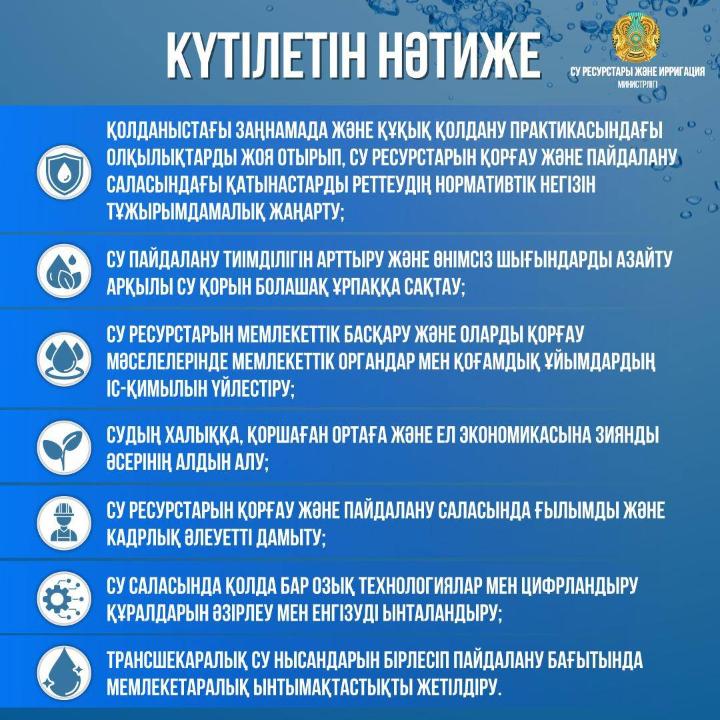
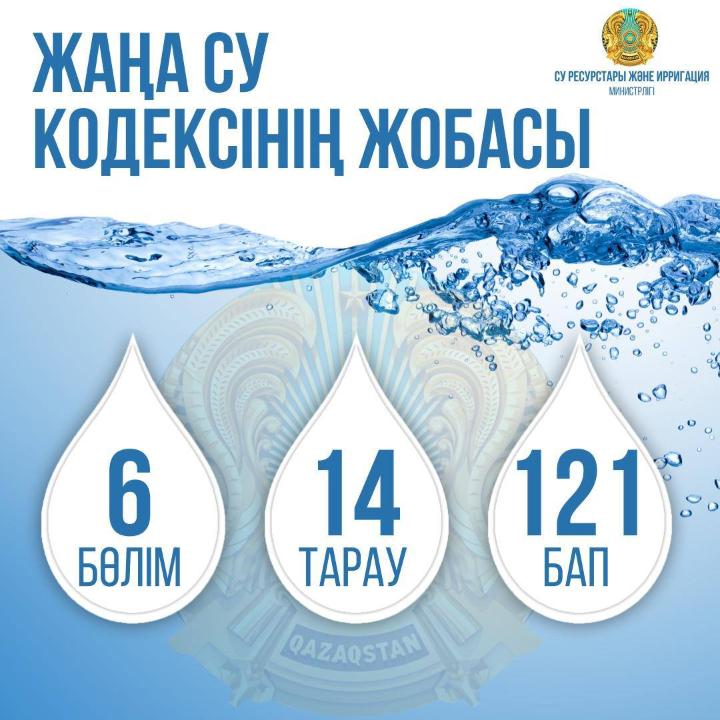
The draft of the new Water Code was prepared on behalf of the Head of State to improve the legal framework and mechanisms for the implementation of a unified state water policy in order to ensure the country's water security and protect the interests of future generations. Changes in legislation are revising the methods of water resources management in favor of preserving the water potential of Kazakhstan.
In the process of developing the draft Code, the Ministry of Water Resources and Irrigation studied the experience and legislation in the field of water resources of Australia, Germany, Israel, Canada, Uzbekistan and other States.
To identify the weaknesses of the current water legislation, trips were made to the regions, meetings were held with experts and scientific organizations.
The working group to discuss the draft of the new Water Code, which also includes deputies of the Mazhilis of the Parliament and independent experts, held 37 meetings.
AS AMENDED IN 2003:
- 272 amendments over 20 years;
- Many norms are declarative in nature or there are no mechanisms for their implementation;
- Some norms do not correspond to each other logically, there are contradictions;
- The issues of safety of hydraulic structures, irrigation, drainage and drinking water supply have not been considered.
IN THE DRAFT OF THE NEW WATER CODE:
- The norms of the Code are systematized;
- Declarative and repetitive norms have been removed;
- The principles and objectives of the Water Code are supported by mechanisms for their implementation;
- Issues of safety of hydraulic structures, irrigation, drainage and drinking water supply are placed in separate sections.
THE MAIN OBJECTIVES OF THE NEW WATER CODE:
1. Achieving and maintaining a safe level of water use
2. Ensuring sustainable economic development
3. Improving the quality of life of citizens and protecting the environment
BASIC PRINCIPLES:
1. Recognition of water as an integral part of the environment, the basis of citizens' life and economic development
2. Recognition by the State of the economic value of water resources in their use
3. Integrated use of surface and underground water resources
4. Saving water
5. Involvement of the public in solving problems of conservation and use of the water fund
6. The use of transboundary water resources on the basis of international norms and treaties ratified by the Republic of Kazakhstan
IN THE NEW EDITION:
1. On behalf of the Head of State, measures have been introduced to prevent and protect settlements and facilities from flood and meltwater
2. For the first time, standards have been introduced for the protection of small lakes, rivers and ponds, as well as glaciers and wetlands
3. The main focus is on adaptation to climate change and the implementation of water conservation principles
4. The powers of state, local executive bodies and local representative bodies are carefully regulated to improve coordination in water resources management
5. For the first time, the concept of "ecological runoff" is introduced – the minimum allowable water level to maintain ecosystems of water bodies and protect them from drying out and other negative consequences.
6. The issues of water supply and sanitation in settlements, as well as the safety of hydraulic structures are included.
7. Priority is given to the reuse of treated wastewater.
8. Basin inspections, along with the functions of state control, are provided with investigative functions. The number of employees of basin inspections has increased 1.5 times, the total staff has reached 242 people.
9. Certain provisions of the new Water Code provide for stimulating investment in our country.
EXPECTED RESULTS:
1. Conceptual updating of the regulatory framework for regulating relations in the field of water protection and use with the elimination of gaps in current legislation and law enforcement practice;
2. Conservation of water reserves for future generations by increasing the efficiency of water use and reducing unproductive costs;
3. Coordination of actions of state bodies and public organizations in matters of state management of water resources and their protection;
4. Prevention of harmful effects of water on citizens, the environment and the economy of the country;
5. Development of science and human resources in the field of protection and use of water resources;
6. Stimulating the development and implementation of advanced technologies and means of digitalization in the water industry;
7. Improvement of interstate cooperation in the field of joint use of transboundary water bodies.
Source : https://www.gov.kz/memleket/entities/water/press/news/details/894345