The draft of the new Constitution of the Republic of Kazakhstan has been published
01.02.2026 08:02:25 9901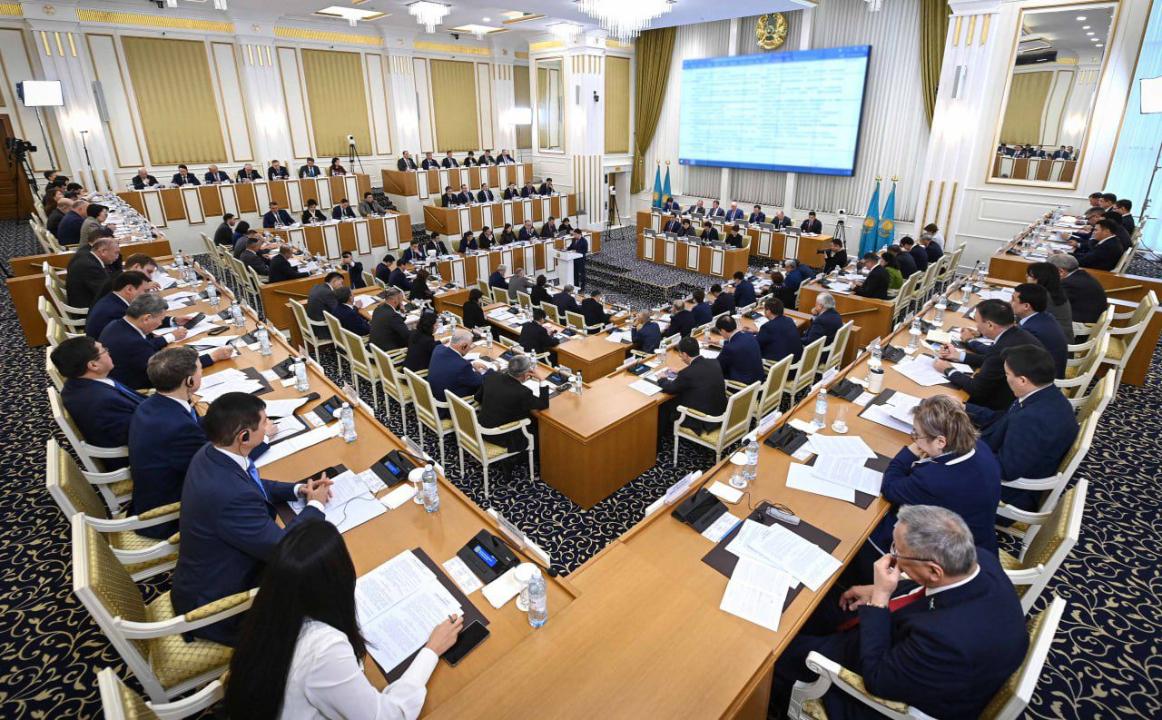
The commission on constitutional reforms published a draft of the new Basic Law of the Republic of Kazakhstan. This document appeared as a result of a thorough analysis of proposals from citizens, political parties, public organizations and experts, open public discussions, as well as a comprehensive and thorough elaboration of new norms and rules. The constitutional reform arose on the basis of the initiative of the head of state Kassym-Jomart Tokayev to create a unicameral parliament in Kazakhstan. The president expressed this idea in his annual address to the people on September 8, 2025 in order to comprehensively modernize the country's political system and give a significant positive impetus to the socio-economic development of Kazakhstan in the era of artificial intelligence. On October 8, 2025, an order was signed on the creation of a working group on the implementation of parliamentary reform. It included well-known legal scientists, experts, representatives of political parties and public organizations. However, all active citizens joined the discussions and began to send their opinions and suggestions through the e-Otinish and eGov portals. Thus, a wide and intense discussion of the new reform lasted about six months. During this period, the Working Group comprehensively reviewed and systematized more than two thousand proposals received from citizens. At the V meeting of the National kurultai, held in January 2026, the head of state summed up the results of the work done and expressed his point of view on the upcoming changes. Kassym-Jomart Tokayev also noted that within the framework of the parliamentary reform, it is initially planned to amend about 40 articles of the Basic Law. However, in the course of the work, it became clear that the scope of changes will be much larger, and they will cover many other aspects of political and public life. On January 21, 2026, the Constitutional Commission was established. It consisted of 130 people, including members of the National Constituent Assembly, prominent legal scholars, responsible employees of central state bodies, heads of mass media, maslikhat chairmen, Representatives of regional public councils, as well as representatives of the expert and scientific community. Thus, the Commission fully covered all social groups and regions of Kazakhstan. The commission is headed by the chairman of the Constitutional Court Elvira Azimova. State Councilor Yerlan Karin and Deputy Prime Minister-Minister of Culture and information Aida Balayeva were appointed as his deputies. "The creation of the commission can be considered as a reflection of the transition from sector changes to a comprehensive constitutional transformation. He has a special mission ahead of him. This is to ensure that the basic principles of the constitutional system are observed in the Basic Law, on the one hand, and on the other hand, it is possible to express a worthy attitude to modern challenges," Chairman of the Constitutional Court Elvira Azimova said at the first meeting. All meetings of the commission were held in full transparency and broadcast live. His work was widely and detailed in the media. Their opinions, comments and suggestions were expressed by well-known lawyers, human rights activists, social activists, deputies, political researchers and other experts. During the work, the members of the Commission reviewed in detail all the main amendments to the Basic Law of the Republic. These amendments concern all sections and 77 articles of the Constitution, that is, they covered 84% of the total text. Thus, the members of the Commission raised the issue of developing a new Constitution of Kazakhstan. Conceptual changes of the Basic Law of the Republic of Kazakhstan are aimed at increasing the orientation of the state towards the person, reflecting the current values and principles inherent in the people of Kazakhstan, as well as increasing the effectiveness of the structure of political institutions in the Republic. In the new preamble, human rights and freedoms were declared for the first time as the main priority of the state. Unity and cooperation, interethnic and interreligious harmony are established as the basis of Kazakhstan's statehood. Sovereignty and independence, unity, territorial integrity were classified as immutable values. For the first time, such principles as Justice, Law and order, careful attitude to nature were enshrined at the level of the Constitution. At the same time, it is established that the only source of state power and the owner of sovereignty is the people of Kazakhstan. Education and science, culture and innovation were identified as the main ideas of the new text of our Constitution. This is a fundamentally important turning point, showing that the future of the state is determined not by Mineral Resources and natural resources, but by human capital and the achievements of citizens. Another important semantic area is digitalization. In this regard, the new text of the Constitution for the first time approved the norm on the protection of citizens ' rights in the digital environment. The main feature of the new text of the Constitution is its orientation towards human rights. Thus, human rights and freedoms are enshrined not only in the new preamble, but are defined as a special priority and semantic core of the entire Constitution. There is a clear distinction between religion and the state. The secular nature of the education and upbringing system is determined. A provision is introduced that marriage is a voluntary and equal Union of a man and a woman. This decision is aimed at protecting traditional values at the highest legal level and strengthening the protection of women's rights. Among the main novellas of the draft constitution, the following can be noted: A new unicameral parliament, the Kurultai, consisting of 145 deputies and having new, expanded powers, will be created. When creating it, a proportional electoral system is used, and the term of office of Deputies is 5 years. The proportional system contributes to the development of the personnel policy of parties, increasing their institutional role and strengthening the responsibility of political forces to society. A new platform for national dialogue will be created – the people's Council of Kazakhstan, which will continue the strategic functions of the assembly of people of Kazakhstan and the National kurultai. It will be the highest advisory body representing the interests of the people of Kazakhstan, having the right to legislative initiative. Creation of the Institute of Vice President. On behalf of the president of the Republic of Kazakhstan, he interacts with socio-political, scientific, cultural and educational organizations of Kazakhstan and abroad. For the first time, a special article dedicated to advocacy and advocacy is enshrined in the Constitution. Protection of intellectual property rights is ensured. Laws that impose new duties on citizens or worsen their situation, prohibit the possibility of being held accountable again for the same offense, and guarantee the rights of citizens, including the principles of the presumption of innocence, will be strengthened. The "Miranda rule" is approved. In addition, the draft of the new Constitution of Kazakhstan comprehensively solves the problem of outdated terminological apparatus. The text of the new Basic Law of the country emphasizes the clear priority of Kazakhstan in the development of the established state structure, international authority, human capital, Education, Science and innovation, which confidently looks to the future. In addition, respect is paid to the formation of the state structure and the current Constitution, which played an important role in the historical development of Kazakhstan. In general, the first draft of the new version of the Constitution proposes to approve the Preamble, Section 11 and Article 95. The acceptance of proposals continues through the e-Otinish and eGov portals. A specific decision on the new constitution will be made by the citizens of our country at a national referendum. The work of the Constitutional Commission continues. Constitutional Reform Commission (Constitutional Commission) **** January 30, 2026 Project CONSTITUTION OF THE REPUBLIC OF KAZAKHSTAN We, the United People of Kazakhstan, strengthening statehood in the indigenous Kazakh land, Preserving the continuity of the thousand-year history of the Great Steppe, clarifying the unitary nature of the state, the impossibility of encroaching on the integrity of its borders and territory, Adhering to the idea of a just Kazakhstan and the principle of Law and order, stating that the rights and freedoms of citizens are strictly observed, based on the principles of unity and solidarity, interethnic and interfaith peace, according to the values of culture and education, science and innovation, recognizing the need to take care of nature, striving for peace and friendship with all the country, feeling a high responsibility to future generations, We adopt the Basic Law of the Republic of Kazakhstan – this Constitution. Section I Fundamentals of constitutional construction Article 1 The Republic of Kazakhstan is a democratic, secular, legal and social state. The highest value of the state is man and his life, rights and freedoms. Article 2 1.The Republic of Kazakhstan is a unitary state. The model of government is the presidential republic. 2.The Sovereignty of the Republic of Kazakhstan covers its entire territory. The state ensures the integrity, indivisibility of its territory, its inviolability. 3.the administrative-territorial structure of the Republic of Kazakhstan is determined by the constitutional law. 4.the capital of the Republic of Kazakhstan is the city of Astana. The status of the capital is determined by law. 5.the names of the Republic of Kazakhstan and Kazakhstan have the same meaning. 6.the sovereignty, independence, unitary, territorial integrity and management model of the Republic of Kazakhstan do not change.
Source : https://www.gov.kz/memleket/entities/kostanai-kalasy-akimat/press/news/details/1152143?lang=kk