The issues of taxation of the financial sector were considered at the meeting of the Project Office for the Implementation of the Tax Code
16.02.2026 19:41:44 1889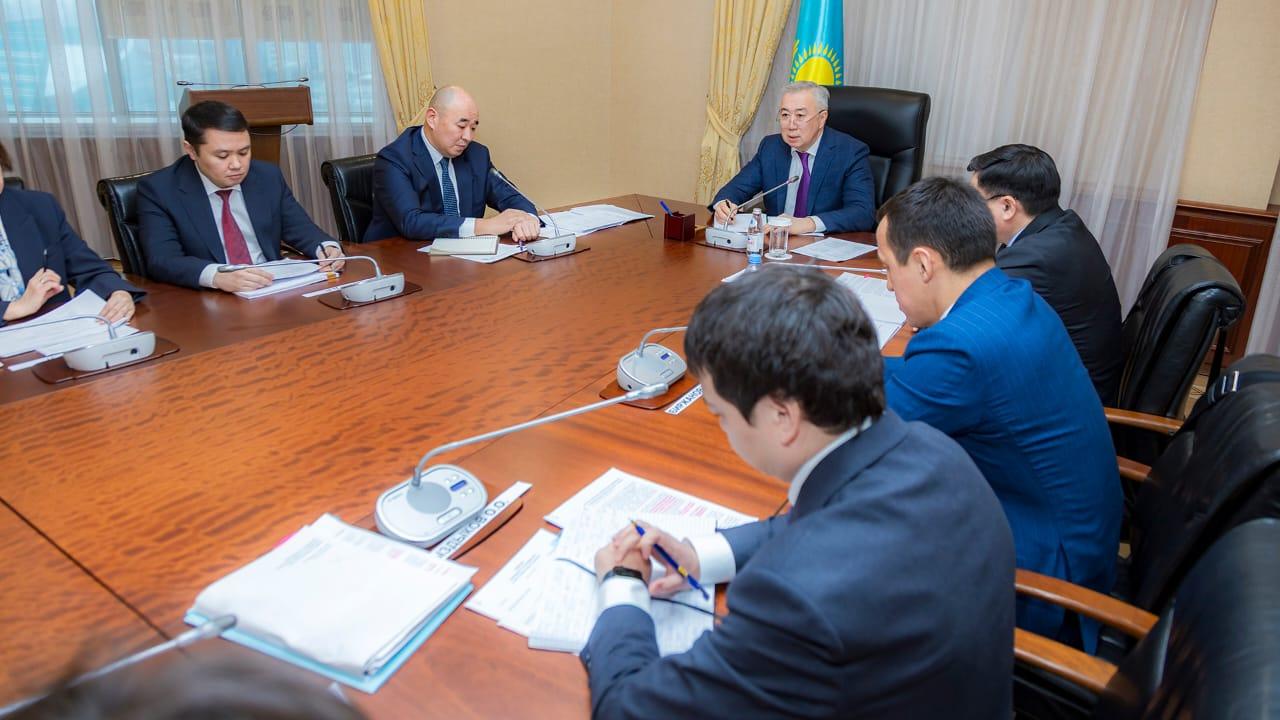
About 38 issues related to the financial sector were discussed at the next meeting of the Project Office for the Implementation of the Tax Code, chaired by Deputy Prime Minister - Minister of National Economy Serik Zhumangarin.
More than 10 questions were of an editorial and clarifying nature. We are talking about expanding the list of information not related to tax secrecy, the procedure for issuing electronic invoices and other technical standards.
However, a separate set of issues requires additional analysis in terms of their impact on the investment market.
VAT on guarantees and factoring
According to Elena Bakhmutova, Chairman of the Board of the Association of Financiers of Kazakhstan, the new Tax Code exempts interest on loans and micro-loans issued in cash from VAT.
However, bank guarantees and sureties are not exempt from VAT. Factoring operations are also subject to taxation.
Factoring is a tool in which a supplier receives payment for a product ahead of time, ceding the right of claim to a bank or financial institution. In fact, it is a form of short-term financing, similar to a loan.
At the same time, factoring is not directly attributed to loans in the Tax Code, and therefore the VAT exemption provided for loans does not apply to it.
For a number of banks, this issue is fundamental, since a significant part of customer service is based on guarantees and factoring operations. In developed markets, factoring is considered as a financial service, and interest income on it is usually exempt from VAT.
It was noted that bringing the tax regime to international practice can increase the competitiveness of the financial market in Kazakhstan and reduce the cost of financing for businesses, primarily for small and medium-sized enterprises.
Following the discussion, it was emphasized that VAT exemption is a tax benefit and requires the position of the Agency for Regulation and Development of the Financial Market. The government's policy is that tax breaks are possible if they contribute to financing the real sector of the economy and increasing investment activity within the country.
Income from securities
The issue of determining income in the form of remuneration on debt instruments is considered separately.
In the current version, the discount on the repayment of securities is excluded from the remuneration and attributed to the increase in value. This complicates the application of tax deductions and may lead to an additional tax burden.
Representatives of the financial community proposed to keep the discount as part of the remuneration in order to avoid ambiguous interpretation of the norms.
The norm on the need to own debt securities for at least three years to reduce taxable income was also discussed. According to market participants, this may reduce investors' interest in such instruments and create unequal conditions between exchange platforms.
All proposals will be carefully studied, taking into account the adopted Code.
VAT on the export of agricultural products
Another issue related to VAT adjustments for agricultural exports.
According to the current norm, an agricultural producer is obliged to reduce the VAT previously accepted for offset by 80% when exporting. Accordingly, a refund is made in the amount of 20%, since farmers are entitled to a reduction in tax obligations by 80%.
It is explained that this norm applies exclusively to crop and livestock products, including products of their primary processing, in accordance with relevant legislation.
The Ministry of National Economy will prepare an official explanation on the procedure for applying VAT on exports of agricultural and processed products.
According to the State Revenue Committee, as of February 12, 921 thousand taxpayers had chosen a special tax regime based on a simplified declaration, while 113 thousand had chosen a general regime.
About 500,000 taxpayers have not yet decided on a choice. They have received repeated notifications through their personal accounts reminding them to choose a tax regime before March 1.
https://www.gov.kz/memleket/entities/economy/press/news/details/1162903?lang=ru