Kazakhstan Advocates Strengthening Multilateralism and Developing Effective Cooperation to Forge Joint Responses to Global Challenges
26.02.2026 08:17:20 2498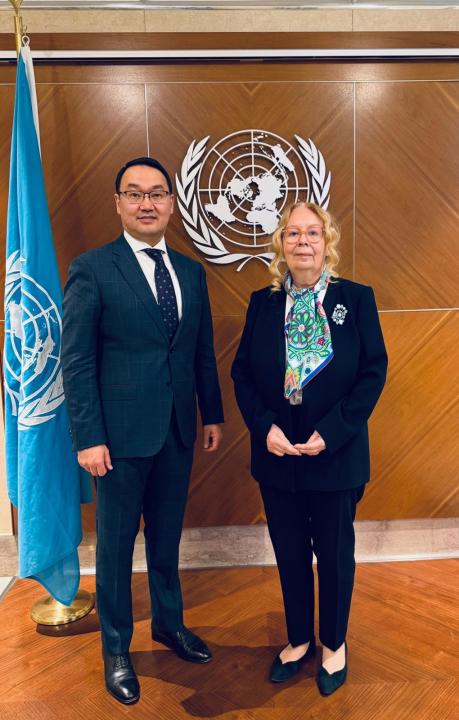
During the visit to Geneva, First Deputy Minister of Foreign Affairs of the Republic of Kazakhstan Yerzhan Ashikbayev held bilateral meetings with the heads of 10 major UN agencies and other international organizations to discuss practical issues of cooperation.
At the meeting with Tatiana Valovaya, Director-General of the United Nations Office at Geneva, the parties reaffirmed Kazakhstan’s unwavering commitment to multilateral diplomacy and active cooperation with the United Nations. T. Valovaya highly appreciated Kazakhstan’s contribution to advancing international initiatives, including the Congress of Leaders of World and Traditional Religions, the Regional Environmental Summit, the opening in Almaty of the UN Regional Centre for the Sustainable Development Goals for Central Asia and Afghanistan, as well as the initiative to establish an International Water Organization under the auspices of the UN.
At the meeting with Volker Türk, UN High Commissioner for Human Rights, Kazakhstan’s commitment to constructive engagement with UN treaty bodies and the Universal Periodic Review mechanism, as well as support for the OHCHR mandate, was reaffirmed. V. Türk noted the high level of trust-based cooperation, including the implementation of a joint “roadmap” adopted following his visit to Kazakhstan in 2023.
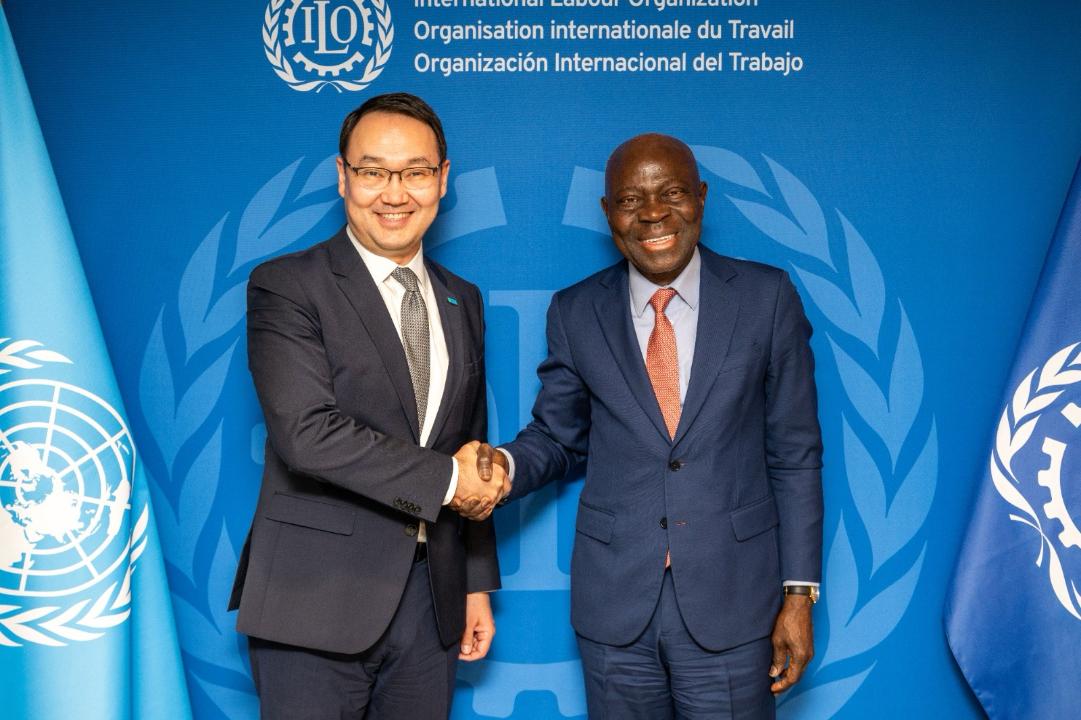
The implementation of the Decent Work 'roadmap' was discussed with Gilbert F. Houngbo, Director-General of the International Labour Organization (ILO). Progress was noted in terms of cooperation on labour rights protection and the reinforcement of international labour standards in national legislation. Kazakhstan confirmed its support for the Global Coalition for Social Justice and its interest in expanding ILO regional programmes in Central Asia.
During the meeting with Tedros Adhanom Ghebreyesus, Director-General of the World Health Organization (WHO), the parties confirmed the high level of partnership and Kazakhstan’s support for WHO efforts to strengthen sustainable, people-centred health systems. Particular attention was paid to advancing primary health care, including the Global Coalition for Primary Health Care initiated by Kazakhstan. The sides discussed the provision of medical and humanitarian assistance to populations in crisis situations, as well as the participation of the WHO Director-General in the Regional Environmental Summit in Astana in April 2026.
Barham Salih, UN High Commissioner for Refugees, positively assessed Kazakhstan’s commitment to cooperation in the field of migration and the protection of the rights of refugees and stateless persons. The results of the implementation of voluntary pledges under the Global Refugee Forum were noted, including the introduction of digital solutions in migration management.
With Gilles Carbonnier, Vice-President of the ICRC, priority humanitarian issues and the promotion of the Global Initiative to galvanize political commitment to international humanitarian law were discussed, including preparations for the High-Level Conference in Jordan in 2026.
With Tatiana Molchan, Executive Secretary of the UN Economic Commission for Europe (UNECE), the parties reviewed issues of implementing international standards and expanding regional cooperation in the areas of transport, trade, environment, energy and innovation. UNECE’s interest in participating in the Regional Environmental Summit and in implementing its outcomes on the basis of multilateral environmental conventions and SPECA was confirmed.
During the meeting with Doreen Bogdan-Martin, Secretary-General of the International Telecommunication Union (ITU), prospects for expanding cooperation on digital transformation were discussed. Kazakhstan’s active role in advancing the global digital agenda, developing e-government, an innovation ecosystem and artificial intelligence technologies was highlighted.
SungAh Lee, Deputy Director-General of the International Organization for Migration (IOM), positively noted Kazakhstan’s migration policy, including its chairmanship within the Almaty Process. Mutual interest in further expanding practical cooperation was reaffirmed.
In addition, on the margins of the High-Level Segment week of the UN Human Rights Council and the Conference on Disarmament, Y. Ashikbayev took part in a side event dedicated to the protection of places of worship in armed conflicts. In his remarks, he underscored the importance of religious sites as part of cultural heritage and as spaces for humanitarian support, reaffirmed Kazakhstan’s commitment to advancing the Global Initiative to Galvanize Political Commitment to International Humanitarian Law, and encouraged States to support its practical implementation.
At all meetings, the heads of international organizations were informed in detail about the ongoing constitutional reform in Kazakhstan and the key provisions of the draft new Constitution, which is people-centered and focused on further strengthening the principles of justice and the rule of law, expanding guarantees of human rights and freedoms, and enshrining at the constitutional level the protection of citizens' rights in the digital environment, including the protection of personal data and ensuring digital security.
Source : https://www.gov.kz/memleket/entities/mfa/press/news/details/1170069?lang=kk