
Kazakhstan's traditional cuisine is gaining export potential
29.03.2026 08:20:53 2173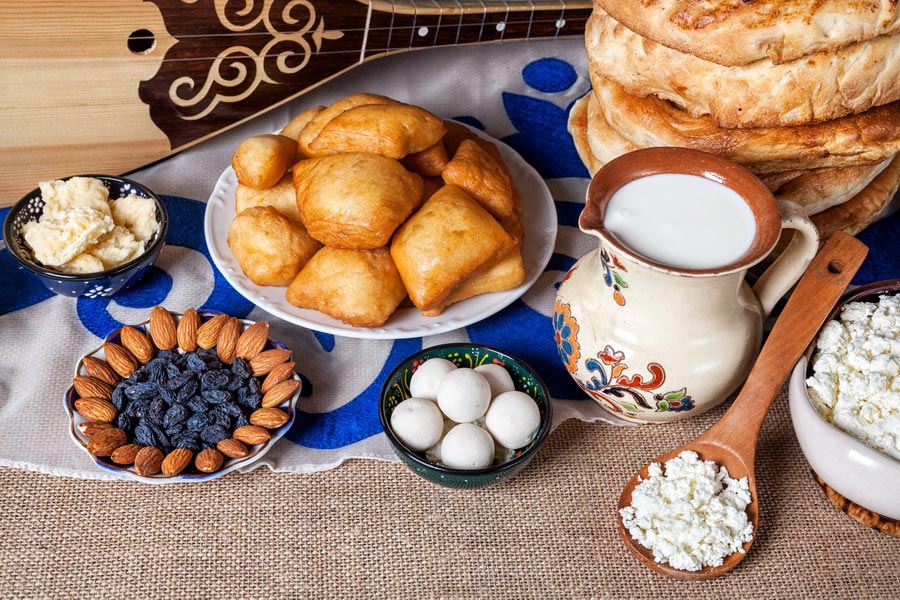
National dishes for Kazakhs are not just a festive dastarkhan. Traditional products like kazy, kymyz, kurt, and baursaks are part of everyday life. Today, this gastronomic culture is gradually expanding beyond the country's borders and becoming part of Kazakhstan's export potential.
According to estimates by QazTrade experts, with systematic support, the export of Kazakh national products could reach 50–80 million US dollars by 2028.
Key markets - Russia and China
Russia and China remain among the key markets for Kazakhstan's national products, where more than 2 million representatives of the Kazakh diaspora reside. This creates a stable demand for traditional products. On the Russian market, kurt and kumys are particularly popular.
In China, especially in the Xinjiang Uygur Autonomous Region, more than 10 million Muslims live, creating a stable demand for halal products. Interest in meat delicacies is growing here. According to QazTrade statistics, the global market for halal meat and delicacies is currently estimated at approximately 2.1 trillion dollars and is growing by about 7% annually.
Export of traditional dairy products is growing
The export of Kazakh traditional dairy products shows steady growth. For example, the export of products including kumys, shubat, and ayran amounted to 13.4 million dollars in 2024 and 17.3 million dollars in 2025. The growth was 29.4%.
The main difficulty in exporting kumys is its shelf life. Genuine chilled kumys lasts only 3-5 days, so delivering it to distant markets is quite challenging. By the time the product reaches another country, it may simply lose its properties. Therefore, producers and technologists are currently seeking solutions. These include pasteurized kumys, which lasts up to 30 days, and also lyophilized kumys powder, essentially dry saumal. Such products are already being supplied to China, although volumes remain small for now.
"Nomadic Gastronomy" as a new export brand
This refers to an entire direction increasingly called "nomadic gastronomy" - the cuisine of steppe culture, based on natural meat and dairy products. Against this backdrop, Kazakhstan's traditional products are gradually finding their niche in foreign markets. What is part of everyday culture for Kazakhs is becoming a new gastronomic discovery for foreign buyers.
"The world's demand for functional food and superfoods is growing, and the Kazakh traditional diet perfectly meets this need. The same kurt is a source of beneficial microelements, and tary and talkan are becoming increasingly recognizable among foreign consumers during trade missions and international exhibitions. Traditional steppe food sells well and is in demand through networks of Kazakh restaurants and cafes abroad. For example, the famous cappuccino with tary, a kind of 'ground steppe coffee,' is already appearing in the USA. It is a simple, accessible, and functional product," noted Aitmukhamed Aldazharov, General Director of QazTrade.
Source : https://www.gov.kz/memleket/entities/mti/press/news/details/1187654?lang=kk