Developing the EAEU-CIS partnership: Key areas of economic cooperation discussed in Astana
30.06.2026 19:37:54 789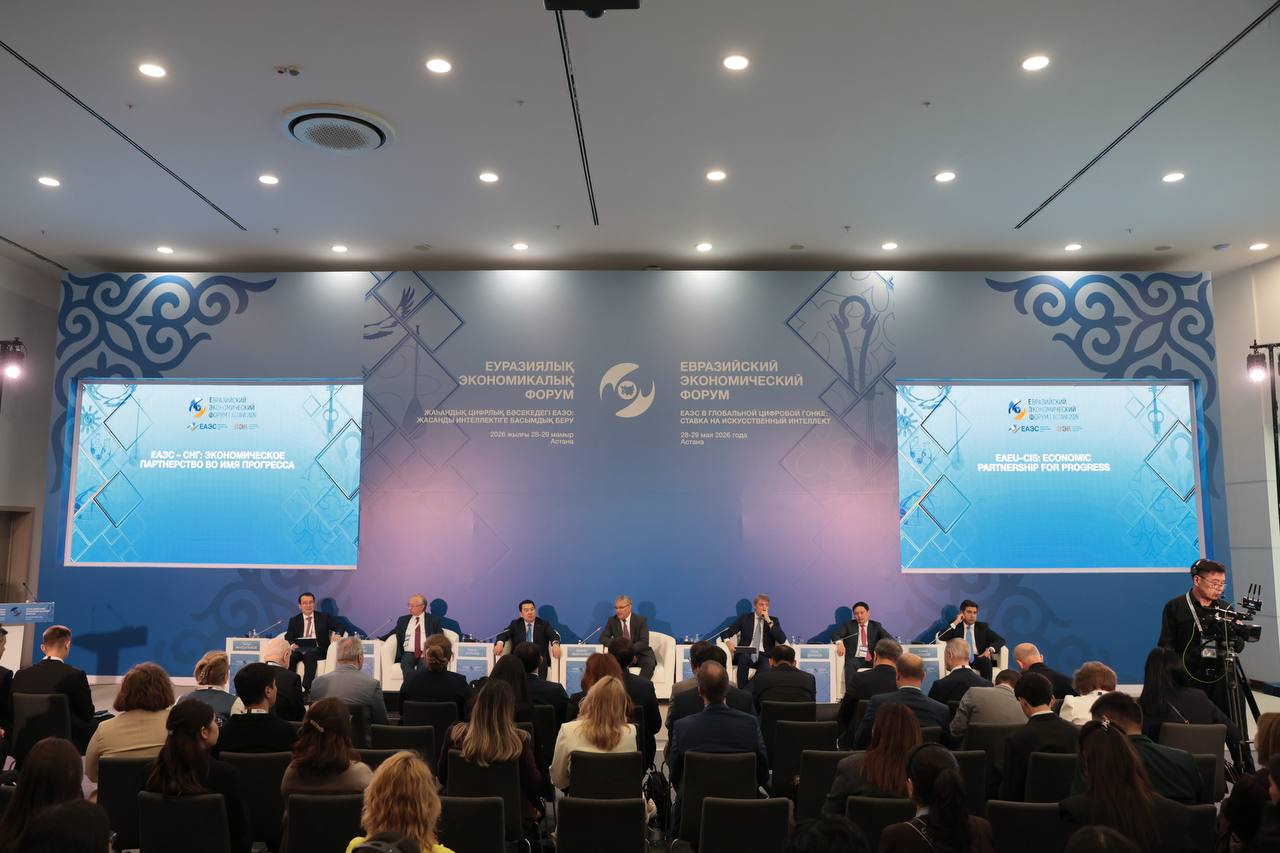
A joint session of the Eurasian Economic Commission (EEC) and the CIS Executive Committee, "EAEU-CIS: Economic Partnership for Progress," was held in Moscow as part of the 5th Eurasian Economic Forum. The platform brought together representatives of the EEC, CIS governments, and leading experts to discuss eliminating trade barriers, accelerating digitalization, and implementing large-scale infrastructure projects.
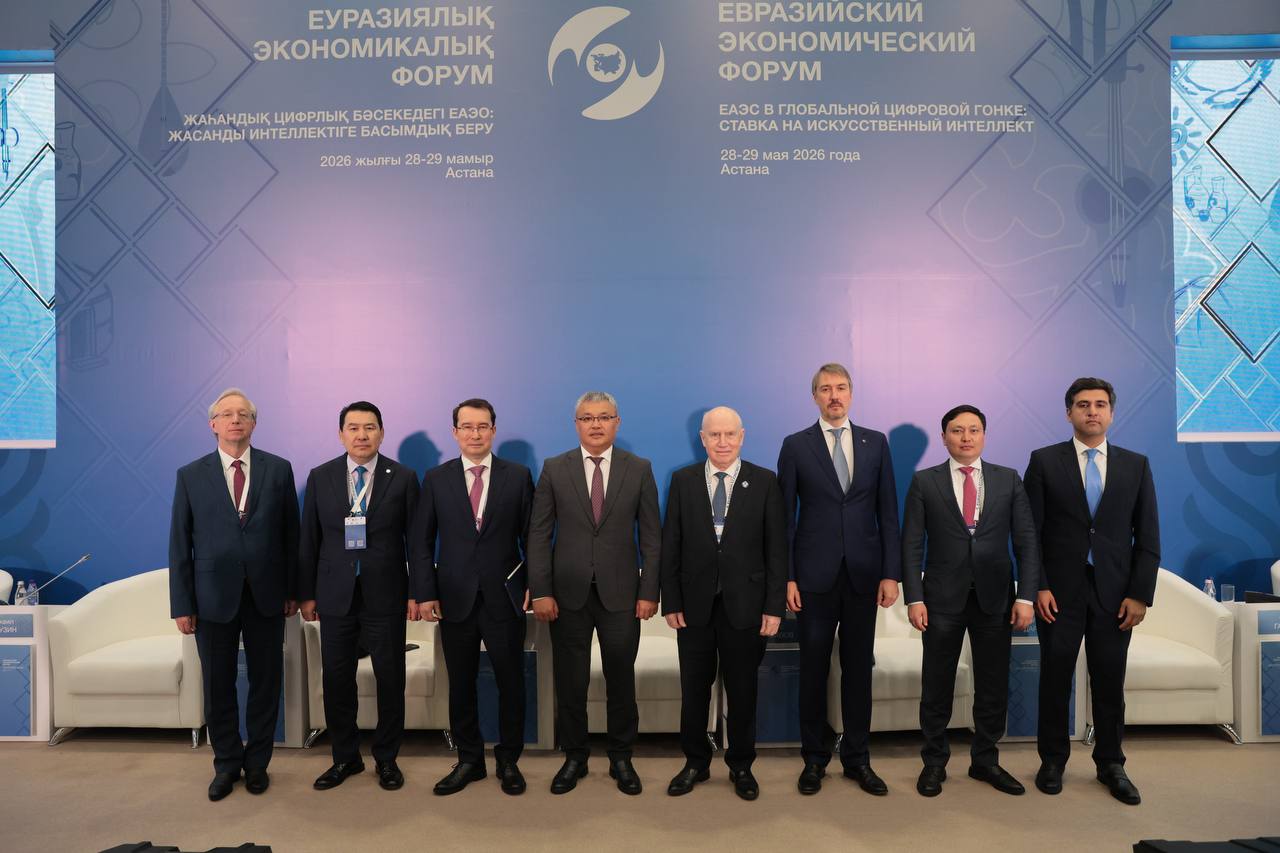
The discussion featured key speakers on the integration agenda: Daniyar Imanaliev, Member of the Board (Minister) for Integration and Macroeconomics of the EEC; Laziz Kudratov, Minister of Investment, Industry, and Trade of the Republic of Uzbekistan; German Nurbayev, Chairman of the CIS Economic Court; Alexander Pankin, Deputy Minister of Foreign Affairs of the Russian Federation; and Denis Trefilov, Deputy Secretary-General of the CIS.
In his address to the session participants, Vice Minister of National Economy of the Republic of Kazakhstan Asan Darbayev expressed gratitude to the organizers for the timely update of the agenda and emphasized that in an era of profound transformation of global markets, the resilience of the region's states directly depends on their ability to quickly pool resources, infrastructure, and technological expertise.
"Today, interaction between the EAEU and the CIS is not just a regional agenda, but the foundation of a new Eurasian economic architecture. The global economy is undergoing a period of profound transformation: production chains are being restructured, routes are changing, and competition for investment and human capital is intensifying. Under these conditions, synchronizing the work of the EAEU and the CIS is becoming not just a formal institutional process, but a practical tool for economic growth," stated Asan Darbayev.
Asan Darbayev emphasized the fundamental importance of Kazakhstan's transition from declarations to tangible results for businesses and citizens. This includes increasing mutual trade, launching industrial cooperation, expanding transit potential, and reducing costs. The most important next step will be the implementation of end-to-end digital interaction, which should reduce customs clearance times along EAEU-CIS routes in the coming years.
The high level of economic interconnectedness between the countries is confirmed by official statistics. By the end of 2025, Kazakhstan's trade turnover with EAEU countries amounted to almost $31 billion, and with all CIS countries, approximately $38 billion. Sectoral cooperation is demonstrating steady growth: according to the Eurasian Economic Commission (EEC), the region's industry grew by 15% between 2020 and 2024, while agricultural production in the EAEU, following a 10% increase in previous years, increased by another 4.6% by the end of 2025.
Asan Darbayev cited the development of the Trans-Caspian International Transport Route (TITR, or "Middle Corridor") as a benchmark for successfully synchronizing efforts. Over the past seven years, the volume of shipments along the TITR has increased more than fivefold, from 800,000 to 4.5 million tons. By 2030, container traffic along the corridor is planned to increase.
Concluding his speech, the Vice Minister touched on financial cooperation, noting that labor mobility and cross-border financial services require closer coordination in the areas of migration and the protection of citizens' social rights.
Source : https://www.gov.kz/memleket/entities/economy/press/news/details/1229842?lang=ru