
The Constitution of the Republic of Kazakhstan Entered into Force on July 1, 2026
01.07.2026 10:02:52 1112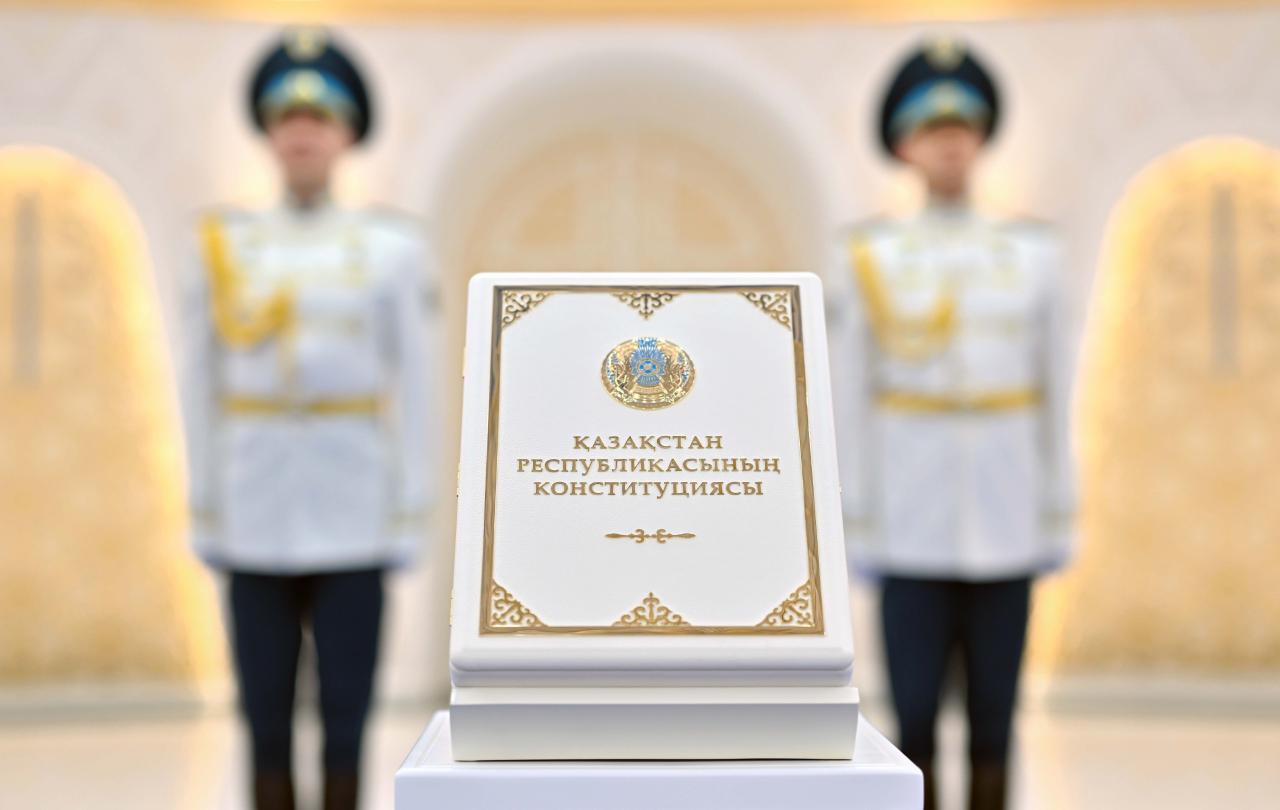
DEAR CITIZENS OF KAZAKHSTAN!
On July 1, 2026, the Constitution of the Republic of Kazakhstan, adopted by the national referendum held on March 15, 2026, entered into force.
Through the expression of the will of the people of Kazakhstan, the foundations have been laid for a new stage in the country’s constitutional development.
The 1995 Constitution of the Republic of Kazakhstan has ceased to have legal force.
The entry into force of the new Basic Law marks a historic milestone in the development of the state and establishes an updated constitutional model based on the supremacy of the Constitution, stronger guarantees of human rights and freedoms, greater legal certainty, increased accountability of public authorities, and broader public participation in the governance of the state.
The Constitution has substantially revised and expanded the fundamental principles governing the Republic of Kazakhstan. For the first time, these principles include the protection of Sovereignty and Independence; respect for human rights and freedoms; ensuring the rule of law and public order; strengthening national unity; improving the well-being of the people; promoting the ideals of responsible and constructive patriotism; fostering public dialogue; affirming the values of diligence, progress, and knowledge; cultivating a high level of environmental awareness; preserving historical and cultural heritage; and supporting national culture.
The Sovereignty, Independence, unitary nature, territorial integrity, and form of government of the Republic of Kazakhstan remain unchanged.
For the first time at the constitutional level, the strategic priorities for the country’s development have been defined, including the development of human capital, education, science, and innovation as the foundation for the long-term development of the Republic of Kazakhstan.
The Constitution establishes the supremacy of the Constitution as the Basic Law of the state, affirming its highest legal authority and direct applicability throughout the territory of the Republic of Kazakhstan. All laws and other normative legal acts shall be adopted solely on the basis of and in implementation of the Constitution and may not contradict it.
The provisions governing the temporal application of laws, which were previously enshrined among the principles of justice, have now been elevated to constitutional status as one of the foundations of the constitutional order. The prohibition on giving retroactive effect to laws that impose new obligations, worsen the legal position of citizens, or establish or increase liability has become universally binding on all state bodies and public officials.
The range of matters subject to regulation by constitutional laws has been expanded to include the legal status and activities of the Halyq Kenesi, the legal status of the capital, the organization of the highest state authorities, the Constitutional Court, the judicial system, special legal regimes, and other matters relating to the structure of the state. This ensures greater stability in their legal regulation.
The Halyq Kenesi has been established as the supreme representative body of the people and has been granted the right of legislative initiative, thereby strengthening public participation in the formation of state policy. A new model of legislative authority has been established, and powers have been redistributed among state institutions.
The constitutional model for the protection of human rights has been substantially updated. The Constitution now enshrines the key guarantees of criminal proceedings not as principles governing the courts, but as inalienable rights of every individual, binding on all state authorities from the moment a person's liberty is actually restricted. These guarantees include the right to legal defense from the moment of actual detention, judicial oversight over restrictions of liberty, the prohibition of arbitrary detention, the right to remain silent and not to testify against oneself or close relatives (the so-called “Miranda rules”), and the presumption of innocence.
For the first time at the constitutional level, the Constitution establishes the state's obligation to compensate for harm caused by unlawful actions of state bodies and public officials, the right to the protection of intellectual property, guarantees of digital rights, including the protection of personal data and digital security, as well as the environmental responsibility of both the state and its citizens.
With the entry into force of the new Constitution, the Constitutional Court of the Republic of Kazakhstan will continue to exercise constitutional review, ensuring the supremacy of the new Constitution, protecting its highest legal authority, and promoting a uniform understanding of constitutional values.
The entry into force of the new Constitution marks the beginning of a new stage in the constitutional development of the Republic of Kazakhstan, in which the individual, human dignity, rights, and freedoms remain the highest values of the state, and the supremacy of the Constitution serves as the firm foundation for sustainable development, the rule of law, and justice.
The Constitutional Court of the Republic of Kazakhstan congratulates all citizens of the Republic of Kazakhstan on the entry into force of the new Constitution and on the beginning of a new stage in the constitutional development of our country.
Link to the new text of the Constitution https://www.gov.kz/memleket/entities/ksrk/press/news/details/1159830?lang=en
Source : https://www.gov.kz/memleket/entities/ksrk/press/news/details/1250997?lang=ru