Kazakhstani enterprises will participate in new EAEU cooperation projects
10.09.2026 11:06:04 1767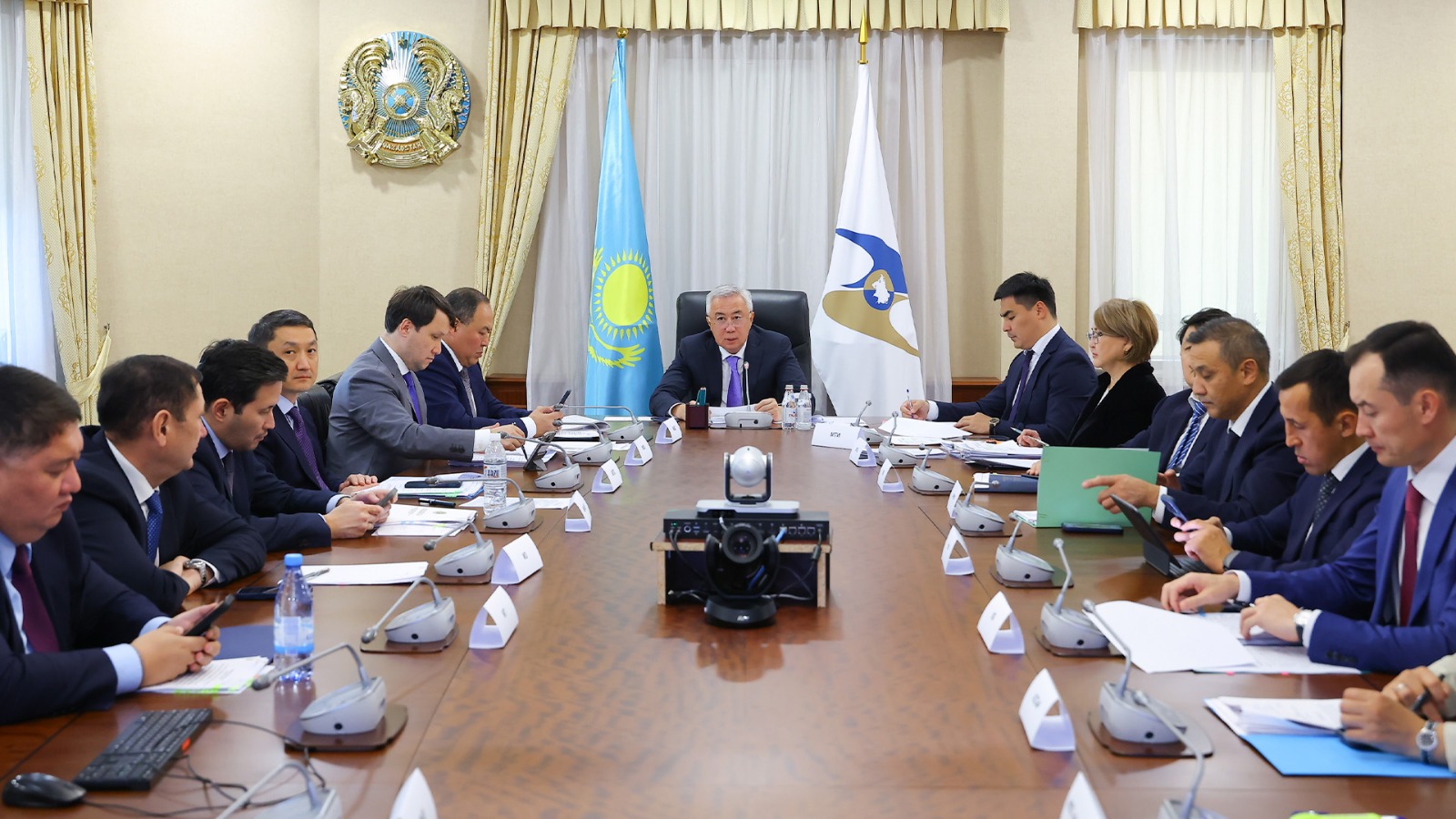
These decisions were made at the regular meeting of the EEC Council, held online. The Kazakh side was headed by Deputy Prime Minister – Minister of National Economy Serik Zhumangarin.
In particular, this concerns a cooperative project for the construction of an AKRUS paint and varnish production facility in the Moscow region. The plant plans to produce paint and varnish materials with higher corrosion and fire resistance characteristics compared to existing analogues. The project implementation is planned for five years and will start this year.
The project participants will be the Belarusian RPE "Orion-VK", the Kazakh LLP "Asyl Construction", which will provide part of the supplies of materials and technological equipment, and the Russian LLC "AKZ Coatings".
Another new cooperative project will be the construction of a new mixing line at the Samara Gypsum Plant. The project provides for an increase in the output of dry construction and special-purpose mixes by 75.5 thousand tons per year. The Kazakh side will be represented by LLP "Elita", which will provide engineering and construction services, and the Belarusian side — by CJSC "Remeza". The projected economic effect for the budget of Kazakhstan from tax revenues from the implementation of this project will amount to about 180 million tenge.
It should be recalled that in 2025, a cooperative project for the production of agricultural machinery in the Akmola region was approved.
As is known, cooperative projects in the EAEU receive preferential financing at a reduced rate through interest rate subsidies on loans for project implementation. The projects are designed to promote technological development and the creation of new production models, and the expansion of trade and economic ties in the countries of the economic union.
At the Council meeting, amendments to a number of documents on the agricultural sector were also adopted. In particular, this concerns changes to the method of field testing of varietal crops of agricultural plants.
In addition, it was decided to amend the Unified Quarantine Phytosanitary Requirements imposed on regulated products and objects at the customs border and on the territory of the EAEU countries. They are aimed at optimizing the application of quarantine phytosanitary measures regarding the pepino mosaic virus, which affects tomatoes, peppers, and eggplants. It is envisaged to exclude the requirement for the absence of this virus in these products, provided that a sufficient level of quarantine phytosanitary safety of the country is ensured.
A decision was also made to change the list of regulated products subject to quarantine phytosanitary control at the customs border and on the territory of the EAEU countries. In particular, the mandatory issuance of a phytosanitary certificate for wooden packaging and fastening material will be canceled if it bears the marking provided for by the Unified Requirements.
These changes are aimed at creating more favorable conditions for the production and trade of relevant products on the territory of the EAEU countries.
The Council also adopted amendments to the Technical Regulations of the Customs Union "On the Safety of Toys". The amendments establish mandatory requirements for toys intended for children under 14 years of age and are aimed at protecting consumers from unreliable product information, as well as preventing the release into circulation of toys that do not meet the established safety standards.
The parties also discussed and made decisions on a number of other procedural issues concerning the activities of other sectors and the Commission.

Source : https://www.gov.kz/memleket/entities/mti/press/news/details/1288962?lang=ru