The share of the shadow economy in Kazakhstan has decreased to 15.69%
16.09.2026 14:36:14 784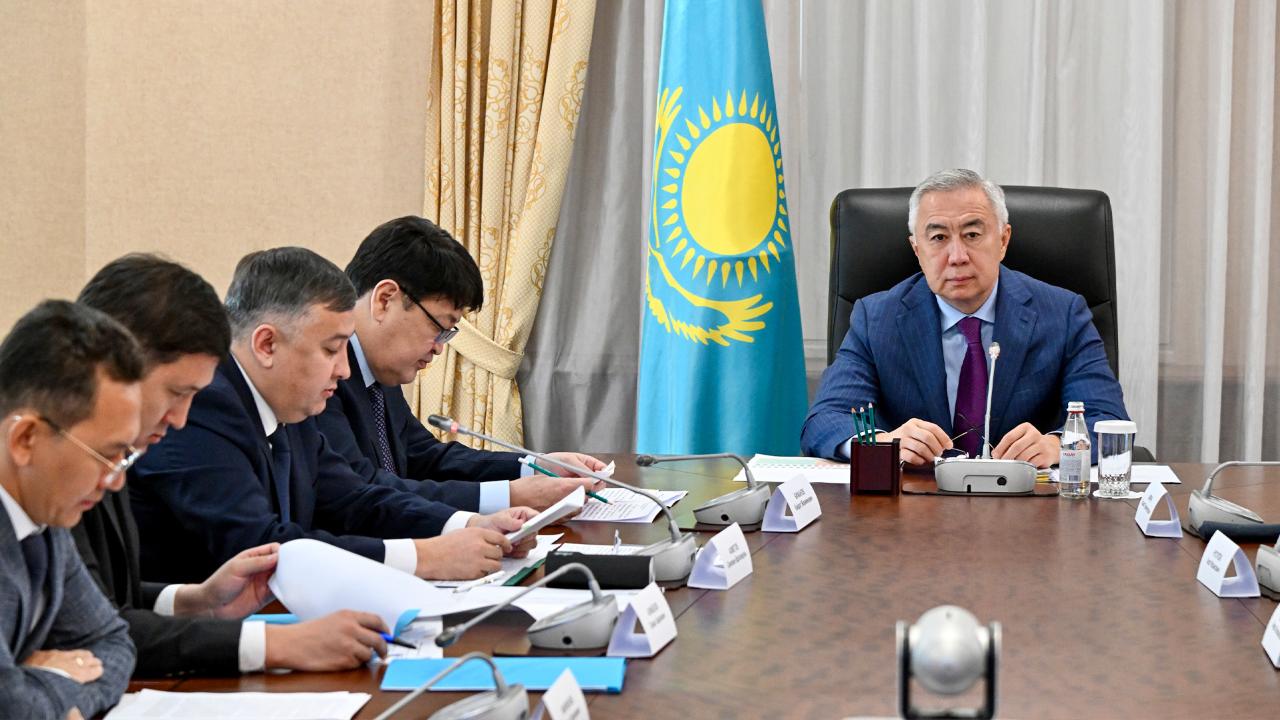
A meeting on combating the shadow economy and illicit trafficking of precious metals was held under the chairmanship of Deputy Prime Minister and Minister of National Economy Serik Zhumangarin, as part of President Kassym-Jomart Tokayev's instructions to ensure the transparency of economic processes.
Participants reviewed the progress made in reducing shadow economy activity, digitalizing economic processes, and strengthening oversight in specific industries. Particular attention was paid to the situation in the jewelry market and proposals for its further legalization.
According to the State Revenue Committee of the Ministry of Finance of the Republic of Kazakhstan, over the past five years, 24 regulatory legal acts have been adopted and 20 information systems have been modernized to combat the shadow economy. The share of the non-observed economy in GDP decreased from 17.58% in 2023 to 15.69% in 2025, or by 1.89 percentage points.
Digitalization and integration of state information systems remains one of the key tools for reducing shadow economy activity. In agriculture, tools for end-to-end product flow control are being introduced, including the "Veterinary and Sanitary Expertise" module, a digital traceability system for crop production, SNT, and the integration of the Unified Automated Control System (UACS) with the KEDEN system.
In the oil and gas and energy sectors, raw material balance meters are being installed at refineries, and analytical data displays for fuel and lubricants are being developed. Amendments have been prepared to equip storage tanks with meters.
In the retail sector, foreign permit forms have been digitized, navigation seals are being used, product labeling and cataloging is being expanded, and a Digital Bazaar system is being developed.
The digitalization of the construction industry continues. Master plans and detailed planning projects are being recorded through the automated digital system of the state urban development cadastre. This year, the Unified Construction Portal Qportal.kz and a pilot project for project verification using artificial intelligence were launched.
A separate area is the legalization of self-employed individuals. The State Revenue Committee, together with the Ministry of Labor and Social Protection of the Population, has completed integration with 45 online platforms. 774,200 economically active citizens have registered for the first time in the State Revenue Committee's information systems. As of today, 922,500 self-employed individuals are officially registered, 94% of whom work through online platforms. They have already paid 9.9 billion tenge in social security contributions.
The meeting also reviewed the results of the Financial Monitoring Agency's efforts to combat the shadow economy.
A separate section was devoted to the jewelry market and the legalization of precious metals. According to the Ministry of Industry and Construction, the domestic jewelry market reached approximately $168 million by the end of 2025, an increase of 3.4%. Production increased by 31% to $7.2 million, while exports totaled $65.4 million.
According to market participants, a significant portion of jewelry turnover remains underground. In 2025, pawnshops transferred approximately 3.2 tons of scrap and waste precious metals to Tau-Ken Altyn LLP for recycling, compared to 3.8 tons the previous year. In this regard, it was proposed to work with the Agency for Regulation and Development of the Financial Market to address the issue of mandatory scrap and waste collection by refining entities, as well as to improve the rules for their acceptance and sale.
Serik Zhumangarin placed particular emphasis on the need to create conditions for jewelers to operate legally and to provide them with accessible raw materials.
"Jewelers are true artisans, whose profession is passed down from generation to generation. We have large jewelry centers, and it's important to preserve this heritage and bring the industry as legally as possible. It's also important to ensure jewelers have access to a legal and affordable source of gold. Creating a transparent working environment will be one of the key steps toward legalizing the industry," said Serik Zhumangarin.
Another issue is mandatory hallmarking of jewelry. In 2024, 45 market participants submitted jewelry for hallmarking, while in 2025, the number increased to 959. The total number of taxpayers working with jewelry is 3,520. Thus, last year, approximately 27% of participants underwent mandatory hallmarking.
It was proposed to work with the Committee on Trade and Commerce to identify high-risk participants and conduct appropriate control measures, including on the reintroduction of recycled jewelry.
https://www.gov.kz/memleket/entities/economy/press/news/details/1292723?lang=en