World
Kazakhstan and China launch Smart Customs pilot project 24.07.2025
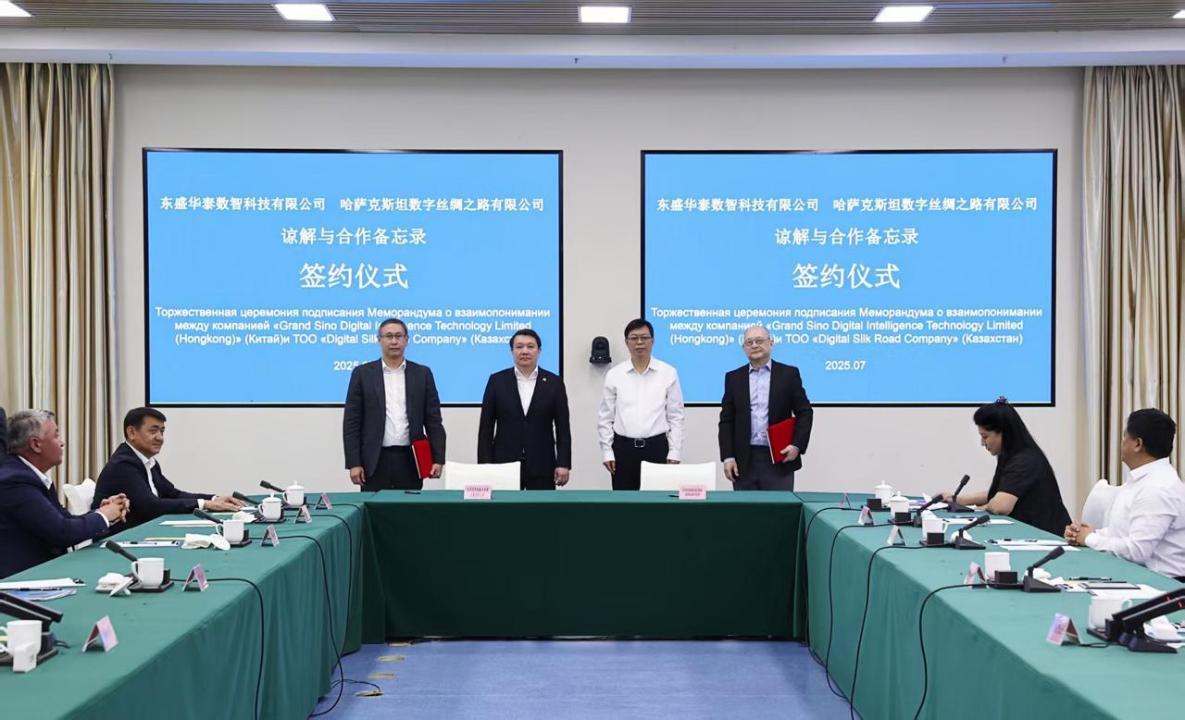
Kazakhstan and China are launching an innovative pilot project "Smart Customs" on the Kazakh-Chinese border. As part of the initiative, it is planned to launch unmanned cargo transportation through the border checkpoints "Bakhty" (RK) — "Pokitu" (PRC).The draft was agreed upon during a working meeting between Chairman of the State Revenue Committee of the Ministry of Finance of the Republic of Kazakhstan Zhandos Duisembiev and Secretary of the Tacheng City Party Committee Mr. Zhi Xianwei.Key features of the project: The use of unmanned vehicles (AGVs) to automatically cross borders without driver involvement; launch of a single electronic declaration recognized by both countries; round-the-clock movement of goods with minimal manual intervention; full digital support and clearance of cargo transportation; implementation of automated navigation and control.Expected effect: increase in cargo traffic to 10 million tons per year; significant reduction of time for customs clearance; reduced transportation costs; increasing the transparency and security of logistics operations; unloading of automotive infrastructure and development of logistics hubs; stimulating the export of agricultural products, including grain, oilseeds, meat and processed goods.Economic importance: The initiative will serve as a driver for modernizing the border infrastructure, creating new jobs and attracting investment. The implementation of the project will strengthen trade and economic cooperation with China and strengthen Kazakhstan's position as a key transit hub in Central Asia.During the visit, a bilateral memorandum of cooperation was signed aimed at joint project implementation, coordination of actions and exchange of experience in the field of digitalization of customs and logistics procedures.Source : https://www.gov.kz/memleket/entities/kgd-pavlodar/press/news/details/1039539?lang=kk
We discussed current customs issues 24.07.2025
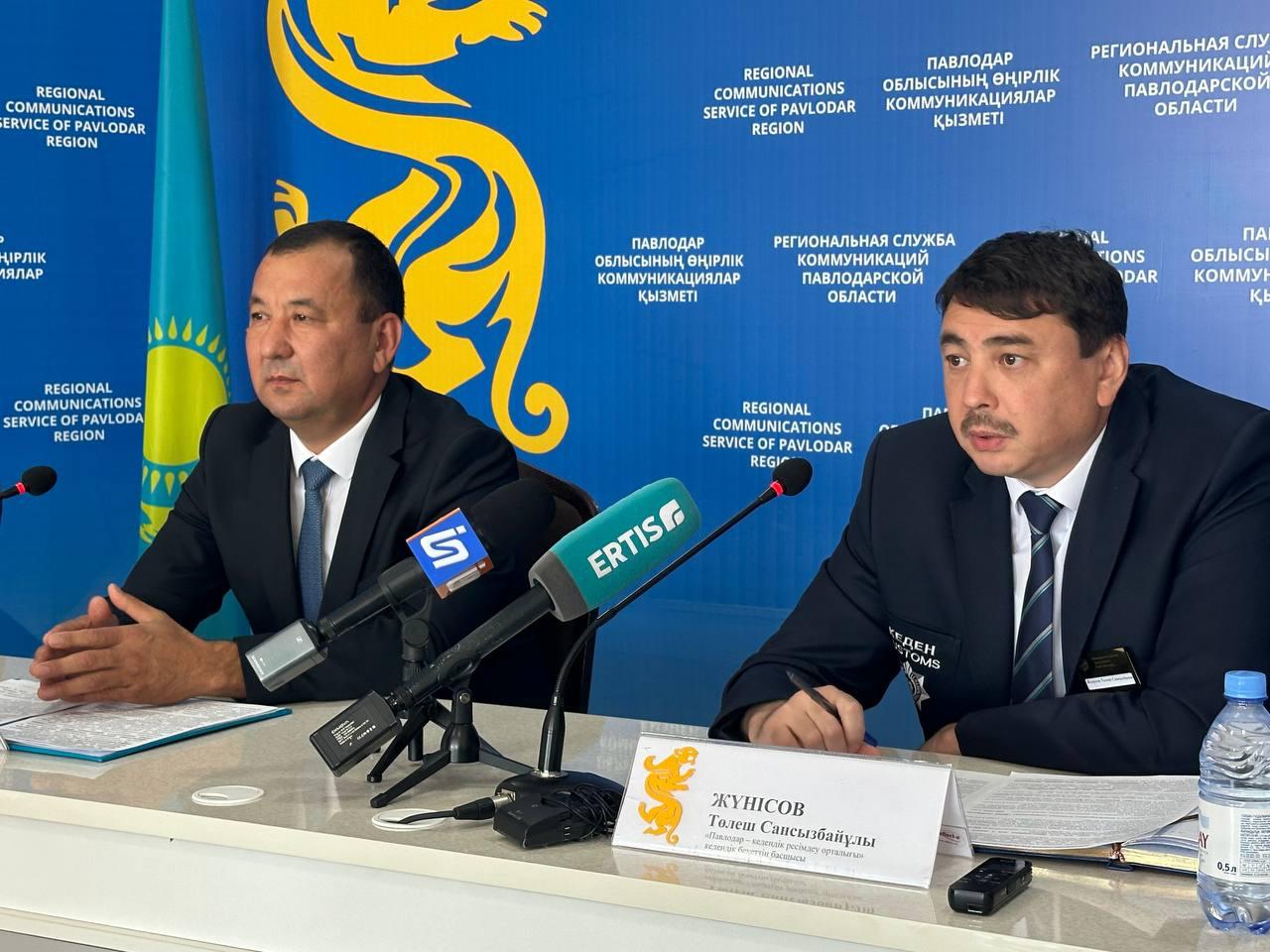
A briefing was held at the regional communications service with the participation of employees of the Department of State Revenue for the Pavlodar region, who are in charge of customs regulation issues. The main topic was the introduction of the new information system "Keden", which will gradually replace the existing platforms "Astana-1" and "E-window".– The modules for processing express cargo, transit declarations, passenger customs declaration and international mail are already working. Since the beginning of the year, more than 2,600 transit declarations have been processed in Keden. The system integrates with the information systems of other countries – Georgia, Azerbaijan and Uzbekistan, which makes it possible to detect price manipulation and falsification of documents," said Tlekes Tusetaev, Head of the Customs Administration Department.The cost, weight and quantitative norms of goods imported for personal use, the effect of the Presidential Decree "On measures to ensure financial stability of the Republic of Kazakhstan", prohibiting the export of foreign currency in cash exceeding the equivalent of 10,000 (ten thousand) US dollars, were announced in a speech by the head of the customs post "Pavlodar Customs Clearance Center" Tolesh Zhunusov. Detailed answers were given to all the journalists' questions.Department of Explanatory Work and Contact Center State Duma of the Pavlodar regionSource : https://www.gov.kz/memleket/entities/kgd-pavlodar/press/news/details/1039551?lang=kk

Третий Добровольный национальный обзор Казахстана по ЦУР представлен на площадке ООН 24.07.2025
Нью-Йорк, США – В рамках Политического форума высокого уровня по устойчивому развитию под эгидой Экономического и Социального совета ООН состоялась презентация третьего Добровольного национального обзора Республики Казахстан. Доклад представил глава делегации – Вице-министр национальной экономики Асан Дарбаев. Документ получил положительную оценку со стороны партнеров. Отмечены его аналитическая полнота, открытый и инклюзивный характер подготовки, а также стремление Казахстана выстраивать устойчивую политику развития на основе прозрачности и участия широкого круга заинтересованных сторон.Добровольный национальный обзор – это формат, в рамках которого государства добровольно отчитываются о прогрессе в достижении Целей устойчивого развития (ЦУР). Казахстан представил уже третий по счёту обзор, отражающий национальные усилия по реализации Повестки 2030 с момента начала её внедрения.Особенностью национального обзорв стало внимание к локализации ЦУР – переносу глобальных задач на уровень регионов и сообществ. Консультации с участием гражданского общества, депутатского корпуса, экспертов, молодёжи, представителей бизнеса и научной среды позволили определить приоритетные цели и сформировать предложения, учитывающие мнение населения.Ключевым элементом обзора стал раздел «Поколение ЦУР», в котором отражены взгляды и инициативы казахстанской молодежи в области устойчивого развития. Этот блок был подготовлен в партнёрстве с неправительственными организациями и активистами.Анализ охватывает все 17 Целей устойчивого развития, при этом углубленное внимание уделено восьми из них. Пять приоритетных целей определены по рекомендациям ООН, ещё три – с учетом результатов общественных опросов.С момента предыдущего обзора Казахстан предпринял ряд шагов по институциональному закреплению ЦУР. Ведущие стратегические документы – Национальный план развития до 2029 года и Стратегия углеродной нейтральности до 2060 года – структурированы с учётом Повестки 2030. Приняты новые законодательные инициативы, включая Социальный и Водный кодексы и др.В 2023 году в стране была создана Парламентская комиссия по мониторингу реализации ЦУР, которая рассматривает ключевые вопросы и вырабатывает рекомендации для госорганов.Представленный на международной площадке третий Добровольный национальный обзор демонстрирует приверженность Казахстана принципам устойчивого развития, а также усилия по выстраиванию системного, инклюзивного и партнёрского подхода к достижению национальных и глобальных целей.Source : https://www.gov.kz/memleket/entities/economy/press/news/details/1039490?lang=kk
Kazakhstan and UNESCO Discuss Collaboration on AI Ethics 24.07.2025
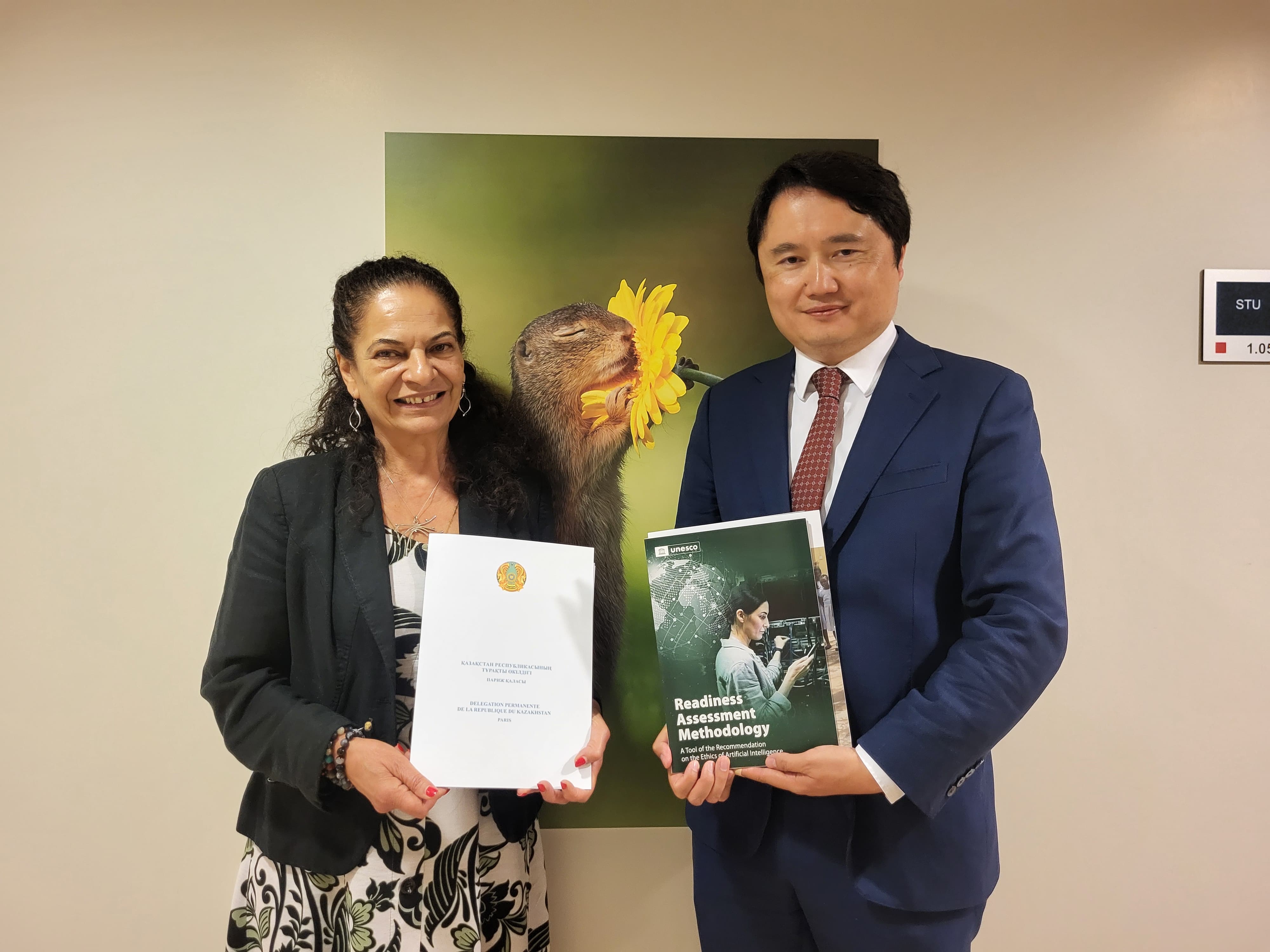
Paris, 22 July 2025 – The Permanent Delegate of Kazakhstan to UNESCO, Askar Abdrakhmanov, held a meeting with UNESCO Assistant Director-General for Natural Sciences, Lidia Arthur Brito, to discuss collaboration in the field of ethical assessment of artificial intelligence technologies.At the outset of the meeting, the Kazakh diplomat expressed gratitude for Dr Brito's support in the recent signing by UNESCO Director-General Audrey Azoulay of the agreement to extend the mandate of the Central Asian Regional Glaciological Centre as a Category 2 institute under the auspices of UNESCO. He confirmed the interest of the Ministry of Science and Higher Education of the Republic of Kazakhstan in promptly ratifying the agreement and reaffirmed the country's commitment to supporting the research activities of the centre, which has significant practical relevance.Mr. Abdrakhmanov also briefed Dr Brito on Kazakhstan’s active efforts in recent years to promote the responsible use of AI and highlighted the special attention given to this topic by President Kassym-Jomart Tokayev.In response, Dr Brito emphasized UNESCO’s central role within the UN system in promoting ethical use of AI technologies and underlined the significance of the 2021 UNESCO Recommendation on the Ethics of Artificial Intelligence — the first and, to date, only global mulitilateral standard-setting instrument in this field.In this context, the two sides discussed the practical implications of this document for Kazakhstan and the prospects for conducting a national study in line with UNESCO’s Readiness Assessment Methodology instrument for the ethical use of AI.At the conclusion of the meeting, both parties agreed to continue maintaining regular contact and to further strengthen cooperation in this important area.Source : https://www.gov.kz/memleket/entities/mfa-unesco/press/news/details/1039460?lang=kk

"One nation. One destiny. One future." 24.07.2025
Within the framework of the project "One people. One destiny. One future." The Department of Social Development is working to form and strengthen the constructive values of a just state among residents of Kostanay region — to live in unity and according to the law, patriotic education, respect for the state symbols of the Republic of Kazakhstan, the desire to speak the state language, preserve the interest and respect of citizens for national traditions and customs.Within the framework of the project, ideological and educational meetings were held in the border areas of Kostanay region: Zhitikarinsky district (Prigorodnoye village), Denisovsky district (Zhaltyrkol village) and Beimbet Mailin district (Novovilinovka village).During the meetings, a flash mob was organized for villagers in honor of the State Symbols of the Republic of Kazakhstan, information and educational brochures and state flags were distributed, and the National Anthem of the Republic of Kazakhstan was played.Such speakers as Natalia Sergeevna Ramazanova, head of Kogamdyk Kelisim State University, and Aibek Batyrkhanovich Shalgymbekov, Professor of the Kostanay Regional University named after Akhmet Baitursynov, Candidate of Historical Sciences, delivered lectures on the topic "Honest Citizen".In addition, a quiz on knowledge of the state language and traditions was held among the villagers, and active participants received prizes. Theatrical performances of Kazakh rituals were presented: "Sansu" (farewell song of the bride), "Syrga salu" (betrothal) and "Besikke salu" (the first laying of the baby in the cradle).The event featured folk songs and national melodies performed by: Manapbek Kadyrov, holder of the Order of "Kurmet", Honored Cultural Worker, traditional singer, Ybyrai Eszhanov, dombrist, head of the folklore ensemble "Akzhelen", Altynai Rustemkyzy Tolegen, performer on the zhetigen and other artists.At the end of the evening, Kazakhstani films were shown.: "The road to mother", "Hiuaz Dospanova", "Rakhymzhan Koshkarbayev".The project also plans trips in August and September to Karabalyk, Fedorovsky, Mendykarinsky and Uzunkol districts.Source : https://www.gov.kz/memleket/entities/kostanai-ishki-sayasat/press/news/details/1039471?lang=kk
Consultative event 24.07.2025
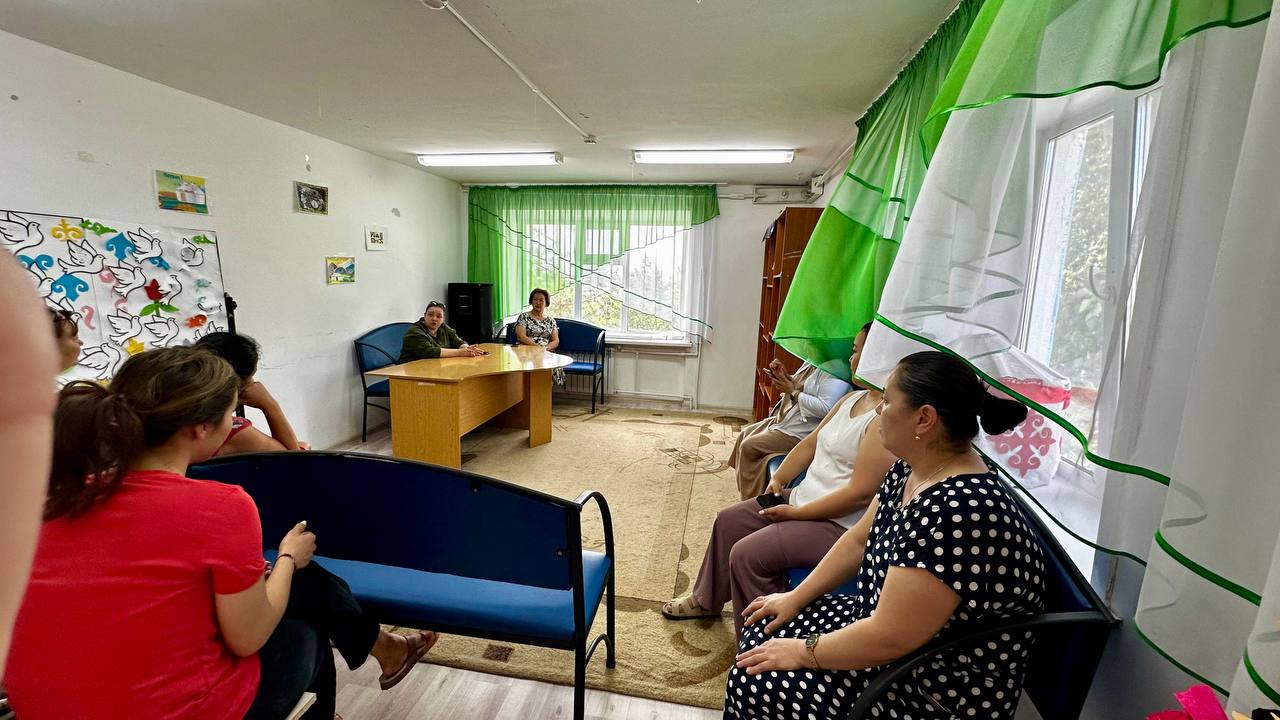
As part of the execution of the "Law and Order" narrative, on July 23, 2025, the Department of Regulation and Control over the activities of bailiffs of the Kostanay Region Department of Justice, together with local executive authorities, organized a consultative event for persons staying at the KSU "Family Adaptation and Support Center".The purpose of the event is to provide legal assistance to people in difficult situations.During the meeting, citizens received clarifications on the issues of obtaining social and legal support provided for by law.Individual legal assistance was also provided in the execution of enforcement proceedings.Holding such events helps to expand citizens' access to legal information, increases the level of legal awareness and implements the principle of social justice, which is one of the key priorities in the activities of judicial authorities. Press ServiceDepartment of JusticeKostanay regionSource : https://www.gov.kz/memleket/entities/adilet-kst/press/news/details/1039475?lang=kk
Prospects for Cooperation in the Field of Military Education Discussed in Athens 24.07.2025
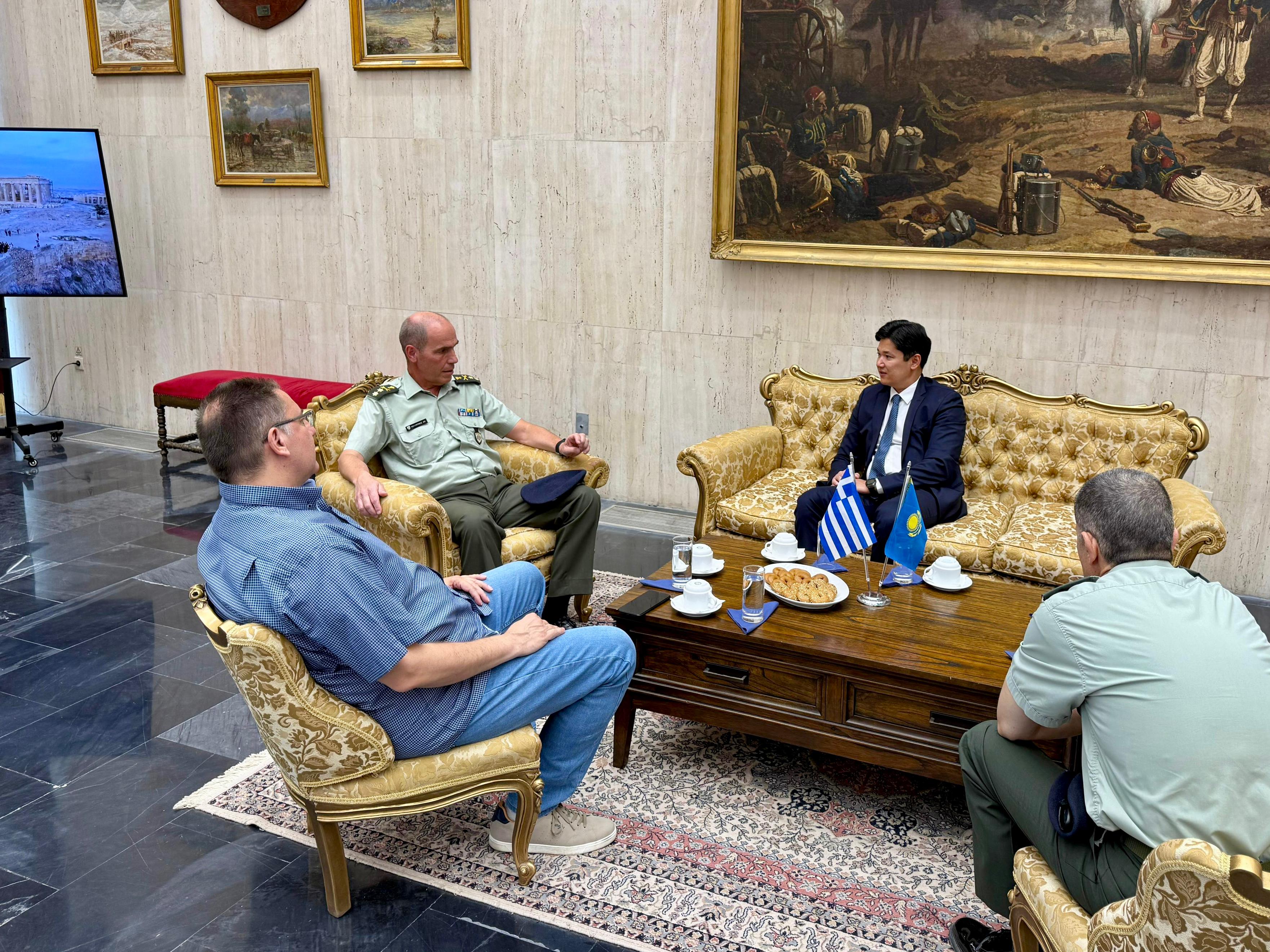
Athens, July 11, 2025 – The Ambassador of the Republic of Kazakhstan to the Hellenic Republic, Timur Sultangozhin, visited the Hellenic Army Academy, where he held a meeting with the Academy’s Commandant, Major General Anastasios Polychronos, as well as members of the academic staff.During the visit, the parties discussed prospects for bilateral cooperation in the field of military education and personnel training. Ambassador Sultangozhin emphasized that Kazakhstan attaches paramount importance to the training of highly qualified military specialists, which reflects the country’s strategic priorities aimed at modernizing the national armed forces and deepening international military cooperation.The Kazakh side presented information on the military education system in the Republic of Kazakhstan, including officer training programs, innovative teaching methods, and modern approaches to military training. Special attention was given to issues of academic exchange and joint programs, including the potential participation of cadets and instructors from both countries in educational and language courses, as well as the organization of joint seminars and scientific-practical events.As part of the visit, the Ambassador familiarized himself with the Academy’s infrastructure: specialized tactical training grounds, educational laboratories, modern classrooms, and lecture halls equipped with advanced technologies for academic and practical training.The parties expressed mutual interest in establishing direct links between military educational institutions of Kazakhstan and Greece, which will open new opportunities for experience sharing and strengthen the educational component of bilateral cooperation in the defense sphere.Background: The Hellenic Army Academy, founded in 1828, is the oldest and one of the most prestigious higher education institutions in the country, responsible for training officers for the Hellenic Armed Forces’ Land Forces. Embassy of the Republic of Kazakhstan in the Hellenic RepublicSource : https://www.gov.kz/memleket/entities/mfa-athens/press/news/details/1039449?lang=kk
Kazakh Ambassador discusses environmental cooperation with Hungarian side 24.07.2025
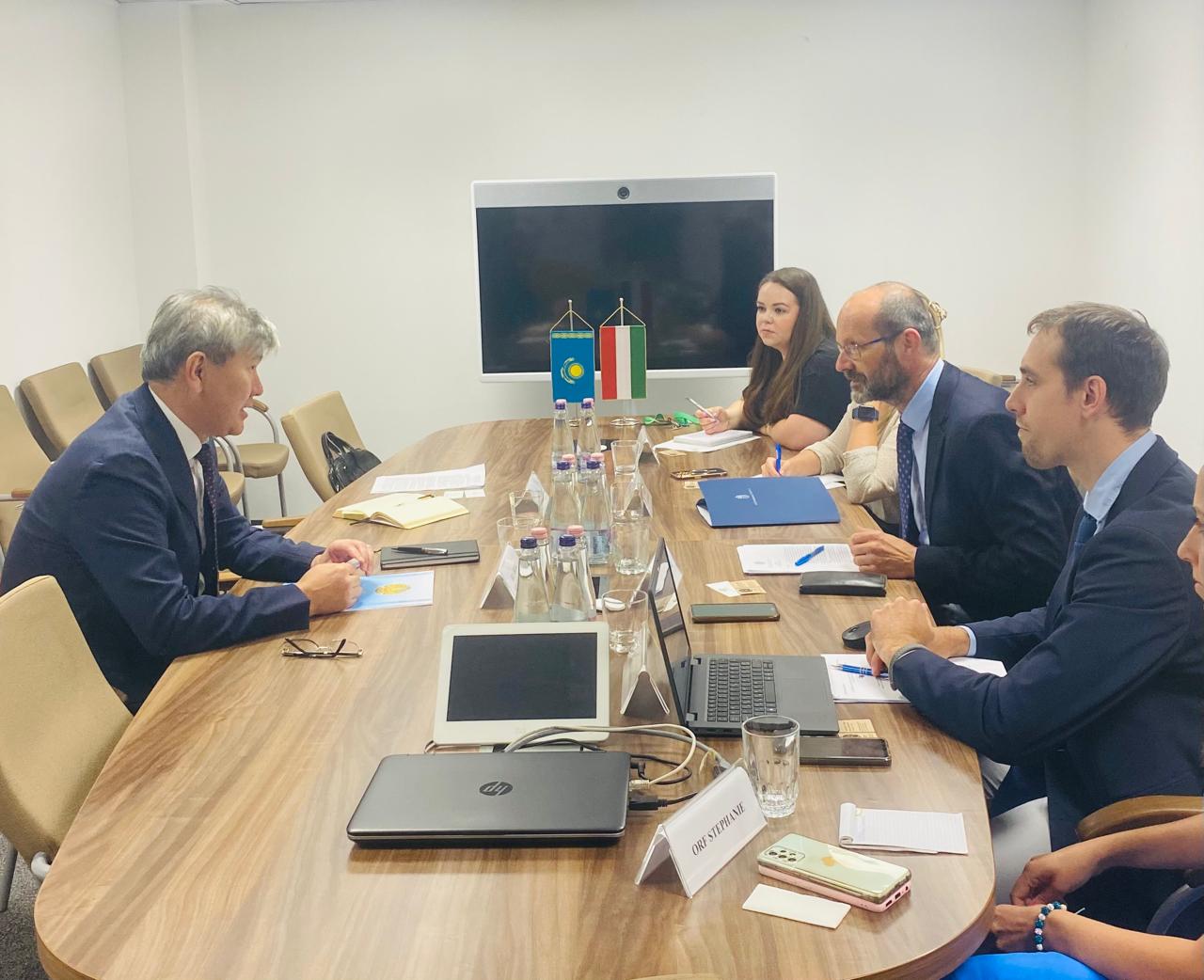
Budapest, July 22, 2025 – The Ambassador of Kazakhstan to Hungary, H.E. Mr. Abzal Saparbekuly, met with Mr. Levente Kőrösi, Director of the Department of Biodiversity and Gene Conservation of the Ministry of Agriculture of Hungary.During the meeting, the parties discussed prospects for bilateral cooperation in the fields of environmental protection, sustainable agriculture, and biodiversity conservation. Special attention was paid to the preservation of the saiga antelope population and the establishment of cooperation between relevant institutions of both countries.In this regard, Mr. Saparbekuly informed the Hungarian side about Kazakhstan’s efforts to protect and restore the saiga population and expressed hope for Hungary’s support in international initiatives in this area. The Ambassador also highlighted the fruitful cooperation with the Hungarian side in June 2025 regarding the relocation of Przewalski’s horses (Equus przewalskii Poljakov) from the Hortobágy Reserve in Hungary to Kazakhstan.Reference: The largest population of these wild horses in the world (265 individuals) is registered in Hungary. The project to reintroduce wild horses to Kazakhstan was launched in 2024 on the initiative of the Committee for Forestry and Wildlife of the Ministry of Ecology and Natural Resources of Kazakhstan, in cooperation with the Prague Zoo, the Association for the Conservation of Biodiversity of Kazakhstan, the Frankfurt Zoological Society, the zoos of Nuremberg and Berlin, and Hungary’s Hortobágy National Park. In turn, Mr. Levente Kőrösi confirmed Hungary’s interest in strengthening cooperation with Kazakhstan within multilateral environmental platforms and expressed readiness for practical collaboration.The meeting took place in a constructive atmosphere and underlined the mutual interest in expanding Kazakh-Hungarian cooperation in nature conservation and sustainable development.Source : https://www.gov.kz/memleket/entities/mfa-budapest/press/news/details/1039451?lang=kk

Digital Transformation of Livestock Farming in Kazakhstan: Prime Minister Instructs to Ensure End-to-End Product Traceability 24.07.2025
On July 8, 2024, a Government meeting chaired by Prime Minister Olzhas Bektenov was held, at which the key issue was the digitalization of livestock farming and strengthening of veterinary control. This initiative is aimed at creating a transparent and effective system for tracking all livestock products - from the birth of an animal to its processing and sale. The Minister of Agriculture Aidarbek Saparov and the Minister of Digital Development, Innovation and Aerospace Industry Zhaslan Madiyev delivered reports. The ministers reported on the progress of implementing digital solutions that should radically change the entire chain of livestock production management. Central to these initiatives is the end-to-end traceability system - a tool that allows tracking the path of products from the moment an animal is born to its processing, transportation and reaching store shelves. The Prime Minister noted that veterinary safety directly affects the country's export potential. Without proper control and transparency, Kazakhstan will not be able to compete in international markets. Therefore, the task has been set to ensure full vaccination coverage of all farm animals, including livestock in private farms. At the same time, each region must be provided with high-quality, affordable veterinary drugs. The emphasis is also on the need to develop domestic production of vaccines and related veterinary products. The farm animal database must be verified by November 1, 2024, to eliminate discrepancies, duplicates and outdated records. And by the end of this year, three ministries - agriculture, digital development and the aeronautical industry - must complete the full digitalization of processes related to the movement of animals and products. In addition, all existing databases will be combined into a single digital platform integrated with the results of the National Agricultural Census. The end-to-end traceability system should not just be a digital tool, but a full-fledged ecosystem that includes registration of the birth of an animal, its vaccination, movement, slaughter, processing and sale of products. This is important for the state, farmers and consumers. The state receives reliable information to manage the industry and prevent disease outbreaks. Farmers — simplified access to subsidies, the ability to confirm the origin of products. Consumers — confidence in the safety and quality of products. Attempts to digitalize the industry have been made before. For example, in 2018, the VetIS system was launched, within which animal registration and product accounting began. However, it was implemented only in pilot regions and faced a number of problems: a shortage of personnel, poor technical equipment, and a lack of coordination between departments. In 2021, online registration of animals and their movements was proposed, but again everything was limited to individual regions, and the systems' data were not integrated with each other. This time, the situation is different. First, there are clear deadlines and objectives. Second, several ministries are involved, which increases the chances of comprehensive implementation. Third, digitalization is part of a broader sustainable rural development strategy for 2023–2027. This demonstrates the political will to change and the willingness to invest in long-term reforms. If all stages are completed on time, Kazakhstan will become one of the first countries in the region with a fully digitalized livestock control system. This will open up new opportunities in foreign markets, strengthen confidence in products in the domestic market, and also increase the level of veterinary safety in the country. Thus, the meeting on July 9, 2024 was not just a discussion of sectoral reform, but a turning point in the development of the agro-industrial complex of Kazakhstan. Unlike previous initiatives, this time there is a systematic approach, a clear distribution of responsibility and an understanding of the ultimate goal - sustainable, transparent and competitive livestock farming.
Digital Transformation of Livestock Farming in Kazakhstan: Prime Minister Instructs to Ensure End-to-End Product Traceability 24.07.2025
On July 8, 2024, a Government meeting chaired by Prime Minister Olzhas Bektenov was held, at which the key issue was the digitalization of livestock farming and strengthening of veterinary control. This initiative is aimed at creating a transparent and effective system for tracking all livestock products - from the birth of an animal to its processing and sale. The Minister of Agriculture Aidarbek Saparov and the Minister of Digital Development, Innovation and Aerospace Industry Zhaslan Madiyev delivered reports. The ministers reported on the progress of implementing digital solutions that should radically change the entire chain of livestock production management. Central to these initiatives is the end-to-end traceability system - a tool that allows tracking the path of products from the moment an animal is born to its processing, transportation and reaching store shelves. The Prime Minister noted that veterinary safety directly affects the country's export potential. Without proper control and transparency, Kazakhstan will not be able to compete in international markets. Therefore, the task has been set to ensure full vaccination coverage of all farm animals, including livestock in private farms. At the same time, each region must be provided with high-quality, affordable veterinary drugs. The emphasis is also on the need to develop domestic production of vaccines and related veterinary products. The farm animal database must be verified by November 1, 2024, to eliminate discrepancies, duplicates and outdated records. And by the end of this year, three ministries - agriculture, digital development and the aeronautical industry - must complete the full digitalization of processes related to the movement of animals and products. In addition, all existing databases will be combined into a single digital platform integrated with the results of the National Agricultural Census. The end-to-end traceability system should not just be a digital tool, but a full-fledged ecosystem that includes registration of the birth of an animal, its vaccination, movement, slaughter, processing and sale of products. This is important for the state, farmers and consumers. The state receives reliable information to manage the industry and prevent disease outbreaks. Farmers — simplified access to subsidies, the ability to confirm the origin of products. Consumers — confidence in the safety and quality of products. Attempts to digitalize the industry have been made before. For example, in 2018, the VetIS system was launched, within which animal registration and product accounting began. However, it was implemented only in pilot regions and faced a number of problems: a shortage of personnel, poor technical equipment, and a lack of coordination between departments. In 2021, online registration of animals and their movements was proposed, but again everything was limited to individual regions, and the systems' data were not integrated with each other. This time, the situation is different. First, there are clear deadlines and objectives. Second, several ministries are involved, which increases the chances of comprehensive implementation. Third, digitalization is part of a broader sustainable rural development strategy for 2023–2027. This demonstrates the political will to change and the willingness to invest in long-term reforms. If all stages are completed on time, Kazakhstan will become one of the first countries in the region with a fully digitalized livestock control system. This will open up new opportunities in foreign markets, strengthen confidence in products in the domestic market, and also increase the level of veterinary safety in the country. Thus, the meeting on July 9, 2024 was not just a discussion of sectoral reform, but a turning point in the development of the agro-industrial complex of Kazakhstan. Unlike previous initiatives, this time there is a systematic approach, a clear distribution of responsibility and an understanding of the ultimate goal - sustainable, transparent and competitive livestock farming.
Digital Transformation of Livestock Farming in Kazakhstan: Prime Minister Instructs to Ensure End-to-End Product Traceability 24.07.2025
On July 8, 2024, a Government meeting chaired by Prime Minister Olzhas Bektenov was held, at which the key issue was the digitalization of livestock farming and strengthening of veterinary control. This initiative is aimed at creating a transparent and effective system for tracking all livestock products - from the birth of an animal to its processing and sale. The Minister of Agriculture Aidarbek Saparov and the Minister of Digital Development, Innovation and Aerospace Industry Zhaslan Madiyev delivered reports. The ministers reported on the progress of implementing digital solutions that should radically change the entire chain of livestock production management. Central to these initiatives is the end-to-end traceability system - a tool that allows tracking the path of products from the moment an animal is born to its processing, transportation and reaching store shelves. The Prime Minister noted that veterinary safety directly affects the country's export potential. Without proper control and transparency, Kazakhstan will not be able to compete in international markets. Therefore, the task has been set to ensure full vaccination coverage of all farm animals, including livestock in private farms. At the same time, each region must be provided with high-quality, affordable veterinary drugs. The emphasis is also on the need to develop domestic production of vaccines and related veterinary products. The farm animal database must be verified by November 1, 2024, to eliminate discrepancies, duplicates and outdated records. And by the end of this year, three ministries - agriculture, digital development and the aeronautical industry - must complete the full digitalization of processes related to the movement of animals and products. In addition, all existing databases will be combined into a single digital platform integrated with the results of the National Agricultural Census. The end-to-end traceability system should not just be a digital tool, but a full-fledged ecosystem that includes registration of the birth of an animal, its vaccination, movement, slaughter, processing and sale of products. This is important for the state, farmers and consumers. The state receives reliable information to manage the industry and prevent disease outbreaks. Farmers — simplified access to subsidies, the ability to confirm the origin of products. Consumers — confidence in the safety and quality of products. Attempts to digitalize the industry have been made before. For example, in 2018, the VetIS system was launched, within which animal registration and product accounting began. However, it was implemented only in pilot regions and faced a number of problems: a shortage of personnel, poor technical equipment, and a lack of coordination between departments. In 2021, online registration of animals and their movements was proposed, but again everything was limited to individual regions, and the systems' data were not integrated with each other. This time, the situation is different. First, there are clear deadlines and objectives. Second, several ministries are involved, which increases the chances of comprehensive implementation. Third, digitalization is part of a broader sustainable rural development strategy for 2023–2027. This demonstrates the political will to change and the willingness to invest in long-term reforms. If all stages are completed on time, Kazakhstan will become one of the first countries in the region with a fully digitalized livestock control system. This will open up new opportunities in foreign markets, strengthen confidence in products in the domestic market, and also increase the level of veterinary safety in the country. Thus, the meeting on July 9, 2024 was not just a discussion of sectoral reform, but a turning point in the development of the agro-industrial complex of Kazakhstan. Unlike previous initiatives, this time there is a systematic approach, a clear distribution of responsibility and an understanding of the ultimate goal - sustainable, transparent and competitive livestock farming.
Digital Transformation of Livestock Farming in Kazakhstan: Prime Minister Instructs to Ensure End-to-End Product Traceability 24.07.2025
On July 8, 2024, a Government meeting chaired by Prime Minister Olzhas Bektenov was held, at which the key issue was the digitalization of livestock farming and strengthening of veterinary control. This initiative is aimed at creating a transparent and effective system for tracking all livestock products - from the birth of an animal to its processing and sale. The Minister of Agriculture Aidarbek Saparov and the Minister of Digital Development, Innovation and Aerospace Industry Zhaslan Madiyev delivered reports. The ministers reported on the progress of implementing digital solutions that should radically change the entire chain of livestock production management. Central to these initiatives is the end-to-end traceability system - a tool that allows tracking the path of products from the moment an animal is born to its processing, transportation and reaching store shelves. The Prime Minister noted that veterinary safety directly affects the country's export potential. Without proper control and transparency, Kazakhstan will not be able to compete in international markets. Therefore, the task has been set to ensure full vaccination coverage of all farm animals, including livestock in private farms. At the same time, each region must be provided with high-quality, affordable veterinary drugs. The emphasis is also on the need to develop domestic production of vaccines and related veterinary products. The farm animal database must be verified by November 1, 2024, to eliminate discrepancies, duplicates and outdated records. And by the end of this year, three ministries - agriculture, digital development and the aeronautical industry - must complete the full digitalization of processes related to the movement of animals and products. In addition, all existing databases will be combined into a single digital platform integrated with the results of the National Agricultural Census. The end-to-end traceability system should not just be a digital tool, but a full-fledged ecosystem that includes registration of the birth of an animal, its vaccination, movement, slaughter, processing and sale of products. This is important for the state, farmers and consumers. The state receives reliable information to manage the industry and prevent disease outbreaks. Farmers — simplified access to subsidies, the ability to confirm the origin of products. Consumers — confidence in the safety and quality of products. Attempts to digitalize the industry have been made before. For example, in 2018, the VetIS system was launched, within which animal registration and product accounting began. However, it was implemented only in pilot regions and faced a number of problems: a shortage of personnel, poor technical equipment, and a lack of coordination between departments. In 2021, online registration of animals and their movements was proposed, but again everything was limited to individual regions, and the systems' data were not integrated with each other. This time, the situation is different. First, there are clear deadlines and objectives. Second, several ministries are involved, which increases the chances of comprehensive implementation. Third, digitalization is part of a broader sustainable rural development strategy for 2023–2027. This demonstrates the political will to change and the willingness to invest in long-term reforms. If all stages are completed on time, Kazakhstan will become one of the first countries in the region with a fully digitalized livestock control system. This will open up new opportunities in foreign markets, strengthen confidence in products in the domestic market, and also increase the level of veterinary safety in the country. Thus, the meeting on July 9, 2024 was not just a discussion of sectoral reform, but a turning point in the development of the agro-industrial complex of Kazakhstan. Unlike previous initiatives, this time there is a systematic approach, a clear distribution of responsibility and an understanding of the ultimate goal - sustainable, transparent and competitive livestock farming.

Notice of Temporary Drinking Water Interruption 23.07.2025
Dear residents of the city!On July 25, 2025, from 09:00 to 22:00, drinking water supply will be temporarily suspended at the following addresses due to reconnection works on the water supply networks along Gogol Street (between Temirbayev and Maylin streets) as part of a major renovation project:Residential buildings:Temirbayev St.: 10, 12, 13aAl-Farabi Ave.: 139, 139a, 141, 141/1–141/7, 143, 143a, 145Perronnaya St.: 8, 10Social facilities:Perronnaya St., 7 — railway stationTemirbayev St., 13/1 — car washTolstoy St., 135A — “Transtelecom” JSCThe Kostanay-Su Municipal Enterprise apologizes for the inconvenience and kindly asks residents to store water in advance.Source : https://www.gov.kz/memleket/entities/kostanai-kalasy-akimat/press/news/details/1039392?lang=kk

The Tanym Center trained more than 4,000 employees of government agencies and organizations in the first half of 2025 23.07.2025
The Tanym Center trained more than 4,000 employees of government agencies and organizations in the first half of 2025The Tanym Corporate Training Center of the Government for Citizens State Corporation summed up the results of its work for the first half of 2025. From January to June, more than 4,000 employees of 30 government agencies and quasi-public sector organizations were trained at the center. Classes were held in an online format using the Qosyl meet platform.The training program was aimed at providing employees with a clear understanding of their responsibilities when dealing with citizens' complaints. Special attention was paid to how to ensure transparency and efficiency of processes so that every request from Kazakhstanis is considered comprehensively, and applicants receive high-quality, complete answers.For this purpose, the Tanym Center has attracted experts from the Prosecutor General's Office, the ICRIAP Public Services Committee, the Ministry of Justice, the Ministry of Culture and Information, as well as the State Corporation.During the classes, the speakers explained the legal basis for handling appeals, including the legal requirements for registration and accounting of applications, as well as the principles of administrative procedures. This knowledge helps specialists to build communication with citizens more competently and minimize bureaucratic barriers.A separate training block was devoted to the personal reception of citizens and business representatives. The audience got acquainted with the best practices of holding such meetings, ways to build an effective dialogue and resolve difficult situations. This is important because, in addition to working in the e-Online system, the format of direct communication with the public remains in demand, which requires special skills from employees.In addition, the participants studied methods for identifying hidden government services and using digital tools to increase their accessibility. This is especially important because the State Corporation provides a wide range of services that cover more than 50 information systems of various government agencies. Many of these services require well-coordinated cooperation between departments in order to provide citizens with fast and high-quality service. Practical exercises and analysis of typical mistakes helped the students to better understand how to build teamwork, minimize bureaucratic barriers and create conditions for the systematic provision of services at all stages.The Tanym Corporate Training Center will continue to work in this direction, focusing on the development of human resources and the introduction of modern approaches to training.Source : https://www.gov.kz/memleket/entities/kostanai-kamysty-klochkov/press/news/details/1039383?lang=kk

Tax memo for a novice individual entrepreneur (IE) 23.07.2025
Since the beginning of 2025, more than 5,600 individual entrepreneurs have been registered in the Pavlodar region. Registration - IP is subject to mandatory state registration – is carried out online through portals eGov.kz , e-license.kz , mobile application "e-Salyq Business", mobile applications of second-tier banks Kaspi.kz , Halyk. - When registering, it is necessary to choose a form of taxation (a special tax regime based on a simplified declaration, a special retail tax regime, a special tax regime using a special mobile application, a special tax regime based on a patent, a special tax regime using a fixed deduction).Main responsibilities of the sole proprietor:1. Conduct activities within the framework of generally established legislation.2. Timely submit tax reports and pay taxes and mandatory payments.3. Keep tax records (depending on the tax regime).Taxes and mandatory payments: Depending on the taxation regime, the sole proprietor is required to pay:- Individual Income tax (IIT), budget classification code (KBK 101202); - Social tax (SN), KBK 103101;- Mandatory pension contributions (OPV), KBK 901101; - Social contributions (CO), KBK 902101;- Contributions to compulsory health insurance (MHI), KBK 904101;- Mandatory employer Pension Contributions (OPVR), KBK 905101;- VAT – in case of exceeding a certain turnover or voluntary registration;- If there are employees, make deductions of personal income tax and social payments (OPV, VOSMS, OSMS, SO, OPVR).Tax period:- Patent – from 1 month to 1 calendar year;- Fixed deduction – calendar year;- Special mobile application – 1 month; - The standard mode is calendar year; - Simplified declaration – half a year.Reporting dates:- Patent – upon receipt of a patent;- Fixed deduction – quarterly (for the 1st quarter no later than May 15; for the 2nd quarter no later than August 15; for the 3rd quarter no later than November 15; for the 4th quarter no later than February 15), annually – no later than March 31 of the following year (for 2025 no later than 03/31/2026);- Special mobile application – reporting is not provided;- Simplified regime – once every six months (for the 1st half of the year – no later than August 15, for the 2nd half of the year – no later than February 15);- The generally established regime is quarterly (for the 1st quarter – no later than May 15;for the 2nd quarter – no later than August 15; for the 3rd quarter – no later than November 15; for the 4th quarter – no later than February 15), annually – no later than March 31 of the following year (for 2025 no later than 03/31/2026).Check the current deadlines on the website portal.kgd.gov.kz or through the Taxpayer's Office. Deadlines for payment of taxes and payments to the budget:- by patent – upon receipt of the patent;- quarterly taxes: for the 1st quarter – no later than May 25; for the 2nd quarter – no later than August 25; for the 3rd quarter – no later than November 25;for the 4th quarter – no later than February 25; - annual taxes – on April 10 of the following year (for 2025 no later than 04/10/2026);- in a special mobile application, the IPN is paid no later than the 25th of the following month (for January – no later than February 25, for February – no later than March 25, etc.);- in the simplified mode, the IPN and SN are paid no later than August 25 and no later than February 25;- OPV, VOSMS, OSMS, SO, OPVR – no later than the 25th of the following month (for January – no later than February 25, for February – no later than March 25, etc.).Electronic services:- Taxpayer's office (cabinet.salyk.kz , knp.kgd.gov.kz ) – access to a personal account (information about charges, debts), receive notifications, submit reports and applications, etc.;- eGov.kz – get an EDS, apply for a license, get a license, pay state duty, submit reports and applications, set off and refund taxes, payments, etc.; - e-salyq Azamat (mobile application) – receive notifications, pay taxes, receive certificates of absence of tax arrears, income, etc. Recommendations: - Carefully monitor the deadlines for filing reports and paying taxes; - Keep copies of all submitted reports and receipts; - Sign up for notifications in the taxpayer's office; - Visit the Taxpayer's Office weekly; - In case of technical failures, take screenshots and/or contact the support service of the State Revenue Committee.Department of Explanatory Work and Contact Center State Duma of the Pavlodar regionSource : https://www.gov.kz/memleket/entities/kgd-pavlodar/press/news/details/1039341?lang=kk
Kazakhstani delegation participated in key events of ASOSAI and ARABOSAI in Baku 23.07.2025
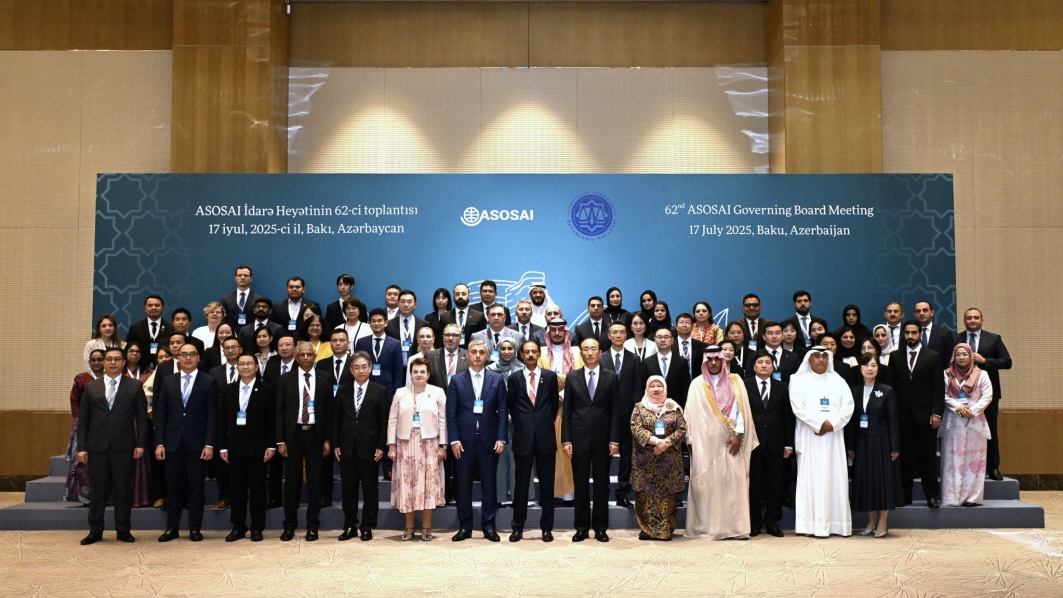
On July 17-18, 2025, Baku, Azerbaijan hosted the 62nd Governing Board meeting of the Asian Organization of Supreme Audit Institutions (ASOSAI) and the 1st joint meeting of ASOSAI-ARABOSAI. The event brought together representatives of supreme audit institutions (SAIs) from 21 countries, including Kazakhstan, Azerbaijan, China, India, the UAE, Pakistan, and other Asian and Middle Eastern states, as well as observers from international organizations.During the meeting, the minutes of previous sessions were approved, and reports on ASOSAI's activities were presented, including the financial statements for 2024 and the budget plan for 2026-2028. Discussions also focused on mechanisms for strengthening partnerships with other regional organizations.Presentations were delivered by ASOSAI Working Groups on Environmental auditing, Sustainable Development Goals (SDGs), Crisis management, IT auditing, and other relevant topics.Special attention was given to financial sustainability issues. Participants examined the impact of inflation and rising borrowing costs on state budgets and exchanged best practices for minimizing financial risks.Secretariat of ASOSAI officially announced that the 63rd Governing Board meeting of ASOSAI in 2026 will be held in Astana, the Republic of Kazakhstan."Hosting the next meeting in Kazakhstan will open new opportunities to strengthen our partnership and advance joint projects," emphasized Rustem Nurpeissov, Member of the Supreme Audit Chamber.Additionally, elections were held during the meeting for positions of ASOSAI representative to the INTOSAI Governing Board for 2025-2031 and INTOSAI External Auditor for 2026-2028. Following the vote, SAIs of the UAE and Pakistan were elected as ASOSAI representatives to the INTOSAI Governing Board, while SAI of the Republic of Korea was elected as INTOSAI External Auditor. Subscribe to the Telegram channelSource : https://www.gov.kz/memleket/entities/esep/press/news/details/1039241?lang=kk
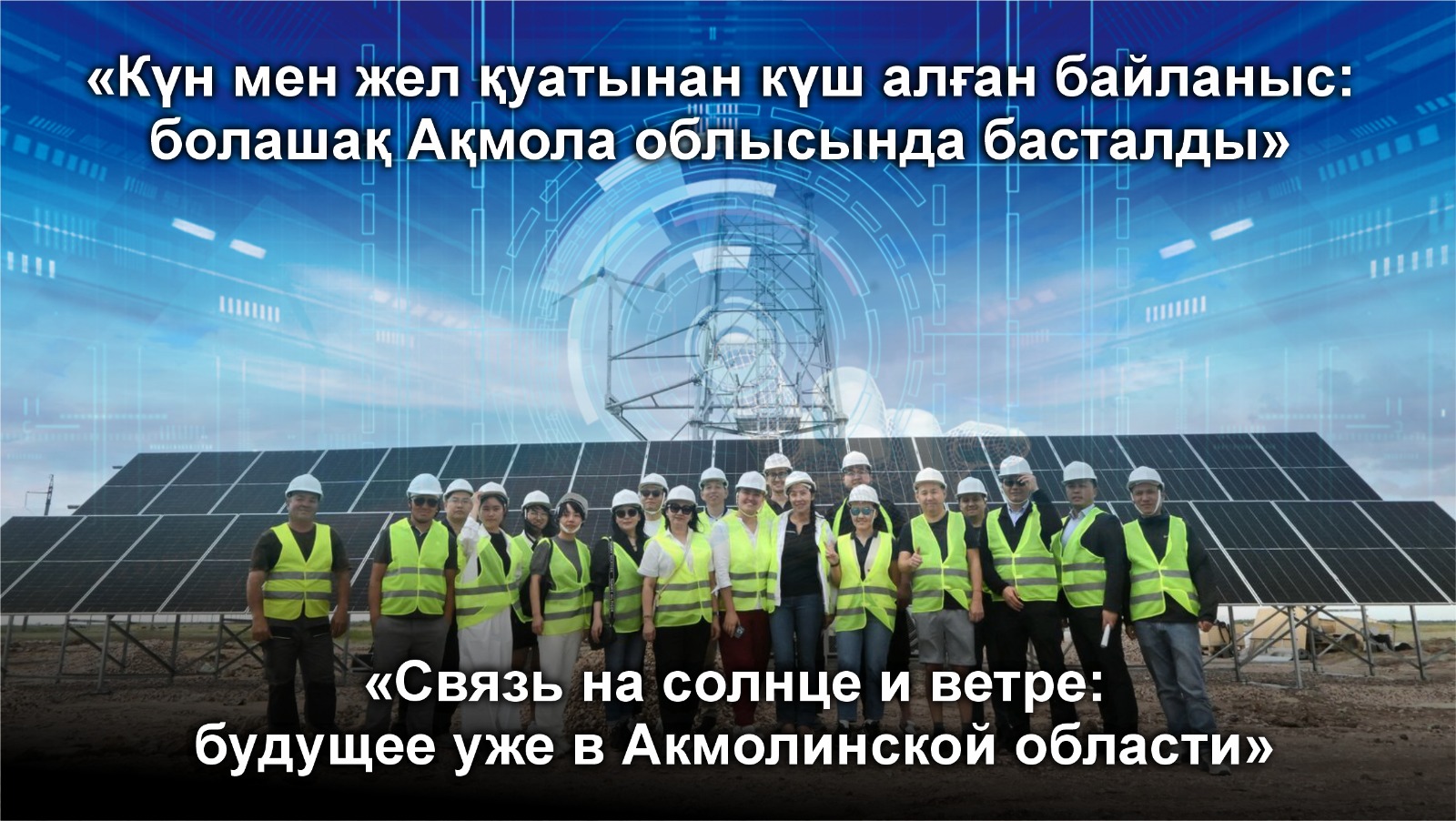
“Connection Through Sun and Wind: The Future Is Already in Akmola Region” 23.07.2025
On the A-1 national highway [Astana – Kokshetau], the region’s first base station powered entirely by renewable energy sources has been put into operation. This milestone opens new opportunities for the development of digital infrastructure along Kazakhstan’s highways.Digitalization on the Roads: A Step into the FutureThe project was implemented as part of a pilot initiative to expand connectivity along highways, with the support of the Akmola Region Department of Digitalization, the Akimat of Shortandy District, and the companies KaR-Tel LLP (Beeline trademark) and ZTE Corporation. The main goal is to ensure uninterrupted mobile communication in areas that lack access to centralized power supply.How Does It Work?The base station is equipped with solar panels and a wind generator, providing fully autonomous energy supply. This solution enables stable network coverage even in remote locations where connecting to the power grid is either impossible or economically unfeasible.Key Advantages of the New Solution• Autonomy – complete independence from centralized power supply.• Eco-friendliness – the use of “green” energy reduces the carbon footprint.• Cost-effectiveness – minimal energy-related expenses.• Reliability – stable network operation even during power outages.What’s Next?If the pilot project proves successful, similar stations will be deployed along highways not only in Akmola Region but across the entire country. Special attention will be given to hard-to-reach areas where mobile connectivity remains a challenge.Source : https://www.gov.kz/memleket/entities/aqmola-digital/press/news/details/1039151?lang=kk
.png)
THE MASTER WHO RELIEVES AN IRON HEART 23.07.2025
A car mechanic is not just a car repairman. He is a true professional who can hear the sound of metal and detect a malfunction in the sound of an engine. With his daily hard work, he ensures the safety of thousands of people on the road. A car is not just a means of transportation, it is a companion of a person, a time and labor saver. And making it reliable is in the hands of a car mechanic. Only a master who has mastered innovation and knows every detail can shoulder the burden of this profession. This year is a year when the status of working professions is increasing and appreciated. At such a time, it is our common duty to glorify the work of real hard workers like auto mechanics. Every success begins with a little bit of hard work. The owner of that work is a car mechanic. #WorkingProfessionsYear #ГодРабочихПофессий

Republican campaign "Road to School" 23.07.2025
С 1 августа по 30 сентября стартует Республиканская акция «Дорога в школу". Цель — оказать материальную поддержку школьникам из малообеспеченных и многодетных семей, детям-сиротам, а также детям, оставшимся без попечения родителей, во время подготовки к началу учебного года и предупредить неявку детей в школу по социальным причинам. В акции могут принять участие все неравнодушные граждане, включая волонтёров, предпринимателей, меценатов, неправительственные организации и других. Желающие оказать помощь детям в подготовке к школе могут обратиться в отдел образования или непосредственно в школу: 8/72149/41373Source : https://www.gov.kz/memleket/entities/edu-osakarovka/press/news/details/1039084?lang=kk