World
Focus on Service: National Guard Commander-in-Chief Assesses Service Conditions and Training of Young Guardsmen in Semey 27.10.2026
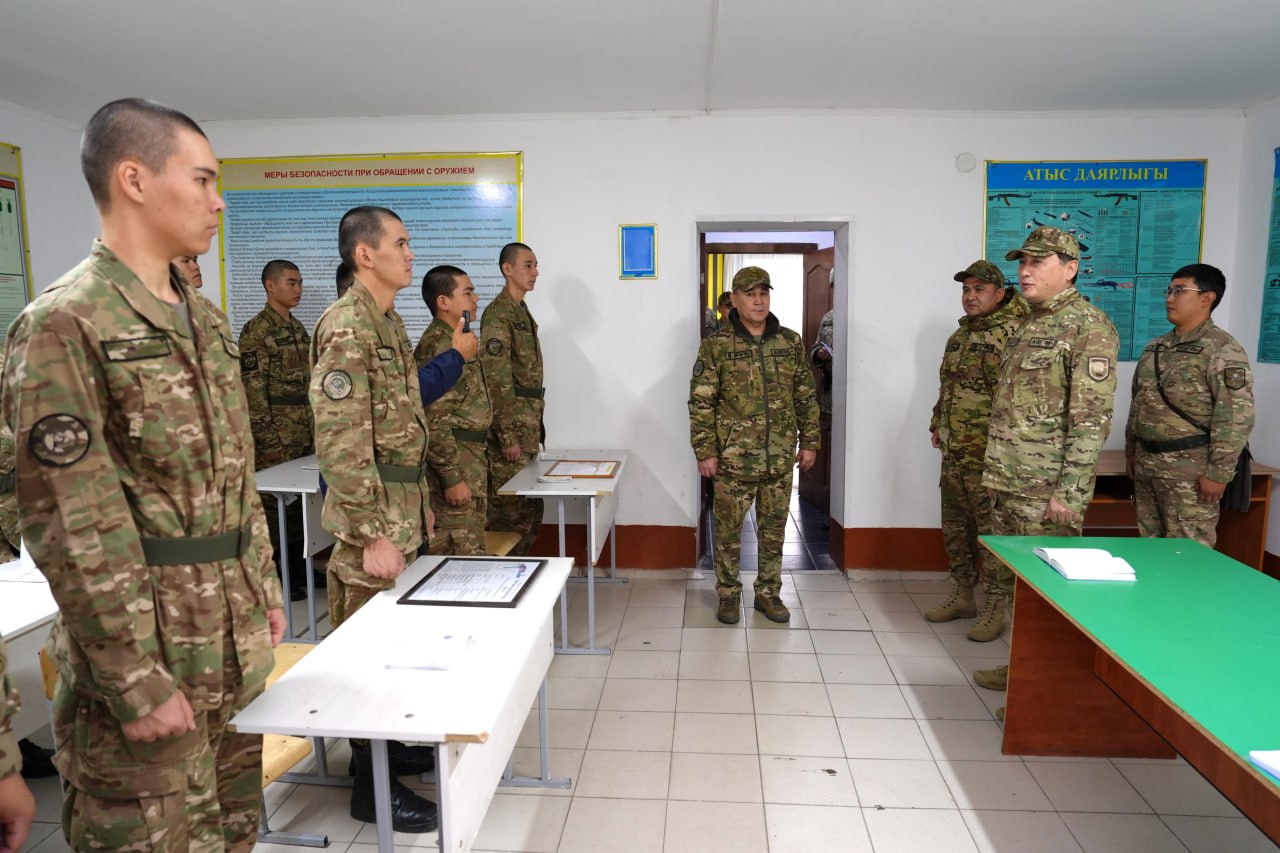
Deputy Minister of Internal Affairs – Commander-in-Chief of the National Guard of the Republic of Kazakhstan, Lieutenant General Ansagan Baltabekov, conducted an inspection of Military Unit 5511, stationed in the city of Semey.Servicemen of the unit carry out public security and public order duties in the city, as well as guard penal institutions.During the inspection, the Commander-in-Chief paid particular attention to the organization of service and combat activities, the personnel’s readiness to carry out assigned tasks, and cooperation with police officers. Coordinated work between units, a prompt response to emerging situations and the constant readiness of servicemen are essential to ensuring the safety of residents and visitors to the city.Another key part of the visit was an assessment of the training of young soldiers who had recently arrived at the unit for compulsory military service. Lieutenant General Ansagan Baltabekov visited the training center, where the Guardsmen are learning the fundamentals of military service, studying procedures for performing combat duty, weapon-handling rules and military discipline requirements.The Commander-in-Chief spoke with the young servicemen, asked about their training progress and adaptation to military life, and wished them success in mastering their military profession, perseverance in their studies and a responsible attitude toward their military duty.During the inspection, Ansagan Baltabekov also reviewed the accommodation conditions for personnel. He inspected the barracks, living facilities and classrooms, assessing the organization of servicemen’s daily lives and the conditions provided for training.In the dining facility, the Commander-in-Chief reviewed kitchen operations, food storage conditions and meal preparation. Particular attention was paid to compliance with sanitary requirements and the provision of nutritious, high-quality meals for personnel.Lieutenant General Baltabekov also visited the unit’s medical center. Among the command’s priorities, he highlighted protecting servicemen’s health, preventing illnesses and providing timely medical assistance. He emphasized the need to ensure that all personnel have access to quality medical care.Following the inspection, the Commander-in-Chief of the National Guard issued a number of instructions aimed at further improving living and service conditions, enhancing the quality of training for young Guardsmen and ensuring the safety of conscripts. Press Service of the National Guard of the Ministry of Internal Affairs of the Republic of KazakhstanSource : https://www.gov.kz/memleket/entities/kvv/press/news/details/1311972?lang=ru
Woman Canine Handler Begins Training Dogs at National Guard Kennel for the First Time 27.10.2026
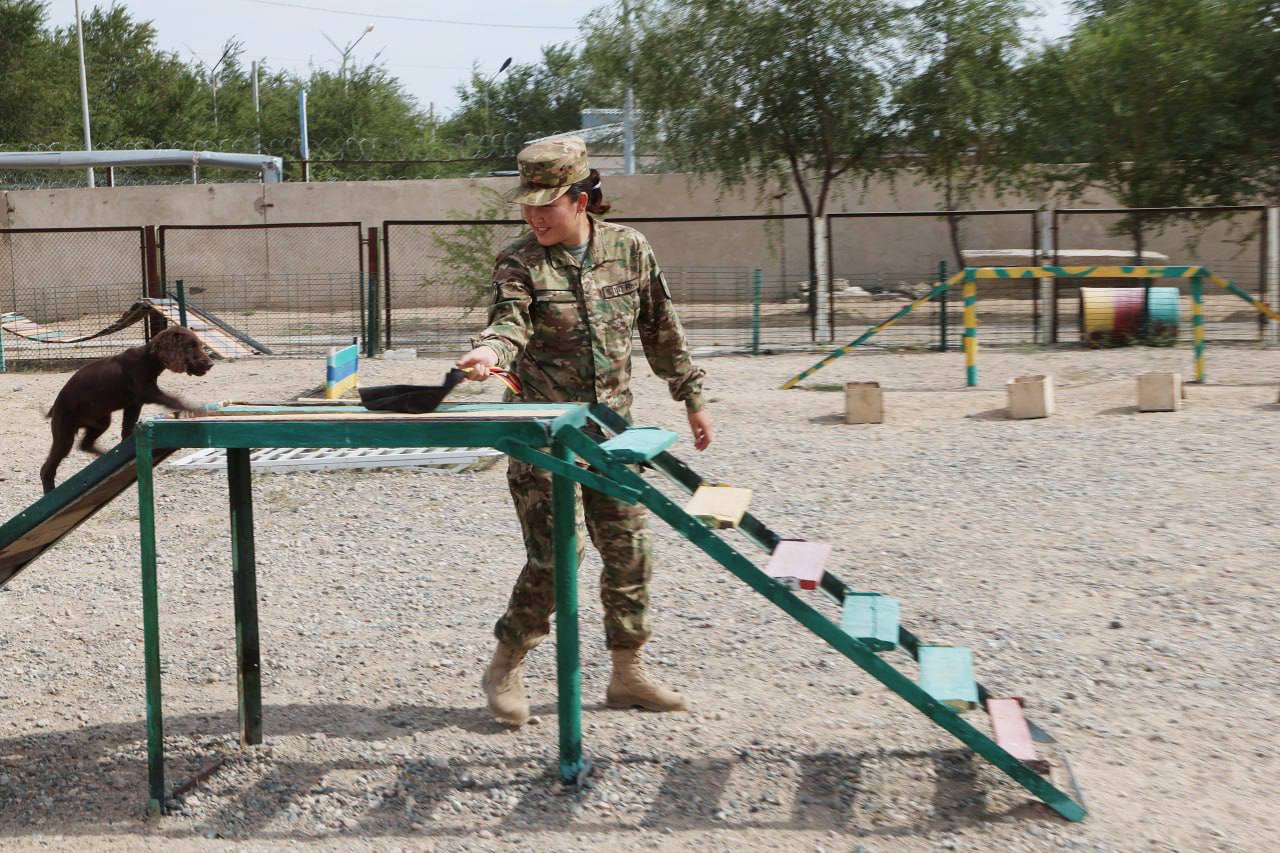
Private Aruzhan Zhunusova serves in Military Unit 6654 of the National Guard of the Ministry of Internal Affairs of the Republic of Kazakhstan and has become the first female canine handler in the agency. She is currently mastering her new specialty and training a Russian Hunting Spaniel to detect narcotic substances.This breed is being used by the National Guard for this task for the first time. As a result, Aruzhan is breaking new ground in two areas of canine service.Aruzhan’s love for animals began in childhood. She often brought stray dogs and kittens home, doing her best to care for them. Her compassion and desire to help those in need played a significant role in shaping her character.After graduating from school, Aruzhan completed her studies at a medical college in Almaty and worked for two years at a Social Adaptation Center for people facing difficult life circumstances.However, her dream of military service never faded. When she learned that women were being recruited as canine handlers, she decided to pursue this new profession.Today, her main partner is Charlie, a three-month-old spaniel. Every day, Aruzhan feeds him, checks his condition and trains him. According to her, spaniels are well suited to searching hard-to-reach areas thanks to their compact size and agility.For Aruzhan, this new profession is an opportunity to fulfill her long-standing dream of military service and devote herself to work she loves. Her appointment opens a new chapter in the history of the National Guard’s canine service. Press Service of the National Guard of the Ministry of Internal Affairs of the Republic of KazakhstanSource : https://www.gov.kz/memleket/entities/kvv/press/news/details/1311968?lang=ru
FOR INDIVIDUAL ENTREPRENEURS: IMPORTANT INFORMATION ABOUT FORM 493 27.10.2026
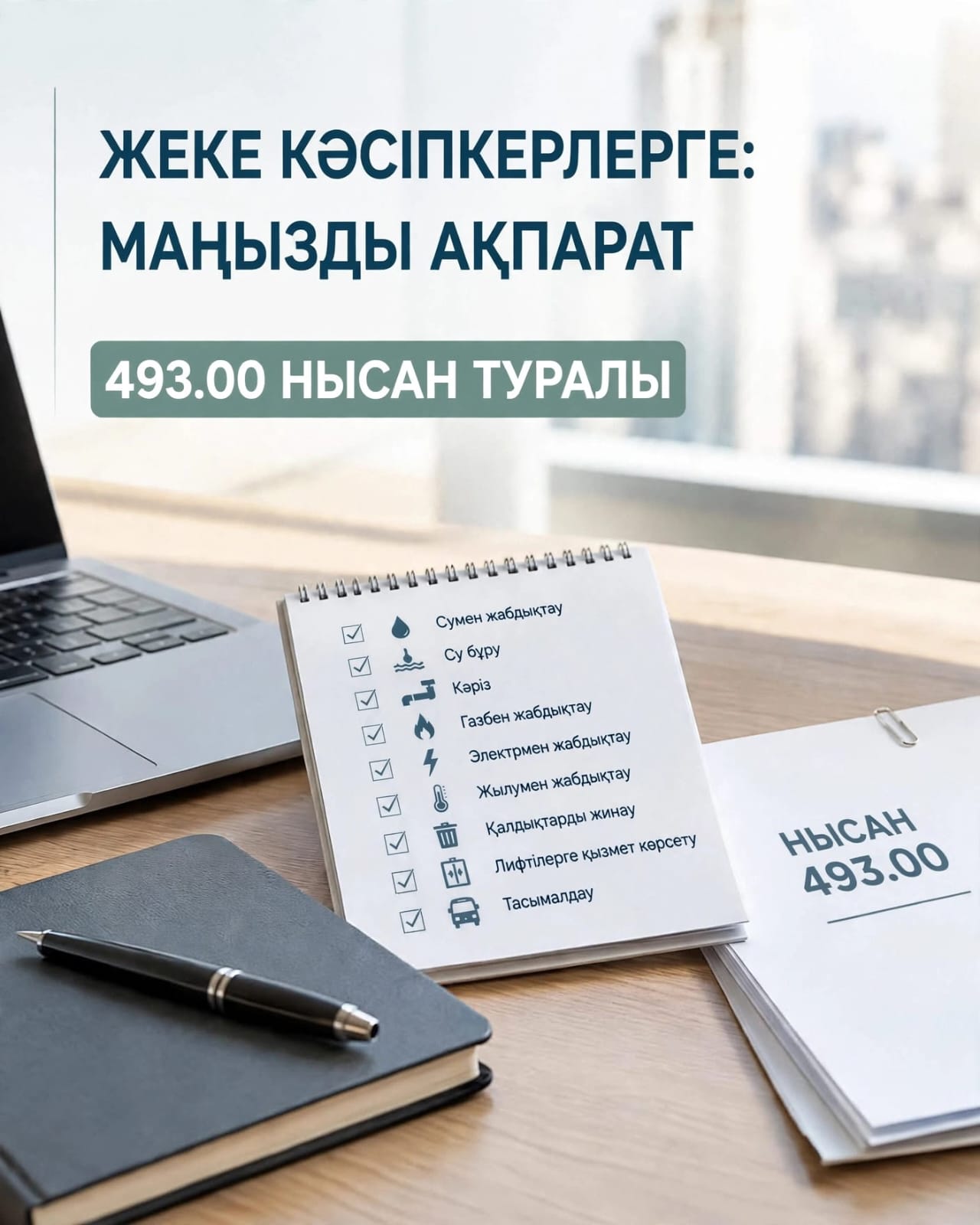
FOR INDIVIDUAL ENTREPRENEURS: IMPORTANT INFORMATION ABOUT FORM 493In accordance with paragraph 6 of Article 56 of the Tax Code of the Republic of Kazakhstan and the Rules for Submission of Information approved by Order of the Minister of Finance of the Republic of Kazakhstan No. 554 dated September 30, 2025, certain organizations are required to submit information to the state revenue authorities on services provided to third parties.Such services include water supply, wastewater disposal, sewage, gas and electricity supply, heat supply, waste collection, elevator maintenance and services in the field of transportation.Please note!Individual entrepreneus do not belong to the category of organizations to which this requirement applies.Thus, *individual entrepreneurs are not required to submit Form 493.*Please take this information into account when fulfilling tax obligations.Source : https://www.gov.kz/memleket/entities/kgd-sko/press/news/details/1311951?lang=ru
Happy Republic Day of Kazakhstan! 27.10.2026
Dear residents and guests of the Samarskoye rural district!We sincerely congratulate you on the main national holiday — Republic Day of Kazakhstan!This day symbolizes a historic turning point toward sovereignty, unity, and creation. Thanks to the wise policy and solidarity of our people, Kazakhstan is confidently moving along the path of sustainable development, strengthening stability, civic harmony, and economic prosperity.Today, each of us contributes to the progress of our common Homeland. May peace, prosperity, and confidence in the future reign in every home, and may our joint work for the benefit of our native land bring joy and inspiration.We wish you good health, family happiness, success in all your endeavors, and new achievements for the good of our country!Sincerely,Public Institution "Office of the Akim of Samarskoye Rural District"Source : https://www.gov.kz/memleket/entities/vko-samar-samar/press/news/details/1311930?lang=ru
Kazakhstan and Kenya intend to strengthen bilateral Trade, Economic and Investment cooperation 27.10.2026
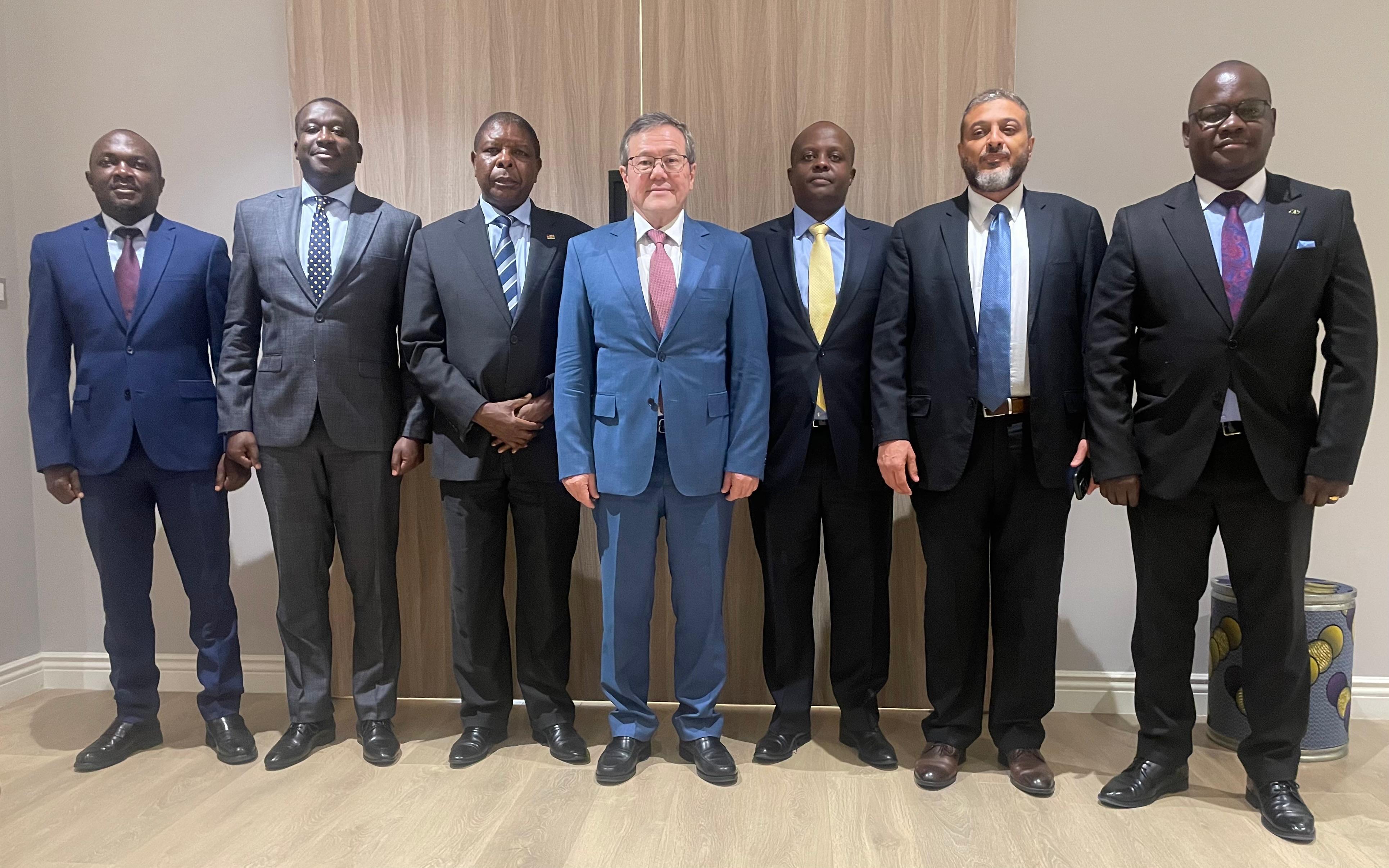
On 8 October 2026, H.E. Barlybay Sadykov, Ambassador Extraordinary and Plenipotentiary of the Republic of Kazakhstan to the Republic of Kenya and Permanent Representative of the Republic of Kazakhstan to the United Nations Office at Nairobi, held a meeting with representatives of Kenya’s government institutions, national companies and business community.The meeting was attended by Josphat Maikara, Director-General for Political and Diplomatic Affairs at the Ministry of Foreign and Diaspora Affairs of Kenya; Daniel Mainda, Chief Executive Officer of the Nairobi International Financial Centre; John Mwendwa, Chief Executive Officer of the Kenya Investment Authority; Martin Owuor, Director of the Legal Services at the Ministry of Foreign and Diaspora Affairs of Kenya; Temesi Mukani, Principal Secretary at the Ministry of Information and Communications of Kenya; and Mustafa Ramadhan, Vice President of the Kenya National Chamber of Commerce and Industry.The parties discussed prospects for further strengthening Kazakhstan–Kenya cooperation, with particular emphasis on the practical implementation of the agreements reached during the state visit of H.E. William Ruto, President of the Republic of Kenya, to Kazakhstan on 19–20 May 2026The importance of fostering business ties and establishing direct contacts between representatives of the business communities of Kazakhstan and Kenya was particularly emphasized, with a view to expanding trade, economic and investment cooperation.The meeting was held in a constructive and friendly atmosphere and reaffirmed the mutual interest in further developing the bilateral partnership.Source : https://www.gov.kz/memleket/entities/mfa-nairobi/press/news/details/1311916?lang=ru
Ambassador of Kazakhstan Visits the OSCE Documentation Centre in Prague 27.10.2026
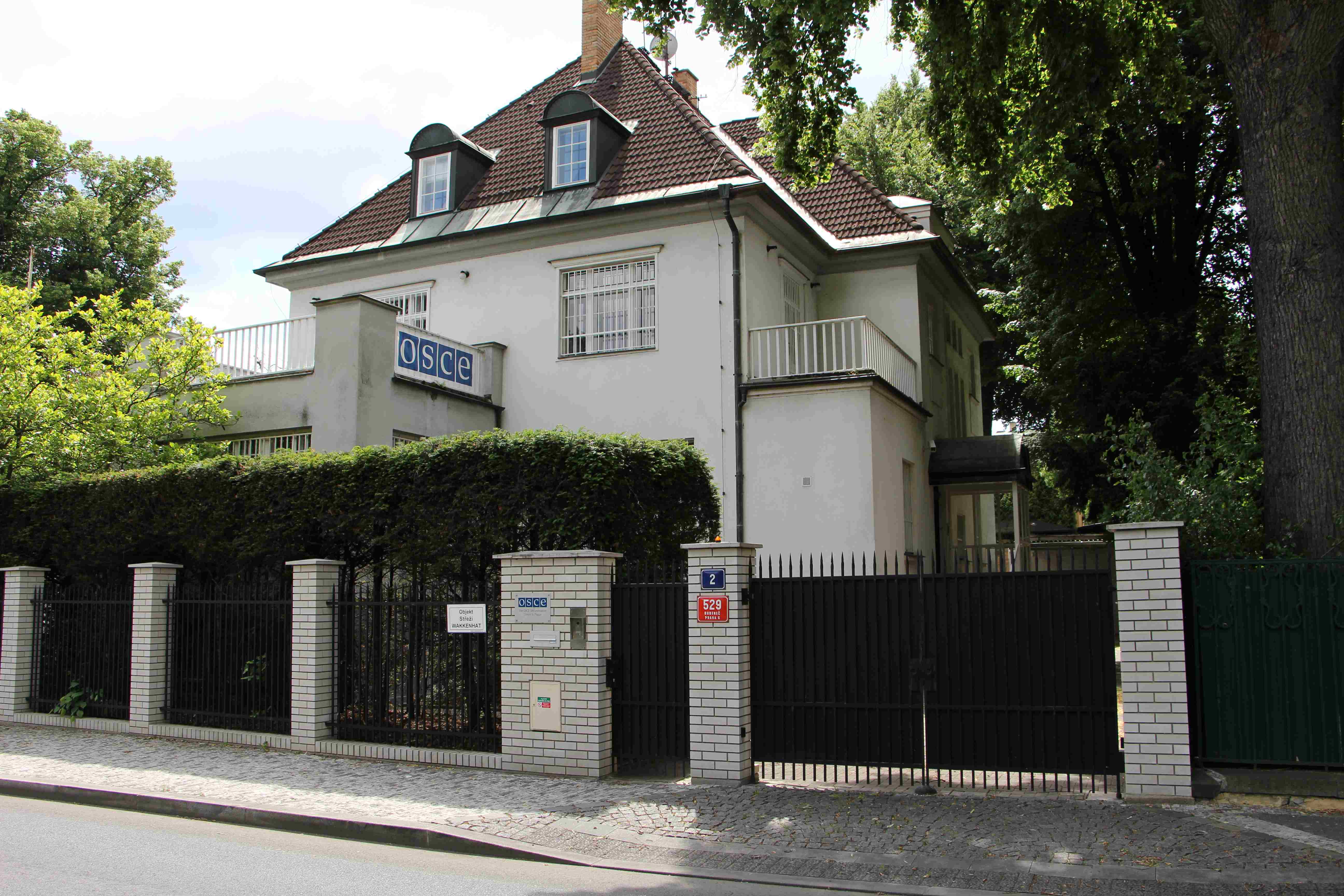
Prague, 15 October 2026 – Ambassador of the Republic of Kazakhstan to the Czech Republic Kairat Abdrakhmanov visited the OSCE Documentation Centre in Prague and met with its Head, Halka Kaiserova.The Documentation Centre serves as the principal repository of the historical archives of the Organization for Security and Co-operation in Europe (OSCE) and its predecessor, the Conference on Security and Co-operation in Europe (CSCE). It preserves, organizes and facilitates access to documents dating back to the 1970s. Its archival holdings include materials from international conferences, political documents and other records reflecting key stages in the establishment and development of the OSCE. In addition, with the support of the Czech Ministry of Foreign Affairs, the Centre facilitates the organization of OSCE events in Prague. Most recently, Prague successfully hosted the Organization’s annual Economic and Environmental Forum.During the visit, the Ambassador was briefed on the Centre’s activities and highly commended its practical contribution to preserving, organizing and providing access to the documentary heritage of the world’s largest regional security organization. The Centre plays a particularly important role in safeguarding the OSCE’s institutional memory, studying the history of multilateral diplomacy and promoting international cooperation. Its archival holdings are of considerable historical and scholarly value, offering deeper insights into the processes that have shaped the European and Eurasian security architecture.Both sides underscored the importance of preserving the OSCE’s archival heritage as a foundation for reflecting on the Organization’s historical experience, strengthening mutual understanding and further advancing dialogue on security and cooperation. The favourable conditions provided by the Centre for researchers from different countries were also positively noted. The parties highlighted the Centre’s considerable potential as a venue for informal consultations on current issues on the agendas of the OSCE Secretariat and its autonomous institutions.Particular attention was drawn to the fact that access to historical documents helps preserve continuity in diplomatic practice and pass accumulated knowledge on to future generations, underscoring the need to ensure adequate funding for the Centre’s activities.The documentary legacy of Kazakhstan’s 2010 OSCE Chairpersonship is of particular interest to researchers. That year was marked by a historic milestone: the OSCE Summit in Astana, the only summit held by the Organization so far this century, at which the leaders of participating States adopted the Astana Declaration.The cordial meeting also featured an engaging exchange of views on the development of multilateral diplomacy, confidence-building, the promotion of international dialogue and the role of the OSCE in these processes. The Ambassador wished the Documentation Centre’s staff continued success in their important work. Source : https://www.gov.kz/memleket/entities/mfa-prague/press/news/details/1311902?lang=ru
Kassym-Jomart Tokayev and Ilham Aliyev Participate in Launch of Trans-Caspian Fiber-Optic Line 27.10.2026
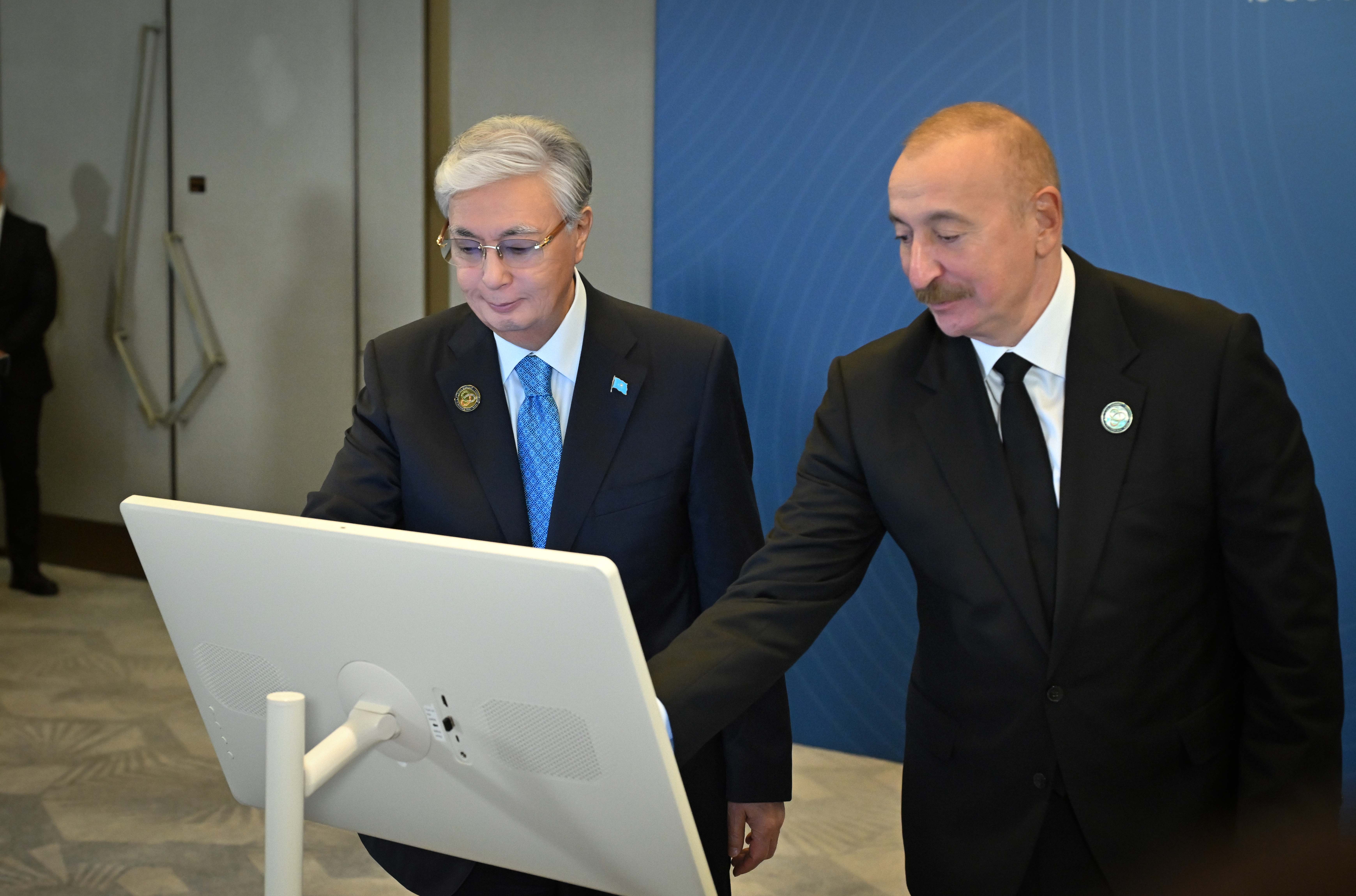
The Presidents officially launched a 380-kilometre fiber-optic communication line connecting Kazakhstan and Azerbaijan across the seabed of the Caspian Sea.The project was implemented jointly by Kazakhtelecom JSC and Azerbaijan’s AzerTelecom. The fiber-optic line will form part of a new communications route linking Kazakhstan, other Central Asian countries and China with Europe. It can also be connected to submarine cable systems in the Mediterranean and Black Seas.The project is of strategic importance for the development of Kazakhstan’s digital economy. In particular, the Trans-Caspian Fiber-Optic Line will provide our country with additional international connectivity and create the conditions necessary for attracting global technology companies and advancing cloud services and artificial intelligence infrastructure.At the launch ceremony of the large-scale project, President Kassym-Jomart Tokayev stated that the fiber-optic communication line would generate a powerful synergistic effect, reinforcing the joint efforts of Kazakhstan and Azerbaijan to develop the Middle Corridor.“We have launched a very important project that will have international significance. Most importantly, it represents a new type of corridor. This is not a transport corridor, but something entirely new that reflects the realities of the modern era – the era of digitalization. It is a fundamentally new format of cooperation, a kind of digital embodiment of the Middle Corridor,” the President of Kazakhstan emphasized.In turn, President of Azerbaijan Ilham Aliyev described the launch of the fiber-optic communication line as another step towards strengthening cooperation between Central Asia and Azerbaijan.“Last year, Azerbaijan was admitted as a full-fledged member of the Consultative Meetings of the Heads of State of Central Asia. This year, I participated as a full-fledged member of this format. This project represents another contribution to deepening cooperation, as the fiber-optic communication lines will be used by both Central Asian and South Caucasus countries, as well as countries across the wider region. Today, we have launched a global project,” the President of the Republic of Azerbaijan said.The opening ceremony also featured remarks by Deputy Prime Minister and Minister of Artificial Intelligence and Digital Development Zhaslan Madiyev, Azerbaijan’s Minister of Digital Development and Transport Rashad Nabiyev, and Chairman of the Management Board of Kazakhtelecom JSC Bagdat Mussin.In the presence of the heads of state, a ceremony was held to exchange the signed Agreement on Cooperation for the Development of the Trans-Caspian International Transport Route between the Government of the Republic of Kazakhstan and the Government of the Republic of Azerbaijan. Source : https://www.gov.kz/memleket/entities/mfa-ljubljana/press/news/details/1311894?lang=ru
Kazakhstan’s Approach to Cooperation with African Countries Presented at the Africa Commerce and Industry Summit 2026 in Nairobi 27.10.2026
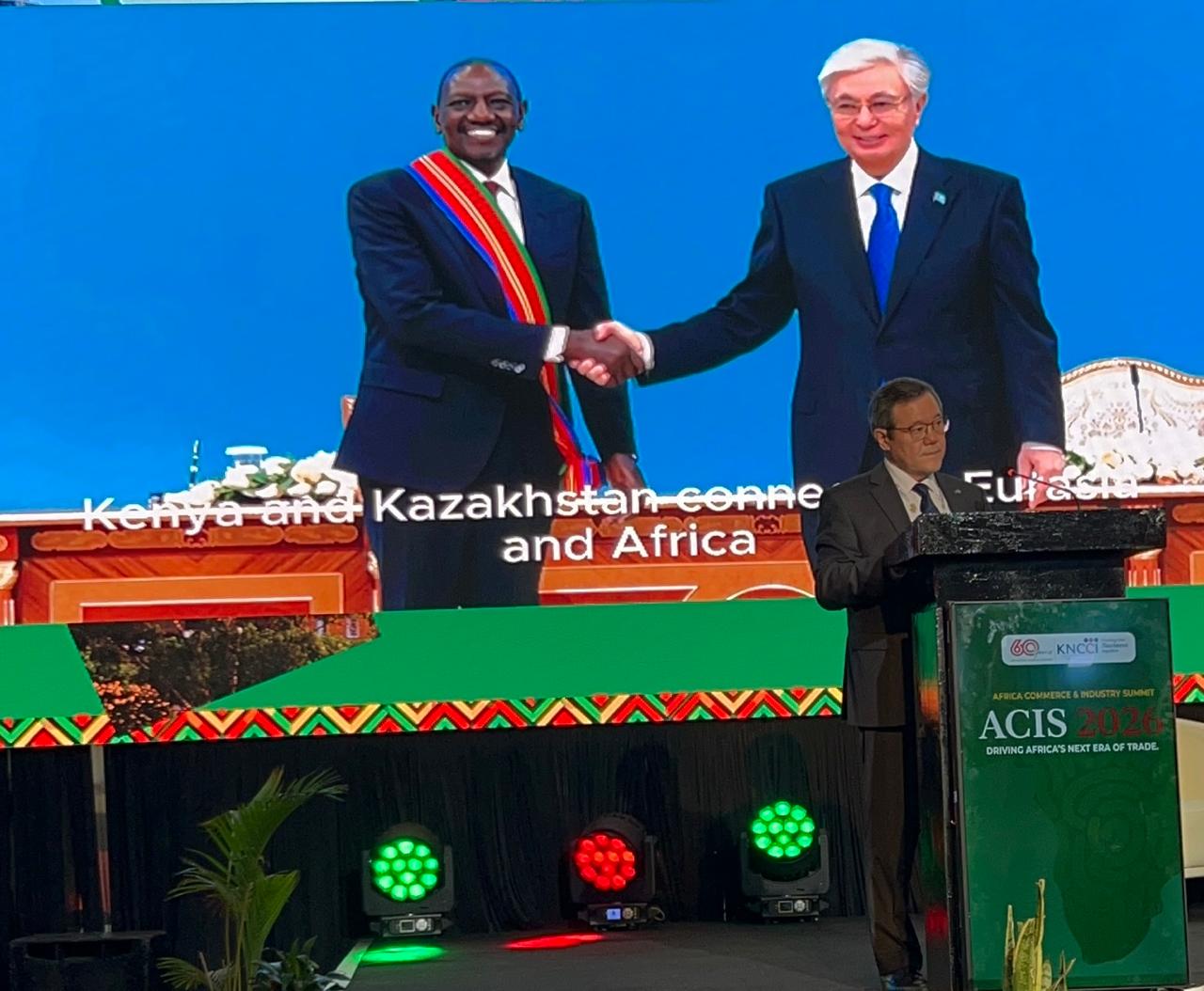
Nairobi, 15 October 2026 – Barlybay Sadykov, Ambassador of the Republic of Kazakhstan to the Republic of Kenya and Permanent Representative of the Republic of Kazakhstan to the United Nations Office at Nairobi (UNON), delivered remarks at the Africa Commerce and Industry Summit 2026 (ACIS 2026), held under the theme “Driving Africa’s Next Era of Trade.”The summit featured remarks by Lee Kinyanjui, Kenya’s Cabinet Secretary for Investments, Trade and Industry; William Kabogo Gitau, Cabinet Secretary for Information, Communications and the Digital Economy; Eric Ruto, President of the Kenya National Chamber of Commerce and Industry (KNCCI); and other participants.In his remarks, Lee Kinyanjui underscored the important role of chambers of commerce and industry in expanding businesses’ access to markets in Africa and other regions, removing trade barriers, and unlocking the potential of the African Continental Free Trade Area.William Kabogo Gitau emphasized that the development of digital infrastructure and innovative technologies should create tangible business opportunities for small and medium-sized enterprises, broaden access to finance, and help African companies enter regional markets.Eric Ruto noted that ACIS 2026 is intended to help move from discussions to concrete commercial deals, expand intra-African trade, and attract investment.In his remarks, the Ambassador highlighted Kazakhstan’s achievements in economic development, the advancement of its transit and transport potential, and information and communication technologies. He also emphasized the significant potential for trade, economic and investment cooperation between Kazakhstan and Africa, noting opportunities for engagement in trade, investment, transport and logistics, agriculture, mining, and digitalization.Particular attention was paid to strengthening the Kazakhstan–Kenya partnership and implementing the agreements reached during Kenyan President William Ruto’s state visit to Kazakhstan in May 2026. The Ambassador called on African business communities to expand cooperation with Kazakhstan.Background: The summit was organized by KNCCI and brought together more than 5,000 participants from over 50 countries. It aims to promote intra-regional and international trade, attract investment, develop industry, and strengthen economic integration among African states.Source : https://www.gov.kz/memleket/entities/mfa-nairobi/press/news/details/1311883?lang=ru
Kazakh Film Days Held in Budapest 27.10.2026
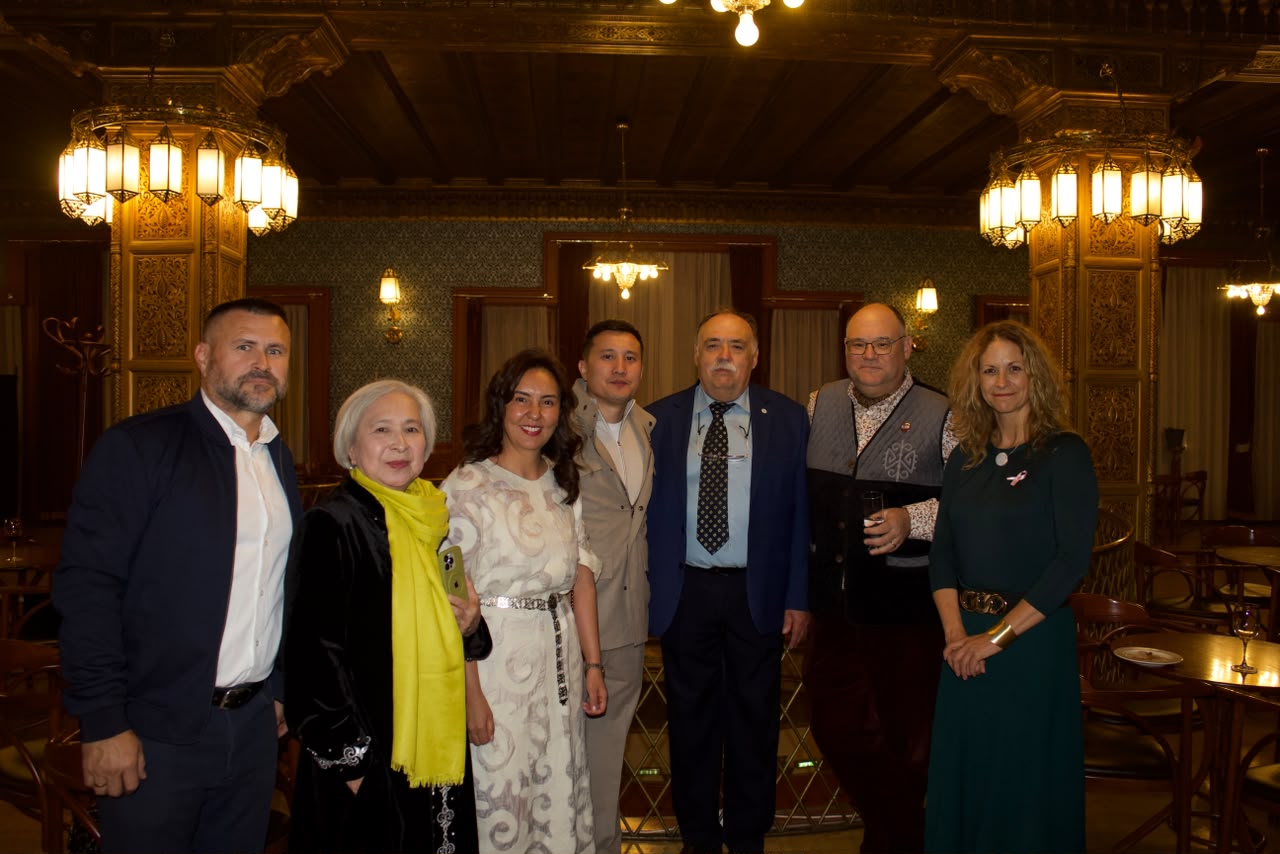
Budapest, 14 October 2026 – From 12 to 14 October 2026, the Embassy of the Republic of Kazakhstan in Hungary organized the Kazakh Film Days in Budapest, the capital of Hungary, with the support of the Ministry of Culture and Information of the Republic of Kazakhstan and the Shaken Aimanov Kazakhfilm Studio.The cultural event, held at the historic Uránia National Film Theatre, aimed to promote Kazakh cinema internationally, introduce Hungarian audiences to Kazakhstan’s rich historical and cultural heritage, and further develop cultural and humanitarian cooperation between the two countries.As part of the three-day programme, audiences were presented with three feature films reflecting different periods of Kazakhstan’s history, national values and cultural traditions, as well as contemporary social issues.The Film Days opened on 12 October with the screening of “Amre”, a historical biographical film dedicated to the life and artistic career of the outstanding Kazakh singer Amre Kashaubayev. Amre Kashaubayev is recognized as one of the first representatives of Kazakh musical art to gain international recognition in Europe.On 13 October, a screening of the contemporary Kazakh drama “Restart” was held. The film explores themes of personal choice, responsibility, human relationships and moral values.The Kazakh Film Days concluded on 14 October with the screening of the historical drama “The Road to Mother”. Set against the backdrop of tragic events in the history of the Kazakh people, the film explores the power of maternal love, the resilience of the human spirit and the complexities of human destiny.The highlight of the programme was the official ceremony and reception held on 13 October. The event was attended by members of the diplomatic corps, representatives of Hungarian government institutions and public organizations, business and cultural communities, members of the Kazakh diaspora and students.H.E. Ms. Anel Bakytbekkyzy, Ambassador Extraordinary and Plenipotentiary of the Republic of Kazakhstan to Hungary, delivered welcoming remarks to the guests.In her address, the Ambassador emphasized the role of culture and cinema as important instruments of public diplomacy, contributing to stronger mutual understanding and trust between peoples and the development of friendly relations.It was also noted that Kazakh cinema, combining national traditions with contemporary artistic approaches, offers international audiences an opportunity to gain a deeper understanding of Kazakhstan’s history, culture and spiritual values.The Ambassador highlighted that the traditionally friendly relations between Kazakhstan and Hungary are based on mutual respect, historical and cultural affinities, and a shared commitment to further expanding multifaceted cooperation.In this context, developing cultural and humanitarian ties, strengthening cooperation between creative communities, and implementing joint cultural initiatives remain important areas for further deepening the partnership between Kazakhstan and Hungary.One of the significant aspects of the event was the special visit of representatives of Kazakhstan’s film industry to Budapest, providing an opportunity for direct interaction with Hungarian audiences and representatives of the cultural sector.Among the distinguished guests were renowned Kazakh actor Sanzhar Madi, who played the leading role in “Amre”; Zhalyn Tleubergenov, producer of “Restart”; and Gulzat Shurenova-Kalishuk, Head of the Distribution and Marketing Department at the Shaken Aimanov Kazakhfilm Studio.The participation of representatives of Kazakhstan’s film industry gave audiences an opportunity to learn more about developments in contemporary Kazakh cinema, the filmmaking process, and prospects for promoting Kazakh films internationally.The Kazakh Film Days attracted more than 200 guests, including representatives of Hungarian government and public institutions, the diplomatic corps, business and cultural communities, members of the Kazakh diaspora and students.The films attracted audience interest and showcased the diversity of Kazakh cinema, demonstrating its ability to explore both significant chapters of national history and universal human values that resonate with international audiences.The Kazakh Film Days in Budapest marked an important milestone in cultural relations between Kazakhstan and Hungary, contributing to the expansion of people-to-people ties, strengthening mutual interest in the cultural heritage of both nations, and raising Kazakhstan’s profile in Hungary.Source : https://www.gov.kz/memleket/entities/mfa-budapest/press/news/details/1311868?lang=ru
RESULTS OF THE REGIONAL STAGE OF THE “ZERDE” COMPETITION 27.10.2026
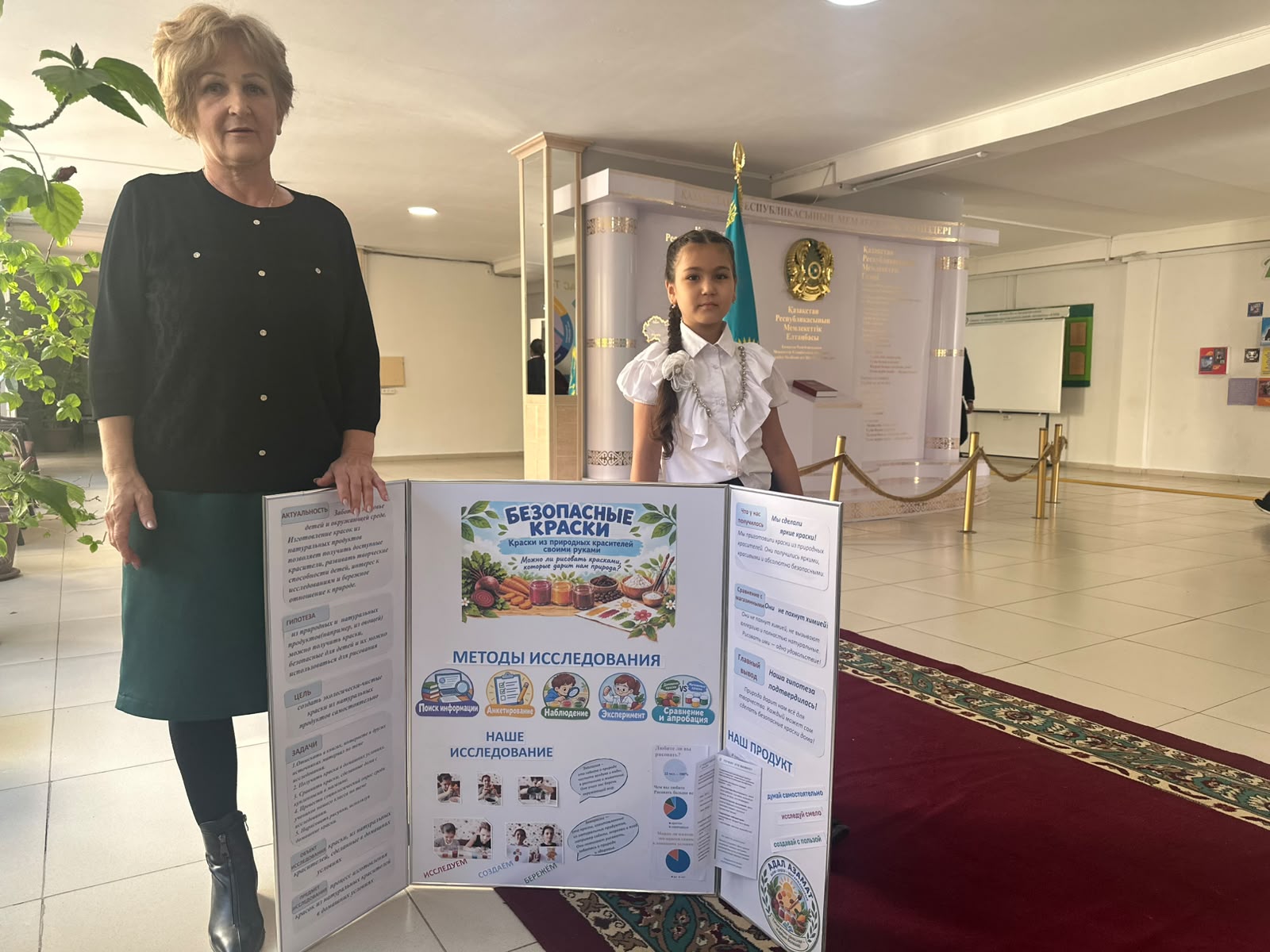
14 октября в городе Караганда, на базе КГУ «Специализированная школа-лицей-интернат “Дарын”», состоялся областной этап Республиканского конкурса исследовательских проектов «Зерде» среди учащихся 2–8 классов.От нашего района в конкурсе приняли участие 13 учащихся, из которых 7 стали призёрами областного этапа! 🎉👏Поздравляем победителей и призёров, а также педагогов-наставников с отличным результатом! Желаем дальнейших успехов, новых открытий и ярких побед! 🌟Большое спасибо всем участникам и педагогам за подготовку, труд, старание и достойное представление нашего района на областном уровне! 💐Гордимся нашими юными исследователями!Source : https://www.gov.kz/memleket/entities/edu-osakarovka/press/news/details/1311855?lang=ru
Kazakhstan’s Deputy Foreign Minister Receives Egyptian Ambassador 27.10.2026
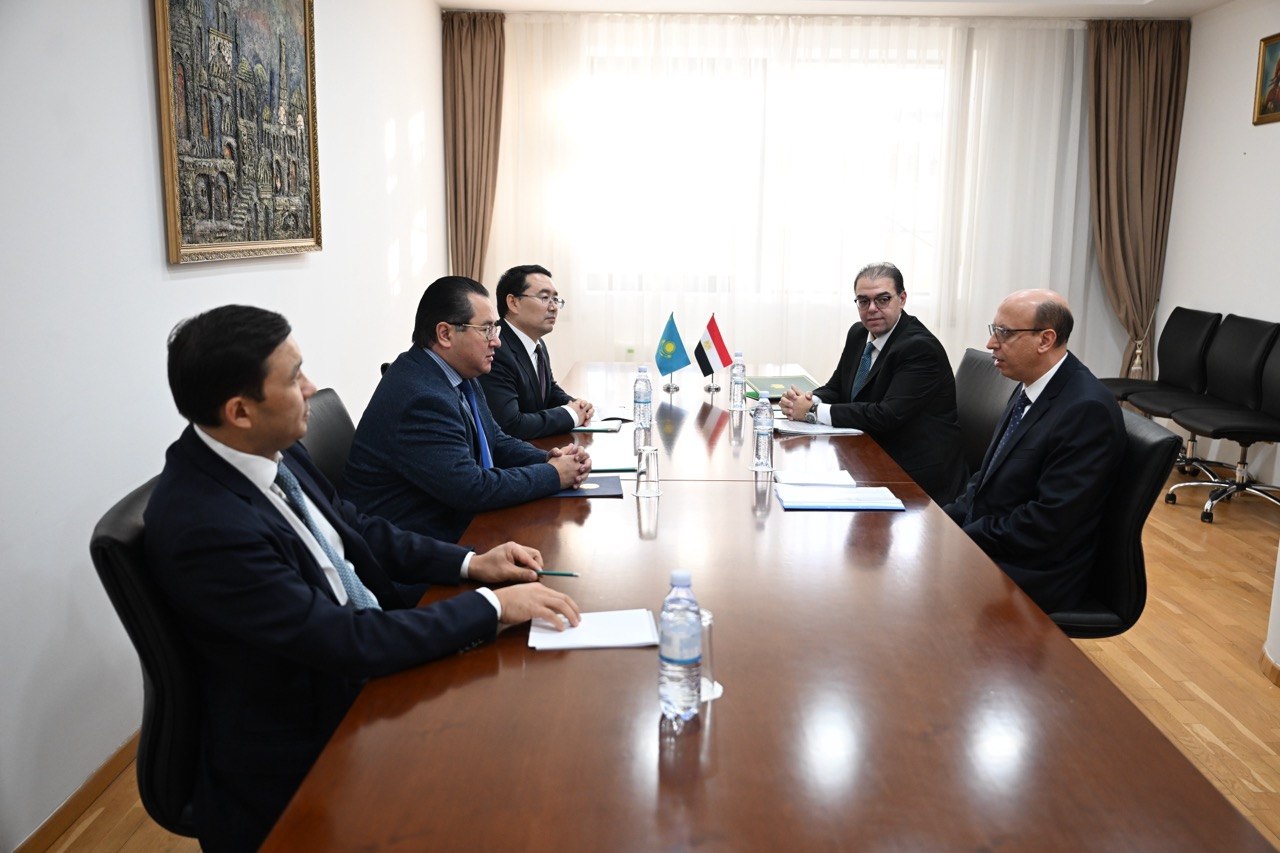
Astana, 15 October 2026 – Deputy Minister of Foreign Affairs of the Republic of Kazakhstan Arman Issagaliyev received Ambassador of the Arab Republic of Egypt to Kazakhstan Sameh Shehata.During the meeting, the parties discussed current issues of bilateral political, trade and economic, cultural and humanitarian, and consular cooperation, including ways of easing visa requirements for Kazakhstani citizens.The sides exchanged views on preparations for upcoming high-level events and agreed to expand the treaty and legal framework of bilateral relations.Source : https://www.gov.kz/memleket/entities/mfa/press/news/details/1311843?lang=ru
Kazakhstan participates in an international forum on improving tax administration 26.10.2026
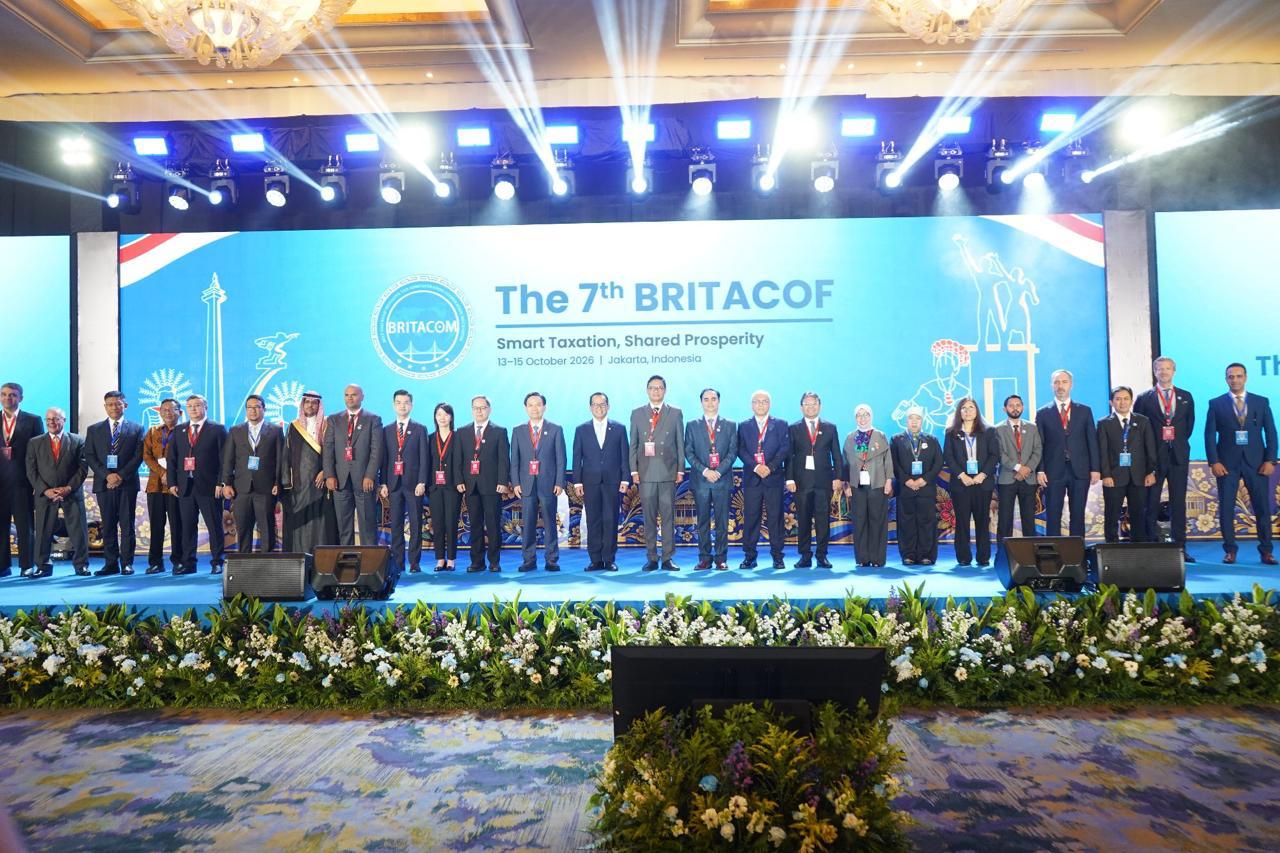
A Kazakh delegation led by Seilzhan Akhmetov, Deputy Chairman of the State Revenue Committee of the Ministry of Finance of the Republic of Kazakhstan, is participating in the 7th Belt and Road Initiative Tax Administration Cooperation Forum (BRITACOF). The forum is taking place on 13–15 October 2026 in Jakarta, Indonesia. The forum brings together representatives of tax administrations from 38 countries and 30 observer organizations. The main purpose of the meeting is to exchange experience and identify effective solutions to modernize the work of tax authorities and make tax compliance clearer and more convenient for individuals and businesses. Discussions focus on the digitalization of tax administration, new approaches to responding to evolving forms of economic activity, and simplifying tax compliance. For Kazakhstan, such platforms are particularly valuable as an opportunity to study successful solutions from other countries and apply the most effective practices while taking national circumstances into account. During the forum, the Kazakh delegation held bilateral meetings with the heads of the tax authorities of China, Indonesia and the United Arab Emirates. The parties discussed the development of tax administration and exchanged practical experience. International cooperation enables Kazakhstan to draw on global experience in further improving its tax system, including digital services, reducing the administrative burden, and creating more transparent and convenient conditions for taxpayers. Kazakhstan continues to develop cooperation with foreign tax administrations under the Belt and Road Initiative, with a particular focus on digitalization, transparency and improving the quality of tax administration.Source : https://www.gov.kz/memleket/entities/kgd/press/news/details/1311786?lang=ru
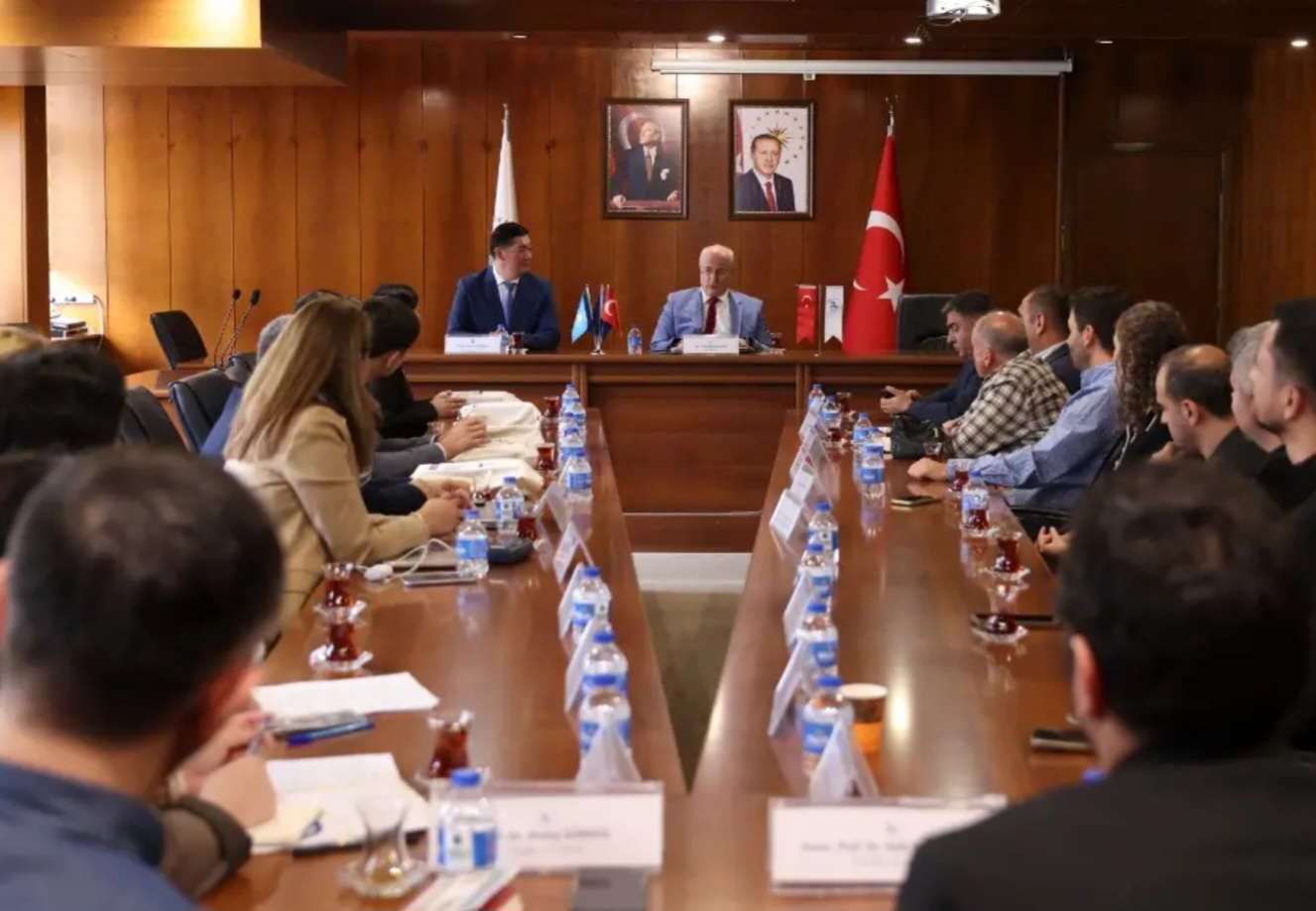
Cooperation between universities of Kazakhstan and Türkiye Continues to strengthen 26.10.2026
A delegation from Shakarim University, headed by Chairman of the Management Board – Rector, Professor Duman Orynbekov, paid a working visit to Dokuz Eylül University in İzmir, Türkiye.During the visit, the Kazakh delegation held a meeting with Professor Hamdi Şükür Kılıç, Vice-Rector of Dokuz Eylül University.The parties discussed opportunities for expanding academic cooperation in veterinary medicine, bioengineering, Turkic studies, and foreign languages, as well as prospects for implementing joint scientific projects and strengthening inter-university ties.Particular attention was given to the preparation of a cooperation protocol between the two universities and the identification of priority areas for future collaboration.The meeting marked an important step towards further strengthening the partnership between Kazakhstan and Türkiye in the fields of education and science.Source : https://www.gov.kz/memleket/entities/mfa-izmir/press/news/details/1311737?lang=ru
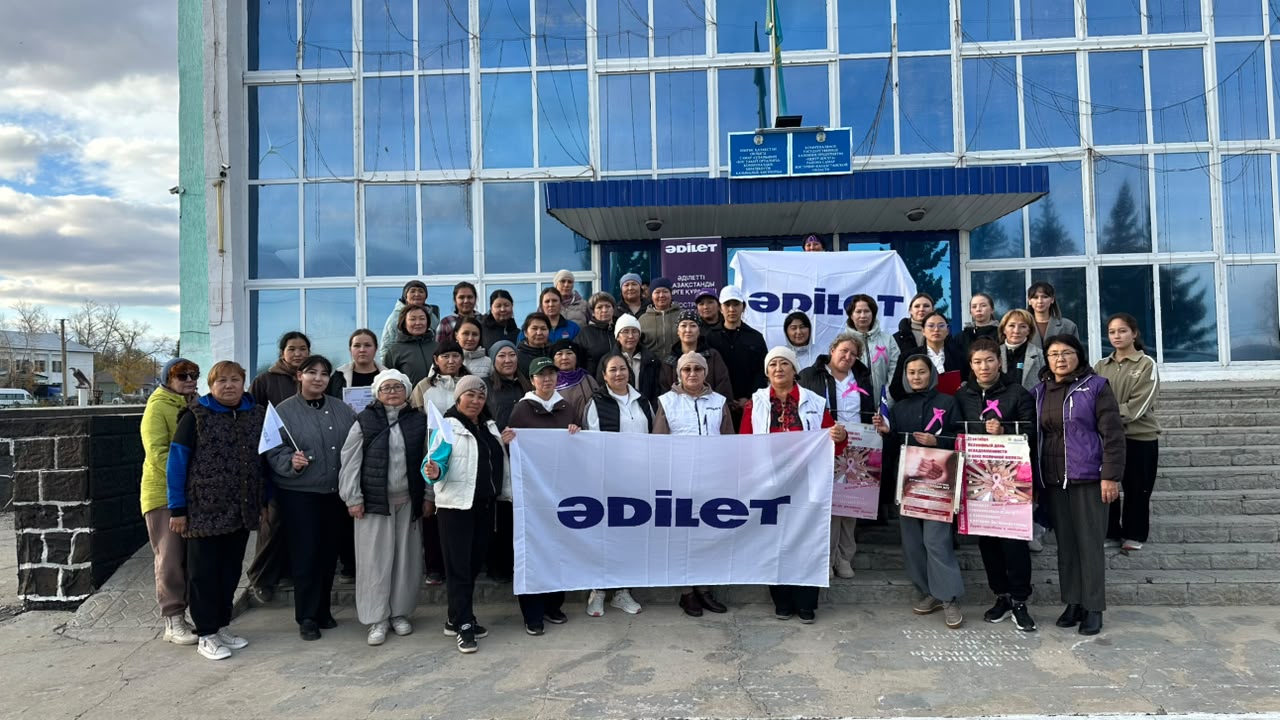
A race in support of women’s health took place in the Samar area 26.10.2026
A race and walk took place in the Samar region as part of the republican information campaign "Ayel omiri ushin" ("For the Life of a Woman"), aimed at raising awareness about breast cancer. The action was held with the support of the regional branch of the Adilet party.More than 50 women representatives of labor collectives of organizations, civil servants and residents of the district took part in the event. The participants came together to support the idea of caring for women's health and to remind them of the importance of timely examination and disease prevention.Following the results of the race, the participants who were the first to reach the finish line were awarded with diplomas and gifts.On the same day, women could receive free consultations from specialists, including a mammologist, at the district hospital, as well as undergo a medical examination.The event was part of an effort to draw attention to women's health issues and the importance of early detection of diseases.Source : https://www.gov.kz/memleket/entities/vko-samar/press/news/details/1311738?lang=ru
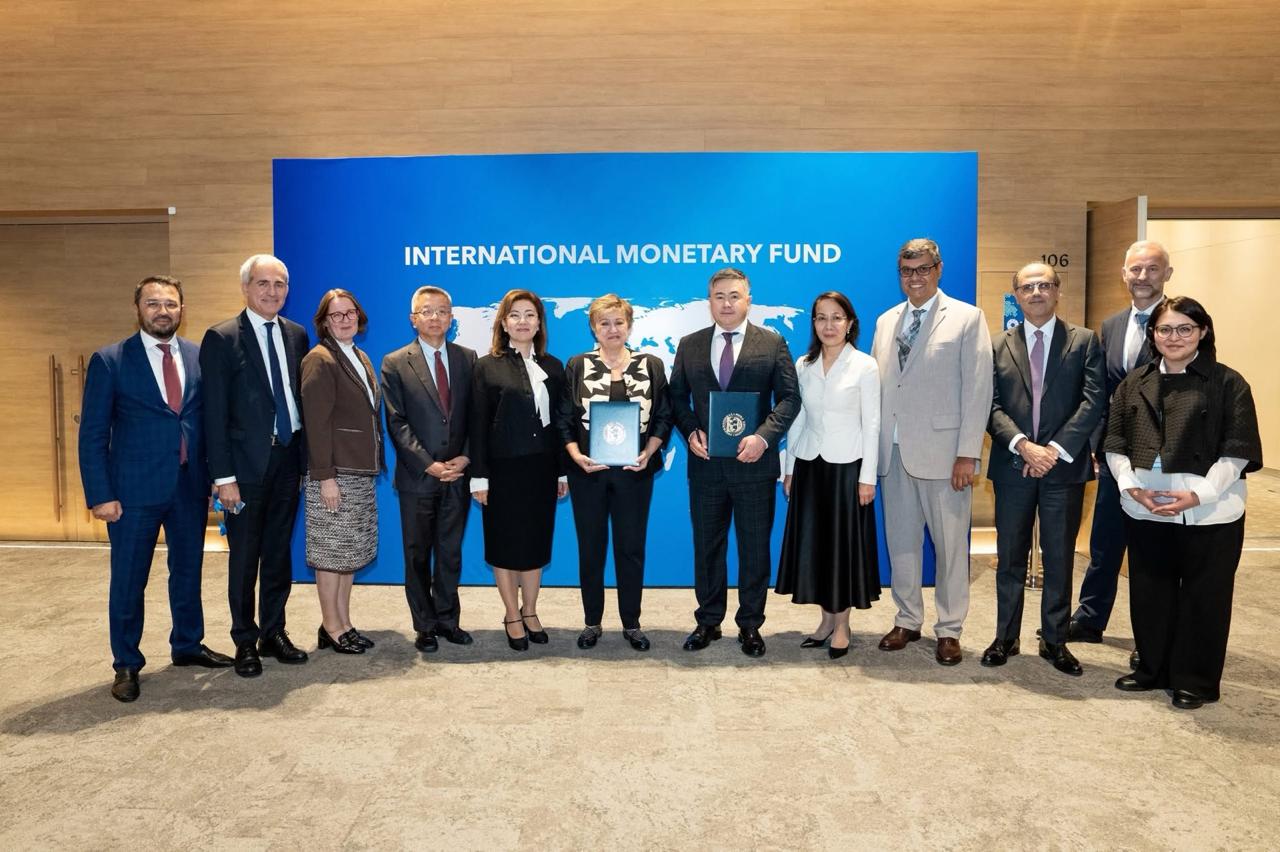
Agency Chairperson Meets with IMF Managing Director Kristalina Georgieva 26.10.2026
Since 13 October 2026, a delegation of the Agency of the Republic of Kazakhstan for Regulation and Development of the Financial Market, led by Chairperson Madina Abylkassymova, has been participating in the Annual Meetings of the International Monetary Fund (IMF) and the World Bank Group in Bangkok, Thailand.During a meeting with IMF Managing Director Kristalina Georgieva, the parties discussed the current state of Kazakhstan’s financial sector, its development prospects and reform priorities, financial stability, and bilateral cooperation. The Agency Chairperson highlighted the constructive cooperation with the IMF and its technical assistance in drafting the new Law on Banks.Madina Abylkassymova also attended the Caucasus and Central Asia ministers and central bank governors meeting with IMF Deputy Managing Director Bo Li. Discussions focused on the importance of a resilient financial sector for regional integration, enhancements to banking regulation, and the adoption of international best practices in supervision.Particular attention was paid to cooperation with the Caucasus, Central Asia, and Mongolia Regional Capacity Development Center (CCAMTAC), based in Almaty.Meetings with IMF representatives also addressed the implementation of a comprehensive risk-based supervisory framework for the capital market and insurance sector. The parties discussed further expert cooperation in drafting new laws on the capital market and insurance to support reforms in these sectors. External Communications Departmentpress@finreg.kzSource : https://www.gov.kz/memleket/entities/ardfm/press/news/details/1311732?lang=ru
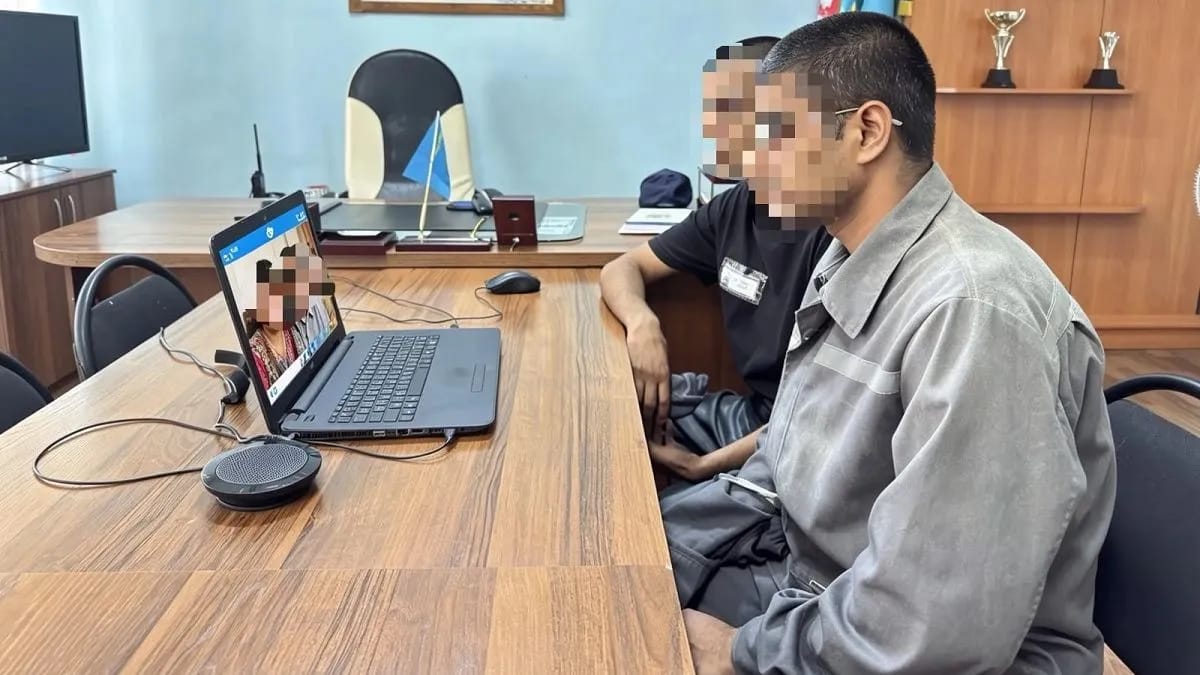
For 3 years, foreigners were afraid to admit to their parents that they were in a colony in Kazakhstan 26.10.2026
Two 25-year-old foreign citizens who were sentenced to three years and six months in prison for causing bodily harm are serving their sentences in a medium-security prison in the Abai region.During the conversation, the convicts admitted that they had come to Kazakhstan from another country several years ago to get an education and build a decent future. Their main dream was to return home with a diploma and meet the expectations of their parents. However, fate decreed otherwise — instead of the long-awaited meeting with their loved ones, they ended up in prison. For three years, the convicts did not dare to inform their parents about the incident, fearing condemnation and the fact that the closest people would turn away from them.The story of the young people did not leave the staff of the institution indifferent. After the psychological diagnosis, the specialists began work on restoring the lost family ties. Psychologists, together with the staff of the educational service, established contact with the relatives of the convicts, explained the situation in detail and organized a video call.After three years of separation, the long-awaited meeting of parents and sons took place. During the video call, no one could contain their emotions. For the first time, parents found out where their children were, and the convicts had the opportunity to ask for forgiveness and hear the most important words of support. For the young people, this meeting was a turning point, giving them hope and faith that they could change their lives.- When I got here, I was most afraid that my parents would never be able to forgive me. These thoughts haunted me. But after our conversation, I realized that no matter what, they still love me and are waiting for me at home. Yes, I didn't live up to their expectations, and I have a lot to fix. Now I know what's expected of me, which means I have something to change for. I will do my best to walk this path with dignity, improve myself and meet my family as soon as possible," the convict shared.- The restoration of family ties is one of the most important areas of psychological and educational work with convicts. The support of relatives has a huge impact on a person's emotional state, helps him realize the consequences of a crime, strengthens motivation to correct and return to a law-abiding life. Each such meeting is backed by the painstaking work of the institution's staff, and it is especially important for us to see how it helps people regain hope and self—confidence," said the institution's psychologist, Kuralai Iksanova.Source : https://www.gov.kz/memleket/entities/duisabai/press/news/details/1311724?lang=ru
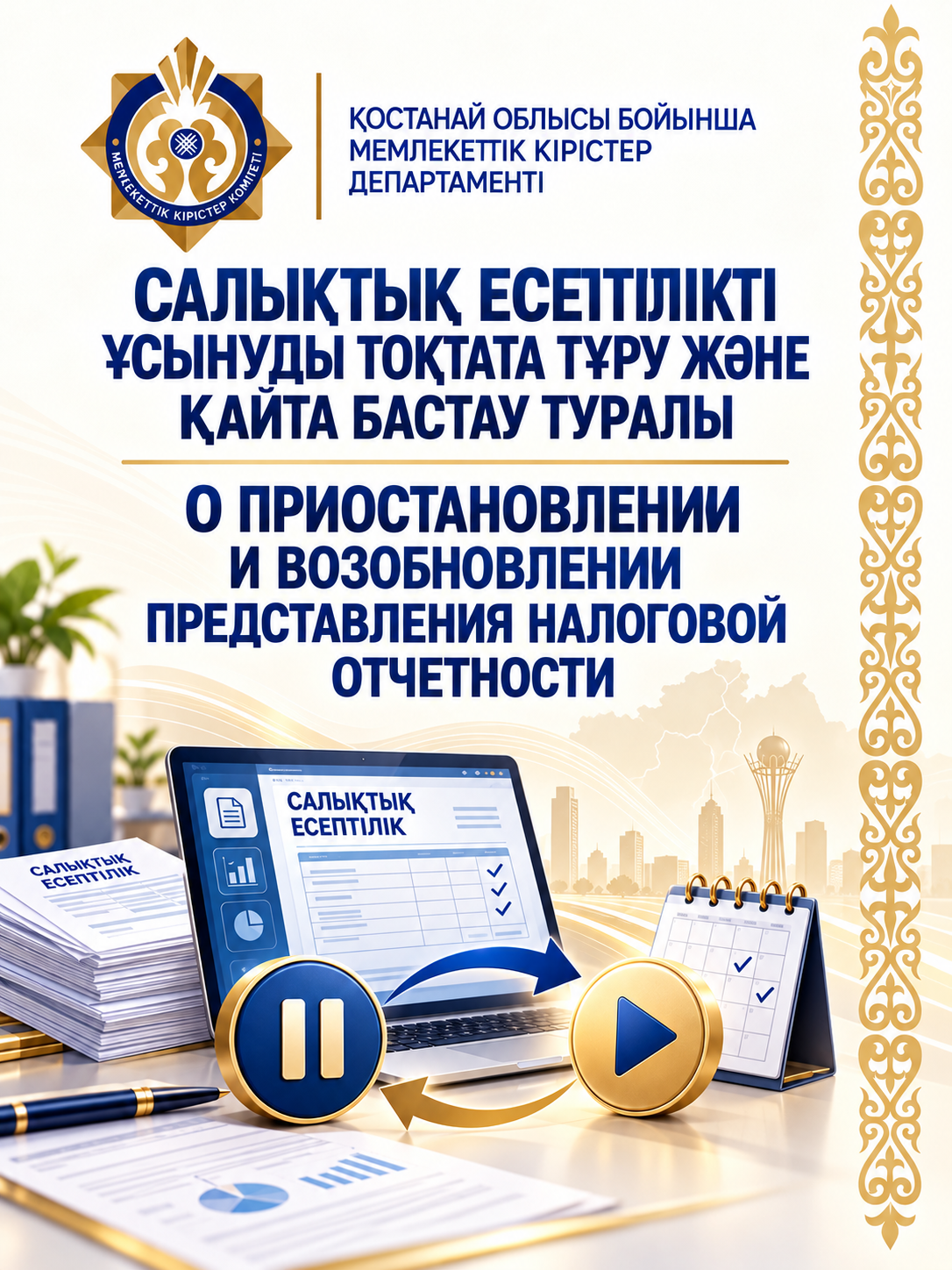
ON SUSPENSION AND RESUMPTION OF TAX REPORTING 26.10.2026
The taxpayer (tax agent) has the right to:suspend the submission of tax reports;resume the submission of tax reports before the suspension period expires.It is mandatory for a taxpayer to resume submitting tax reports upon resumption of business.The total period of suspension of tax reporting should not exceed the limitation period.In the period from the date of suspension to the date of resumption of the submission of tax reports to the value added tax payer, the issuance of electronic invoices is suspended. If there are taxable objects, the submission of tax reports by the taxpayer (tax agent) is not suspended.Information on the suspension (or) resumption of tax reporting is published on the authorized body's Internet resource no later than the date of the relevant decision by the tax authority.The publication on the Internet resource of the authorized body of information on the suspension and (or) resumption of tax reporting is the basis for the failure to submit tax reports for the period specified in the tax statement or the appeal of the local executive body.A refusal to suspend the submission of tax reports by a taxpayer (tax agent) is accepted in the case of:tax arrears, arrears on social payments;if the taxpayer is included in the register of inactive taxpayers;the presence of unfulfilled notifications from the tax authority.The tax authority recognizes the submission of tax reports as resumed in the case of:submission by the taxpayer (tax agent) of tax reports from the date of submission of tax reports;the discovery of the fact of the taxpayer's resumption of activity during the period of suspension or from the date of resumption of activity.The resumption of activity is recognized as the beginning of a taxpayer's activity that leads to a tax obligation to calculate, pay taxes, make payments to the budget and social obligations.Source : https://www.gov.kz/memleket/entities/kgd-kostanay/press/news/details/1311677?lang=ru
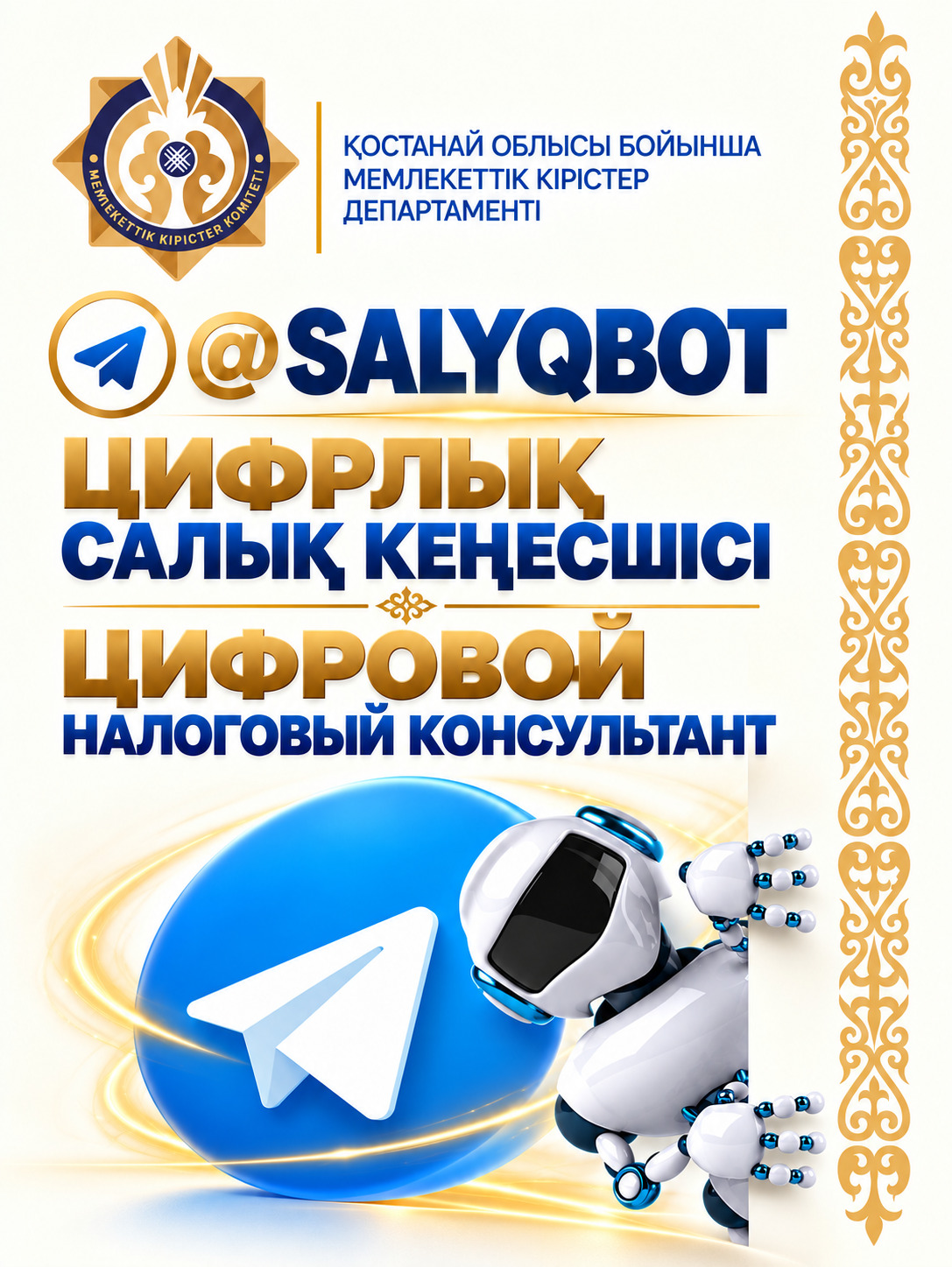
DIGITAL TAX CONSULTANT @SALYQBOT 26.10.2026
The Department of State Revenue for the city of Kostanay recalls that in order to promptly assist the population in clarifying tax and customs issues, improving public awareness and receiving feedback, there is a chatbot in Telegram "@SalyqBot", implemented by the State Revenue Committee of the Ministry of Finance of the Republic of Kazakhstan.@SalyqBot is a digital tax consultant, developed in Kazakh and Russian languages and has very useful functions:"Account unblocking";"Personal tax assistance";"Bankruptcy";"Video Call";"Prompt assistance on customs issues";"Salyq AI 2026";"TOP Questions";"Ask the operator a question";"Electronic services";"Calculators";The "Directory";"Tax calendar";"Polls";"Video Tutorials".The chatbot is available under the name "@SalyqBot" or via a direct link. https://t.me/salyqbot .Source : https://www.gov.kz/memleket/entities/kgd-kostanay/press/news/details/1311657?lang=ru
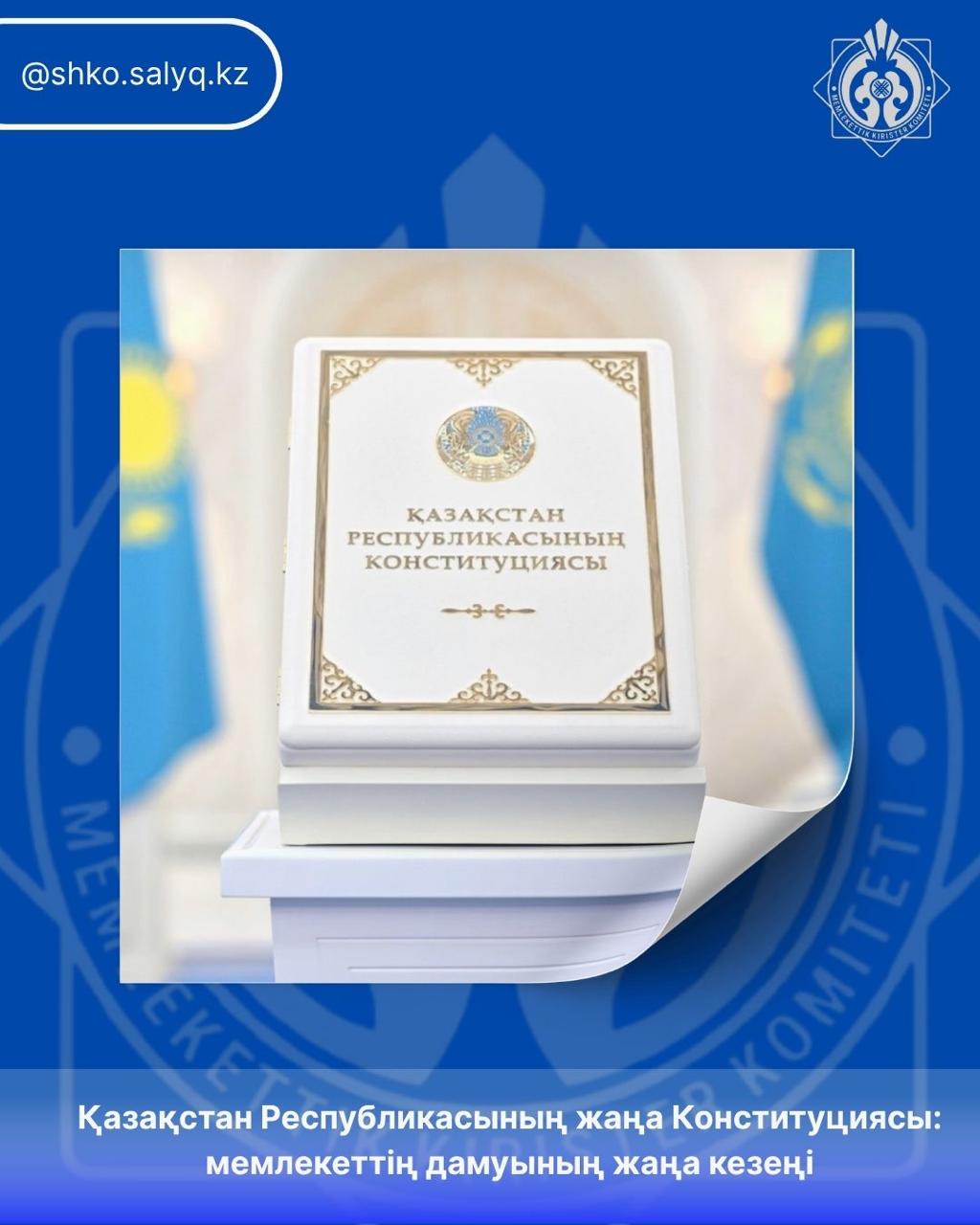
New Constitution of the Republic of Kazakhstan: a new stage in the State development 26.10.2026
The year 2026 became a significant milestone in the history of Kazakhstan. The adoption of the new Constitution at a nationwide referendum marked a large-scale renewal of the country's political and legal system. The new edition provides for substantial changes in the structure of state power, mechanisms for protecting citizens' rights, and principles for the further development of the state.One of the main transformations was the reform of the legislative branch. Instead of a bicameral Parliament consisting of the Senate and the Mazhilis, a unicameral Kurultai is provided for. Its formation under a proportional representation system is aimed at renewing parliamentary representation and improving the legislative process. The Kurultai is vested with powers to pass laws, review matters regarding the activities of the Government, and participate in coordinating key state appointments.An important institutional change was the restoration of the post of Vice President of the Republic of Kazakhstan. Their appointment is provided for by the President with the consent of the Kurultai. The new model also defines the procedure for transferring the powers of the head of state in the event of early termination of their duties, ensuring legal certainty in matters of state power succession.A special place in the renewed political system is occupied by the Qazaqstan Xalyq Kenesı, the People's Council, created as the supreme advisory body. Among the powers provided for it are the submission of legislative initiatives for consideration by the Kurultai and proposing the conduct of a nationwide referendum. The activity of the Council is intended to contribute to strengthening social accord, national unity, and interaction between the state and civil society.The new Constitution also pays attention to modern challenges. In the context of digitalization and the development of artificial intelligence, the protection of private life and personal data becomes particularly significant. Enshrining relevant guarantees reflects the need to improve legal mechanisms for protecting citizens in the digital environment.Provisions aimed at strengthening human rights guarantees are of substantial importance. These include, among others, the right to judicial protection of one's rights and freedoms, ensuring the right of a detainee to know their rights, guarantees of rights for the protection of its citizens outside the Republic of Kazakhstan, etc.The Constitution emphasizes matters of sovereignty, territorial integrity, and the national values of Kazakhstan. Today, this is especially important for preserving the unity of the country and further sustainable development.Special attention is deserved by the consolidation of the principles of citizen responsibility to the state. In this regard, Article 38 of the Constitution of the Republic of Kazakhstan is of important significance, establishing the duty to pay legally established taxes, fees, and other mandatory payments.This norm reflects one of the fundamental principles of the tax system - the mandatory nature and fairness of taxation.The payment of taxes ensures the formation of the revenue part of the state budget necessary for funding social obligations, infrastructure development, education, healthcare, and other priority areas of state policy. At the same time, the establishment of tax obligations must be carried out exclusively on legal grounds, and their fulfillment ensured in accordance with current tax legislation.Thus, the updating of the Constitution covers a wide range of issues — from the organization of state power and the expansion of legal guarantees to the definition of citizens' duties and the foundations of economic development.The new Constitution forms the legal foundation for the further development of Kazakhstan, the strengthening of the rule of law, and the enhancement of the accountability of both the state and its citizens. Compliance with its provisions, including the conscientious fulfillment of tax obligations, is an important condition for the sustainable development of the country and the strengthening of trust between society and the state.Source : https://www.gov.kz/memleket/entities/kgd-vko/press/news/details/1311640?lang=ru
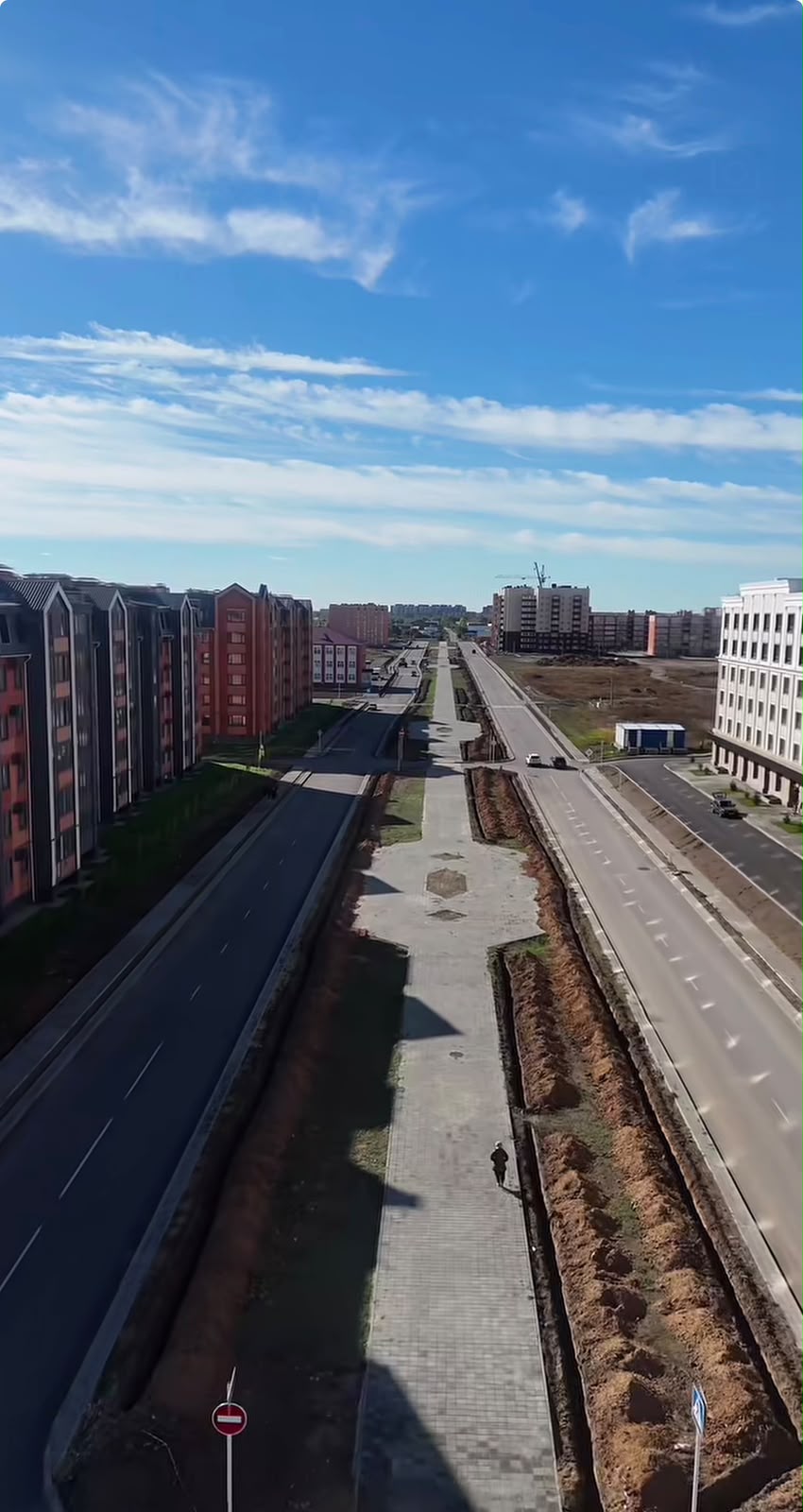
Infrastructure Development Continues in Bereke Microdistrict 26.10.2026
Infrastructure development and improvement works are being carried out in stages in Bereke microdistrict to create a comfortable and safe environment for residents. As the area continues to grow, particular attention is being paid to road quality, street lighting, and the development of public spaces.The main road infrastructure works have been completed. Asphalt has been laid and road markings have been applied. In response to residents’ requests, an additional street has been constructed near the comfortable school. The remaining work includes laying paving slabs over an area of approximately 1,000 square metres, installing road signs, and cleaning the surrounding area.Street lighting installation is also underway. A total of 425 lighting poles are being installed throughout the microdistrict. The work is scheduled to be completed by the end of November this year. This will improve street lighting and help ensure residents can move around safely after dark.Further improvements to the microdistrict’s streets are planned for 2027. These include the installation of bus shelters, benches, waste bins, and small architectural features.The comprehensive development of Bereke microdistrict will continue. Efforts to improve road quality, enhance street lighting, and upgrade public spaces are aimed at improving residents’ quality of life and creating a more comfortable urban environment.Source : https://www.gov.kz/memleket/entities/kostanai-kalasy-akimat/press/news/details/1311635?lang=ru