Phytoanalysis of seed material of spring grain crops.
22.12.2025 12:10:47 2873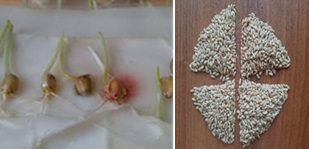
High seed quality is one of the key agronomic requirements, ensuring optimal conditions for obtaining high and stable crop yields. The prevalence of latent seed diseases in nature complicates a comprehensive assessment of their sowing qualities, which can negatively impact seed production. Therefore, preliminary diagnosis of infected seeds is crucial in improving seed quality. Many diseases are seed-borne. Furthermore, during the formation and maturation period, they become infected with root rot pathogens (Helminthosporium and Fusarium), Septoria leaf spot, and other pathogens, as well as colonized by saprophytic microorganisms. Therefore, phytopathological analysis of the seed material is necessary.
Wheat seeds were submitted for laboratory analysis. According to phytoanalysis results, wheat seeds were predominantly infected with pathogens of the genus Helminthosporium, and to a lesser extent, with saprophytic fungi of the genera Alternaria and Penicillium.
The following pathogens were identified:
Helminthosporium, the causative agent of root rot. Seedlings were affected by dark brown streak-like spots and continuous discoloration of the epicotyl and rootlets. During the growing season, grain infection occurred early and late. From the analyzed seed lots, it was clear that early-infected grains were shrunken, with darkening affecting most or half of the grain. Late-infected grains were normally developed, but the embryo and surrounding area were dark. A latent form of the disease was observed; the grain appeared healthy, but analysis revealed the Helminthosporium pathogen. When sown, such grain can become a source of root rot infection. Under favorable weather conditions during the growing season, the causative agent, Helminthosporium, may appear on the leaves as dark brown spots, infecting the grain of the new crop.
Fusarium is the causative agent of root rot. Upon germination, the grain became covered with a pale pink or white coating, indicating that infection occurred later in the growing season. When sown with such seeds, seedlings may be sparse or weakened.
Alternarium is the causative agent of black germ and sooty mold. Signs of grain disease included the formation of a darkened zone around the germ. The seeds were outwardly healthy, but the Alternaria pathogen only became apparent during germination. Penicillium is a fungal infection that can reduce seed germination. High grain moisture (over 15-16%) and above-zero temperatures are favorable for the development of mold fungi.
Specialists at the Mendykara District Branch, as samples are received for laboratory analysis, determine seed infestation. Phytoanalysis reveals whether seeds are infected with pathogens, what types of pathogens they are infected with, and what percentage of infected seeds are present.
Preparing seed material and choosing the right seed treatment can prevent disease development in the field and ensure good, healthy seedlings. High seed quality is one of the key agronomic requirements, ensuring, under other optimal conditions, high and stable agricultural yields.
Mendykarinsky district branch
RGU "RMTSFDiP" KGI in the agro-industrial complex of the Ministry of Agriculture of the Republic of Kazakhstan
tel./fax: 8-714-43-2-20-79
phytopathologist J. Mustafin.