Address by the Head of State Kassym-Jomart Tokayev at the 5th Session of the National Kurultai
21.01.2026 12:30:38 2529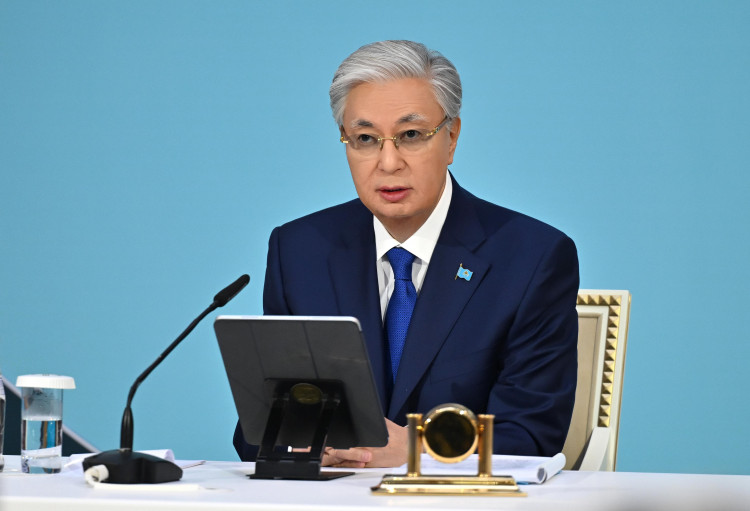
Dear compatriots!
In their speeches, members of the Kurultai voiced important ideas and initiatives.
A constructive exchange of views took place within the framework of the Kurultai. I am confident that all of this will benefit the development of our country.
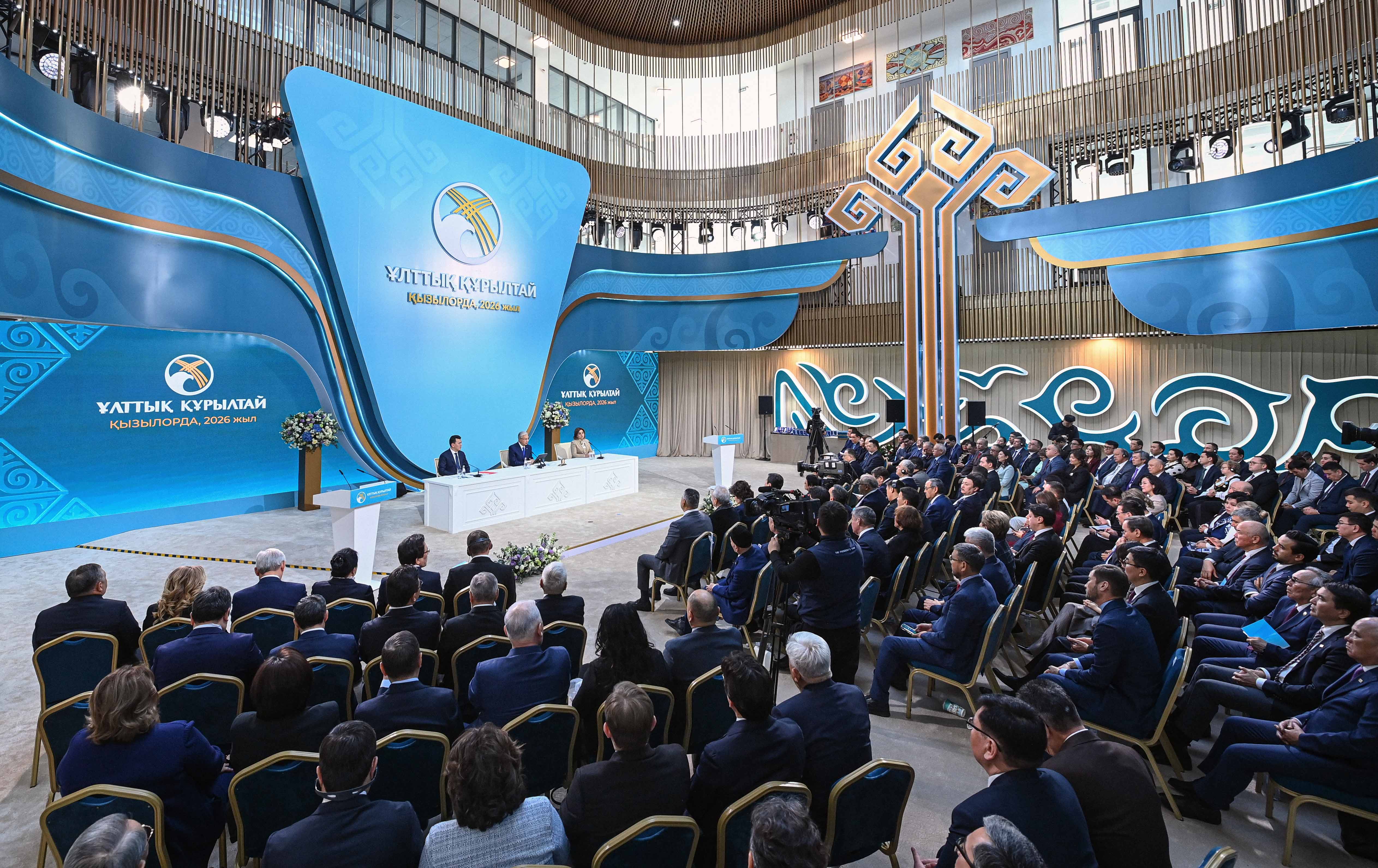
Today, the National Kurultai is being convened for the fifth time.
The first meeting of our Kurultai was held in the cradle of the nation – Ulytau.
The second meeting took place in the spiritual center of the Turkic world – Turkestan.
The third was organized in the unique Atyrau region.
Last year, we gathered in the historic city of Kokshetau.
Now, we are on the sacred land of Kyzylorda.
For our people, this region plays a special role. There is a concise and profound expression: “Syr – Alash’s mother” (the Syr Darya that nurtured Alash).
The ancient settlements of Chirik-Rabat, Zhankent, Syganak, Altynasar, and Barshynkent testify to the existence of an ancient urban culture on Kazakh soil.
It can be said that Kyzylorda is their rightful successor and, overall, has great historical significance for our country.
Everyone knows that a century ago this city was the capital of Kazakhstan. Extremely important decisions concerning the future of the country were made here.
It is no coincidence that people say: “Syr eli – zhyr eli” (the Syr Darya region is the land of storytellers and poets).
Since the time of Korkyt Ata, the art of zhyr and kui has been widely practiced in this region.
Our entire country knows the renowned Zhiyenbay, Nurtugan, and Nartai, who stood at the origins of schools of the oral epic tradition.
The land along the Syr Darya is the homeland of true hardworking people.
During the Soviet period, about one hundred residents of the Kyzylorda region were awarded the title of Hero of Labor. Our people take pride in the famous rice grower Ibray Zhakhaev, whose name has become a symbol of labor valor.
The outstanding legacy of the shock workers of the past is being worthily continued by the current generation.
In recent years, the Kyzylorda region has been developing dynamically, keeping pace with the times.
Last year, the gross regional product increased by 6.5 percent.
Over three years, nearly two trillion tenge in investments were attracted to the region.
Last year, 27 investment projects were implemented.
Among them, the launch of a new thermal power plant deserves special mention.
This strategic facility, built entirely with investors’ funds, will enhance the region’s energy security.
The population of the region is provided with quality drinking water; 80 percent of residents have access to natural gas.
The expansion of gas networks in populated areas will continue.
Roads in the region are in good condition.
Aviation and railway infrastructure is being modernized.
A new terminal has opened at Korkyt Ata Airport.
The railway station, one of Kyzylorda’s historic buildings, has undergone major reconstruction.
At the same time, reconstruction of ten railway stations has begun in the region.
All of this will strengthen the region’s logistics potential.
The Kyzylorda region has many achievements, especially in the social sphere.
Over three years, 34 educational facilities, 45 cultural and sports facilities, and 40 medical facilities have been built here.
On my instruction, construction of a multifunctional hospital designed for 300 beds has begun in Kyzylorda.
In the near future, a 500-capacity polyclinic and a 200-bed perinatal center will also be built.
In short, the Kyzylorda region is developing dynamically in all areas. It can be said with confidence that the situation in the region is good. This is the result of the active and diligent work of Akim Nurlybek Nalibayev.
In the middle of the last century, the first human spaceflight was launched from Baikonur – a fact known throughout the world.
This historic land developed successfully both during the era of the Great Silk Road and in modern times.
Being in Kyzylorda, I cannot but address the issue of the Aral Sea.
Its restoration remains a task that is still relevant for all humanity; I spoke about this in my Address.
Thanks to many years of consistent work, we have been able to preserve the Northern Aral, which has been gradually recovering for several years.
A project to raise the Kokaral Dam is currently being developed, and its implementation will begin at the end of this year.
This will make it possible to significantly increase the volume of water in the Small Aral.
However, not everything is in our hands.
Most of Kazakhstan’s major rivers originate in neighboring countries.
The volume of water from the Syr Darya reaching the sea varies depending on the water policies of the states located in the upper reaches of the river.
Therefore, addressing many of these challenges is closely linked to skillful water diplomacy.
At present, agreements on the joint use of water resources have been concluded with all Central Asian countries.
Ultimately, to resolve the fate not only of the Aral Sea, but also of the Caspian Sea, Lake Balkhash, and the Irtysh River, it is necessary to reach consensus with our neighbors and conclude the relevant agreements.
Water is a strategic resource for our country.
We must address the water issue systematically.
Last year, I proposed establishing an International Water Organization. We need to consistently promote this initiative as part of reforming the United Nations.
In April, an International Environmental Summit will be held in Astana.
At the forum, we will discuss the problem of the Aral Sea with the heads of state of the member countries of the International Fund for Saving the Aral Sea.
We hope that the revival of the Small Aral will pave the way for further sustainable progress across the entire region.
Today, citizens of the Kyzylorda region are present here: veterans, representatives of the intelligentsia, public figures, entrepreneurs, and young people.
In this regard, I would like to note the diligence, unity, love for their native land, solidarity, mutual support, and true patriotism of local residents.
Along with the regional center, every aul in the region is distinguished by its cleanliness.
For example, as I have repeatedly emphasized, the auls named after Nagi Ilyasov and Tan serve as examples for the entire country.
You contribute to the development not only of your region, but of our state as a whole.
Thanks to the unity and creative labor of the people, the past year was marked by major achievements for our country.
The economy grew by 6.5 percent.
GDP exceeded 300 billion dollars and, for the first time in the history of Independence, reached 15 thousand dollars per capita.
This is a record figure for the entire Central Asian region.
Foreign currency assets of the National Fund increased by 5 billion dollars.
The country’s gold and foreign exchange reserves reached a new peak, surpassing 65 billion dollars.
The share of small and medium-sized businesses in the economy approached 40 percent.
The population reached about 20.5 million people, and the average life expectancy of citizens rose to 75.4 years.
Most importantly, society has changed: a major shift has taken place in national self-awareness, and the reforms have acquired a sustainable character.
The National Kurultai played an exceptional role in these processes.
Over four years, Kurultai members put forward many important initiatives; based on their proposals, 26 laws were adopted.
This fact alone clearly demonstrates that the Kurultai has become a key driving force behind large-scale reforms.
In particular, concrete steps were taken to ensure women’s rights and children’s safety.
An active fight against gambling addiction and the spread of drugs was launched.
Work in the field of toponymy and naming policy (onomastics) was streamlined.
New honorary titles were introduced into the system of state awards, raising the status of working people.
In addition, we defined the core values shaping a new quality of the nation.
We are erecting a barrier against social vices that threaten the future of younger generations.
Members of the Kurultai put forward an initiative to streamline work in the sphere of domestic policy.
You took a direct part in preparing the relevant document.
As a result, last year the basic principles, values, and directions of the domestic policy of the Republic of Kazakhstan were approved.
Now it is necessary to work actively, guided by this document.
Dear participants of the meeting!
One of the strategic directions of state policy is the development of culture and the arts.
It is evident that the effectiveness of the transformations we are implementing directly depends on the transformation of public consciousness.
Therefore, we attach special importance to the development of the cultural and humanitarian sphere, where unprecedented and large-scale steps for our country have been outlined.
In particular, a Kazakh Drama Theater will be established in the Almaty region; theater buildings will be constructed in the Abai region and the Aktobe region. In Shymkent, construction of an Opera and Ballet Theater will begin.
This year marks the 100th anniversary of the Mukhtar Auezov Kazakh National Drama Theater. By this significant date, the major renovation of the building must be completed.
The State Academic Russian Theater for Children and Youth named after Natalia Sats will also be reconstructed.
In addition, over the course of two years, it is planned to modernize more than 100 cultural facilities.
One of the most important tasks is the development of museums.
In this regard, I would like to especially note the new local history museum in Kyzylorda, which I visited in the autumn of last year during a working trip to the region.
During the construction of the building, which meets all modern requirements, innovative approaches to organizing museum work were applied.
This practice can serve as an example for other regions.
It is also planned to build a new drama theater in the city; construction is expected to begin this year.
During my recent meeting in Kyzylorda with representatives of the local intelligentsia, I spoke about the importance of opening a modern library. Its construction will begin this year.
At present, among young people, the conviction is growing that the country has entered an era of confident growth.
Representatives of the younger generation are making a significant contribution to the consolidation of a new public ethic and the development of the creative industries.
Contemporary art in Kazakhstan has received international recognition as a distinctive cultural phenomenon.
The film industry is also experiencing a revival.
We take great pride in how representatives of the new generation, through their creativity, reveal facets of our national identity and present Kazakhstan to the world.
The energy and enthusiasm, innovation and creativity of young people provide a powerful impetus for growth across many sectors.
Therefore, comprehensive support for young people will remain a constant priority of state policy.
Our goal is to create conditions in which the younger generation can successfully absorb both fundamental national values and the best achievements of modernity.
Proposals on the need to promote our spiritual and cultural heritage on the international stage have previously been voiced at meetings of the National Kurultai.
To this end, systematic work is being carried out.
In particular, for the first time in the past 14 years, the invaluable manuscript “Khandar Shezhiresi” (“The Genealogy of Khans”) has been included in UNESCO’s Memory of the World International Register.
This summer, the next session of the World Heritage Committee will be held in Busan, where the inclusion of the underground mosques of Mangystau in the UNESCO World Heritage List will be considered.
Today, Kazakhstan ranks among the top 25 countries worldwide in terms of the number of elements of intangible cultural heritage inscribed by UNESCO.
However, we must not rest on our laurels. Considerable work still lies ahead in the in-depth study of our history and the development of culture and the arts, which we intend to pursue consistently.
Our country possesses many historical sites and valuable artifacts of profound educational and cultural significance.
A striking example is the Zharkent Mosque, built entirely of wood – a unique result of the joint work of Chinese architects and Uyghur masters.
An equally exceptional historical monument is the Ascension Cathedral in Almaty.
These two structures, embodying friendship and harmony, represent a vivid expression of the principle of “Unity in Diversity.”
Every corner of the Great Steppe preserves the chronicle of our people’s centuries-old history. One such treasure is the Karatau petroglyphs. Created four thousand years ago, these rock carvings confirm that the roots of our civilization reach deep into antiquity.
In the Sauyskandyk area of the Kyzylorda region and the Arpaozen site in the Turkistan region, scholars have discovered a total of 17,000 petroglyphs.
I believe that such priceless archaeological monuments, alongside our national traditions, fully deserve inclusion in the UNESCO World Heritage List.
I instruct the relevant ministry to address this matter.
The teachings of Abai, whose reflections remain relevant over time, should become the core of our identity and national being. The concept of “Adal Azamat” (“Responsible Citizen”) resonates with the thinker’s idea of “Tolyq Adam” (“The Complete Person”).
Our task is to ensure the inclusion of Abai’s “Words of Edification” in UNESCO’s Memory of the World register.
The teachings of Al-Farabi and Yassawi are also pillars of our national spirituality.
Frankly speaking, we too often recall the legacy of our great ancestors only on anniversary dates. This is fundamentally wrong.
Therefore, it is necessary to hold regular scholarly events aimed at the broad popularization of the heritage of Al-Farabi, Yassawi, and Abai.
This is needed, first and foremost, for ourselves, as their works form the foundation of our spiritual and philosophical identity.
The country’s humanitarian institutions must systematically promote the teachings of these great thinkers.
Our key goal is to preserve our invaluable national heritage and pass it on to future generations.
In this context, I would like to mention proposals by several Kurultai members regarding the development of disciplines such as philosophy, sociology, and political science, as well as the preparation of a multi-volume collection on socio-political thought.
It was also proposed to make the research of scientific institutions publicly accessible through online platforms.
In the near future, construction of Presidential Libraries will begin in Astana and Almaty.
I believe these facilities should become more than mere book repositories; they should serve as centers for promoting the history, culture, and achievements of our civilization.
The task of strengthening national identity becomes even more urgent amid the rapid development of digital technologies and artificial intelligence.
The reality is that in the new era, only those nations and states that succeed in digitizing their history and culture and integrating them into the global digital civilization will retain their agency.
Essentially, this is a matter of ideological sovereignty and the future of our country.
Therefore, I support the idea of creating a national repository of memory and knowledge – the National Digital Heritage.
Such an initiative, in the Year of Digitalization and Artificial Intelligence, will open new horizons in preserving and studying our historical legacy.
Last year, I emphasized the need to systematize scientific research, archival materials, museum collections, and works of art.
The repository is intended to adapt this work to modern realities.
In recent years, we have achieved tangible progress in the comprehensive scholarly understanding and popularization of our centuries-old history.
This spring, work on a documentary drama about Jochi will be completed.
This large-scale project was announced by me at the Kurultai in Atyrau.
The premiere of the multi-episode film will take place on major international platforms and will contribute to promoting the legacy of the Golden Horde globally. However, when addressing such a historical subject, it is essential to ensure deep intellectual substance in addition to a vivid visual portrayal.
Therefore, at my instruction, an International Symposium dedicated to the history of the Golden Horde will be held in May, with the participation of leading scholars from around the world.
We also attach great importance to the study of the Common Turkic Civilization.
In September, together with our Russian colleagues and representatives of other countries, we plan to hold the international conference “Greater Altai – the Ancestral Home of the Turks.”
Five years ago, in my article “Independence Is Above All,” I set the task of preparing a new academic history of our country based on modern scientific approaches.
By the end of this year, this fundamental research project will be completed – a comprehensive seven-volume academic history of Kazakhstan will be published.
This work will make a significant contribution to strengthening our statehood and to the formation of a cohesive historical self-awareness of the nation.
It is symbolic that this important scholarly milestone coincides with the 35th anniversary of Kazakhstan’s Independence.
It is through such concrete actions that we must mark this historic date.
Knowledge of the past and a confident vision of the future are guarantees of the country’s steady progress and the formation of active patriotism. Patriotism is, of course, love for the Motherland, but such a feeling means little without civic responsibility and the desire to be useful to one’s country.
Today, a truly important issue is being discussed in society – where and when it is appropriate to use the National Flag of Kazakhstan.
This procedure is regulated by specific norms and rules.
A careless or negligent attitude toward the use of state symbols is unacceptable.
At the same time, it is important to observe not only the letter but also the spirit of the law.
We must encourage expressions of patriotism while ensuring respectful and tactful use of state symbols.
I am sincerely pleased to see Kazakhstan’s flags on streets, cars, houses, and during sporting and cultural events, both in our country and abroad.
Through such actions, our citizens demonstrate national solidarity and pride in Kazakhstan.
Behind the recognition of our flag stand the achievements of domestic athletes, the labor of scientists, the successes of entrepreneurs, and the triumphs of musicians. These achievements become the shared pride of the entire country and strengthen its prestige in the world.
We must support patriotism that comes from the heart and is expressed in concrete actions – care for the native land and readiness to serve society.
The basic principles of responsible and creative patriotism have already been shaped by life itself – for example, participation in the nationwide campaign “Taza Kazakhstan,” the volunteer movement, charitable activities, social entrepreneurship, and other good deeds for the benefit of our state.
“Taza Kazakhstan” is an integral part of national ideology.
Cleanliness begins with good thoughts and intentions of each person, manifested first and foremost in a careful and respectful attitude toward one’s home and streets.
“Taza Kazakhstan” (Clean Kazakhstan) is not a beautiful slogan or a one-time campaign; it is the result of daily, diligent work.
Cleanliness strengthens discipline, and discipline fosters responsibility. It is extremely important to firmly instill this idea in the minds of young people. Only then will we become a truly civilized and progressive country.
Being a patriot of Kazakhstan is a great civic responsibility.
We do not need loud voices hiding behind slogans about national interests, nor dishonest individuals seeking to extract political dividends from the sacred feeling of genuine love for the Fatherland.
Responsible and creative patriotism is the persistent, conscientious, and professional labor of our citizens in all spheres – in factories and agricultural fields, medical institutions, schools, universities, and scientific laboratories, government bodies, and private companies. It is loyalty to the Motherland in military service and in the work of maintaining public order.
Kazakhstan must become a country of hardworking citizens, a territory of Justice, Law, and Order.
It is important that creative labor and the power of the law are reinforced by an ideology of high everyday culture. In many countries, these principles have become the formula for success and prosperity.
Such fundamental life values and moral orientations are formed in the family and at school. Therefore, these key institutions must constantly remain within our special focus. We must not allow political adventurers of any kind to undermine the value-based core of our nation or to steer young people toward a false path of fashionable “alternative” moral values. I am confident everyone understands what I mean.
The state is obliged to safeguard traditional cultural values and to counter the propaganda of destructive and, to call things by their proper names, immoral patterns of behavior.
In our society, the institution of marriage should be legally strengthened as a voluntary union between a man and a woman, officially registered in a state institution.
At the same time, under no circumstances should criminal prosecution or moral discrimination be permitted for beliefs that diverge from the official state position on matters of morality.
The state’s position can be summarized by the following principle: “Every citizen has the right to choose, but no one has the right to impose that choice.”
Our state will firmly protect the rights and freedoms, honor, and dignity of all citizens.
The brutal murder of a young woman named Nurai in Shymkent caused a wide public outcry across the country.
The Kurultai received more than 130 appeals regarding this incident. It was established that the suspect harassed and threatened Nurai.
Ultimately, this led to her death. In this regard, I have instructed the Minister of Internal Affairs to provide a legal assessment of the actions of the Shymkent City Police Department.
The Prosecutor General must also take this case under personal control.
Bride kidnapping is an egregious and barbaric crime that undermines the authority of our nation.
Such cruel acts are absolutely unacceptable.
It is essential that legal innovations are closely linked to the growth of national self-awareness and the strengthening of civic responsibility.
The principle of “Law and Order” applies equally to everyone.
Every citizen of our country is obliged to strictly observe it.
Dear members of the Kurultai!
The strength of any state lies in its citizens.
I am convinced that collective creative energy, despite any obstacles and life circumstances, is capable of achieving truly remarkable success.
You know that I am critical of various plans and strategies, because I categorically reject empty promises and “castles in the air.”
I believe that plans for the future must be realistic.
The era we have entered is ultra-dynamic; it breaks habitual patterns of thinking and erodes established mental frameworks.
Digitalization and artificial intelligence are creating an entirely new reality in which seemingly entrenched notions and practices no longer have a place.
In the conditions of a global digital economy, the size of a country’s population is unlikely to be of decisive importance.
Successful nations will be those that are able to adapt to the new reality shaped by artificial intelligence and, moreover, actively and substantively participate in shaping that reality themselves.
Therefore, Kazakhstan has embarked on a path of accelerated digitalization and the integration of artificial intelligence into all spheres of public and personal life.
We have begun to invest substantial resources in education, science, and high technology, guided by the acute need to improve the quality of human capital, which is especially important at this critical stage of the country’s historical development.
The key point is that these plans must not drown in presentations and forums filled with empty promises to citizens.
We need real achievements, not PR campaigns or an imitation of progress.
The Year of Digitalization and Artificial Intelligence is not a tribute to fashion, and certainly not a declaration, but a concrete task for the entire state apparatus.
It is strategic in nature, and therefore the demand for its implementation will correspond to its importance for the state.
Results must be expressed in clear and measurable indicators: reduced decision-making times, increased labor productivity, and improved quality of services.
It is important to understand that technologies alone cannot eliminate managerial chaos.
If processes are initially structured incorrectly, overloaded with duplicate functions and bureaucratic red tape, the introduction of artificial intelligence will not become a panacea.
Therefore, strategies for digital transformation must be preceded by putting order into the management system itself.
This gives rise to an urgent task: it is necessary to improve organizational culture in the public sector and introduce best management practices and competencies.
With the help of digital solutions and artificial intelligence technologies, the quality of public administration can and must be improved across all sectors.
First and foremost, we should focus on creating a solid infrastructure foundation for the high-tech and energy-intensive economy of the future.
Under no circumstances should mistakes be made in logistics, when warehouses are built in scattered locations and only later connected to the necessary engineering networks.
Moreover, such facilities often fail to meet unified standards, which leads to increased costs and the loss of economies of scale. This is a clear example of managerial incompetence.
Therefore, a carefully thought-out, centralized approach is required.
Special zones should be identified in advance for the construction of powerful data centers necessary to ensure the reliable and uninterrupted operation of the entire IT infrastructure.
Data centers equipped with power supply, cooling, and security systems should be built on designated sites.
The Government, together with the Akimat of Pavlodar Region, plans to build a “Data Center Valley” based on the energy capacities of the Ekibastuz basin. This is a good proposal; we will see how successfully it is implemented.
We must begin commissioning new energy capacities without waiting for the completion of nuclear power plants.
It should also be borne in mind that data centers are comparable to metallurgical plants in terms of energy consumption.
Therefore, issues of energy self-sufficiency must be considered a key component of state policy.
Kazakhstan’s electricity generation of 123.1 billion kilowatt-hours is clearly insufficient for the successful implementation of all our plans. I stated this clearly at a recent meeting of the Security Council.
In other words, the competitive advantages of our country are not being fully utilized.
Kazakhstan possesses enormous coal reserves – approximately 33 billion tons.
At the current level of consumption, these reserves will last for 300 years.
Annual coal production exceeds 110 million tons, placing our country among the world’s leading producers.
Coal is our strategic asset, and it must be fully utilized with the application of the latest technologies to completely neutralize its harmful impact on the environment.
By the way, President Trump was right when he said, “I like coal, I don’t like wind.” There is a rational point in that statement.
The development of coal-fired power generation should be granted the status of a National Project. The Government is tasked with resolving this issue by 20 March.
The agenda includes the accelerated implementation of key projects: the construction of new thermal power plants in Kokshetau, Semey, and Oskemen.
It must be acknowledged that the resolution of this issue has been delayed, and people are waiting. My criticism is addressed to the Government and the Samruk-Kazyna Fund.
It is necessary to ensure the timely commissioning of the power plant in Kurchatov, additional power units at GRES-2, and to begin construction of GRES-3 in Ekibastuz.
To ensure the stability of the energy system, so-called balancing capacities must be introduced on an accelerated basis.
First and foremost, this concerns gas-fired power generation.
The potential of natural gas can and must be strengthened through the exploration of new deposits. Unfortunately, the production of this fuel is lagging behind the growing needs of our economy.
Last year alone, imports of commercial gas increased by 18 percent, reaching 4.5 billion cubic meters.
At the same time, the commissioning of new gas fields is proceeding at an unacceptably slow pace.
The current situation is a direct result of ineffective planning, which is absolutely unacceptable under the current extraordinary conditions.
I have tasked the leadership of QazaqGaz with commencing the development of promising areas using their own funds and with the involvement of investors.
The Government, together with the Samruk-Kazyna Fund, must intensify geological exploration and ensure the development of new hydrocarbon fields.
Control over the timely launch of major gas processing projects must be strengthened.
We need concrete results, not declarations of intent.
An important reserve for ensuring the reliability of the energy system lies in the country’s water resources, whose potential is not being properly utilized. Frankly speaking, work in this critically important area has been neglected.
An accurate assessment of the country’s actual hydropower potential must be carried out as a matter of urgency, since the previous data dating back to the Soviet period are long outdated.
Where are our scientists from the Academy of Sciences? Why have they still not provided an accurate assessment of the country’s hydropower potential?
A reliable map of Kazakhstan’s water and energy resources must be prepared.
Time is of the essence. The preparation of these documents must not become an obstacle to the accelerated development of hydropower.
The Government and the Samruk-Kazyna Fund must resolve the issue of transferring certain hydrotechnical facilities into trust management in order to improve their efficiency.
Close attention must also be paid to the transport and logistics complex, without the proper development of which sustainable economic growth is impossible.
Kazakhstan possesses enormous transit potential, but substantial efforts are still required to fully unlock it.
Large-scale work is underway across the country: thousands of kilometers of roads and railways are being built and repaired, bottlenecks on major routes are being eliminated, railway stations, sea, air, and land ports are being modernized and constructed, and multimodal transportation is being developed.
Road transport continues to play a crucial role.
Modernizing roads in accordance with international standards is one of our priority tasks.
First, this will strengthen Kazakhstan’s position as a key transit corridor between the West and the East.
Second, it will significantly improve transport connectivity between regions.
The construction of the Kyzylorda–Zhezkazgan road section within Kyzylorda Region has recently been completed.
By the end of the year, traffic will be fully opened from the Ulytau Region as well. The total length of the route will be approximately 400 kilometers.
Most importantly, this year the country will begin implementing infrastructure projects unprecedented in scale.
One of Kazakhstan’s key highways is the Western China–Western Europe corridor.
However, the section between Kyzylorda and Aktobe remains narrow, which has led to frequent traffic accidents.
I have already instructed that this section be widened.
This year, construction will begin on a new four-lane road along this route.
A significant portion of existing roads remains intra-regional in nature.
As you know, in my September Address I instructed that construction of the Beineu–Sekseul highway be accelerated.
Work on this project will also begin this year.
Once completed, the length of the Middle Corridor will be reduced by 900 kilometers, providing direct access to the ports of Aktau and Kuryk.
The Karaganda–Zhezkazgan highway has been in deplorable condition for many years.
This year, we will begin construction of a new two-lane road along the old route. In the future, we plan to reconstruct the existing road and expand it to four lanes.
Traffic intensity is also increasing around Saryagash.
In this regard, construction of the Saryagash ring road will begin this year.
The quality and timeliness of all works will be under my personal control.
The implementation of these projects will significantly enhance Kazakhstan’s potential as an international transport and logistics hub.
Alongside highways, efforts must continue to expand and strengthen railway infrastructure, which is essential for improving transport connectivity.
The launch of traffic on the second tracks of the Dostyk–Moiynty section last year, as well as the completion of the bypass line around Almaty, have significantly reinforced the country’s transit status.
This year, the Kyzylzhar–Moiynty and Darbaza–Maktaaral railway lines will be constructed, and the Altynkol–Zhetigen and Zhezkazgan–Sekseul sections will be modernized.
The development of air transport routes is of particular importance for Kazakhstan.
New international flights must be launched. This is not only a matter of economics, but also of our country’s status as an open society in which citizens enjoy freedom of movement around the world.
More than a dozen international air routes pass through our territory – a positive trend that must be actively encouraged.
Now is the time for Kazakhstan to assert itself as an international transit and transport hub.
To take a worthy place on the global logistics map, systematic efforts and a clear strategy are required.
The Government has been tasked with achieving concrete results in aviation, particularly in cargo aviation.
The fact that our country has not yet become a Eurasian center for air cargo transportation is, in my view, an unforgivable omission – simply put, an absurdity.
The Government has made an incorrect managerial decision to establish a state-owned cargo airline. For reasons that are unclear, this task was assigned to the national railway company, Kazakhstan Temir Zholy. If the Government is unable to carry out this task, it should be handed over to private entities.
At a recent expanded meeting, it became clear that the main stumbling block is the price of aviation fuel, which is excessively high and uncompetitive compared to airports in neighboring countries.
A country that produces 100 million tons of crude oil cannot compete on the price of jet fuel with countries that do not produce oil. Is this not absurd?
In this situation, I have serious complaints about our well-known economists.
However, I have similar complaints about energy specialists as well. It appears that personnel decisions will have to be made.
Our main strategic objective is to maintain the pace of high-quality economic growth.
To this end, efforts have begun to reduce inflation, a new investment cycle has been announced, and other decisions are being implemented.
The economy and the business community are transitioning to a new tax regime.
The Government and local executive bodies are obliged to ensure a smooth and conflict-free “fiscal transition.”
All reasonable and constructive proposals from the public regarding the application of the new Tax Code must be carefully examined, and adjustments made where necessary. After all, the Tax Code is not sacred scripture.
Effective feedback mechanisms are especially important during periods of societal transformation.
Systematic work with citizens’ appeals allows us to keep our finger on the pulse, understand real needs, and respond to public expectations in a timely manner.
Recently, I have received an increasing number of inquiries from citizens regarding the mechanisms for financing private schools.
In a recent interview with the newspaper Turkistan, I stated my position clearly: the current system of state financing in the education sector is distorted and requires immediate correction.
Audit results revealed violations in a number of private schools, involving unlawful and unjustified expenditures made possible by deficiencies in the per-capita financing methodology.
The Government has been tasked with urgently reforming the mechanism of state financing for the education sector and establishing clear funding criteria.
At the same time, the positive role of business in the development of secondary education must be taken into account.
Similar – and perhaps even more serious – problems have emerged in the healthcare sector.
A comprehensive inspection of the Social Medical Insurance Fund revealed numerous violations and abuses. In most cases, these involved routine falsifications and egregious cases of document forgery carried out for the large-scale embezzlement of public funds.
The entire country is mobilizing efforts and resources to ensure high-quality economic growth, develop infrastructure, and improve healthcare, while at the same time enormous financial resources allocated to the social sphere are simply being stolen.
In 2024–2025 alone, the state allocated 7.8 trillion tenge to healthcare development.
To put this into perspective, this amounts to 15.5 billion US dollars by international standards.
It must be understood that state expenditures on education and healthcare are primarily aimed at improving the quality of life of our citizens and are driven by the strategy of building a Just Kazakhstan.
Law enforcement agencies have been instructed to identify all beneficiaries of corruption schemes.
I support the Government’s decision to place the Compulsory Medical Insurance Fund under the authority of the Ministry of Finance. What occurred in the Fund was the result of a lack of professionalism among leaders in the social sector and their indifference to state interests. I will not even speak of patriotism in this case.
Therefore, the demand for integrity among officials remains an urgent task of nationwide importance.
Rampant fraudsters have become a real threat to national security.
While enormous funds are being stolen from the medical insurance system, ambulance service workers and on-call paramedics, instigated by fraudsters, including political provocateurs, are taking part in protest actions and putting forward social demands.
Our citizens are also becoming victims of scammers: they lose their honestly earned savings and are deceived into participating in criminal financial schemes.
In today’s world, the problem of immigration-related fraud has also intensified significantly. We see what is happening in Europe and the United States.
This issue is becoming increasingly relevant for our country as well, as Kazakhstan grows more attractive to foreign citizens in terms of employment and residence.
Law enforcement agencies have uncovered criminal schemes involving the unlawful issuance of documents to foreign nationals in order to legalize their permanent residence in Kazakhstan.
The fight against fraud – whether in the social or economic sphere – must be intensified. It is also necessary to decisively hold all violators of the law accountable: hooligans, vandals, thieves, members of organized crime, and, of course, provocateurs seeking to destabilize our society. This is an urgent task – one might even say a primary task.
Digitalization will inevitably become widespread and even comprehensive. This means that particular attention must be paid to the legislative protection of personal data, as well as to improving citizens’ financial and digital literacy.
Another pressing issue is effective cooperation with Kazakhstan’s strategic economic partners in conditions of heightened international tension. Our position is absolutely clear: Kazakhstan supports economic integration and actively participates in it, but integration must be fair and aligned with our national interests.
Kazakhstan is chairing the Eurasian Economic Union this year.
Among our priorities is the broad application of artificial intelligence to enhance the effectiveness of Eurasian integration.
Work will continue to remove trade barriers and eliminate unjustified protectionism.
For example, one cannot consider it normal that Kazakhstan’s agricultural processing sector has come under unjustified pressure.
Domestic food producers are being forced to cut output due to competition from subsidized goods originating in EAEU member states. For Kazakhstan, this is a matter of food security.
That is why I speak of fair integration.
The Government must act more proactively to defend national interests.
It is necessary to find a fair balance of mutual interests and to defend Kazakhstan’s positions with competence, sound arguments, and professionalism.
Only in this way will we be able to enhance the competitiveness of our economy in the international market.
Dear participants of this meeting!
We are witnessing the emergence of entirely new phenomena, to which both the present and the next generation will have to adapt.
In other words, what until recently seemed virtually incredible or impossible is becoming familiar and even part of everyday reality.
Before our very eyes, international law is being eroded.
The crisis of trust in the international arena is deepening.
Global military expenditures have reached a record level of around three trillion dollars, and by 2035 this figure may double.
Growing militarization is undermining the efforts of the international community to build a just world order.
In these difficult circumstances, the importance of foreign policy increases significantly. It must be as balanced as possible and aimed at protecting and advancing the strategic interests of our state.
In diplomacy, the cost of an incorrect decision is so high that it can cause irreparable damage to the long-term interests of the state.
We know this from our own experience. If, in the economy, one program or concept can be replaced by other policy documents – which, unfortunately, happens quite often – then signatures on international treaties cannot be withdrawn. What is written with the pen cannot be erased with an axe.
In our understanding, diplomacy is the most important – one might even say the only viable – instrument for achieving compromise and consensus, not a path leading to conflict and international confrontation.
Any conflict can be overcome if there is genuine willingness and the necessary professionalism.
I made the decision to join the Abraham Accords.
The very emergence of these accords is a diplomatic innovation stemming from President Trump’s deep understanding of historical context and contemporary political realities.
I am confident in the correctness of the decision to become a party to the Abraham Accords, which are intended to contribute to the establishment of lasting peace in the Middle East.
To understand the essence of this Agreement, one must pay attention to its name.
Abraham, or Ibrahim, is a prophet revered in the history of religions equally by followers of Judaism, Christianity, and Islam.
All religions are rooted in values that unite humanity.
We stand for peace among representatives of different peoples and faiths.
Therefore, accession to this Agreement has special significance and will contribute to strengthening our country’s international standing.
Kazakhstan is a responsible middle power and, by the size of its territory, the largest state in the Islamic world.
We stand on the side of sound judgment and justice and will always be guided by this policy.
All of our foreign policy actions are subordinated to one overarching goal: ensuring the territorial integrity, security, and sovereignty of Kazakhstan.
For me, as the Head of the Kazakh state, Independence is above all else.
This is not a ceremonial slogan, but a fundamental principle of our national strategy in this unstable world.
I have said many times: Independence is, first and foremost, national unity and solidarity.
It is essential for us to strengthen the cohesion of our people and demonstrate strategic restraint and wisdom, while clearly understanding our main objective –building a prosperous, respected, and strong state.
Speaking frankly, I want to remind everyone that we must finally move beyond the psychology and mentality shaped by unhealed historical traumas.
Blaming others for our problems, engaging in endless disputes, and searching for those at fault is a dead end.
The world is changing, and time will not wait for us. Our nation is young, and we must move forward in step with the modern world.
The world is transforming in all dimensions – from politics and the economy to climate and technology.
In these conditions, Kazakhstan must also make bold, unconventional, and innovative decisions, without fear.
It is no coincidence that I even told members of the Government: “If you are afraid of something or someone, write me a note. If I see substance in your decisions or proposals, I will approve them. I will take full responsibility upon myself.”
I address this call first and foremost to civil servants, entrepreneurs, and scientists.
The time of major, fundamental change is coming – or rather, it has already come. And our country must take a worthy place in the new historical reality.
Dear friends!
In a recent interview with the newspaper Turkistan, I emphasized that this year will be decisive for the future of our country. Kazakhstan is entering a new stage of large-scale political modernization, a key element of which is the forthcoming parliamentary reform.
You know that the initiative to transition to a unicameral Parliament was announced by me in my previous Address.
In society, this important idea received broad support, and on 8 October I signed an order establishing a Working Group on parliamentary reform. It included prominent legal scholars, experts, and representatives of political parties and public organizations.
It is extremely important that all concerned citizens joined the discussion, expressed their views, and submitted proposals through the special “Parliamentary Reform” section on the e-Otinish and eGov portals.
The Working Group carried out substantial work, comprehensively reviewing and summarizing citizens’ proposals on parliamentary reform.
All of this work was under my constant attention.
The first meeting of the Working Group, chaired by me, took place in mid-October.
Two meetings of the Working Group members were held on 2 and 29 December.
This year, three more meetings were held, the last one literally yesterday, on the eve of the Kurultai.
In short, it can be stated that the intensive discussion of constitutional reform has been under way for almost half a year.
Based on the conclusions of the Working Group and regularly conducted public opinion surveys, it would not be wrong to say that citizens support the initiative to transition to a unicameral Parliament.
Deputies and heads of parliamentary party factions, who recently held meetings with voters in the regions, also note that citizens view the planned reform with approval.
There are no discrepancies here. Overall, the general outlines are clear. A basic consensus has formed regarding the key principles and parameters of the planned transformations.
On the basis of the comprehensive analysis conducted, the Working Group presented its vision and specific proposals.
The main questions at present concern how many deputies the new Parliament will have, what its structure will be, and how its work will be organized.
These are very important – indeed, fundamental – details that must be thoroughly examined in order to arrive at well-considered decisions.
Therefore, today, on the platform of the National Kurultai, I would like to present the consolidated proposals of the Working Group.
First of all, I would like to express my view regarding the name of the future Parliament.
I believe it should be called the Kurultai, since the historical meaning and the very essence of this concept are understood and close to our people.
The initiative to revive sessions of the Kurultai was put forward by me in 2022.
At the beginning of my remarks today, I emphasized its effectiveness.
Overall, I believe that we must preserve, within the country’s political system, the term “Kurultai” as a symbol of an exceptionally important state institution.
As for the number of deputies, this issue also sparked sharp debates, and several positions were expressed.
One side defended the idea of proportional representation, proceeding from the size of our country’s population.
The other side argued for increasing the number of deputies to 500.
Our main goal is to form a truly effective and professional Parliament.
The new legislative body must ensure comprehensive legislative support for the large-scale transformations being carried out in the country.
As advanced international experience shows, this does not necessarily require increasing the number of deputies.
The issue is not quantity, but quality.
Parliament must consist of genuine patriots and professionals. That is the most important thing.
As a result of a detailed analysis of citizens’ appeals and vigorous discussions within the Working Group, it was decided to set the numerical composition at 145 parliamentary mandates.
It is possible that there will be three Deputy Speakers in the new Parliament.
And there should be no more than eight committees.
The second block of proposals concerns the powers of Parliament with regard to forming the composition of a number of key state bodies.
According to the current Constitution, as you know, the powers to form the Constitutional Court, the Supreme Audit Chamber, and the Central Election Commission are evenly distributed among the Mazhilis, the Senate, and the President.
It is now proposed that the appointment of all members of these key state institutions be carried out exclusively with the consent of Parliament.
It is also proposed to grant deputies of the country’s highest representative body the authority to elect all judges of the Supreme Court upon nomination by the President.
This represents a major step in the development of Kazakhstan’s parliamentarism and in strengthening the system of checks and balances between the branches of power.
The third block of proposals concerns the procedure for forming the new Parliament.
Deputies will now be elected under a proportional system.
This will strengthen the institutional role of political parties and increase their accountability to society.
I am aware that a number of parties proposed to entrench the proportional principle not only in the formation of Parliament, but also in maslikhats (local administrative bodies) at all levels.
However, at the regional level, I believe it is necessary to retain the majoritarian system.
The voices of regional residents must be clearly heard.
This is my firm position.
During the discussions, I was advised to retain the presidential quota in Parliament.
However, I am convinced that the new Parliament does not require guardianship or supervision.
There should be no exclusive appointees; deputies must be elected under uniform rules applicable to all.
Within this approach, the special quota of the Assembly of the People of Kazakhstan is also abolished.
At the same time, it was proposed to abandon quotas for the representation of youth, women, and persons with special needs.
However, this issue lies in an entirely different dimension.
These quotas reflect our firm commitment to the principle of social justice and ensure the inclusiveness of all socio-political processes in our country.
Therefore, I propose to retain them unchanged.
At the same time, arguments were made for restoring the previous electoral threshold for parties entering Parliament by raising it from the current five percent to seven percent.
This norm was once adopted at the initiative of the National Council of Public Trust and, together with other changes, contributed significantly to improving our electoral legislation five years ago.
Lowering the threshold was intended to reduce the monopoly of major political forces in Parliament and to increase party competition.
The norm proved effective: for the first time in the country’s history, six political parties entered the Mazhilis.
Therefore, I believe that the five-percent threshold should be retained.
The fourth block of proposals concerns procedural matters and rules of procedure.
Deputies of the new Parliament are planned to be elected for a five-year term.
A three-stage algorithm for adopting laws is proposed: the first stage is the conceptual approval of a draft law; the second is the approval of amendments; and the third is the adoption of the law.
Thus, the large-scale reformatting of parliamentary activity will logically continue the political transformations already implemented.
The key objective is to strengthen the institutional framework of the state and create a sustainable political system based on the concept of “A Strong President – An Influential Parliament – An Accountable Government.”
The new configuration of power institutions will provide a reliable platform for building a just society with equal opportunities for all.
Ultimately, the forthcoming parliamentary reform will enhance our country’s potential, establish a new rhythm, and improve the quality of the socio-economic transformations underway.
As I have noted on many occasions, reforms are a continuous process grounded in societal needs and the logic of state development.
As the results of the discussions held within the Working Group show, the demand for change has indeed matured.
We received more than five hundred different proposals on parliamentary reform, as well as almost three times as many recommendations on broader constitutional development issues from lawyers, experts, and civil society representatives.
All these matters fall outside the competence of the current Working Group, yet they arouse legitimate interest and require close consideration.
In particular, society is concerned about the representation of regions and ethno-cultural associations in the system of state power, as mentioned today by Deputy Ponomarev.
This is undoubtedly an important issue that cannot be ignored.
It is clear that addressing this task requires a responsible approach, taking into account the interests of the state.
All planned changes must complement each other organically and under no circumstances contradict one another.
My principled position is that the constitutional principles of the Kazakh model of harmony and unity, as well as the established traditions of interaction between the state and society, must not only be preserved but strengthened.
At the new stage of reforms, Kazakhstan requires a broad platform or forum for the regular conduct of a nationwide dialogue on all issues of social development.
This platform will include the main socio-political associations and structures that promote unity and cohesion among our people.
In this context, the historically important missions of the Assembly of the People of Kazakhstan and the National Kurultai can be considered effectively fulfilled.
As a new institution, I propose establishing the People’s Council of Kazakhstan.
I consider it critically important to preserve strategic continuity in the activities of the new body with respect to the functions of the Assembly of the People of Kazakhstan and the National Kurultai – namely, the consistent strengthening of Kazakh statehood and the Independence of the Republic of Kazakhstan.
At the same time, the People’s Council will, in essence, become a new state body incorporating the experience of consultative structures from other countries.
All ethnic groups, population groups, and regions will be represented in it.
The People’s Council of Kazakhstan will have the status of the country’s highest consultative body.
Its proposed composition will consist of 126 members:
42 from ethno-cultural associations, 42 from major public associations, 42 from maslikhats (local administrative bodies) and regional public councils.
All members of the People’s Council will be appointed by the President, while the Chairperson will be elected by the Council’s members.
The Chairperson will have two deputies appointed on a rotational and voluntary basis, as well as a head of the secretariat.
The People’s Council should be granted the right of legislative initiative, which will significantly enhance its status.
Its highest body will be the session, convened at least once a year.
The Council will be entrusted with the core functions of the Assembly of the People of Kazakhstan related to interethnic and interfaith harmony.
At the same time, the new body will focus on developing proposals to improve domestic policy, as well as on promoting and explaining issues related to state ideology and the provisions of the Constitution and other key state documents.
The Council will also assume responsibility for organizing Congresses of Leaders of World and Traditional Religions, as well as other humanitarian forums of national significance.
The status and procedure for forming the People’s Council are planned to be regulated by a separate section of the Constitution and a special Constitutional Law.
Professional legal experts have also emphasized the need to clarify certain aspects of the Constitution.
In particular, an important proposal concerns the election of the Head of State.
Under the current Constitution, in the event of force majeure circumstances preventing the President from fulfilling his duties, his mandate for the remaining term passes to the Speaker of the Senate.
If the Speaker of the Senate is unable to assume leadership, presidential powers are transferred further along the vertical of authority.
It is important to emphasize that the key phrase here is “for the remaining term.”
This could mean six months – or even six years.
Therefore, in the event of the President resigning from office, and in line with advanced international practice, it is necessary to enshrine in the Constitution the requirement to hold early presidential elections within two months.
I firmly believe that any future leader of our country must confirm their legitimacy through elections.
A constitutional amendment in this regard will send an important signal to future leaders of Kazakhstan.
It has also been revealed that the text of the Constitution contains certain terminological inaccuracies and stylistic distortions.
These shortcomings must also be addressed as part of the constitutional reform.
In addition to lawyers, qualified linguists will be involved in this work.
Another important issue concerns the Constitution’s preamble.
It should more clearly articulate our national values so that they remain immutable regardless of the passage of time.
It should also specifically reflect the deep roots of civilization and statehood on Kazakh land, thereby firmly affirming continuity with the great states of the Great Steppe.
Moreover, we must enshrine in the Constitution the provision that our supreme goal is the construction of a Just Kazakhstan, and that this goal will be achieved.
I also consider it necessary to include in the Constitution, particularly in the new version of its preamble, principles related to the rule of law, environmental stewardship, and the protection of the environment.
All these principles of state-building are absolutely relevant and must not be subject to revision or erosion.
It is necessary to preserve and strengthen provisions emphasizing the secular nature of our country.
Our Constitution must reflect the spirit of the times.
In the 21st century, digitalization is advancing rapidly, acquiring a stable and highly dynamic character.
High technologies have begun to directly affect daily life, as well as human rights and freedoms.
It is evident that this trend will only intensify in the future.
Therefore, the Constitution must clearly define the institutional and legal foundations of digitalization in Kazakhstan.
I consider it necessary to explicitly stipulate that citizens’ personal digital data are protected by law.
From the entire set of proposals received so far, I have addressed only the main points.
Thus, the overall outline of constitutional reform is already taking shape.
Over six months of discussions and debates, the key parameters of the upcoming reform have been defined and are closely interconnected.
Constructive ideas and proposals from citizens, received through appropriate communication channels, were carefully studied and taken into account to the maximum extent possible.
If these approaches receive public support, a new stage of state-building will begin in Kazakhstan.
Esteemed members of the Kurultai!
Each of you takes an active part in implementing large-scale reforms and clearly understands the logic of the transformations underway.
The main goal of political modernization is to strengthen Kazakhstan’s potential and enhance the resilience of our statehood to contemporary challenges.
What matters are not formal changes, but a positive transformation of the very essence of state institutions and improved interaction among them.
As a result of the constitutional reforms of 2022, measures were adopted to build a balanced political system and improve the effectiveness of public administration.
To strengthen the rule of law and entrench legal culture, the Constitutional Court was established.
The new Administrative Procedural and Processual Code shifted the balance of judicial decisions in favor of citizens and entrepreneurs, enabling them to successfully defend their legitimate interests.
An important step in strengthening the system of human rights protection was the creation of cassation courts and the granting of constitutional status to the Human Rights Commissioner.
We modernized the electoral system and the procedure for forming representative bodies, significantly enhancing their political influence and authority.
The new electoral model opened the way to Parliament and maslikhats (local administrative bodies) for representatives of diverse ideological views and political parties.
A wave of renewal also swept through the executive branch following the introduction of elected rural akims (mayors).
A significant constitutional innovation was the ban on relatives of the Head of State holding high-level, key positions in the governance system.
Thus, comprehensive changes affected all branches of power – judicial, legislative, and executive – at both the central and regional levels.
Moreover, tangible changes occurred at the highest level of authority – the institution of the presidency itself.
All these reforms were carefully considered by me, guided by the unconditional priority of state interests and the well-being of the people.
Therefore, all initiatives are integrated into a unified long-term strategy of large-scale national modernization.
I am convinced that achieving stable and positive results requires an evolutionary approach, phased action, and the adaptation of society to new political and economic realities.
As the saying goes, everything has its time.
I believe that this time has come.
Today, at the final session of the National Kurultai, I would like to present another important proposal.
The initiative I propose will organically complete the entire political architecture we have methodically built over several years.
This concerns the establishment of the institution of Vice-President of the Republic of Kazakhstan and its corresponding constitutional enshrinement.
The Vice-President will be appointed by the President with the consent of Parliament by a simple majority vote.
The scope of the Vice-President’s powers will be determined by the Head of State.
It is envisaged that, at the President’s instruction, the Vice-President will:
– represent the Republic of Kazakhstan at international forums and negotiations with foreign delegations;
– represent the President in Parliament;
– interact with domestic and foreign socio-political, scientific, cultural, and educational organizations;
– carry out other assignments of the President.
These key provisions regarding the official functions of the Vice-President should also be reflected in the Constitution.
Certain administrative structures supporting the current Parliament, as well as the position of State Advisor, are to be abolished.
The functions, structure, and governance system of the Presidential Administration will be reformed in line with practical necessity.
You are aware that the office of Vice-President exists in many countries.
In our case, the establishment of this position will stabilize governance processes and bring final clarity to the hierarchy of power.
I must emphasize that this constitutional innovation does not weaken the institution of presidential authority.
On the contrary, the office of the President remains the central pillar of the state system.
I am convinced that Kazakhstan will continue to develop successfully as a presidential republic.
This proven political system must not be abandoned, especially since international experience strongly supports such a choice.
I am confident that the proposed reforms, including the transition to a unicameral parliament to be named the Kurultai, the creation of the People’s Council, and the establishment of the Vice-Presidency, will provide a powerful impulse for the country’s development and strengthen its potential.
Together with the systemic reforms of 2022, the implementation of these initiatives signifies a transition from the model established over 30 years ago, in 1995, to an entirely new constitutional model.
If citizens support these initiatives at a nationwide referendum, Kazakhstan’s statehood and political system will be fundamentally reconfigured, ensuring a higher level of stability.
Thus, united as one people, we will be able to confront the challenges of today’s unstable era.
Initially, it was assumed that parliamentary reform would affect around 40 articles of the Constitution.
However, during the process, it became evident that the number of changes would be significantly greater.
You know that the 2022 reform updated 33 articles of the Constitution.
The changes now planned are far more extensive.
In fact, we intend to take a step comparable to adopting a new Constitution.
Therefore, I have decided to establish a Constitutional Commission.
Tomorrow, I will sign a special Decree.
The Commission will include more than 100 members drawn from among participants of the National Kurultai, prominent legal scholars, media leaders, maslikhat (local administrative bodies) chairpersons, representatives of regional public councils, and other professionals.
The work of the Commission will be headed by the Chairperson of the Constitutional Court.
The Commission will thoroughly review and consolidate all proposals and prepare a draft of concrete amendments.
A date for a nationwide referendum will then be determined.
Despite the severe escalation of global tensions, we have implemented complex and fundamental transformations in our country.
The outcomes of the referendums on the 2022 constitutional reform and on the construction of a nuclear power plant demonstrated the support of an overwhelming majority of citizens for my policies.
I make every decision only after careful analysis of its necessity for the country.
Concrete work aimed at improving citizens’ well-being is my top priority.
The welfare of the people, and the interests of the nation and the state, are my highest values.
I will continue to devote all my efforts to the country’s development and to strengthening our Independence.
I express my sincere gratitude and deep appreciation to the entire nation and to everyone present here for their unwavering support of my strategic course.
Dear friends!
The National Kurultai will take its rightful place in the annals of our country’s history.
In a very short period, we have accomplished significant work, laying the foundations of a Just, Strong, Safe, and Clean Kazakhstan.
You have made a substantial contribution to the political, economic, social, cultural, and humanitarian transformation of the country, as well as to strengthening our statehood.
I am confident that in the future we will continue working together for the good of our Motherland.
There are still many tasks ahead of us.
The most important undertakings that will shape the future of our nation are only beginning.
Therefore, we must not fear difficulties, nor do we have the right or the time to rest on our laurels.
Strengthening our unity, we must roll up our sleeves and get to work.
If the new Parliament receives the meaningful and historically significant name “Kurultai,” which holds a special place in our national consciousness, I am confident this can be regarded as a good omen.
Source : https://www.gov.kz/memleket/entities/mfa-geneva/press/news/details/1149728?lang=kk