THE NEW CONSTITUTION OF THE REPUBLIC OF KAZAKHSTAN: THE BEGINNING OF A COMPLEX REFORM
31.01.2026 16:24:43 6312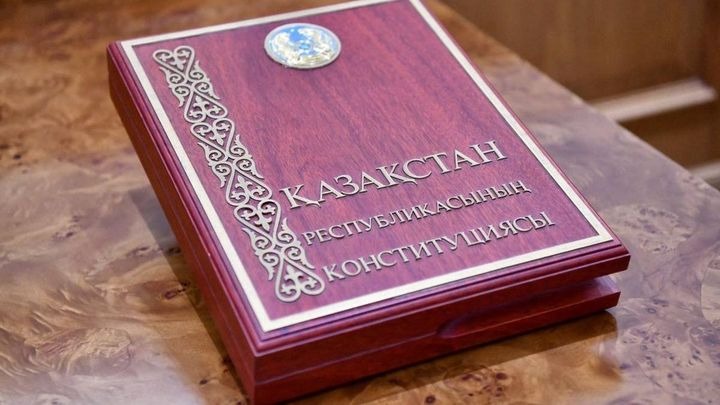
The Constitutional Reform Commission has presented to the public the draft of the updated Constitution of the Republic of Kazakhstan. This document is the result of a systematic analysis of proposals received from citizens, political parties, public organizations and experts, open public discussions and comprehensive elaboration of legal norms.
The proposed constitutional reform stems from the initiative of Head of State Kassym-Jomart Tokayev to radically modernize the country's political system. The President raised the idea of moving to a unicameral Parliament in his Address to the People of Kazakhstan on September 8, 2025, highlighting this step as an important decision that will give impetus to socio-economic development in the era of artificial intelligence.
In order to implement this initiative, a decree was signed on October 8, 2025 on the establishment of a working group on the implementation of parliamentary reform. The working group included leading legal scholars, experts, representatives of political parties and public associations.
In addition, ordinary citizens also actively participated in the discussion process. Proposals were submitted through the e-Otinish and eGov portals, and over two thousand initiatives were considered in about six months. All proposals were systematized and thoroughly analyzed.
At the 5th session of the National Congress, held in January 2026, the Head of State summed up the work done and expressed his position on the upcoming constitutional changes. The President noted that initially it was planned to amend about 40 articles of the Constitution, but during the discussions the scope of the changes expanded significantly.
On January 21, 2026, the Constitutional Commission was established. It included members of the National Congress, prominent lawyers, representatives of central and local government bodies, heads of the mass media, chairmen of maslikhats, representatives of regional public councils and the scientific and expert community. The commission, consisting of 130 people, covered all regions and social groups of the country.
The Commission is headed by the Chairperson of the Constitutional Court, Elvira Azimova. State Counselor Yerlan Karin and Deputy Prime Minister - Minister of Culture and Information Aida Balayeva have been approved as her deputies.
The commission's meetings were held in an open format and broadcast live. The proceedings were widely covered in the media, and lawyers, human rights defenders, public activists, and experts openly expressed their opinions.
As a result, amendments were developed covering all sections of the Constitution, including amendments to 77 articles. This represents a large-scale modernization covering more than 80 percent of the total text.
The concept of the new Constitution is aimed at strengthening the people-oriented nature of the state, defining the basic values inherent in society, and increasing the effectiveness of political institutions. The updated Preamble clearly states for the first time that human rights and freedoms are the main priorities of the state. Unity, solidarity, interethnic and interreligious harmony are recognized as the basis of statehood.
Sovereignty, independence, and territorial integrity were included among the immutable values. The principles of justice, law and order, and environmental responsibility were enshrined at the Constitutional level. In addition, it was clarified that the people of Kazakhstan are the sole source of state power and the owners of sovereignty.
One of the main ideas of the new Constitution is to prioritize education, science, culture, and innovation. This shows that the future of Kazakhstan is based not on natural resources, but on human capital. Also, for the first time, the protection of citizens' rights in the digital space was enshrined at the constitutional level.
The separation of state and religion was clearly established, the secular nature of the education and upbringing system was established. Marriage was defined as an equal, voluntary union between a man and a woman, and traditional family values were legally protected.
The project envisages the creation of a unicameral Parliament – the Kurultai – consisting of 145 deputies. It will be formed through a proportional electoral system and will have expanded powers. In addition, a new national dialogue platform, the People's Council of Kazakhstan, will be established.
The introduction of the vice-presidential institution, the adoption of a special article on the legal profession, the protection of intellectual property rights, the approval of the "Miranda Rule", and the updating of legal terminology are also among the important innovations.
In general, the new draft Constitution envisages a future-oriented modernization of Kazakhstan while preserving its established statehood. The final decision on the document will be made by the country's citizens in a nationwide referendum. The acceptance of proposals is still ongoing, and the work of the Constitutional Commission has not stopped.