THE NEW CONSTITUTION OF KAZAKHSTAN: COMPARISON OF THE OLD AND THE NEW
02.02.2026 15:19:35 22325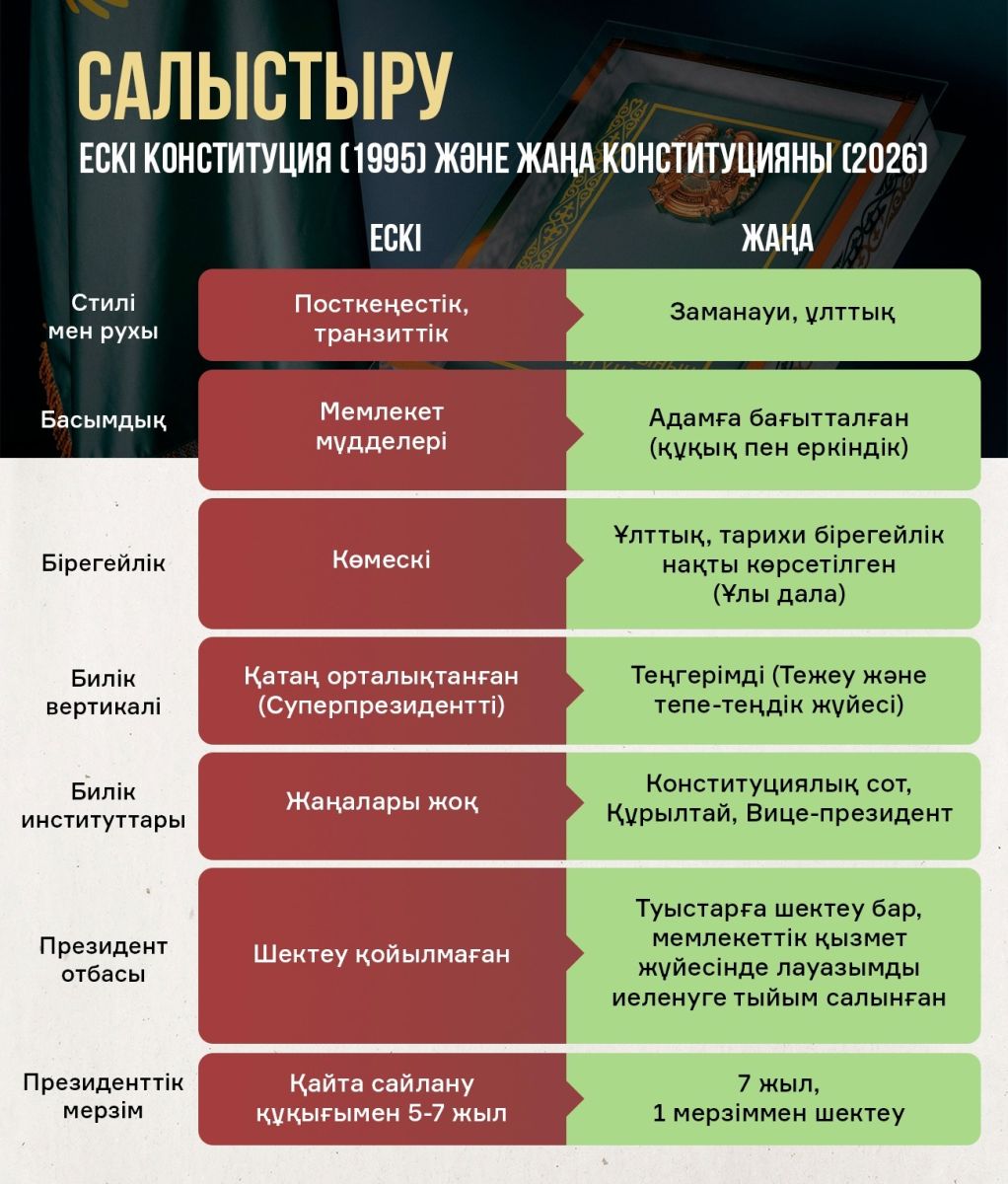
As part of the Constitutional Reform in Kazakhstan, a new Constitution is to be adopted in 2026. This document is aimed at modernizing the country's legal system and further improving the structure of state governance. Compared with the old Constitution (1995), the main features of the new Constitution are clearly reflected. Style and spirit: While the old Constitution had a post-Soviet, transit character, the new Constitution is based on a modern, national character. It clearly reflects the historical features and cultural uniqueness of our state.
Priority: While the old Constitution focused on the interests of the state, the new Constitution is focused on the individual. It clearly states the guarantees of rights and freedoms.
Uniqueness: The new Constitution clearly reflects national and historical uniqueness. In particular, through the idea of the "Great Steppe", the cultural and historical uniqueness of Kazakhstan was enshrined at the Constitutional level. This aspect was not clear in the old Constitution.
Vertical of power: While the old Constitution had a highly centralized, super-presidential system of power, the new Constitution has a balanced organization of power and a system of checks and balances.
Institutions of power: The new Constitution provides for new institutions to strengthen the country's political system: the Constitutional Court, the National Congress, and the Vice President. The old Constitution did not contain such innovations.
The President's Family: While the old Constitution did not restrict the president's relatives from holding public office, the new Constitution imposes strict restrictions on relatives. They cannot hold public office.
Presidential term: While under the old Constitution the president was elected for a term of 5–7 years and was eligible for re-election, under the new Constitution the president is elected for a single term of 7 years.
Thus, the new Constitution, while preserving the country's historical and cultural values, brings the system of governance into line with balanced and modern standards.