MURAT ABENOV ON THE NEW CONSTITUTION: THE BALANCE OF SOVEREIGNTY AND INTERNATIONAL LAW HAS BEEN PRESERVED
04.02.2026 17:50:59 2819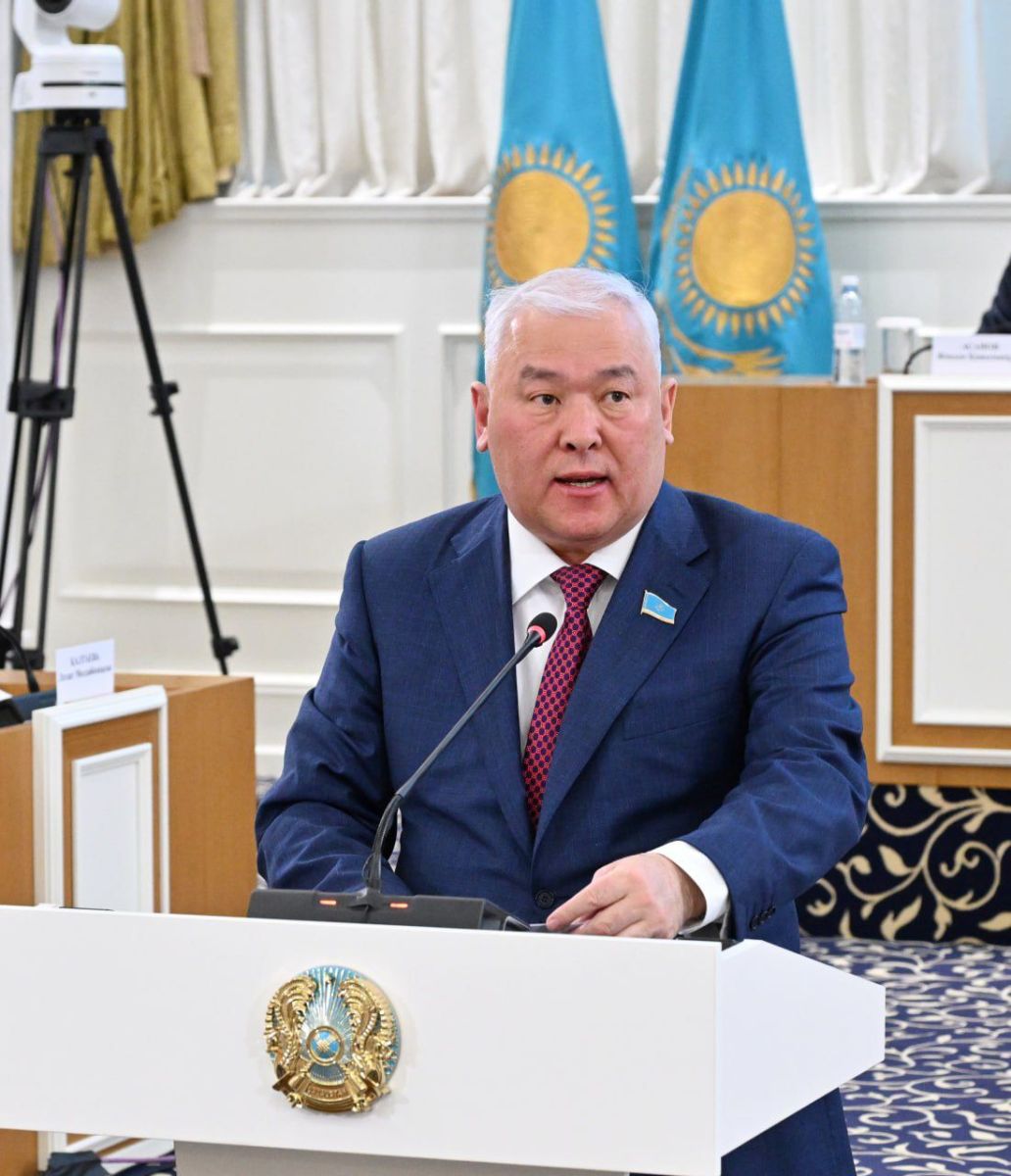
The issue of the relationship between international treaties and national legislation has been discussed by experts and the public for many years. Murat Abenov, a deputy of the Majilis, a member of the Constitutional Commission, explained the essence of the changes proposed in the new draft Constitution.
"We, together with our colleagues, have carefully studied the draft norms. The important thing is that the new Constitution does not contain any provisions that would negate the legal force of international treaties ratified by the Republic of Kazakhstan and generally recognized norms of international law," the deputy said.
According to him, Kazakhstan remains committed to the principle of mutual respect in relations with other states, as well as to the main international treaties on human rights within the framework of the UN. The draft text does not contain norms that would imply a waiver of international obligations regarding inalienable human rights and freedoms.
Focusing on the first block of changes, the deputy noted the contradictions that arose due to the primacy of international treaties over laws.
"The current Constitution provided that in the event of a conflict between a law and an international treaty, the norms of an international treaty could be applied. In practice, this led to the automatic application of the rules of an international agreement even in cases where they could negatively affect national legislation and the exercise of citizens' rights and freedoms," Abenov noted.
The deputy also drew attention to the risks related to the quality of international treaties themselves.
"Unspecified and unclear obligations that arose when concluding such contracts subsequently gained priority, making it impossible to correct them through the laws of Kazakhstan. This negatively affected the stability of the legal system," the speaker said.
As Murat Abenov explained, in the new draft Constitution, international treaties will retain the status of existing law, but the highest legal force will belong exclusively to the Constitution, without any reservations.
The second block of changes concerns the procedure for applying international treaties.
"Another shortcoming of the current Constitution is the norm that the procedure for the entry into force of international treaties "may be determined by the legislation of the Republic of Kazakhstan," Abenov noted.
He reminded that the mentioned norm contradicts the basic principles of the Constitution. According to him, such a structure creates legal uncertainty, does not clearly indicate the competence of state bodies, and opens the way to legal disputes, especially in the areas of international trade, technical regulation, and compliance with standards.
Murat Abenov also noted the importance of open ceremonies.
"Adoption of laws through open and public procedures, including discussions within the Kurultai, clearly defining the powers and responsibilities of state bodies, determining the necessary financial resources, as well as parliamentary oversight mechanisms, will create a more effective and predictable system for fulfilling international obligations," he said.
As Abenov noted, a clear hierarchy, in which the highest legal force belongs only to the Constitution, makes the legal system more understandable.
"In this case, the main goal of constitutional regulation is to ensure the stability of basic constitutional values, legal guarantees for citizens, and the compatibility of legislation," the deputy concluded.