The provisions of the new Tax Code were explained in Almaty
16.02.2026 19:26:17 2173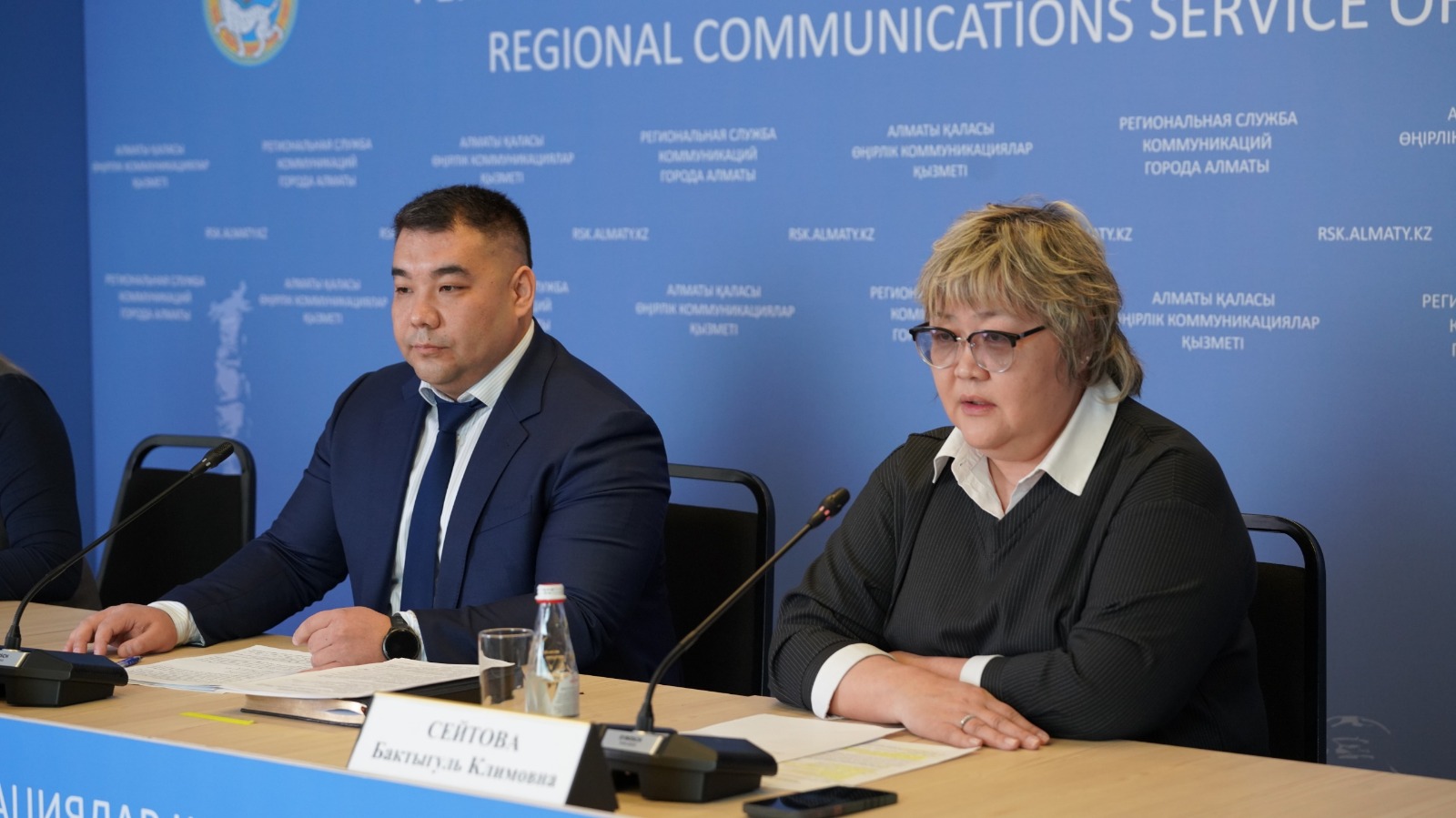
In Almaty, the transitional provisions of the new Tax Code were explained and a special tax regime that came into effect on January 1 of this year was discussed. A press conference held at the Regional Communications Service was devoted to this topic. At it, the leadership of the State Revenue Department of Almaty explained in detail what changes will occur for the self-employed, small businesses and farms, and what taxpayers should consider during the transitional period.
Before the introduction of the new Tax Code, Kazakhstan used seven special tax regimes, including a patent, a mobile application, a simplified declaration, a fixed deduction, a retail tax, and separate regimes for agricultural producers. Starting in 2026, the system will be streamlined: only the regime for the self-employed, a simplified declaration-based regime, and three special tax regimes for farms will remain. The goal of the changes is to make taxation clearer, reduce the administrative burden, and maximize access to social protection.
The new special tax regime for the self-employed is available to citizens and compatriots of Kazakhstan with low income who are not registered as individual entrepreneurs, do not use hired labor, and are engaged in permitted activities. Monthly income should not exceed 300 MCI (approximately 1.3 million tenge). Under this regime, registration as an individual entrepreneur is not required, tax reporting is not submitted, and the personal income tax rate is set at 0 percent.
"The new regime for the self-employed is the most simplified and is aimed at citizens with low and unstable incomes. The only obligation is to pay social payments in the amount of 4 percent of income. This will make the pension system, medicine and social insurance more accessible. This is an important step towards legalizing self-employment and protecting the rights of citizens," explained Nurlybek Ospanov, Head of the Administration of Individual Entrepreneurs and Individuals of the State Revenue Department of Almaty.
All operations of self-employed individuals are carried out through a special mobile application. There, checks are generated, income is recorded, and social payments are automatically calculated. For those working through Internet platforms, contributions are transferred by platform operators. In rural areas where communication is not available, obligations are fulfilled at the end of the month.
The special tax regime based on a simplified declaration for small and medium-sized businesses has been preserved and updated. It can be used by taxpayers with an annual income of up to 600 thousand MCI (approximately 2.6 billion tenge) and whose type of activity is not included in the list of prohibited activities. The regime provides for a flat rate of 4 percent on personal income tax or corporate income tax, exemption from value-added tax and social tax, as well as filing declarations twice a year and paying taxes twice.
"We have retained the simplified declaration, but made it more flexible and convenient for business. The high income threshold will allow entrepreneurs to grow their business without fragmentation, and the ability to take into account the wage fund will encourage official payment of wages and legalization of employment," said Baktygul Seitova, head of the public services department of the State Revenue Department of Almaty.
The procedure for applying the special regime for farms has been largely preserved. After the abolition of the unified land tax, such farms will continue to pay personal income tax at the previous rate - 0.5 percent of income. They will be exempt from a number of taxes, including property tax, transport tax, VAT and social tax, and will submit reports once a year. Tax payments will be made twice a year, taking into account the seasonality of agricultural production.
The procedure for transitioning to new regimes was also explained at the press conference. To use the simplified declaration, it is necessary to submit a notification through the taxpayer's account, the E-Salyq Business application, the bank's mobile application or a paper form by March 1, 2026. Otherwise, the taxpayer will automatically be transferred to the generally established regime. Self-employed persons who previously worked through a patent or mobile application will be automatically deregistered as individual entrepreneurs if they do not choose another regime. Farms will be automatically transferred without notification.
"The transition period is intended to allow taxpayers to adapt to the new rules calmly and without undue hardship. It is important to determine the tax regime in a timely manner and, if necessary, provide notification. All changes are aimed at simplifying procedures and creating a more transparent and fair tax system," the department noted.
The Almaty Department of State Revenues urged entrepreneurs and self-employed citizens to familiarize themselves with the new requirements in advance and use available digital services to transition to the appropriate tax regime.