
AMNESTY 2026: WHOSE DEBTS WILL THE TAX AUTHORITY FORGIVE?
14.07.2026 19:35:45 1953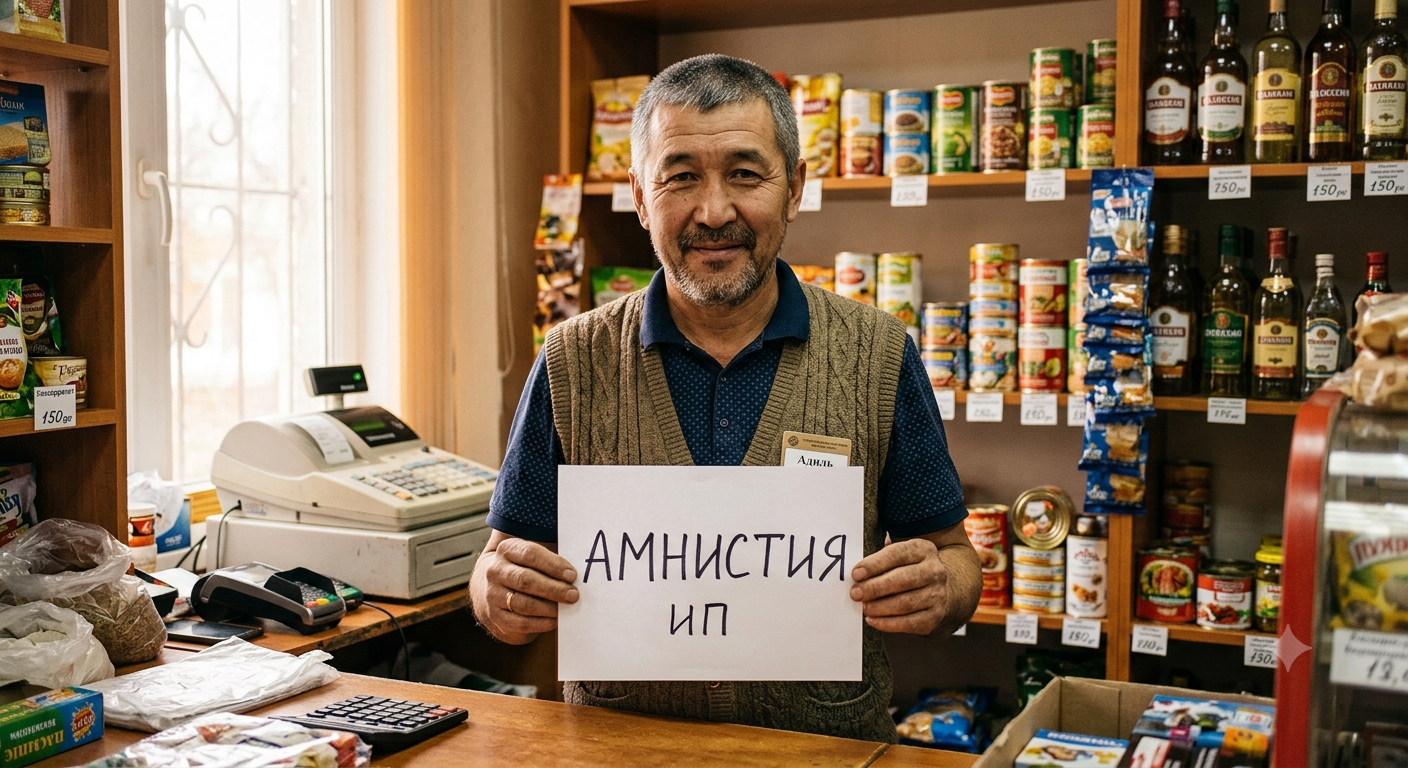
According to the Law of the Republic of Kazakhstan dated July 1, 2026, No. 329-VIII "On Amnesty in Connection with the Adoption of the New Constitution of the Republic of Kazakhstan," a large-scale exemption from administrative penalties is provided, including violations handled by the state revenue authorities.
Below is a detailed analysis of which tax and customs penalties are subject to write-off and which are not.
Key Conditions for Exemption
The amnesty applies to individuals, individual entrepreneurs, and persons engaged in private practice (lawyers, notaries, etc.).
The main criteria for writing off a fine are:
- The fine was imposed by an official of a state revenue authority, not by a court.
- The fine was not executed (not paid in full or in part) at the time the law entered into force — July 1, 2026.
- The violation is not included in the list of exceptions established by Article 8 of the Law on Amnesty.
Which violations ARE EXEMPT from fines
Violations considered by the state revenue authorities under Article 720 of the Code of Administrative Offences (CAO) fall under the amnesty, provided they are not on the list of "prohibited" articles. Generally, these are procedural and less severe violations:
- Violation of registration deadlines: failure to meet the deadline for submitting an application for tax registration (Art. 269 CAO).
- Errors in special tax regimes: unlawful application of a special tax regime (Art. 270 CAO).
- Suspension of reporting: conducting business activities during a period when filing reports has been suspended (Art. 271 CAO).
- Overdue declarations: failure to submit tax reporting within the established deadline, if a fine has been imposed for this (Art. 272 CAO).
- Cash register (KKM) violations: all violations related to the use of cash registers, including failure to issue a receipt or cash discrepancies (Art. 284 CAO).
- Customs formalities: most administrative violations in the field of customs affairs (Arts. 521–558 CAO), if they were reviewed by the state revenue authorities. These include violations of the customs control zone regime, deadlines for filing declarations, procedures for storing goods, and others.
- Violations during export/import within the EAEU: failure to fulfill obligations when moving goods within the Customs Union (Art. 287 CAO), except for cases qualified as concealment of taxable items.
🔴 Which violations ARE NOT subject to amnesty
The law establishes a strict list of exceptions. Fines under these articles must be paid in full, as they are recognized as the most socially dangerous or as infringing upon the financial stability of the state.
Amnesty is denied for the following articles of the CAO:
- Court-imposed fines: any tax or customs violation where the fine ruling was issued by a court.
- Shadow economy: concealment of taxable items and other property (Art. 275 CAO).
- Intentional non-payment: evasion of payment of assessed taxes and other mandatory payments (Art. 277 CAO).
- Distortion of reporting: understating the amounts of taxes and payments in declarations and calculations (Art. 278 CAO).
How will the procedure work?
The exemption should occur automatically. The state revenue authorities are obliged to terminate the execution of the relevant rulings on the imposition of fines on their own initiative. Government agencies are given six months from the date the law comes into effect (i.e., until the end of 2026) to implement all amnesty measures. Enforcement proceedings for such cases are also subject to termination.
Source : https://www.gov.kz/memleket/entities/kgd-zhetysu/press/news/details/1254940?lang=ru