New Delhi, India
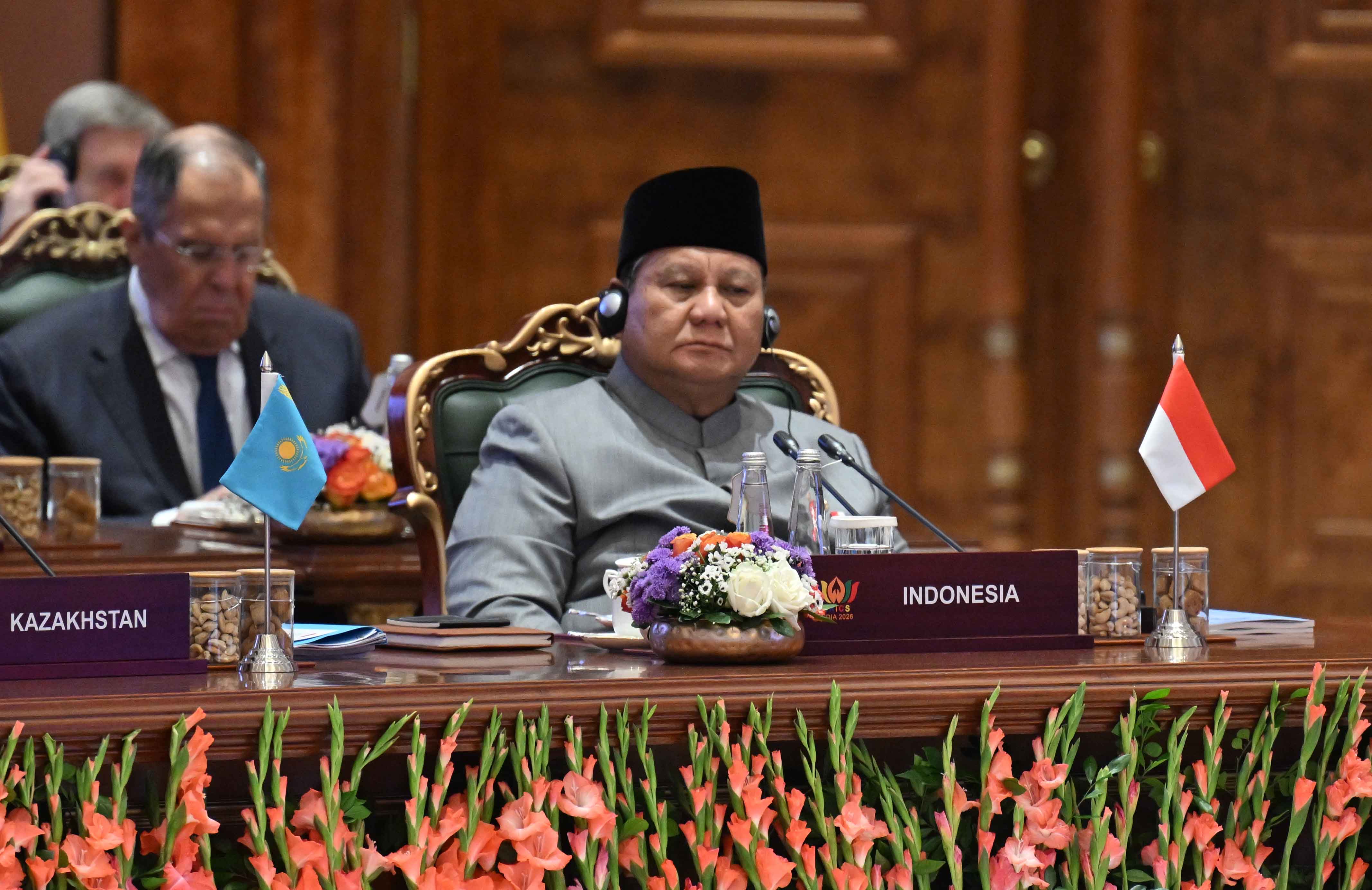
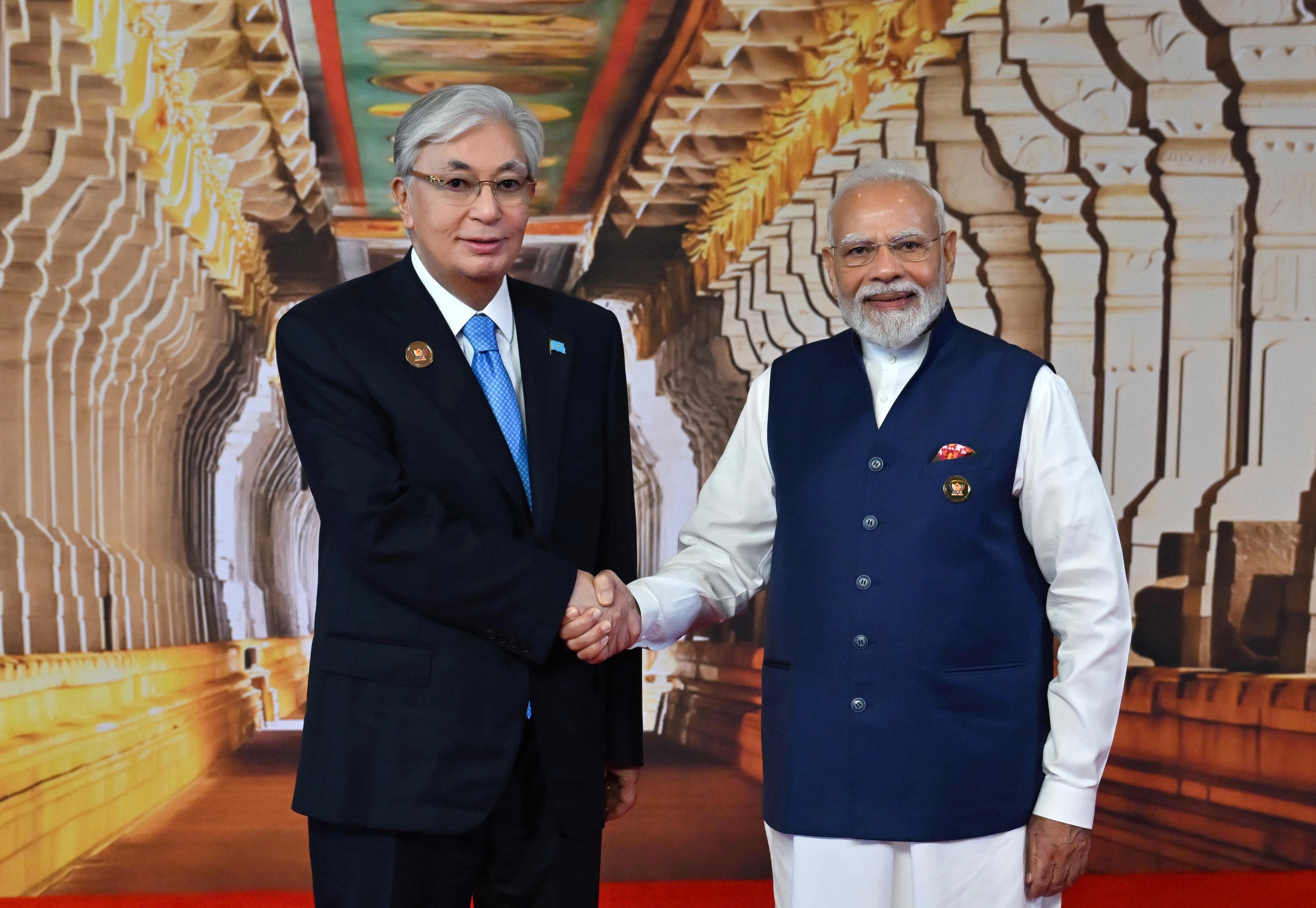
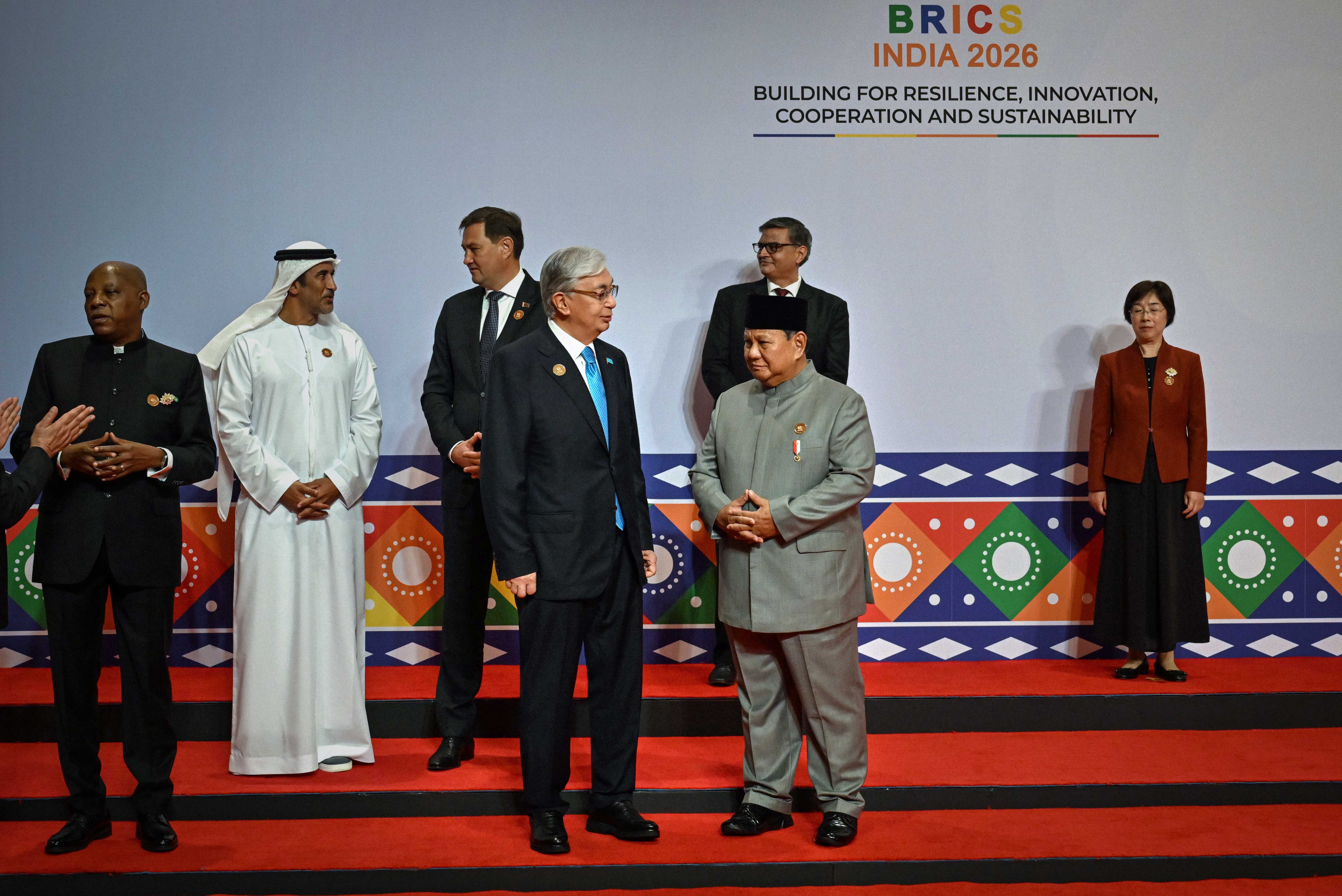
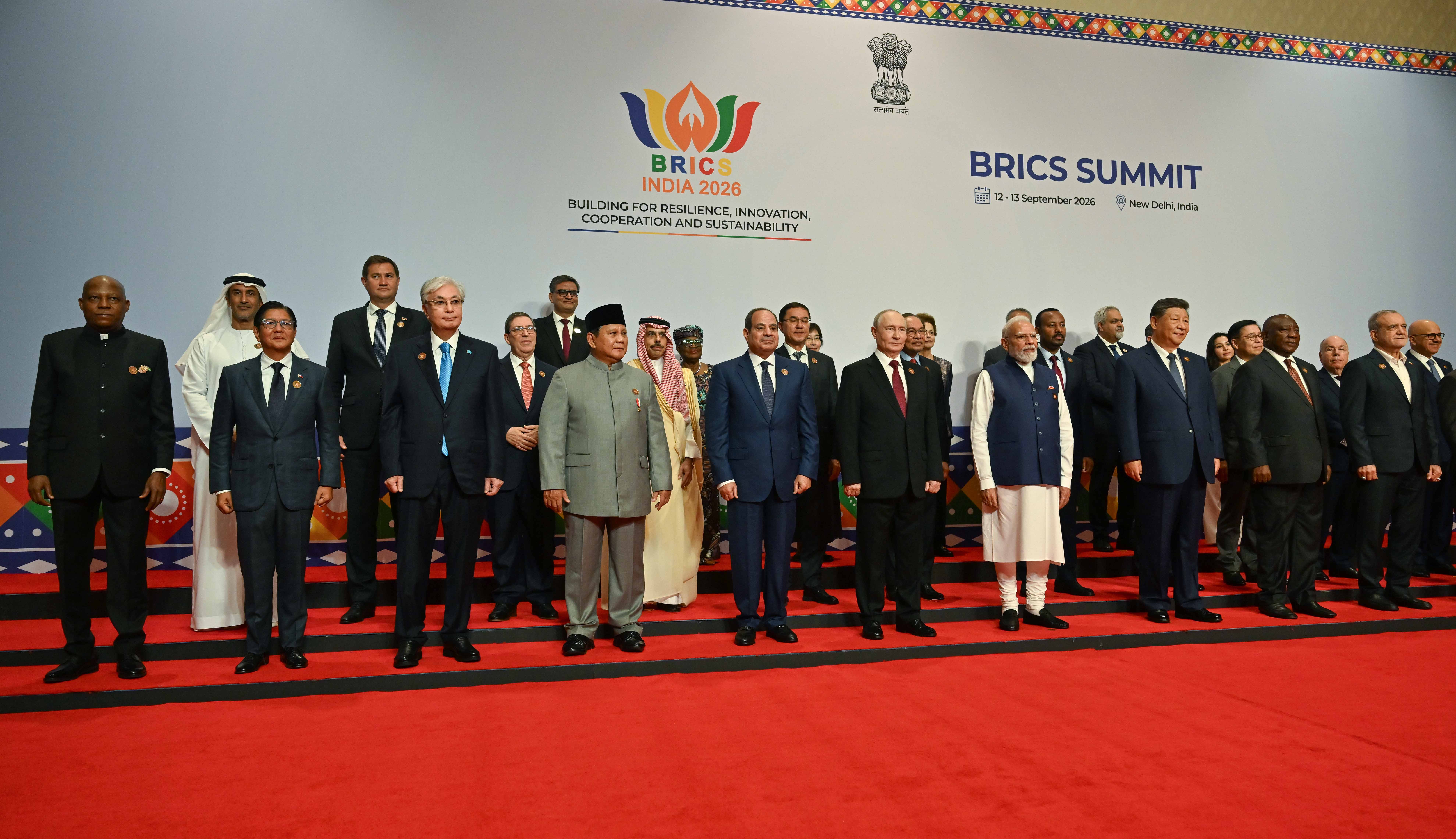
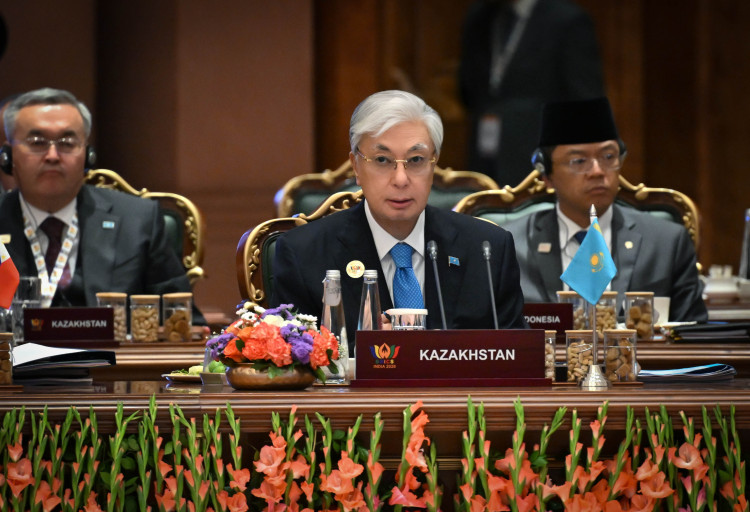
President Kassym-Jomart Tokayev delivered remarks at the BRICS plenary session held in the Outreach/BRICS Plus format in New Delhi under the theme “Building for Resilience, Innovation, Cooperation and Sustainability”.
The Head of State thanked Prime Minister Narendra Modi for the hospitality and the excellent organization of the BRICS Summit.
“It is very symbolic that we meet here in New Delhi, a city that reflects India’s uniquely rich cultural heritage. As BRICS marks twenty years of cooperation, India’s chairmanship has advanced extremely important people-centric agenda, guided by the principle “Humanity First”, the President of Kazakhstan said.

As Kassym-Jomart Tokayev noted, representing nearly half of the world’s population and 40% of global GDP, BRICS has both significant ability and responsibility to reduce divisions and deliver tangible results.
“However, its full potential will remain out of use unless we address the fundamental challenges facing the global community and halt the erosion of trust among major powers. Such tendency reflects what the 2026 Global Peace Index calls the “Great Fragmentation” – an era marked by geopolitical confrontation, rising militarization, weakening multilateral institutions and growing trade barriers. Last year, the global economic impact of violence reached almost 22 trillion US dollars or 10 % of world’s GDP. This is an alarming sign. We witness how regional conflicts go far beyond its borders and heavily impact the global economy. Disruptions of vital maritime routes revealed weakness of global energy, food and trade supply chains”, the Head of State noted.

President Tokayev identified the growing threat to cross-border infrastructure as another serious concern.
“Peace and strategic stability are therefore essential to economic resilience and sustainable development. Yet, the stakes extend far beyond economics. The priority is to move from regional de-escalation to lasting stability through political dialogue and sustained diplomacy. More broadly, erosion of international security architecture and protracted conflicts are increasing the risk of a new arms race and strategic miscalculations and practical wrongdoings. Therefore, high-level dialogue among nuclear powers is in demand to reduce nuclear risks, including those linked to new technologies, Kassym-Jomart Tokayev stated.
The Head of State noted that the declining trust among major powers constrains the ability of the United Nations to act effectively.
“Yet there is no alternative to the UN. Reform must strengthen its capacity for conflict prevention and collective action. The UN Charter must be upheld consistently, not selectively. Security Council reform should reflect today’s realities, with just representation for Asia, Africa and Latin America. Emerging middle powers must also have a stronger voice in global decision-making, as they can preserve dialogue and help narrow geopolitical divisions and gaps. As a partner country, Kazakhstan sees BRICS as an open platform for practical cooperation that complements the UN-centered multilateral system and connects peoples, regions and markets. Our unwavering principle is to seek common ground on each difficult issue. This approach reflects our balanced and target oriented foreign policy guided by the pursuit of mutually beneficial engagement with all partners,” the President emphasized.

Kassym-Jomart Tokayev noted that Kazakhstan’s trade turnover with BRICS members and partner countries reached approximately 72 billion dollars in 2025.
“Having industrial, transit and technological potential, we aim to diversify our trade and investment ties with all BRICS countries. As chair of the Eurasian Economic Union, Kazakhstan supports closer economic cooperation with BRICS and progress towards a free trade agreement with India. As a reliable supplier of major commodities, my country contributes to global supply security. We see significant opportunities for closer partnerships in value-added processing across energy, critical minerals and agriculture with a particular emphasis on technology transfer, knowledge-sharing and joint investments. And beyond this, we offer considerable scope for jointly developing large-scale infrastructure projects, including those of international significance. The New Development Bank could explore financing commercially viable projects in Kazakhstan”, the Head of State said.

President Tokayev noted that strengthening transport connectivity would help unlock this potential and give further impetus to shared economic growth.
“While being one of Eurasia’s transit and logistics hubs, Kazakhstan by expanding railways, ports and digital infrastructure, wants to make cross-border transport faster and more predictable. Last year, transit freight through Kazakhstan approached 40 million tonnes. Our long-term goal is to reach 100 million tonnes a year. Overall, our transit network already handles up to 85% of overland freight between China and Europe. Through the Middle Corridor, Kazakhstan serves as a gateway connecting Asia and Europe across the Caspian Sea. Further synergy of this vital transit route with the Belt and Road Initiative and International North-South Transport Corridor can form more integrated and resilient Eurasian transport network. In this regard, I welcome India’s proposed BRICS Logistics Supply Chain Cooperation Framework because it may foster practical cooperation within the BRICS Plus”, Kassym-Jomart Tokayev said.

The Head of State went on to highlight the role of Artificial Intelligence, which is already reshaping economies, societies and the global balance of power.
“By combining technological strengths with the scale of leading developing economies, BRICS can create new opportunities for innovation, investment and sustainable growth. Kazakhstan regards Artificial Intelligence as a strategic priority and is ready to leverage its advanced computing infrastructure as well as national and UN digital centers to expand effective cooperation within BRICS Plus. As a concrete step, I propose to launch a BRICS Plus Partnership for Artificial Intelligence to connect national AI centres, to provide access to AI labs, science projects and develop multilingual solutions”, the President emphasized.
Kassym-Jomart Tokayev also stressed that resilience requires more than technological progress.
“I would like to mention the water issues which is essential for all of us. Global water governance remains fragmented. That is why we proposed to establish an International Water Organization as a specialized UN agency to bring greater coherence to global efforts and strengthen intergovernmental coordination. I invite BRICS members and partners to join the international consultations launched by our country”, the Head of State said.
Concluding his speech, the President of Kazakhstan stated that multipolarity without effective multilateralism would inevitably make the “Great Fragmentation” even more dangerous for the humankind.
In his view, Kazakhstan therefore advocates multipolarity based on sovereign equality, a balance of interests and shared responsibility. Kassym-Jomart Tokayev expressed confidence that the New Delhi Summit would contribute to advancing this vision through practical cooperation and shared progress.