
Constitution-2026: the main directions of reforms
23.09.2026 11:16:41 776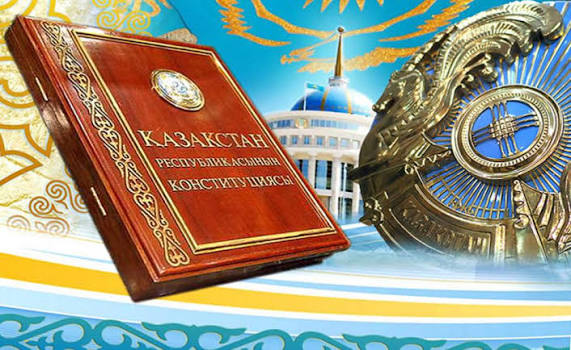
On July 1, 2026, a new Constitution officially entered into force in Kazakhstan, adopted in a national referendum. This historic step has radically changed the balance of power, strengthened the protection of citizens' rights and laid new economic principles for a Just Kazakhstan.
The renewal of the basic law was supported by 87.15% of citizens who voted in the referendum. Experts note that the new version strengthens legal guarantees for the population and makes the government more responsible to society. The scale of modernization is unprecedented – the reform affected about 84% of the text of the previous edition of the basic law.
The most notable institutional change is the elimination of the bicameral Parliament. The Senate and the Mazhilis have stopped their work. They are being replaced by the Kurultai, an updated unicameral Parliament.
The Kurultai will include 45 deputies elected exclusively by proportional representation (on party lists) for a 5-year term. The deputy must be a citizen of the Republic of Kazakhstan over the age of 25 and have lived in the country for the last 10 years. Deputies have full immunity.
The Kurultai passes laws, controls the work of the government (up to the expression of no confidence), coordinates the appointments of the Prime Minister and Vice-President, and appoints judges of the Supreme Court. The President retains the right to appoint the Prosecutor General, the heads of the National Security Committee, the National Bank, the Constitutional and Supreme Courts. The Parliament is informed about the appointments after the fact.
The post of Vice-president (which previously existed in 1991-1996) is returning to the political system of Kazakhstan. The President appoints him with the consent of the Kurultai. If the Parliament refuses to approve it twice, the head of state has the right to dissolve the Kurultai. The Vice President provides assistance to the President in cooperation with the Parliament and the Government. The appearance of this position changes the scheme of transfer of powers with the early departure of the head of state. First of all, the duties pass to the Vice-President, second to the Chairman of the Kurultai, and third to the Prime Minister. After that, new presidential elections must be announced within 7 days and held 2 months in advance.
The powers of the former Parliament have been officially terminated. Elections to the new Kurultai are scheduled for August 2026. At the same time, the adoption of a new Concept of Legal Policy will begin to bring all the laws of the country in line with the updated Constitution.
One of the main innovations is the establishment of the Halyk Kenesi (People's Council). This is the highest advisory body, which will include ordinary citizens of Kazakhstan. The People's Council is designed to strengthen national unity, but its main feature is real legal levers. The Council received the right to directly submit draft laws to the Kurultai for consideration and propose holding national referendums.
The Constitution of 2026 has been adapted to the realities of artificial intelligence and digitalization. For the first time, the basic law establishes strict protection of personal data in the digital environment. This is a step towards the establishment of Kazakhstan as a regional center of digital law.
An analogue of the famous "Miranda rule" is being introduced – the duty of representatives of law enforcement agencies to immediately read out their rights to detainees. Lawyers emphasize the importance of the norms on the right to clearly know what a detainee can expect, as well as guaranteed compensation for harm in case of unlawful prosecution.
A total ban on foreign financing of political parties and NGOs engaged in political activities has been introduced. Caring for nature and protecting the environment have now been elevated to the rank of a constitutional duty.
As part of the rethinking of economic and social relations, the new Constitution of the Republic of Kazakhstan clearly outlines not only the rights of citizens, but also their mutual obligations to the state. Thus, an important milestone of fiscal justice is the updated approach to the formation of the country's budget, the foundation of which is fixed in the basic law.
Article 35 of the Constitution states: "The payment of legally established taxes, fees and other mandatory payments is the duty and obligation of everyone." This provision enshrines the principle of universal taxation, ensuring that any fiscal obligations can be imposed solely within the legal framework adopted by the new legislative body, the Kurultai.
The preamble of the updated document enshrines the unshakeable principles of Kazakhstan: sovereignty, independence, unitarity, rule of law and inviolability of borders. #Change of borders#Law and Order
Department of Explanatory Work and contact center of the Department of State Revenue in Pavlodar region
Source : https://www.gov.kz/memleket/entities/kgd-pavlodar/press/news/details/1296777?lang=ru