The government reviewed preliminary results of economic development for the first nine months
29.09.2026 05:02:21 209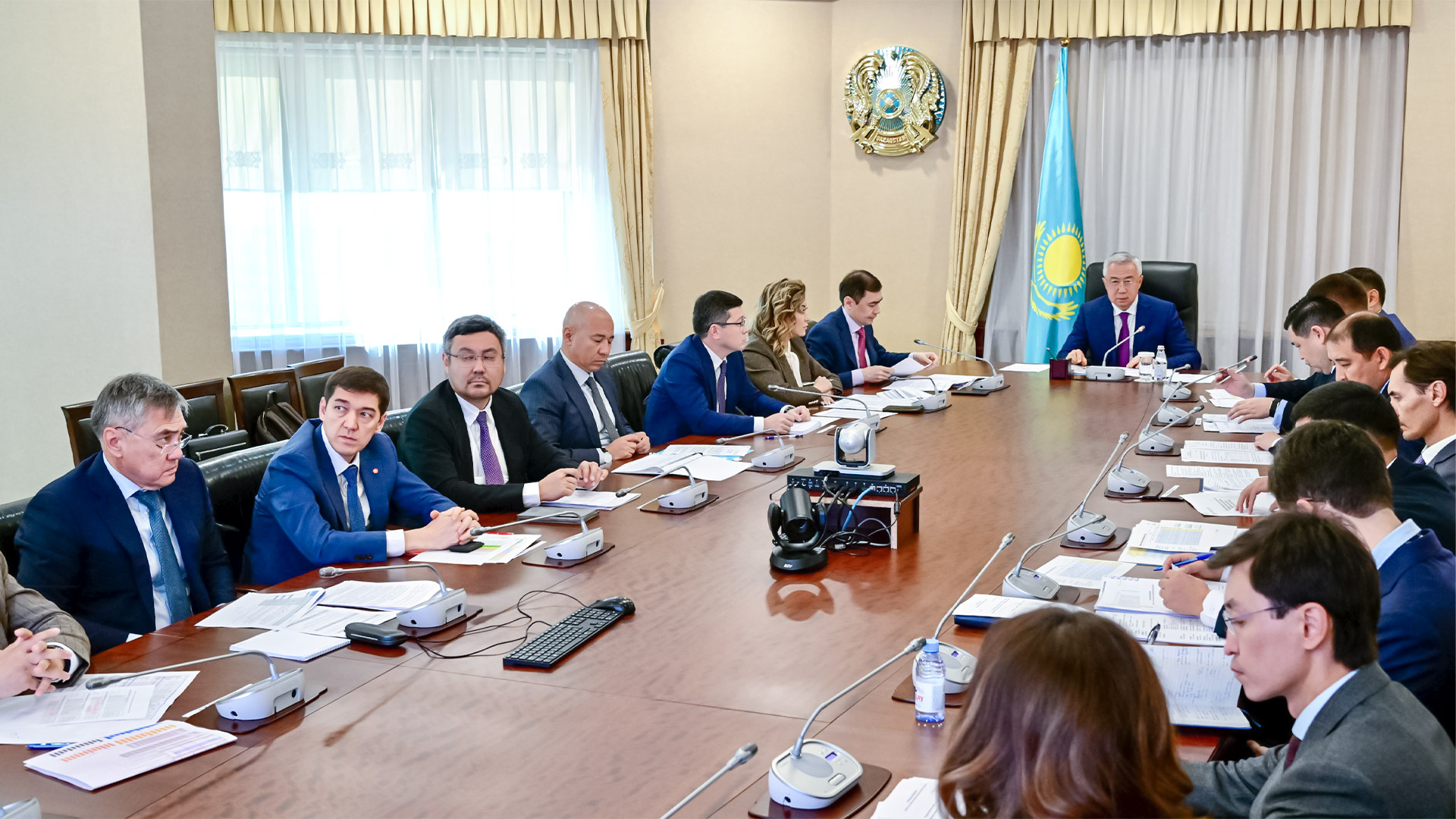
At a meeting of the Economic Growth Headquarters chaired by Deputy Prime Minister and Minister of National Economy Serik Zhumangarin, preliminary results of economic growth for the first nine months were reviewed.
The main drivers of GDP growth remain construction, manufacturing, transportation and warehousing, trade, and agriculture.
In the manufacturing industry, the volume of physical volume growth is expected to continue in January–September. The main contributors are mechanical engineering and the chemical industry.
In the first eight months of 2026, passenger car production in mechanical engineering increased by 34.2%, reaching 117,200 units. Production of trucks and special-purpose vehicles increased by 18.5%, railway platforms by 76.6%, and passenger cars by 40.9%. In the chemical industry, sulfuric acid production increased by 4%, polypropylene by 24.5%, and ammophos by 10.3%.
Meanwhile, the volume of physical volume growth in metallurgy remains at 97.5%. Measures are being taken to expand the raw material base to improve these indicators. Negotiations are underway with potential suppliers both domestically and internationally.
Serik Zhumangarin heard a report on the measures taken by the Ministry of Industry and Construction, jointly with the Ministry of Trade and Integration, to provide enterprises with additional raw materials. Following the discussions, he instructed that efforts to expand the raw material base for the metallurgical industry be continued.
Positive momentum continues in construction. From January to August, construction volume amounted to 6.1 trillion tenge, or 115.6% compared to the same period last year. Growth was recorded in 18 regions. An increase in construction volume is projected for the first nine months. At the same time, growth in housing construction continues: 11.3 million square meters of housing were commissioned in the first eight months, a 3.6% increase compared to last year. A total of 12.8 million square meters of housing is projected for the first nine months.
The transport and logistics sector also maintains positive momentum. Rail transportation of grain and coal will contribute primarily to the growth in freight traffic. Grain transportation volumes reached 13.6 million tonnes, an increase of 3 million tonnes, coal by 1.1 million tonnes, and iron ore by 2.8 million tonnes. Continued growth will also be supported by sustained oil and gas transportation volumes and the implementation of infrastructure projects.
Trade continues to make a significant contribution to economic growth. The trade volume index for January-August was 106%, with turnover reaching 51.5 trillion tenge. Steady growth is projected for the first nine months. Wholesale trade contributed the most, reaching 34.7 trillion tenge, driven in part by growth in trade in metallurgical products, grain, and fuel. Retail trade turnover reached 17 trillion tenge, with the highest growth rates observed in food products.
Regional trade development was also discussed at the meeting. The Deputy Prime Minister tasked akimats (regional administrations) with ensuring the high-quality implementation of regional trade development roadmaps in accordance with the Prime Minister's instructions.
In the agro-industrial complex, steady growth in agriculture is expected for the period from January to September. This positive trend is projected to continue through the end of the year. Crop production will provide the main contribution due to an increase in the gross oilseed harvest, which is higher than last year's harvest rate. In livestock farming, growth will be supported by increased milk production due to the ramp-up of modern dairy farms, as well as increased meat production thanks to preferential lending for feedlots.
The food industry is making an additional contribution to economic growth. Positive production trends are expected for the period from January to September due to the launch of new capacity and the expansion of output at existing enterprises.
In conclusion, Serik Zhumangarin emphasized the importance of ensuring that projected indicators are met across all key sectors by the end of the first three quarters.
"Our goal for the rest of the year is not to accelerate the pace, but to strictly adhere to the approved work schedules. Over the past eight months, virtually all key resources have already been allocated and the necessary reserves have been created. Now the challenge is to use them effectively, disburse funds in a timely and high-quality manner, and adhere to the planned work schedules in key sectors. The primary focus must be on production chains, ensuring that the established capacities are provided with the necessary resources and components," the Deputy Prime Minister concluded.
Source : https://www.gov.kz/memleket/entities/economy/press/news/details/1300142?lang=ru