
Society
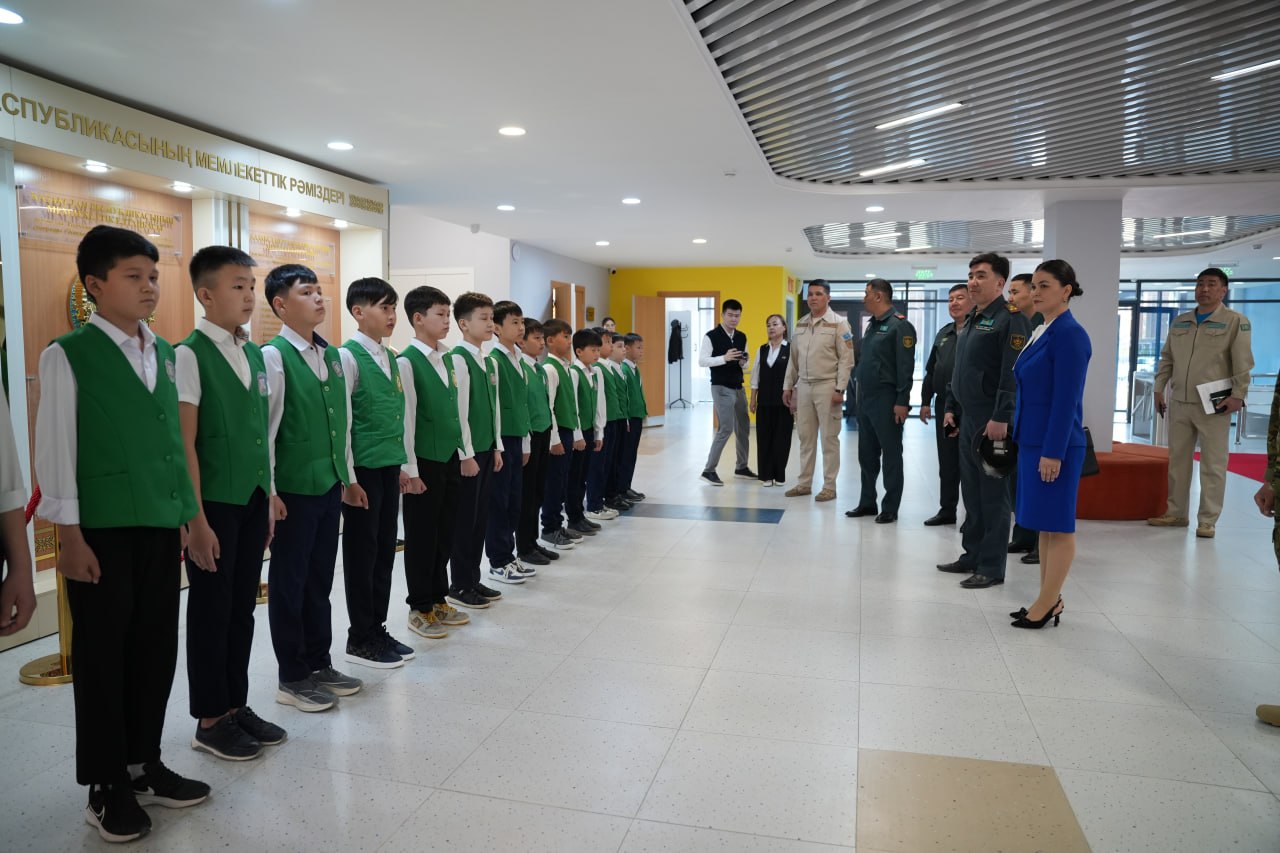
Over a thousand schoolchildren from Kyzylorda took part in a large-scale patriotic event. 01.04.2026
Source : https://www.gov.kz/memleket/entities/mod/press/news/details/1191496?lang=kk
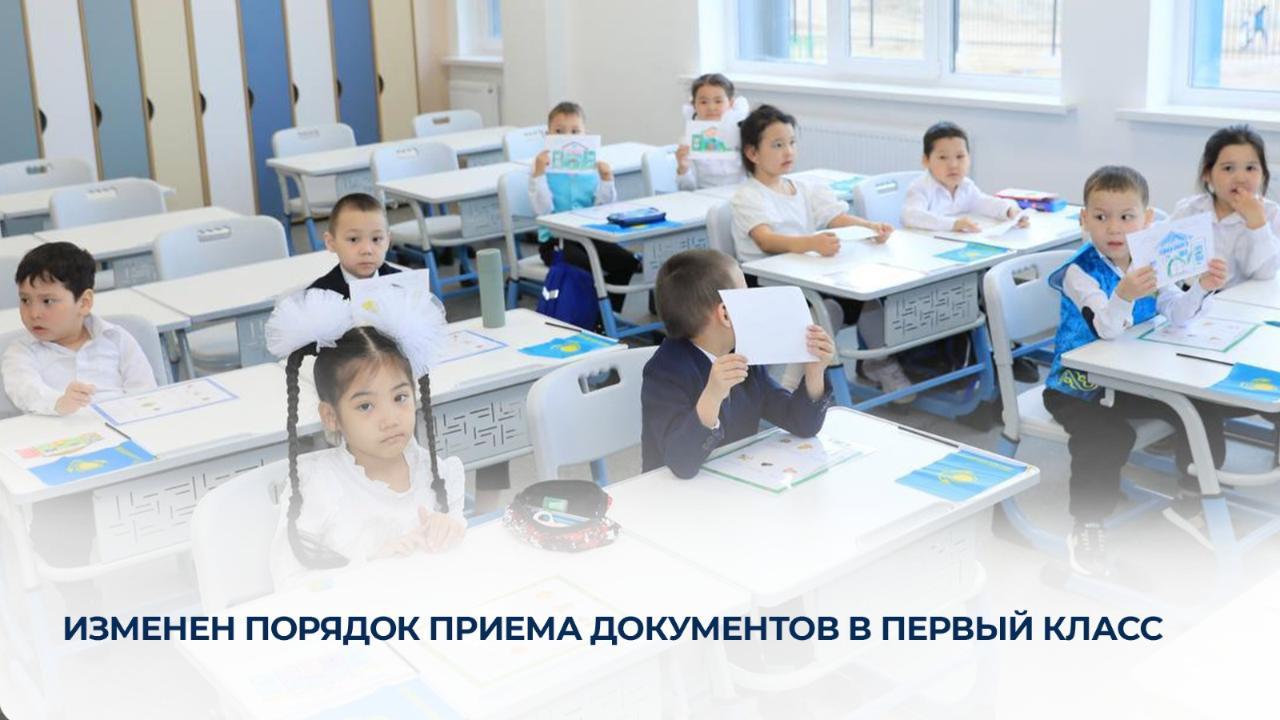
In the Karaganda region, documents for first grade will be accepted on June 29 01.04.2026
В Казахстане изменили порядок приёма детей в первый класс: старт кампании перенесли с 1 апреля на 27 мая, а для бесперебойной работы цифровых систем введён региональный график подачи заявлений. В Карагандинской области приём документов пройдёт с 29 июня по 31 августа (в рабочие дни).Какие документы понадобятсяДля граждан Казахстана:- заявление от родителя или законного представителя;- копия свидетельства о рождении ребёнка;- медицинские документы (паспорт здоровья форма 026/у-3 и карта прививок 065/у);- две фотографии 3×4 см.Дети, которые прошли предшкольную подготовку и остаются в той же школе, будут зачислены в первый класс автоматически. Это значительно упрощает процесс: не нужно собирать полный пакет документов заново. При этом родители по-прежнему могут выбрать другую школу — в этом случае документы подаются в общем порядке.Для иностранцев:Для них действуют те же базовые требования, однако родители должны иметь разрешение на временное или постоянное проживание в Казахстане.- заявление;- копия свидетельства о рождении;- справка о состоянии здоровья;- две фотографии 3×4 см;- документ, подтверждающий законное проживание (вид на жительство, РВП, удостоверение беженца или кандаса и др.);- документ, удостоверяющий личность, и миграционная карта.Зачисление детей, прибывших из-за рубежа, осуществляется с учётом уровня их образования. Если документы отсутствуют, решение принимает специальная комиссия.С вопросами можно обращаться по номеру (8-7212) 50-45-25.Source : https://www.gov.kz/memleket/entities/edu-osakarovka/press/news/details/1191482?lang=kk
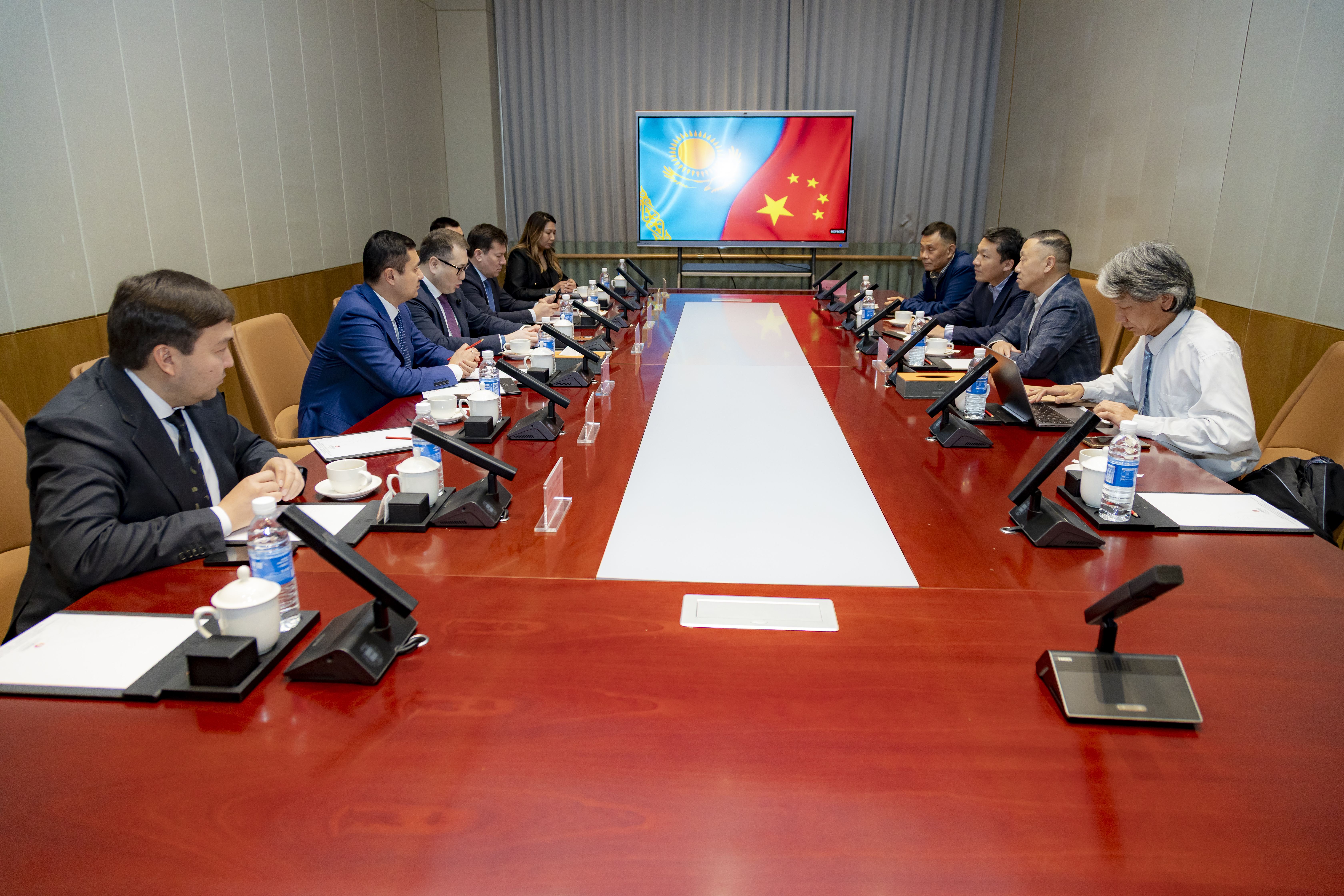
Kazakh companies reached $125 million in Qingdao deals 01.04.2026
Following the trade and economic mission in Qingdao, Kazakh companies reached agreements with Chinese partners totaling $125 million. Shandong Province is one of China's largest economic regions with a developed industrial base and a capacious consumer market. According to QazTrade, by the end of 2025, trade turnover between Kazakhstan and Shandong reached $2.2 billion, having increased by over 40%. More than 25 Kazakh companies participated in the mission. The main focus was on direct B2B meetings with Chinese importers and distributors. The Kazakh side presented products from the agro-industrial complex and deep processing. Flour, oil and fat products, honey, dairy products, and confectionery goods generated high interest from Chinese businesses. During the visit, the Minister of Trade and Integration of the Republic of Kazakhstan, Arman Shakkaliyev, held meetings with the leadership of Shandong Province and business representatives. Issues of expanding supplies and transitioning from negotiations to specific contracts were discussed. The topic of industrial cooperation was also addressed. The Minister visited the production facilities of Haier, one of the world's largest manufacturers of household appliances. The year 2026 has been declared the Year of Import of Kazakh Goods in China. In Kazakhstan, it is the Year of Export to China. Against this backdrop, the trade and economic mission in Qingdao became a practical step towards expanding supplies. It was organized by the Ministry of Trade and Integration of the Republic of Kazakhstan together with Kazakhstan's single export development operator, QazTrade.Source : https://www.gov.kz/memleket/entities/mti/press/news/details/1191475?lang=kk

Санаторий объектілеріне қойылатын санитариялық-эпидемиологиялық талаптар 01.04.2026
Қазақстан Республикасы Денсаулық сақтау министрінің м.а. 2022 жылғы 10 тамыздағы № ҚР ДСМ-78 «Балалар сауықтыру және санаторлық объектілерге қойылатын санитариялық-эпидемиологиялық талаптарды бекіту туралы» бұйрығына сәйкес санаторлық-сауықтыру ұйымдары белгіленген санитариялық нормалар мен қағидалардың сақталуын қамтамасыз етуге міндетті.Санитариялық-эпидемиологиялық талаптар санаторлық объектілерді жобалау, салу, реконструкциялау және пайдалану процестеріне қолданылады.Санаторлық ұйымдар мыналарды қамтамасыз етуге міндетті:аумақтың тиісті санитариялық жағдайын, оның ішінде абаттандыру мен аймақтарға бөлуді;инженерлік жүйелердің (сумен жабдықтау, су бұру, жылумен қамтамасыз ету, желдету және жарықтандыру) жарамды күйде жұмыс істеуін;санитариялық-гигиеналық режимнің сақталуын, оның ішінде ағымдағы және жалпы тазалау, дезинфекция, дезинсекция және дератизация жүргізуді;белгіленген талаптарға сәйкес қауіпсіз және сапалы тамақтандыруды ұйымдастыруды;демалушыларға медициналық қызмет көрсетуді, оның ішінде денсаулық жағдайын бақылауды және эпидемияға қарсы шараларды уақтылы қабылдауды;міндетті медициналық тексерулерден және гигиеналық даярлықтан өткен персоналды жұмысқа жіберуді.Санитариялық-эпидемиологиялық талаптарға сәйкес келмеген жағдайда санаторлық объектілерді пайдалануға жол берілмейді.Санитариялық талаптарды сақтау – демалушылардың денсаулығы мен қауіпсіздігін қамтамасыз етудің кепілі.«Алтынсарин аудандық санитариялық-эпидемиологиялық бақылау басқармасы» РММ басшысы А.Ж. ӘлмағанбетSource : https://www.gov.kz/memleket/entities/kostanai-altynsarin-audany-akimat/press/news/details/1191440?lang=kk
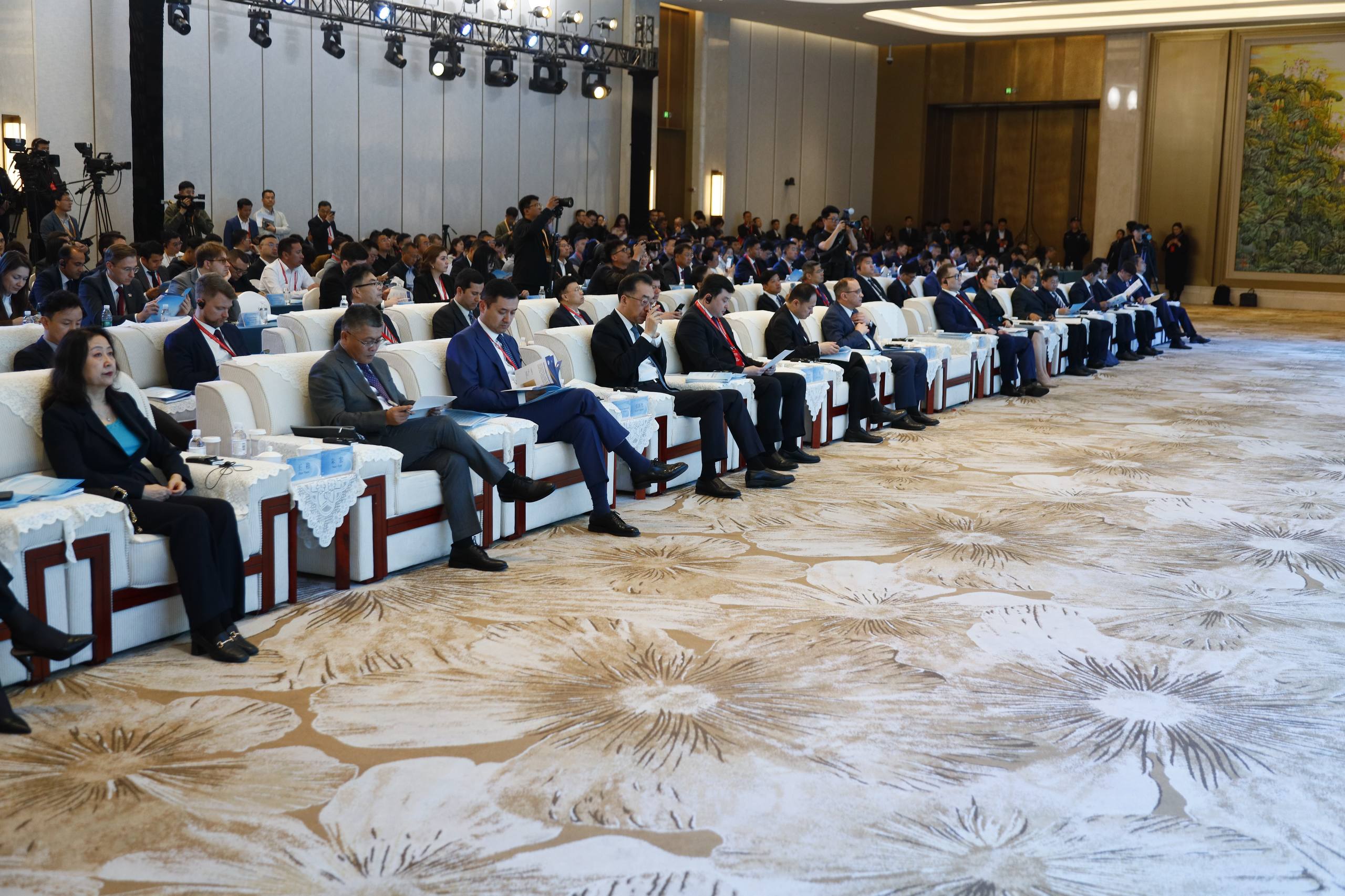
Kazakhstan boosts exports to China: Shakkaliyev participated in the SCO forum 01.04.2026
As part of an official visit to China, Minister of Trade and Integration Arman Shakkaliyev participated in the "Export to China - SCO Selection" forum, which became one of the key platforms for promoting Kazakh exports to the Chinese market. Opening the forum, the Minister emphasized that Kazakhstan views China as a strategic partner and consistently develops cooperation in trade, investment, and industrial cooperation. "Under the leadership of our heads of state, Kazakh-Chinese relations have reached the level of an eternal comprehensive strategic partnership, demonstrating steady growth in trade turnover, expansion of investment cooperation, and deepening of industrial cooperation. Today, China is Kazakhstan's largest trading partner, and Kazakhstan, in turn, remains a reliable supplier of energy resources, agricultural products, and raw materials for the Chinese economy.Over the past three years, bilateral trade turnover has shown steady and dynamic growth. From $41 billion in 2023 to $48.7 billion in 2025."Behind these impressive figures lies the high complementarity of the two countries' economies, the pragmatic work of enterprises, as well as significant support from such developed regions of China as Shandong Province," noted Minister Arman Shakkaliyev. "The 'Export to China' platform creates effective conditions for direct business interaction and access to the market of Shandong Province and China as a whole," he noted. Also, the Minister of Trade and Integration of the Republic of Kazakhstan held meetings with the leadership of Shandong Province, Deputy Governor Wen Nuan and Mayor of Qingdao City Ren Gang. During the negotiations, the parties discussed key areas for the development of trade, economic, and investment cooperation, including industrial cooperation, logistics, and the introduction of modern technologies. As the Minister noted, "Kazakh-Chinese cooperation today is at an unprecedentedly high level and demonstrates steady positive dynamics." According to him, "it is important not only to increase trade volumes but also to ensure its qualitative transformation — with a focus on high value-added products and the development of processing." Special attention was paid to the implementation of joint investment projects. Kazakhstan confirmed its readiness to create joint productions using advanced and environmentally friendly technologies. "It is fundamentally important for us that new productions comply with high international environmental standards and contribute to sustainable development," the minister emphasized. The parties also noted the importance of interregional cooperation. Shandong Province is one of China's leading industrial and trade centers and an important partner of Kazakhstan. By the end of 2025, trade turnover between Kazakhstan and Shandong Province reached $2.2 billion US dollars, demonstrating high growth. The Minister expressed confidence that "the intensification of interregional interaction will give additional impetus to the development of the entire complex of Kazakh-Chinese partnership." As part of the event, the Minister also visited the national pavilion of Kazakhstan, which showcased products from domestic manufacturers. The exhibition demonstrated the country's export potential and the readiness of Kazakh companies to expand their presence in the Chinese market. The Minister also emphasized the practical focus of the event, noting that "the format of direct dialogue and B2B meetings will allow moving to specific agreements and launching joint projects in the shortest possible time." During the forum, Kazakhstan's opportunities for increasing non-resource exports, developing e-commerce, and forming sustainable value chains were presented.In conclusion, the Minister emphasized that Kazakhstan aims to further deepen cooperation with China: "We view China as a key and priority partner and are confident that through joint efforts we can bring our interaction to a qualitatively new level." The Minister also visited the production facilities of Haier in Qingdao City — one of the world leaders in household appliances and "smart home" digital solutions.Furthermore, meetings were held with the leadership of leading companies in Shandong Province — Qingdao Dadu Grain Co., Ltd. and RuiXue Global Co., Ltd., during which prospects for the development of investment cooperation, expansion of agricultural product supplies, and implementation of joint projects were discussed, including the creation of modern productions and the introduction of advanced agricultural technologies in Kazakhstan. It is worth noting separately that already on the first day of the forum, Kazakh companies achieved practical results: agreements were signed with Chinese partners for the supply of products worth about $125 million US dollars, including feed meal, oilseeds, and other agricultural products. This result is a significant indicator of the platform's effectiveness and demonstrates the high interest of Chinese businesses in Kazakh exports even at the initial stage of the forum.Source : https://www.gov.kz/memleket/entities/mti/press/news/details/1191453?lang=kk
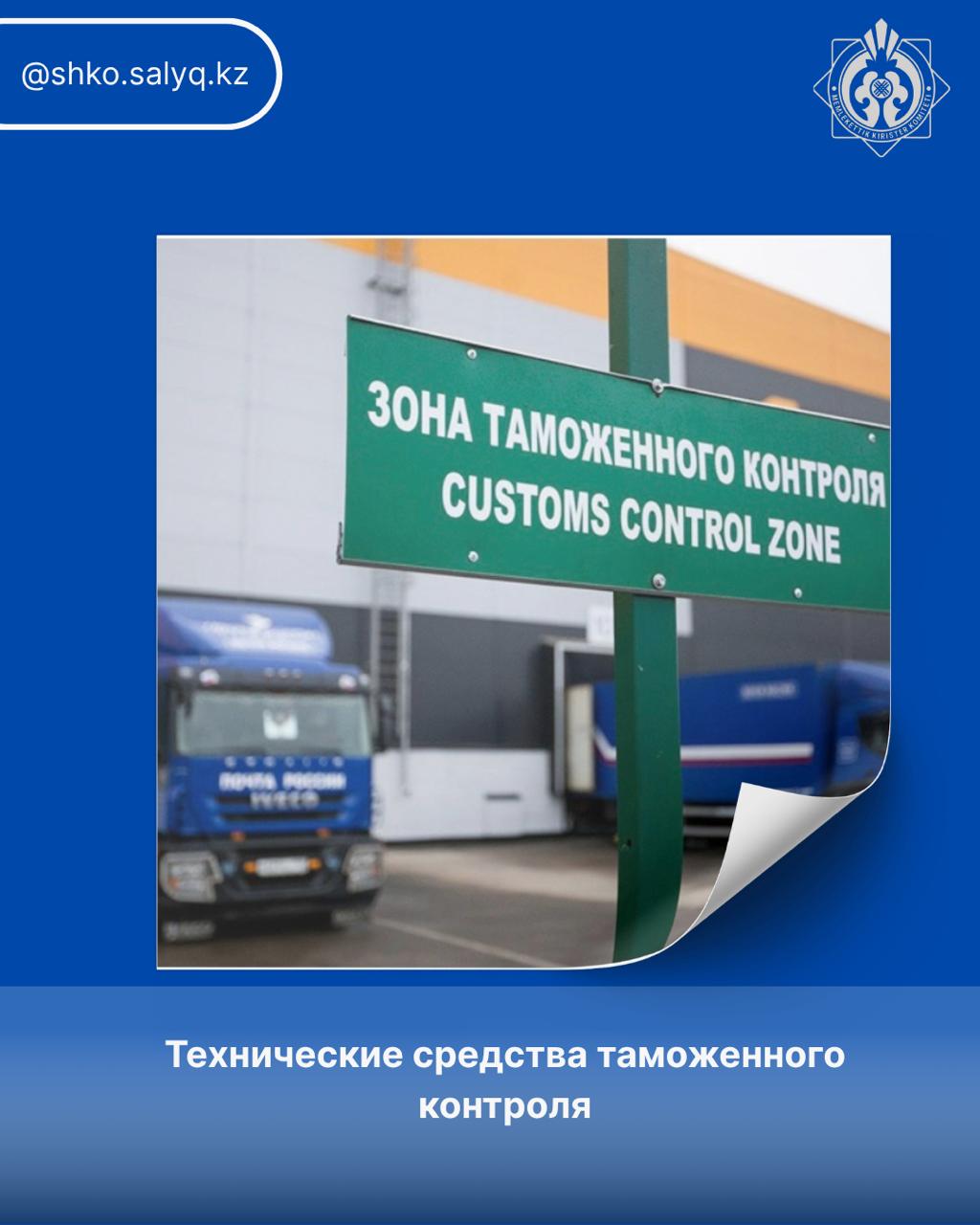
Technical Means of Customs Control 01.04.2026
During customs control, customs authorities may use technical means of customs control (equipment, devices, measuring instruments, tools, and other technical means) and other technical resources. The list and procedure for the use of technical means of customs control are approved by the authorized body.Technical means of customs control must be safe for human life and health, as well as for animals and plants, and must not cause harm to people, goods, or vehicles.By Order of the Minister of Finance of the Republic of Kazakhstan No. 84, the list and rules for the use of technical means of customs control (TMCC) were approved. The purpose is to increase the efficiency and safety of customs control, accelerate procedures, and prevent violations.Main groups of technical means:Automatic transport accounting systemsRadiation control systemsWeight and dimension control systemsInspection and screening complexes (ISC)Search tools (metal detectors, mirrors, probes, endoscopes, thermal imagers)Identification tools (narcotics detectors, explosives detectors, metal and refrigerant analyzers)Scales, seal verification devices, scanners, and barcode printersVideo surveillance systemsInformation carrier control systemsOperational communication (radios — portable, vehicle-mounted, or stationary for staff communication)Rules for use:• Selection of TMCC depends on the type of goods and the type of control.• Mandatory compliance when working with radiation and X-ray devices.• Compliance with technical regulations and standards.• TMCC must not damage goods or their packaging.Thus, TMCC provides a modern approach to customs control by introducing technological, safe, and efficient inspection methods. It helps Kazakhstan meet international standards and ensures transparency at the border.Source : https://www.gov.kz/memleket/entities/kgd-vko/press/news/details/1191386?lang=kk
Announcement on the Commencement of the Internal Analysis of Corruption Risks at the KSU "Tourist Information Center of the East Kazakhstan Region" from April 1 to April 30, 2026. 01.04.2026
The KSU "Tourist Information Center of the East Kazakhstan Region" of the Tourism Department of the East Kazakhstan Region, located at 35 Ordzhonikidze St., Ust-Kamenogorsk, hereby announces that an internal analysis of corruption risks is being conducted during the period from April 1, 2026, to April 30, 2026. In case of questions or suggestions, you may contact us via telephone at 8 (7232) 21-54-86 or email at info@viziteast.kz. The anti-corruption policy of the KSU "Tourist Information Center of the East Kazakhstan Region" of the Tourism Department of the East Kazakhstan Region is a set of interrelated principles, procedures, and specific measures aimed at preventing corruption in its activities. The main objectives of the Department's anti-corruption policy are:— prevention of corruption, including the identification and subsequent elimination of the causes of corruption (corruption prevention);— ensuring accountability for corruption offenses;— fostering anti-corruption awareness among the institution's employees.The main tasks of the enterprise's anti-corruption policy are:— identifying and eliminating causes that contribute to corruption within the institution;— minimizing the risk of involving the institution's employees in corrupt activities;— developing measures aimed at ensuring the transparency of employees' actions in situations involving potential corruption;— improving methods of education in moral standards and the foundations of anti-corruption resilience;— ensuring accountability for corruption offenses;— monitoring the effectiveness of anti-corruption policy measures;— establishing the obligation for employees to know and comply with the fundamental norms of anti-corruption legislation.The fundamental regulatory legal act in the field of combating corruption is the Law of the Republic of Kazakhstan "On Combating Corruption." HELPLINES: Call-center of the National Anti-Corruption Bureau – 1424 Police Department of the East Kazakhstan Region – 8 /7232/ 23-43-32 East Kazakhstan Regional Prosecutor's Office – 8 /7232/ 24-32-99 Reporting Corruption OffensesIf you have encountered manifestations of corruption by employees of the KSU "Tourist Information Center of the East Kazakhstan Region" of the Tourism Department of the East Kazakhstan Region or have become an involuntary witness to illegal corruption violations: You may report a fact of a corruption offense in the following ways:via telephone at + 7 7232 21-54-86in writing to the postal address: 070004, Republic of Kazakhstan, EKR, Ust-Kamenogorsk, 40 M. Gorky St., "Tourism Department of EKR" SE, or 35 Ordzhonikidze St., Ust-Kamenogorskin writing to the email address: r.kurmusheva@akimvko.gov.kz or info@viziteast.kzSource : https://www.gov.kz/memleket/entities/tourism-vko/press/news/details/1191334?lang=kk
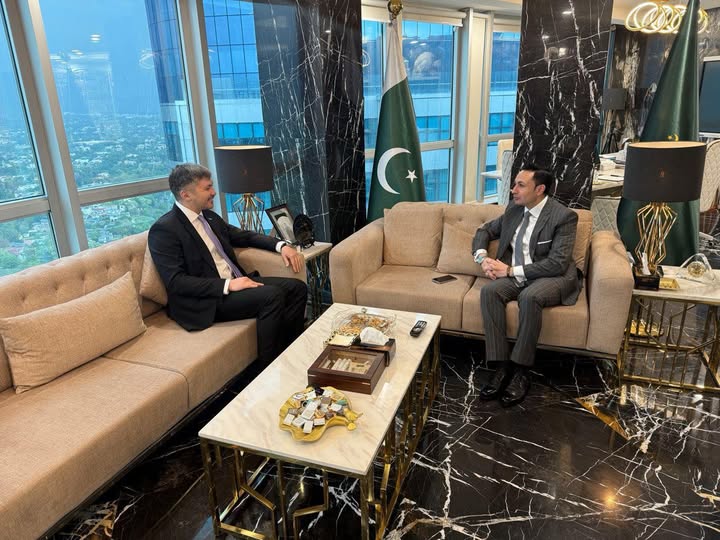
On the Development of Kazakhstan-Pakistan Cooperation in the Tourism Sector 01.04.2026
Islamabad, March 30, 2026 — The Ambassador of the Republic of Kazakhstan to Pakistan H.E. Mr. Yerzhan Kistafin, held a meeting with the National Coordinator to the Prime-Minister of Pakistan on Tourism, Mr. Sardar Yasir Ilyas Khan.During the meeting, Ambassador Y.Kistafin highlighted the key outcomes of the state visit of the President of Kazakhstan to Islamabad in February of this year. Both sides expressed their high appreciation for the negotiations and events held during the visit, noting their strong productivity and substantive outcomes.In the context of the agreements reached, the parties discussed prospects for further strengthening bilateral cooperation in the tourism sector. Particular attention was given to fostering partnerships between tour operators, hotel establishments, and specialized educational institutions.Mr. Sardar Yasir Ilyas Khan conveyed his intention to organize a delegation visit to cities of Kazakhstan later this year, aimed at holding meetings with relevant government authorities and representatives of Kazakhstan’s tourism industry.Ambassador Y.Kistafin reiterated his sincere appreciation to Mr. Sardar Yasir Ilyas Khan for the continued support and warm hospitality extended to Kazakhstani delegations visiting Pakistan.Source : https://www.gov.kz/memleket/entities/mfa-islamabad/press/news/details/1191338?lang=kk
Announcement on the Commencement of the Internal Analysis of Corruption Risks at the "Tourism Department of the East Kazakhstan Region" State Institution from April 1 to April 30, 2026. 01.04.2026
The State Institution "Tourism Department of the East Kazakhstan Region," located at 40 M. Gorky St., Ust-Kamenogorsk, hereby announces that an internal analysis of corruption risks is being conducted during the period from April 1, 2026, to April 30, 2026.In case of questions or suggestions, you may contact us via telephone at 8(7232)713-268 or email at r.kurmusheva@akimvko.gov.kz.The anti-corruption policy of the SI "Tourism Department of the East Kazakhstan Region" is a complex of interrelated principles, procedures, and specific measures aimed at preventing corruption in its activities.The main goals of the department's anti-corruption policy are:— prevention of corruption, including the identification and subsequent elimination of the causes of corruption (corruption prevention);— ensuring accountability for corruption offenses;— fostering anti-corruption awareness among the institution's employees.The main tasks of the enterprise's anti-corruption policy are:— identifying and eliminating causes that contribute to corruption within the institution;— minimizing the risk of involving the institution's employees in corrupt activities;— developing measures aimed at ensuring the transparency of employees' actions in situations involving potential corruption;— improving methods of education in moral standards and the foundations of anti-corruption resilience;— ensuring accountability for corruption offenses;— monitoring the effectiveness of anti-corruption policy measures;— establishing the obligation for employees to know and comply with the fundamental norms of anti-corruption legislation.The fundamental regulatory legal act in the field of combating corruption is the Law of the Republic of Kazakhstan "On Combating Corruption."HELPLINES: Call-center of the National Anti-Corruption Bureau – 1424 Police Department of the East Kazakhstan Region – 8 /7232/ 23-43-32 East Kazakhstan Regional Prosecutor's Office – 8 /7232/ 24-32-99Reporting Corruption Offenses If you have encountered manifestations of corruption by employees of the SI "Tourism Department of the EKR" or have become an involuntary witness to illegal corruption violations:You may report a fact of a corruption offense in the following ways:via telephone at + 7 7232 713-268in writing to the postal address: 070004, Republic of Kazakhstan, EKR, Ust-Kamenogorsk, 40 M. Gorky St., SI "Tourism Department of the EKR"in writing to the email address: r.kurmusheva@akimvko.gov.kzSource : https://www.gov.kz/memleket/entities/tourism-vko/press/news/details/1191351?lang=kk

On the practice of taxation of subjects of natural monopolies 01.04.2026
On the practice of taxation of subjects of natural monopoliesIn order to clarify the practice of taxation of subjects of natural monopolies (SEM), the following is reported.According to the information of the Committee on Regulation of Natural Monopolies of the Ministry of National Economy of the Republic of Kazakhstan, the formation of tariffs for regulated services is carried out in accordance with Article 118 of the Entrepreneurial Code of the Republic of Kazakhstan and the legislation on natural monopolies.In accordance with subparagraph 13) of Article 4 of the Law of the Republic of Kazakhstan "On Natural Monopolies", regulated services are goods, works and services provided by subjects of natural monopolies and subject to state regulation.At the same time, the investment program, according to subparagraph 7) of Article 4 of the said Law, is a set of investment measures aimed at developing, modernizing and maintaining infrastructure, as well as achieving established technical, economic and environmental indicators.In accordance with paragraph 6 of Article 21 of the Law, the implementation of the investment program, as well as the repayment of borrowed funds raised for its implementation, is carried out at the expense of profits and depreciation included in the tariff.Thus, the profit and depreciation deductions included in the tariff have a strictly targeted purpose and should be used exclusively for the implementation of approved investment programs. The use of these funds in a free or residual manner within the framework of the costly tariff method is not provided.In addition, the tariff estimate includes other expenses necessary for the implementation of regulated activities, including labor costs, mandatory deductions, acquisition of strategic resources (coal, fuel oil, electricity, water, and others), depreciation, repairs, and investment measures.Consequently, the tariff provides for the reimbursement of economically justified costs and the formation of funds allocated for the development of infrastructure and the implementation of investment programs.In this regard, the application of the tax and budget legislation of the Republic of Kazakhstan should be carried out taking into account the requirements of the relevant legislation on natural monopolies and the specifics of the targeted use of funds.We note that the tariff is a monetary expression of the cost of a regulated service, formed on the basis of economically reasonable costs, and is used exclusively for tariff regulation purposes. At the same time, the tariff estimate cannot be considered as a basis for determining tax obligations.At the same time, if deviations are detected between the indicators provided for in the tariff estimate and the actual costs incurred, such facts are subject to reflection and analysis in accordance with the established procedure.Source : https://www.gov.kz/memleket/entities/kgd-kostanay/press/news/details/1191283?lang=kk
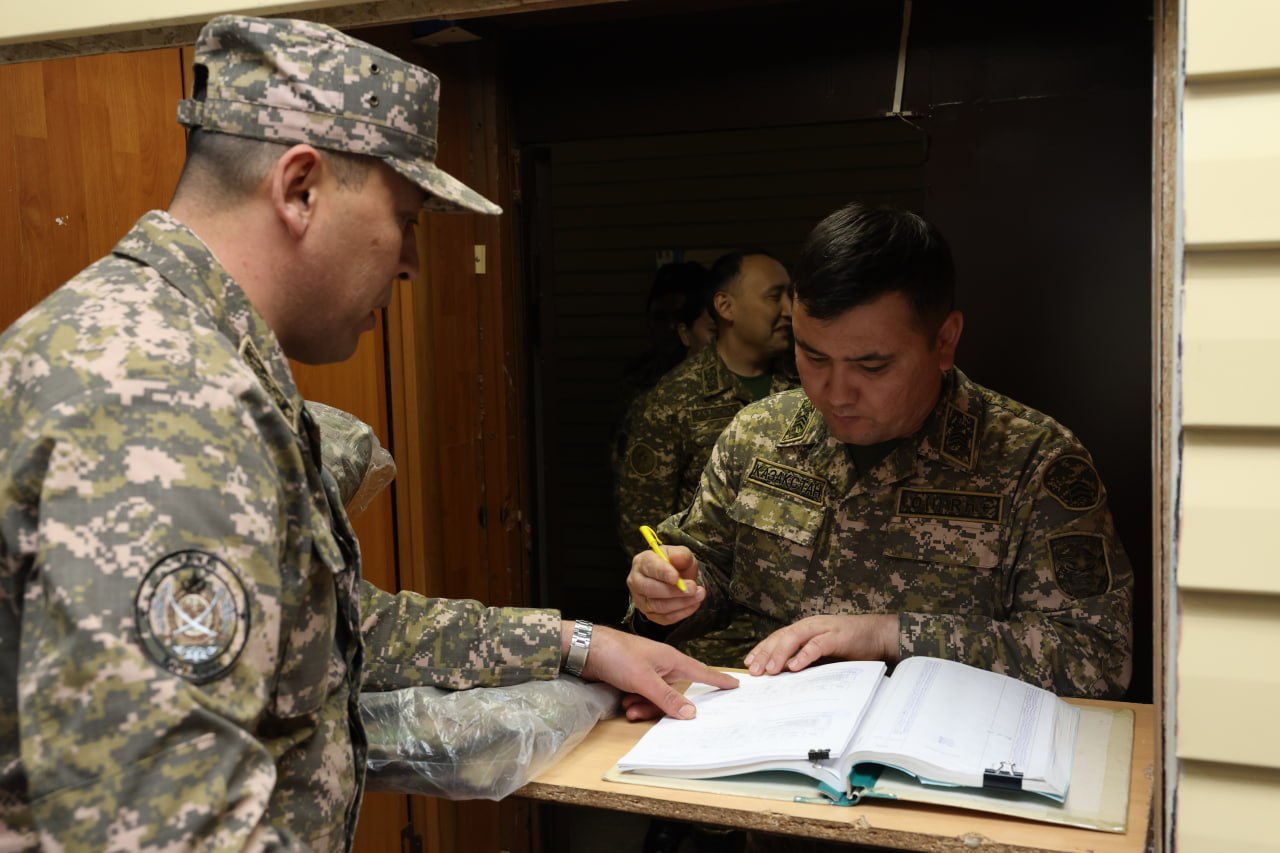
The soldier's opinion is the main criterion: the army will create units for field testing of uniforms and equipment 01.04.2026
Source : https://www.gov.kz/memleket/entities/mod/press/news/details/1191282?lang=kk
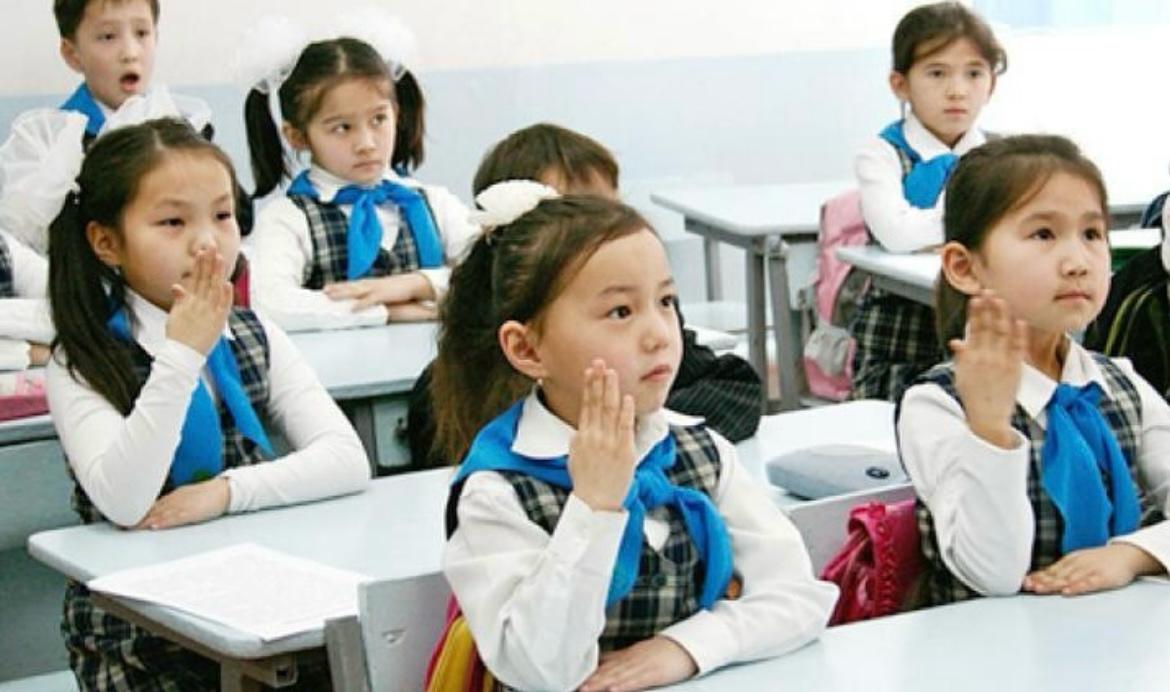
Admission of children to the 1st grade for the 2026-2027 academic year will be carried out from May 27 to August 31. 01.04.2026
In accordance with the schedule approved by the Ministry of Education of the Republic of Kazakhstan, admission of documents to the 1st grade in all educational institutions of the Almaty region will be held from June 18 to August 31, 2026. To receive a public service, documents can be submitted through the e-government web portal or in paper form directly to the organization of primary, basic secondary and general secondary education. The list of necessary documents for enrolling a child in an educational organization: Statement from a parent (or legal representative); Child's birth certificate; Applicant's identity card; Medical certificates: form No.065/e "Immunization passport"; form No.052-2/e "Child's Health Passport"; A 3×4 cm photo of a child. We ask parents and legal representatives to submit timely documents for admission of children to the 1st grade, observing the established deadlines.Source : https://www.gov.kz/memleket/entities/almobl-bilim/press/news/details/1191237?lang=kk
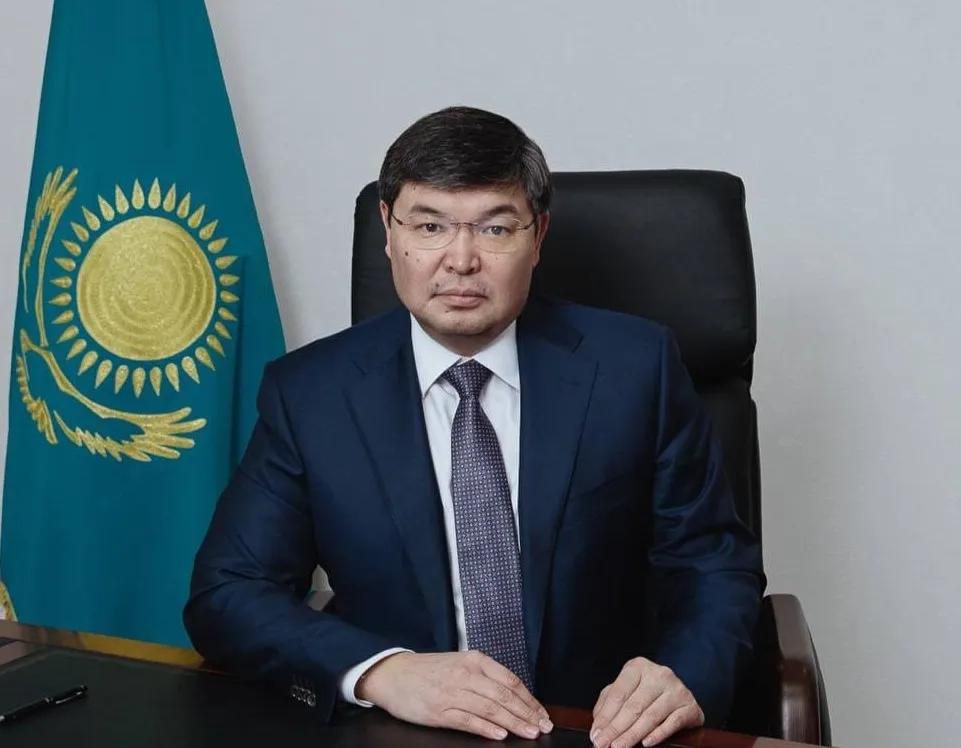
The digital logic of budgeting: how public finance is changing 01.04.2026
Digitalization in public finance has long moved beyond mere technological updates. It is about a deep transformation of the entire management system: from revenue administration to expenditure control, reports Zakon.kz.Finance Minister Madi Takiyev spoke about how data is becoming the foundation of budget policy, why the very philosophy of management is changing, and what role artificial intelligence plays in this process.– Madi Tokeshevich, today digitalization has become a key topic for all government agencies. How is it changing the public finance system? – Digitalization is changing not the tools, but the very philosophy of management. We are moving from a fragmented system, where each process existed separately, to a holistic model in which all elements are interconnected and work as a single organism. This applies to all levels of public finance: from tax administration to budget planning. For example, we have already reduced the number of information systems in the public revenue block from 14 to 5 and built a unified technological foundation, on the basis of which key solutions are being developed, such as the Integrated Tax Administration System (ISNA), Smart Data Finance, and Keden. Previously, financial management was largely reactive: an event would occur first, then we would analyze it, and only then make decisions. Today, thanks to digital solutions, it is possible to see the picture in advance: forecast revenues, assess risks, understand where imbalances may arise. This is essentially a transition from accounting to management. And in this, we see the main significance of digitalization for public finances. – Can we already talk about specific results of this transformation? – Yes, and it is important that these results are not only quantitative but also qualitative. On the one hand, we see growth in the revenue base, and it is largely driven by increased administration efficiency. But no less important is that the very structure of the system has changed. For instance, ISNA today serves 2.2 million taxpayers, over 136 thousand people use the system daily, and the processing time for key operations has been reduced multiple times: closing the operational day – from 18 to 3 hours, processing payments – from 15 to 3 minutes, documents – from 1 hour to 1 minute. Such changes are not just an acceleration of processes, but a completely different level of manageability. Furthermore, we are actively developing Smart Data Finance – a big data platform that already accumulates information from 78 sources and forms a comprehensive digital dossier for each taxpayer. But perhaps our main result is trust in the system. When processes are transparent and logical, it creates a completely different attitude from business and society. – How deeply are data and analytics used today? – Today, data is the foundation of the entire system. We no longer work with individual indicators but see the complete picture. Through Smart Data Finance, a so-called digital profile is formed, which includes information on real estate, transport, transactions, employment contracts, financial operations, and other parameters. This allows us to see not only individual operations but also the interconnections and behavior of economic participants. This fundamentally changes the approach to administration. Control becomes targeted and justified. We intervene less where there are no risks and focus attention on truly problematic areas. Simultaneously, we are implementing elements of artificial intelligence in budget revenue forecasting, risk management, and transaction analysis. This is the next step, which will allow a transition to even more precise and proactive management. – How has digitalization affected the fight against the shadow economy? – The effect here is indeed tangible. Today, key tools are electronic invoices and big data analytics. The full transition to E-invoices has made it possible to identify fictitious transactions automatically. According to system data, over 10 thousand taxpayers were identified with signs of fictitious transactions amounting to about 8.5 trillion tenge, with over 3 thousand of them already having revoked invoices worth 822 billion tenge.It is important that the system operates without human involvement: it itself records anomalies and restricts further operations if risks are present. This makes control more objective and reduces the scope for abuse. As a result, the environment itself changes: it becomes less profitable to operate "in the shadows" and, conversely, more comfortable in the legal field. – And what is happening with the expenditure side of the budget? – Here, we are also consistently implementing digital approaches. If previously planning largely relied on average indicators, today we use real data: receipts, invoices, procurement statistics. Integration with the National Product Catalog plays a key role here. Today, the system already contains over 15 million product items, and data on over 400 million receipts are transmitted through integrations with cash registers and other systems. Additionally, the Price Database is operational, having already processed over 150 million cash receipts and accumulating information on 650 thousand product items.Preventive control has become an important element. We do not just check expenses after they are made, but analyze them even at the planning stage. This allows us to identify unjustified expenses before they enter the budget. www.zakon.kzSource : https://www.gov.kz/memleket/entities/kvga/press/news/details/1191213?lang=kk
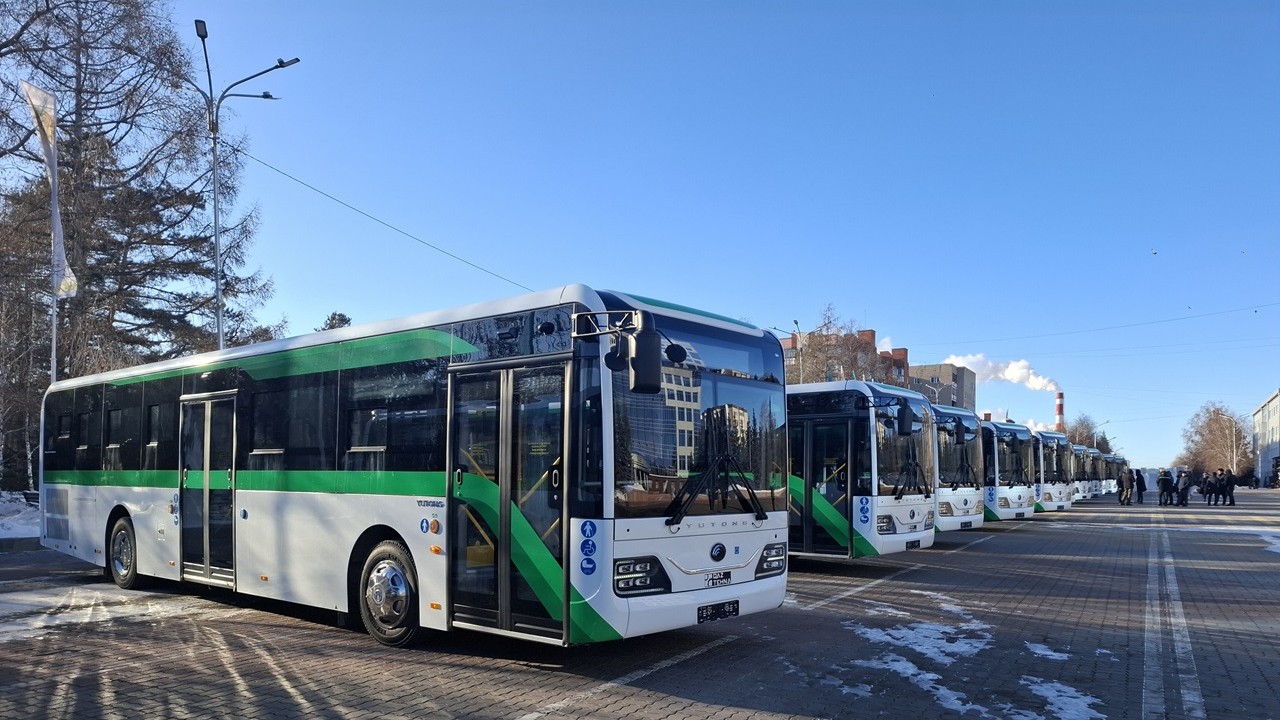
City continues bus fleet renewal and launches new routes 01.04.2026
The city is continuing to modernize its public transport system. Every day, 187 buses operate on urban and suburban routes. Over the past five years, the bus fleet has been significantly обновлен, and currently 151 buses (81%) are less than 7 years old. This has substantially improved the quality and reliability of passenger transportation.As part of a working visit, the city administration visited the enterprise Altair Production Cooperative. The carrier operates routes No. 5, 11, 12, and 38. The company has 40 buses, and starting tomorrow, an additional 12 new vehicles will be deployed on the routes. Thus, the enterprise has become one of the first to fully renew its fleet.These results have been achieved благодаря government support measures and subsidy mechanisms, which enable systematic renewal of public transport and improve passenger comfort.In addition, starting from June 1, two new routes will be launched. They will connect key social and infrastructure facilities, including the regional hospital, Polyclinic No. 1, the triathlon park, boxing school, football academy, and the industrial zone. The new routes are expected to enhance convenience for residents and visitors of the city.Source : https://www.gov.kz/memleket/entities/kostanai-kalasy-akimat/press/news/details/1191227?lang=kk
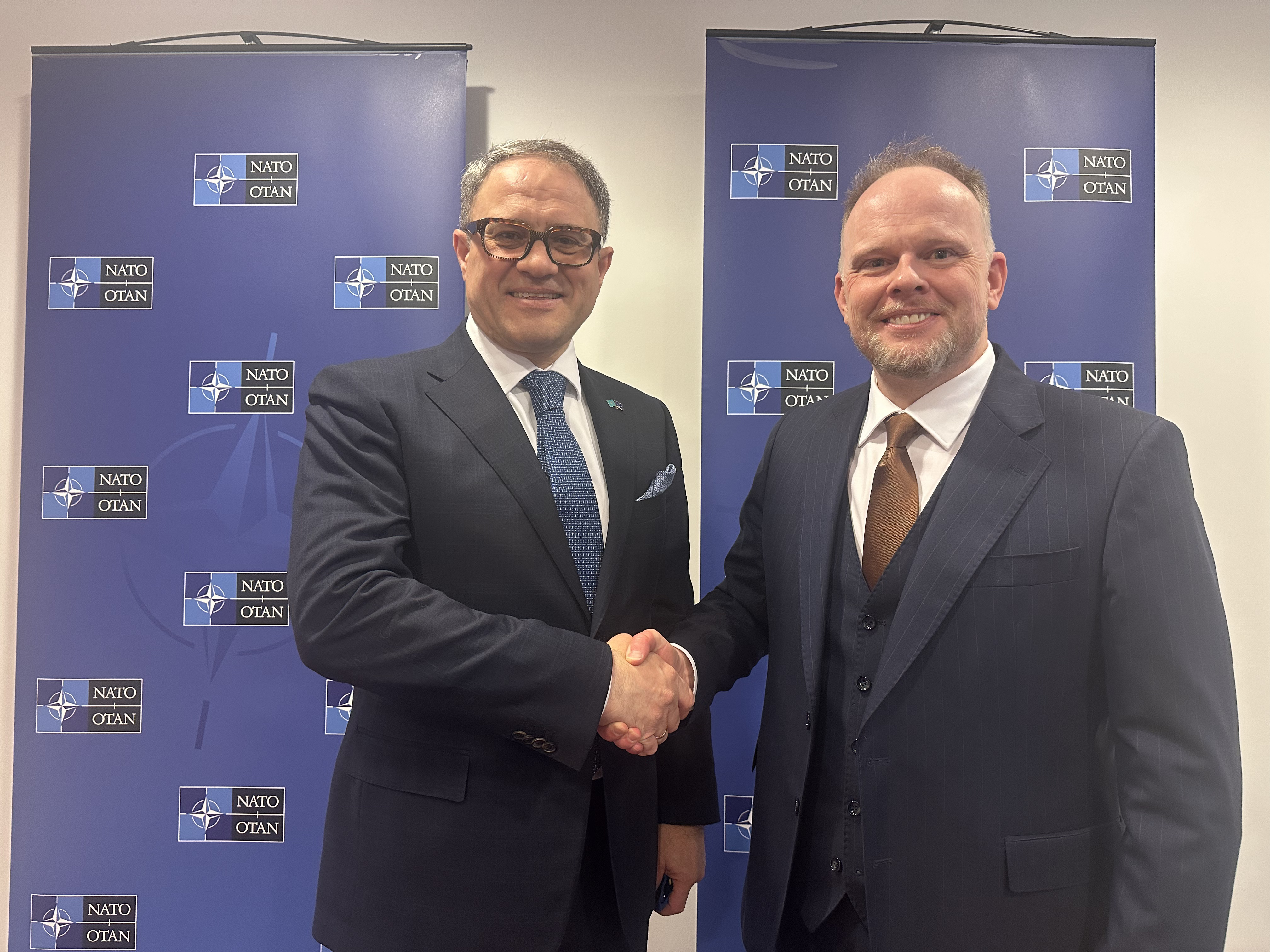
Ambassador of Kazakhstan meets with NATO Secretary General’s New Special Representative 31.03.2026
Brussels, 31 March 2026 – The Ambassador Extraordinary and Plenipotentiary of the Republic of Kazakhstan to the Kingdom of Belgium, the Grand Duchy of Luxembourg, the European Union, and the North Atlantic Treaty Organization (NATO), Mr. Roman Vassilenko, held a meeting with the newly appointed NATO Secretary General’s Special Representative for the Caucasus and Central Asia, Mr. Kevin Hamilton, to discuss the current state of cooperation between Kazakhstan and NATO, as well as issues on the international agenda.Roman Vassilenko noted that the main goal of cooperation with NATO for Kazakhstan is the preparation of peacekeeping units of its Armed Forces for deployment as part of peacekeeping missions under the UN auspices.Following the meeting, the parties agreed to continue developing cooperation in strengthening the peacekeeping potential of the Armed Forces of the Republic of Kazakhstan. Source : https://www.gov.kz/memleket/entities/mfa-brussels/press/news/details/1191129?lang=kk
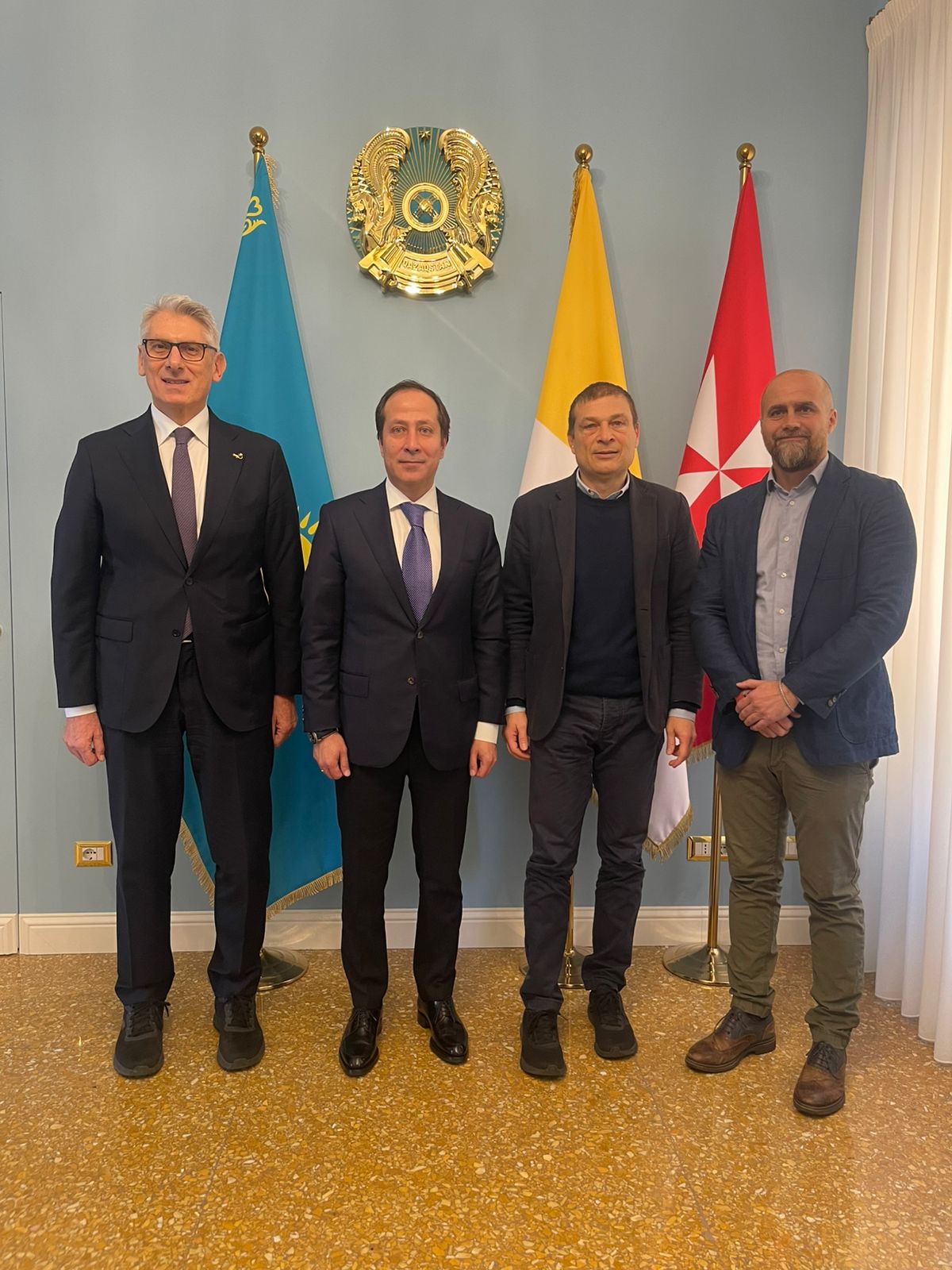
Kazakhstan and Bambino Gesù Strengthen Partnership in Pediatric Medicine 31.03.2026
On March 31, 2026, the meeting took place at the Embassy of the Republic of Kazakhstan to the Holy See between Kazakhstan’s Ambassador - Timur Primbetov, and President of the Vatican’s pediatric hospital “Bambino Gesù” Tiziano Onesti.During the meeting, the parties discussed cooperation between Bambino Gesù Hospital and Kazakhstan’s corporate foundation “University Medical Center”, in the field of pediatric medicine. Particular attention was devoted to collaboration in the diagnosis and treatment of epilepsy, as well as neurological and rare diseases.The interlocutors also exchanged views on further cooperation within the framework of the Congress of Leaders of World and Traditional Religions, underscoring the importance of this international platform in promoting humanitarian dialogue, interreligious understanding, and joint initiatives aimed at safeguarding the health and well-being of children.At the conclusion of the meeting, the parties reaffirmed their mutual interest in further expanding cooperation and reviewed promising avenues for future engagement.Source : https://www.gov.kz/memleket/entities/mfa-vatican/press/news/details/1191138?lang=kk
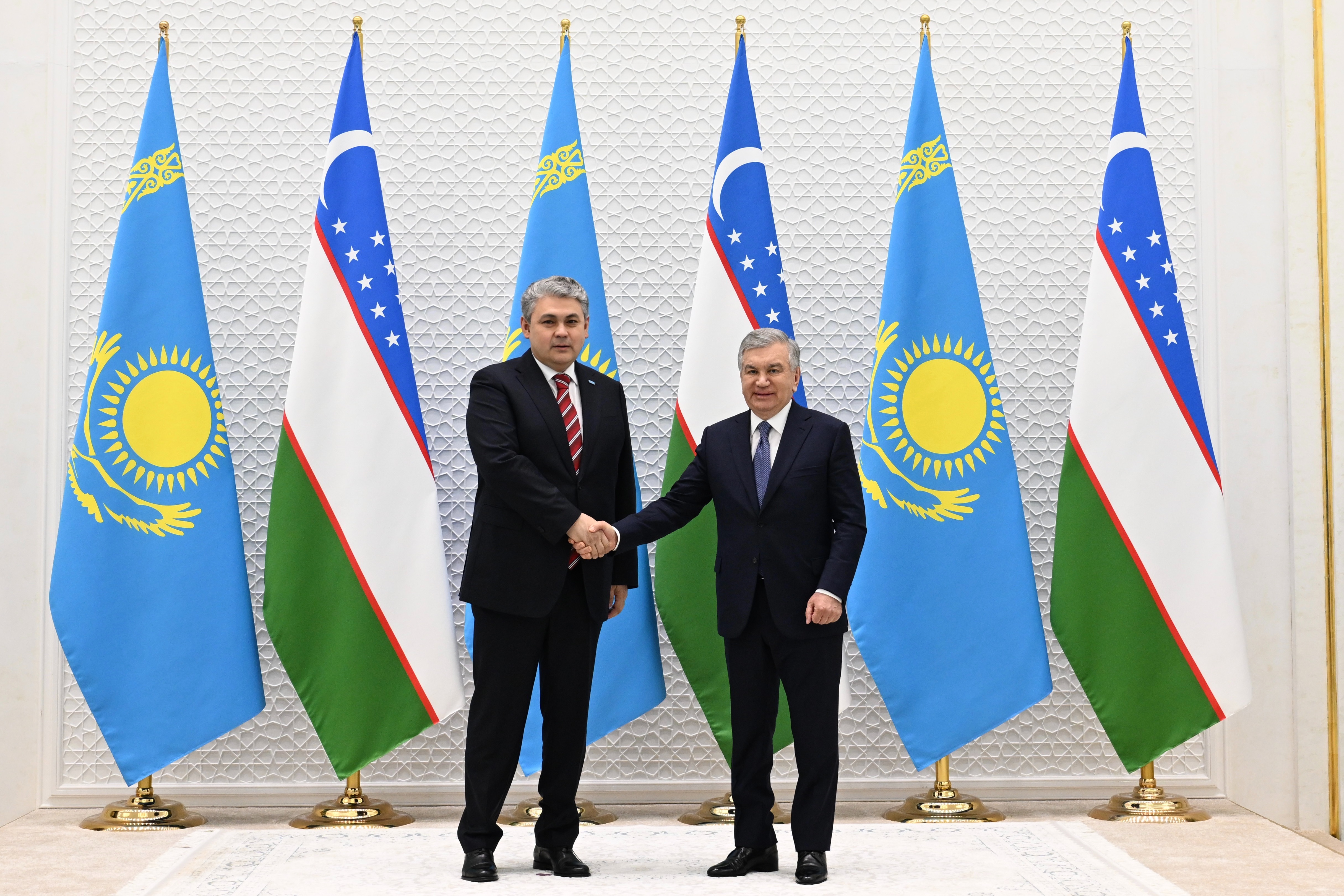
Kazakhstan and Uzbekistan Continue to Strengthen Strategic Tandem 31.03.2026
Tashkent, March 31, 2026 – As part of an official visit to Tashkent the Minister of Foreign Affairs of the Republic of Kazakhstan Yermek Kosherbayev was received by the President of the Republic of Uzbekistan Shavkat Mirziyoyev.During the meeting, President Mirziyoyev noted with satisfaction the positive dynamics in the development of multifaceted cooperation between the two countries, emphasizing the importance of further deepening the allied relations between Kazakhstan and Uzbekistan.In turn, Minister Kosherbayev conveyed warm greetings and best wishes on behalf of the President of the Republic of Kazakhstan Kassym-Jomart Tokayev and informed about the progress in implementing the agreements reached at the highest and high levels.“Today, Kazakh-Uzbek relations serve as a model of reliable and long-term cooperation in the international arena. This is primarily facilitated by regular and trust-based political dialogue at the highest level,” Kosherbayev stated.The sides also discussed current issues on the regional and international agenda.The high level of interaction between Kazakhstan and Uzbekistan within multilateral structures was underscored, along with the importance of further developing regional cooperation and joint efforts to strengthen peace and stability in Central Asia.Source : https://www.gov.kz/memleket/entities/mfa/press/news/details/1191158?lang=kk
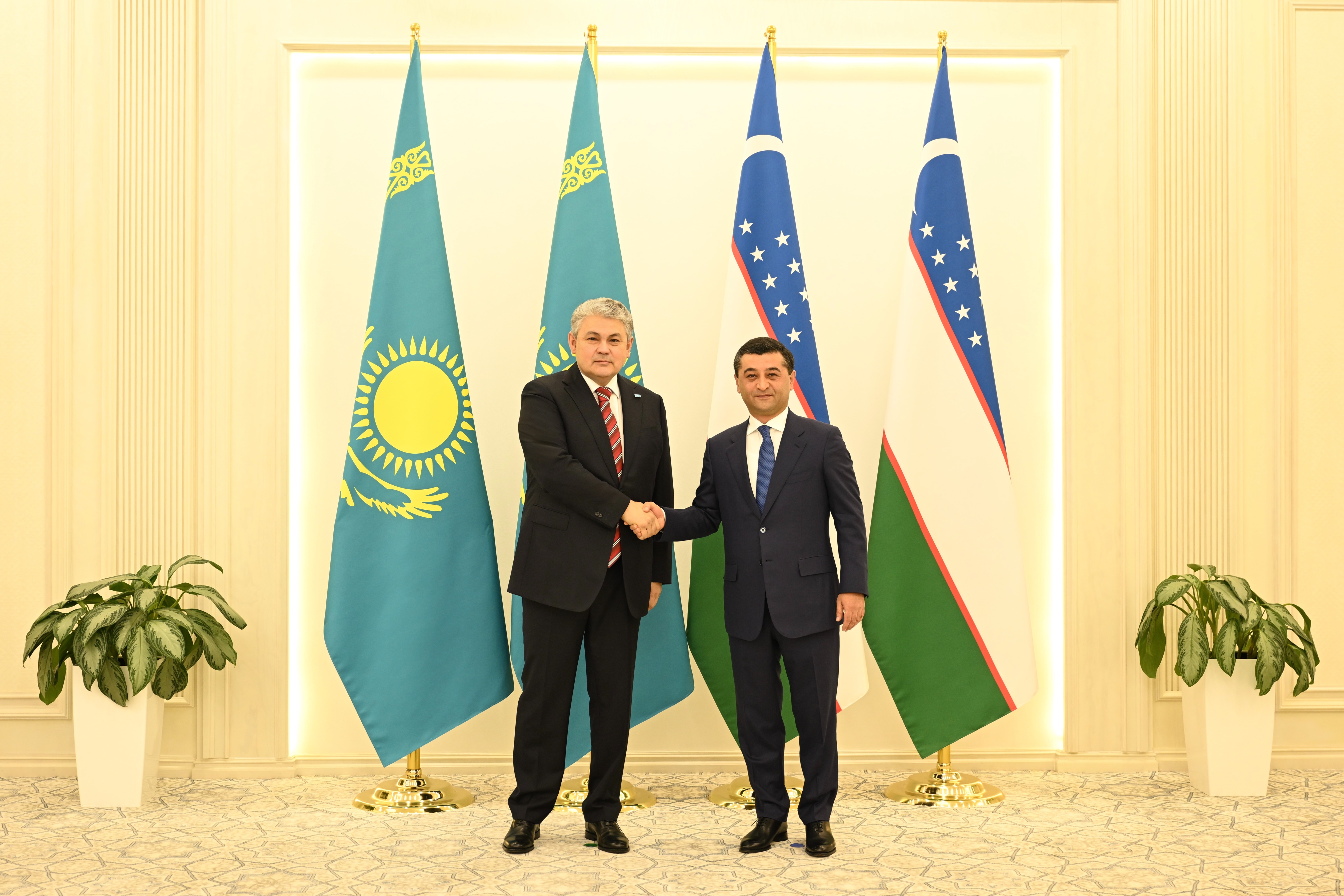
Kazakhstan and Uzbekistan continue to develop allied relations and strengthen strategic dialogue 31.03.2026
Tashkent, March 30, 2026 – As part of an official visit to Tashkent, Minister of Foreign Affairs of the Republic of Kazakhstan Yermek Kosherbayev held talks with Minister of Foreign Affairs of the Republic of Uzbekistan Bakhtiyor Saidov.During the meeting, the foreign ministers reviewed a wide range of issues of multifaceted Kazakh-Uzbek cooperation, as well as discussed prospects for further strengthening political, trade-economic, investment, transit-transport, water-energy, and cultural-humanitarian cooperation.The sides expressed their commitment to deepening strategic partnership and alliance based on friendship, mutual understanding and good neighborliness.“Thanks to the political will of the heads of state in recent years, Kazakh-Uzbek relations have been brought to a qualitatively new level of interaction and demonstrate high dynamics of development at all levels,” Minister Kosherbayev noted during the conversation.In turn, Minister Saidov confirmed that the presidents of the two states have set a long-term course for the progressive expansion of cooperation in both bilateral and multilateral formats.In this context, the foreign ministers thoroughly discussed measures for the practical implementation of the agreements reached at the highest level during the first and second meetings of the Supreme Interstate Council in 2024-2025, and expressed readiness to further promote the inter-parliamentary and intergovernmental relations.Special attention was paid to further development of trade-economic and investment cooperation.“Significant progress has been made in recent years in deepening economic cooperation. Kazakhstan consistently ranks among Uzbekistan’s top three trading partners. In 2025, the bilateral trade increased by 16.2 percent and approached $5 billion,” Minister Kosherbayev said. In the context of the implementation of the agreements reached at the highest level, the ministers confirmed their intentions to facilitate further deepening of the economic partnership, including increasing bilateral trade to $10 billion.The interlocutors also noted progress in industrial cooperation, which currently includes 78 investment projects worth $1.8 billion.In this context, the implementation of such projects as the construction of the International Center for Industrial Cooperation “Central Asia”, hotels “Tashkent” in Astana and “Astana” in Tashkent, as well as the “Astana” district in “Yangi Tashkent” was also reviewed.During the meeting, the sides highlighted the significant potential for cooperation in the development of transport corridors enabling both countries to access markets of the Middle East, South Asia and Europe. The sides expressed mutual readiness to promote fruitful interaction in this area.In addition, the substantive agenda of cultural and humanitarian cooperation was emphasized as the foundation of strong and long-term relations between the two states.The sides also underscored the importance of implementing projects in the educational field, and in particular, the activities of the branch of the Tashkent Institute of Irrigation and Agricultural Mechanization Engineers in Almaty and the Chirchik branch of South Kazakhstan Research University named after Mukhtar Auezov.The ministers also exchanged views on current regional and international issues, confirmed their interest in strengthening cooperation within multilateral structures and expressed readiness to continue mutual support in promoting the initiatives of both countries.The foreign ministers emphasized the importance of developing regional cooperation and joint efforts to strengthen peace and stability in Central Asia.Following the talks, the Cooperation Program between the Ministries of Foreign Affairs of the Republic of Kazakhstan and the Republic of Uzbekistan for 2026-2027 was signed.Source : https://www.gov.kz/memleket/entities/mfa/press/news/details/1191166?lang=kk
Topical issues of customs administration were discussed with participants of foreign economic activity 31.03.2026
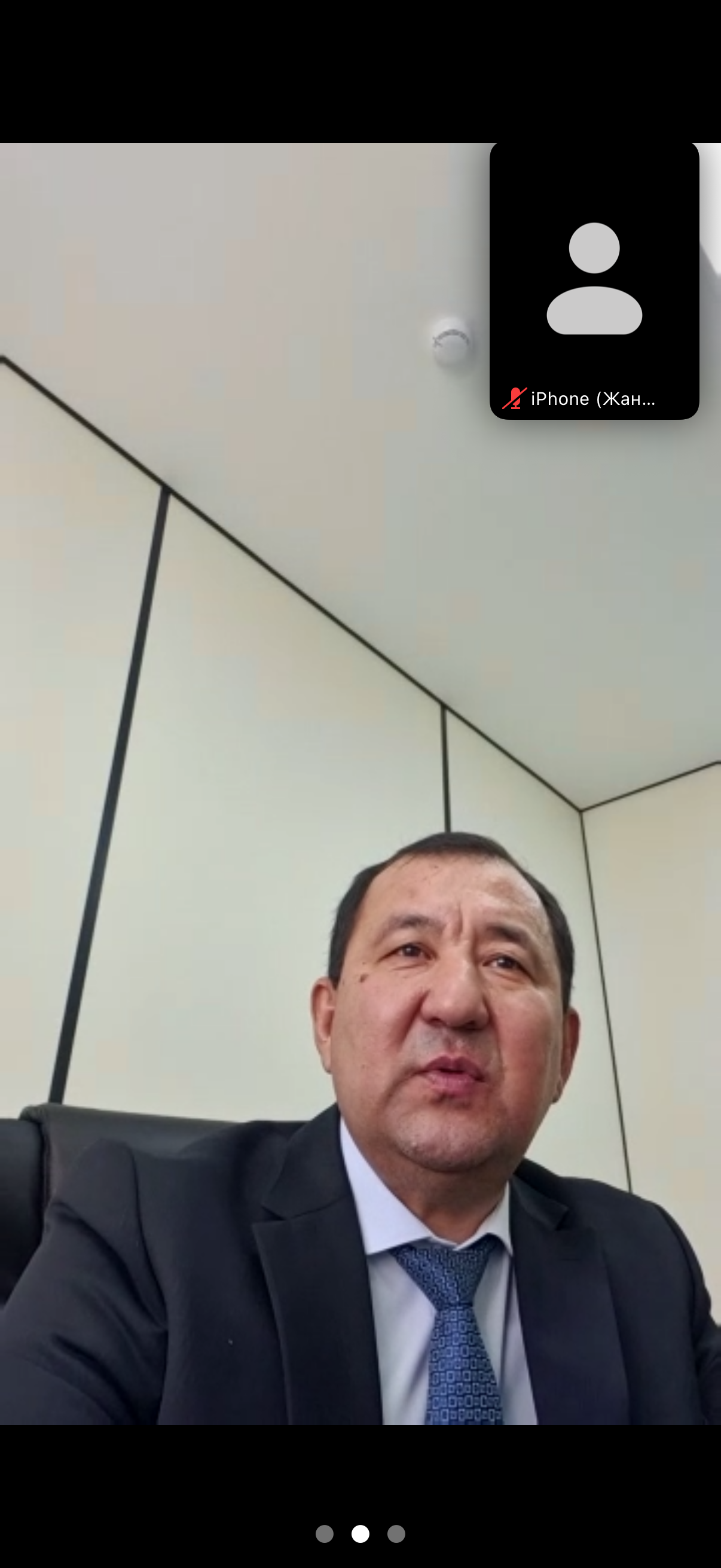
An online information meeting was held on the ZOOM platform for participants in foreign economic activity. The speaker of the event was the head of the Customs Administration Department, Tlekes Tusetaev. The main topics on the agenda were the protection of intellectual property and the introduction of navigation seals.As part of the first topic, participants were reminded of measures to combat counterfeiting and "gray" imports. The key instrument here is the Customs Register of Intellectual Property Objects (TROIS). If, when declaring a product, it is suspected of copyright infringement, its release is suspended for 10 working days until the circumstances are clarified. This measure works effectively in practice: in 2025, the release of goods on 14 declarations totaling 242.7 thousand US dollars was suspended.Special attention was paid at the webinar to an important innovation on the territory of the EAEU. Starting from February 11, 2026, a cargo tracking system using navigation seals will be phased in. The rules will apply to goods transported by road and rail. The Institute of Space Engineering and Technology LLP has been appointed the national operator of the system in Kazakhstan.What does the use of navigation seals give a business?- Minimization of customs inspections and excessive checks at the border.- Guaranteed protection of the cargo from unauthorized opening along the entire route.- Convenient management of the process through an online account, including a single payment for services in all countries of the Union.Regular explanatory meetings help businesses to learn about changes in legislation in a timely manner, minimize risks and build their work as transparently as possible.Department of Explanatory Work and Contact CenterState Duma of the Pavlodar regionSource : https://www.gov.kz/memleket/entities/kgd-pavlodar/press/news/details/1191170?lang=kk
Nauryz celebrated in Estonia: celebration of spring and unity 31.03.2026
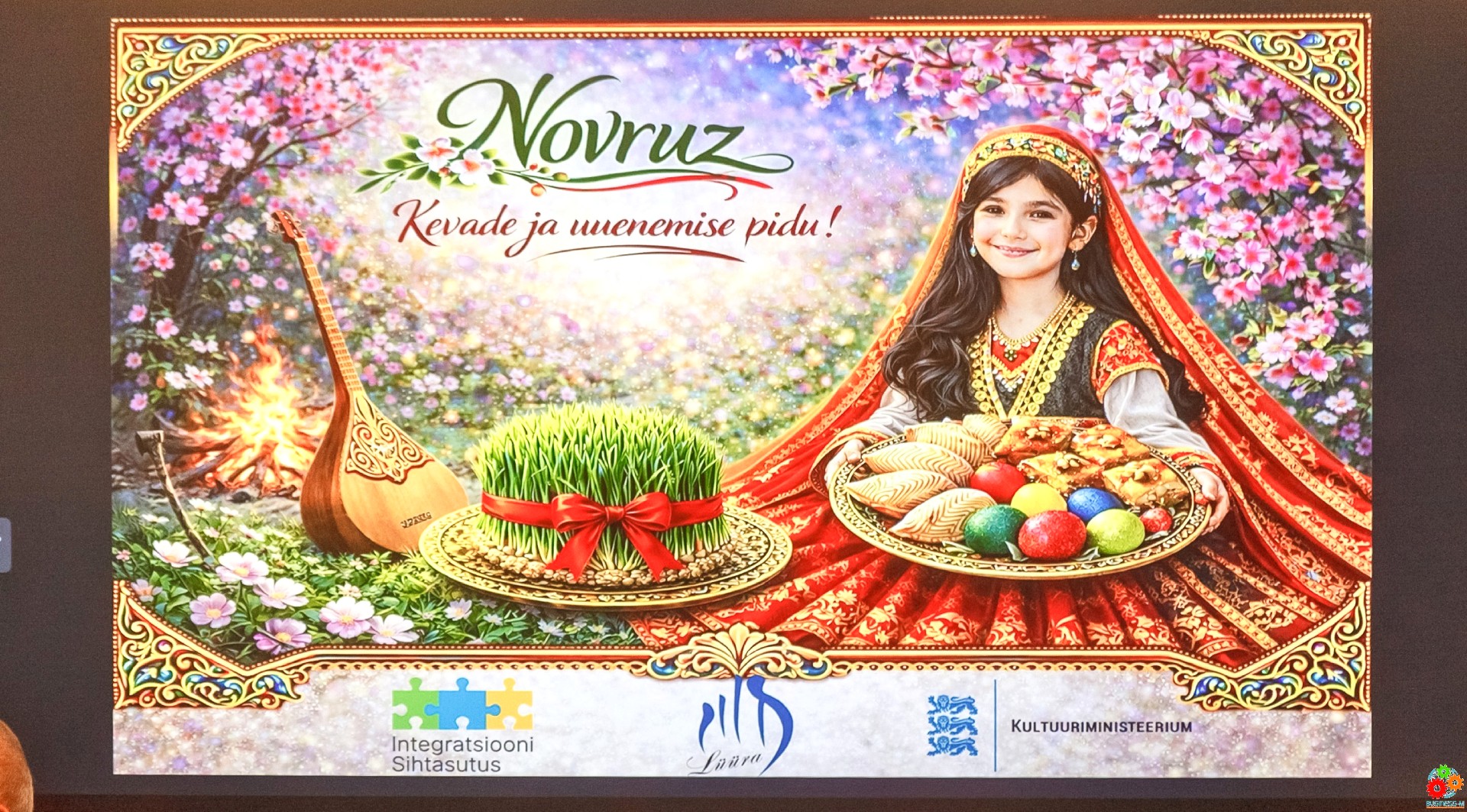
The Embassy of Kazakhstan in Estonia, in cooperation with the International Association "Lyra" and the "Atameken" Kazakh Society, held a large-scale celebration of Nauryz. The event became a vibrant symbol of spring renewal.The celebration brought together members of the Kazakh diaspora, cultural figures, and residents of Estonia, creating a space for interethnic dialogue and the strengthening of friendly ties.A festive concert was the centerpiece of the event. Creative ensembles performed national dances and musical numbers that conveyed the spirit and grandeur of steppe traditions.Thanks to the support of the Embassy of Kazakhstan, guests were able to experience the legendary Kazakh hospitality. The Embassy organized a presentation of traditional national dishes, including baursaks and other iconic treats that are essential attributes of the dastarkhan during Nauryz.The collaborative efforts of the Embassy of Kazakhstan, "Lyra," and "Atameken" highlighted the importance of preserving the cultural heritage of the Kazakh people in Estonia and the role of public organizations in developing a multicultural society.Once again, Nauryz proved that cultural bridges between nations remain a solid foundation for mutual understanding and peace. Source : https://www.gov.kz/memleket/entities/mfa-tallin/press/news/details/1191173?lang=kk