World
.png)
The Sabbath in the Nurtas microdistrict of the Karatau district: joint work of residents and institutions 01.09.2025
On August 16, 2025, another city-wide clean-up was held in the Karatau district of Shymkent. This time, the cleaning event was organized in the "Nurtas" microdistrict, and several departments and municipal institutions in the city actively participated in it. The event was attended by employees of the departments of land relations, architecture and urban planning, economics and budget planning, finance, and entrepreneurship of Shymkent, as well as representatives of the Karatau municipal state institution and the Zhasyl Zher limited liability partnership. The scale of the cleanup was very extensive: in total, more than 400 employees were mobilized and 25 special equipment was involved. As a result, more than 46 tons of garbage and household waste were removed from the territory. This figure reflects the results achieved in just one day. The production of such a volume of waste, on the one hand, indicates that the sanitary situation in the district still needs to be improved, and on the other hand, it indicates the increasing responsibility of the city authorities and residents for cleanliness. The purpose of the regular weekly cleanups in the city is not only to collect garbage. It is to educate residents in respect for the environment, ecological culture, and also to prove that government agencies, public utilities, and ordinary citizens in the city can work together. The Nurtas microdistrict is one of the largest residential areas in the Karatau district. The large population, the accumulation of household waste, and the need for improvement require systematic monitoring of the sanitary cleanliness of this area. In this regard, the past Sabbath was very important for the residents. City-wide clean-ups are held regularly in Shymkent every year. For example, in 2022, during an environmental event held in the Nurtas microdistrict, about 15 tons of garbage were removed. In 2023, the figure reached 28 tons. The fact that more than 46 tons of garbage were collected during this year's clean-up indicates an increase in the activity of residents, as well as the expansion of the technical capabilities of the organizers. While previously such Sabbaths were mainly attended by municipal employees and representatives of local akimats, now various departments, government employees, and business entities are involved. This is an important indicator that environmental culture has reached a new level. The increase in the number of vehicles has also brought about a clear change. For example, while only 8-10 vehicles were mobilized for the 2021 Sabbilik, 25 special vehicles participated in this year's event. This made it possible to remove a large amount of waste in a short time. Another important aspect of the Sabbath is that it strengthens the sense of solidarity and responsibility in society. When residents see with their own eyes how cleanliness is being established, they are more likely to avoid littering and take care of the environment in the future. And the joint work of government officials and residents strengthens the relationship between the government and the people. The activity of young people is also increasing year by year. In 2024, members of the "Zhasyl el" squad and volunteer students participated in such Sabbaths several times and made their contribution. This trend continued this year. Young volunteers who participated in the Sabbath in "Nurtas" helped the elderly and helped clean up the area. Saturdays are not limited to temporary cleaning, but also contribute to the formation of an ecological culture. City-wide cleaning events held every Saturday make city residents understand how important it is to live in a clean environment. If 10-15 years ago, the understanding of garbage disposal was at a low level, now the situation has improved significantly. This is the result of such systematic events. For example, in 2015, an average of only 5-7 tons of garbage was collected in the city during one Saturday. The current figure has increased several times. On the one hand, this indicates the expansion of the city and the increase in its population, and on the other hand, it indicates an improvement in the organizational level. The Saturday garbage collection event held on August 16, 2025 in the Nurtas microdistrict of the Karatau district was an important event in the ecological life of the city of Shymkent. Thanks to the joint efforts of more than 400 people and the work of 25 pieces of equipment, more than 46 tons of garbage were removed. This is the result of just one day. Compared to previous years, the current Sabbaths are much larger, more organized, and more effective. Thanks to the combined efforts of the city authorities and residents, environmental culture is reaching a new level. Based on the principle that "a clean city is the key to a bright future," the regular and systematic holding of such cleanups will undoubtedly change the face of Shymkent. The cleanup event in the Nurtas microdistrict is a clear example of this trend.
.png)
Al-Farabi district continues clean-up days: on August 20, residents and municipal services united for the sake of cleanliness of the city 01.09.2025
On August 20, another clean-up day was held in Shymkent in the Al-Farabi district as part of the republican environmental campaign "Taza Kazakhstan". The initiator was the office of the district akim, and the event itself was attended by employees of the district administration, specialists of the Al-Farabi state municipal enterprise and active residents. The goal of the event is simple, but very important: to create a comfortable and safe living environment in the city, to raise the level of environmental culture, and to show an example of how, through joint efforts, we can change the surrounding space. As a result of the work, more than 70 people came out to clean the streets, courtyards and public areas. Four units of specialized equipment were used to collect and remove waste. Together, they managed to collect and remove about six tons of garbage that had been accumulating in the area. Al-Farabi district occupies a special place in the urban structure: not only residential areas are located here, but also important cultural, business and educational centers. The high population density and active city life make the issue of the sanitary condition of the district especially relevant. That is why regular clean-up days have become part of the improvement system. Compared to previous years, several positive changes can be noted. Just a few years ago, participation in such events was limited mainly to officials and public utilities. Residents, as a rule, remained on the sidelines, perceiving the cleanup as a task exclusively for city structures. However, in recent years, the situation has changed: young people, students, and concerned citizens are increasingly joining the events. This time, it was possible to notice that representatives of yard committees also came out to clean up, which became a good example of self-organization. Particular attention should be paid to the technical equipment of the clean-up days. If previously the cleaning was carried out mainly manually, now the district administration is using specialized machines: loaders, dump trucks, and garbage removal equipment. This allows for the elimination of the volume of waste in a few hours, which would previously have taken several days. Comparing the current campaign with similar events of previous years, we can say that the organizational evolution is also noticeable. For example, in 2021, as part of the spring campaign in the same area, it was possible to remove about 3 tons of garbage. Then the event was more symbolic: more emphasis was placed on drawing attention to the problem. This year, the work has become systemic: each clean-up day has a specific plan, and the results are measured by real indicators. It is also important that such actions are no longer isolated. Now they are held every week and are no longer perceived as a one-time campaign, but as part of city life. This also changes the attitude of residents: they begin to understand that cleanliness depends not only on public utilities, but also on each individual. The organizers note that the regularity of such clean-up days helps to develop an environmental culture. After all, participation in them is not just about cleaning up trash, but also about cultivating a respectful attitude towards the city. When a person cleans up the street with his own hands, he is unlikely to want to throw a piece of paper or a bottle in the wrong place again. Participation of young people is especially important. In the Al-Farabi district, many students and schoolchildren come to such events voluntarily. For them, this is not only a contribution to the improvement, but also an opportunity to feel their involvement in a common cause. In previous years, such involvement was almost non-existent: everything was limited to official structures. Another aspect is support from local businesses. Some entrepreneurs help with equipment, inventory, or even provide drinking water and gloves for participants. In 2025, this practice is becoming more widespread, which indicates the growth of social responsibility of business. Such actions are important not only from the point of view of sanitation, but also as a way to unite society. Residents of the district, working side by side with officials and utility workers, understand that they have a common goal - to make the city cleaner and more comfortable. This reduces the distance between the authorities and the population, creates trust and a sense of unity. Of course, one clean-up day is not enough to solve all environmental problems. But regularity and systematicity of events allow to gradually reduce the number of spontaneous dumps, eliminate garbage in time, and most importantly — prevent its occurrence. After all, cleanliness is not only the result of cleaning, but also the habit of each person. On August 20, the cleanup day in the Al-Farabi district became yet another proof that changes are possible if all parties are involved: the government, utilities, residents and businesses. Compared to previous years, progress is noticeable: the actions are becoming more widespread, organized and effective. A clean city is not only a beautification, but also an indicator of culture. And culture begins with responsibility. And if earlier environmental campaigns were perceived as a formality, now they are increasingly becoming a symbol of common concern for the future of Shymkent.
.png)
Sabbath work is gaining momentum in the Al-Farabi district, giving impetus to environmental culture 01.09.2025
On August 20, the next weekly meeting was held in the Al-Farabi district of Shymkent as part of the “Clean Kazakhstan” environmental campaign. This event was organized at the initiative of the district akim’s office, and was actively attended by employees of state institutions and specialists of the Al-Farabi municipal state enterprise. The main goal of the meeting was to create a comfortable environment for city residents, contribute to the reduction of household waste, and strengthen environmental culture. More than 70 people were involved in the event, including akimat employees, municipal specialists, volunteer youth, and active residents. In addition, 4 special vehicles were used for garbage collection, resulting in the removal of about 6 tons of waste. This is one of the big steps taken to maintain cleanliness in the district. Since Al-Farabi district covers the central part of Shymkent, it is densely populated and the amount of household waste collected is larger than in other regions. Therefore, the district akimat regularly organizes cleanliness and order maintenance activities. Previously, such clean-ups were systematically organized and showed their results with the participation of residents. Compared to previous years, this year's Sabbath has a number of features. For example, in the environmental actions organized in 2022, there was a decrease in the level of participation of residents. Most often, akimat employees and municipal specialists participated. However, in this year's events, it can be seen that the activity of young volunteers has increased, and residents have joined them of their own free will. This is clear evidence that an environmental culture is gradually forming among the population. In addition, the use of machinery and equipment has also improved in recent years. While in the past, manual collection was the norm on Saturdays, special trucks, loading equipment, and mechanisms for transporting garbage containers are now widely used. As a result, work productivity has increased, and it has become possible to remove large volumes of garbage in a short time. According to the residents of the district, the regular holding of such Saturdays is one of the most effective ways of environmental education. Because people not only contribute to the cleanliness of their yard or street, but also form the habit of protecting nature and being attentive to the environment. The active participation of young people in particular will contribute to the strengthening of environmental culture in the future. Another feature of this Saturday is the increased social responsibility. Local businessmen and heads of institutions are also interested in and supporting the event. Some organizations are independently organizing cleaning work in their territories, setting an example for residents. This trend has strengthened the understanding in society that "city cleanliness is a common responsibility for all of us." Based on the experience of previous years, it is important to maintain sanitary cleanliness throughout the year, not just during the Sabbath. For example, during the 2021 campaign "Clean City - Bright Future" held in the city, several Sabbaths were organized in the spring months, and as a result, the streets were cleaned, but household garbage increased again in the summer. This year, the district akimat introduced a regular schedule to prevent such shortcomings and made it a tradition to hold weekly cleaning events. From this perspective, the results of the 2025 Sabbaths are much more effective. Firstly, they are becoming a systematic work, not just a one-time event. Secondly, the activity of residents is increasing and support is being provided by society. Thirdly, the use of modern technology is saving time and helping to improve the quality of work. Cleanup efforts in the Al-Farabi district will continue in the future. The district akim's office has set the main task of expanding measures in this direction and increasing the participation of residents. In addition, the issues of forming a culture of waste disposal, preventing spontaneous landfills, and maintaining green areas are not left on the agenda. In general, the Sabbilik, which took place on August 20, made a significant contribution to improving the ecological situation in the Al-Farabi district. It was not only a cleaning operation, but also an important event that increased the collective responsibility of society and called on residents to unite. Compared to previous years, the quality and scope of this year's Sabbilik expanded, and the results were significantly higher. Cleanliness is a measure of culture. Therefore, each resident's contribution not only improves the appearance of the city, but also guarantees a clean and comfortable environment for future generations.
.png)
Employees of the Shymkent Land Relations Department took part in and contributed to the citywide clean-up day 01.09.2025
On August 16, a citywide clean-up day was held in Shymkent again, in which employees of the land relations department took an active part. As every week, they went out into the streets and courtyards to contribute to the cleanliness and improvement of the city. Such initiatives have long ceased to be a one-time action - today it is part of a systematic work that forms an environmental culture and strengthens the sense of responsibility among residents. The current clean-up day covered different areas of the city, where garbage was cleared, areas around buildings and public spaces were cleaned. The department employees, having joined forces, showed an example of careful attitude to the environment. At the same time, the organizers emphasize: cleanliness is not a one-time event, but a daily habit that every resident should follow. If we compare the current practice with the last decade, the difference is noticeable. Previously, clean-up days were held no more than a few times a year – in spring or autumn, most often as part of the national campaign "Taza Kazakhstan". On such days, city residents came out en masse to clean up, but after a short time, the cleanliness was again replaced by the usual picture - garbage on the roadsides, unkempt yards, unauthorized dumps. Today, the approach has changed. The city authorities have made clean-up days regular, and now residents can join the common cause every Saturday. This has had a tangible effect: order has become more noticeable, and the habit of throwing garbage in bins is gradually becoming entrenched. The peculiarity of the current clean-up days is that not only municipal services or individual activists join them. Civil servants, business representatives, students, schoolchildren and simply concerned residents participate in the action. Such unification of different social groups shows that concern for cleanliness has become a common cause. It was not possible to achieve such a scale in previous years. On August 16, the organizers focused not only on cleaning, but also on educational work. Residents were reminded of the need to protect green areas, properly sort waste, and not throw garbage in unauthorized places. Such explanations were almost never given before, and therefore the results of the cleanups were short-lived. Now the situation is changing: people are beginning to understand that the cleanliness of the city directly depends on their behavior in everyday life. It is important to note that in recent years the appearance of Shymkent has really changed. Where previously one could see spontaneous dumps, today there are container sites. The number of violators throwing garbage in the wrong places is decreasing. This is largely due to regular clean-up days, which remind residents of the importance of order and discipline. Comparing today's events with the past, one can note another difference: previously, clean-up days were perceived more as an obligation or a formality. People came out because "that's how it's supposed to be," but their attitude to work was superficial. Today, participation has become conscious. Many city residents come with their families, bring their children, in order to cultivate respect for work and nature. This approach creates a completely different result - a long-term effect appears, not a temporary order. On August 16, employees of the land relations department showed by their example that every person can influence the state of the city. Such actions form a positive image of state bodies that not only perform administrative functions, but also participate in socially useful work. This is another important step towards the word "cleanliness" ceasing to be associated only with the duties of utility workers. City authorities note that the practice of clean-up days will be continued and expanded. The plans include not only garbage collection, but also landscaping of green areas, tree planting, and development of playgrounds and sports grounds. If previously clean-up days were limited to a few hours of cleaning, now it is turning into a comprehensive program to improve the urban environment. Residents of Shymkent are increasingly taking part in these events. According to them, they feel the real benefit of their efforts – clean streets, well-kept yards and a sense of unity with neighbors and colleagues. Many admit that participation in clean-up days has changed their attitude to everyday habits: they have become more attentive to waste sorting, have stopped passing by discarded garbage, and have begun to value public space more. Thus, the clean-up day on August 16 became another confirmation that the tradition of regular cleaning in Shymkent has taken root and is producing results. Unlike previous years, when such events were one-time events, today they have become part of a sustainable city culture. Cleanliness and order in the city are now perceived not as the responsibility of individual services, but as a common task for the entire society. Shymkent is gradually turning into a city where caring about cleanliness is becoming the norm. And this is largely due to those who take to the streets every Saturday – be it officials, entrepreneurs, students or ordinary citizens. Their joint work is forming a new face of the city and shows that only together can we achieve real changes.
.png)
Employees of the Shymkent City Land Relations Department participated and contributed to the city-wide Sabbath. 01.09.2025
On August 16, another city-wide clean-up was held in Shymkent. This time, employees of the Shymkent City Land Relations Department took part in the city's cleanliness and made their contribution. The city's streets and yards were cleaned of garbage, and order was established in public places. According to the participants of the clean-up, such measures not only help keep the city clean, but also help form an ecological culture among residents. City-wide Sabbath is an event traditionally held every Saturday in Shymkent. In recent years, this trend has become systematic and has become a permanent environmental movement. Previously, Sabbaths were held several times a year, on holidays, but now they have become a weekly habit. This instills in the city residents the idea that "cleanliness is a daily lifestyle." During the cleaning work carried out this Saturday, several facilities were covered. Especially the yards and streets where there is a large concentration of residents were cleaned of garbage. Employees of the Land Relations Department shared their initiatives and worked together with their colleagues. This action is an example for other institutions. Because the cleanliness of the city is not only the task of municipal institutions, but also the common responsibility of every organization and every citizen. Compared to previous years, Shymkent has held clean-ups before, but their consistency and the scope of their coverage were not as wide as today. Previously, clean-ups were usually held in the spring or autumn, in conjunction with national campaigns such as "Clean Kazakhstan". At that time, it was common for residents to participate in a one-day clean-up event and then show negligence again. Now, at the initiative of the city administration, the principle of "every Saturday is a clean-up day" has been introduced and is being implemented regularly. This change has contributed to strengthening environmental culture and mobilizing residents for a common cause. Another feature of the Sabbilik is that not only civil servants, but also entrepreneurs, youth organizations, and even volunteer residents actively participate in it. Thus, the cleanliness of the city is becoming a common cause of the entire society. Previously, only representatives of public utilities and some activist groups participated in such events. Now, the inclusion of representatives of various industries has increased the social significance of the Sabbilik. During the Shabbat on August 16, city residents were also educated about environmental responsibility. It was emphasized that simple rules such as throwing garbage in special places, sorting household waste, and protecting green areas are important for everyone. As a result of these educational activities, residents, in addition to participating in Shabbat, strive to maintain cleanliness in their daily lives. Regular citywide cleanups have significantly improved the appearance of the city. In recent years, the number of littering incidents on the streets and public places of Shymkent has decreased. This is not only due to the efforts of municipal services, but also indicates a change in the consciousness of residents. In the past, the Shabbats were mostly held in a formal manner. After cleaning a certain area, garbage would accumulate again. This is because most residents did not treat their area responsibly. Today, the situation is completely different. Now, each person who participates in the Shabbat tries to maintain cleanliness in their daily lives in order to preserve the results of their labor. This is a sign of a major cultural change. According to the city administration and responsible institutions, the weekly cleanups will continue in the future. The events organized every week are not limited to garbage collection, but also include landscaping, tree planting, and flower planting. This, in turn, will not only improve the ecological situation of the city, but also create a comfortable environment for residents. Thus, the Sabbath, held on August 16, has become one of the regular steps in maintaining cleanliness and order in the city of Shymkent. The activity of employees, young people, and residents is like an investment in the future of the city. Compared to the Sabbaths of previous years, the stability and quality of the current events are much higher. We can say that all this is the result of the proper organizational work of the city administration and the activity of residents. Keeping Shymkent clean is the duty of every citizen. The slogan "A clean city is a comfortable environment for us" has become the main principle of today. Participation in the Shymkent Cleanup is not just a one-day job, it is a part of our daily lives. If we all participate together, the appearance of our city will improve and its future will be bright.
.png)
The second stage of deratization works has started in Shymkent: a course towards cleanliness and order in the city 01.09.2025
On August 20, the second stage of deratization measures aimed at protecting the health of city residents and maintaining sanitary order officially began in Shymkent. The work covers several large objects at once: the plan includes 38 river beds and canals, as well as 2,376 container sites for household waste. The treatment is carried out at the expense of the city budget, while only certified chemicals that meet international quality and safety standards are used. The authorities emphasize that the fight against rodents is not a temporary campaign, but a systematic process, on which the sanitary and epidemiological situation in the metropolis directly depends. Cockroaches, mice and rats not only spoil the appearance of the city, but also pose a threat to public health, being carriers of dangerous infections. Therefore, deratization is considered one of the priority measures to ensure comfortable living conditions. Special attention is paid to safety issues. Since chemicals are used in the treatment, residents are advised to strictly observe safety rules. Experts remind: residents of apartment buildings are obliged to independently carry out preventive measures in basements and utility rooms. Similar obligations apply to owners of private houses and organizations. It is legally established that everyone must contribute to maintaining sanitary order, and the state takes on coordination and control. If we compare the current campaign with previous years, we can note several key differences. Previously, deratization activities were carried out mainly in the spring and autumn, and did not cover all areas of the city. Most often, the work was limited to garbage sites and individual canals. Such partial coverage led to the fact that in some places the rodent population quickly recovered. This year, the authorities decided to act comprehensively: to simultaneously treat hundreds of points throughout the city. This approach eliminates the migration of rats from untreated areas and increases the effectiveness of the campaign. Another innovation is related to the drugs used. In previous years, cheap products were used in some cases, which did not always provide the desired result. Today, the emphasis is on certified chemicals that have been tested for safety for humans and animals. This allows for increased public confidence and reduced risks of side effects. Significant changes have also affected the information component. If earlier residents often found out about deratization after the fact, now the authorities warn citizens in advance. Information about the timing and locations of treatment is published on social networks, on official websites and in printed advertisements. This allows residents to prepare and take the necessary precautions. As a result, city residents have become more actively involved in the process and perceive sanitary work as an important part of the overall urban culture. It is important to note that the current campaign is a continuation of the spring stage, which took place earlier this year. The first wave managed to reduce the number of rodents in a number of areas, but experts note that a sustainable result requires systematic work. That is why the second stage became a logical continuation, and in the future it is planned that such campaigns will be held regularly and without delays. In the past, there were some problems with the organization: the work was not carried out on time, and in some areas it was postponed altogether. This created favorable conditions for the repeated spread of pests. Today, the situation has changed: deratization is carried out according to a clear plan, without failure to meet deadlines. The effectiveness is confirmed by the residents themselves, who note that the number of rats and mice has noticeably decreased. In addition to the direct destruction of rodents, the campaign has another important aspect - educational. City residents are reminded that cleanliness and order depend not only on public utilities, but also on the behavior of the residents themselves. If garbage is stored in a disorderly manner, and basements and courtyards remain unkempt, then the efforts of specialists will be in vain. Therefore, the authorities emphasize joint responsibility: the state ensures the treatment of key areas, and residents must maintain order in their territory. The current stage of deratization can be considered as an indicator of a new approach to sanitary issues in Shymkent. This is no longer a one-time action, but a comprehensive work, including prevention, control and interaction with the population. In comparison with previous years, progress is noticeable: the coverage of the territory has expanded, the quality of the preparations has increased, and the information of residents has improved. August 20 was the start date of an important sanitary process that will preserve the health of residents and improve the appearance of the city. The results of the second stage will show how effectively the new strategy works. However, it can already be said that deratization in Shymkent is ceasing to be a formality and is turning into a systemic policy. Thus, the events against rodents are not only a fight for clean streets, but also part of the general movement for a modern, safe and comfortable city. If the current course is continued, Shymkent will be able to significantly strengthen its position as one of the most comfortable megalopolises in the country.
.png)
The second phase of rodent control operations began in Shymkent on August 20. 01.09.2025
On August 20, the second stage of rodent control work began in Shymkent in order to protect public health and improve the sanitary situation in the city. This event was organized on a large scale, covering the banks of 38 rivers and canals and around 2,376 garbage bins at the same time. The city administration is financing these works from the budget, and it was noted that only specially certified chemical preparations are used against pests. The rodent problem is not only a problem that spoils the beauty of the city, but also poses a direct threat to the health of residents. Pests such as mice and rats carry various infectious diseases, and also live in food warehouses and basements of residential buildings, significantly harming the quality of life. Therefore, systematic deratization work is considered an important need for the city. During this event, a special warning was issued to city residents. The population was required to strictly observe precautions, since chemical preparations are used, and it is very important to handle them correctly. According to the Health Code, in the basements of apartment buildings, as well as in the territory of their property, each legal entity and individual are obliged to carry out anti-rodent work at their own expense. That is, this is the common responsibility of not only state institutions, but also the entire society. If we look at the experience of previous years, such work was traditionally carried out in the spring and autumn months. But at that time, the area covered was limited, often only certain areas around garbage dumps and large canals were deratized. As a result, in some areas, there were cases when the spread of rodents was not completely stopped, but increased again. The peculiarity of this year's event is its large-scale scale. This time, hundreds of garbage dumps and dozens of water canals are being covered simultaneously throughout the city. This approach allows you to prevent pests from moving from one area to another and achieve effective results. Another important difference is the quality of the drugs used. It is no secret that in previous years, cheaper but less effective chemical mixtures were sometimes used. Now, only certified products that meet international standards and are safe for human and animal health are used. This has increased the confidence of residents and changed their attitude towards deratization. Also, special attention is currently being paid to information and explanatory work. Previously, when such events began, only a brief announcement was made to the public, and sometimes residents were unaware of where and when chemical treatment was taking place. As a result, precautions were not fully observed, and the level of household safety decreased. As part of this year's campaign, the city administration is warning residents in advance and providing specific instructions through social networks, the media, and special announcement pages. This contributes to the active participation of the city's population. The fight against rodents is not just a one-time measure, it should be a constant process in the life of the city. This is because pests multiply rapidly and, if they find a favorable environment, spread again in a short time. For this reason, the second stage, which began on August 20, is considered a continuation of the first stage. The first stage was carried out in the spring, and even then a number of parts of the city were covered. Now, in the autumn period, these works will continue systematically, allowing us to maintain the epidemiological situation in the city at a stable level until the end of the year. In comparison, in previous years, such deratization works were sometimes not carried out on time, there were delays. The consequences of these shortcomings to a certain extent affected the quality of life of residents. Currently, the work is being carried out according to a specific plan, on time and on a large scale. In addition, there is support from the public. Many residents pay attention to maintaining cleanliness in their territory, using garbage cans in a timely manner, and not leaving basements unattended. This deratization period, which began on August 20, is an important measure aimed at protecting the sanitary cleanliness of Shymkent and the health of residents. It is not limited only to the destruction of pests, but also contributes to the instillation of an ecological culture in the population and the increase of personal responsibility. In this regard, there is confidence that the current work will be much more effective and productive than before. In conclusion, the second phase of deratization works in Shymkent is not only a sanitary measure, but also a reflection of cultural changes in society. Compared to previous years, the scope of these measures has expanded and their quality has improved. Most importantly, residents are also contributing and actively participating in maintaining cleanliness. As a result of these joint efforts, the future of the city will be clean, safe and comfortable.
.png)
City Cleanliness Under Control: Illegal Garbage Removal Stopped in Shymkent 01.09.2025
On August 20, in Shymkent, on the continuation of Al-Farabi Street, employees of authorized bodies conducted a raid, during which trucks that arrived to unload garbage in an unauthorized place were detained. The vehicles were placed in a penalty parking lot, and the owner of the site where the waste was planned to be dumped was held accountable and taken to the district department of internal affairs to give an explanation. This case became another confirmation that in the metropolis, the issue of sanitary order and ecology is under strict control and is considered a strategic task for maintaining the health and well-being of city residents. The problem of unauthorized dumps has always been relevant for large cities. Abandoned garbage spoils the appearance of the city, pollutes the soil and air, and creates a threat of spreading infections. This problem is especially acute in the summer, when high temperatures contribute to the rapid decomposition of waste, and unpleasant odors and unsanitary conditions become a challenge for residents of nearby areas. Therefore, the measures taken in August are not only administrative in nature, but also have important sanitary and preventive significance. If we look back at previous years, we can note that such raids used to be rather episodic. Violators in most cases got off with only fines, the amounts of which were relatively small and did not have a significant impact. As a result, many enterprises and individuals continued to take construction and household waste to the outskirts of the city, considering such actions insignificant. Today, the approach has changed. New measures have been added to traditional fines - violators' cars are confiscated and placed in a car impound. This practice has a much more tangible effect, because the owners suffer direct financial losses and risk their reputation. Another important change was the participation of residents themselves in control. Today, city residents actively help public utilities and law enforcement agencies, record the facts of garbage dumping and transfer photo or video materials to the relevant authorities. This practice has increased the efficiency of work and allowed to significantly reduce the number of illegal dumps near residential areas. If we compare the situation with five years ago, we can see that then the attention to the problem was not so serious, and today cleaning and control over the sanitary condition of the city have become a regular process, and not separate campaigns. It is important to emphasize that street cleanliness is not only a matter of aesthetics. Polluted areas directly affect the health of the population, especially children. Sanitary doctors note that in areas where spontaneous dumps are formed, the risk of infectious and respiratory diseases is higher. Therefore, the fight against unauthorized garbage disposal is not just an administrative measure, but an element of protecting the health of all city residents. The current events differ from previous years in that various services are more closely coordinated. Not only public utilities participate in the raids, but also the police, environmental inspectors, and representatives of the akimat. This comprehensive approach allows for faster identification of violators and prevention of wastelands and outlying areas from turning into dumps. In addition, the city is conducting extensive information work: residents are regularly warned that strict sanctions are provided for illegal dumping of waste, and that garbage must be taken exclusively to specially designated landfills. August 20 became another confirmation that a systemic approach to the problem of sanitary order is being built in Shymkent. The cleanliness and improvement of the city are no longer limited to organizing clean-up days or temporary events. This is a process that is monitored on an ongoing basis, and each identified violation receives an appropriate legal assessment. Such a tough position on the part of the authorities is already yielding results: the number of illegal dumps is decreasing, and the residents themselves are becoming more responsible in matters of waste management. The main goal of such raids is not only to punish violators, but also to form a sustainable culture of careful attitude towards the environment among the population. The awareness that every action affects the overall appearance of the city should become the norm. The cleanliness of the city is an indicator of the level of development of society, its maturity and respect for its residents. Thus, the incident on Al-Farabi Street demonstrated that tolerance for violators of sanitary norms is ending. Today, each violation is followed by a specific reaction, supported by serious sanctions and support from the residents themselves. The difference between current events and previous years is their systematicity, rigidity and constant nature. Cleanliness in the city is no longer the exclusive task of public services and is turning into a common cause in which both the authorities and the public must participate. It is precisely this interaction that determines how comfortable and attractive Shymkent will become in the future.
.png)
Kalamyzdyn tazalygy – ortaq zhauapkershilik: Al-Farabi koshesinde beybereket kokys tastaushylarga shara koldanyldy 01.09.2025
20 tamyz kүnі Shymkent qalasynda tazalyk pen kogamdyk tәrtіptі saktau bagytynda manyzdy ball zuzhege asty. Al-Farabi koshesinin zhalgasynda beybereket kokys tastagan zhane kokys toguge kelgen birneshe zhuk kolikteri ustaldy. Korshagan ortany qorғau talaptaryn elemey, ruqsat etilmegen oryndarga kaldyk tokken azamattar men kasiporyn okilderine katysti tiisti sharalar kabyldanda. Tartip buzgan kolikter ayypturagyna koyylyp, zher partaksіnіn esі de zhauapkershilikke tartyldy. Ol audandyk ishkіster bolіmіne zhetkіzіlіp, túsіnіktemé beruge nedetteldi. Búl okika – kaladágy tazalyk mәselesіnіn tek senbilik sharalarymen gana shektelmeitіnіn, sonomen qatar zaңdyk dengeyde de zhuyeli baqylauda bolatynyn aykyn korsetip otyr. Songs zhyldary Shymkent ekologiyak madenietti kalyptastyru bagytynda koptegen іс-sharalar қolғa alynuda. Degenmen, keibir turgyndar men kasip ieleri zanda elemei, ozderinin ardekatterimen kala businessin buldirip, turgyndardyn densaulygyna da kauip tondirude. Please make sure you don't have any problems with the organiza- tion. Arnay reidtik sharalardyn maksaty – tek ayyppul salu gana emes, en aldymen turgyndar arasynda ecology zhauaupkershilikti arttyru. Ørbіr azamat oz kalasynyn tazalygy ushіn zhauapt ekenіn tussіngende gana munday kuzushylyktar azayady. Tariqa koz zhugirtsek, Shymkent tazalykka baylanysty osynday raider buryn da zhurgіzilgen. Mysaly, 2018–2019 zhyldary kalada birneshe ret zhuk kolikteri men zheke kasip ieleri kokys uyindilerin ruksat etilmegen zherlerge tokkeni ushin Akimshilik zhazaga tartylgan bolatyn. Wherever you go, you will be able to get rid of the pain of the almada. Alayda songs zhyldary zanama qatandatylyp, ayippul kolemi artty, al kolikti ayypturagyna koyu tazhiribesi tartip buzushylarga nakty eskertu retina witchcraft. Kazirgі tanda tazalyk mәselesі tek korkate ůshіn gana emes, turgyndardyn kauipsisdіzdіgі ushіn de asa magnyzda. It's important to know if you're looking for something to eat or not. Al bul, asіrese zhaz aylarynda, sanitary qauіp tondіredi. Sondyktan, 20 tamyzda qolғa alyngan bul shara kalanyn ecology tұraktylygyn saktauga bagyttalgan manyzdy kadam boldy. Sonday-ak, bul ogiga zher uchaskelerin durys paidalanbau masselesine de nazar audartty. Kabyr zheri oz uchaskelerin baqylausyz kaldyryp, zaңsyz қokys togetіn оrіnғa inaldiryp. Munday oreketterge qatan toskauyl koyu – kaladagy tartip pen madeniettin azhyramas boligi. Aldagi uaqytta bula bagyttagy tekseruler kusheytilip, kіnalilirdің barіne zaң ayasynda shara koldanylatyny khabarlandy. Please pay attention to the details. Ørbіr azamat aşyk zhatkan nemese ruqsat etilmegen zherge togіlgen koqysty korgen zhagdaida tiisti mekemelerge khabarlau arkyly ortak іsk үles қOSа алади. Bul kogamda “tazalyk – ortak іs” degen tusіnіkti kalyptastyrady. Aldyngy zhyldarmen salystyrganda, kazirgi raidterdin ereksheligi – olardyn zhilіliginde zhane natizhelіliginde. Buryn mundai baqylaular tek belgili bir kezenderde gana zhurgizilse, buginde olar turakty sipatka iye bol's open. Bul kadam kala turgyndarynyn da zhauaapkershіlіgіn arttyryp, za buzushylardyn sanyn azaytuga bagyttalgan. Shymkent is a million Turkish bars and a metropolis. Munday qalada tartip pen tazalykty saktau onai emes. Bіrak, akimdіk pen kommunaldyk mekemelerdin zhuyelі zhumysy, police qatan baqylauy zhane en bastysy, turgyndardyn belsendi ustamy arkasynda kala kelbetin basins and housings, this type of installation is tolyk mүmkindik bar. 20 tamyzdagy raid – tazalyk mәselesіnde tek senbilikke katysu zhetkіlіksіz ekenіn, arbіr azamattyn zanga baguynuy men kogamdyk tәrtіpke ules Kosuy kazhet ekenіn tағы ір мәрте әлдиді. Bu sharalar aldagy uaqytta da zhalgasyp, qaladagy beybereket koqys tastaudyn tamyrina balta sabbatynyna senіm mol. Korytyndylay kele, Shymkent tags tazalyk zhumystary tek bir kundik emes, kundelikty omir saltyna ainaluy kerek. Bugіngі raid – wasps baggyttagy nakty kadamdardyn birі. Eger bez borimiz birge zhauaupkershiliktі sezіnіp, tabigatka kamkorlykpen karasak, kalamyzdy shyn maninde pelvis, korіktі әrі jails etuge Tolyk mүmkindik bar.
.png)
A Clean City is a Common Cause: Regular Cleanup Days in Shymkent Become a Tradition 01.09.2025
On August 16, another clean-up day was held in Shymkent, organized by the municipal state institution "Turan". The traditional action took place at several sites in the city at once. This time, the list included the Aktash microdistrict, residential buildings of the 3rd microdistrict under numbers 3, 4a, 4b, 5 and 6, apartment buildings on Mangeldin Street in the 8th microdistrict (No. 32, 34, 36, 36a, 40, 42), as well as areas along Temirlanovskoye Highway (house No. 30) and Poshanova Street (No. 28, 30, 32). Employees of municipal services, residents of nearby houses and volunteers were involved in the work. During the clean-up day, household waste was collected at these addresses, branches and dry grass were removed, playgrounds and courtyards were tidied up. Special attention was paid to the accumulated waste along the roads, which not only spoiled the appearance, but also posed a real danger to the environment. The organizers emphasize that the goal of such events is not just to clean specific areas, but to form a general culture of caring for the city. After all, cleanliness is not a one-time action, but part of everyday life. The peculiarity of this year is that the cleaning works have become regular. If earlier city clean-up days were mainly seasonal or one-time format - in spring and autumn, now they are held on a permanent basis, covering new areas almost every week. This allows to prevent accumulation of garbage and maintain order in the long term. Comparing with previous years, it can be noted that the clean-up days of 2020–2022 were more often held on the initiative of public utilities and were limited to certain areas. Often, only employees of the relevant organizations participated in them, while residents took the position of observers. Now the situation has changed significantly: residents of microdistricts are actively coming out to help, and young people and volunteer associations are increasingly becoming part of these actions. An important difference of the current events is their scale. For example, in just one day — August 16 — seven different locations in the city were covered. Such coverage is possible thanks to systematic organization and a pre-thought-out action plan. Participants are distributed across territories, provided with the necessary inventory, and efforts are coordinated so that each area is put in order. It is impossible not to note the involvement of young people. Today, senior schoolchildren, students and volunteers are actively joining the campaigns. For them, clean-up days are not only a useful practice, but also a school of environmental responsibility. The younger generation learns by personal example: you need to take care of cleanliness not by order from above, but by an internal need to live in a well-groomed and beautiful environment. In addition, the very philosophy of such events is changing. If earlier they were perceived as a "fasting day" for public utilities, now it is a real symbol of the unity of city residents. When neighbors go out together to clean the yard or street, a sense of community and mutual support is formed between them. This helps not only to keep the city clean, but also to strengthen social ties. For Shymkent, where intensive construction and population growth inevitably create additional burden on the city infrastructure, such measures are becoming especially relevant. The more actively the city develops, the more problems arise with garbage, landscaping and improvement. Regular clean-up days help solve these problems gradually, without waiting until the problems reach a critical level. From a practical point of view, a clean city is a guarantee of safety and health. Garbage on the streets and in the yards can cause rodents, unpleasant odors, and on hot days, even a source of infections. Therefore, systematic cleaning allows not only to improve the appearance, but also to prevent possible threats. At the same time, the organizers emphasize that cleaning alone will not solve the situation. It is important that residents themselves stop throwing garbage in inappropriate places and learn to treat public spaces with care. After all, cleanliness is not only the responsibility of utility workers, but also a manifestation of the civic culture of each person. The clean-up day on August 16 proved once again: when people unite for a common goal, the result becomes tangible. Yards become cleaner, streets become lighter, the atmosphere in the city becomes friendlier. In the future, such actions can develop into a full-fledged environmental movement, when caring for nature and cleanliness becomes the norm of everyday life. Thus, the difference between today's clean-ups and the past is not only in scale, but also in philosophy. If earlier it was a temporary event, now it is a permanent practice that forms a new view of the city residents' own space. Regular cleaning becomes a habit, and the habit gradually turns into a lifestyle. That is why the slogan "Clean Shymkent is our common future" sounds especially relevant today. Only by joint efforts can we turn the metropolis into a city where it is pleasant to live, work and raise children.
.png)
A clean city is a guarantee of a bright future: Shymkent regularly organizes Sabbath cleanings 01.09.2025
On August 16, another clean-up was held in Shymkent, organized by the Turan municipal state institution. This time, the cleaning activities covered several addresses: Aktas microdistrict, houses No. 3, 4a, 4b, 5, 6 of the 3rd subdistrict, houses No. 32, 34, 36, 36a, 40, 42 of the 8th subdistrict along Mangeldina Street, as well as large-scale work was carried out at addresses No. 30 on Temirlan highway and No. 28, 30, 32 on Poshanov Street. During the clean-up, yard areas, streets and pedestrian paths were cleaned of garbage, dried grass was collected, and children's playgrounds and areas around trees were put in order. The main goal of this event is to create a comfortable environment for residents, ensure the cleanliness of public spaces, and most importantly, set an example for the younger generation. It is known that the city's territory is beautified not only by the work of special institutions, but also by the activity of residents. Therefore, the merit of each citizen who participated in the Shabbat is great, and their activity is evidence of the true cultural image of the city. The most important thing is that the cleaning work is organized not only as a one-day campaign, but also on a regular basis. The "Turan" institution continues to work in this direction systematically every week. In the future, it is planned to cover other districts of the city. Such consistency clearly demonstrates that this is a common cause aimed at increasing the responsibility of residents for the environment and beautifying the city. Compared to previous years' cleanups, the cleanup campaigns organized in 2022–2023 were mostly seasonal. Especially in the spring and autumn months, mowing dry grass on the outskirts of the city and cleaning ditches were prioritized. The main feature of the current events is that they are gradually integrated into everyday life and have become a regular process. Previously, representatives of public utilities mainly participated in cleanup activities, but now residents themselves are actively involved and are eager to work together as neighbors. This change clearly shows the growing culture of the city. In addition, in recent years, the scope of the Sabbath activities has expanded, not being limited to one area, but covering several small districts and streets at once. For example, during the Sabbath activities on August 16 this year, work was carried out at seven different locations at once. This indicates that the organization has reached a high level. Another important aspect of the Sabbath is the participation of young people. In previous years, such events were mainly attended by municipal workers, but now young volunteers, students and schoolchildren are also taking part. For them, this is the first step in forming an ecological culture and showing compassion for their hometown. Thus, the younger generation has begun to accept the idea of nature conservation and maintaining a clean environment as a way of life. Shymkent, as a rapidly developing metropolis in recent years, is often faced with environmental problems due to the increase in construction and traffic. Therefore, maintaining cleanliness is one of the most pressing issues on the agenda. It is known that the cleanliness of the city not only has an aesthetic effect, but also has a direct impact on the health of residents. An environment with clean yards and streets free of garbage is safe for children and comfortable for adults. In this context, the Saturday, August 16, is of great importance. It once again reminded the city's residents: "Cleanliness is our common cause!" In order for this slogan to remain not only on paper, but to be realized in real life, the contribution of every citizen is necessary. The activity of residents is the main guarantee of the city's transformation into a truly civilized and cultural center. It is planned to organize such clean-ups more often in the future. The city administration, together with residents, is considering new ways to maintain cleanliness. These include separate garbage collection, development of a recycling system, and promotion of environmental culture among residents. The main feature of today's cleanup is its consistency. If earlier such measures were perceived as short-term campaigns, now they are becoming a daily way of life. Such cleanup actions once again prove that cleanliness is not only the work of public utilities, but the common responsibility of all city residents. In conclusion, the August 16th Senbilik was one of the important steps towards the formation of an ecological culture in Shymkent. This initiative will undoubtedly become a sustainable process that will make the city prosperous in the future, creating a comfortable and safe environment for residents. It is clear that if each resident contributes to keeping their yard clean, the whole city will become more beautiful, green and bright.
.png)
Sanitation work in the Al-Farabiyyah district: from seasonal campaigns to systemic cleanliness 01.09.2025
On August 19, 2025, large-scale sanitary measures were again carried out in the Al-Farabi district of Shymkent. However, this time they were not part of a one-time campaign, but a long-term program aimed at maintaining cleanliness and order on a daily basis. This approach significantly distinguishes the current work from previous years, when cleaning was episodic and often depended on the seasons. On this day, the district's public utilities cleared streets, sidewalks, courtyards and public spaces of household waste, carried out work to clean out irrigation ditches, and also took away tens of tons of waste to specialized landfills. Dozens of units of equipment and several hundred workers were involved in the events. Such a scale became possible thanks to systematic organization and clear planning. If we compare the current situation with previous years, the difference becomes obvious. Just a few years ago, sanitary campaigns were held mainly in the spring and autumn. The so-called "subbotniks" helped to temporarily clean the streets and parks, but after a short time, the garbage accumulated again. The lack of daily control and the lack of equipment did not allow for maintaining constant order. Manholes remained clogged, irrigation ditches became clogged, and some courtyards did not see cleaning for months. Today, everything has changed. Since 2025, sanitation activities in the Al-Farabiyya district have been transferred to a regular basis. This means that cleaning and disinfection have become part of a permanent schedule. Every day, public utilities carry out a certain amount of work, without waiting for the next large-scale campaign. This strategy has a long-term effect: the streets remain clean, the risk of unsanitary conditions is reduced, and the city looks well-groomed. Another important feature of the current events is the activity of residents. If earlier the residents of the district more often perceived cleaning as a task of utility workers, now more and more people are beginning to realize their personal responsibility for cleanliness. City residents participate in clean-up days, clean the areas adjacent to their houses, and show initiative in matters of improvement. Such involvement forms an environmental culture, which is perhaps the main achievement of recent years. Machinery also plays a significant role. In previous years, many jobs were done manually, which significantly reduced their efficiency. In 2025, the situation changed: the district received modern equipment for garbage removal, special machines for washing streets and cleaning leaves, and equipment for cleaning ditches. Thanks to this, the process became faster, better, and safer for workers. In addition, at the current stage, much attention is paid to information and educational work. Authorities and specialists hold meetings with the population, explain why it is important to comply with sanitary standards, how to properly dispose of household waste, why it is forbidden to throw waste into ditches or on the side of the road. These measures gradually change people's attitudes to cleanliness: instead of complaining about dirt, citizens have a desire to participate in solving the problem themselves. Comparing with previous years, several key differences in current sanitary measures can be identified: Systematic - instead of one-time clean-up days, a permanent cleaning schedule has been introduced. Scale – more people and equipment are involved daily, rather than on an ad hoc basis. Information support – the population is actively involved through explanatory work. Participation of residents – a habit of shared responsibility for order is formed. An integrated approach covers not only streets and courtyards, but also ditches, parks, and public spaces. This model of sanitary work directly affects the quality of life. Clean streets and courtyards reduce the risk of spreading infections, improve the appearance of the city, and make it more comfortable to live in. Residents note that in recent months there have been fewer unpleasant odors, bus stops and sidewalks are cleaner, and you can spend time in parks and squares without feeling neglected. In the long term, regular sanitary measures will reduce the load on public utilities. When cleaning is done daily, the amount of accumulated garbage is reduced, which means fewer resources are required to eliminate it. This not only increases efficiency, but also saves budget funds. Thus, the sanitary measures in the Al-Farabi district of Shymkent in 2025 became a new stage in the organization of city life. From episodic and temporary actions, they turned into a sustainable system based on the responsibility of the authorities and citizens. This experience can serve as an example for other districts and cities of the country, where the problem of cleanliness is still acute. The main result is that cleanliness has ceased to be a temporary result of one action. It is becoming a norm of life, maintained every day. And this is already a serious step towards the formation of a new image of a modern, safe and comfortable Shymkent.
.png)
Sanitation work in Al-Farabi district: constant cleanliness is a guarantee of residents' safety 01.09.2025
On August 19, 2025, it was once again proven that sanitary measures are being implemented on a regular basis in the Al-Farabi district of Shymkent. On this day, specialists and representatives of public utilities, led by the district akim, carried out extensive work and paid special attention to the cleanliness of the city. The main goal is to establish systematic and regular work, not limited to one-time garbage collection. A new approach in this direction aims to improve the quality of life of city residents, as well as to strengthen responsibility for the environment. As part of this event, streets, sidewalks, parks and irrigation canals in the district were cleaned and household waste was removed. Hundreds of specialists and dozens of pieces of equipment were involved in the work. More than 27 tons of garbage were removed from the city in one day. In addition, ditches and canals were dug to ensure the free passage of wastewater, and roadsides were put in order. These works are not just a periodic action, but are included in the daily plan and continue systematically. Compared to previous years, the specificity of this year's sanitation campaign is clearly felt. For example, in 2023 and 2024, sanitation cleaning activities were mostly seasonal. During spring and autumn Sabbaths, residents and employees would collect garbage, whitewash trees, and maintain cleanliness for a certain period of time. However, the results of such activities did not last long. After a few weeks, garbage would accumulate again, and the ditches would become clogged again. That is, cleanliness was only provided temporarily. And the main advantage of the work undertaken in 2025 is its sustainability. Now, sanitation has become not a one-time event, but a regular task. This change is the result of the city administration's strategic decision aimed at improving the quality of life of residents and ensuring environmental safety. In addition, it is noticeable that residents themselves, rather than being indifferent to the issue of cleanliness, have begun to show activity. In recent years, the issue of environmental culture has been increasingly put on the agenda. It has become clear that cleanliness is not only the responsibility of public utilities, but also the common business of every citizen. This year's campaign has become a concrete step in this direction. Residents of the district not only participate in the Sabbath, but also help keep their yards clean, take out garbage in special places, and clean ditches on their own. This is also a clear manifestation of a change in public consciousness. Another feature of sanitation work in the Al-Farabi district is the modern and sufficient use of equipment. Previously, garbage was collected manually, and there was a shortage of special equipment. Now this problem has been solved, and trucks, special garbage collectors, and water spraying machines are operating regularly. Thanks to this, the quality and efficiency of cleaning work has increased. In addition, information and explanatory measures are being systematically carried out among the population in connection with this year's work. Representatives of the akimat and specialists meet with the population and give advice on not throwing garbage anywhere, sorting household waste, and taking a shared responsibility for street cleanliness. Such explanatory work was rarely carried out in previous years, but now this direction has become permanent. Compared to the experience of previous years, the main advantage of sanitary measures in 2025 is their systematicity and comprehensiveness. The city territory is being cleaned not only on a one-time basis, but also on a daily schedule. This is a new level of work aimed at preventing environmental problems and ensuring sanitary safety. As a result of such work, the ecological situation in the city will undoubtedly improve and the quality of life of residents will increase. In conclusion, this initiative, which began in the Al-Farabi district, can serve as an example not only for the district, but also for the entire city. Maintaining cleanliness is a common task for all of us. Thanks to the systematic supervision of the Akimat and the active participation of residents, there is every chance to turn Shymkent into a truly clean, comfortable and safe city.
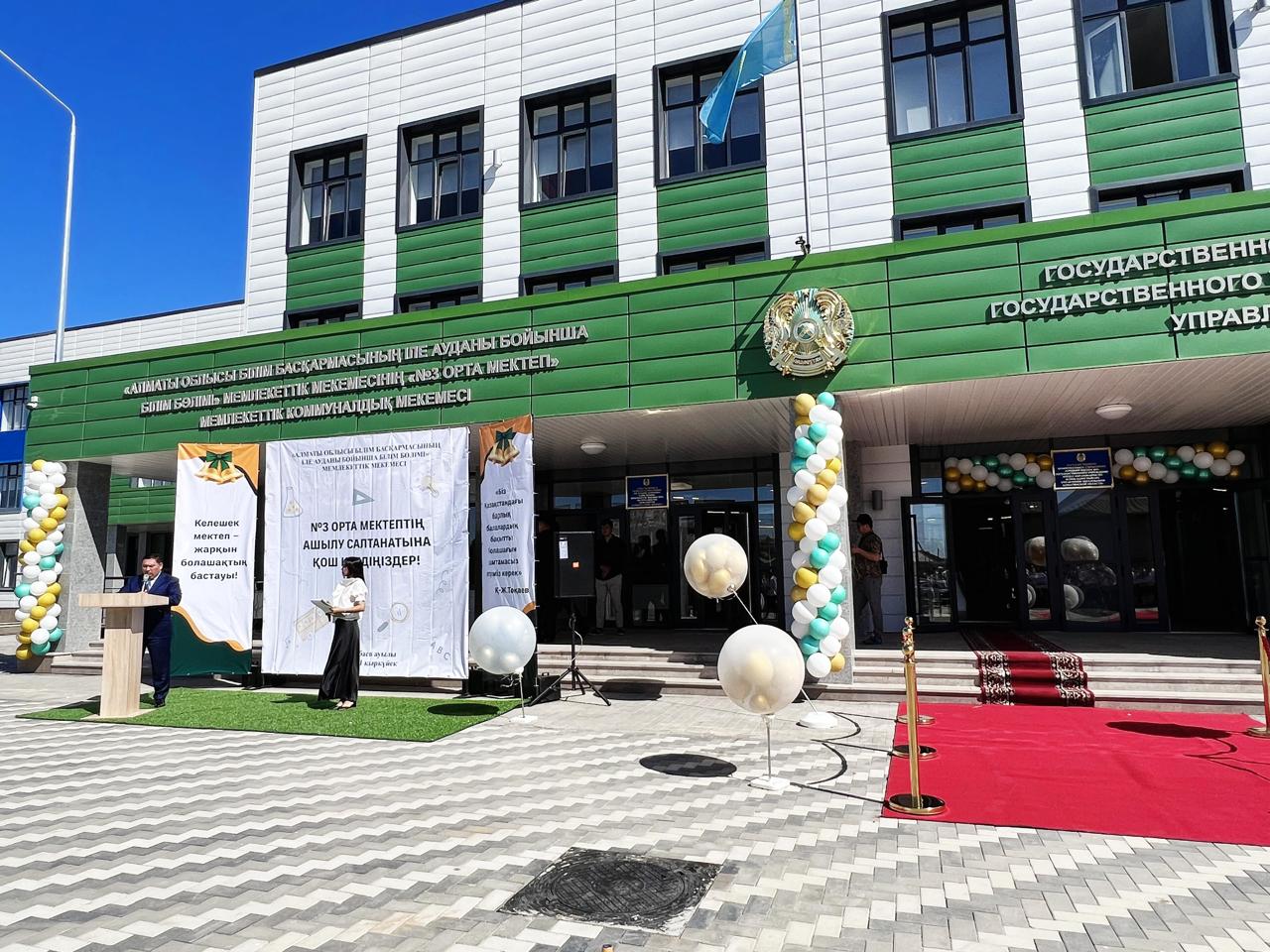
The new academic year began in Almaty region with the opening of 9 schools 01.09.2025
Source : https://www.gov.kz/memleket/entities/almobl/press/news/details/1059884?lang=kk
.png)
A Clean City is a Common Cause: How Another Cleanup Day Went in Shymkent 01.09.2025
On August 20, another large-scale clean-up day was held in Shymkent, organized by the municipal state institution "Turan" together with the company "ShymkentSpetsKompleks". The venue was the area along Temirlanovskoye Highway, house No. 40. It would seem that such events are already familiar to city residents, but this clean-up day was noticeably different from many previous events, and not only in its scope, but also in its new approach to educating the population about environmental culture. The main goal of the event was not just to clean the area and remove garbage. The organizers deliberately put an emphasis on developing environmental responsibility and engaging city residents in joint care for the cleanliness of the environment. Traditional cleanup days of previous years were mainly limited to collecting household waste, cutting down dead wood or clearing ditches. This time, the emphasis was shifted towards an educational and enlightening effect. Not only utility workers came out to clean up, but also representatives of various public associations, students, high school students, employees of private enterprises and, of course, ordinary residents of nearby neighborhoods. Such a wide range of participants shows that the cleanup is increasingly perceived as a common cause, and not as a one-time initiative of the akimat or individual organizations. Comparing with previous years, it can be noted that 5-10 years ago, clean-up days were held irregularly and were mainly timed to coincide with state holidays or the spring month of beautification. Their main task was to bring visible order to the central streets and parks. As a result, the effect was short-lived: after a week or two, garbage would accumulate in the same places again. Today, the situation is gradually changing. This clean-up day was different in that the work was carried out systematically and in line with modern requirements. Thus, the collected garbage was not simply taken to the dump, but partially sorted: plastic and glass were sent for recycling. Mini-lectures were held for residents on how to properly separate waste and why it is important for the environment. This format was practically never used before. In addition, the organizers focused on an information campaign. Invitations were distributed in advance via social networks, and an online broadcast was conducted during the event, which attracted additional attention from city residents. In previous years, information was limited, and many residents learned about the clean-up days after the fact. Participation of young people deserves special mention. If previously such events were mainly attended by employees of state institutions, now students and schoolchildren have become active participants. For them, participation in environmental campaigns is becoming fashionable and prestigious. Moreover, it was young people who often took the initiative – they suggested installing containers for separate waste collection or decorating cleared areas with green spaces. The reasons for such changes are rooted in several factors. Firstly, in recent years the population of Shymkent has grown significantly, and with it the volume of household waste. This requires new approaches to their disposal. Secondly, the city is increasingly positioning itself as a modern metropolis, where environmental issues are coming to the forefront. Thirdly, the city residents themselves are gradually changing their attitude to cleanliness: if earlier the opinion was “this is the concern of utility workers”, now more and more people understand that cleanliness depends on everyone. The current clean-up day also showed another important trend: events are no longer one-off. The organizers said that such events will be held regularly, and not just on the eve of holidays. This confirms that a culture of a systematic approach to improvement is being formed in the city. Particular attention was paid to the educational component. Residents were given talks on how to properly care for courtyard areas, why it is important not to throw garbage in the wrong places, and what penalties apply for violating the rules of improvement. Such a comprehensive approach allows us to hope that the effect of the clean-up days will be long-term, not temporary. Comparing the current clean-up day with previous years, several key differences can be identified. If earlier the main indicator was the amount of garbage collected, now it is the involvement of residents and the development of their environmental thinking. If earlier the events were more of an administrative initiative, today they are turning into a mass movement supported by society itself. And if earlier cleaning was perceived as an obligation, now many participate voluntarily and enthusiastically. Such changes are largely due to global environmental trends. In various countries, the emphasis has long been shifted from one-time events to the formation of sustainable habits. Shymkent is moving in the same direction, and the current clean-up day is a vivid confirmation of this. Thus, the event that took place on August 20 can be called not just a cleanup of the territory, but a full-fledged step towards the formation of an environmentally responsible society. It showed that the cleanliness of the city depends not only on public utilities, but also on each resident. And the more people realize this, the faster Shymkent will become a truly green and comfortable metropolis.
.png)
Culture of cleanliness: Saturday cleaning organized by the "Turan" municipal state institution in Shymkent and the "ShymkentSpetsKompleks" company 01.09.2025
On August 20, another clean-up day was held in Shymkent. The event, organized jointly by the Turan municipal state institution and the ShymkentSpetsKompleks company, was held at Temirlan highway No. 40. The main goal of the clean-up day is not only to clean up the area from garbage, but also to form an ecological culture among residents, to increase respect for nature and responsibility. The peculiarity of this clean-up day is that it is not limited to just collecting garbage, but also to mobilize residents to form an ecological awareness. Shymkent city traditionally holds annual clean-up events. In previous clean-up events, the main focus was on garbage collection, but this year the content of the event has expanded significantly. Previous clean-up events were usually held in the outskirts of the city, in parks or on central streets, and the main result was the number of tons of garbage collected. The main achievement of this year's clean-up event is the active participation of residents and the voluntary participation of young people. This indicates that the attitude towards environmental culture in society is changing. Citizens of all ages were involved in the clean-up along the Temirlan highway. From local residents to students and volunteer youth organizations, and even individual entrepreneurs contributed their share. The collected garbage was removed with special equipment, and the area was cleaned in accordance with sanitary requirements. But according to the organizers, this is not just cleaning, but also educational work. Each participant felt not only the joy of work from the clean-up, but also the pride of contributing to nature protection. Another difference between this year's event and previous years' Sabbaths is the increased informational focus. Extensive propaganda was carried out through social networks, explaining to residents not only the importance of participating in Sabbaths, but also the importance of maintaining cleanliness in everyday life. Previously, such events were often taken as initiatives of the akimat, but now they can be called an ecological movement supported by the entire society. These changes are due to the increased awareness of residents, as well as increased responsibility for the city's ecology. At the same time, special attention was paid to the promotion of environmental culture during this year's Sabbilik. In addition to cleaning the territory, participants were also given explanatory work on sorting garbage and separate collection of recyclable waste. This is a topic that has not been raised much in previous years. While in previous Sabbiliks, garbage was collected in one place and loaded into special vehicles, now modern methods are being introduced. These changes correspond to global environmental trends and can be said to be concrete steps aimed at turning Shymkent into a "green city" in the future. Another important difference is the fact that the Sabbath has become a permanent event. Previously, such events were held only on the eve of certain holidays, but now they are organized systematically and have become part of the life of the city. This proves that an ecological culture has taken shape and is beginning to take root as a way of life. In general, the main feature of the 2025 Sabbath is its depth of content. If in previous years the main result was the volume of collected garbage, then this year's event focused on influencing society, forming environmental thinking, and the activity of residents. There are many reasons for these changes: firstly, the city's population is growing year by year, and the volume of household waste is increasing; secondly, the active involvement of young people in environmental movements is contributing to the rise of eco-consciousness to a new level; thirdly, support for environmental initiatives by local authorities is becoming more and more stable. Therefore, this year's Cleanup Saturday can be seen not only as a cleanup event, but also as an important event that unites society and increases respect for nature. Such initiatives are not just one-day events, but pave the way for long-term cultural changes. As residents become more responsible for their environment, the city will become a cleaner and more comfortable place. In the future, the systematic holding of such Saturdays, combined with environmental education activities, will undoubtedly contribute to turning Shymkent into an exemplary "green city" in the region.
.png)
Irrigation systems are being modernized in Shymkent: a new approach to an old problem 01.09.2025
On August 20, 2025, large-scale work began in Shymkent, in the Al-Farabi district, to modernize irrigation systems. On this day, the district akim Maratbek Samenbekuly personally inspected the area, checked the condition of the canals and gave instructions to specialists to put the systems in order. The main goal is to prevent water accumulation, increase the efficiency of the canals, protect residential areas from flooding and create safer conditions for residents of the district. These works are of particular importance for the city, where the problem of water drainage and the condition of irrigation canals has repeatedly caused discomfort to the population in different years. In case of heavy rains, uncleaned or clogged canals quickly overflowed, water went beyond the channel and flooded roads and courtyards. This happened repeatedly, especially in the spring-autumn season. Past years show that attention to this issue was mostly seasonal. For example, in 2023, canal cleaning most often began only in the spring, when it became obvious that the canals could not cope with melt water. In those years, one-time measures were taken to clean and repair individual sections, but there was no systematic approach. As a result, after a few months, the situation repeated itself. In 2024, the Akimat took the first steps to make this work more systematic. Special groups were formed, periodic inspections of the canals were carried out, and additional devices for regulating the water level were installed in a number of places. However, these measures were not yet of a daily nature - work was carried out only in certain seasons, and the rest of the time the canals again remained without proper control. The main difference of the current 2025 is that since August 20, irrigation work has become permanent and daily. If earlier attention to this topic was increased only during rains or when residents complained, now the emphasis is on prevention. Arnaly canals are cleared of silt, debris, and weakened areas are strengthened. Special machines and teams are involved for this, which allows tasks to be completed more quickly. This approach not only reduces the risk of emergency situations, but also significantly extends the service life of the systems themselves. The residents themselves will feel the big benefit from this. Firstly, the threat of flooding of yards and roads will disappear, which is especially important in areas with dense development. Secondly, in case of heavy precipitation, water will be drained faster, without destroying the road surface and without creating emergency situations on the roadway. Thirdly, the modernization of irrigation systems will have a positive effect on agriculture, because water for irrigation will be distributed more rationally, without unnecessary losses. Another important aspect is environmental. When channels are clogged with household waste, this not only reduces their throughput, but also harms the environment. Regular cleaning and maintenance of the system will help maintain the natural balance, prevent stagnant zones where insects or unpleasant odors can spread. If we compare the current work with previous years, the difference becomes obvious. In the past, the measures were mostly reactive: it rained, the streets were flooded - after that, the services were called in. Now, however, a preventive approach has been chosen: problems are eliminated before they manifest themselves. This approach saves resources and time. After all, restoring a road or eliminating the consequences of flooding is much more expensive than timely cleaning of a canal. It is also interesting that they plan to involve modern technologies in this work. In the near future, the possibility of introducing digital monitoring is being considered - with the installation of sensors to control the water level and equipment that transmits data online. Thus, specialists will be able to respond in a timely manner to changes in the system and prevent malfunctions at an early stage. Special attention is paid to interaction with residents. The Akimat emphasizes that the cleanliness of the canals depends not only on the work of public utilities, but also on the citizens themselves. If people throw garbage into the pits, no efforts will bring the desired result. Therefore, in parallel with technical measures, explanatory work is also carried out: citizens are urged to protect the environment and maintain order. Thus, the modernization of irrigation systems in the Al-Farabi district of Shymkent is not just another cleaning or seasonal maintenance. This is a new systemic approach aimed at a long-term result. The experience of past years has shown that temporary measures do not solve the problem, so now the focus is on constant monitoring and prevention. Since August 20, irrigation in the district has become a daily affair, which means that residents can count on a higher level of safety and comfort. This work is a vivid example of how a well-established infrastructure management mechanism can directly affect the quality of life of city residents. If this experience is continued and extended to other areas of the city, Shymkent will be able to significantly reduce the risk of flooding and at the same time increase the efficiency of water resource use. For a city that is dynamically developing and expanding, such a step is timely and strategically important.
.png)
Today's step to modernize the irrigation system in Al-Farabi district 01.09.2025
On August 20, 2025, important work began in the Al-Farabi district of Shymkent city to modernize irrigation systems. On this day, the district akim Maratbek Samenbekuly got acquainted with the current state of local canals and channels and gave specific instructions to specialists. The main goal is to reduce the risk of waterlogging, improve the capacity of the canals, prevent flooding, and create comfortable conditions for residents. The direct involvement of the district akim himself indicates that special attention is paid to this issue. Irrigation systems are necessary not only for agriculture, but also for the safety of city residents. If irrigation does not work properly, during heavy rainfall, streets will flood, roads will be damaged, and residential buildings will be at risk. Therefore, this work should be permanent, not one-time. This year's special feature is this - measures have begun to be monitored not seasonally, but daily. If we look back at previous years, in 2023, such work was mainly carried out only at the beginning of the season. At that time, the canals were cleaned and some points were put in order, but this had only a temporary effect. During heavy rainfall or unexpected weather conditions, the weakness of the systems became apparent, and water would spread on some streets. Although residents complained, the problem was often solved only through temporary measures. In 2024, the first systematic steps were taken in this direction. Special groups were created and cleaning of canals at certain times began to be practiced. Devices for regulating the water level were installed in some areas, but this has not yet become a fully-fledged permanent system. The work was mainly carried out only in the spring and summer, and was neglected in the autumn and winter months. Therefore, problems arose again during the rainy season. And this year, the initiative for 2025 is completely different. The district administration considers irrigation not just as a seasonal operation, but as a strategic task that requires constant daily monitoring. Starting from August 20, canals will be inspected, water permeability will be assessed, and garbage and silt will be cleaned regularly. Special equipment will be deployed, and planned work will be organized to prevent canals from subsiding. Instead of preparing for unexpected situations, as before, priority is given to preventive measures. The main feature of this approach is prevention, not waiting for an event. Daily attention to each part of the system will ensure its durability. As a result of this initiative, residents will benefit first and foremost. The risk of flooding will be reduced, streets will be dry and safe. Roads will be protected from damage, additional funds allocated for infrastructure will be saved. It will also bring efficiency to agriculture. The necessary water will be regulated for irrigated fields, and excess water will not be wasted. This, in turn, will increase productivity and support the work of farmers. Another important point is maintaining the ecological balance. Cleaning water channels from silt and garbage will pave the way for the proper functioning of the natural system. Compared to the experience of previous years, this year's systematic work will also increase the trust of residents. Previously, people would only complain and wait for a response when a problem arose. Now they will see the results of preventive work with their own eyes. Even residents themselves are being involved in this and are being invited to participate in keeping the canals clean. Increasing public responsibility is another important aspect of this initiative. If local residents do not litter, do not damage the system, and pay attention to cleanliness, the efficiency of irrigation will increase. There are also plans to digitize these works in the future. Monitoring the condition of each channel via GPS, installing automated devices that measure water levels, and monitoring data online are among the future plans of the district akimat. The introduction of such technologies will allow us to immediately identify where in the system there is a problem and take timely measures. This experience exists in developed countries and can now be implemented in our region. In general, the modernization of irrigation systems in the Al-Farabi district, which began on August 20, is fundamentally different from the previous seasonal cleaning practice. This is a new approach based on preventive measures, requiring constant, daily monitoring. The steps taken for the safety and comfort of residents are aimed at the efficient use of water resources, the preservation of infrastructure, and support for agriculture. Compared to previous years, this initiative will allow achieving more systematic and tangible results. Continuing these works on a regular basis will undoubtedly have a positive impact on the socio-economic development of the district and improve the quality of life of the population.
.png)
Daily veterinary preventive measures started in Shymkent on August 18 01.09.2025
Since August 18, 2025, daily veterinary preventive and disinfection work has begun in all four districts of Shymkent. This decision has become an important step in protecting the health of citizens and pets. If earlier such events were seasonal, now prevention has acquired a permanent basis and is carried out every day without exception. The main goal of daily prevention is to prevent the spread of infectious diseases common to humans and animals. Veterinary specialists note that zoonotic diseases such as brucellosis or rabies pose a real threat not only to livestock and pets, but also to people themselves. Daily activities allow diseases to be detected at an early stage, immediate action taken and thus potential outbreaks prevented. This approach has become relevant in recent years: population growth, increasing urban density and the increase in the number of domestic animals create new challenges for sanitary safety. What exactly do veterinary services do? Specialists travel to the city's districts and carry out comprehensive work: vaccinate large and small cattle; vaccinate dogs and cats against rabies; carry out diagnostics and examination of animals; carry out disinfection of areas where there is a risk of spreading infections; explain to residents the rules of animal care and the importance of timely vaccination. Thus, prevention covers not only farm animals, but also domestic pets. This is especially important for a metropolis, where the risk of infection through contact with street or homeless animals is higher. The work covers all four districts of Shymkent: Abaysky District – there are many private households with subsidiary farms. Specialists pay attention to vaccination of farm animals and conduct explanatory talks with owners. Al-Farabiyya district is the city center, where work with pets and control over stray animals is especially relevant. Enbekshinsky district - includes suburban and rural areas. Here the main burden falls on the vaccination of cattle and small cattle. Karatau district – combines multi-storey buildings and the private sector, therefore prevention is carried out comprehensively and covers both domestic pets and farm animals. Thus, prevention affects all categories of animals in every area of the city. Until 2025, such events were held mainly seasonally - in spring and autumn. For example, in 2023, special attention was paid to vaccinating livestock against brucellosis, and domestic animals against rabies. In 2024, the scale of prevention expanded: more attention was paid to sanitization and information work with the population. However, the seasonal approach had a downside - there was a period of time between prevention cycles when the risk of spreading the disease increased. The new system, introduced on August 18, 2025, has changed the situation dramatically. Now the work is carried out daily, which allows the situation to be kept under constant control. In addition, the current campaign is distinguished by its increased attention to domestic animals. If previously the emphasis was mainly on farm animals, now cats and dogs are vaccinated and examined daily. This is especially important for the protection of children, who are most often in contact with pets. Why now? The daily format of prevention has become possible due to the improvement of the material and technical base of the veterinary service. In recent years, new vaccines, modern equipment have been purchased, and specialists have been trained who are able to conduct diagnostics at a higher level. In addition, world practice has shown that constant veterinary control is more effective than seasonal. In countries with a developed prevention system, daily vaccination and disinfection programs have long been introduced. Kazakhstan is gradually introducing such standards, and Shymkent has become one of the first cities where this system has been launched. Reaction of residents Many city residents note that the new format gives more confidence. Pet owners are understanding about vaccination, as they understand its importance for the health of the whole family. Parents of small children have become especially active: they invite veterinarians more often and are interested in the rules for caring for pets. Residents of the private sector also perceive the initiative positively. Previously, some postponed livestock vaccination, which created a risk for neighbors. Now, thanks to the systematic work of specialists, the situation is gradually changing. The introduction of daily veterinary measures from August 18, 2025, was an important step in ensuring the sanitary safety of Shymkent. Compared to previous years, the current campaign is distinguished by its scale, regularity and coverage of all categories of animals. If 2023 and 2024 can be called preparation stages, then 2025 will be the time to move to a new level. This decision will not only reduce the risk of spreading infections, but also create a culture of caring for animals among the population. In the future, such programs can be implemented in other regions of Kazakhstan. Shymkent shows an example of how daily prevention can become a reliable shield for the health of people and animals.
.png)
Veterinary prophylaxis is carried out daily in Shymkent 01.09.2025
Since August 18, 2025, veterinary preventive, diagnostic and disinfection measures have been carried out regularly every day in the entire district of Shymkent. Such a decision was not made by chance. As the city's population grows every year and the volume of agricultural products increases, the prevention of infectious diseases has become the main mechanism for ensuring the safety of the population. During their daily work, specialists examine and vaccinate large and small livestock, as well as domestic animals - dogs and cats. At the same time, monitoring the general condition of animals and timely detection of the first signs of infectious diseases is the main focus. Another important part of the daily routine is educational activities among the population. Veterinarians explain the correct way to care for animals and emphasize the importance of vaccination. The veterinary service of the Shymkent city administration usually carries out preventive measures in all four districts of the city . They are: Abay district is one of the most densely populated areas. Since there are many residents here who mainly keep livestock in the private sector, prevention and awareness-raising activities are given special attention. Since Al-Farabi District is a central district, vaccination of domestic animals and control of stray dogs and cats are often carried out here. Enbekshy district - this district includes rural areas under the city. Here, large-scale routine vaccination of cattle and small animals is being carried out. Karatau district - new residential buildings and the private sector are located side by side, so both pets and livestock are covered. That is, since August 18, daily veterinary prophylaxis has covered all four districts. Prior to this initiative, veterinary measures were usually carried out in accordance with a certain season. For example, in 2023, vaccinations were carried out in spring and autumn. At that time, tens of thousands of animals in the city were vaccinated, and the main focus was on prevention against rabies and brucellosis. In 2024, these works were expanded, more attention was paid to inspection and disinfection, and the level of awareness of the population increased significantly. Veterinarians met with the population and intensified their explanatory work about the risk of disease transmission to humans. Daily prevention, introduced from August 18, 2025, is a significant step forward from the previous one. Now, work is carried out on a planned basis every day, without depending on a specific day or season. This approach allows for early detection of the disease and timely stopping the threat of its spread. A similar system is widely used in world practice. In developed countries, daily monitoring has become the standard for the prevention of zoonotic diseases. Another feature of the new format of work is the special attention paid to pets. Previously, vaccinations were mainly given to agricultural animals, but now dogs and cats are also vaccinated daily. In urban conditions, this is a very necessary step. The increase in stray animals and their direct contact with residents increases the risk of spreading dangerous diseases such as rabies. Therefore, vaccination of pets plays a crucial role in maintaining public health. Residents are also accepting this change positively. Those who previously were indifferent to vaccinating livestock or pets are now beginning to understand that it is directly related to their own health. Especially in families with children, the health of animals is becoming increasingly important. This is the result of the educational work carried out in recent years. There are a number of reasons for the introduction of daily veterinary measures. First, the population density of cities is increasing, which increases the risk of the spread of infectious diseases. Second, the share of animal products in the food consumption culture of the population is high. Therefore, the health of livestock is a guarantee of food security. Third, in recent years, concern about zoonotic diseases has also increased internationally. As the coronavirus pandemic has shown, the threat of diseases transmitted from animals to humanity is very high. Compared to the experience of previous years, the new system of 2025 is a timely solution. Although the seasonal measures of 2023 yielded results at a certain stage, they were not sustainable. Although information and explanatory work was intensified in 2024, prevention was still carried out in a phased manner. And the daily prevention, which began in August 2025, has become comprehensive and permanent, minimizing the possibility of the spread of the disease. Another noteworthy point is the improvement of the material and technical condition of veterinary services. In recent years, new laboratory equipment has been purchased, the types of vaccines have increased, and the professional qualifications of specialists have increased. This also allows for the effective organization of daily work. In general, daily prevention is not only the work of veterinarians, it is also the responsibility of society. If every resident pays attention to timely examination and vaccination of their pets, it will be much easier to prevent infectious diseases. Therefore, veterinary specialists expect cooperation from the population. In conclusion, the daily veterinary measures introduced in Shymkent from August 18, 2025 are a new level of ensuring epidemiological security in the region. Compared to seasonal disinfection and vaccination in previous years, this system provides for more stable, effective and comprehensive coverage. As a result of such an initiative, city residents will have access to high-quality and safe food products and will have the opportunity to protect their health. Most importantly, this experience can serve as an example for other regions of the country in the future.