Kazakhstan is moving towards systemic management of non-resource exports
20.01.2026 12:10:54 2403
Kazakhstan aims to become one of the top three global sunflower oil suppliers and increase its oil and fat exports to over $1 billion by 2028. To achieve this, the country is transitioning from disparate export support measures to systemic industry management, building complete export chains from raw materials and processing to logistics and target markets.
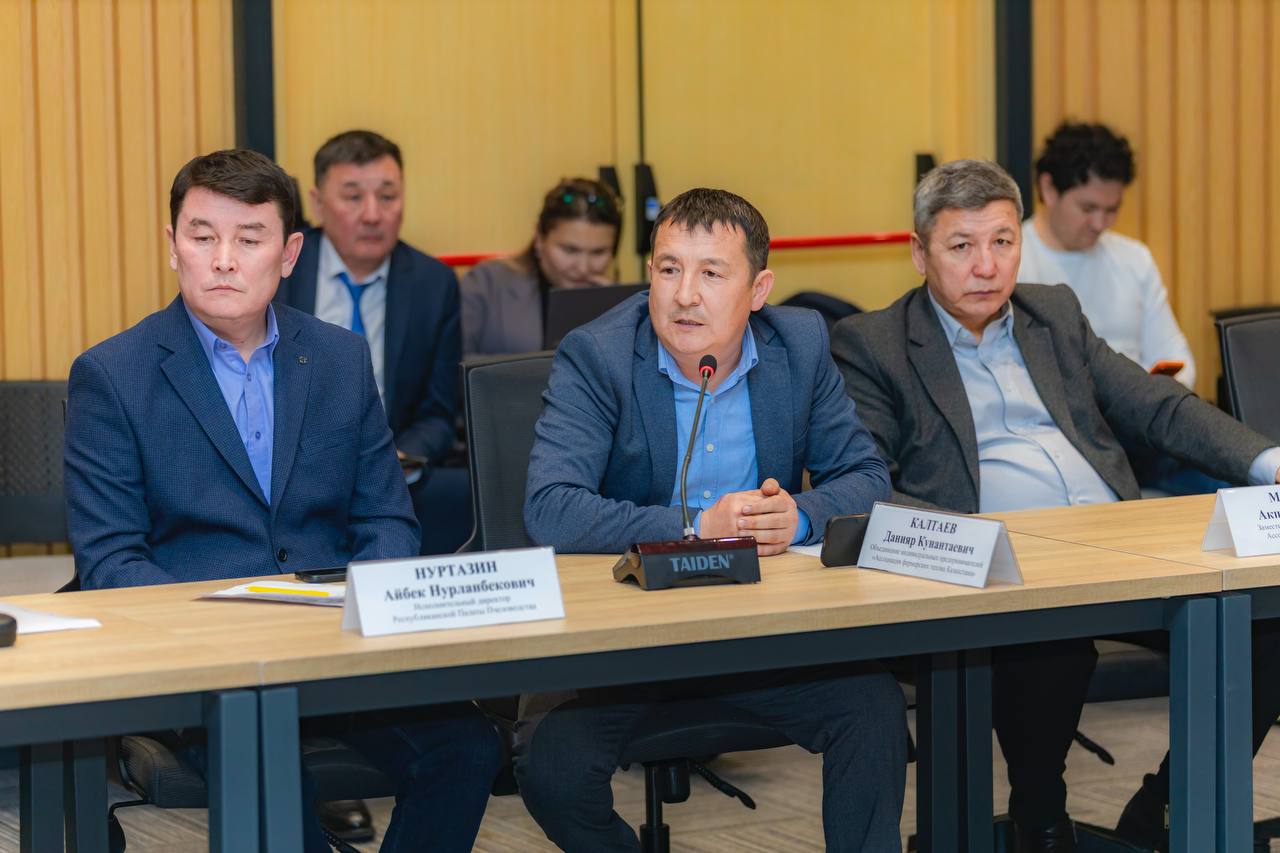
The first meeting of the Export Headquarters for the Promotion of Non-Resource Exports this year was held in Astana, chaired by Aidar Abildabekov, Vice Minister of Trade and Integration of the Republic of Kazakhstan. The focus was on new approaches to developing agricultural exports and removing systemic barriers faced by Kazakhstani producers in foreign markets.
In 2025, the Export Headquarters' work was transformed into a fundamentally new format. While discussions had previously been focused on a case-by-case basis, five industry meetings were held at QazTrade from May to December, each dedicated to specific product groups: agricultural products, the oil and fat industry, grain processing, honey, and industrial and IT products. This resulted in a refocusing of the headquarters on developing systemic solutions based on the real economics of the industries.
A key outcome of this work was the development of a Roadmap for the Development of Oil and Fat Industry Exports for 2026–2028. For the first time, the industry was examined across the entire value chain. As part of the document's preparation, a diagnostic assessment was conducted of more than 30 enterprises engaged in oilseed cultivation in the northern, eastern, and southeastern regions of the country, as well as processing in the Abay, East Kazakhstan, Akmola, Zhetysu, and Almaty regions. More than 50 representatives from the public and private sectors participated in the work, ensuring cooperation between three relevant ministries and utilizing the international methodology of the International Trade Centre with the support of the European Union.
The roadmap defined measurable benchmarks for industry development, including increasing processing capacity utilization, expanding export geography, and Kazakhstan's entry into the top three global sunflower oil exporters by 2028. In essence, the industry received a unified, coordinated action plan focused on foreign market demand.
The lessons learned served as the basis for scaling up the industry approach to other areas of the agricultural sector. Lentils, a crop demonstrating high export growth rates and surpassing traditional grains in terms of marginality, resilience to climate risks, and export attractiveness, were discussed as an example at the meeting. Special attention was given to systemic barriers to non-resource exports: freight prioritization by rail, phytosanitary and veterinary inspection procedures, registration of Kazakh companies in Chinese registries, reimbursement of export costs, and access to financial support instruments.
"The roadmap for developing fat and oil exports has created the foundation for the strategic development of the industry. At the same time, it is necessary to expedite the inclusion of oil mills in the register of EAEU commodity producers and simplify quarantine procedures, which will reduce costs and increase export potential," said Yadykar Ibragimov, representative of the National Association of Oilseed Processors.
"We have created a register of problematic issues, which allows unresolved cases to be manually escalated to the level of the Ministry of Trade and Integration and, if necessary, the Government Executive Office. It was decided to hold headquarters meetings on a regular basis, once a month, based on the industry," noted Aidar Abildabekov. As noted, since the establishment of the Export Headquarters, approximately 20 meetings have been held, including an Exporters' Forum in 2025. QazTrade continues to implement export acceleration programs, organize trade and economic missions, exhibitions, and business forums, as well as provide consulting and financial support to exporters.
At the end of the meeting, representatives of the export community and industry associations noted the effectiveness of the Export Headquarters' new format. Exporters emphasized that this approach enables them to quickly find solutions to specific cases and strengthens interactions between businesses and government agencies when entering foreign markets.
For reference: To support exporters, 109 industrial and innovation entities received reimbursement for expenses totaling 6.1 billion tenge in 2025. Domestic exporters are now gaining greater access to financial resources. The Export Credit Agency's financial support volume for 2025 reached 650.9 billion tenge, almost 1.9 times higher than the 2024 level (336 billion tenge). The focus is on trade and pre-export financing, which totaled 88.4 billion tenge, a nearly three-fold increase compared to last year. Support was provided to 113 exporters (SMEs accounted for 69%, and medium and high value-added enterprises accounted for 87%) (96 in 2024).
Source : https://www.gov.kz/memleket/entities/mti/press/news/details/1144238?lang=kk