THE PROPOSALS RECEIVED WERE TAKEN INTO ACCOUNT, AND ADDITIONAL PROVISIONS WERE INCLUDED IN THE DRAFT NEW CONSTITUTION.
11.02.2026 15:47:55 2688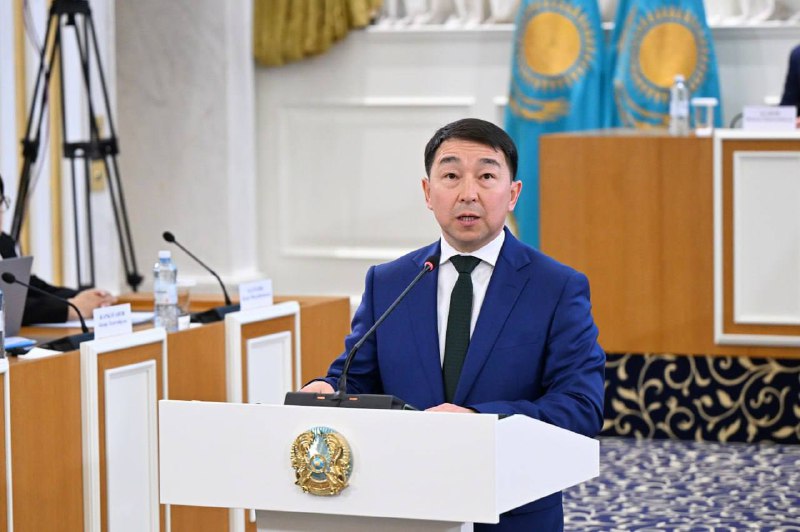
The proposals received by the Constitutional Commission have been carefully studied, and additional norms have been introduced into the draft Constitution. This was stated by Bakhyt Nurmukhanov, Deputy Chairman of the Constitutional Court, at the 11th meeting of the Commission on Constitutional Reforms.
"Article 8 of the draft Constitution states that two forms of ownership are recognized and equally protected. They are state and private property. Many proposals state that this norm does not cover all forms of ownership. Thus, paragraph 1 of the said article reads: "All forms of ownership in the Republic of Kazakhstan are recognized, guaranteed and equally protected," the speaker explained.
Article 14, paragraph 2 of the draft states that human rights and freedoms are inherent in every person, are absolute and inalienable. Many citizens and experts have suggested strengthening this provision, asking to add that "human rights and freedoms determine the content and application of the legislation of the Republic of Kazakhstan."
Taking these suggestions into account, the paragraph was amended to read: "Human rights and freedoms are inherent in every person, they are absolute and no one can deprive them of them, and the content and application of the current law of the Republic of Kazakhstan are determined accordingly."
"Paragraph 3 of Article 14 states that a citizen of the Republic of Kazakhstan has rights and obligations in accordance with his citizenship. Citizenship represents a person's constitutional and legal relationship with the state. Therefore, citizens of the Republic of Kazakhstan have the full range of rights, freedoms and obligations established by the Constitution and are equal before the law. Paragraph 5 of this article has also been clarified. According to the amended wording, the exercise of the rights and freedoms of a person and a citizen must not violate the rights and freedoms of another person, must not harm the foundations of the constitutional order, public order, the health of citizens and the human nature of society," he said.
In addition, proposals to make the dissolution mechanism of the Kurultai more flexible and conducive to compromise were also taken into account. In this regard, the phrase "shall dissolve" was replaced with the phrase "has the right to dissolve".
"In the draft Constitution published for public discussion, these powers are established in an imperative form. Now it is proposed to formulate these powers of the President of the Republic in a dispositive form and establish them as a right. The corresponding changes have been made to subparagraphs 2), 4) and 8) of Article 46, paragraph 1 of Article 57, and paragraphs 1 and 2 of Article 62," explained the Commission member.
At the same time, the aforementioned constitutional norms impose restrictions on the dissolution of the Constituent Assembly. The Constituent Assembly may not be dissolved during a state of emergency or war, during the last six months of the President's term of office, within one year of the previous dissolution, or in the cases established by Article 51 of the Constitution.