The Center for Combating Disinformation is a part of the Constitution of the Republic of Kazakhstan.
25.02.2026 16:51:45 3595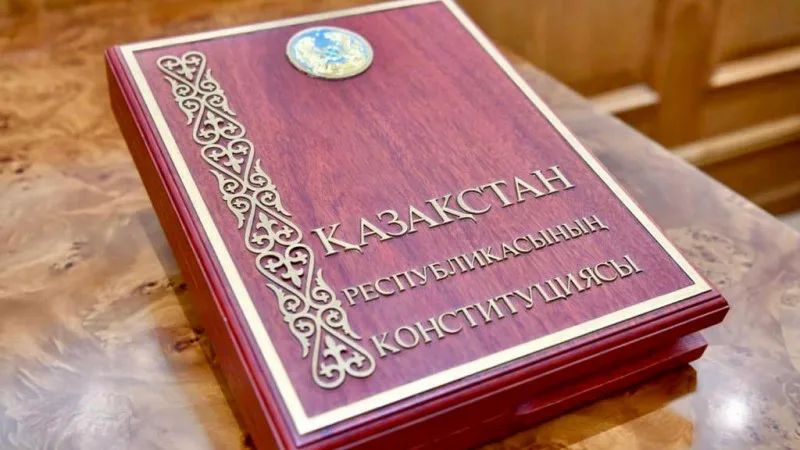
🔎 The Center for Countering Disinformation has prepared an overview of the most common fakes and manipulations surrounding the new draft of the Constitution of the Republic of Kazakhstan. We compared the false statements circulating online with the official text of the draft and explanations from government agencies.
Part 1
1. "The Constitution Strengthens the Powers of the President"
This does not match the content of the document.
The draft establishes a system of checks and balances. Key personnel decisions - the appointment of the Vice President, Prime Minister, judges of the Constitutional Court, members of the Central Election Commission and the Supreme Audit Chamber - will be made with the consent of the Kurultai.
In addition, the President's single seven-year term of office without the right to re-election remains.
Such a structure is characteristic of a presidential republic, not a "super-presidential" model.
Conclusion: Fake
2. "The ban on selling land to foreigners will be lifted"
The draft text does not contain any norms that would allow the sale of land to foreign citizens.
Paragraph 3 of Article 8 states:
It is established that "the land and its subsoil, waters, flora and fauna, and other natural resources belong to the people. The state exercises the right of ownership on behalf of the people. Land may also be privately owned on the grounds, conditions, and within the limits established by law."
Conclusion: Fake
3. "Free medicine will be abolished"
The project maintains the non-reimbursable nature of medical care.
According to paragraph 2 of Article 32:
"Citizens of the Republic of Kazakhstan have the right to receive medical care established by law, which they do not pay for themselves."
The issue here is not the abolition of free medicine, but rather the legislative clarification of the mechanism for implementing this right.
Conclusion: Manipulation
4. "Free education will be abolished"
This also does not correspond to the text of the project.
In fact, the Constitution guarantees the free nature of secondary education in state educational institutions. It also establishes the right to receive free higher education on a competitive basis in higher education institutions (Article 33).
At the 9th meeting of the Constitutional Reform Commission, Deputy Prime Minister - Minister of Culture and Information Aida Balayeva:
"No one is deprived of the right to medical care and education... The concept of "free" has been replaced by a more legally specific concept: "citizens have the right to receive medical care without paying, in accordance with the procedure established by law," he noted.
Conclusion: Manipulation
5. "Annual paid leave will be abolished"
This is a misconception.
Article 27 of the draft Constitution guarantees the right to rest. The exact duration and conditions of annual paid leave are determined by the Labor Code.
The constitutional norm establishes the principle, while the details are regulated by sectoral legislation.
Conclusion: Manipulation
Part 2
6. "The concept of "freedom" has been removed from the Constitution"
On the contrary, rights and freedoms are defined as the highest value.
The Preamble and Article 1 declare that man, his life, rights and freedoms are the most precious treasure of the state. Rights and freedoms are recognized as indivisible and inalienable.
Deputy Prime Minister of the Republic of Kazakhstan - Minister of Culture and Information Aida Balayeva noted in her public statement: "The person and his dignity are becoming the center of the constitutional model."
Conclusion: Manipulation.
7. "Freedom of speech and assembly will be restricted"
In fact, the draft Constitution explicitly prohibits censorship (Article 23, Clause 5) and guarantees freedom of expression (Article 23, Clause 4). Restrictions are permitted only by law and only for the purpose of protecting the constitutional order, public security, and the rights of others, in accordance with Kazakhstan’s international obligations, including the International Covenant on Civil and Political Rights.
The right to peaceful assembly is also guaranteed in Article 35 of the draft Constitution. The lack of a list of types of peaceful assembly is explained by the fact that all of these types fall under the concept of "peaceful assembly", that is, are covered by the right to peaceful assembly. The specific types of peaceful assembly are specified in the Law on Peaceful Assembly.
Such a general concept, which does not specify the types of peaceful assemblies, is consistent with the International Covenant on Civil and Political Rights, which states that "the right to peaceful assembly shall be recognized."
Conclusion: Manipulation.
8. "Total digital control will be introduced"
On the contrary, the draft Constitution introduces "digital rights" and protects citizens' privacy and personal data from illegal use in the virtual environment (Article 21, Clause 1).
Conclusion: Fake.
9. "The text of the Constitution was written by foreigners"
The draft was prepared by domestic lawyers, scientists, and experts, taking into account the proposals of citizens. The work of the commission was conducted openly and publicly.
Conclusion: Fake.
10. "The new Constitution violates international obligations"
The draft does not contain any norms that contradict ratified international treaties. The fundamental principles of human rights and freedoms are brought into line with internationally recognized standards.
The procedure for the application of ratified international treaties will be determined by law, taking into account the need to protect national interests. Ratified international treaties will remain part of the current legal system of the Republic of Kazakhstan.
Conclusion: Manipulation.
The Center for Countering Disinformation urges citizens to carefully examine primary sources, be critical of unverified publications, and refrain from spreading false information.
When forming your own view, rely on official texts and explanations from authorized bodies, rather than emotional and superficial interpretations.