
London hosts discussion on the outcomes of the Regional Ecological Summit held in Astana
05.05.2026 16:14:22 2156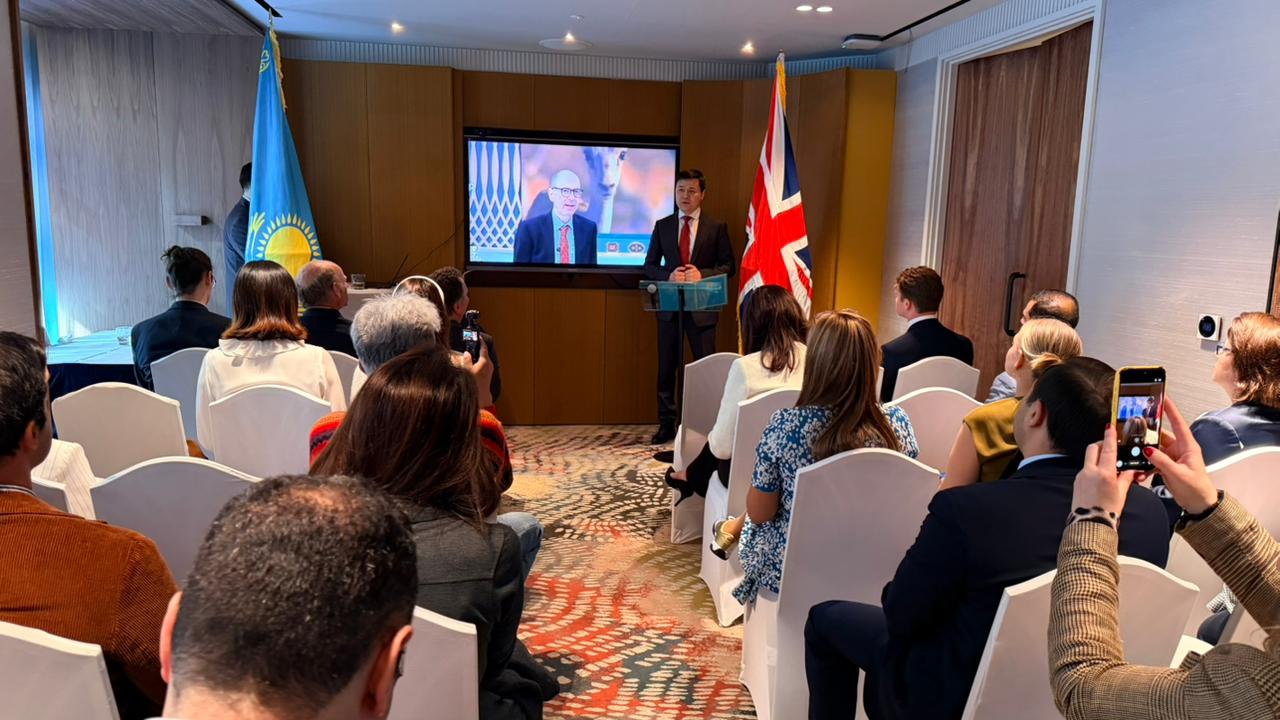
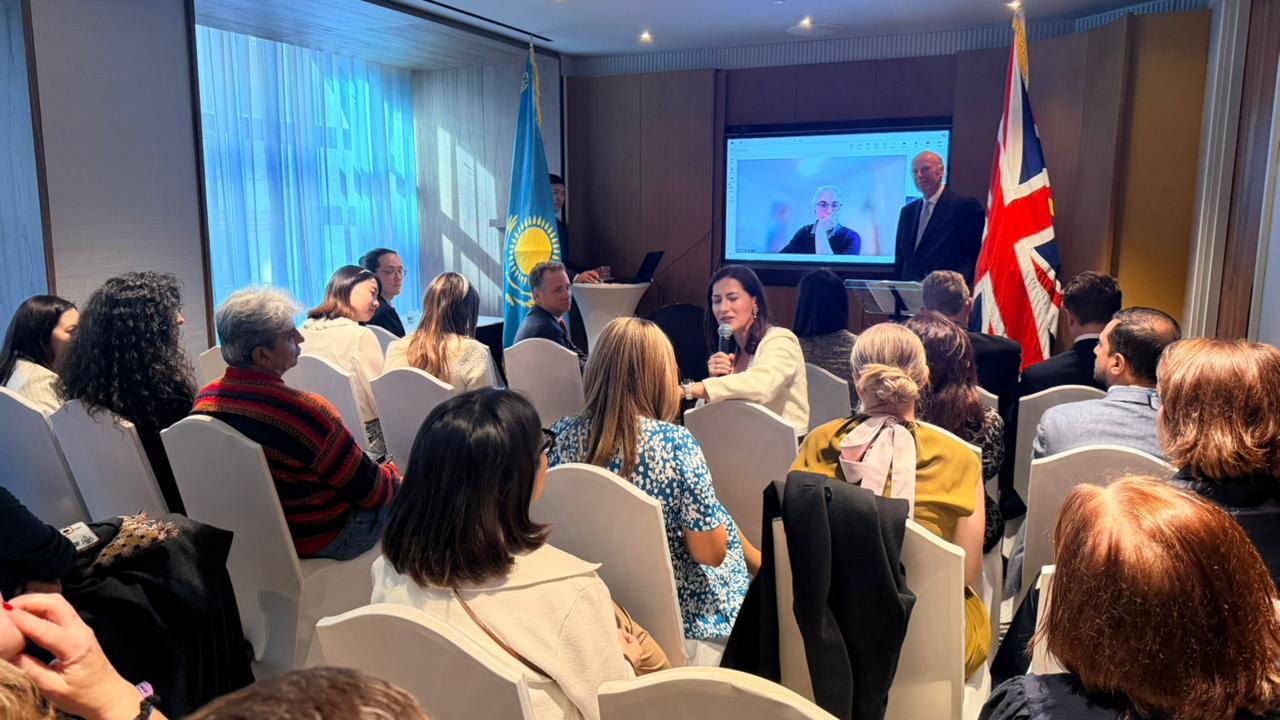
An event dedicated to reviewing the outcomes of the Regional Ecological Summit (RES-2026), recently held in Astana, took place in London. The discussion brought together representatives of the UK Foreign, Commonwealth & Development Office, business and expert communities, British journalists, as well as participants of the Summit who attended from the United Kingdom. Participants exchanged views on the results achieved in Astana and shared perspectives on future cooperation with Kazakhstan in the areas of green economy, water security, and sustainable development.
Opening the event, the Chairman of the British-Kazakh Society, Rupert Goodman, noted: “The Summit was a landmark event, bringing together the leaders of 11 states, international organisations, financial institutions, business, academia, and civil society. One of its key outcomes was the adoption of the Joint Declaration of the Heads of State of Central Asia, ‘Environmental Solidarity of Central Asia’, which reaffirmed a shared commitment to strengthening regional cooperation.”
He also highlighted the strong interest in the Summit in the UK: “His Grace the Duke of Richmond addressed a written message to the President of Kazakhstan, Kassym-Jomart Tokayev, and to the participants of the Summit, underlining the importance of the regional environmental agenda and international engagement around it. The message particularly emphasised that water is one of our most precious resources, and its responsible management will be key to ensuring sustainability and prosperity for future generations. In this context, the strong attention given in Astana to the initiative of establishing an International Water Organisation is highly encouraging.”
Welcoming the guests, Chargé d’Affaires of the Republic of Kazakhstan to the United Kingdom, Ruslan Karabulov, noted the significant scale and level of engagement at the Summit. Over three days, 58 sessions were held, including 21 high-level panels, with more than 8,000 participants in total. Senior representatives of the UN and leading international organisations took part in the discussions, including the OSCE, the European Union, the Asian Development Bank, the EBRDS, and the World Bank.
A substantial package of initiatives and investment agreements was also announced, including more than 30 regional environmental projects with total funding exceeding USD 2 billion, as well as additional agreements worth over USD 2.3 billion in areas such as renewable energy, waste management, and sustainable industrial development.
Sharing her impressions of the Summit, Dr. Undala Alam, Regional Climate Adviser at the UK Foreign Office, welcomed Kazakhstan’s initiatives and highlighted key areas for strengthening bilateral cooperation. These include environmental sustainability, biodiversity protection, regenerative agriculture, carbon market development, strengthening regulatory frameworks for environmental security, improvements in public governance, and heating system reforms. She noted that the United Kingdom is interested in deepening dialogue with Kazakhstan across these areas, including knowledge exchange and the deployment of green technologies.
Mr. Kristian Carraretto, Head of Energy Transition at the European Bank for Reconstruction and Development, stated that a Memorandum of Understanding was signed during the Summit on the establishment of Kazakhstan’s country investment platform for energy transition, “QaJET”. “By 2035, Kazakhstan plans to commission at least 10 GW of renewable energy capacity, attract around USD 20 billion in investment, and reduce emissions by more than 20 million tonnes annually,” he said.
British broadcaster and RES session moderator Charlotte Kann highlighted Kazakhstan’s leadership in climate diplomacy. She noted that the Summit demonstrated the important role that middle powers can play in an increasingly multipolar world.
The event also featured a Q&A session and a screening of the documentary Tasbaqa, which tells the story of the Central Asian tortoise on the Ustyurt Plateau and highlights the importance of biodiversity conservation in the region.
Participants concluded that the RES was not merely a platform for dialogue, but a meaningful step towards practical implementation of agreements — strengthening partnerships and shaping a more coordinated, forward-looking environmental agenda for Central Asia.
Source : https://www.gov.kz/memleket/entities/mfa-london/press/news/details/1214503?lang=kk