
International Symposium on the Heritage of the Golden Horde Opens in Astana with President Kassym-Jomart Tokayev in Attendance
21.05.2026 09:09:55 2137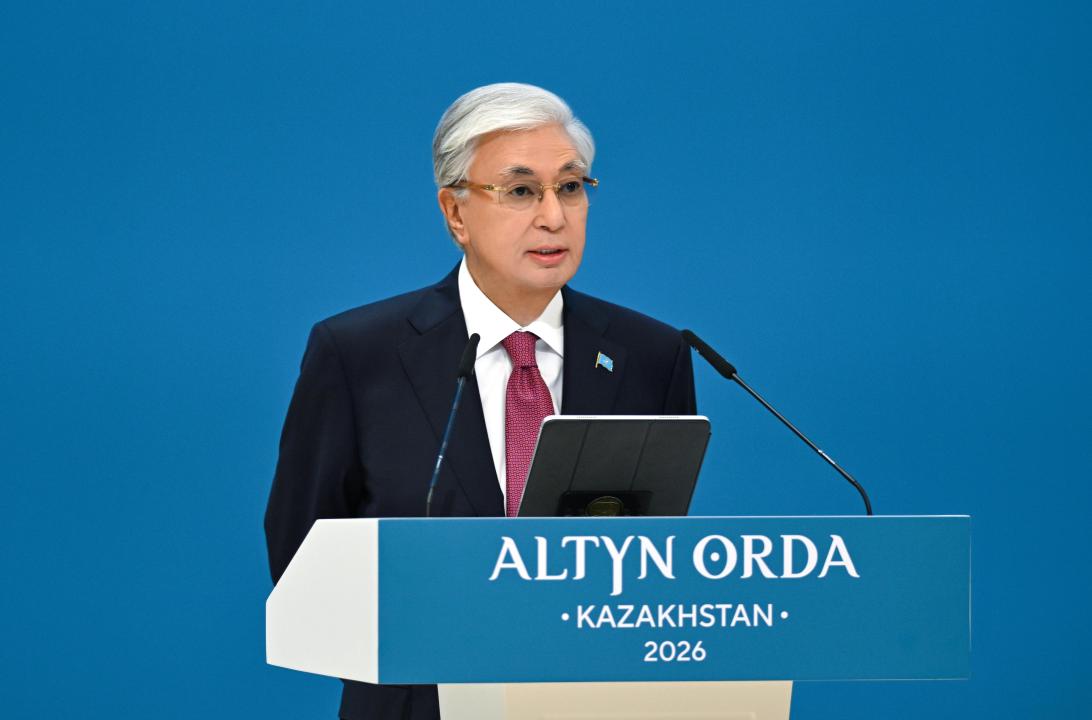
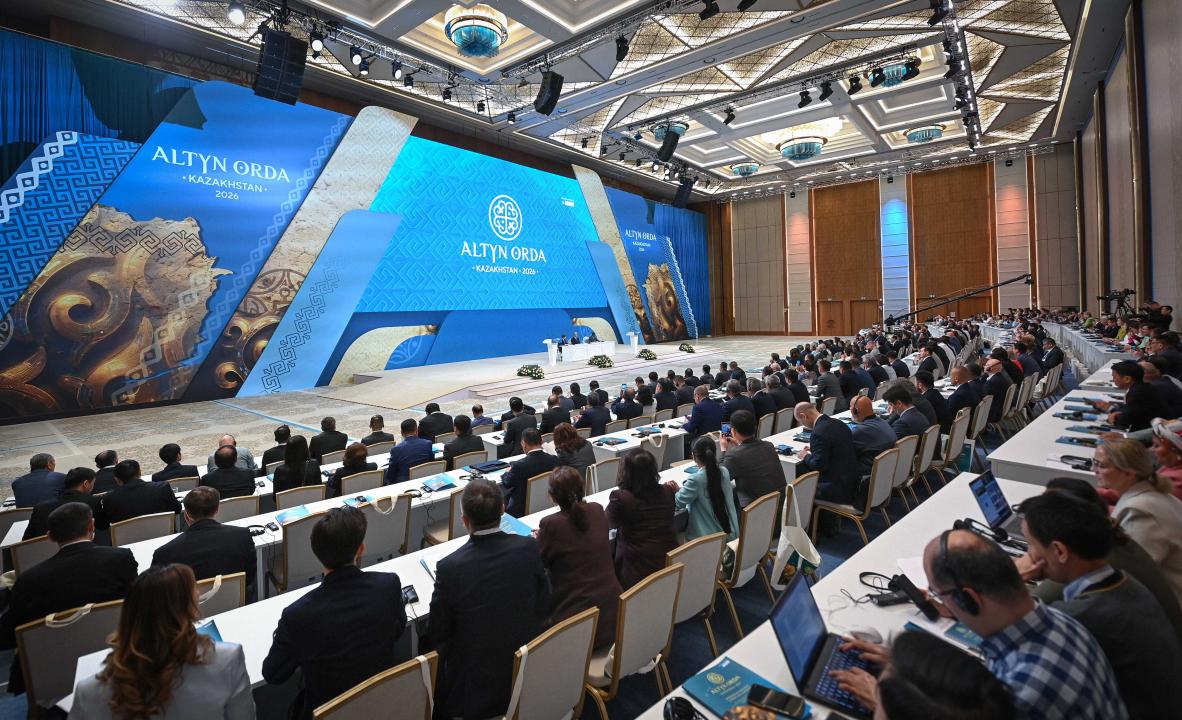
On May 19, the opening ceremony of the International Symposium “The Golden Horde as a Model of Steppe Civilization: History, Archaeology, Culture and Identity” took place in Astana, attended by the President of the Republic of Kazakhstan, Kassym-Jomart Tokayev.
Held under the auspices of UNESCO on May 19–20, the large-scale international forum has brought together leading domestic and international scholars, experts, and members of the global academic community to explore the historical legacy of the Jochi Ulus and its role in shaping civilizational processes across Central Eurasia.
The symposium aims to position the Republic of Kazakhstan as a leading international center for the study of the Golden Horde’s heritage while showcasing the country’s academic potential in the field of Central Eurasian civilization studies through a comprehensive interdisciplinary analysis of the political, economic, cultural, and spiritual legacy of the Jochi Ulus and its relevance to contemporary integration processes across Eurasia.
As part of the symposium, a thematic exhibition dedicated to the heritage of the Golden Horde as a model of steppe civilization is also being held. The exhibition features archaeological, written, and cultural artifacts.
The exhibition covers key thematic areas, including statehood and governance, steppe fashion and clothing, military affairs, interaction between steppe and urban civilizations, as well as culture, science, and art. Special attention is given to an interactive map featuring 70 archaeological and architectural monuments, 17 of which are presented with detailed descriptions, aerial photographs, and 3D visualizations.
Among the key exhibits is the handwritten scroll “Shezhire of the Khans”, containing genealogical information on rulers and historical figures of the period. The exhibition also features the Catalan Atlas, the genealogical tree of the khans, coins, written sources, and everyday objects. The written heritage includes three decrees, four diplomatic letters, and 21 manuscripts presented in original, facsimile, and electronic formats.
The exhibition is based on materials from major archaeological sites in Kazakhstan, including the ancient cities of Saraishyq, Syganak, Barshynkent, and other historically significant sites located across the country. The exhibition aims to promote the historical and cultural heritage of the Golden Horde and encourage further academic interest in its study.
The plenary session was moderated by Sayasat Nurbek, Minister of Science and Higher Education of the Republic of Kazakhstan. The opening ceremony was attended by representatives of the UNESCO Secretariat, diplomatic missions of the CIS, SCO, CSTO, and OTS member states, as well as ambassadors of Russia, China, Türkiye, Iran, Mongolia, Ukraine, Hungary, Bulgaria, the United States, the United Kingdom, Germany, France, and a number of other countries.
The forum brought together more than 300 scholars and experts, including 120 international researchers from over 20 countries. Participants included medieval historians, archaeologists, orientalists, Turkologists, Mongolists, numismatists, epigraphy specialists, political scientists, cultural scholars, art historians, diplomats, and representatives of international organizations.
Speaking at the plenary session, Sayasat Nurbek noted that the International Symposium dedicated to the heritage of the Golden Horde holds strategic importance for the development of historical scholarship and the rethinking of the historical past.
“Today, we are discussing not only the past, but also the foundations of understanding statehood, identity, and Kazakhstan’s place in the history of Eurasia. In the context of the contemporary reassessment of history, the Golden Horde gains particular importance as a key stage in the formation of the political and cultural traditions of the Great Steppe,” the Minister emphasized.
According to him, the Golden Horde represented a unique model of Eurasian integration, fostering interaction between East and West, as well as the exchange of ideas, technologies, and cultural practices, while its history reflects a synthesis of steppe and sedentary civilizations.
“For Kazakhstan, the study of the Golden Horde is not merely an academic undertaking. It is a matter of historical continuity. Kazakhstan regards itself as one of the successors to the Jochi Ulus, where the foundations of statehood and ethnogenesis were formed and later continued in the Kazakh Khanate,” Sayasat Nurbek noted.
Welcoming remarks were also delivered by Ernesto Ottone Ramirez, Assistant Director-General for Culture of UNESCO and Director of the UNESCO World Heritage Centre; Arslan Koichiev, State Secretary of the Kyrgyz Republic; Irada Ayupova, Minister of Culture of the Republic of Tatarstan; Audrey Azoulay, President of the La France s’engage Foundation; Sodnomsambuu Demberel, President of the Mongolian Academy of Sciences; Shavkat Ayupov, President of the Academy of Sciences of the Republic of Uzbekistan; as well as Ilnur Mirgaliyev, Head of the M.A. Usmanov Centre for Golden Horde and Tatar Khanates Studies at the Sh. Marjani Institute of History of the Academy of Sciences of the Republic of Tatarstan.
During the symposium, particular attention is being paid to the ethnopolitical history of the Golden Horde, the contemporary significance of its legacy, prospects for further research, material and spiritual cultural heritage, written and oral sources, as well as civilizational interaction along the Great Silk Road.
The forum also envisages specialized academic sessions dedicated to interdisciplinary research on the historical and cultural heritage of the Golden Horde, archaeological discoveries, and issues related to the formation of historical memory and identity.
One of the key outcomes of the international forum was the adoption of the Astana Declaration on the Heritage of the Golden Horde, aimed at promoting international academic cooperation, consolidating research initiatives, and strengthening collaboration among research centers and expert communities from different countries.
The symposium’s cultural programme includes the concert “Uly Dala Murasy” (“Heritage of the Great Steppe”), reflecting the richness of the Great Steppe’s historical and cultural heritage and the continuity of the spiritual traditions of the Eurasian space.
The hosting of the International Symposium in Kazakhstan contributes to further strengthening the country’s international standing as one of the leading centers for the study of the history and heritage of Central Asia, expanding academic dialogue, and promoting an objective understanding of the historical processes that played a significant role in shaping Eurasian civilization.
Source : https://www.gov.kz/memleket/entities/mfa-hague/press/news/details/1226344?lang=ru