
Sacred Sites of Mangystau Inscribed on UNESCO World Heritage List
25.07.2026 14:48:01 2532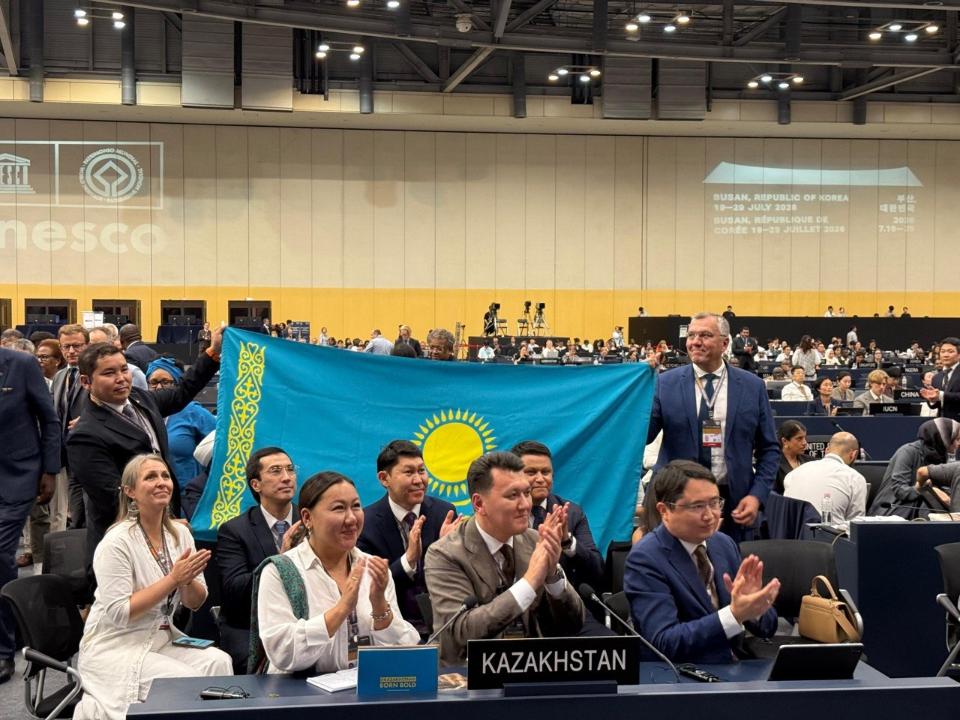
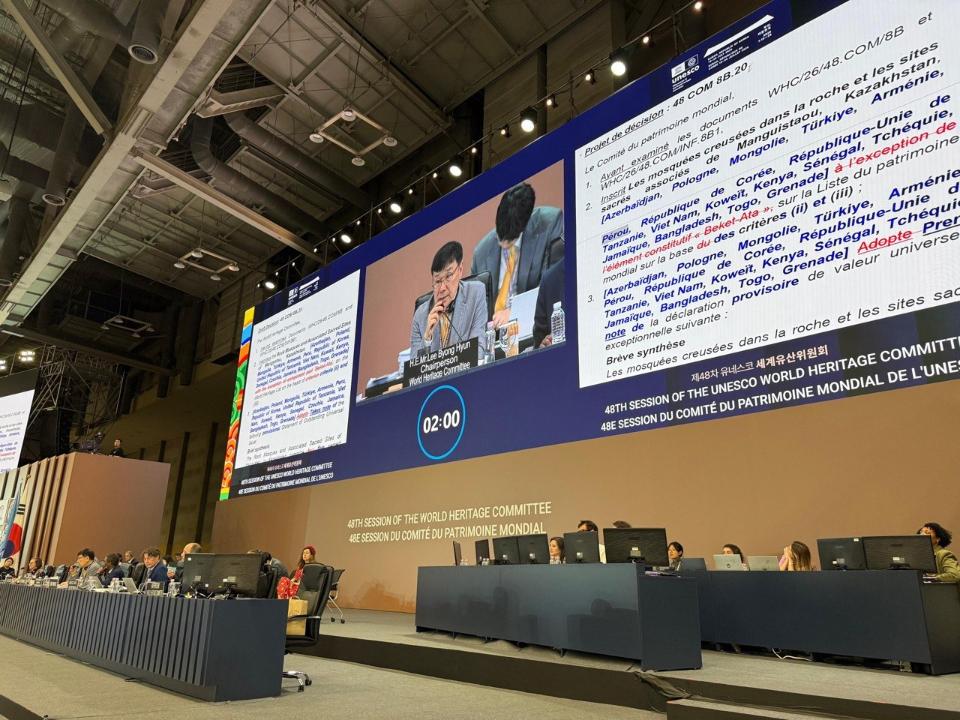
Busan, 25 July 2026 – Today, at the 48th session of the World Heritage Committee, ongoing in Busan, Republic of Korea, a decision was adopted to inscribe the “Rock Mosques and Associated Sacred Sites of Mangystau” on the UNESCO World Heritage List.
The newly inscribed UNESCO World Heritage property comprises five rock-cut mosques: Beket Ata, Shopan Ata, Qaraman Ata, Shaqpaq Ata and Sultan Epe.
The decision represents international recognition of the Outstanding Universal Value of this complex of historical and cultural monuments in western Kazakhstan, which developed over many centuries and demonstrates how spiritual traditions and practices were adapted, through local architecture, to the region’s distinctive natural environment and geological features.
In March 2024, at the National Constituent Assembly meeting in Atyrau, President of Kazakhstan Kassym-Jomart Tokayev instructed the competent bodies, together with the National Commission for UNESCO and ISESCO Affairs of the Republic of Kazakhstan, to work on the inscription of the Mangystau Rock Mosques on the World Heritage List
The delegation of Kazakhstan to the Committee session is headed by Erlan Karin, Chairperson of the National Commission of the Republic of Kazakhstan for UNESCO and ICESCO and First Deputy Chief of Staff of the Presidential Administration of the Republic of Kazakhstan. The delegation also included representatives of the Ministry of Foreign Affairs of the Republic of Kazakhstan, the Ministry of Culture and Information of the Republic of Kazakhstan, as well as leading experts in the field of cultural and natural heritage conservation.
Speaking following the adoption of the decision, Erlan Karin thanked the members of the Committee, the UNESCO World Heritage Centre and the International Council on Monuments and Sites (ICOMOS) for their professional assessment, constructive dialogue and support throughout the preparation of the nomination.
He emphasized that the inscription of the sacred monuments of Mangystau on the World Heritage List was not only a recognition of their significance for humanity as a whole, but also a tribute to the rich history, spiritual heritage and cultural identity of the Kazakh people.
According to him, the decision places a special responsibility on Kazakhstan to preserve this exceptional heritage for future generations and reaffirms the country’s unwavering commitment to fulfilling the provisions of the 1972 Convention concerning the Protection of the World Cultural and Natural Heritage.
Following the adoption of the historic decision, a symbolic ceremony dedicated to the inscription of the sacred sites of Mangystau on the World Heritage List was held at the Busan Convention Centre. During the ceremony, delegates attending the session congratulated the people of Kazakhstan on this joyful occasion. Dombra player Meirban Seyitbay and zhetygen performer Sabina Bauyrzhanova presented musical works inspired by the history of the Great Steppe, the spiritual traditions of Mangystau and the cultural heritage of the Kazakh people.
The inscription of the property on the World Heritage List was the result of many years of joint efforts by the Ministry of Culture and Information of the Republic of Kazakhstan, the Ministry of Foreign Affairs of the Republic of Kazakhstan, the Akimat of Mangystau Region, as well as national research institutions and experts who ensured the preparation of the nomination dossier in accordance with the international standards of the 1972 UNESCO Convention.
The best known of the five rock-cut mosques included in the newly inscribed UNESCO World Heritage property is Beket Ata, associated with the life and legacy of the prominent Sufi figure of the eighteenth and nineteenth centuries. Today, it remains one of the most revered pilgrimage sites in Kazakhstan, welcoming hundreds of thousands of visitors from different countries every year.
According to tradition, Beket Ata received his spiritual guidance at the burial place of Shopan Ata, a distinguished Sufi figure of the late medieval period and a disciple of Khoja Ahmed Yasawi. Another major rock-cut mosque in Mangystau bears his name. For this reason, many pilgrims also make a point of visiting this mosque, together with the surrounding necropolis and wells.
The Qaraman Ata complex is one of the largest sacred centres in the region and includes an underground mosque and an extensive historic necropolis. For centuries, it has remained an important centre of religious life and spiritual guidance.
Carved into chalk rock, the Shaqpaq Ata Mosque is one of the oldest in Kazakhstan. Its unique cruciform layout, rich decorative features and numerous epigraphic monuments bear witness to the rich spiritual and artistic culture of medieval Mangystau.
Sultan Epe has long been venerated as the patron of travellers and sailors. Located near the coast of the Caspian Sea, the mosque bearing his name served for centuries as a place of pilgrimage and spiritual support for local communities and merchants travelling along overland and maritime trade routes.
With the inscription of the sacred sites of Mangystau, Kazakhstan now has seven properties on the UNESCO World Heritage List. These include the Mausoleum of Khoja Ahmed Yasawi, the Petroglyphs within the Archaeological Landscape of Tamgaly, Saryarka – Steppe and Lakes of Northern Kazakhstan, the Silk Roads: the Routes Network of the Chang’an–Tianshan Corridor, the Western Tien-Shan, and the Cold Winter Deserts of Turan.
Source : https://www.gov.kz/memleket/entities/mfa-unesco/press/news/details/1263662?lang=ru