
Representatives of businesses and government agencies discussed the procedure for applying the SPOT system in mutual trade within the EAEU
27.05.2026 16:11:14 2488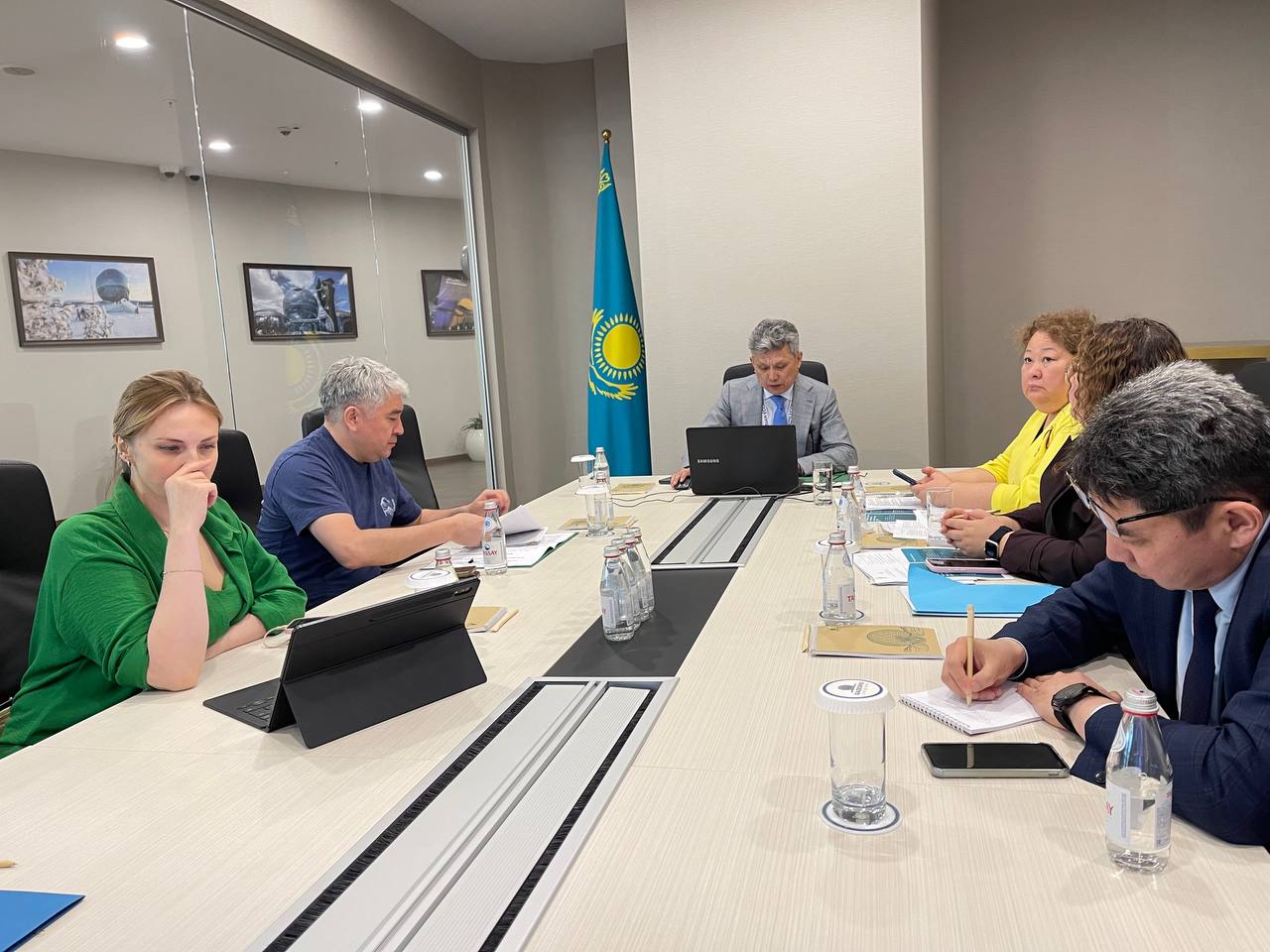
On May 26, a meeting dedicated to the implementation of the Goods Delivery Expectation Confirmation System (GDECS) in the Russian Federation was held at the Eurasian Economic Commission. The discussion was initiated by the Kazakh side. The event was attended by representatives of government bodies, businesses, and industry associations of the member states of the Eurasian Economic Union. In total, more than 100 representatives from various economic sectors participated in the discussion.
During the meeting, representatives of the Federal Tax Service and the Federal Customs Service of the Russian Federation provided clarifications on the approaches and procedures for applying the new system, and also answered participants' questions related to practical aspects of delivering goods to the territory of the Russian Federation.
GDECS is a national system for confirming the expectation of goods delivery, being introduced in the Russian Federation for the movement of goods from EAEU member states. The system provides for preliminary registration of the delivery, issuance of a document on the upcoming delivery of goods (DUDG), payment of a security deposit for indirect taxes, and obtaining a QR code confirming the presence of the necessary information in the system.
GDECS was introduced by Federal Law of the Russian Federation No. 101-FZ dated April 17, 2026 "On the National System for Confirming the Expectation of Goods Delivery," as well as accompanying amendments to the tax legislation of the Russian Federation. Starting April 1, 2026, the system is applied in a pilot mode, and from June 1, 2026, a transition to mandatory application is envisaged.
According to information from the Russian side, the implementation of the system is aimed at increasing the transparency of trade turnover, ensuring the full payment of indirect taxes, and enhancing the traceability of goods at all stages of their circulation. At the same time, key control procedures are shifted to the stage before border crossing. During the discussion, business representatives raised questions regarding the system registration procedure, document processing timelines, specifics of applying security deposits, and the potential impact of the new requirements on logistics and delivery times. Relevant clarifications were provided to the participants on the issues raised.
It was separately noted that the Federal Customs Service of the Russian Federation envisions a phased and maximally soft approach to applying the new requirements. In particular, mobile groups have been established at 30 checkpoints on the Kazakh-Russian route and at 11 sections of the Belarusian-Russian border to support the system's implementation, where consulting and practical support for foreign economic activity participants will be provided.
Given the significant volume of mutual trade between Kazakhstan and the Russian Federation, the functioning of GDECS is of great importance for a wide range of market participants. According to the results of 2025, the volume of Kazakhstan's exports to the Russian Federation amounted to approximately 8.1 billion US dollars. A substantial part of the deliveries is carried out by road transport, which is directly subject to the new system.
The meeting participants emphasized the importance of continuing an open dialogue between government bodies and the business community to ensure the timely adaptation of foreign economic activity participants to the new conditions of mutual trade within the EAEU.
Source : https://www.gov.kz/memleket/entities/mti/press/news/details/1229119?lang=ru