
The oil and fat industry brought Kazakhstan almost $1 billion in export revenue
30.06.2026 18:37:49 54
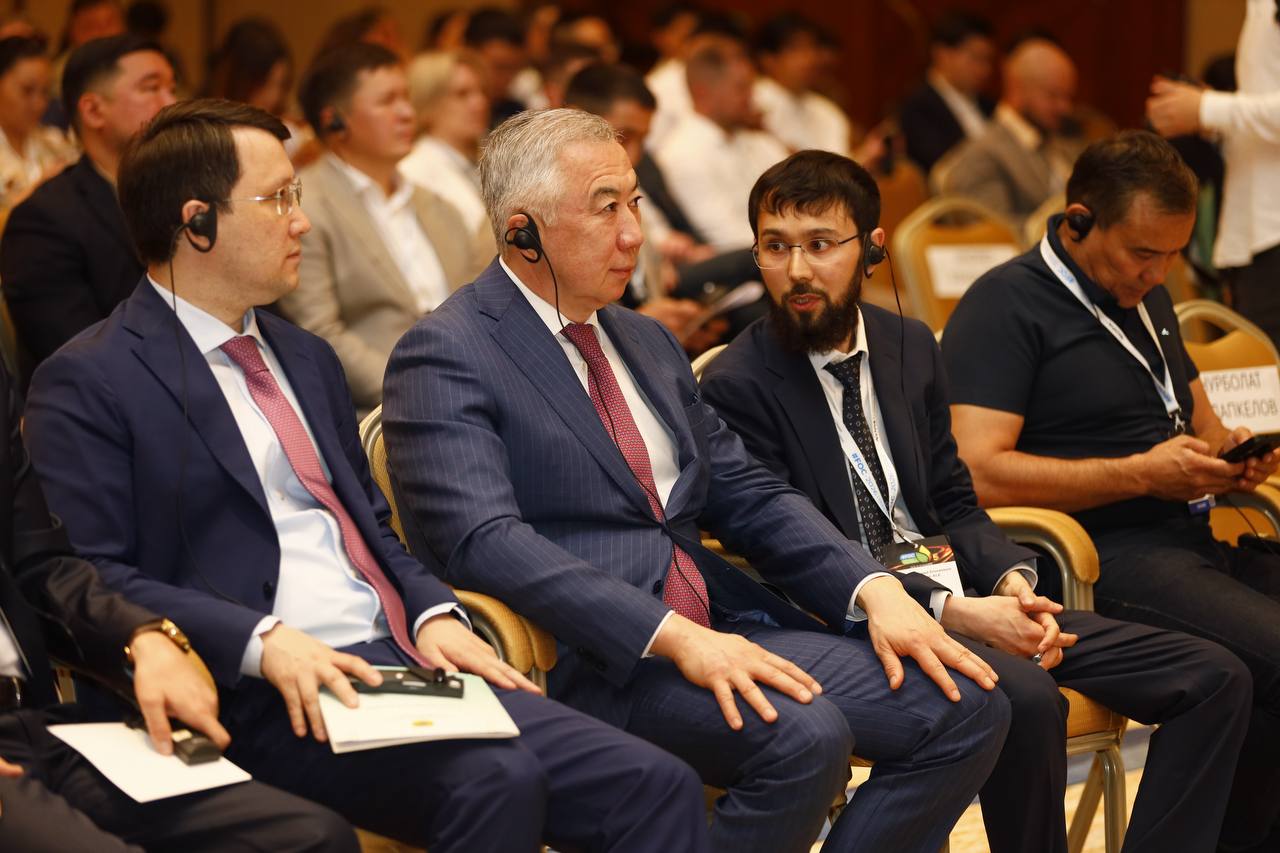
On June 5, the Fifth Anniversary International Conference "FOC 2026: Fats and Oils Conference" is being held in Astana. Over five years, it has become one of the key platforms for discussing the future of the Eurasian fats and oils industry. This year, the forum brought together over 330 delegates from 18 countries worldwide, heads of more than 50 Kazakh oilseed processing plants, representatives of government agencies, international organizations, financial institutions, agro-holdings, logistics companies, and the world's largest industry players.
The conference was organized by the National Association of Oilseed Processors with the support of the Ministry of Agriculture of the Republic of Kazakhstan, the Ministry of Trade and Integration of the Republic of Kazakhstan, and JSC "QazTrade Center for Trade Policy Development". Among the participants were representatives of the International Trade Centre, UN FAO, EBRD, Wilmar, Bunge, Kourosh Food Industry, Huatai, Chinese Cereals and Oils Association, China Vegetable Oil Industry Association, and other international structures and companies.
Opening the conference, Vice Minister of Trade and Integration of the Republic of Kazakhstan Aset Nusupov emphasized that such broad international representation is not accidental, as today the fats and oils industry is at the center of the global food agenda.
According to him, trips to the country's agricultural regions and meetings with agricultural producers confirm the large-scale changes taking place in the domestic agro-industrial complex. Kazakhstan is consistently transitioning from raw material exports to the production of high value-added products, the development of deep processing, and the exploration of new export markets.
The results of this transformation are already noticeable at the international level. Last year, Kazakhstan entered the ranks of the world's largest exporters of sunflower oil, providing about 3.6% of global exports of this product and securing a place among the leading suppliers on the global market. In the Chinese market, the republic took second place among sunflower oil exporters, strengthening trade and economic cooperation between the two countries. Exports of fats and oils products and oilseeds increased by 70% over the year, becoming one of the most striking examples of successful economic diversification and the development of non-commodity exports.
Today, the fats and oils sector is one of the main drivers of growth for the domestic processing industry. In 2025, the production volume of fats and oils products exceeded 1.57 million tons for the first time, and export revenue reached a record $963 million USD. For comparison: back in 2021, this figure was $240 million. Thus, in just four years, the industry's export revenue has increased more than fourfold.
Sunflower oil production shows particularly impressive dynamics. Over the past four years, its output has grown 2.3 times and exceeded 752 thousand tons. Simultaneously, Kazakhstan has significantly reduced its dependence on imports: if from 2015 to 2021 the share of imported sunflower oil on the domestic market averaged 39%, today it does not exceed 18%.
The fats and oils industry already generates more than a quarter of all foreign exchange earnings from the country's exports of processed agricultural products. In 2025, its contribution reached 27%, making the sector one of the key elements of Kazakhstan's economic resilience.
The growth in processing stimulates the development of the entire agro-industrial complex. High demand for oilseeds from domestic enterprises contributes to the expansion of cultivated areas, increased investment in agriculture, and modernization of production capacities. In parallel, the production of deep-processing products is developing, which has a positive impact on related industries - livestock farming, poultry farming, compound feed, and the food industry.
Conference participants paid special attention to the issue of food security and price stability. Despite the fact that, according to FAO, from May 2023 to the end of 2025, the global vegetable oil price index increased by 39%, and the cost of sunflower oil on European exchanges rose by 47%, in Kazakhstan, thanks to the joint work of the state and business, it was possible to maintain stable domestic prices. Under the memorandum between the National Association of Oilseed Processors, the Ministry of Agriculture, and the Ministry of Trade and Integration, the wholesale price of sunflower oil for the domestic market has not exceeded 730 tenge per liter for over three years. In February 2026, the price stabilization mechanism was extended until the end of the current year.
Today, Kazakh fats and oils products are supplied to more than 20 countries worldwide. The main sales markets are China, Central Asian countries, and the European Union. In 2025, Kazakhstan ranked sixth in the world in sunflower oil exports and second in the Chinese market. Moreover, over the past two years, the republic has become the largest supplier of vegetable oils to Uzbekistan and Tajikistan, providing over 90% of the import of this product in these countries. Kazakhstan also fully meets Central Asia's needs for sunflower meal and is among the top three largest suppliers of this product to the European Union.
According to Aset Nusupov, such results have been made possible thanks to consistent state policy and close interaction with business. Last year, together with industry associations, international partners, and JSC "QazTrade", a Roadmap for the Development of Fats and Oils Exports until 2028 was developed. Its implementation will allow the industry's foreign exchange earnings to increase by another 60% in just two years - to over $1.5 billion USD, and for Kazakhstan to secure a place among the world's four largest sunflower oil exporters with the prospect of further entering the global top three.
An important part of this strategy is the development of transport and logistics infrastructure. Kazakhstan is consistently expanding the capabilities of the Trans-Caspian International Transport Route, improving railway infrastructure, and modernizing port capacities. In 2026, vegetable oil was transshipped directly onto a sea vessel for the first time at the port of Aktau. Simultaneously, with the support of KTZ, trial shipments of granulated sunflower meal to China via the Dostyk – Alashankou border crossing began. Another important achievement was the country's first container shipment of sunflower oil in flexitanks from the East Kazakhstan region to China's Jiangsu province. The 4,700-kilometer route was completed in just 12 days, confirming the high potential of modern logistics solutions.
The geography of trade opportunities for domestic producers is also expanding. Today, free trade agreements with Vietnam, Serbia, and Iran are in effect for Kazakh businesses. Last year, new agreements were signed with the United Arab Emirates, Mongolia, and Indonesia. Furthermore, negotiations on the creation of a free trade zone with India are ongoing, opening up additional prospects for Kazakh exporters in one of the world's largest markets.
Separately, the Vice Minister highlighted the high indicators of oilseed exports. Just from September to April of the current season, flax exports amounted to about one million tons worth almost $500 million. The main buyers were China and European Union countries. Rapeseed exports for the same period exceeded 200 thousand tons, with key destinations including China, Poland, Latvia, and other European states.
The National Product Catalog - a digital product identification system - is becoming an important tool for increasing trade transparency. Using sunflower oil as an example, it eliminates discrepancies in product names and ensures a unified approach to its classification both in the domestic market and in export operations. According to estimates by international analytical agencies, the global vegetable oil market will maintain steady growth in the coming years. Global consumption already exceeds 220 million tons annually and continues to increase. This creates additional opportunities for further strengthening Kazakhstan's position on the global food market.
Conference participants note that the domestic fats and oils industry has become a clear example of how consistent development of processing, the introduction of modern technologies, and a focus on exporting high value-added products can ensure sustainable economic growth, expansion of supply geography, and strengthening of the country's food security.
The conference was organized by the National Association of Oilseed Processors with the support of the Ministry of Agriculture of the Republic of Kazakhstan, the Ministry of Trade and Integration of the Republic of Kazakhstan, and JSC "QazTrade Center for Trade Policy Development". Among the participants were representatives of the International Trade Centre, UN FAO, EBRD, Wilmar, Bunge, Kourosh Food Industry, Huatai, Chinese Cereals and Oils Association, China Vegetable Oil Industry Association, and other international structures and companies.
Opening the conference, Vice Minister of Trade and Integration of the Republic of Kazakhstan Aset Nusupov emphasized that such broad international representation is not accidental, as today the fats and oils industry is at the center of the global food agenda.
According to him, trips to the country's agricultural regions and meetings with agricultural producers confirm the large-scale changes taking place in the domestic agro-industrial complex. Kazakhstan is consistently transitioning from raw material exports to the production of high value-added products, the development of deep processing, and the exploration of new export markets.
The results of this transformation are already noticeable at the international level. Last year, Kazakhstan entered the ranks of the world's largest exporters of sunflower oil, providing about 3.6% of global exports of this product and securing a place among the leading suppliers on the global market. In the Chinese market, the republic took second place among sunflower oil exporters, strengthening trade and economic cooperation between the two countries. Exports of fats and oils products and oilseeds increased by 70% over the year, becoming one of the most striking examples of successful economic diversification and the development of non-commodity exports.
Today, the fats and oils sector is one of the main drivers of growth for the domestic processing industry. In 2025, the production volume of fats and oils products exceeded 1.57 million tons for the first time, and export revenue reached a record $963 million USD. For comparison: back in 2021, this figure was $240 million. Thus, in just four years, the industry's export revenue has increased more than fourfold.
Sunflower oil production shows particularly impressive dynamics. Over the past four years, its output has grown 2.3 times and exceeded 752 thousand tons. Simultaneously, Kazakhstan has significantly reduced its dependence on imports: if from 2015 to 2021 the share of imported sunflower oil on the domestic market averaged 39%, today it does not exceed 18%.
The fats and oils industry already generates more than a quarter of all foreign exchange earnings from the country's exports of processed agricultural products. In 2025, its contribution reached 27%, making the sector one of the key elements of Kazakhstan's economic resilience.
The growth in processing stimulates the development of the entire agro-industrial complex. High demand for oilseeds from domestic enterprises contributes to the expansion of cultivated areas, increased investment in agriculture, and modernization of production capacities. In parallel, the production of deep-processing products is developing, which has a positive impact on related industries - livestock farming, poultry farming, compound feed, and the food industry.
Conference participants paid special attention to the issue of food security and price stability. Despite the fact that, according to FAO, from May 2023 to the end of 2025, the global vegetable oil price index increased by 39%, and the cost of sunflower oil on European exchanges rose by 47%, in Kazakhstan, thanks to the joint work of the state and business, it was possible to maintain stable domestic prices. Under the memorandum between the National Association of Oilseed Processors, the Ministry of Agriculture, and the Ministry of Trade and Integration, the wholesale price of sunflower oil for the domestic market has not exceeded 730 tenge per liter for over three years. In February 2026, the price stabilization mechanism was extended until the end of the current year.
Today, Kazakh fats and oils products are supplied to more than 20 countries worldwide. The main sales markets are China, Central Asian countries, and the European Union. In 2025, Kazakhstan ranked sixth in the world in sunflower oil exports and second in the Chinese market. Moreover, over the past two years, the republic has become the largest supplier of vegetable oils to Uzbekistan and Tajikistan, providing over 90% of the import of this product in these countries. Kazakhstan also fully meets Central Asia's needs for sunflower meal and is among the top three largest suppliers of this product to the European Union.
According to Aset Nusupov, such results have been made possible thanks to consistent state policy and close interaction with business. Last year, together with industry associations, international partners, and JSC "QazTrade", a Roadmap for the Development of Fats and Oils Exports until 2028 was developed. Its implementation will allow the industry's foreign exchange earnings to increase by another 60% in just two years - to over $1.5 billion USD, and for Kazakhstan to secure a place among the world's four largest sunflower oil exporters with the prospect of further entering the global top three.
An important part of this strategy is the development of transport and logistics infrastructure. Kazakhstan is consistently expanding the capabilities of the Trans-Caspian International Transport Route, improving railway infrastructure, and modernizing port capacities. In 2026, vegetable oil was transshipped directly onto a sea vessel for the first time at the port of Aktau. Simultaneously, with the support of KTZ, trial shipments of granulated sunflower meal to China via the Dostyk – Alashankou border crossing began. Another important achievement was the country's first container shipment of sunflower oil in flexitanks from the East Kazakhstan region to China's Jiangsu province. The 4,700-kilometer route was completed in just 12 days, confirming the high potential of modern logistics solutions.
The geography of trade opportunities for domestic producers is also expanding. Today, free trade agreements with Vietnam, Serbia, and Iran are in effect for Kazakh businesses. Last year, new agreements were signed with the United Arab Emirates, Mongolia, and Indonesia. Furthermore, negotiations on the creation of a free trade zone with India are ongoing, opening up additional prospects for Kazakh exporters in one of the world's largest markets.
Separately, the Vice Minister highlighted the high indicators of oilseed exports. Just from September to April of the current season, flax exports amounted to about one million tons worth almost $500 million. The main buyers were China and European Union countries. Rapeseed exports for the same period exceeded 200 thousand tons, with key destinations including China, Poland, Latvia, and other European states.
The National Product Catalog - a digital product identification system - is becoming an important tool for increasing trade transparency. Using sunflower oil as an example, it eliminates discrepancies in product names and ensures a unified approach to its classification both in the domestic market and in export operations. According to estimates by international analytical agencies, the global vegetable oil market will maintain steady growth in the coming years. Global consumption already exceeds 220 million tons annually and continues to increase. This creates additional opportunities for further strengthening Kazakhstan's position on the global food market.
Conference participants note that the domestic fats and oils industry has become a clear example of how consistent development of processing, the introduction of modern technologies, and a focus on exporting high value-added products can ensure sustainable economic growth, expansion of supply geography, and strengthening of the country's food security.
Source : https://www.gov.kz/memleket/entities/mti/press/news/details/1235282?lang=ru