The Government discussed inflation dynamics and measures to prevent price increases
17.08.2026 19:00:36 1344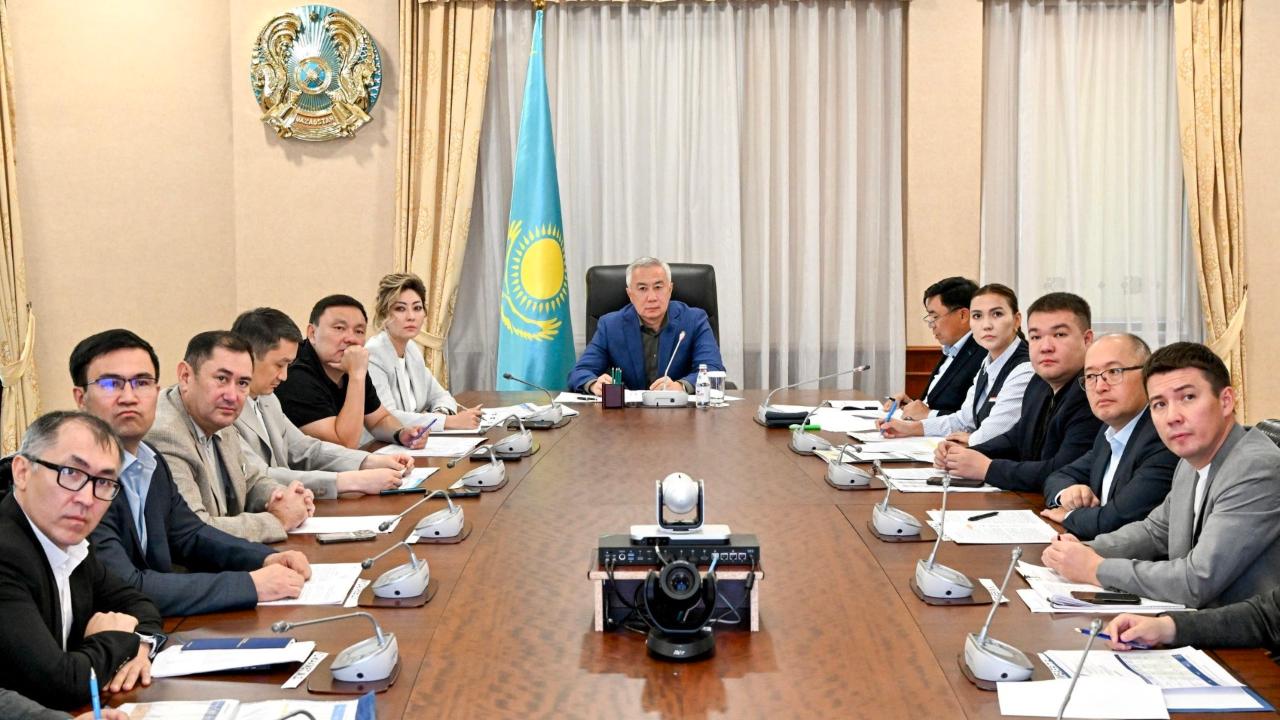
At the latest meeting on inflation stabilization, chaired by Deputy Prime Minister and Minister of National Economy Serik Zhumangarin, the current price situation in various markets, forecasts, and further response measures were examined in detail. With annual inflation at 10.2% in some regions, its rate remains above the national average.
At the meeting, several scenarios for future inflation dynamics were considered, taking into account possible tariff increases on regulated goods and services. Serik Zhumangarin instructed the Committee for the Regulation of Natural Monopolies to review tariff adjustment parameters, taking into account their potential contribution to inflation.
Monthly food inflation in July was 0.4%, slowing by 0.2 percentage points compared to June. Meanwhile, deflation for socially important food products was recorded at 0.3%, which allowed their price index to decrease to 1.6% since the beginning of the year. First Deputy Minister of Trade and Integration Aizhan Bizhanova noted that the Ministry aims to ensure a monthly slowdown in food inflation by an average of 0.2 percentage points.
Among paid services, growth was recorded in healthcare (110.1%) and communications (105.5%) over the seven-month period (July 2026 to December 2025).
The sugar market situation was also reviewed separately. Kazakhstan has four sugar factories with a combined daily processing capacity of 8,700 tons of sugar beets and 2,400 tons of raw cane sugar. From January to June 2026, 77,000 tons of sugar were produced, including 9,000 tons of beet sugar and 68,000 tons of cane sugar.
Given the country's dependence on sugar imports, the government has taken measures to allow duty-free imports of up to 100,000 tons of raw sugar this year. Following the discussion, Serik Zhumangarin instructed the Ministry of Agriculture to hold a separate meeting with representatives of the sugar industry and jointly develop additional measures to stabilize prices.
In the dairy market, average prices remained virtually unchanged in July, compared to a 0.7% increase in June. The Deputy Prime Minister instructed the Ministry of Agriculture to hold a meeting with raw milk producers and thoroughly study the factors influencing production costs.
Bakery price growth since the beginning of the year has been below forecast. This was facilitated, among other things, by measures to provide cheaper electricity to producers of socially important food products, including bread. Changes to pricing rules in socially important markets came into effect at the end of July. Now, the Ministry of Trade and Integration, together with local governments, plans to soon conclude memoranda with bread producers stipulating mutual obligations.
Paid services in the unregulated market were another topic of the meeting. Despite a slowdown in growth in July to 0.7% from 1.1% in June, pricing pressure in this segment remains. Year-on-year, the cost of paid services increased by 9.2%. First Deputy Minister of Trade and Integration Aizhan Bizhanova presented an analysis of price dynamics in eight areas. The highest rates of growth are observed in healthcare, transportation, education, tourism, and sports.
Serik Zhumangarin instructed relevant government agencies to analyze the state of the relevant markets, identify the main causes of rising service costs, and submit proposals for price containment.
Special attention was given to pharmaceuticals. Following the review, the Agency for the Protection and Development of Competition will conduct a market analysis and study the factors influencing pricing.
Special instructions were given to regions with inflation above the national average. Within a week, akimats are to hold meetings with major food suppliers and take measures to stabilize prices.
"Today, we examined in detail the main factors influencing inflation. Specific response tools exist for many of them. Now, it's especially important to prevent price increases in regions where inflation exceeds the national average. A significant portion of the current factors are determined by individual commodity and regional markets, so targeted interventions are needed for each of them. We will analyze the situation and the results of the measures taken on a weekly basis," emphasized Serik Zhumangarin.
https://www.gov.kz/memleket/entities/economy/press/news/details/1275442?lang=en