
Tax Reform: How Special Tax Regimes Work in Kazakhstan
14.09.2026 17:20:45 185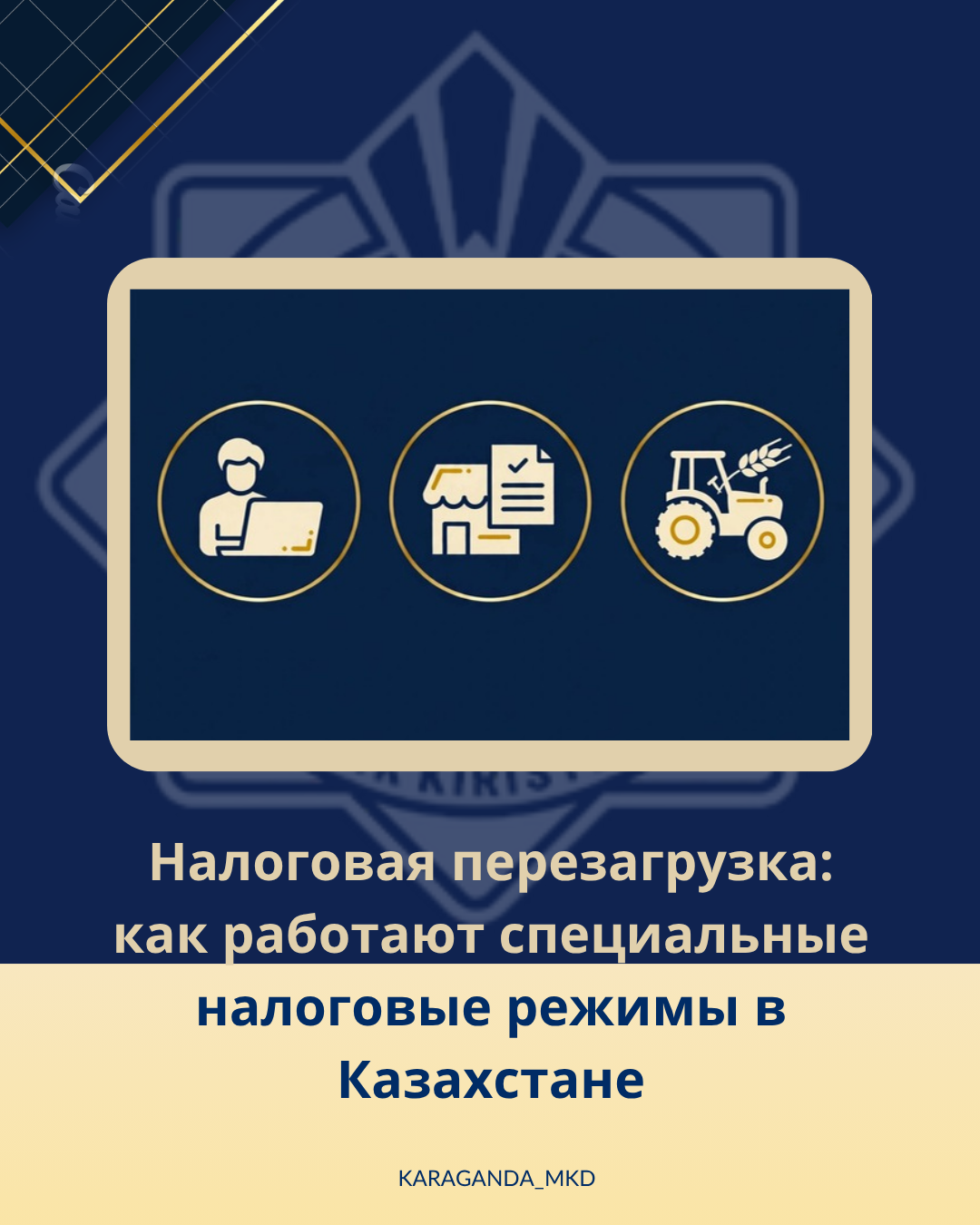
Tax Reset: How Special Tax Regimes Work in Kazakhstan
The new Tax Code has fundamentally restructured the architecture of special tax regimes (STRs), reducing their number from six to three basic instruments. This large-scale optimization is intended to make taxation for small businesses more transparent, eliminate capital-splitting schemes, and at the same time support entrepreneurs.
Updated STR systems:
1. STR for self-employed individuals:
Designed for individuals working without hired employees. The regime covers a strictly approved list of 40 types of activities (services provided to the public and creative professions).
Indicators and limits:
The maximum income is limited to an amount of up to 300 MCI per month. The individual income tax (IIT) rate is 0%, while mandatory social payments are combined into a fixed rate of 4%. No tax reporting is required — accounting is maintained through the “e-Salyq Business” application.
2. STR based on a simplified declaration:
Designed for traditional small businesses operating in retail trade (with retail premises of up to 2,000 sq. m.), public catering, household services and healthcare.
Indicators and limits:
The annual income threshold is up to 600,000 MCI. The basic tax rate on income is set at 4%; however, local maslikhats are authorized to adjust it within the range of 2% to 6%. The tax period is six months.
In the Karaganda Region, this rate is 2%.
3. STR for peasant and farming enterprises (PFEs):
This regime has been retained for the agricultural sector, with eligible entities being automatically transferred to it without the need to submit additional applications. The preferential rate of the single land tax remains at the minimum level, while activities are regulated in accordance with the specific characteristics of the land fund.
What businesses need to take into account
The financial sector, wholesale sales of excisable goods, audit, consulting and construction services have been excluded from the scope of preferential tax regimes — these activities have been transferred to the generally established taxation procedure (GETP).
Entrepreneurs who previously applied the abolished regimes (patent, retail tax, fixed deduction) were required to update their status and submit notifications on the transition in order to avoid being automatically transferred to the generally established taxation regime.
Department of State Revenues in the Karaganda Region
Source : https://www.gov.kz/memleket/entities/kgd-karaganda/press/news/details/1291350?lang=ru