
News
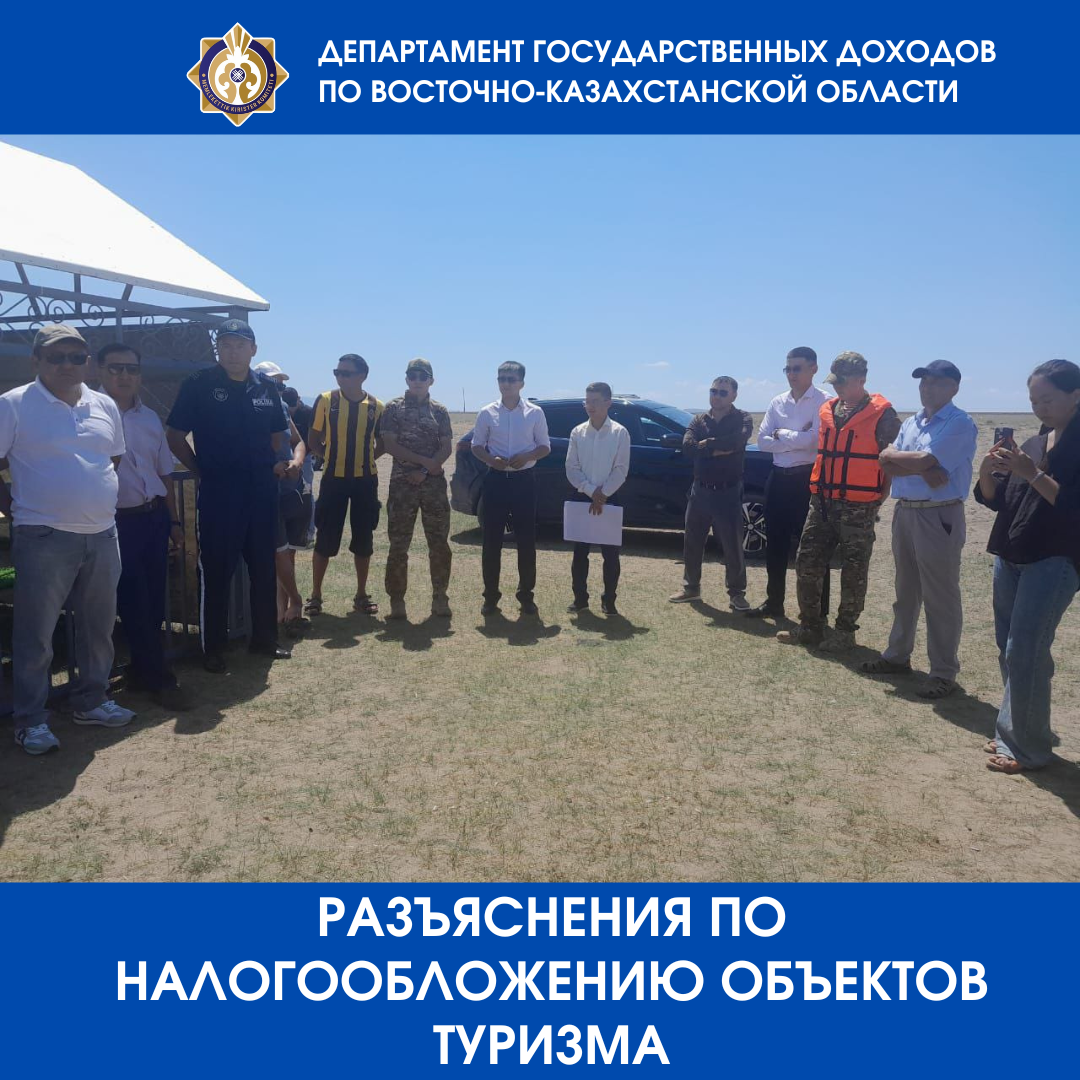
Tax regulations for tourism facilities 24.07.2025
In line with President of the Republic of Kazakhstan K.K. Tokayev 's directives on tourism development, the State Revenue Department of East Kazakhstan region, along with its territorial offices, is currently conducting outreach. This involves distributing informational memos and booklets on taxation and the application of tax legislation at various tourism sites, including the coasts of Bukhtarma reservoir, lakes Sibi and Dubagaly, the upper and lower Taintas lakes, lake Zaysan, Kotlovany beach on the Irtysh River, and other popular tourist destinations Source : https://www.gov.kz/memleket/entities/kgd-vko/press/news/details/1039747?lang=kk
.png)
A builder is a person who lays the foundation of the future. 24.07.2025
When cities are adorned with skyscrapers that compete with the sky, architecturally harmonious bridges, and comfortable homes, it is the result of the work of builders. A builder is not just someone who builds walls, he is a specialist who turns dreams into reality and embodies the future of a country. This profession requires great responsibility, true hard work, and perseverance. Every brick is a confidence built with sweat, every drawing is a road built to the future of the country. Choosing a construction profession is a real contribution to the development of the Motherland. Because construction is the pillar of development and a guarantee of stability. ⠀ 2025 is the Year of Working Professions! This is a year of great gratitude and respect for builders and skilled craftsmen. If we are to lay a solid foundation for future generations, let's start by enhancing the value of the construction profession! #WorkingProfessionsYear2025 #Builder

The Agency has eased requirements to open subsidiary banks and branches of foreign banks 24.07.2025
Kazakhstan has eased requirements to open subsidiary banks and branches of foreign banks. The measure has been implemented within execution of the order of the Head of State to attract reliable foreign banks to the financial market of country.Relevant amendments are set out in the Law of the Republic of Kazakhstan "Amendments and Additions to Certain Legislative Acts of the Republic of Kazakhstan on Development of the Financial Market, Protection of Rights of Consumers of Financial Services, Communications and Elimination of Excessive Legislative Regulation" signed by the Head of State on 30 June 2025.The law has cut the requirement for a minimum amount of total assets of a foreign bank to open its branch in Kazakhstan – from USD 20 billion to USD 10 billion.In order to reduce administrative barriers, list of documents has been shortened depending on the level of the credit rating of the financial institution. Documents that the financial regulator can obtain on its own from information systems, Internet resources and from a regulator of the applicant country have been excluded. Requirements for availability of premises in ownership and staffing for a year before the start of work have been simplified.Branches of foreign banks are also provided with an opportunity to place assets accepted as a reserve in low-risk financial instruments, the list of which will be determined by a regulatory legal act of the Republic of Kazakhstan.In order to ensure equal competitive conditions for operation of branches of foreign banks and second-tier banks in the financial market of Kazakhstan, branches of foreign banks are now allowed to conduct exchange transactions with foreign currency, carry out custodial activities, issue payment cards, participate in syndicated financing, provide agency services, etc.These amendments are effective from 1 July 2025.The law also reinforces requirements for an impeccable business reputation.The law takes effect on 31 August 2025. External Communications Directoratepress@finreg.kz Source : https://www.gov.kz/memleket/entities/ardfm/press/news/details/1039740?lang=kk

Engineering infrastructure of the Almaty region: the basis of sustainable development and comfort 24.07.2025
Source : https://www.gov.kz/memleket/entities/almobl/press/news/details/1039687?lang=kk

SEC "Konaev" implemented an affordable housing project in Almaty 24.07.2025
Source : https://www.gov.kz/memleket/entities/almobl/press/news/details/1039651?lang=kk

Current questions about UAPF. Payments of pension savings from UAPF according to the schedule: how they are calculated and where to apply 24.07.2025
1. Who is entitled to receive scheduled pension benefit payments from UAPF?In accordance with the Social Code of the Republic of Kazakhstan, monthly pension payments from compulsory pension contributions and (or) compulsory occupational pension contributions (hereinafter referred to as COPC) according to the established schedule from UAPF are made to persons who have pension savings in UAPF:- who have reached retirement age (men - 63 years old, women - 61 years old (since 2028, the age will increase annually by 6 months until reaching 63 years old in 2031));- upon reaching 55 years of age, for which COPC have been paid in total for at least 84 calendar months at the time of applying for pension benefit payment, subject to termination of employment in jobs with harmful working conditions, the professions of which are provided for in the list of industries, jobs, professions of workers approved by the authorized state body;- who have a disability of group 1 or 2, established indefinitely,Payments from UAPF are made in the manner determined by the Government of the Republic of Kazakhstan. 2. How are scheduled pension benefits calculated? Payments are calculated according to the schedule as follows: in the first year of receiving payments, the amount of pension savings is multiplied by the pension savings payment rate of 6.5% and divided by 12. In subsequent years, the amount of the monthly pension benefit is increased by the pension payment indexation rate of 5%. In this case, the monthly pension payment from the UAPF is made in the amount of at least 70% of the subsistence minimum (hereinafter - SM) established for the relevant financial year by the law on the republican budget (in 2025, the SM is 46,228 tenge).For beneficiaries of certain categories: persons with disabilities of groups 1 or 2, established indefinitely, as well as those who worked in harmful and hazardous industries, whose savings are formed through compulsory occupational pension contributions in total for at least sixty months, the Methodology provides for correction factors that increase the amount of the monthly pension benefit. For persons who meet more than one of the above conditions, the adjustment factor with the highest value is applied.When calculating and making pension benefit payments to persons who have reached the age of 55 and paid COPC for them for at least 84 months in total:- the threshold of at least 70% of the minimum wage for making a pension benefit payment is not applied;- adjustment factors are not applied;- the balance on the individual pension savings account in the amount of less than 70% of the minimum wage is not subject to payment together with the amount of the next pension benefit.It should be noted that pension payments from UAPF are made until the pension savings are exhausted.If the amount of pension savings on the date of payment from UAPF does not exceed twelve times the minimum pension established by the law on the republican budget for the relevant financial year (in 2025, 753,252 tenge = 62,771 x 12), the payment is made in a lump sum. 3. Where and when to apply for payment of pension savings from UAPF in connection with reaching retirement age? To assign pension benefits from the UAPF at the expense of mandatory types of pension contributions in connection with reaching the retirement age, as well as the assignment of a basic and solidarity pension from the state budget, beneficiaries must promptly contact the State Corporation "Government for Citizens" (CSC) at their place of residence. This can be done 10 days before reaching the retirement age. All types of pension benefits by age are made from the date of application. In this case, the day of application is considered to be the day of registration of the application and the necessary documents in the CSC, provided that the recipient has reached the retirement age, if he applied earlier - the day of application is considered to be the day of reaching the retirement age. Timely application is especially important for receiving benefits from the budget, for the assignment of which it is necessary to verify the work experience based on the documents submitted by the beneficiary. Pension benefits at the expense of budget funds are made for life, and from the UAPF - until the depletion of the benefiary's pension savings. 4. Is there a service for advance reminders about timely registration of pension benefits? Future pensioners (potential beneficiaries), whose phone numbers are registered in the egov mobile citizens database, receive an SMS notification from number 1414 2 months before reaching retirement age about the possibility of timely contacting the nearest branch of the State Corporation to receive services for the appointment of pension benefits with a link to the list of documents on the egov.kz website. That is, government agencies send out relevant notifications to process pension benefits within the specified timeframes, since payments are not assigned for the missed period.It is also worth noting that in order to provide a proactive service for making pension benefit payments from UAPF to persons who have reached retirement age, have pension savings in UAPF and have not applied for their payment, UAPF conducts an annual reconciliation together with the State Corporation for the presence of assigned pension benefits by age and state basic pension benefit at the expense of budgetary funds for these citizens. Based on the results of the annual reconciliation, when identifying persons who have assigned pension benefits from budgetary funds, UAPF makes pension payments to them within the framework of the relevant agreement concluded with the State Corporation, i.e. without an application. 5. Where should I apply for payment of pension savings in connection with the establishment of disability of group 1 or 2 indefinitely?For payment of pension savings in connection with the establishment of a permanent first or second group disability, you must contact the UAPF departments either through your personal account on the website (enpf.kz) or in the UAPF mobile application using an electronic digital signature.Please note that UAPF has organized on-site services for persons with permanent first or second group disability. In this case, a preliminary consultation is carried out, including checking the possibility of receiving services remotely, without leaving. 6. Where can I find a list of documents for processing pension payments from UAPF?On the enpf.kz website, in the section “Services – Pension payments”, there is a list of necessary documents depending on the type of pension benefits and the method of filing them, requirements for their execution, application forms and samples of their completion, a sample power of attorney. In the “Online services” section, there is an option to pre-check the documents sent for pension payments from UAPF (service name “Pre-check of documents for pension benefit”: https://www.enpf.kz/ru/elektronnye-servisy/checkdoc.php). UAPF consulting services can be obtained through instant messengers (chat bot in WhatsАpp and Viber at +7 777 000 14 18), call center at 1418 (call within Kazakhstan is free), on the corporate website enpf.kz, as well as on the official UAPF pages on social networks Instagram, Facebook, VKontakte, Telegram, Odnoklassniki.Source : https://www.gov.kz/memleket/entities/akimat-beyneu/press/news/details/1039617?lang=kk
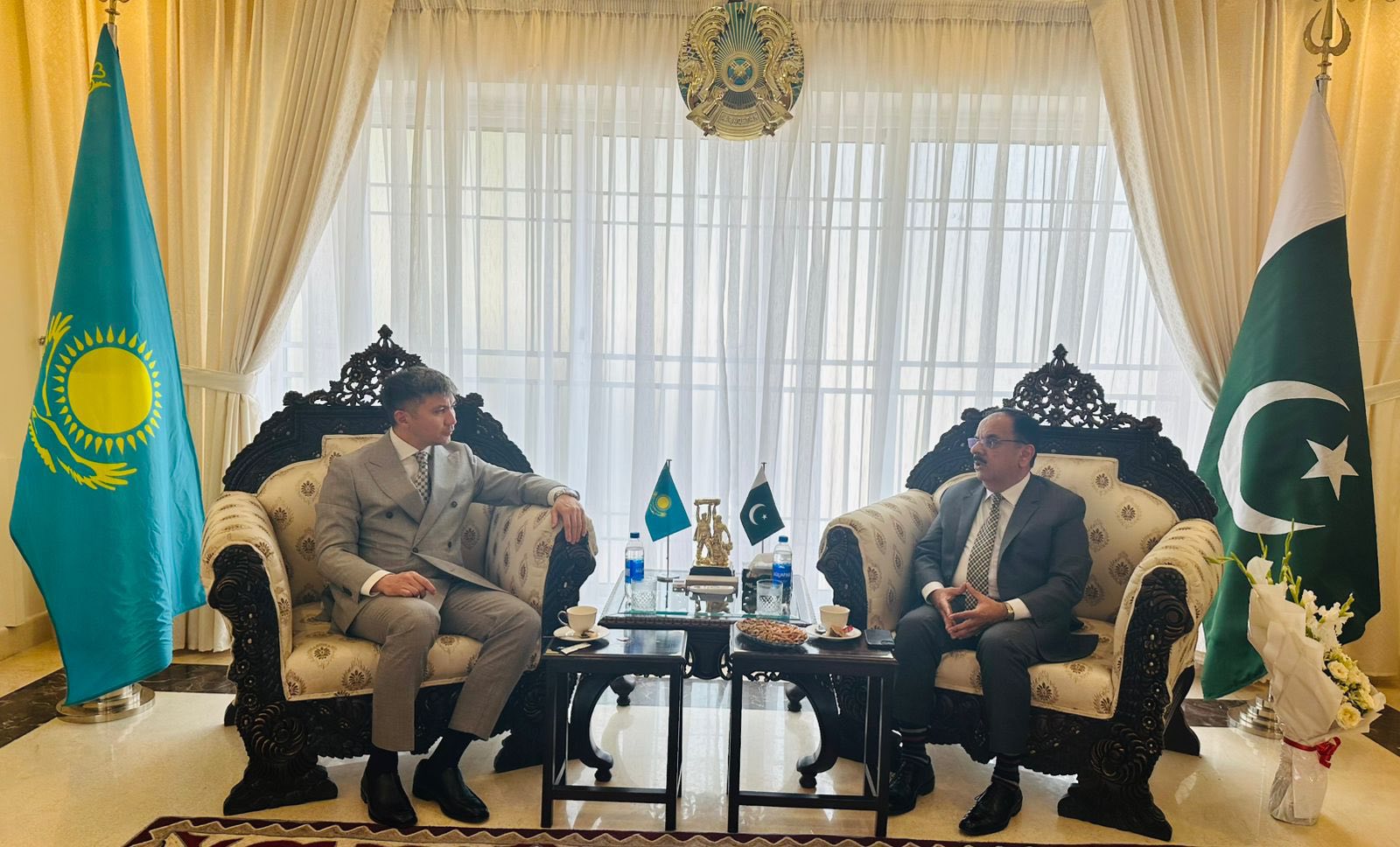
Kazakhstan and Pakistan strengthen cooperation between research communities 24.07.2025
Islamabad, July 23, 2025 – Ambassador of Kazakhstan to Pakistan, H.E. Mr. Yerzhan Kistafin, held a meeting with the President of Daily Ittehad and Vice President of the Council of Newspaper Editors of Pakistan, Mr. Tahir Farooq.During the meeting, Mr. Tahir Farooq informed about the establishment of the Center for Regional Connectivity and Shared Future and shared the main objectives and upcoming plans of the newly formed institution.Considering the importance of regional connectivity in the bilateral agenda of Kazakhstan and Pakistan, Mr. T.Farooq expressed interest in establishing cooperation with Kazakhstani analytical and research institutions.In turn, Ambassador Yerzhan Kistafin briefed on the current activities and key events held in 2025, as well as future plans, noting the positive dynamics in Kazakhstan–Pakistan cooperation.The Ambassador welcomed the proposals put forward and expressed readiness to support the new initiative.As a result of the meeting, an agreement was reached to organize a visit of the delegation of the Center for Regional Connectivity and Shared Future to Kazakhstan.Source : https://www.gov.kz/memleket/entities/mfa-islamabad/press/news/details/1039509?lang=kk
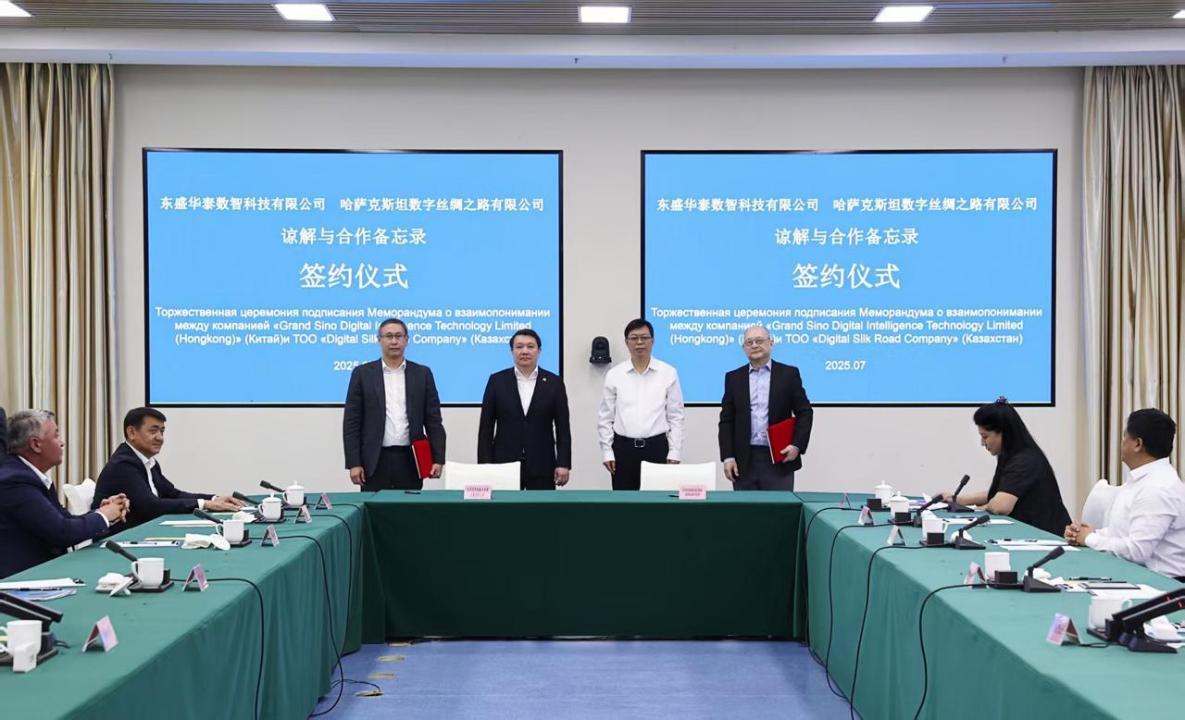
Kazakhstan and China launch Smart Customs pilot project 24.07.2025
Kazakhstan and China are launching an innovative pilot project "Smart Customs" on the Kazakh-Chinese border. As part of the initiative, it is planned to launch unmanned cargo transportation through the border checkpoints "Bakhty" (RK) — "Pokitu" (PRC).The draft was agreed upon during a working meeting between Chairman of the State Revenue Committee of the Ministry of Finance of the Republic of Kazakhstan Zhandos Duisembiev and Secretary of the Tacheng City Party Committee Mr. Zhi Xianwei.Key features of the project: The use of unmanned vehicles (AGVs) to automatically cross borders without driver involvement; launch of a single electronic declaration recognized by both countries; round-the-clock movement of goods with minimal manual intervention; full digital support and clearance of cargo transportation; implementation of automated navigation and control.Expected effect: increase in cargo traffic to 10 million tons per year; significant reduction of time for customs clearance; reduced transportation costs; increasing the transparency and security of logistics operations; unloading of automotive infrastructure and development of logistics hubs; stimulating the export of agricultural products, including grain, oilseeds, meat and processed goods.Economic importance: The initiative will serve as a driver for modernizing the border infrastructure, creating new jobs and attracting investment. The implementation of the project will strengthen trade and economic cooperation with China and strengthen Kazakhstan's position as a key transit hub in Central Asia.During the visit, a bilateral memorandum of cooperation was signed aimed at joint project implementation, coordination of actions and exchange of experience in the field of digitalization of customs and logistics procedures.Source : https://www.gov.kz/memleket/entities/kgd-pavlodar/press/news/details/1039539?lang=kk
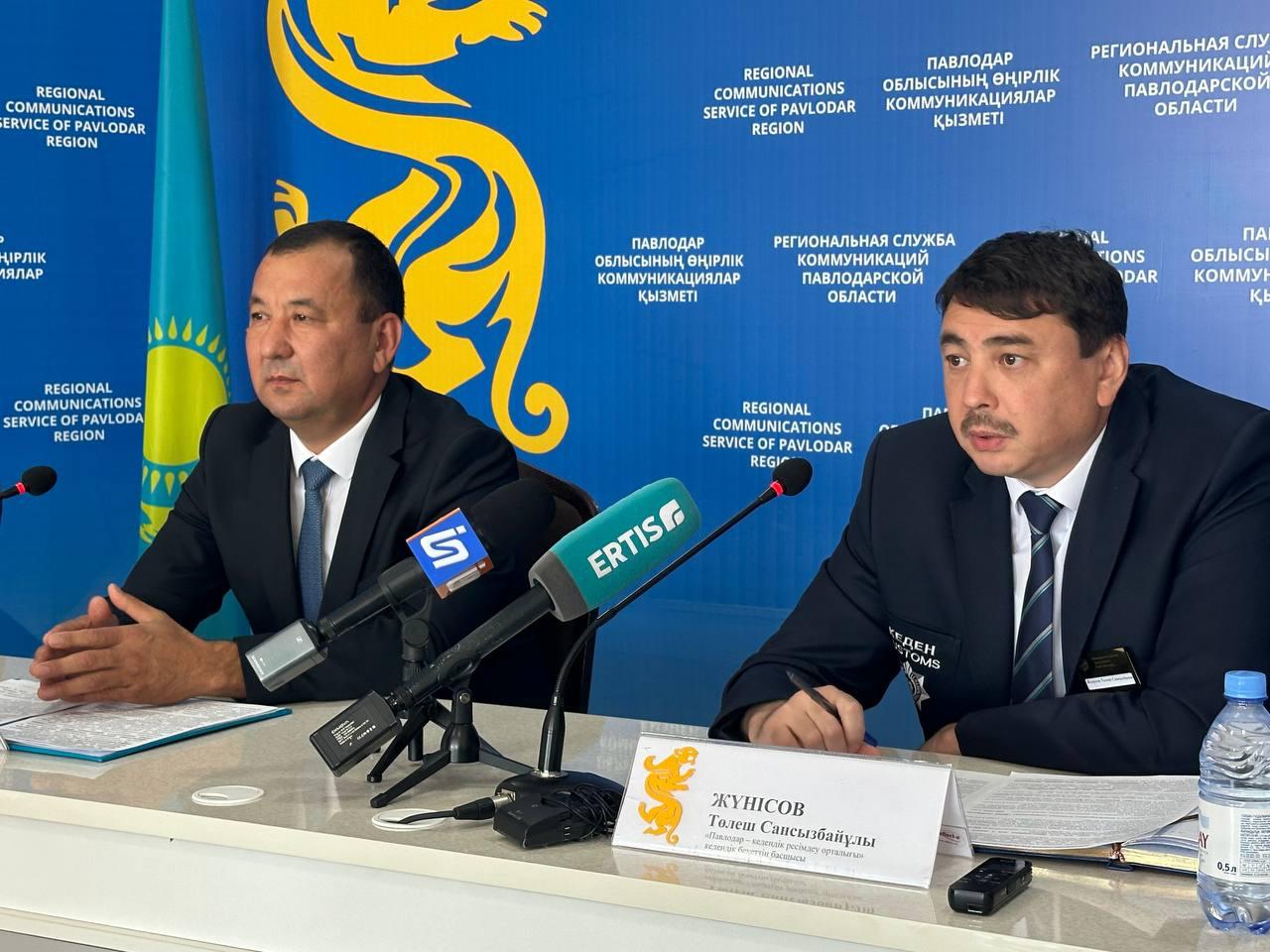
We discussed current customs issues 24.07.2025
A briefing was held at the regional communications service with the participation of employees of the Department of State Revenue for the Pavlodar region, who are in charge of customs regulation issues. The main topic was the introduction of the new information system "Keden", which will gradually replace the existing platforms "Astana-1" and "E-window".– The modules for processing express cargo, transit declarations, passenger customs declaration and international mail are already working. Since the beginning of the year, more than 2,600 transit declarations have been processed in Keden. The system integrates with the information systems of other countries – Georgia, Azerbaijan and Uzbekistan, which makes it possible to detect price manipulation and falsification of documents," said Tlekes Tusetaev, Head of the Customs Administration Department.The cost, weight and quantitative norms of goods imported for personal use, the effect of the Presidential Decree "On measures to ensure financial stability of the Republic of Kazakhstan", prohibiting the export of foreign currency in cash exceeding the equivalent of 10,000 (ten thousand) US dollars, were announced in a speech by the head of the customs post "Pavlodar Customs Clearance Center" Tolesh Zhunusov. Detailed answers were given to all the journalists' questions.Department of Explanatory Work and Contact Center State Duma of the Pavlodar regionSource : https://www.gov.kz/memleket/entities/kgd-pavlodar/press/news/details/1039551?lang=kk

Третий Добровольный национальный обзор Казахстана по ЦУР представлен на площадке ООН 24.07.2025
Нью-Йорк, США – В рамках Политического форума высокого уровня по устойчивому развитию под эгидой Экономического и Социального совета ООН состоялась презентация третьего Добровольного национального обзора Республики Казахстан. Доклад представил глава делегации – Вице-министр национальной экономики Асан Дарбаев. Документ получил положительную оценку со стороны партнеров. Отмечены его аналитическая полнота, открытый и инклюзивный характер подготовки, а также стремление Казахстана выстраивать устойчивую политику развития на основе прозрачности и участия широкого круга заинтересованных сторон.Добровольный национальный обзор – это формат, в рамках которого государства добровольно отчитываются о прогрессе в достижении Целей устойчивого развития (ЦУР). Казахстан представил уже третий по счёту обзор, отражающий национальные усилия по реализации Повестки 2030 с момента начала её внедрения.Особенностью национального обзорв стало внимание к локализации ЦУР – переносу глобальных задач на уровень регионов и сообществ. Консультации с участием гражданского общества, депутатского корпуса, экспертов, молодёжи, представителей бизнеса и научной среды позволили определить приоритетные цели и сформировать предложения, учитывающие мнение населения.Ключевым элементом обзора стал раздел «Поколение ЦУР», в котором отражены взгляды и инициативы казахстанской молодежи в области устойчивого развития. Этот блок был подготовлен в партнёрстве с неправительственными организациями и активистами.Анализ охватывает все 17 Целей устойчивого развития, при этом углубленное внимание уделено восьми из них. Пять приоритетных целей определены по рекомендациям ООН, ещё три – с учетом результатов общественных опросов.С момента предыдущего обзора Казахстан предпринял ряд шагов по институциональному закреплению ЦУР. Ведущие стратегические документы – Национальный план развития до 2029 года и Стратегия углеродной нейтральности до 2060 года – структурированы с учётом Повестки 2030. Приняты новые законодательные инициативы, включая Социальный и Водный кодексы и др.В 2023 году в стране была создана Парламентская комиссия по мониторингу реализации ЦУР, которая рассматривает ключевые вопросы и вырабатывает рекомендации для госорганов.Представленный на международной площадке третий Добровольный национальный обзор демонстрирует приверженность Казахстана принципам устойчивого развития, а также усилия по выстраиванию системного, инклюзивного и партнёрского подхода к достижению национальных и глобальных целей.Source : https://www.gov.kz/memleket/entities/economy/press/news/details/1039490?lang=kk
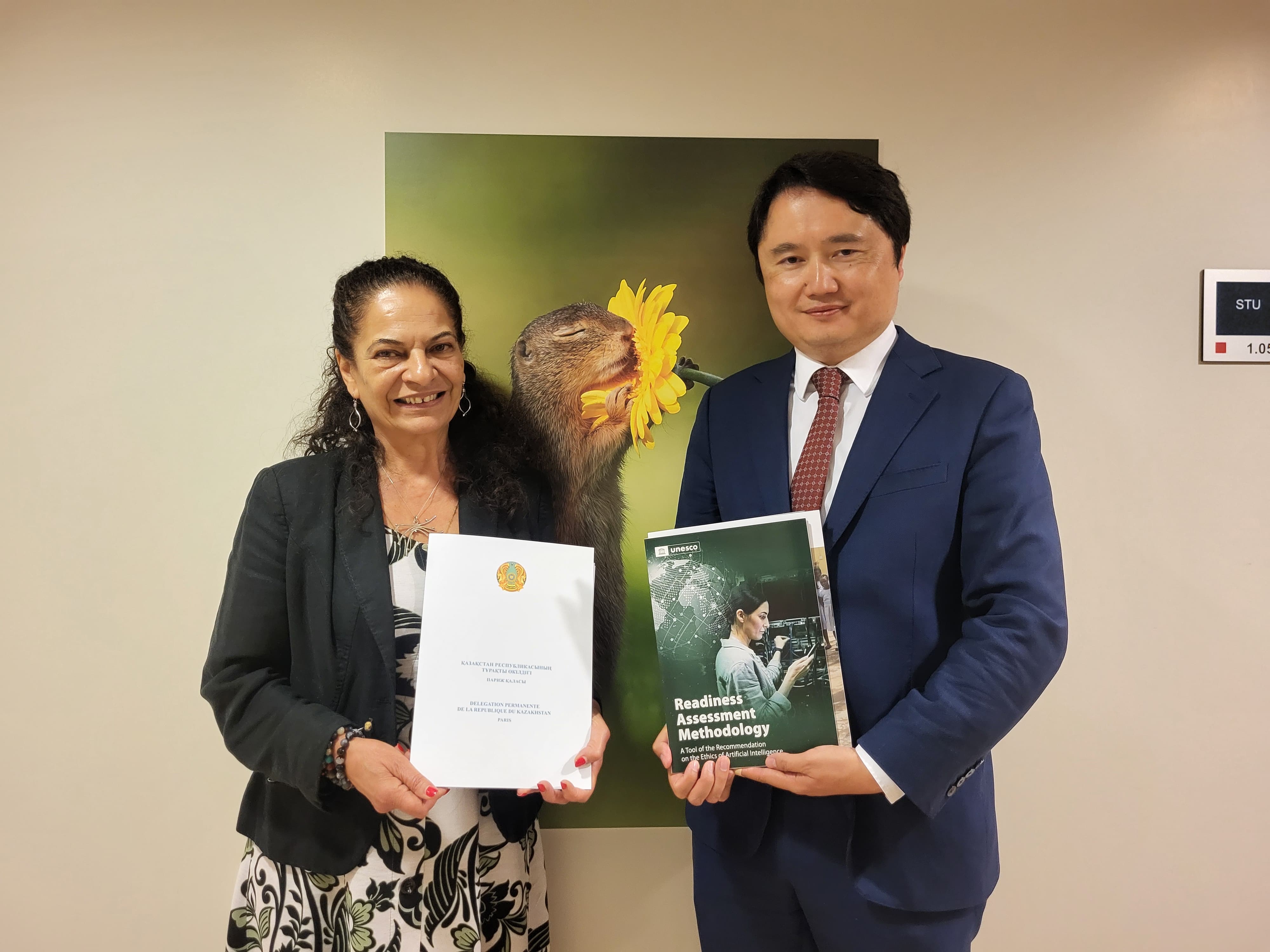
Kazakhstan and UNESCO Discuss Collaboration on AI Ethics 24.07.2025
Paris, 22 July 2025 – The Permanent Delegate of Kazakhstan to UNESCO, Askar Abdrakhmanov, held a meeting with UNESCO Assistant Director-General for Natural Sciences, Lidia Arthur Brito, to discuss collaboration in the field of ethical assessment of artificial intelligence technologies.At the outset of the meeting, the Kazakh diplomat expressed gratitude for Dr Brito's support in the recent signing by UNESCO Director-General Audrey Azoulay of the agreement to extend the mandate of the Central Asian Regional Glaciological Centre as a Category 2 institute under the auspices of UNESCO. He confirmed the interest of the Ministry of Science and Higher Education of the Republic of Kazakhstan in promptly ratifying the agreement and reaffirmed the country's commitment to supporting the research activities of the centre, which has significant practical relevance.Mr. Abdrakhmanov also briefed Dr Brito on Kazakhstan’s active efforts in recent years to promote the responsible use of AI and highlighted the special attention given to this topic by President Kassym-Jomart Tokayev.In response, Dr Brito emphasized UNESCO’s central role within the UN system in promoting ethical use of AI technologies and underlined the significance of the 2021 UNESCO Recommendation on the Ethics of Artificial Intelligence — the first and, to date, only global mulitilateral standard-setting instrument in this field.In this context, the two sides discussed the practical implications of this document for Kazakhstan and the prospects for conducting a national study in line with UNESCO’s Readiness Assessment Methodology instrument for the ethical use of AI.At the conclusion of the meeting, both parties agreed to continue maintaining regular contact and to further strengthen cooperation in this important area.Source : https://www.gov.kz/memleket/entities/mfa-unesco/press/news/details/1039460?lang=kk

"One nation. One destiny. One future." 24.07.2025
Within the framework of the project "One people. One destiny. One future." The Department of Social Development is working to form and strengthen the constructive values of a just state among residents of Kostanay region — to live in unity and according to the law, patriotic education, respect for the state symbols of the Republic of Kazakhstan, the desire to speak the state language, preserve the interest and respect of citizens for national traditions and customs.Within the framework of the project, ideological and educational meetings were held in the border areas of Kostanay region: Zhitikarinsky district (Prigorodnoye village), Denisovsky district (Zhaltyrkol village) and Beimbet Mailin district (Novovilinovka village).During the meetings, a flash mob was organized for villagers in honor of the State Symbols of the Republic of Kazakhstan, information and educational brochures and state flags were distributed, and the National Anthem of the Republic of Kazakhstan was played.Such speakers as Natalia Sergeevna Ramazanova, head of Kogamdyk Kelisim State University, and Aibek Batyrkhanovich Shalgymbekov, Professor of the Kostanay Regional University named after Akhmet Baitursynov, Candidate of Historical Sciences, delivered lectures on the topic "Honest Citizen".In addition, a quiz on knowledge of the state language and traditions was held among the villagers, and active participants received prizes. Theatrical performances of Kazakh rituals were presented: "Sansu" (farewell song of the bride), "Syrga salu" (betrothal) and "Besikke salu" (the first laying of the baby in the cradle).The event featured folk songs and national melodies performed by: Manapbek Kadyrov, holder of the Order of "Kurmet", Honored Cultural Worker, traditional singer, Ybyrai Eszhanov, dombrist, head of the folklore ensemble "Akzhelen", Altynai Rustemkyzy Tolegen, performer on the zhetigen and other artists.At the end of the evening, Kazakhstani films were shown.: "The road to mother", "Hiuaz Dospanova", "Rakhymzhan Koshkarbayev".The project also plans trips in August and September to Karabalyk, Fedorovsky, Mendykarinsky and Uzunkol districts.Source : https://www.gov.kz/memleket/entities/kostanai-ishki-sayasat/press/news/details/1039471?lang=kk
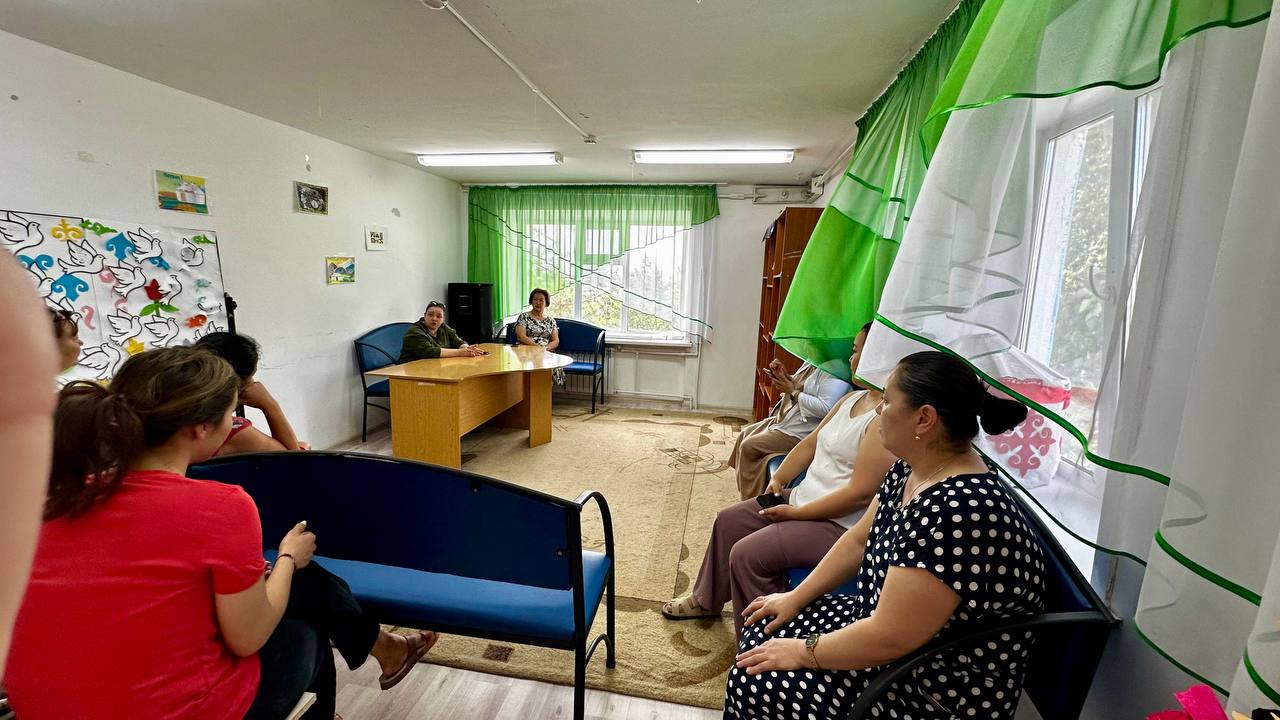
Consultative event 24.07.2025
As part of the execution of the "Law and Order" narrative, on July 23, 2025, the Department of Regulation and Control over the activities of bailiffs of the Kostanay Region Department of Justice, together with local executive authorities, organized a consultative event for persons staying at the KSU "Family Adaptation and Support Center".The purpose of the event is to provide legal assistance to people in difficult situations.During the meeting, citizens received clarifications on the issues of obtaining social and legal support provided for by law.Individual legal assistance was also provided in the execution of enforcement proceedings.Holding such events helps to expand citizens' access to legal information, increases the level of legal awareness and implements the principle of social justice, which is one of the key priorities in the activities of judicial authorities. Press ServiceDepartment of JusticeKostanay regionSource : https://www.gov.kz/memleket/entities/adilet-kst/press/news/details/1039475?lang=kk
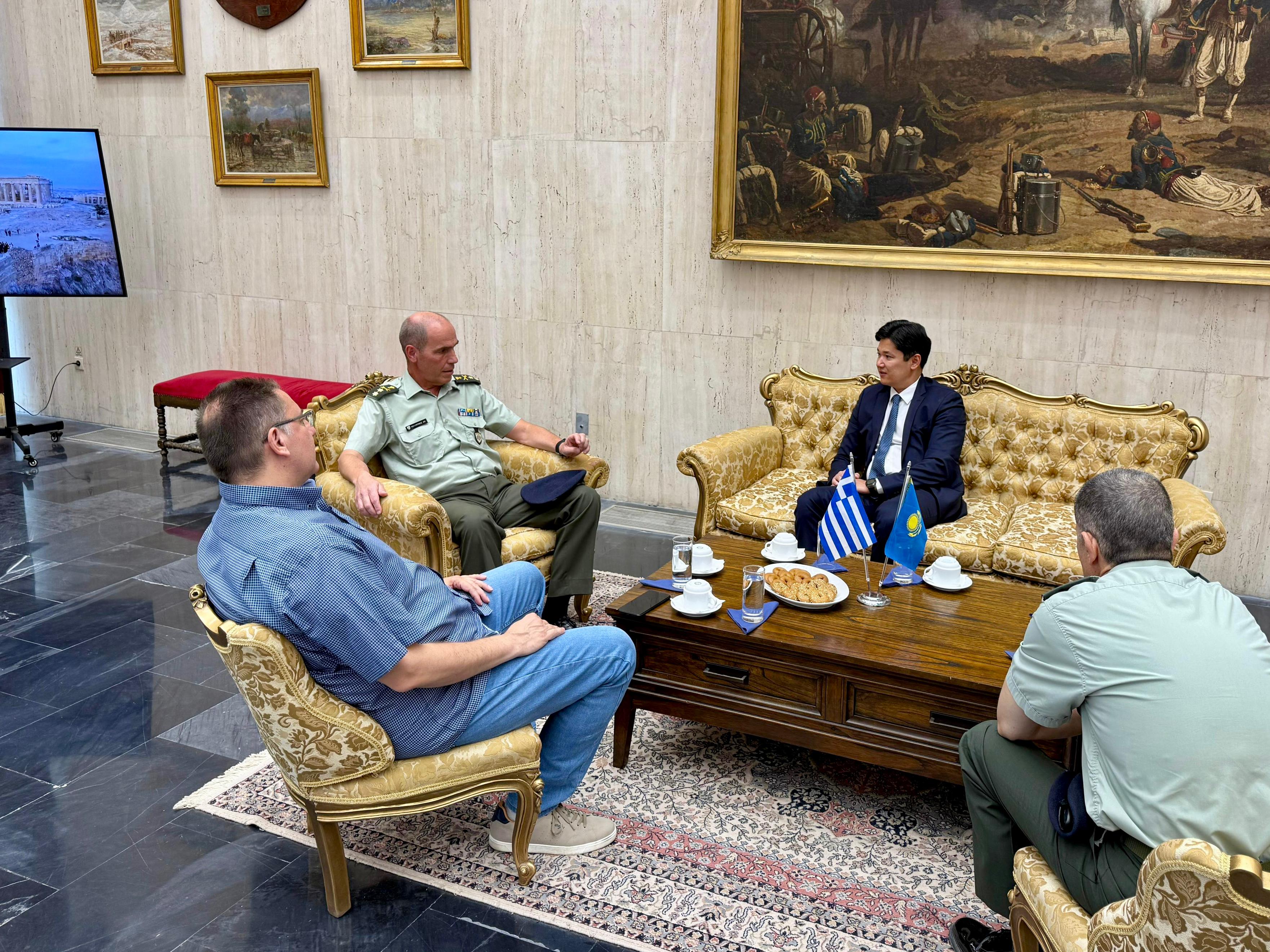
Prospects for Cooperation in the Field of Military Education Discussed in Athens 24.07.2025
Athens, July 11, 2025 – The Ambassador of the Republic of Kazakhstan to the Hellenic Republic, Timur Sultangozhin, visited the Hellenic Army Academy, where he held a meeting with the Academy’s Commandant, Major General Anastasios Polychronos, as well as members of the academic staff.During the visit, the parties discussed prospects for bilateral cooperation in the field of military education and personnel training. Ambassador Sultangozhin emphasized that Kazakhstan attaches paramount importance to the training of highly qualified military specialists, which reflects the country’s strategic priorities aimed at modernizing the national armed forces and deepening international military cooperation.The Kazakh side presented information on the military education system in the Republic of Kazakhstan, including officer training programs, innovative teaching methods, and modern approaches to military training. Special attention was given to issues of academic exchange and joint programs, including the potential participation of cadets and instructors from both countries in educational and language courses, as well as the organization of joint seminars and scientific-practical events.As part of the visit, the Ambassador familiarized himself with the Academy’s infrastructure: specialized tactical training grounds, educational laboratories, modern classrooms, and lecture halls equipped with advanced technologies for academic and practical training.The parties expressed mutual interest in establishing direct links between military educational institutions of Kazakhstan and Greece, which will open new opportunities for experience sharing and strengthen the educational component of bilateral cooperation in the defense sphere.Background: The Hellenic Army Academy, founded in 1828, is the oldest and one of the most prestigious higher education institutions in the country, responsible for training officers for the Hellenic Armed Forces’ Land Forces. Embassy of the Republic of Kazakhstan in the Hellenic RepublicSource : https://www.gov.kz/memleket/entities/mfa-athens/press/news/details/1039449?lang=kk
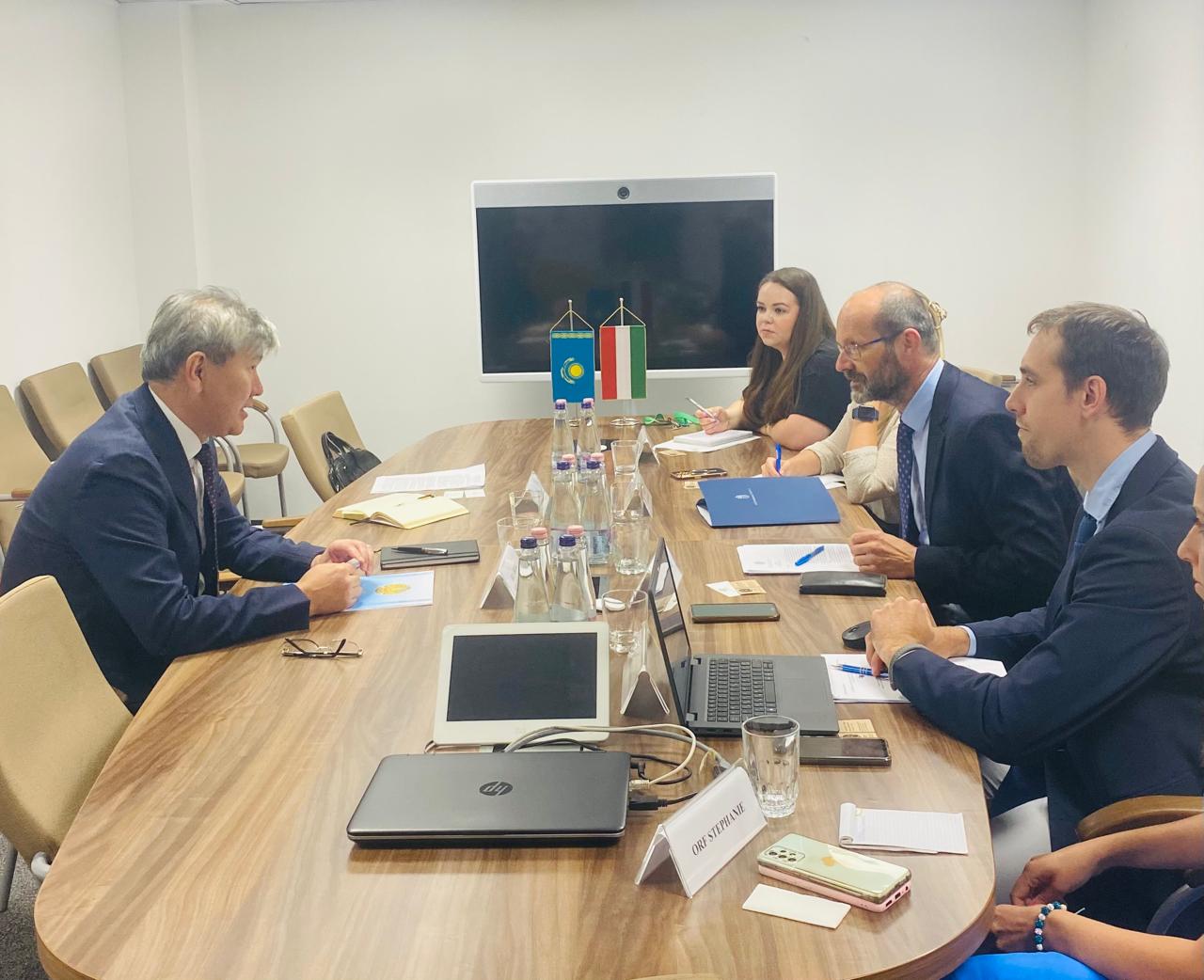
Kazakh Ambassador discusses environmental cooperation with Hungarian side 24.07.2025
Budapest, July 22, 2025 – The Ambassador of Kazakhstan to Hungary, H.E. Mr. Abzal Saparbekuly, met with Mr. Levente Kőrösi, Director of the Department of Biodiversity and Gene Conservation of the Ministry of Agriculture of Hungary.During the meeting, the parties discussed prospects for bilateral cooperation in the fields of environmental protection, sustainable agriculture, and biodiversity conservation. Special attention was paid to the preservation of the saiga antelope population and the establishment of cooperation between relevant institutions of both countries.In this regard, Mr. Saparbekuly informed the Hungarian side about Kazakhstan’s efforts to protect and restore the saiga population and expressed hope for Hungary’s support in international initiatives in this area. The Ambassador also highlighted the fruitful cooperation with the Hungarian side in June 2025 regarding the relocation of Przewalski’s horses (Equus przewalskii Poljakov) from the Hortobágy Reserve in Hungary to Kazakhstan.Reference: The largest population of these wild horses in the world (265 individuals) is registered in Hungary. The project to reintroduce wild horses to Kazakhstan was launched in 2024 on the initiative of the Committee for Forestry and Wildlife of the Ministry of Ecology and Natural Resources of Kazakhstan, in cooperation with the Prague Zoo, the Association for the Conservation of Biodiversity of Kazakhstan, the Frankfurt Zoological Society, the zoos of Nuremberg and Berlin, and Hungary’s Hortobágy National Park. In turn, Mr. Levente Kőrösi confirmed Hungary’s interest in strengthening cooperation with Kazakhstan within multilateral environmental platforms and expressed readiness for practical collaboration.The meeting took place in a constructive atmosphere and underlined the mutual interest in expanding Kazakh-Hungarian cooperation in nature conservation and sustainable development.Source : https://www.gov.kz/memleket/entities/mfa-budapest/press/news/details/1039451?lang=kk

Digital Transformation of Livestock Farming in Kazakhstan: Prime Minister Instructs to Ensure End-to-End Product Traceability 24.07.2025
On July 8, 2024, a Government meeting chaired by Prime Minister Olzhas Bektenov was held, at which the key issue was the digitalization of livestock farming and strengthening of veterinary control. This initiative is aimed at creating a transparent and effective system for tracking all livestock products - from the birth of an animal to its processing and sale. The Minister of Agriculture Aidarbek Saparov and the Minister of Digital Development, Innovation and Aerospace Industry Zhaslan Madiyev delivered reports. The ministers reported on the progress of implementing digital solutions that should radically change the entire chain of livestock production management. Central to these initiatives is the end-to-end traceability system - a tool that allows tracking the path of products from the moment an animal is born to its processing, transportation and reaching store shelves. The Prime Minister noted that veterinary safety directly affects the country's export potential. Without proper control and transparency, Kazakhstan will not be able to compete in international markets. Therefore, the task has been set to ensure full vaccination coverage of all farm animals, including livestock in private farms. At the same time, each region must be provided with high-quality, affordable veterinary drugs. The emphasis is also on the need to develop domestic production of vaccines and related veterinary products. The farm animal database must be verified by November 1, 2024, to eliminate discrepancies, duplicates and outdated records. And by the end of this year, three ministries - agriculture, digital development and the aeronautical industry - must complete the full digitalization of processes related to the movement of animals and products. In addition, all existing databases will be combined into a single digital platform integrated with the results of the National Agricultural Census. The end-to-end traceability system should not just be a digital tool, but a full-fledged ecosystem that includes registration of the birth of an animal, its vaccination, movement, slaughter, processing and sale of products. This is important for the state, farmers and consumers. The state receives reliable information to manage the industry and prevent disease outbreaks. Farmers — simplified access to subsidies, the ability to confirm the origin of products. Consumers — confidence in the safety and quality of products. Attempts to digitalize the industry have been made before. For example, in 2018, the VetIS system was launched, within which animal registration and product accounting began. However, it was implemented only in pilot regions and faced a number of problems: a shortage of personnel, poor technical equipment, and a lack of coordination between departments. In 2021, online registration of animals and their movements was proposed, but again everything was limited to individual regions, and the systems' data were not integrated with each other. This time, the situation is different. First, there are clear deadlines and objectives. Second, several ministries are involved, which increases the chances of comprehensive implementation. Third, digitalization is part of a broader sustainable rural development strategy for 2023–2027. This demonstrates the political will to change and the willingness to invest in long-term reforms. If all stages are completed on time, Kazakhstan will become one of the first countries in the region with a fully digitalized livestock control system. This will open up new opportunities in foreign markets, strengthen confidence in products in the domestic market, and also increase the level of veterinary safety in the country. Thus, the meeting on July 9, 2024 was not just a discussion of sectoral reform, but a turning point in the development of the agro-industrial complex of Kazakhstan. Unlike previous initiatives, this time there is a systematic approach, a clear distribution of responsibility and an understanding of the ultimate goal - sustainable, transparent and competitive livestock farming.
Digital Transformation of Livestock Farming in Kazakhstan: Prime Minister Instructs to Ensure End-to-End Product Traceability 24.07.2025
On July 8, 2024, a Government meeting chaired by Prime Minister Olzhas Bektenov was held, at which the key issue was the digitalization of livestock farming and strengthening of veterinary control. This initiative is aimed at creating a transparent and effective system for tracking all livestock products - from the birth of an animal to its processing and sale. The Minister of Agriculture Aidarbek Saparov and the Minister of Digital Development, Innovation and Aerospace Industry Zhaslan Madiyev delivered reports. The ministers reported on the progress of implementing digital solutions that should radically change the entire chain of livestock production management. Central to these initiatives is the end-to-end traceability system - a tool that allows tracking the path of products from the moment an animal is born to its processing, transportation and reaching store shelves. The Prime Minister noted that veterinary safety directly affects the country's export potential. Without proper control and transparency, Kazakhstan will not be able to compete in international markets. Therefore, the task has been set to ensure full vaccination coverage of all farm animals, including livestock in private farms. At the same time, each region must be provided with high-quality, affordable veterinary drugs. The emphasis is also on the need to develop domestic production of vaccines and related veterinary products. The farm animal database must be verified by November 1, 2024, to eliminate discrepancies, duplicates and outdated records. And by the end of this year, three ministries - agriculture, digital development and the aeronautical industry - must complete the full digitalization of processes related to the movement of animals and products. In addition, all existing databases will be combined into a single digital platform integrated with the results of the National Agricultural Census. The end-to-end traceability system should not just be a digital tool, but a full-fledged ecosystem that includes registration of the birth of an animal, its vaccination, movement, slaughter, processing and sale of products. This is important for the state, farmers and consumers. The state receives reliable information to manage the industry and prevent disease outbreaks. Farmers — simplified access to subsidies, the ability to confirm the origin of products. Consumers — confidence in the safety and quality of products. Attempts to digitalize the industry have been made before. For example, in 2018, the VetIS system was launched, within which animal registration and product accounting began. However, it was implemented only in pilot regions and faced a number of problems: a shortage of personnel, poor technical equipment, and a lack of coordination between departments. In 2021, online registration of animals and their movements was proposed, but again everything was limited to individual regions, and the systems' data were not integrated with each other. This time, the situation is different. First, there are clear deadlines and objectives. Second, several ministries are involved, which increases the chances of comprehensive implementation. Third, digitalization is part of a broader sustainable rural development strategy for 2023–2027. This demonstrates the political will to change and the willingness to invest in long-term reforms. If all stages are completed on time, Kazakhstan will become one of the first countries in the region with a fully digitalized livestock control system. This will open up new opportunities in foreign markets, strengthen confidence in products in the domestic market, and also increase the level of veterinary safety in the country. Thus, the meeting on July 9, 2024 was not just a discussion of sectoral reform, but a turning point in the development of the agro-industrial complex of Kazakhstan. Unlike previous initiatives, this time there is a systematic approach, a clear distribution of responsibility and an understanding of the ultimate goal - sustainable, transparent and competitive livestock farming.
Digital Transformation of Livestock Farming in Kazakhstan: Prime Minister Instructs to Ensure End-to-End Product Traceability 24.07.2025
On July 8, 2024, a Government meeting chaired by Prime Minister Olzhas Bektenov was held, at which the key issue was the digitalization of livestock farming and strengthening of veterinary control. This initiative is aimed at creating a transparent and effective system for tracking all livestock products - from the birth of an animal to its processing and sale. The Minister of Agriculture Aidarbek Saparov and the Minister of Digital Development, Innovation and Aerospace Industry Zhaslan Madiyev delivered reports. The ministers reported on the progress of implementing digital solutions that should radically change the entire chain of livestock production management. Central to these initiatives is the end-to-end traceability system - a tool that allows tracking the path of products from the moment an animal is born to its processing, transportation and reaching store shelves. The Prime Minister noted that veterinary safety directly affects the country's export potential. Without proper control and transparency, Kazakhstan will not be able to compete in international markets. Therefore, the task has been set to ensure full vaccination coverage of all farm animals, including livestock in private farms. At the same time, each region must be provided with high-quality, affordable veterinary drugs. The emphasis is also on the need to develop domestic production of vaccines and related veterinary products. The farm animal database must be verified by November 1, 2024, to eliminate discrepancies, duplicates and outdated records. And by the end of this year, three ministries - agriculture, digital development and the aeronautical industry - must complete the full digitalization of processes related to the movement of animals and products. In addition, all existing databases will be combined into a single digital platform integrated with the results of the National Agricultural Census. The end-to-end traceability system should not just be a digital tool, but a full-fledged ecosystem that includes registration of the birth of an animal, its vaccination, movement, slaughter, processing and sale of products. This is important for the state, farmers and consumers. The state receives reliable information to manage the industry and prevent disease outbreaks. Farmers — simplified access to subsidies, the ability to confirm the origin of products. Consumers — confidence in the safety and quality of products. Attempts to digitalize the industry have been made before. For example, in 2018, the VetIS system was launched, within which animal registration and product accounting began. However, it was implemented only in pilot regions and faced a number of problems: a shortage of personnel, poor technical equipment, and a lack of coordination between departments. In 2021, online registration of animals and their movements was proposed, but again everything was limited to individual regions, and the systems' data were not integrated with each other. This time, the situation is different. First, there are clear deadlines and objectives. Second, several ministries are involved, which increases the chances of comprehensive implementation. Third, digitalization is part of a broader sustainable rural development strategy for 2023–2027. This demonstrates the political will to change and the willingness to invest in long-term reforms. If all stages are completed on time, Kazakhstan will become one of the first countries in the region with a fully digitalized livestock control system. This will open up new opportunities in foreign markets, strengthen confidence in products in the domestic market, and also increase the level of veterinary safety in the country. Thus, the meeting on July 9, 2024 was not just a discussion of sectoral reform, but a turning point in the development of the agro-industrial complex of Kazakhstan. Unlike previous initiatives, this time there is a systematic approach, a clear distribution of responsibility and an understanding of the ultimate goal - sustainable, transparent and competitive livestock farming.
Digital Transformation of Livestock Farming in Kazakhstan: Prime Minister Instructs to Ensure End-to-End Product Traceability 24.07.2025
On July 8, 2024, a Government meeting chaired by Prime Minister Olzhas Bektenov was held, at which the key issue was the digitalization of livestock farming and strengthening of veterinary control. This initiative is aimed at creating a transparent and effective system for tracking all livestock products - from the birth of an animal to its processing and sale. The Minister of Agriculture Aidarbek Saparov and the Minister of Digital Development, Innovation and Aerospace Industry Zhaslan Madiyev delivered reports. The ministers reported on the progress of implementing digital solutions that should radically change the entire chain of livestock production management. Central to these initiatives is the end-to-end traceability system - a tool that allows tracking the path of products from the moment an animal is born to its processing, transportation and reaching store shelves. The Prime Minister noted that veterinary safety directly affects the country's export potential. Without proper control and transparency, Kazakhstan will not be able to compete in international markets. Therefore, the task has been set to ensure full vaccination coverage of all farm animals, including livestock in private farms. At the same time, each region must be provided with high-quality, affordable veterinary drugs. The emphasis is also on the need to develop domestic production of vaccines and related veterinary products. The farm animal database must be verified by November 1, 2024, to eliminate discrepancies, duplicates and outdated records. And by the end of this year, three ministries - agriculture, digital development and the aeronautical industry - must complete the full digitalization of processes related to the movement of animals and products. In addition, all existing databases will be combined into a single digital platform integrated with the results of the National Agricultural Census. The end-to-end traceability system should not just be a digital tool, but a full-fledged ecosystem that includes registration of the birth of an animal, its vaccination, movement, slaughter, processing and sale of products. This is important for the state, farmers and consumers. The state receives reliable information to manage the industry and prevent disease outbreaks. Farmers — simplified access to subsidies, the ability to confirm the origin of products. Consumers — confidence in the safety and quality of products. Attempts to digitalize the industry have been made before. For example, in 2018, the VetIS system was launched, within which animal registration and product accounting began. However, it was implemented only in pilot regions and faced a number of problems: a shortage of personnel, poor technical equipment, and a lack of coordination between departments. In 2021, online registration of animals and their movements was proposed, but again everything was limited to individual regions, and the systems' data were not integrated with each other. This time, the situation is different. First, there are clear deadlines and objectives. Second, several ministries are involved, which increases the chances of comprehensive implementation. Third, digitalization is part of a broader sustainable rural development strategy for 2023–2027. This demonstrates the political will to change and the willingness to invest in long-term reforms. If all stages are completed on time, Kazakhstan will become one of the first countries in the region with a fully digitalized livestock control system. This will open up new opportunities in foreign markets, strengthen confidence in products in the domestic market, and also increase the level of veterinary safety in the country. Thus, the meeting on July 9, 2024 was not just a discussion of sectoral reform, but a turning point in the development of the agro-industrial complex of Kazakhstan. Unlike previous initiatives, this time there is a systematic approach, a clear distribution of responsibility and an understanding of the ultimate goal - sustainable, transparent and competitive livestock farming.
Digital transformation small sharuashylygynda – productkttyn tolyk kadagalanuy 24.07.2025
2025 years 8 years Prime Minister Olzhas Bektenovtin toraғalygymen otken Үkimet otyrysynda mal sharuashylygyn digits zhuyege koshіru maselelerі karaldy. Minister Zhaslan Madiev pen Aidarbek Saparov saladagy zhurgizilip zhatkan reformalar turaly bayandady. Bul shara veterinary baqylaudy kusheitu, vakkalaau tiіmdіlіgіn artyru zhane mala ónimderіnіn export shygaryluyn kamtamasyz etu ushіn ote magizdy kadam boldy Kazakhstan is small sany 9.6 million hectares of land. Osygan Baylanysty Ukimet budget 160 billion tenge bolu arkyly damuda zhyldamdatudy maksat etude En basty natizhesi – onimnің throughs (ainalmals) kadagalanuy. Barlyk small qozgalysy, veterinary qyzmetter, vaccinalau, export and import of zhaily small meter biryngay digital platform engіzіletіn boldy. Prime Minister barlyk onirlerde 1 karashaga deyin derekterin tolyk zhanartyluyn zhane derekter basen verifikatsiya laudy mindettedi. Zhaslan Madiyev pen Trend.az mәlіmetі boyynsha, tsiflyk zhuyede AI technologylar komegimen mal tirshіlіgіn kadagalau, aurulardy aldyn alu, pashalardy drondarmen baqylau engizilude. Bul - "precision livestock farming" (nakty mal sharuashylygy) dep atalatyn alemdik tendensionny in Kazakhstan zhuzege asyrylyp zhatkanyn bildiredi. 2023–2024 zhyldard and small sharuashylygynda reformalar zhurgizildi. Agrarian Kenester, Veterinary Aktiyalar, Subsidyalar Zhane Infrakurylym Salyngan. Wasps kezende memlekettik koldau 120 billion – 140 billion tenge deyin boldy. Bіrak onіmdіlіk pen exporttyk potential alі tolyk ashylgan zhok. 2025 zhylgy reformalar bul reformalardy digits turgydan sauyktyruga bagyttalgan, yagni buryngy practitioners digits ne gizde arі tiіmdi zhangyrtuga umtylady. Mysaly, 2022-2023 zhyldary AI na negіzdelgen sonak zhobalar ush aimakta iske kosyldy, bіrak scale thousand kaldy. ètken aptadag shishimder boyynsha digit zhuyenі 100% engіzu mіndetteldі. This is why it's important. Eger ukіmet tapsyrmalary tolyk oryndalsa, Kazakhstan 2025 zhyldan bastap small sharuashylygy salasynda tolyk tsiflangan baqylau zhuyesіn engіzgen Ortalyk Asiadagy algashky elderdin biri boladas. Bul — veterinarian qauіpsіzdіktі kusheytyp kana koymay, shetelge export kolemin arttyruga, sonday-ak tutynushylardyn onimge degen senіmіn nizhaytuga mүmkindik beredi. Sonymen qatar, end-to-end traceability yktimal. 2025 zhylgy 9 shilde otken Үkimet otyrysy mal sharuashylygy salasyndagy digits transformation bastamasy retinde tarikhi manizga ie. Buryngy reformalar – subsidyalar, infrakurylym, kenester – digits in some places kurylyp, tiimdilik pen export aleueti kusheytilip otyr. Bul kazakhstannyn agroenergerkasіp keshenіn zhana dengeyge shygaryp, auyldyk onirlerdin damuyn, tehnologiya zhanaruyna zhol ashady. Ball of the ball – agricultural economy men digits dәuіrdіn үylesіmdi damuynѣ nakty korіnіsі. Tilshi Togzhan Gabidinova