World
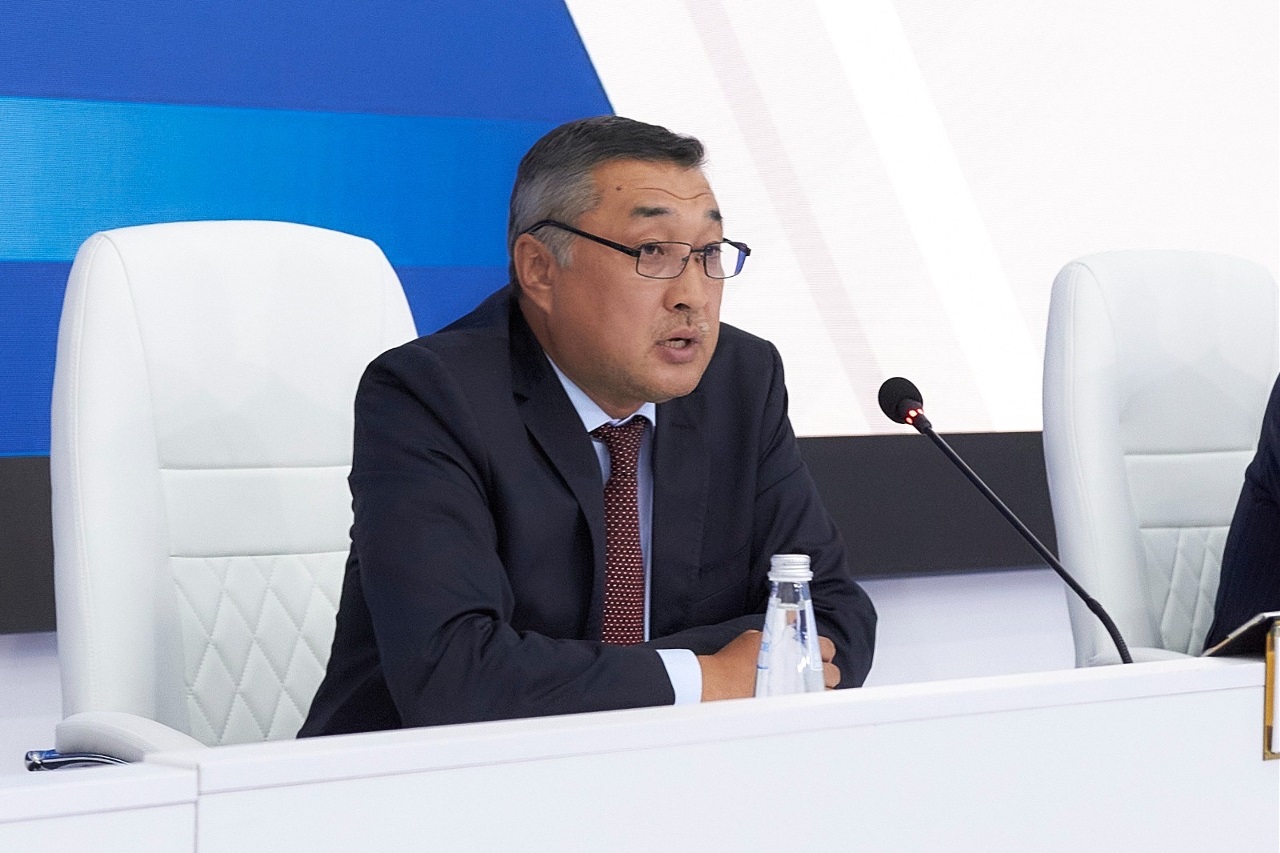
The Ministry of Finance is introducing a unified digital accounting system for state property on the e-Qazyna platform. 23.09.2026
At the briefing of the Central Communications Service, representatives of the Ministry of Finance of the Republic of Kazakhstan spoke about the digital transformation of the state property management system and the further development of the e-Qazyna.kz platform.Nurmakhan Adilbekov, Chairman of the Committee for State Property and Privatization of the Ministry of Finance of the Republic of Kazakhstan, and Zhanasyl Ospanov, Chairman of the Board of “Information and Accounting Center JSC,” informed about the key areas of this work.As part of the Year of Digitalization and Artificial Intelligence, the Ministry of Finance of the Republic of Kazakhstan continues to improve digital tools for managing state assets.Today, the e-Qazyna.kz platform combines 40 digital services. They cover the accounting of state and quasi‑state organizations, electronic tenders, privatization, leasing and trust management of state property, monitoring of state property, and other processes.One of the key tasks is to transition from a fragmented system for tracking state assets to a unified digital system based on e-Qazyna.kz. The implementation of this initiative is included in the roadmap until 2029.Within the framework of this work, digital profiles of state property objects and management entities are being created. They will make it possible to track the life cycle of assets, use up‑to‑date photographs and geographical coordinates of the objects, and, in the future, data from space monitoring.A separate area is related to the digitalization of accounting for the state and quasi‑state sectors. It is planned to introduce cloud accounting, integrate e‑Qazyna.kz with the “e‑Minfin” system, and automate the intra‑corporate accounting of property of entities in the quasi‑state sector.The digitalization of accounting for national and strategic resources is ongoing. In the future, it is planned to create a unified digital database of the State Register, which will include information about land and water resources, the forest fund, groundwater, hydrocarbon deposits, and solid minerals.The next stage in the system’s development will be the introduction of artificial intelligence and Big Data technologies. Their use will make it possible to apply predictive analytics to forecast the wear and tear of assets, identify signs of inefficient use of property, and plan maintenance and modernization costs for state assets more accurately.Of the 79 functions of the State Property and Privatization Committee, 36 have the potential for digitalization. To date, 26 of them, or 72%, have been automated. In the third quarter of 2026, a pilot automation of another eight functions is planned, including electronic voting in the management bodies of joint‑stock companies and partnerships, as well as the approval of the charters and balance sheets of state‑owned enterprises.The digital profile of the balance holder will also be implemented in stages. In 2026, it will include buildings and structures; in 2027, land plots; and in 2028–2029, transport, equipment, and other types of assets.The development of e-Qazyna.kz is aimed at creating a unified digital ecosystem for managing state property. This will make it possible to improve the efficiency of using state assets, increase revenues from their use, and optimize maintenance costs.Source : https://www.gov.kz/memleket/entities/minfin/press/news/details/1296866?lang=ru
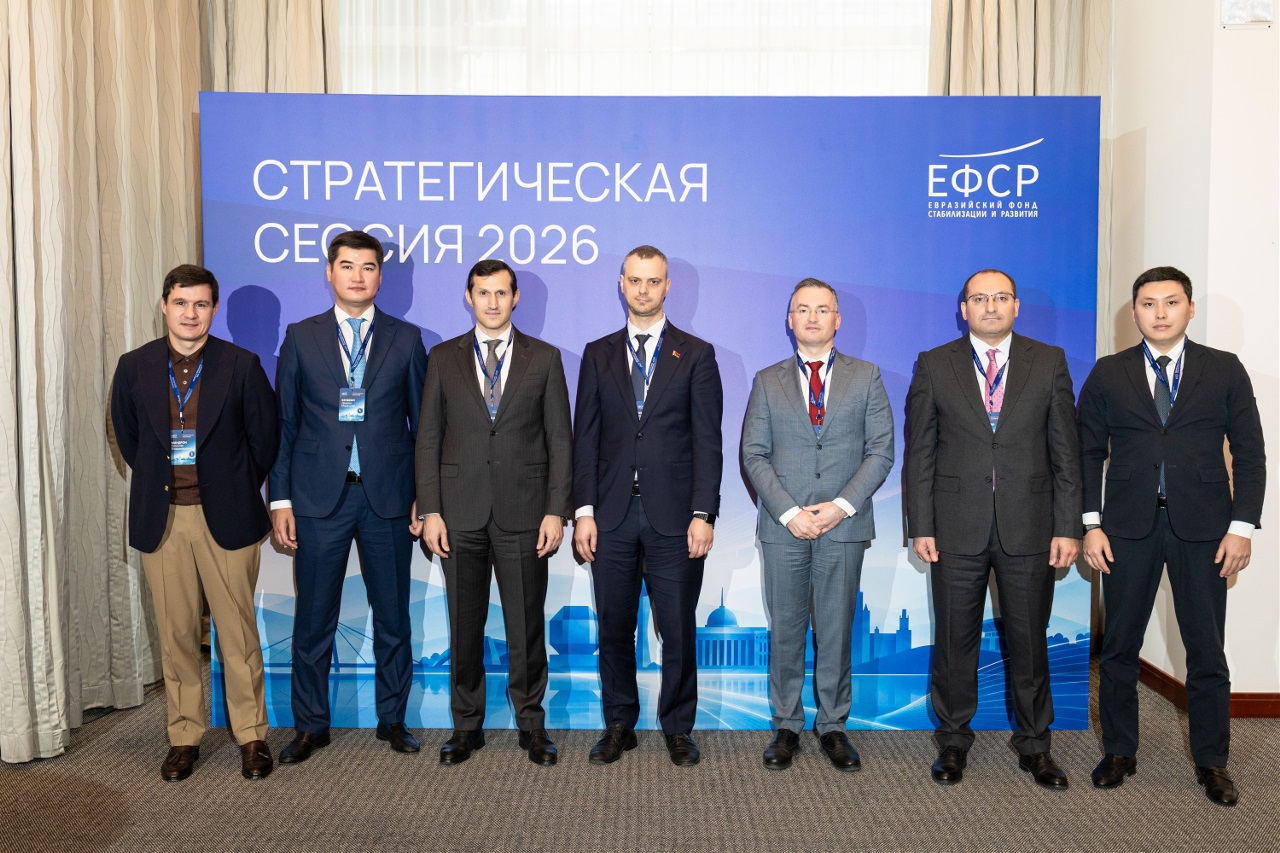
The participants of the EFSD discussed the new strategy of the Fund 23.09.2026
Continuing the work program of the Kazakh delegation in Moscow, Vice Minister of Finance of the Republic of Kazakhstan Dauren Kenbeil took part in the Strategic Session of the Eurasian Fund for Stabilization and Development. The participants discussed the draft strategy of the EFSD for 2027–2031, which defines the key areas of the Fund’s activities and its priorities for the medium and long term. “An important element of the strategy is strong analytics, on the basis of which timely preventive measures should be taken to ensure the stable growth of our economies,” Dauren Kenbeil noted. The EFSD brings together Armenia, Belarus, Kazakhstan, Kyrgyzstan, Russia, and Tajikistan and serves as an important tool for strengthening macroeconomic stability and financial cooperation among the member states.Source : https://www.gov.kz/memleket/entities/minfin/press/news/details/1296867?lang=ru

Digital security has become a part of everyday life, especially when it comes to protecting personal data and bank accounts 23.09.2026
In the Akmola region, systematic work is underway to prevent cybercrime and improve the legal literacy of the population. What is drop fraud and why is it dangerous?Drop fraud is the transfer or provision of access to your bank cards, accounts, payment instruments, and identification means to other persons. Liability also arises for conducting money transfers or payments within such dubious schemes. Fraudsters often offer "easy money" for using your banking instruments, but participating in such schemes threatens serious legal consequences.Main rules of digital securityTo avoid becoming an accomplice in a fraudulent scheme, remember the basic rules: Never give anyone your bank cards, PIN codes, SMS passwords, and login details for banking applications. Do not give access to your accounts and identification means to unauthorized persons. Ignore any offers of quick earnings if they require you to use your personal accounts or cards.How are children and youth protected?The Department of Digitalization and Archives of the Akmola region pays special attention to educational work with the younger generation: Starting from September 1, 2026, regular personal safety classes will be held in 523 schools and 27 colleges of the region. The training covers about 160,000 pupils and students. The lessons thoroughly examine topics of drop fraud, internet fraud, personal data protection, and safe online behavior. As part of the legal literacy marathon "Құқықтық мәдениет" and the work of the Centers for Pedagogical Support of Parents, more than 155,000 children have been reached, and over 117,000 parents have received useful information. More than 2,600 specialized events have already been held for adults.Security in the digital environment begins with the personal responsibility of each individual. Protect your data and do not allow malefactors to use you in others' schemes.Source : https://www.gov.kz/memleket/entities/aqmola-digital/press/news/details/1296858?lang=ru
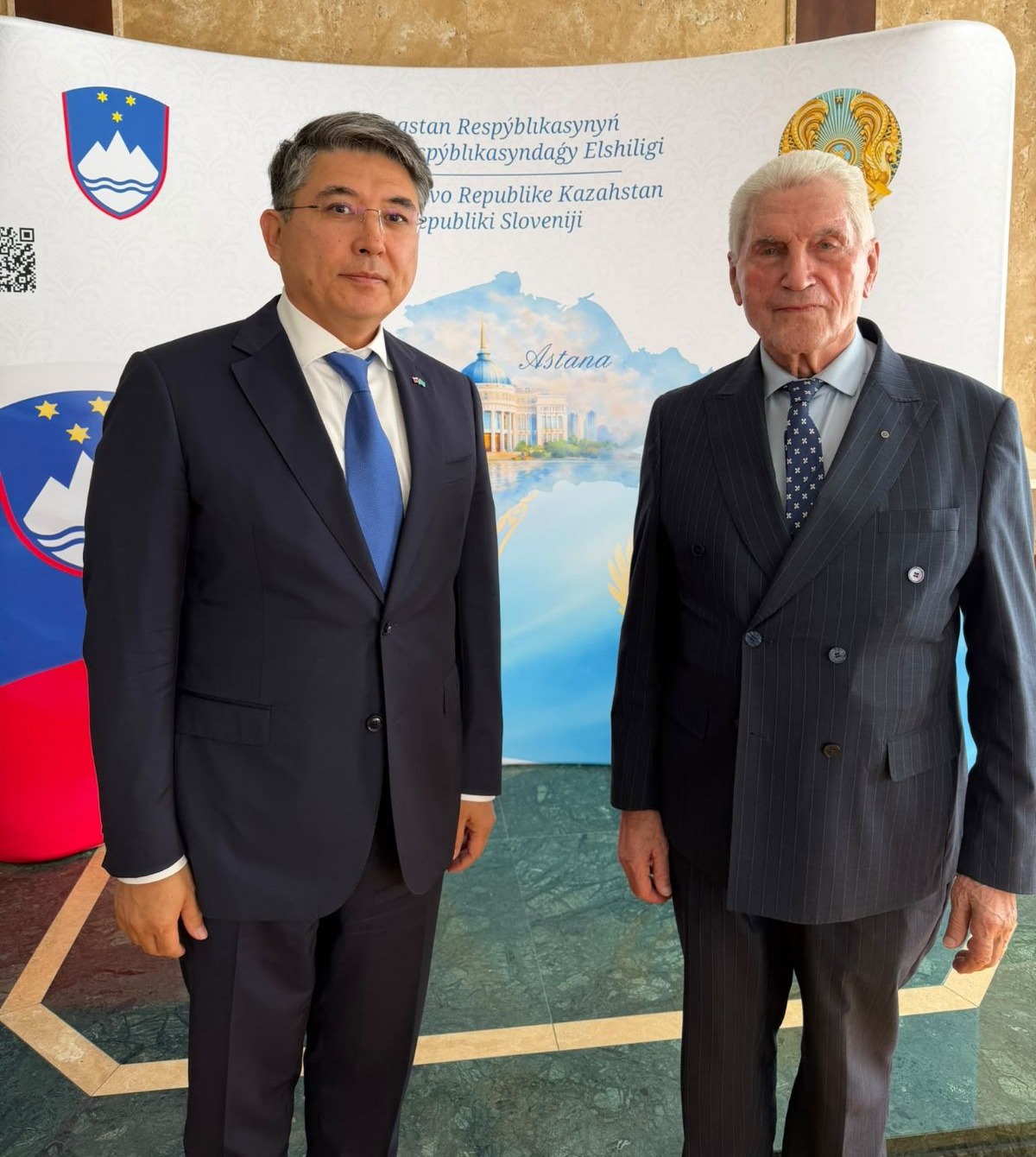
Dialogue Without Borders: Kazakhstan and Alma Mater Europaea University Expand the Space for Academic and Intercivilizational Cooperation 23.09.2026
22 September 2026, Ljubljana – Ambassador of Kazakhstan to Slovenia Altay Abibullayev held a meeting at the Embassy with Professor Ludvik Toplak, Rector of Alma Mater Europaea University, Member of the World Academy of Art and Science, and Director of the Global Peace Offensive Center. The discussions focused on intercivilizational and interreligious dialogue, strengthening a culture of peace, as well as expanding academic and expert cooperation between Kazakhstan and Slovenia.Professor Toplak highly commended Kazakhstan’s political reforms and development dynamics, with particular emphasis on the country’s international initiatives aimed at promoting peace, dialogue and sustainable development. The parties discussed opportunities to establish sustainable mechanisms for expert and academic engagement, including the organization of joint conferences, round tables and thematic discussions involving scholars, experts and representatives of the interfaith community.Particular attention was devoted to Kazakhstan’s experience in promoting interreligious dialogue, the activities of the Congress of Leaders of World and Traditional Religions, Kazakhstan’s engagement with the Holy See, as well as the forthcoming 24th meeting of the Secretariat of the Congress in Astana. The parties expressed interest in further bringing together the intellectual and expert capacities of Kazakhstan and Slovenia to promote dialogue among cultures and religions, uphold human dignity, foster youth development, and seek joint responses to contemporary global challenges.Reference: On 6 August 2025, Alma Mater Europaea University signed a Memorandum of Cooperation in Ljubljana with the Sherkhan Murtaza International Taraz University. The memorandum provides for joint educational, research and cultural projects, exchanges of students and faculty, as well as the organization of conferences, seminars and other academic events.On 30 April 2026, the International Center for Interfaith and Interreligious Dialogue (Astana) and Slovenia’s Global Peace Offensive Center signed a Memorandum of Understanding in the areas of interreligious, intercultural and intergenerational dialogue, as well as joint educational, research and public initiatives. The memorandum was signed with the participation of Gulsana Kozhabay, Chairperson of the Board of the International Center for Interfaith and Interreligious Dialogue.Source : https://www.gov.kz/memleket/entities/mfa-ljubljana/press/news/details/1296863?lang=ru
How the UAPF Open Day on New Opportunities for Pension Savings Management Went 23.09.2026
On September 16, 2026, UAPF JSC held its latest Open Day, entitled "Participation of Contributors in Managing Their Pension Assets and the invest.enpf.kz Portal for Independent Access to Information on Investment Portfolio Managers."Meeting participants were provided with detailed information on amendments to the Social Code of the Republic of Kazakhstan, which will take effect on September 7, 2026, significantly expanding the rights of UAPF contributors to independently choose strategies and portfolios for managing their pension savings.According to these amendments, depositors will be able to transfer up to 100% of their savings to investment portfolio managers (IPMs) for trust management. It was explained that these changes are aimed at increasing long-term returns from savings management by selecting an IPM with the most suitable investment strategy and performance history. Those gathered were informed that contributors of compulsory pension contributions (CPC) and voluntary pension contributions (VPC), as well as individuals for whom compulsory occupational pension contributions (COPC) and VPC have been transferred, will be able to independently determine the amount of their savings transferred to trust management, select one or more IPMs, and one or more investment portfolios in line with their financial goals.UAPF specialists also introduced the event participants to the unified online information platform, invest.enpf.kz, introduced for the convenience of investors, which consolidates key information on the investment management of pension assets. The platform provides convenient and structured access to performance information and allows for dynamic comparison of various data on portfolios managed by all trust managers (the NBRK and IPMs) over a specified period. Investors can evaluate investment portfolios and independently select a manager and their investment strategies based on their interests.Answers were also given to questions regarding mechanisms for protecting pension savings when managing IPM.During the meeting, UAPF JSC specialists not only explained the terms of the innovation's implementation, explained how to choose the right IPM, and transfer pension savings, but also answered other questions from participants and media representatives related to Kazakhstan's pension system.According to Open Day participants, the meeting was well-organized, with lively discussions, and UAPF JSC representatives explained all the nuances of the changes to Kazakhstan's funded pension system in a clear and accessible manner.Source : https://www.gov.kz/memleket/entities/akimat-beyneu/press/news/details/1296850?lang=ru
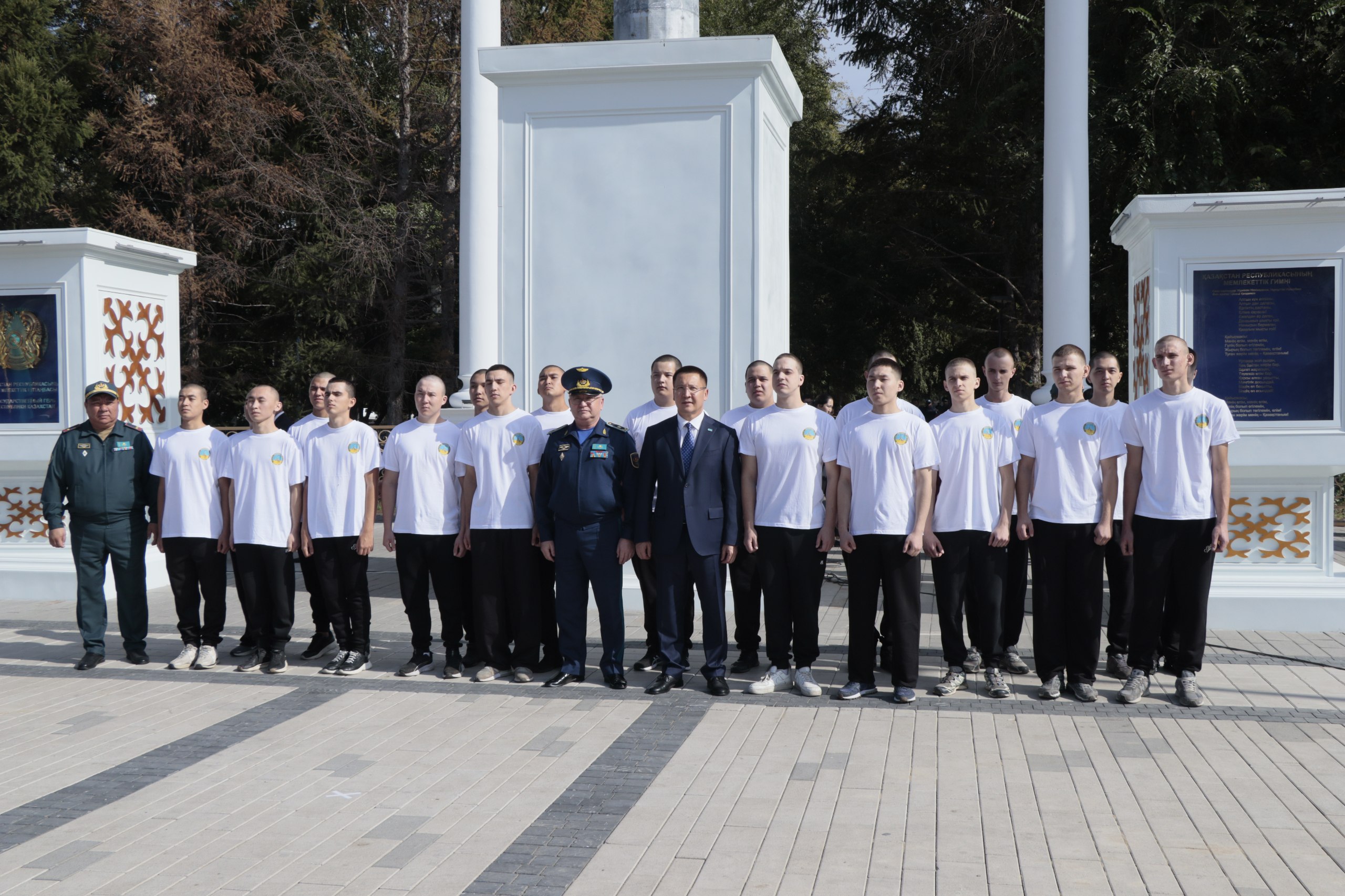
The Pavlodar region has supported the new military tradition “Sarbaz zholy” 23.09.2026
Source : https://www.gov.kz/memleket/entities/mod/press/news/details/1296846?lang=ru

Astana has become a finalist for the international «WIPO City of Innovation» award 23.09.2026
Astana was included in the list of 15 finalists for the international «WIPO City of Innovation – 2026» award, established by the World Intellectual Property Organization (WIPO).The award aims to support cities developing an innovative and creative ecosystem, with the selection conducted by an international independent jury based on the initiatives and implementation plans presented by the cities.Applications were received from cities of various sizes worldwide, and alongside Astana, the 15 finalists include cities from Belgium, China, India, Jordan, Morocco, the Philippines, Portugal, the Russian Federation, Thailand, and the United Kingdom.The winners will be announced on October 12, 2026, at a ceremony at WIPO headquarters in Geneva, taking place on the sidelines of the sixth meeting of the UN Mayors Forum.Source: Website of the World Intellectual Property Organization (WIPO), https://www.wipo.int/ru/web/awards/city-of-innovation.Source : https://www.gov.kz/memleket/entities/adilet-kis/press/news/details/1296831?lang=ru
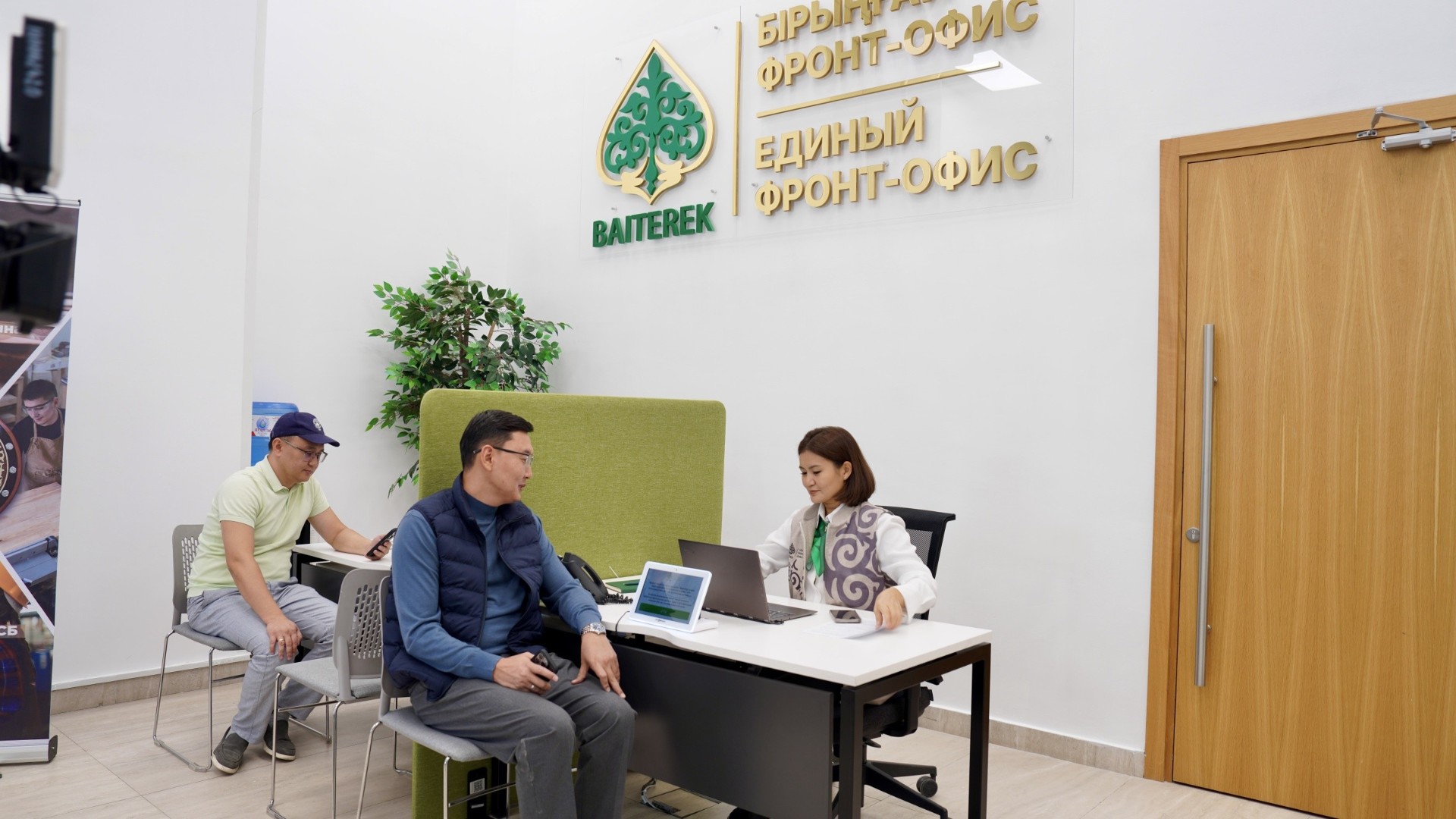
The Baiterek Holding's unified front office for supporting entrepreneurs has begun operating within the Damu Fund's regional network 23.09.2026
Deputy Prime Minister and Minister of National Economy Serik Zhumangarin visited the front office on its first day and learned about the new business support format.The unified front office combines the support tools of the Baiterek Group organizations using a one-stop shop principle. Here, entrepreneurs can receive advice, select the appropriate support tool, submit an application, and arrange project support right through to funding approval.Front offices will operate in all regions of Kazakhstan, based at Damu Fund branches. For entrepreneurs in remote areas and villages, mobile offices—buses carrying specialists—will be provided. This will allow them to receive the necessary advice and support without traveling to the regional center, including in regions where individual development institutions do not have their own representative offices.Front-office consultants intend to provide information on support instruments for Baiterek Group organizations:-Damu Entrepreneurship Development Fund – concessional lending, interest rate subsidies, guarantees, and non-financial support measures for small and medium-sized businesses;-Development Bank of Kazakhstan – financing of large investment projects;-Qazaqstan Investment Corporation – direct investment and venture financing instruments;-Export Credit Agency of Kazakhstan – export credit insurance;-Industrial Development Fund – concessional and leasing financing for enterprise modernization."Today, our specialists not only work with the Fund's instruments but also help select solutions from other Baiterek holding organizations. Essentially, the Damu regional network is becoming a single point of access to a wide range of financial and non-financial instruments – from preferential loans and guarantees to investment financing, export insurance, and leasing," said Farkhat Sarsekeyev, Chairman of the Board of the Damu Fund.The technical launch of the unified front office took place in February of this year. Since then, consultants have received approximately 30,000 requests from entrepreneurs. The front office has supported and financed 1,250 projects.Business Support and Assistance Centers are also operating in pilot mode within the unified front office. Their purpose is to assist entrepreneurs in resolving specific issues requiring interaction with government agencies, financial institutions, and other organizations.The Centers' specialists conduct an initial analysis of the problem and identify possible solutions. If necessary, relevant government agencies, financial institutions, akimats, and Baiterek Group organizations are involved. The pilot project covers Astana, Almaty, Shymkent, the North Kazakhstan Region, and Aktobe Region."It's important that this support is available in all regions of the country. We plan to expand the 'Isker Aimaq' program to rural areas, making our approach to supporting entrepreneurs more targeted. This is where Damu's regional branches and mobile front offices play a major role. The consultants' role is to support businesses at all stages of their development. Another important area is Business Support and Assistance Centers. Entrepreneurs often face a specific problem but don't know where to turn or how to solve it. These centers are being created precisely for such situations. They are currently operating in pilot mode in five regions of the country," noted Serik Zhumangarin.Source : https://www.gov.kz/memleket/entities/economy/press/news/details/1296836?lang=ru
Constitution-2026: the main directions of reforms 23.09.2026
On July 1, 2026, a new Constitution officially entered into force in Kazakhstan, adopted in a national referendum. This historic step has radically changed the balance of power, strengthened the protection of citizens' rights and laid new economic principles for a Just Kazakhstan. The renewal of the basic law was supported by 87.15% of citizens who voted in the referendum. Experts note that the new version strengthens legal guarantees for the population and makes the government more responsible to society. The scale of modernization is unprecedented – the reform affected about 84% of the text of the previous edition of the basic law. The most notable institutional change is the elimination of the bicameral Parliament. The Senate and the Mazhilis have stopped their work. They are being replaced by the Kurultai, an updated unicameral Parliament. The Kurultai will include 45 deputies elected exclusively by proportional representation (on party lists) for a 5-year term. The deputy must be a citizen of the Republic of Kazakhstan over the age of 25 and have lived in the country for the last 10 years. Deputies have full immunity. The Kurultai passes laws, controls the work of the government (up to the expression of no confidence), coordinates the appointments of the Prime Minister and Vice-President, and appoints judges of the Supreme Court. The President retains the right to appoint the Prosecutor General, the heads of the National Security Committee, the National Bank, the Constitutional and Supreme Courts. The Parliament is informed about the appointments after the fact. The post of Vice-president (which previously existed in 1991-1996) is returning to the political system of Kazakhstan. The President appoints him with the consent of the Kurultai. If the Parliament refuses to approve it twice, the head of state has the right to dissolve the Kurultai. The Vice President provides assistance to the President in cooperation with the Parliament and the Government. The appearance of this position changes the scheme of transfer of powers with the early departure of the head of state. First of all, the duties pass to the Vice-President, second to the Chairman of the Kurultai, and third to the Prime Minister. After that, new presidential elections must be announced within 7 days and held 2 months in advance. The powers of the former Parliament have been officially terminated. Elections to the new Kurultai are scheduled for August 2026. At the same time, the adoption of a new Concept of Legal Policy will begin to bring all the laws of the country in line with the updated Constitution. One of the main innovations is the establishment of the Halyk Kenesi (People's Council). This is the highest advisory body, which will include ordinary citizens of Kazakhstan. The People's Council is designed to strengthen national unity, but its main feature is real legal levers. The Council received the right to directly submit draft laws to the Kurultai for consideration and propose holding national referendums. The Constitution of 2026 has been adapted to the realities of artificial intelligence and digitalization. For the first time, the basic law establishes strict protection of personal data in the digital environment. This is a step towards the establishment of Kazakhstan as a regional center of digital law. An analogue of the famous "Miranda rule" is being introduced – the duty of representatives of law enforcement agencies to immediately read out their rights to detainees. Lawyers emphasize the importance of the norms on the right to clearly know what a detainee can expect, as well as guaranteed compensation for harm in case of unlawful prosecution. A total ban on foreign financing of political parties and NGOs engaged in political activities has been introduced. Caring for nature and protecting the environment have now been elevated to the rank of a constitutional duty. As part of the rethinking of economic and social relations, the new Constitution of the Republic of Kazakhstan clearly outlines not only the rights of citizens, but also their mutual obligations to the state. Thus, an important milestone of fiscal justice is the updated approach to the formation of the country's budget, the foundation of which is fixed in the basic law.Article 35 of the Constitution states: "The payment of legally established taxes, fees and other mandatory payments is the duty and obligation of everyone." This provision enshrines the principle of universal taxation, ensuring that any fiscal obligations can be imposed solely within the legal framework adopted by the new legislative body, the Kurultai.The preamble of the updated document enshrines the unshakeable principles of Kazakhstan: sovereignty, independence, unitarity, rule of law and inviolability of borders. #Change of borders#Law and OrderDepartment of Explanatory Work and contact center of the Department of State Revenue in Pavlodar region Source : https://www.gov.kz/memleket/entities/kgd-pavlodar/press/news/details/1296777?lang=ru

In Pavlodar region, 73% of residents have submitted an income declaration: violators face warnings and fines 23.09.2026
In Pavlodar region, the interim results of the work on submitting the Declaration of Income and Property (form 270.00) were summed up. 36,439 people submitted reports before the deadline set by law on September 15, which is 73% of the total number of required applicants.In total, about 50,000 citizens in the region should report for 2025. The majority of the 13,000 residents who have not yet submitted their documents are heads of companies, founders of legal entities and their spouses.The Department of State Revenue for the Pavlodar region reminds citizens who do not have time to report on time, it is necessary to do so as soon as possible.You can submit the form 270.00 online via:- "Taxpayer's Office" (cabinet.kgd.gov .kz);- The portal of "Electronic government" (egov.kz);- E-Salyq Azamat and eGov Mobile mobile applications;- Mobile applications of Halyk Bank and Kaspi Bank.A warning is provided for late delivery for the first time. In case of repeated violation during the year, a fine of 15 MCI is imposed. A fine of 3 MCI is provided for providing false information in the document.The following categories of citizens are required to provide a declaration of income and property of an individual (TNF 270.00):1. Civil servants and persons equated to them, as well as their spouses.2. Heads and founders (participants) of legal entities with a share of more than 10% in the authorized capital (or shares of joint-stock companies) and their resident spouses (with the exception of NGO participants).3. Persons engaged in private practice (notaries, lawyers, mediators, private bailiffs).4. Citizens who have received independent income subject to taxation (property income, except for sole proprietors).5. Owners of foreign bank accounts if the total balance as of December 31 of the reporting year exceeds 1,000 MCI (3,932,000 tenge).6. Owners of foreign real estate and property whose rights or transactions are subject to state registration.7. Owners of digital assets (cryptocurrencies, digital money, digitized assets).8. Persons who made large purchases during the reporting year in excess of 20,000 MCI (78,640,000 tenge).Form 270.00 contains information about the purchase or sale of property, sources of financing for transactions, assets outside the Republic of Kazakhstan, as well as accounts receivable and payable between individuals. #Zamen_tartip_the Law_and_ OrderDepartment of Explanatory Work and Contact CenterState Duma of the Pavlodar regionSource : https://www.gov.kz/memleket/entities/kgd-pavlodar/press/news/details/1296765?lang=ru
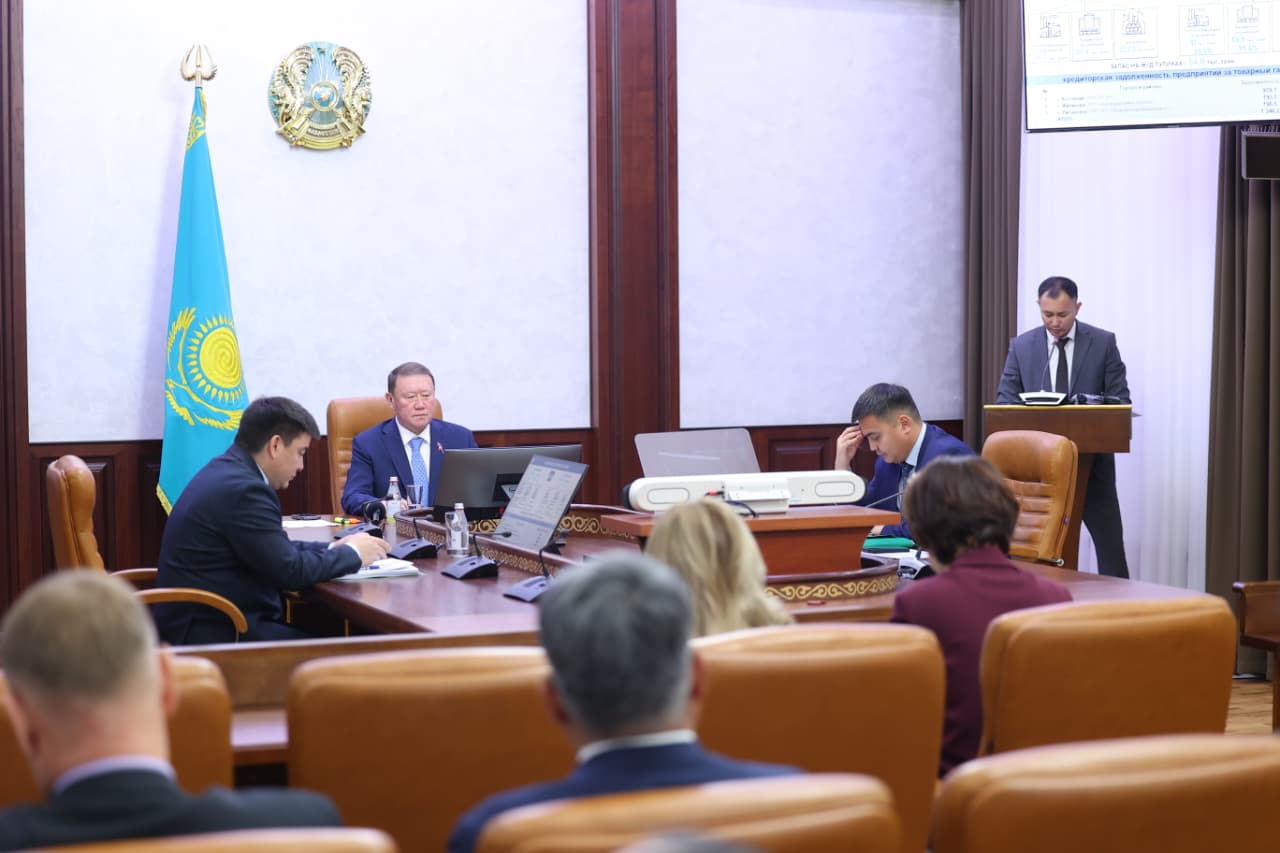
The heating season should proceed smoothly, without accidents or interruptions. 23.09.2026
Under the chairmanship of Kostanay Region Akim Kumar Aksakalov, a meeting of the regional akimat was held, dedicated to the region's preparation for the heating season. Reports were delivered by the head of the Energy and Housing and Communal Services Department of the regional akimat, as well as the akims of the cities of Kostanay, Rudny, Arkalyk, Lisakovsk, and the Zhitikara district.The Head of State has repeatedly noted that the heating season is one of the most pressing issues, paying special attention to the modernization of the energy and communal sectors, as well as ensuring uninterrupted heat supply to the population.«The heating season in the region begins on October 1. At the previous meeting, I instructed to complete preparations for the heating season by September 15. To date, all 118 heat supply sources have been fully prepared, including 4 combined heat and power plants and 114 boiler houses, as well as 698 autonomous heating systems. Readiness has been ensured for all multi-apartment residential buildings and social facilities. Repair work on 30.7 kilometers of heating networks, as well as water supply and sewerage networks, has been completed», – noted the head of the region.To date, city and district akimats have stockpiled about 384.1 thousand tons of coal, which constitutes 94.3% of the plan. In the cities of Kostanay, Lisakovsk, and Arkalyk, 8 major projects for the reconstruction of heating networks are being implemented. It was planned to renew 14.7 kilometers of networks by 2026. This volume has been fully completed. As a result of the work carried out, the level of wear and tear of heating networks has decreased to 42.8%.«Last heating season, we managed to significantly reduce the number of accidents – from 254 to 134 cases. The number of resident complaints also decreased from 96 to 20. Our task for the upcoming season is to ensure its stable passage, without accidents and interruptions», – said Kumar Aksakalov.Source : https://www.gov.kz/memleket/entities/kostanay/press/news/details/1296750?lang=ru

Excise tax rates on tobacco products 23.09.2026
Excise tax rates on excisable goods, the list of which is defined by Article 536 of the Tax Code of the Republic of Kazakhstan, are set in absolute amount per unit of measurement in physical terms. According to the Tax Code of the Republic of Kazakhstan, tobacco products produced in Kazakhstan or imported into the country are subject to excise tax at the following rates:- Cigarettes with a filter, without a filter and cigarillos: from January 1 to December 31, 2026 inclusive – 18 051 tenge per 1,000 pieces; from January 1 to December 31, 2027 inclusive – 21 163 tenge per 1,000 pieces.- Cigars: 825 tenge per 1 piece.- Pipe tobacco, smoking tobacco, hookah tobacco, etc., packaged in consumer containers and intended for final consumption (with the exception of pharmaceutical products containing nicotine): from January 1 to December 31, 2026 inclusive – 15,863 tenge per 1 kilogram; from January 1 to December 31, 2027 inclusive — 18,835 tenge per 1 kilogram.- Products with heated tobacco (heated tobacco stick, heated tobacco capsule, etc.): from January 1 to December 31, 2026 inclusive – 11,230 tenge per 1,000 units; from January 1 to December 31, 2027 inclusive – 11,330 tenge per 1,000 units.- Import of cigarettes (cigars) worth over 10.0 thousand tenge of the customs value (except for importation for personal consumption) – 10% of the value.Unless otherwise provided by the Tax Code of the Republic of Kazakhstan, the excise tax is subject to transfer to the budget at the location of the taxable object no later than the 20th day of the month following the reporting tax period. #Zamen_tartip_the Law_and_ OrderSource : https://www.gov.kz/memleket/entities/kgd-pavlodar/press/news/details/1296728?lang=ru
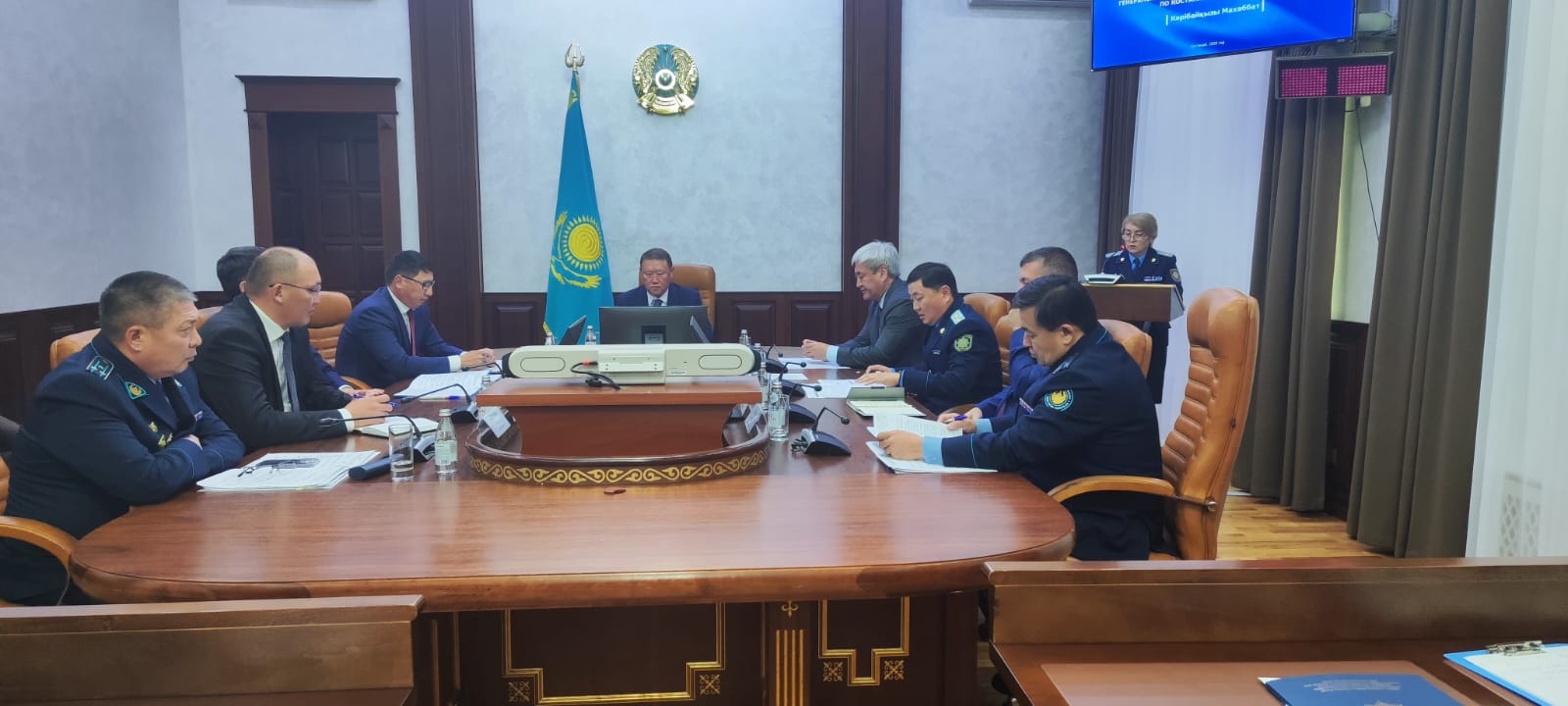
A regular meeting of the Interdepartmental Commission for the Implementation of the Constitutional Principle “Law and Order” under the Regional Akimat was held. 23.09.2026
On September 21 of this year, a regular meeting of the Interdepartmental Commission for the Implementation of the Constitutional Principle “Law and Order” under the regional akimat was held under the chairmanship of Kumar Aksakalov, the akim of the Kostanay region.The meeting addressed issues of ensuring road safety and preventing crimes committed under the influence of alcohol.According to the results of eight months, the number of registered road accidents in the region decreased by 3.4% — from 854 to 825. The number of injured decreased by 6.4% — from 1,184 to 1,108 people, and fatalities — by 4%, from 50 to 48.The placement of warnings in 2GIS also showed a positive result: on 12 designated accident-prone sections, the number of road accidents over seven months decreased by 37% — from 27 to 17.Akimats of cities and districts, together with the police, have been instructed to analyze the causes of the increase in accidents in certain territories, identify the most dangerous sections, assess the safety of pedestrian crossing locations, consider equipping buses and emergency service vehicles with speed control systems, and take specific measures to improve road safety.On the second issue, it was noted that over eight months, the number of crimes committed under the influence of alcohol decreased by 18.3%.At the same time, instructions were given to strengthen medical support for citizens repeatedly placed in temporary adaptation and detoxification centers, as well as to take measures to staff districts with psychiatrists and narcologists.Special attention has been instructed to be paid to retail outlets that repeatedly violate the rules for selling alcoholic beverages, with the adoption of measures provided for by law.Source : https://www.gov.kz/memleket/entities/kostanay/press/news/details/1296720?lang=ru

Astana has become a finalist for the international «WIPO City of Innovation» award 23.09.2026
Astana was included in the list of 15 finalists for the international «WIPO City of Innovation - 2026» award, established by the World Intellectual Property Organization (WIPO). The award aims to support cities developing an innovative and creative ecosystem, with the selection conducted by an international independent jury based on the initiatives and implementation plans presented by the cities. Applications were received from cities of various sizes worldwide, and alongside Astana, the 15 finalists include cities from Belgium, China, India, Jordan, Morocco, the Philippines, Portugal, the Russian Federation, Thailand, and the United Kingdom. The winners will be announced on October 12, 2026, at a ceremony at WIPO headquarters in Geneva, taking place on the sidelines of the sixth meeting of the UN Mayors Forum. Source: Website of the World Intellectual Property Organization (WIPO), https://www.wipo.int/ru/web/awards/city-of-innovation.Source : https://www.gov.kz/memleket/entities/adilet/press/news/details/1296649?lang=ru
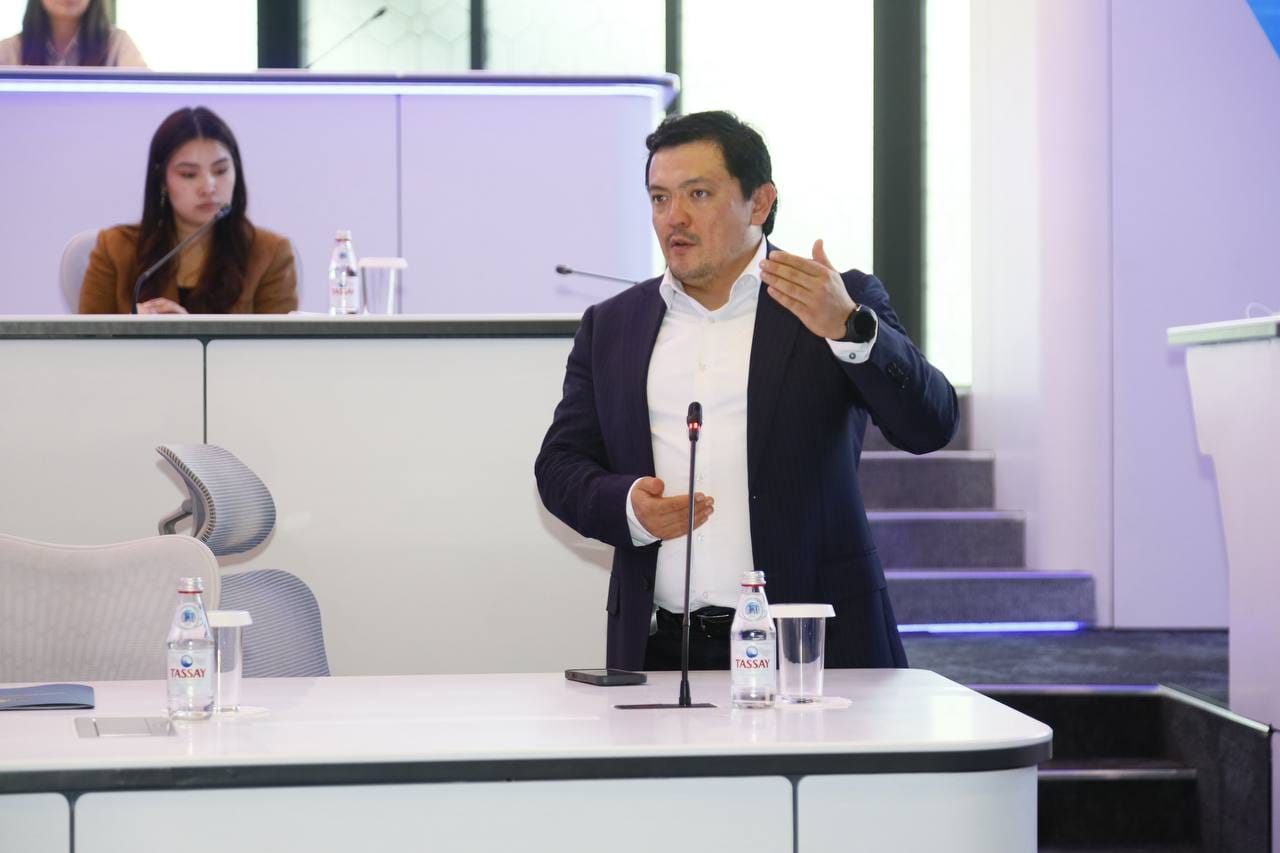
В Астане презентовали AI-навигатор по обязательным требованиям для бизнеса 23.09.2026
В Астане презентовали пилотный проект Реестра обязательных требований в сфере предпринимательства, разработанный Министерством национальной экономики во исполнение поручения Главы государства, данного в Послании от 8 сентября 2025 года «Казахстан в эпоху искусственного интеллекта».Презентация проекта состоялась в Международном центре искусственного интеллекта Alem.ai. Проект представил вице-министр национальной экономики Бекболат Молдабеков.Система на основе искусственного интеллекта собирает требования к бизнесу из нормативных правовых актов в одном месте и помогает определить, какие из них относятся к конкретному виду деятельности.Сегодня требования к бизнесу содержатся в тысячах нормативных правовых актов: законах, кодексах, постановлениях и ведомственных приказах. Одна и та же обязанность может быть закреплена сразу в нескольких документах, при этом нормы регулярно меняются. В результате предпринимателю бывает непросто разобраться, какие требования необходимо соблюдать именно в его случае.«Предпринимателю зачастую приходится тратить немало времени, чтобы найти в большом массиве законодательства требования, которые относятся именно к его деятельности. Наша задача — сделать этот процесс проще и понятнее. Реестр с использованием искусственного интеллекта собирает необходимые требования в одном месте и показывает, на кого они распространяются, что именно нужно сделать, в какие сроки и как подтвердить исполнение. Это позволит бизнесу быстрее ориентироваться в законодательстве и сосредоточиться на своей основной деятельности», — отметил Бекболат Молдабеков.Искусственный интеллект анализирует тексты нормативных правовых актов и выделяет конкретные обязательства. Для каждого из них определяется, кто должен его выполнять, в чем заключается обязанность, при каких условиях и в какие сроки она действует, как подтверждается исполнение, какой орган осуществляет контроль и какая ответственность предусмотрена за нарушение.При этом окончательное решение по каждому требованию остается за человеком. Ни одна норма не получает статус подтвержденной автоматически. Уполномоченный государственный орган проверяет, редактирует или отклоняет каждое требование. Все действия фиксируются в системе, что позволяет отслеживать историю изменений.Как это будет работать для бизнесаРеестр станет для предпринимателя навигатором по требованиям законодательства. Пользователю будет достаточно выбрать вид деятельности по ОКЭД, указать БИН, отрасль или соответствующий сценарий и ответить на несколько вопросов.После этого система сформирует персональный профиль с учетом конкретной деятельности. В нем будут указаны необходимые разрешительные документы со ссылками на eGov.kz и eLicense.kz, требования на разных этапах работы бизнеса, а также общие обязанности в соответствующих сферах регулирования.На основе сформированного профиля предприниматель сможет получить справочное заключение в формате PDF. Оно будет подготовлено с использованием языковой модели исключительно на основе включенных в профиль норм, без дополнительных предположений. Документ носит информационный характер и поможет быстрее сориентироваться в действующих правилах.Таким образом, бизнес сможет сократить время на поиск необходимой информации, снизить риск нарушения требований и быстрее определить необходимые разрешения и обязательства для запуска или развития проекта.Реестр будет отслеживать изменения законодательстваСистема также будет следить за изменениями законодательства. При появлении новой редакции нормативного правового акта она сравнит ее с предыдущей версией и покажет, какие нормы добавились, изменились или были исключены.Требования из утративших силу актов будут исключаться из действующего реестра, при этом история изменений сохранится.Единая система поможет снизить регуляторную нагрузкуДля государства реестр станет инструментом анализа регуляторной нагрузки на бизнес. Система позволит выявлять требования, которые дублируются в разных нормативных правовых актах, а также возможные противоречия между ними.При анализе учитываются содержание норм на казахском и русском языках, числовые параметры, категория субъекта и юридическая сила документа.При изменениях в связанных актах либо выявлении возможных дублирований и противоречий система формирует рекомендацию о дополнительном пересмотре нормы. Окончательное решение принимает ответственный государственный орган.Это позволит более последовательно снижать регуляторную нагрузку. Государственные органы смогут видеть, где требования являются избыточными, какие сферы регулируются наиболее подробно и какие нормы требуют пересмотра.Система также будет отслеживать сроки пересмотра нормативных актов и заранее информировать ответственные органы о необходимости проведения соответствующей работы.В дальнейшем Реестр планируется интегрировать с другими государственными информационными системами и цифровыми сервисами. Это позволит использовать проверенные данные об обязательных требованиях в единой цифровой экосистеме.Source : https://www.gov.kz/memleket/entities/economy/press/news/details/1296636?lang=ru
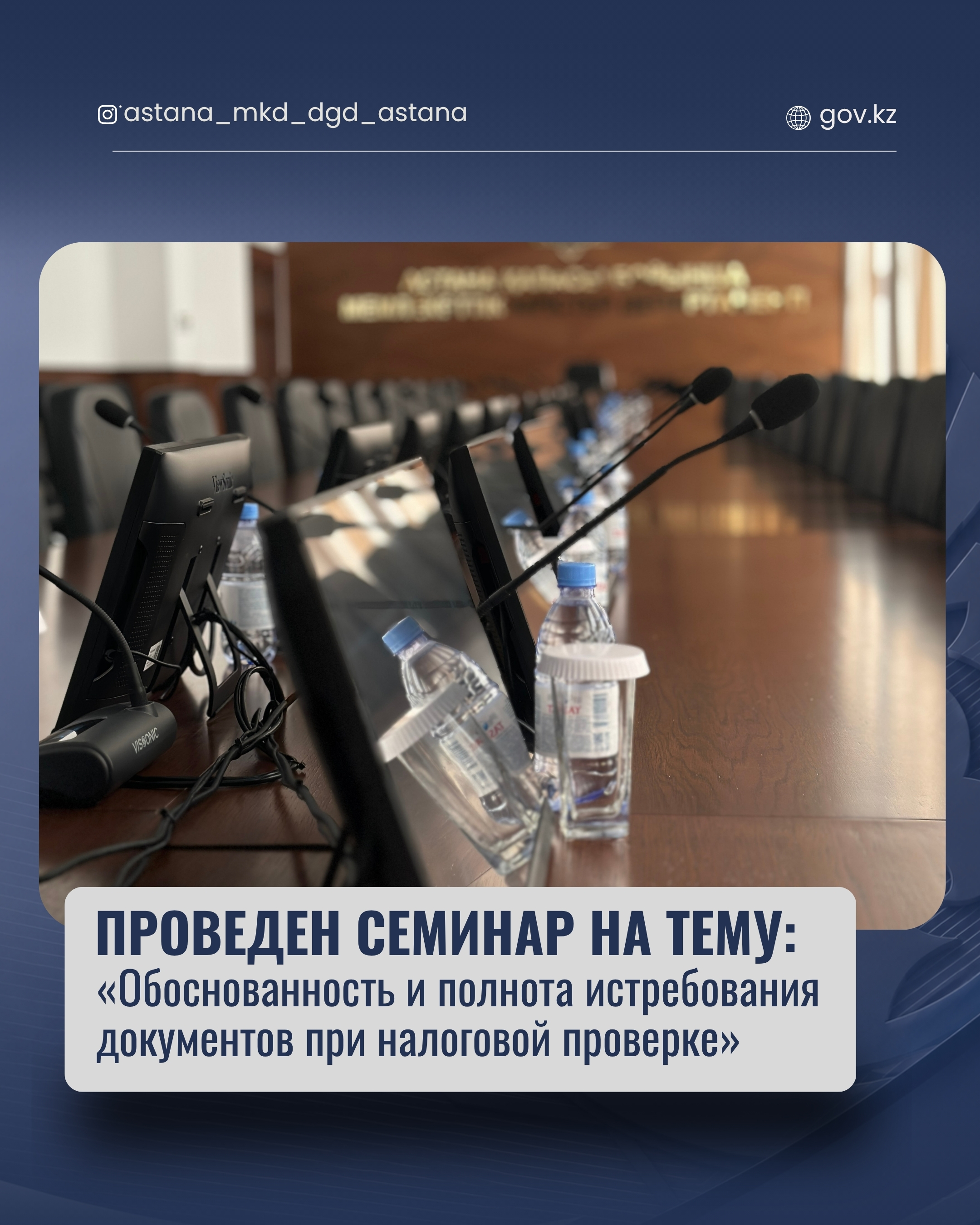
Justification and Completeness of Document Requests During a Tax Audit. 23.09.2026
On September 22, 2026, in accordance with the schedule approved following an internal corruption risk assessment, the Department of State Revenues in Astana held a seminar for the Department’s employees on the topic “Justification and Completeness of Document Requests During a Tax Audit.”The main objective of the event was to prevent corruption-related offenses among the Department’s employees by clarifying the limits of lawful authority when requesting documents during tax audits, establishing a consistent understanding of the provisions of the Tax Code of the Republic of Kazakhstan regarding the justification and completeness of such requests, and preventing abuse of authority and excessive administrative burdens on taxpayers as part of the systematic efforts to reduce corruption risks in the activities of the Department.Source : https://www.gov.kz/memleket/entities/kgd-astana/press/news/details/1296632?lang=ru

SRC Held a Seminar on Current Issues of Cooperation in Debt Management 23.09.2026
On September 18, 2026, the State Revenue Committee of the Ministry of Finance of the Republic of Kazakhstan (SRC MF RK) held a seminar with the participation of the territorial State Revenue Departments for Almaty, Almaty Region, and Zhetysu Region on the topic “Current Issues of Cooperation in Debt Management: Practical Aspects and Ways for Improvement.”During the seminar, the participants discussed practical issues arising in the course of debt management, exchanged experience, and considered approaches to improving cooperation between the territorial state revenue authorities.Particular attention was paid to improving the effectiveness of ongoing work, ensuring the prompt exchange of information, and developing unified approaches to resolving emerging issues.Following the meeting, the participants identified areas for further cooperation and exchanged proposals aimed at improving debt management.Source : https://www.gov.kz/memleket/entities/kgd-almaty/press/news/details/1296588?lang=ru
PENSION ASSET MANAGEMENT KEY ISSUES REGARDING UAPF 23.09.2026
Who manages pension assets? The investment of pension assets is managed by the National Bank of the Republic of Kazakhstan (NBRK) and, since 2021, by licensed investment portfolio managers (IPMs) that meet the requirements of the authorized body. The primary objective of this fiduciary management of pension savings is to invest in various financial instruments and generate income. Pension asset managers—both the NBRK and IPMs—maintain their own investment strategies and independently determine the structure of their investment portfolios within the framework of their investment declarations.The current IPM registry includes six private companies to which Kazakhstanis can entrust the management of their pension savings: Alatau City Invest JSC, BCC Invest JSC, Centras Securities JSC, Halyk Finance JSC, Halyk Global Markets JSC, and Tansar Capital JSC. (Note: Halyk Global Markets JSC has notified the Unified Accumulative Pension Fund [UAPF] of the termination of its fiduciary management agreement effective 2027; consequently, as of January 1, 2026, the Fund is no longer accepting applications to transfer pension savings to this company.)Information regarding IPMs and their investment declarations can be found on the website www.enpf.kz under the "Services" section—specifically the "Registry of Investment Portfolio Managers"—as well as on the online platform invest.enpf.kz. Legislative amendments provide for the possibility of transferring up to 100% of pension savings—accumulated through compulsory pension contributions and compulsory occupational pension contributions—to an investment portfolio manager (IPM) for management. Who is eligible for this, and how does the mechanism work? All UAPF contributors will have the option to transfer up to 100% of their accumulated savings to private investment portfolio managers (IPMs) for management. These provisions came into effect on September 7, 2026.Information regarding IPMs and their investment declarations is available on the website www.enpf.kz under the "Services" – "Register of Investment Portfolio Managers" section, as well as via the online platform invest.enpf.kz.In the near future, a single IPM will be able to offer contributors up to three types of investment portfolios (conservative, moderate, and aggressive), differing in terms of risk level, expected return, and investment horizon.The procedure for structuring investment portfolios of pension assets will be determined by the authorized body responsible for the regulation, control, and supervision of the financial market and financial organizations. Is it possible to distribute savings among several management companies? Contributors may select one or more Investment Portfolio Managers (IPMs). To enhance public awareness, the UAPF has launched a unified online information platform: invest.enpf.kz. This modern digital resource enables contributors to compare data on pension asset portfolios managed by various entities—specifically the National Bank of the Republic of Kazakhstan (NBRK) and IPMs—all in one place. Contributors gain access to tools for independently evaluating investment portfolios and selecting a manager and investment strategy tailored to their specific goals and expectations. Furthermore, the invest.enpf.kz platform allows contributors not only to review IPM investment declarations and analyze financial performance but also to access information regarding any administrative measures, sanctions, or enforcement actions taken against an IPM by the regulator (the ARDFM). How the transfer of savings from the UAPF to an asset management company takes place? To transfer pension savings to trust management, an account holder must select an Investment Portfolio Manager (IPM) and then submit an application using the prescribed form. This can be done via the personal account area on the enpf.kz website or the invest.enpf.kz online platform using an electronic digital signature, or at any UAPF branch.Within the personal account area, the account holder can, among other things:check the amount available for transfer to, or return from, an IPM or the National Bank of the Republic of Kazakhstan (NBRK);review the terms and conditions for submitting an application to select (or change) an IPM or to return pension savings currently under IPM management to NBRK management;submit an application to select (or change) an IPM or to return funds to the NBRK, and track the application's status;access other available pension services.The status of an application to transfer pension savings to trust management can be tracked in the personal account area on the website or via the UAPF mobile app.The processes for submitting applications for transfer to an IPM and their subsequent processing by the UAPF are fully automated. The UAPF transfers pension assets to IPM trust management within the timeframes established by regulatory legal acts. However, transferring pension savings from one IPM to another, or returning them to NBRK management, is permitted only after at least one year has elapsed since the initial transfer. Where can contributors find complete information on pension asset management and track the performance of management companies? The UAPF serves as the central record-keeping and information hub for all contributors and acts as the operator of their individual pension savings accounts, regardless of which entity manages the assets (the National Bank of the Republic of Kazakhstan and/or an Investment Portfolio Manager (IPM) selected by the contributor).The UAPF provides accessible services related to pension asset management, offering 24/7 access to statements that fully reflect citizens' accumulated savings and earned investment income via the personal account section of the enpf.kz website or the UAPF mobile app.Information regarding the investment activities of each manager is continuously updated on the enpf.kz website under the "Statistics and Analytics" section—specifically, "Investment Management of Pension Assets."Additionally, a dedicated online platform (invest.enpf.kz) operates for UAPF contributors; this modern digital resource enables users to compare the asset management performance of all managers (the National Bank of the Republic of Kazakhstan and IPMs). Invest.enpf.kz provides access to return-on-investment data, allows for the comparison of asset managers and their portfolios over selected timeframes, and facilitates informed investment decision-making.Source : https://www.gov.kz/memleket/entities/vko-altai/press/news/details/1296571?lang=ru

Glotov Yevgeniy Reviews Progress on Major Investment Projects in Astana 23.09.2026
During a working visit, Astana Deputy Akim Glotov Yevgeniy reviewed the progress of investment projects in the capital’s digital infrastructure, industrial, logistics and education sectors.He visited a data centre under construction that is designed to meet TIER IV reliability standards. It is the first commercial project of this level in Eurasia. The complex will have a total power capacity of up to 100 MW, with the first phase scheduled to become operational in 2027.Glotov Yevgeniy also reviewed construction progress at an agro-industrial complex for the advanced processing of grain and legume crops. The project is expected to attract USD 320 million in investment and create approximately 400 new jobs once the complex becomes operational.In addition, the Deputy Akim visited the construction site of the country’s largest logistics park, which will cover approximately 160,000 square metres. The project is expected to become an important part of the capital’s modern transport and logistics infrastructure.Work is also continuing in the field of international education. Glotov Yevgeniy reviewed preparations for the opening of the new ICS Astana and SABIS International School-Astana campuses. In the first phase, the schools will provide an additional 2,000 student places, with the potential to increase capacity in the future. https://www.instagram.com/p/DdjR0HZx4dC/Source : https://www.gov.kz/memleket/entities/astana-uir/press/news/details/1296545?lang=ru
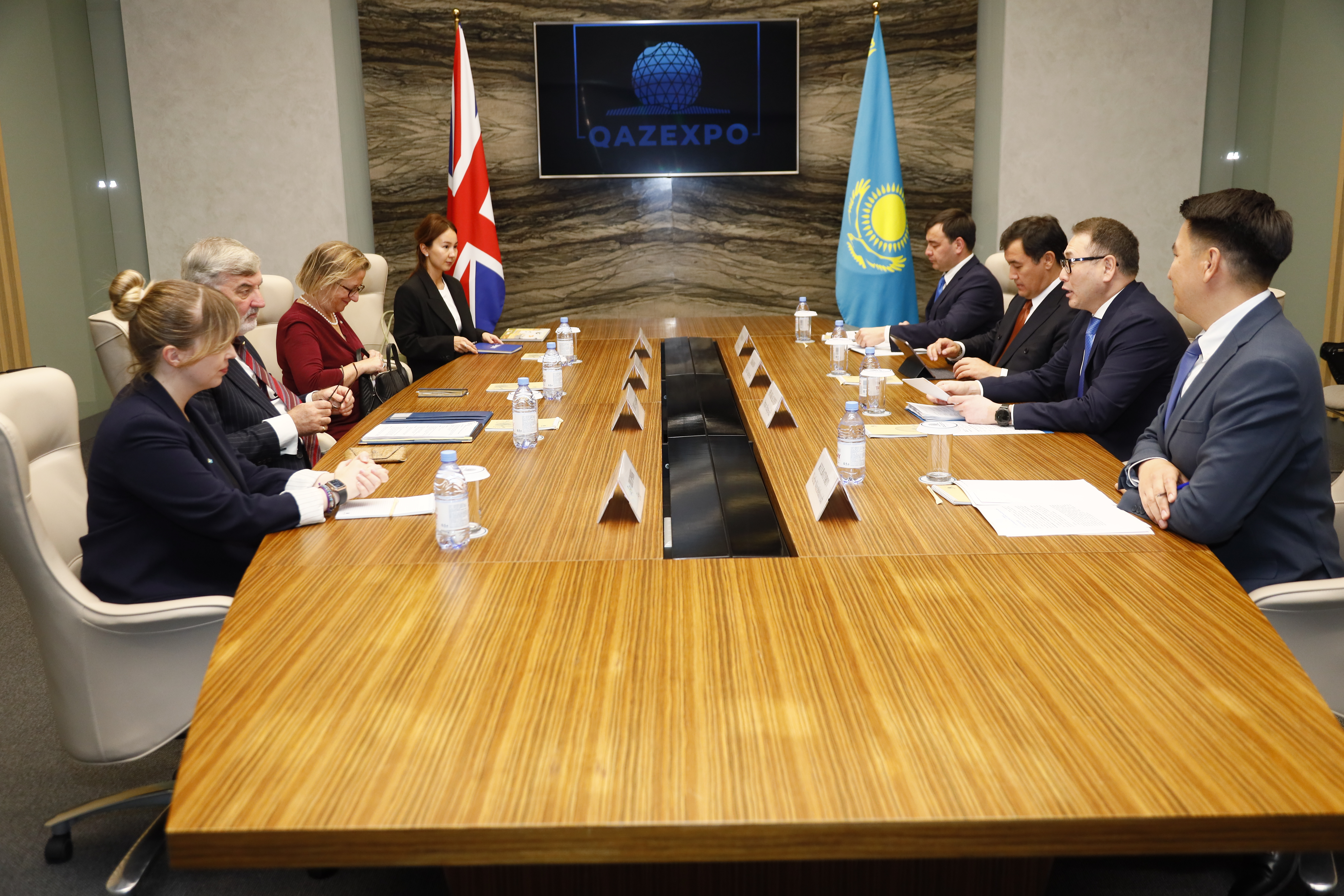
Arman Shakkaliyev and Lord John Alderdice discussed the expansion of trade and the development of investment 23.09.2026
Minister of Trade and Integration of the Republic of Kazakhstan Arman Shakkaliyev held a meeting with the UK Government's Trade Envoy to Azerbaijan and Central Asia, Lord John Alderdice. The parties discussed the dynamics of bilateral trade, expansion of Kazakh exports, development of industrial cooperation, investment, and scientific-educational collaboration.By the end of 2025, trade turnover between Kazakhstan and the United Kingdom reached 1.63 billion US dollars, an increase of 83.7% compared to 2024. For January–July 2026, the figure reached 1.25 billion US dollars, which is 68.5% higher than the same period in 2025.At the same time, Kazakhstan is interested not only in maintaining growth rates but also in diversifying the trade structure and increasing supplies of high value-added products. Currently, the basis of exports consists of silver, crude oil, copper, and copper cathodes.“It is important for us to move from the achieved growth to deeper and more diversified trade. First and foremost, we are interested in expanding the export of Kazakh products to the British market beyond raw materials,” noted Arman Shakkaliyev.In this regard, the minister proposed organizing a trade and economic mission of British importers and retail chain representatives to Kazakhstan for direct interaction with domestic producers. The parties also discussed the requirements of the British market for quality, certification, packaging, and standards for potential export products.Special attention was paid to critical minerals and the development of processing. Lord John Alderdice noted the promising prospects for cooperation between British companies and universities with Kazakhstan, not only in the extraction sector but also in the field of mineral processing and the creation of high value-added products.“Kazakhstan has significant natural resources, but it is especially important that you set the task not to limit yourselves to their extraction, but to create added value and develop processing. It is precisely here that we see great opportunities for cooperation,” said Lord John Alderdice.The parties also considered opportunities for attracting British investment into the manufacturing industry, energy, logistics, and high-tech sectors, as well as expanding direct contacts between companies of the two countries.During the meeting, cooperation in the field of standardization, export promotion, science, and education was discussed. Kazakhstan is interested in exchanging experience with the British Institute of Export and International Trade, as well as in further interaction between KazStandard and the British Standards Institution (BSI). Issues of preparing Kazakh exporters for carbon regulation requirements, including CBAM, were separately considered.Lord John Alderdice also noted the potential for cooperation between universities and research centers of the two countries, including in the field of mining, mineral processing, and the nuclear industry.Following the meeting, the parties confirmed their interest in transitioning from general potential to specific trade, investment, production, and scientific projects, as well as in further expanding direct contacts between businesses and relevant organizations of Kazakhstan and the United Kingdom.Source : https://www.gov.kz/memleket/entities/mti/press/news/details/1296537?lang=ru