
Water conservation, reduction of emissions without damage to crops: agrodrons will be harvested in Kazakhstan
26.11.2024 19:08:16 3438
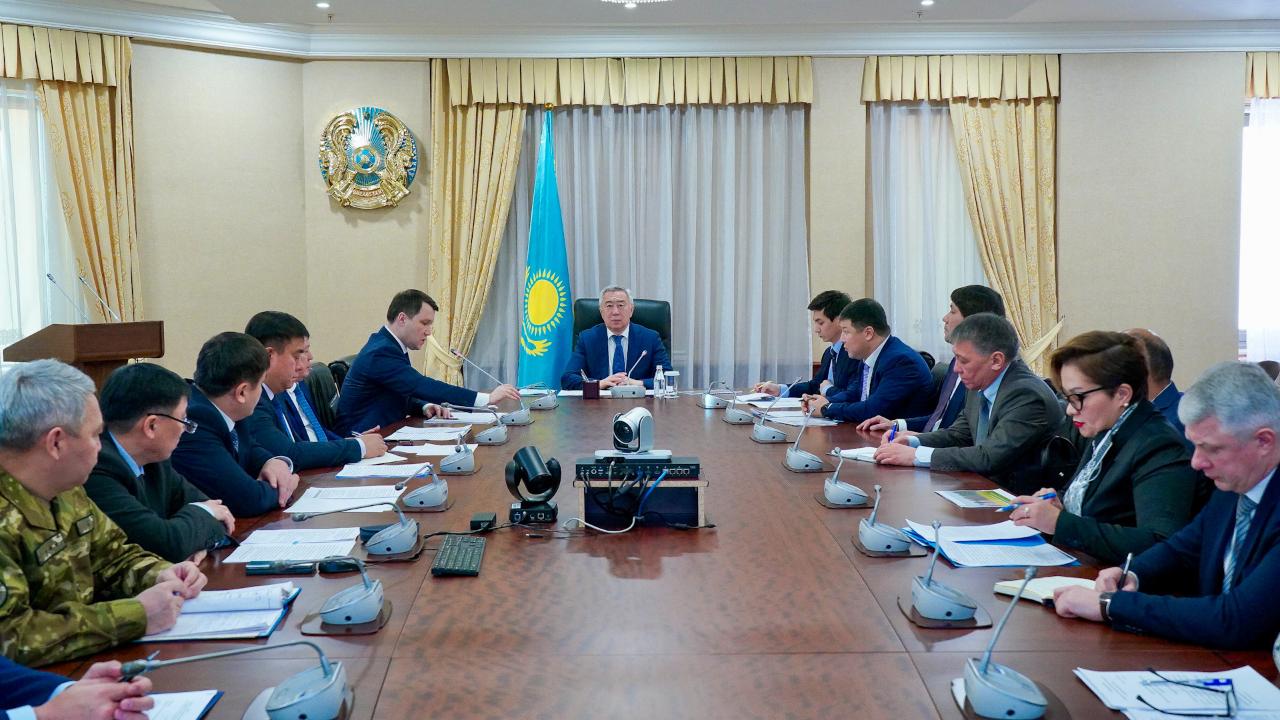
The effectiveness of using and scaling up the practice of using agrodrons in agriculture was discussed at a government meeting chaired by Deputy Prime Minister Serik Zhumangarin.
International experience in the use of agrodrons in over 100 countries around the world shows significant advantages of using unmanned aerial vehicles instead of ground-based sprayers. More than 500 million hectares of fields have already been processed in the world with the help of agrodrons. Due to the minimal use of water, it was possible to save about 210 million tons of water and reduce CO2 emissions by 25 million tons. Agrodrons allow you to cultivate and explore lands in hard-to-reach places. They work in any weather and time of day, during rain and at night.
"For example, a self-propelled sprayer spends 150 liters of water per hectare, which is about 750 thousand liters of water per 5 thousand hectares. While a drone requires 50,000 liters to handle the same amount of space, this is more than 15 times less. In addition, the self-propelled sprayer presses the track during operation, which causes the farmer to lose about 6% of the crop. The UAV does not cause such damage to crops," Sanzhar Nurgazinov, a representative of the company operating agrodrones, said at the meeting.
In order to scale up the use of UAVs for inspection, treatment of pests and dangerous plant diseases in Kazakhstan, the Ministry of Agriculture signed a memorandum with the Chinese company Eavision for the import of 80 agrodrons. These devices will be sold among agricultural producers. In addition, a joint Kazakh-Chinese enterprise Sunkar Eavision International LLP has been established, which will assemble domestic drones on the territory of the SEZ of the Alatau Information Technology Park.
"Together with the SEC of the regions, the issue of opening demonstration and service centers of agrodrones in Turkestan, Taraz, in the regions of Abai and Zhetysu has been worked out. The issue of training assemblers and pilots has been resolved on the basis of three educational institutions: Talgar Polytechnic College, College of IT Technologies in Semey and agricultural college in Kaplanbek village of Turkestan region," said Vice Minister of Agriculture Yermek Kenzhehanuly.
In parallel, work is underway to create the software necessary for the inspection of pest infestation sites and carrying out treatments. It is planned to link the survey activities with the treatments carried out in the information system "Kazakhstan Garysh Sapary" – GIS "Phytokz".
Serik Zhumangarin set the task for the Ministry of Digital Development, Innovation and Aerospace Industry to explore the possibility of developing its own software for managing agricultural drones.
Following the meeting, Serik Zhumangarin instructed the Ministry of Agriculture to develop a roadmap for the development and implementation of agrodrons in agriculture by the end of February 2025, taking into account the selection or development of necessary software, the creation of service centers, training specialists, mainly from rural youth, to work with UAVs; KazAgroFinance – to work out measures to support farmers to purchase agrodrons within the framework of available funds.
Source : https://www.gov.kz/memleket/entities/moa/press/news/details/890762