Kazakhstan Actively Participated in the 43rd UNESCO General Conference
13.11.2025 16:11:09 4327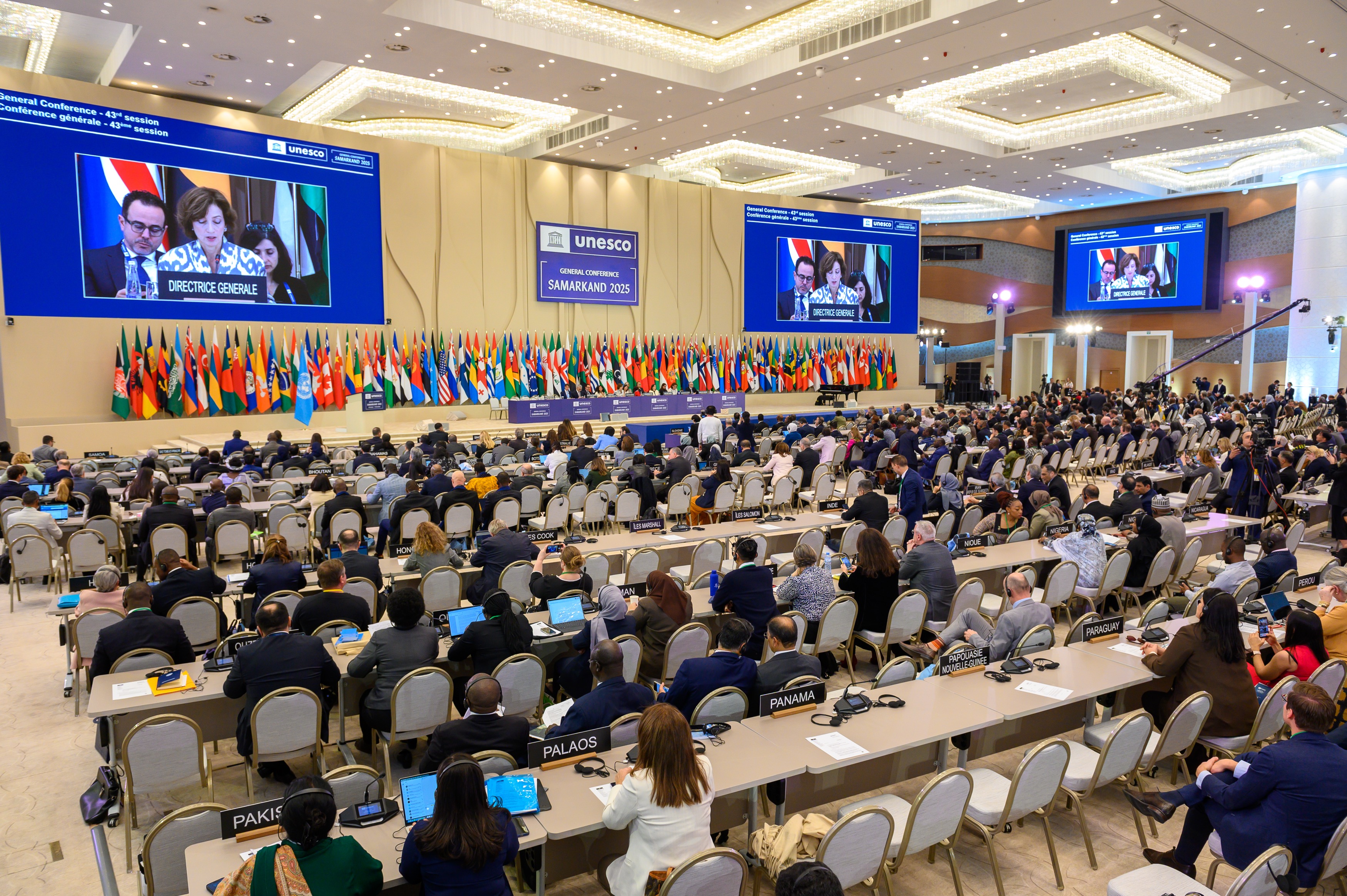
Samarkand, 13 November 2025 – The delegation of the Republic of Kazakhstan is completing its participation in the 43rd session of the UNESCO General Conference, held from 30 October to 13 November 2025 in Samarkand. The event, attended by over 4500 representatives out of almost 180 Member States, has become the Organization’s largest gathering, setting strategic priorities for international cooperation in education, science, culture, information, and communication for the coming years.
Kazakhstan was elected Vice-President of the General Conference, re-elected to the Intergovernmental Hydrological Programme Council for 2025-2029, and to the Bureau of the 25th General Assembly of States Parties to the World Heritage Convention, while continuing its membership in the World Heritage Committee (2023-2027) – reflecting the country’s continued recognition as an active and constructive participant in UNESCO’s work.
Kazakhstan has made a significant contribution to the effectiveness of the Conference, acting as the author and co-author of a number of resolutions and initiatives.
A major achievement of the session was the adoption of Kazakhstan’s resolution on enhancing cooperation with and between National Commissions for UNESCO, co-sponsored by 70 Member States. The document highlighted the central role of National Commissions in implementing UNESCO’s mandate and outlined practical measures to expand their engagement with the Organization’s Secretariat, government bodies, academia, and civil society.
On 31 October, State Counsellor of Kazakhstan and Chairman of the National Commission for UNESCO and ICESCO, Erlan Karin, delivered a statement at the plenary session of the General Conference. He presented the key priorities of Kazakhstan’s state policy as outlined in President Kassym-Jomart Tokayev’s Address “Kazakhstan in the Era of Artificial Intelligence: Current Challenges and Solutions through Digital Transformation,” emphasizing the role of digitalization, education, and innovation in sustainable development. He underlined UNESCO’s leading role in promoting the ethical use of AI and noted Kazakhstan’s ongoing comprehensive national study based on UNESCO’s Readiness Assessment Methodology (RAM).
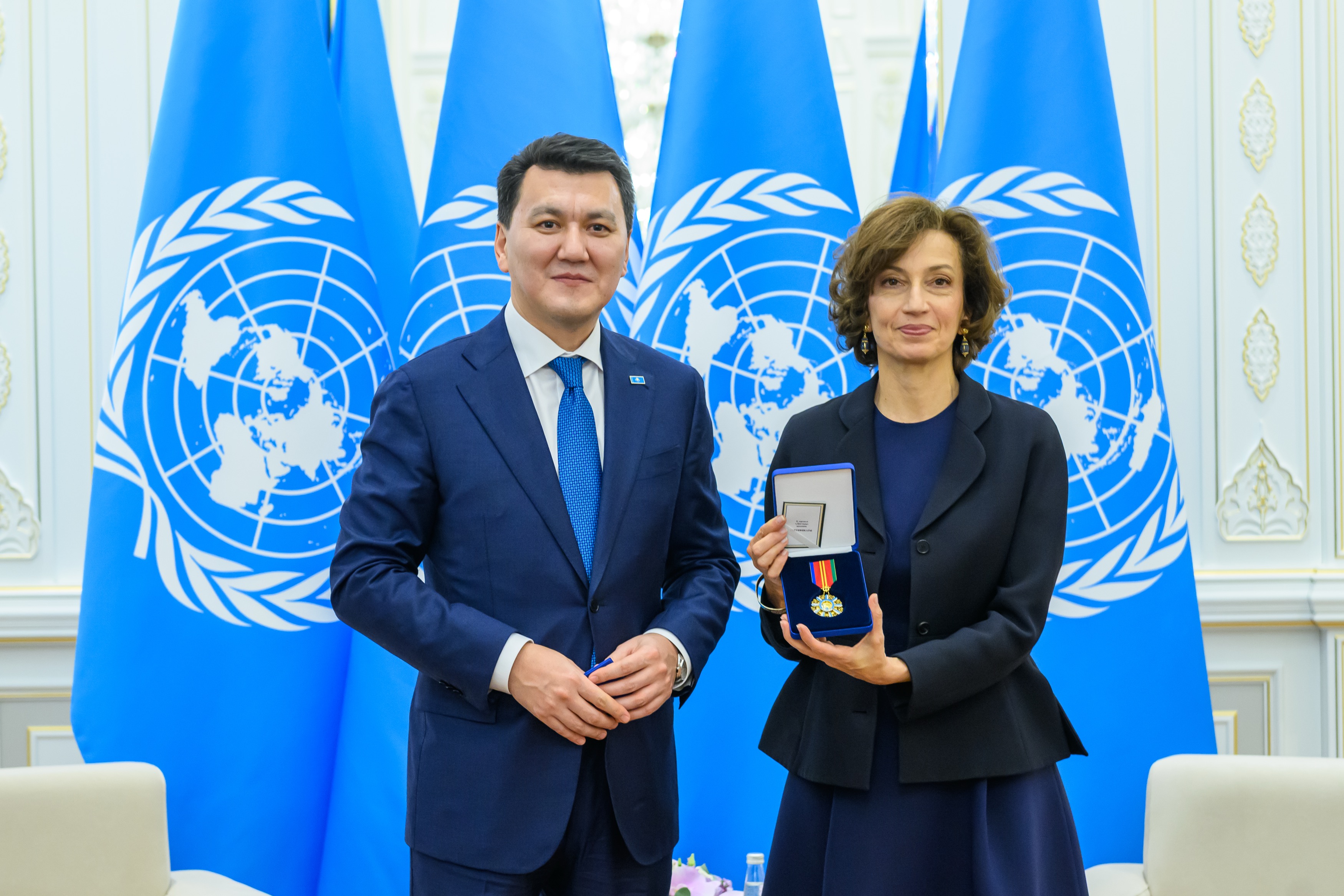
State Counsellor Karin also met with UNESCO Director-General Audrey Azoulay, expressing gratitude for many years of fruitful cooperation. In recognition of her contribution to strengthening the partnership, he presented her with the Order of Dostyk (Friendship), 2nd degree, awarded by the President of Kazakhstan.
On 4 November, the Kazakh delegation took part in the presentation of new publications by the Turkic Culture and Heritage Foundation, including the “Cultural Code of the Turkic World” catalogue and the “Heritage of Turkic Folklore” anthology. The event also celebrated the establishment, by decision of the 43rd General Conference, of the World Turkic Family Language Day, to be observed annually on 15 December – the day of the deciphering of the Orkhon inscriptions, the oldest monument of Turkic writing. This decision symbolizes recognition of the Turkic peoples’ contribution to global cultural and linguistic diversity. Delegates highly appreciated the multicultural performance by the soloists of the Kazakh ethno-folk ensemble “Turan”, featuring music in Kazakh, Kyrgyz, Azerbaijani, Uzbek, Turkish, Turkmen, and Hungarian languages.
Kazakhstan co-sponsored the resolution to proclaim the International Day of Nomadic Heritage. In recognition of the valuable contributions of the nomadic peoples into cultural heritage of the world, it will be observed annually on 22 September – the autumn equinox – the day symbolizing harmony between humanity and nature.
Speaking at a side event devoted to the Global Convention on the Recognition of Higher Education Qualifications, Vice-Minister of Science and Higher Education of Kazakhstan Talgat Yeshenkulov emphasized the importance of expanding academic mobility, research exchange, and the country’s active engagement in UNESCO’s international education initiatives.
The 43rd General Conference approved the list of anniversaries with which UNESCO could be associated in 2026-2027, which includes the 100th anniversaries of opera singer Yermek Serkebayev and film director Abdolla Karsakbayev.
On 6 November, the Conference elected Khaled El-Enany, former Minister of Tourism and Antiquities of Egypt, as the new Director-General of UNESCO. The Permanent Delegate of Kazakhstan to UNESCO Askar Abdrakhmanov conveyed a congratulatory letter on behalf of the country’s leadership, expressing confidence in the continued strengthening of cooperation.
Source : https://www.gov.kz/memleket/entities/mfa-unesco/press/news/details/1106079?lang=kk