Kazakhstan Presented Approaches to the Use of Satellite Data in Climate Reporting at an International Conference in Tokyo
09.02.2026 16:04:25 3127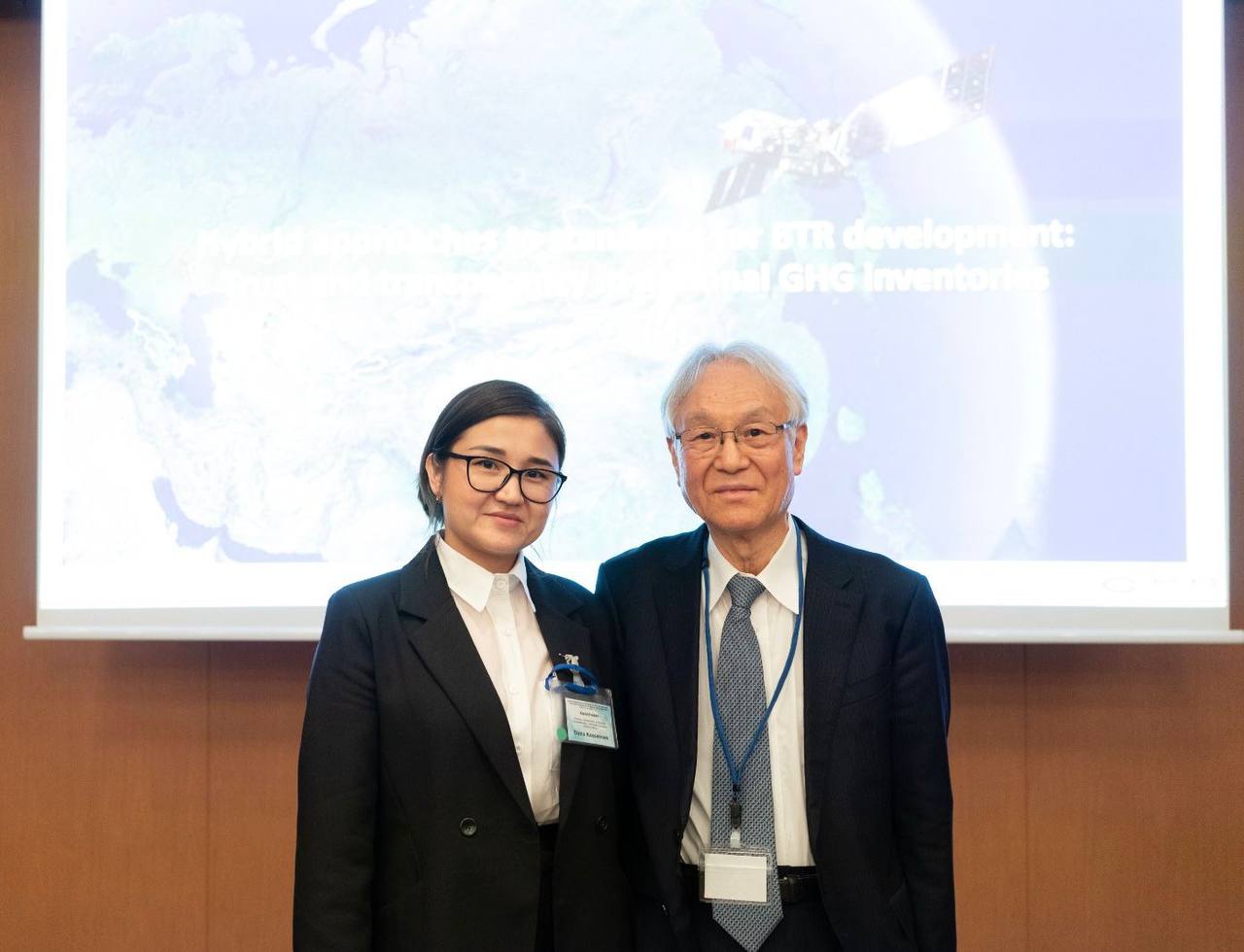
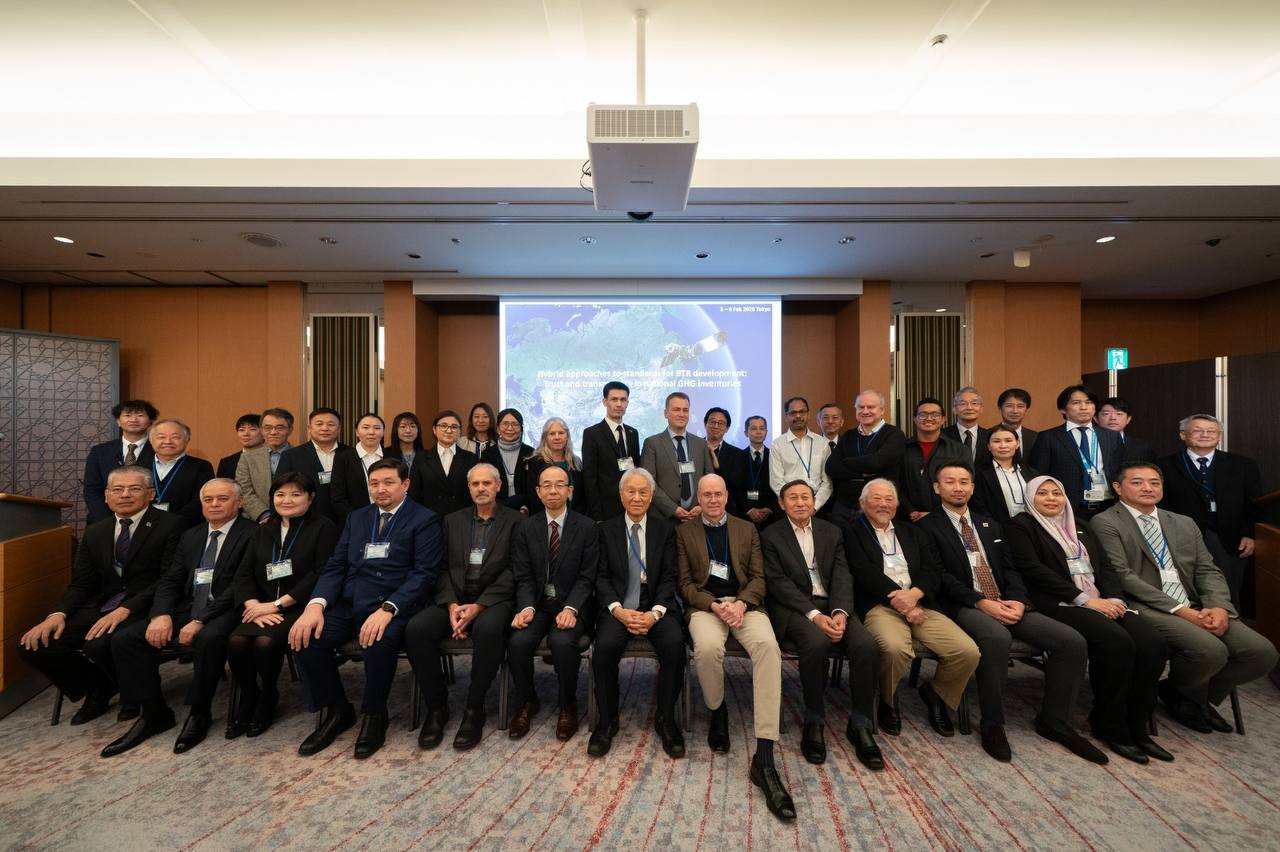
The Kazakh delegation took part in the international conference Hybrid Approaches to Standards for BTR Development: Trust and Transparency in National GHG Inventories, held in Tokyo, Japan. The event was dedicated to the development of hybrid approaches to preparing Biennial Transparency Reports (BTRs) under the Paris Agreement. During the conference, Kazakhstan presented its approaches to integrating satellite data into the national greenhouse gas (GHG) inventory in order to enhance the accuracy, transparency, and comparability of climate reporting.
Within the framework of the conference, Kazakhstan outlined its national position on the use of satellite data and “top-down” approaches as a complementary tool to traditional inventory methods applied under the UN Framework Convention on Climate Change (UNFCCC). It was emphasized that the foundation of the national inventory remains ground-based monitoring data and official statistics produced by relevant government authorities in full compliance with IPCC methodologies.
JSC “Zhasyl Damu”, acting as the national operator in the field of climate reporting and carbon regulation, actively contributes to the development and strengthening of the methodological and institutional framework of the national GHG inventory system, including the enhancement of quality assurance and quality control (QA/QC) procedures and the introduction of modern analytical tools.
According to the latest national GHG inventory:
- the “Agriculture” sector ranks second in the structure of national GHG emissions;
- the “Land Use, Land-Use Change and Forestry” (LULUCF) sector is currently a net source of emissions;
- data for this sector cover vast areas of pastures, agricultural and forest lands and are of key importance for the implementation of the country’s climate policy.
Special attention was given to Kazakhstan’s high natural and climatic heterogeneity. The country’s territory includes arid and semi-arid zones, steppes, mountainous regions, and extensive agricultural lands. This significantly affects the spatial distribution of GHG emissions and removals and increases uncertainty in estimates, particularly in the LULUCF sector.
The use of satellite observations is especially relevant for the regular updating of land-use maps, tracking transitions between land-use categories, assessing the impacts of wildfires and ecosystem recovery, as well as analyzing methane emission trends in agriculture and identifying anomalous changes related to livestock dynamics and crop residue burning practices.
Discussions also highlighted methodological and institutional challenges, including discrepancies between atmospheric fluxes and inventory source categories. In this context, Kazakhstan adheres to a gradual and balanced approach, which предусматривает improving and harmonizing land-use data, implementing pilot projects in the Agriculture and LULUCF sectors, and progressively integrating satellite data into the national QA/QC system.
The approach presented at the conference reflects Kazakhstan’s commitment to building a scientifically robust, sustainable, and transparent climate reporting system, as well as to strengthening international cooperation in climate policy. These efforts form part of the preparations for the Regional Environmental Summit 2026, which will be held in Kazakhstan and will serve as an important platform for discussing regional climate initiatives and solutions.
Background: The Regional Environmental Summit (RES 2026) is an international event aimed at bringing together Central Asian countries and other states to address pressing environmental challenges, including climate change, water resources degradation, sustainable natural resource management, and others. RES 2026 will take place from April 22 to 24, 2026, in Astana (Kazakhstan). The Summit is expected to host 1,500 delegates, including representatives of governments, international organizations, businesses, and the scientific community. The initiative to hold RES 2026 in partnership with the United Nations was announced by the President of the Republic of Kazakhstan, Kassym-Jomart Tokayev, during the 78th session of the UN General Assembly in 2023. More information about RES 2026 is available at: https://res2026.kz/
Source : https://www.gov.kz/memleket/entities/ecogeo/press/news/details/1157610?lang=kk