"Science, education and creativity - the strategic basis of constitutional development"
23.02.2026 19:21:28 3086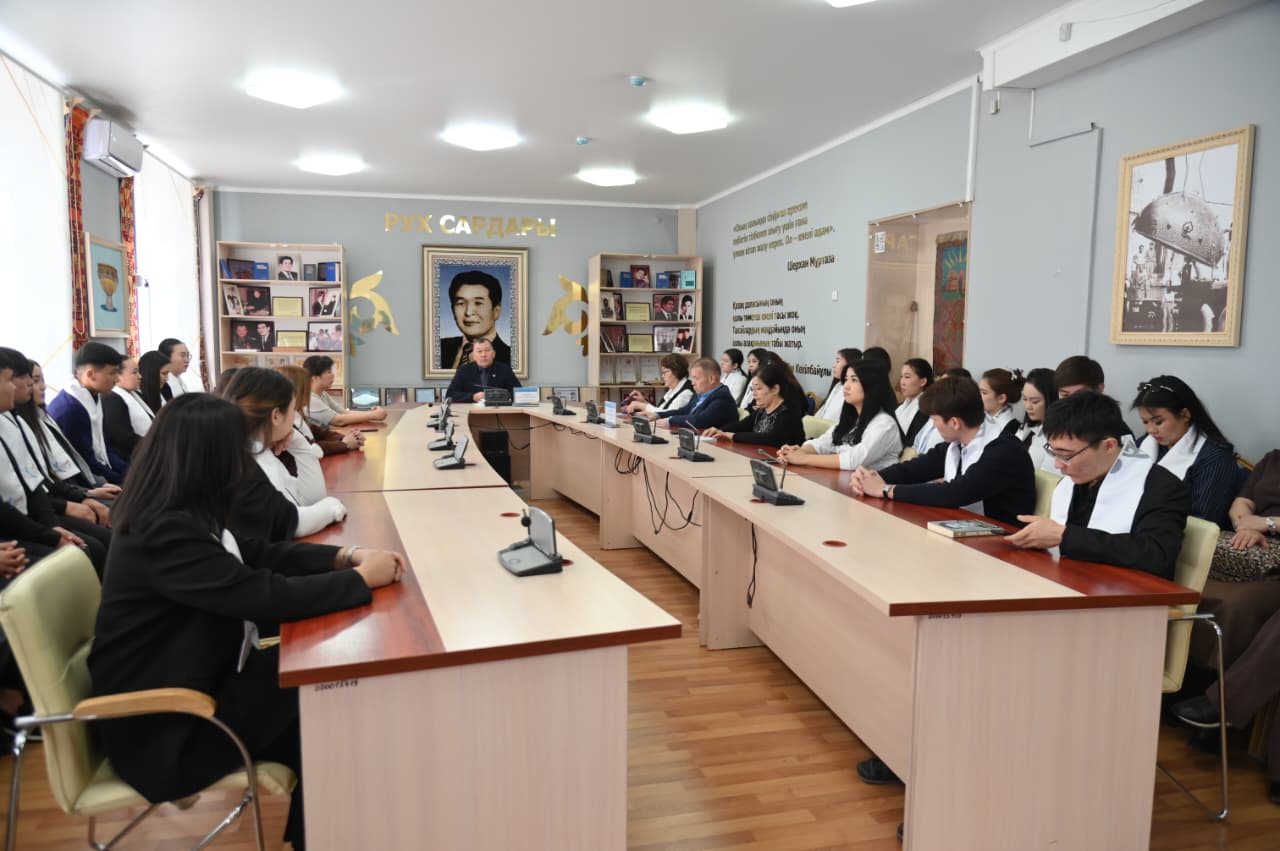
A roundtable discussion on the topic "Science, Education and Creativity - the Strategic Basis of Constitutional Development" was held at the Uzbekali Zhanibekov South Kazakhstan Pedagogical University. The meeting, dedicated to explaining the content and main directions of the new Constitution, became a platform for an open exchange of views between teachers and students.
During the event, Kairat Anarbayev, Director of the University's Department of Educational Work and Youth Affairs, spoke extensively about the priorities of the New Constitution. He paid special attention to the issue of human potential development and assessed the identification of education and science as a strategic direction as an important step.
– The pillar of the state's development is high-quality education and competitive science. The new Constitution places special emphasis on the development of human capital. This is a decision that is in the long-term national interest, – said the speaker.
Kairat Anarbayev, comparing the norms of the previous and new Constitutions, touched upon the changes related to state education standards. According to him, the new version clearly defines the secular nature of the education system. This strengthens the legal framework that ensures the neutrality of the education sector from religious beliefs.
The meeting also discussed significant changes in other sections of the Constitution. It was noted that the relationship between religion and the state has been defined in a clear legal framework and the principle of creating a secular society has been established. It was also noted that all legislative acts to be adopted will be systematized in accordance with the requirements of the New Constitution.
Special attention was also paid to legal relations in the field of education. According to the speaker, relations between teachers and students, parents and educational organizations should be regulated within the framework of the law. This will not only improve the quality of education, but also contribute to strengthening mutual responsibility.
At the roundtable, university lecturers Madi Besbayev and Gaziza Marina spoke, explaining individual articles of the Constitution. They highlighted the importance of norms related to the protection of human rights, the principle of secularism, and freedom of science and creativity, and answered students' questions.
At the end of the meeting, the participants came to a common opinion that the free development of science and creativity is directly related to the strength of the constitutional foundation. It was noted that only when the rule of law is established, there will be a wide path to freedom of thought, research, and innovation.
Participants expressed their support for the New Constitution, emphasizing that it is a strategic document aimed at increasing the country's intellectual potential, and noted that prioritizing science and education is a key factor determining the long-term development direction of the state.