
MODERN CIVIL SERVICE: REQUIREMENTS AND OPPORTUNITIES
11.07.2026 17:55:46 1063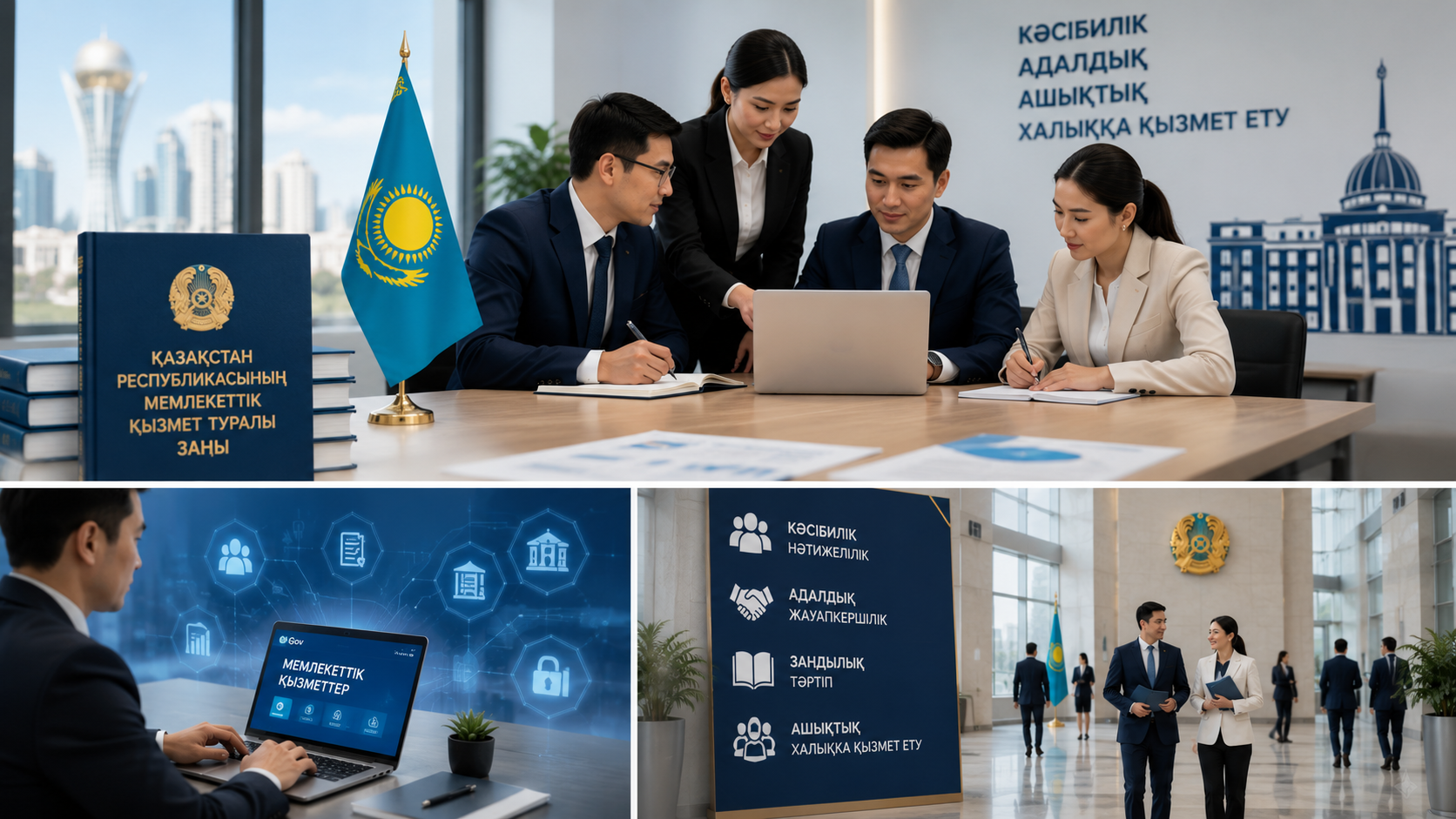
The civil service is a vital area for ensuring the sustainable development and prosperity of our country. In today's environment, improving the public administration system, increasing its efficiency and transparency are among the strategic objectives of any state. The professionalism, integrity, and responsibility of civil servants are the main guarantees of public trust in state institutions. The Republic of Kazakhstan is consistently implementing large-scale reforms aimed at developing the civil service system. Today, the priority areas of personnel policy in this area are improving the efficiency of the state apparatus, ensuring openness, strengthening the principles of meritocracy, and developing a public administration system focused on the needs of citizens.
In this regard, updating the legal framework governing the civil service is particularly important. The new Law of the Republic of Kazakhstan "On the Civil Service of the Republic of Kazakhstan," signed by the Head of State on May 19 of this year, is intended to strengthen the legislative basis for ongoing reforms and give new impetus to the qualitative development of the state apparatus. The amendments envisaged by the law are based on the principles of a democratic, legal, and social state enshrined in the Constitution of the Republic of Kazakhstan, as well as on the principles of professionalism, legality, openness, service to the people, and meritocracy.
One of the key features of the new law is the adaptation of the civil service system to modern requirements. Specifically, it provides for a strengthening of the principle of meritocracy, recognizing professional qualifications and work results as the primary criteria for admission to civil service and career advancement. Furthermore, by dividing entry-level, non-managerial positions by level, it provides for the possibility of horizontal career advancement within a single position, with a corresponding increase in salary. This will take into account the civil servant's length of service, professional achievements, discipline, and public opinion.
Furthermore, positive changes are expected in terms of attracting talented and promising young people to the civil service. Thus, university graduates who complete their studies with a high GPA of 3.33 or higher are offered the opportunity to apply for non-managerial administrative government positions without competition. Furthermore, for high school graduates planning to dedicate their careers to public service, a special government contract is being developed to provide state-funded training for talented young people, with subsequent non-competitive entry into public service. Mechanisms for early career orientation toward public service are currently enshrined in law. To develop schoolchildren's understanding of public service, a series of large-scale events held annually during the academic year will be strengthened. The long-term result of this work should be the formation of a civil service cadre comprised of talented young people, identified while still in school, who possess a high level of professional training and developed personal competencies that fully meet the needs of society.
In turn, the law strengthens mechanisms for increasing the accountability of public servants and compliance with service ethics standards. This will contribute to strengthening discipline and trust in the government apparatus. The implementation of digital solutions is also an important area. The gradual expansion of the application of digital systems will reduce bureaucratic barriers and create a more comfortable environment for citizens.
The adoption of this law will improve the accessibility and quality of public services for the public. The work of government agencies will become more open and effective, which will contribute to strengthening mutual trust between society and the state. Furthermore, the level of professionalism of the government apparatus will increase, and the quality of management decisions will improve. All of this will have a positive impact on the country's socioeconomic development.
In conclusion, it should be noted that the new Law of the Republic of Kazakhstan "On the Civil Service of the Republic of Kazakhstan," which comes into force on July 1 of this year, is an important tool for modernizing the public administration system. It will not only enhance the efficiency of the civil service but also lay the foundation for the development of a modern, open, and responsible model of public administration.
Department of the Agency of the Republic of Kazakhstan for Civil Service Affairs in Abay Region
Source : https://www.gov.kz/memleket/entities/abay-kurchatov/press/news/details/1247280?lang=ru