
S. Zhakupova informed about improving the quality of life of people with disabilities
16.11.2024 18:32:17 2679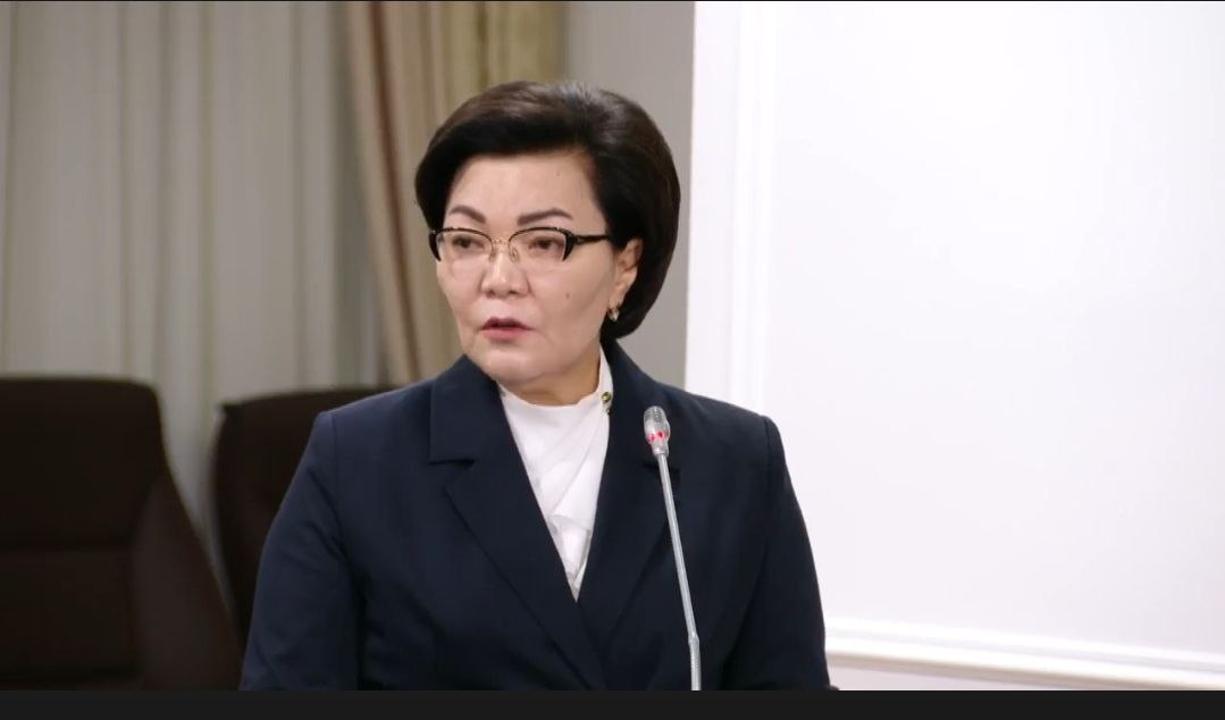
Minister of Labor and Social Protection of the Population of the Republic of Kazakhstan Svetlana Zhakupova at a Government meeting spoke about the measures taken aimed at social protection and improving the quality of life of persons with disabilities (hereinafter – LSI).
At the beginning of her speech, the head of the Ministry of Health said that today 732 thousand people live in the country. LSI, which is 3.6% of the total population. Of these, 57% are of working age, 27% are of retirement age, and 15% are children.
The structure of nosological forms of diseases among people over the age of 18 is dominated by mental disorders (18%), diseases of the circulatory system (17.2%), injuries of all localizations (13%). Among children with disabilities – diseases of the nervous system (26.6%), congenital malformations (25.1%), mental disorders (22.4%). At the same time, in recent years, there has been an increase in child disability by 11.4 percentage points.
"Social security expenses for persons with disabilities are carried out at the basic and mandatory levels. Every year, expenditures from the republican budget increase by about 22%. This year, they amounted to 748.5 billion tenge. Social payments from the State Social Insurance Fund amounted to 46 billion tenge," Svetlana Zhakupova said.
The Minister added that state support for people with disabilities is provided in a proactive format. Services are provided through the Social Services Portal, where 794 providers of rehabilitation equipment, 760 providers of sign language services, 122 sanatorium organizations are registered.
This year, they have implemented 770.7 thousand technical rehabilitation equipment, provided 26.6 thousand individual assistant services, provided 80 thousand sanatorium treatment services and 8.6 thousand sign language services.
"To date, 43,312 objects have been registered in the Interactive Accessibility Map, 19,421 objects or 45% have been fully adapted. In the regional aspect, indicators below the plan are observed in 6 regions.
Since the beginning of the year, social inspectors have conducted 2,344 inspections to ensure that people with disabilities have access to social and transport infrastructure facilities. As a result, 826 orders were issued to eliminate the identified violations, 798 administrative fines were imposed for a total amount of 199.2 million tenge," Svetlana Zhakupova informed.
3 rehabilitation centers (Semey, Taraz and Kentau) out of 9 planned have been put into operation. Construction is underway in Akmola, Aktobe, Atyrau, West Kazakhstan regions, Ulytau region and Shymkent.
Day care centers for children with autism spectrum disorder and other mental disorders have been opened in 7 regions of the country (Shymkent, Pavlodar, Ust-Kamenogorsk, Taldykorgan, Taraz, Kostanay and Aktobe).
"In order to increase the control and effectiveness of rehabilitation measures, a Digital rehabilitation Diary has been launched. Protocols of social rehabilitation by types of nosologies have been developed.
Since August this year, a pilot project for the rehabilitation of children with musculoskeletal disorders at home using innovative rehabilitation tools has been implemented in 4 regions (Abai, Kyzylorda and Pavlodar regions, Shymkent) together with the Kazakhstan Khalkyna Foundation.
Another successful example is the activity of the Ak Zhol-M children's rehabilitation center in Talgar, Almaty region. With the support of the Kazakstan Khalkyna Foundation, this center is equipped with modern innovative equipment.
In general, in the republic for 9 months of this year, according to the results of the rehabilitation measures carried out, due to the improvement in health, the number of fully rehabilitated persons amounted to 8,9 thousand people, about 8,2 thousand people were transferred to a lighter disability group," Svetlana Zhakupova said.
Taking into account new trends in the development of society, the requirements for the level of professional training of social workers, their skills and competencies are increasing. Educational modules on the qualification levels of social workers have been developed. For short-term training of social workers who do not have specialized education, memoranda have been concluded with 14 universities with departments of social work. Training is also provided at the skills.enbek site.
"Professional standards for social workers at 8 levels have been approved. A center for the recognition of professional qualifications in the field of special social services (hereinafter referred to as SSS) has been established on the basis of the National Scientific Center. A special Register of social workers has been formed for systematization and accounting. To date, 9,568 people out of 12,704 social workers have been trained and 7,537 people have received certificates," the minister added.
In order to improve the quality of the provision of special social services, from January 1, 2025, licensing of entities, regardless of the form of ownership, providing SSAS will be introduced. The licensor has appointed a Committee for Regulation and control in the field of social protection of the population. The licensing process is fully digitized. Pre-licensing preparation is being carried out.
"Today, more than 110 thousand people receive special social services in 1021 organizations in hospital, semi-hospital, temporary stay and at home. These services are also provided by 177 non-governmental organizations working under the state social order. It should be noted that the current long-term contracts for the state social order will remain in force until their official expiration.
Also, a per capita financing system will start from the new year, which will allow determining the necessary amounts of social assistance and support, taking into account the personalized needs of each service recipient," Svetlana Zhakupova added.
The Minister stressed that the employment of persons with disabilities is an important issue. As of November 1 of this year, 148 thousand people or 39% of the able-bodied (381 thousand) LSI are provided with employment.
In terms of employment sectors, scientific activity (28%), public administration (12%), education and trade (9% each), and healthcare (7%) are leading.
By profession, 21% of people with disabilities are employed as professional specialists, 19% are unskilled workers, 13% are technical specialists, 11% each are managers and civil servants, service and sales workers.
"I would like to focus separately on the institute of freelance disability advisers, their role is increasing. Advisers to ministers and mayors at all levels are involved in the implementation of policies to protect the rights of LSI in all aspects of life.
We observe a successful example of the adviser's work with the support of the Mayor of Almaty. The Mayor's advisor is included in the Project Office and has a small staff that ensures the achievement of the goals and needs of people with disabilities. Omarova Kasiet raises problematic issues and finds constructive solutions together with government agencies and civil society. As a result of the analysis of the Almaty Development Roadmap, the Adviser's office presented 189 different recommendations for 300 events for planning and implementing them, taking into account the principles of inclusion.
I would like to draw the attention of the other mayors of the regions to the need to implement this positive experience," the head of the Ministry of Health summed up.
Source : https://www.gov.kz/memleket/entities/enbek/press/news/details/877931