News
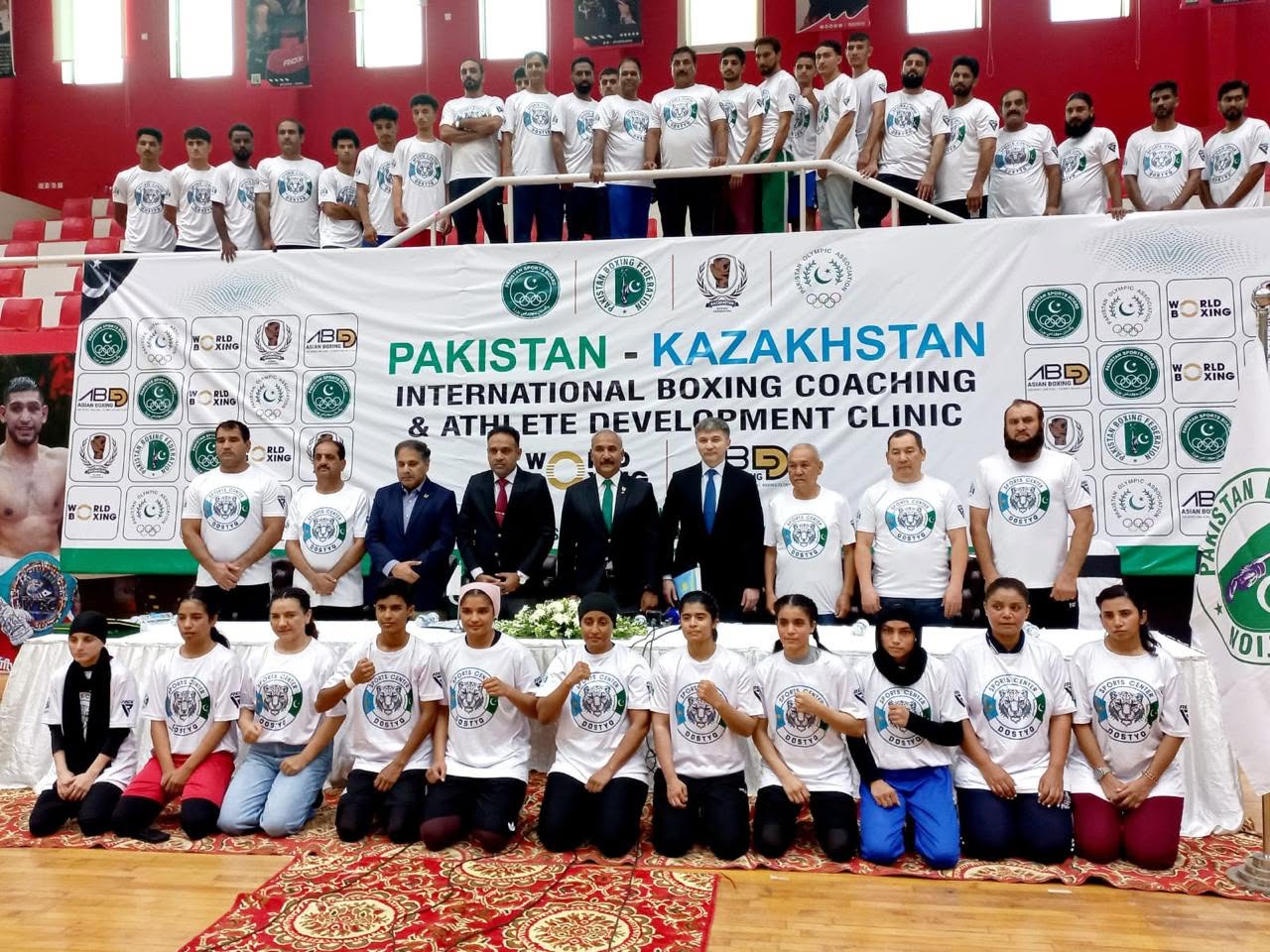
The Delegation of the Kazakhstan Boxing Federation Visited Islamabad 14.07.2026
Islamabad, June 20, 2026 – Following the agreements reached during the state visit of the President of Kazakhstan to Islamabad on February 3-4, 2026, and in accordance with the MoU between the Boxing Federations of Kazakhstan and Pakistan, as well as the roadmap for 2026, a delegation of the Kazakhstan Boxing Federation visited Islamabad from June 16 to 20, 2026.Kazakhstan boxing specialists Mr. Damir Budanbekov and Mr. Nurzhan Kondybayev conducted comprehensive training seminars and masterclasses for boxers and the coaching staff of the Pakistan Boxing Federation at the Kazakhstan-Pakistan Sports Center «Dostyq» in Islamabad.The initiative was aimed at enhancing the technical, tactical, and physical preparedness of athletes, while also strengthening the professional competencies of coaches through the exchange of expertise and the introduction of modern training methodologies.During a press conference, the Ambassador of Kazakhstan to Pakistan,H.E. Mr. Yerzhan Kistafin, emphasized the importance of further expanding Kazakhstan-Pakistan cooperation in the field of sports. He noted that the implementation of joint projects contributes to strengthening the friendly relations between the two countries and fostering closer ties between their respective sporting institutions.For his part, the President of the Pakistan Boxing Federation, Mr. I.Tung, highlighted that the programme represented the first major practical initiative implemented under the bilateral Memorandum of Understanding. He also expressed interest in further broadening cooperation with Kazakhstan partners.In addition, renowned British professional boxer of Pakistani origin Mr. Amir Khan arrived in Islamabad to participate in the training activities. During his visit, he met with Kazakhstani and Pakistani coaches and conducted a masterclass for boxing enthusiasts.At the closing ceremony, Mr. A. Mohyuddin, Federal Secretary of the MIPC of Pakistan, expressed appreciation to the Kazakhstan side and reaffirmed his strong commitment to further promoting sports diplomacy between the two countries.The RDX company, which provided equipment and sports gear for the “Dostyq” Sports Centre, presented personalized gifts for guests from Kazakhstan.The Embassy of Kazakhstan expresses its sincere appreciation to Mr. Shakhmurat Mutalip, President of the Kazakhstan Boxing Federation, for his personal support in organizing the visit of the Kazakh coaches and for his valuable contribution to the successful implementation of this joint project.Source : https://www.gov.kz/memleket/entities/mfa-islamabad/press/news/details/1253193?lang=ru
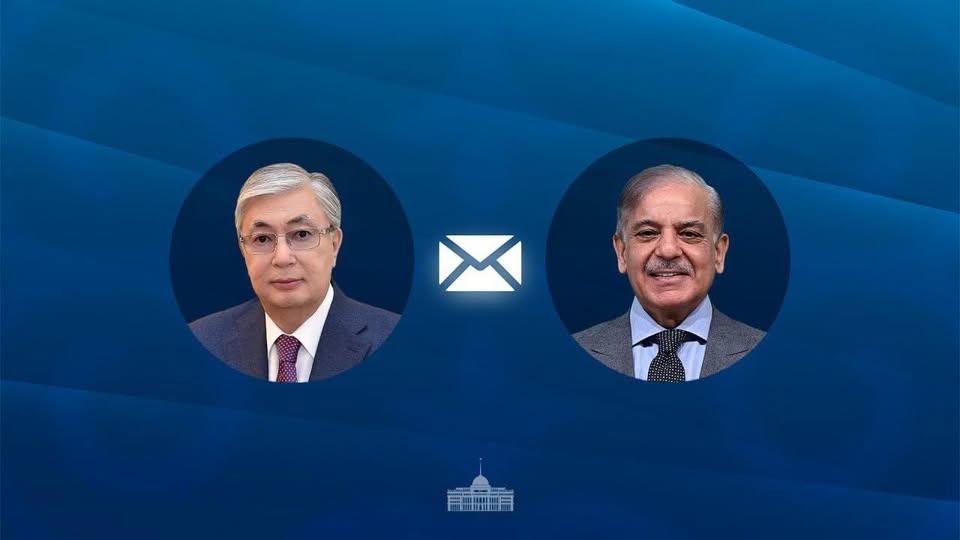
The President sent a letter to the Prime Minister of Pakistan H.E. Mr. Shehbaz Sharif 14.07.2026
H.E. Mr. Kassym-Jomart Tokayev congratulated Prime Minister of the Islamic Republic of Pakistan H.E. Mr. Shehbaz Sharif on the successful conclusion of diplomatic efforts that led to the signing of the Memorandum of Understanding between the US and Iran.The President highly valued the constructive role of Pakistan in facilitating this historic peace deal, noting the visionary leadership of H.E. Mr. Shehbaz Sharif and his consistent commitment to the principles of peaceful settlement.The Head of State believes that the agreements reached have particular significance for ensuring longstanding stability in the Middle East and the international community as a whole.He expressed confidence that Pakistan will continue to contribute to regional security, enhancing interstate trust.H.E. Mr. Kassym-Jomart Tokayev also reaffirmed Kazakhstan’s readiness to further strengthen its multifaceted cooperation with Pakistan and wished H.E. Mr. Shehbaz Sharif every success in his responsible state duties.Source : https://www.gov.kz/memleket/entities/mfa-islamabad/press/news/details/1253184?lang=ru
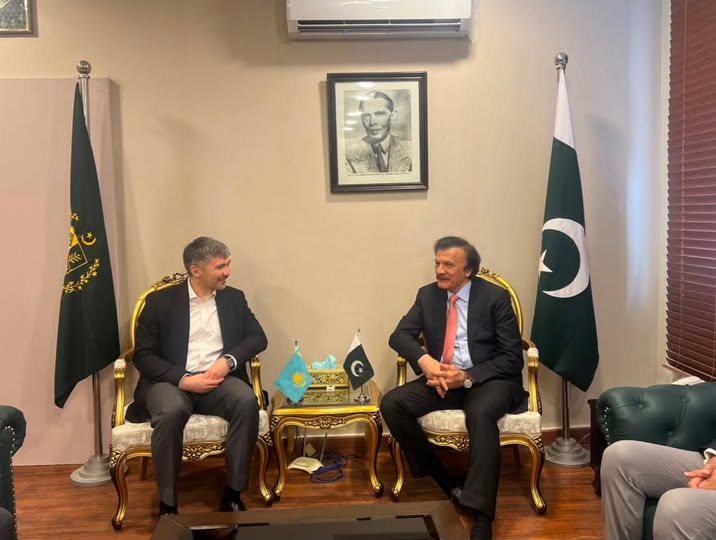
Kazakhstan and Pakistan Discuss the Development of Trade, Economic and Investment Cooperation 14.07.2026
Islamabad, June 11, 2026 – а meeting was held between the Ambassador of Kazakhstan to Pakistan, H.E. Mr. Y.Kistafin, and the Special Assistant to the Prime Minister of Pakistan, Minister-in-Charge for Industry and Production, H.E. Mr. Haroon Akhtar Khan.During the meeting, a comprehensive exchange of views took place on pressing issues of the bilateral agenda and prospects for further development of cooperation. The parties also reaffirmed their commitment to implementing the agreements reached during the state visit of the President of the Republic of Kazakhstan, H.E. Mr. Kassym-Jomart Tokayev, to Pakistan in February 2026.For his part, H.E. Mr. Haroon Akhtar Khan assured full support for Kazakhstani entrepreneurs interested in developing trade and economic cooperation with Pakistan, as well as in implementing joint investment projects of mutual interest.Source : https://www.gov.kz/memleket/entities/mfa-islamabad/press/news/details/1253172?lang=ru
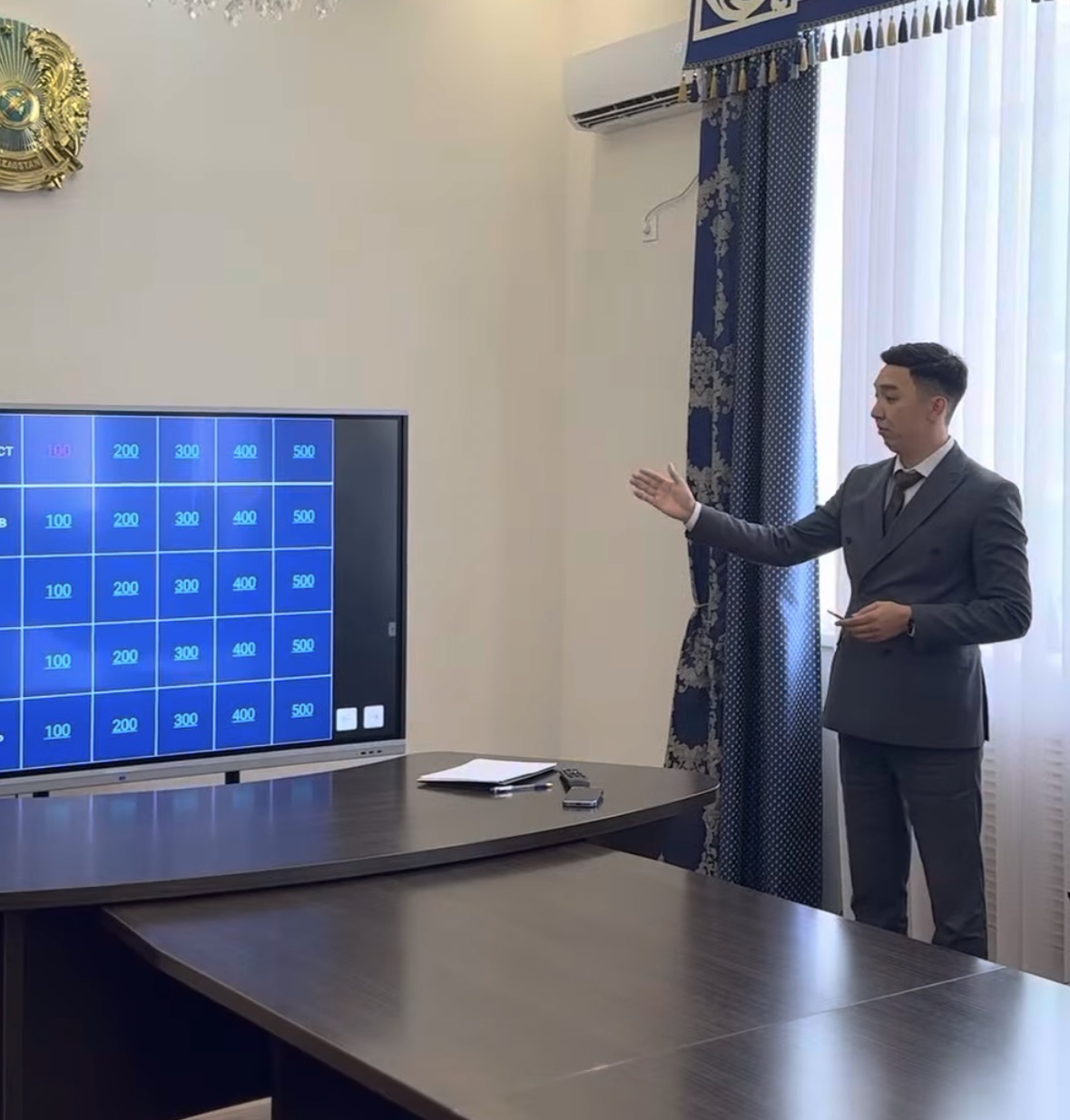
The anti-corruption quiz for civil servants was passed 14.07.2026
Today, representatives of the Department of the Agency of the Republic of Kazakhstan for Civil Service Affairs for the Region conducted an anti-corruption quiz for civil servants of the city akimat.During the event, Bagdat Kapyshev, Chief Specialist of the Anti-Corruption Prevention Department, and Bagda Birlik Serikuly, Chief Specialist of the Civil Service Control Department, discussed key changes in anti-corruption legislation, answered questions from the participants, and emphasized the importance of adhering to the principles of integrity, legality, and official ethics.The anti-corruption quiz was held in an interactive format, allowing participants to test their knowledge, increase their legal literacy, and reinforce their understanding of the requirements of anti-corruption legislation.Source : https://www.gov.kz/memleket/entities/kostanai-kalasy-akimat/press/news/details/1253176?lang=ru
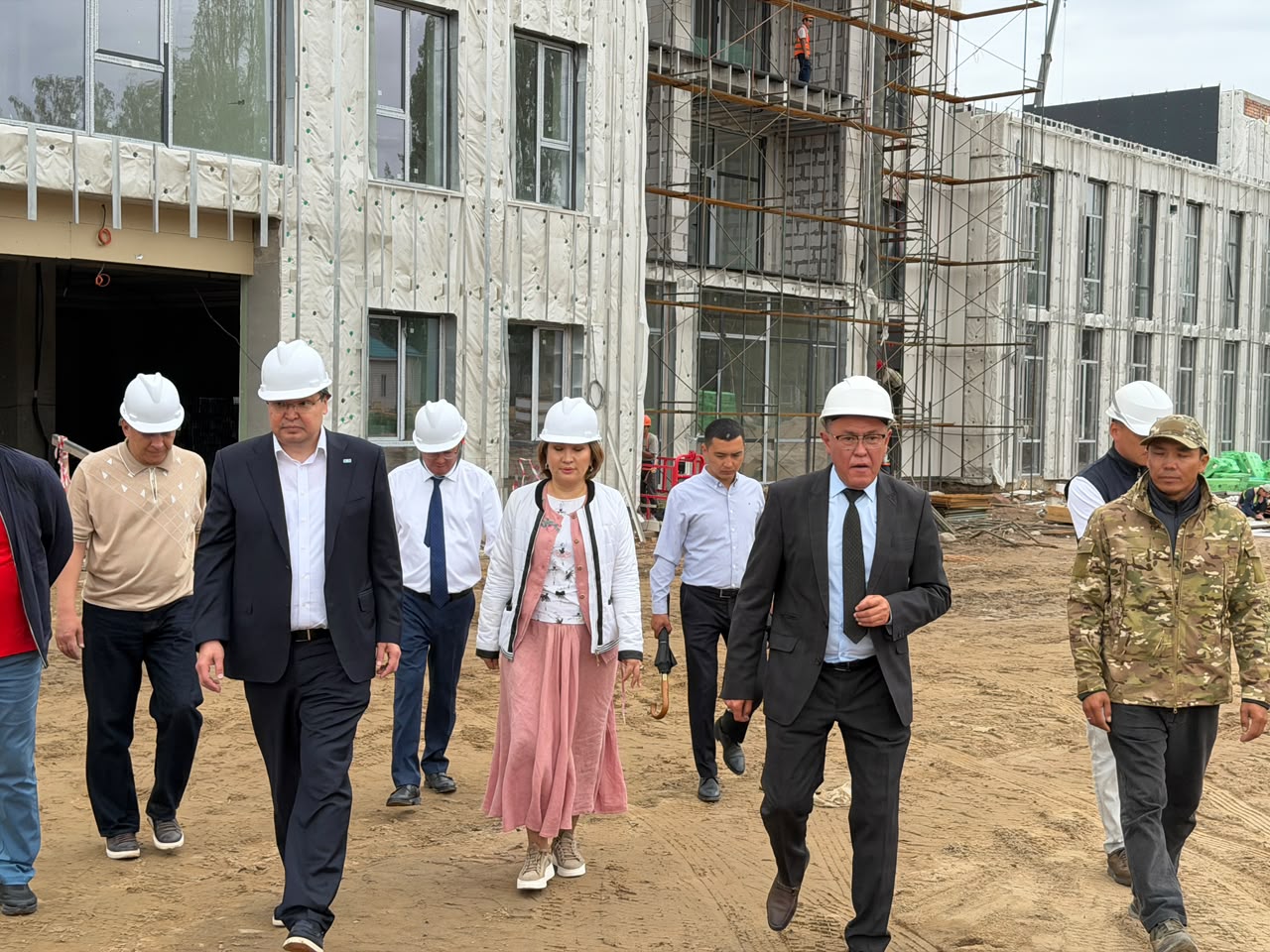
Madi Takiev Inspects the Progress of Construction and reconstruction of Kazakhstani Health Resorts in Kyrgyzstan 14.07.2026
Madi Takiyev, Minister of Finance of the Republic of Kazakhstan visited the construction sites of four Kazakhstani health resort facilities during a working trip to Kyrgyzstan.The Minister reviewed the current condition of the facilities, the development of their infrastructure, and the progress of investment projects aimed at modernizing them and improving their efficiency.Special attention was given to the construction of the “Kazakhstan” health resort. It was noted that construction work is proceeding according to the approved schedule, with construction and installation work scheduled for completion in the fourth quarter of the current year. The project will result in the creation of a modern health resort complex that meets current standards for quality recreation and wellness.Design documentation is currently being developed for three sites, providing for the construction and modernization of state-of-the-art health resort complexes. The implementation of these projects will create comfortable conditions for citizens to relax and improve their health, as well as enhance the tourist appeal of Kazakhstan’s recreational facilities on the shores of Lake Issyk-Kul.Following the visit, the Minister of Finance issued a series of directives aimed at ensuring the timely implementation of the projects, the effective use of state assets, and adherence to the established deadlines for completing the work.Source : https://www.gov.kz/memleket/entities/minfin/press/news/details/1253166?lang=ru

UAPF has provided over 24.5 million services to contributors since the beginning of the year 14.07.2026
The Unified Accumulative Pension Fund (UAPF) plays a key role in the country's pension system, providing citizens with reliable tools for saving for retirement. UAPF provides a variety of digital services to Kazakhstanis and continues to develop them, adapting to customer needs. The 24/7 availability of the Fund's services on its website and mobile app is a key factor in increasing contributor interest.Over the five months from January 1, 2026, to May 31, 2026, 24.7 million services were provided to the public. Of these, 14.3 million were provided electronically, and 9.9 million were automated. Thus, the share of automated, electronic, and remote services amounted to 98.7% of the total. 322,100 services were provided in person, including more than 313,400 directly at the Fund's offices.As a reminder, all pension accounts are opened automatically in the UAPF upon receipt of the first contribution. Targeted requirements are also automatically accrued to citizens of the Republic of Kazakhstan under 18 years of age, and targeted savings accounts (TSA) are opened to record and pay out targeted savings to adult recipients of targeted savings under the National Fund for Children program.During the reporting period, the total number of automatically opened individual pension savings accounts (IPSAs) for all types of compulsory pension contributions (CPCs), notional pension accounts (NPSAs) for recording compulsory occupational pension contributions (COPCs) paid by employers from their own funds, and targeted savings accounts (TSAs, opened to record and pay targeted savings to recipients of targeted savings under the National Fund for Children program) amounted to 891,700.Getting statements from IPSAs, NPSAs, and TSAs remains the most popular service. Since the beginning of the year, more than 15.0 million statements have been issued for all account types, 13.3 million of which were electronic and 1.5 million statements were issued automatically. The UAPF reminds that accessing account status information through your personal account is the most convenient, reliable, and timely way to monitor your pension savings. The service operates online 24/7, allowing you to receive up-to-date information at any time and from anywhere. Account status information is available not only through the UAPF mobile app and your personal account on the UAPF website, but also through the egov.kz portal or the e-government mobile app. This provides additional convenience for users who prefer to interact with government services through a single platform. UAPF notes that, starting in 2025, the annual automatic mailing of statements will no longer be provided. However, receiving information on pension savings by mail is still possible upon submitting a request to the UAPF address.In addition to receiving statements in their personal account on the website and in the mobile app, contributors (beneficiaries) can use services such as making changes and additions to their account details, obtaining a certificate of account availability, submitting an application for pension benefits due to the establishment of a Group 1 or 2 disability for life or upon reaching the age of 50 through voluntary pension contributions, tracking the status of a benefit application, transferring a portion of their pension savings to an investment portfolio manager (IPM), calculating a projected future pension using a pension calculator, etc. Over the past period, 38.7 thousand contributor applications for transferring a portion of their pension savings to IPM trust management were accepted, the majority of which were in electronic format.During the reporting period, 46.7 thousand applications for changing account details were accepted, of which approximately 44.0 thousand were submitted at the Fund's offices.When seeking a service from UAPF specialists, contributors typically receive additional consultations and advice on savings management. As part of outreach efforts, 25,100 roadside presentations were held, attended by 505,100 people. The number of materials published in the media based on UAPF announcements amounted to 17,000.The number of inquiries received from contributors and beneficiaries through feedback channels (call center, website consultations, instant messaging, social media, and other communication channels) amounted to 192,500.As a reminder, any company can request an on-site presentation and consultation on the funded pension system by simply calling the call center at 1418 or through the Fund's website or mobile app.UAPF consulting services can be obtained through instant messengers (chat bot in WhatsApp and Viber at +7 777 000 14 18), call center at 1418 (free call within Kazakhstan), on the corporate website enpf.kz, as well as on the official UAPF pages on social networks Instagram, Facebook, VKontakte, Telegram, Odnoklassniki. Source : https://www.gov.kz/memleket/entities/akimat-karakiya/press/news/details/1255661?lang=ru
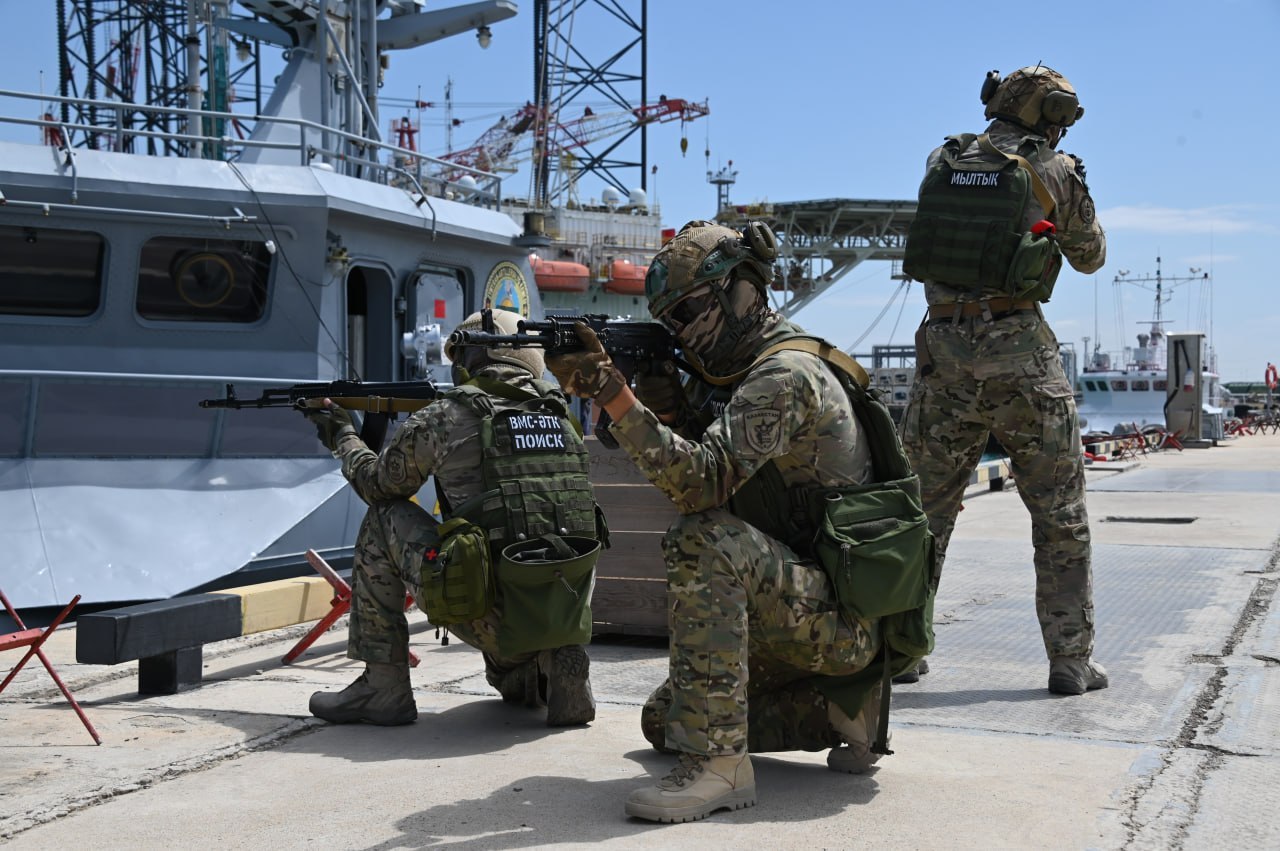
Training exercises on bringing troops to the highest levels of combat readiness were held in the Armed Forces 14.07.2026
Source : https://www.gov.kz/memleket/entities/mod/press/news/details/1253116?lang=ru
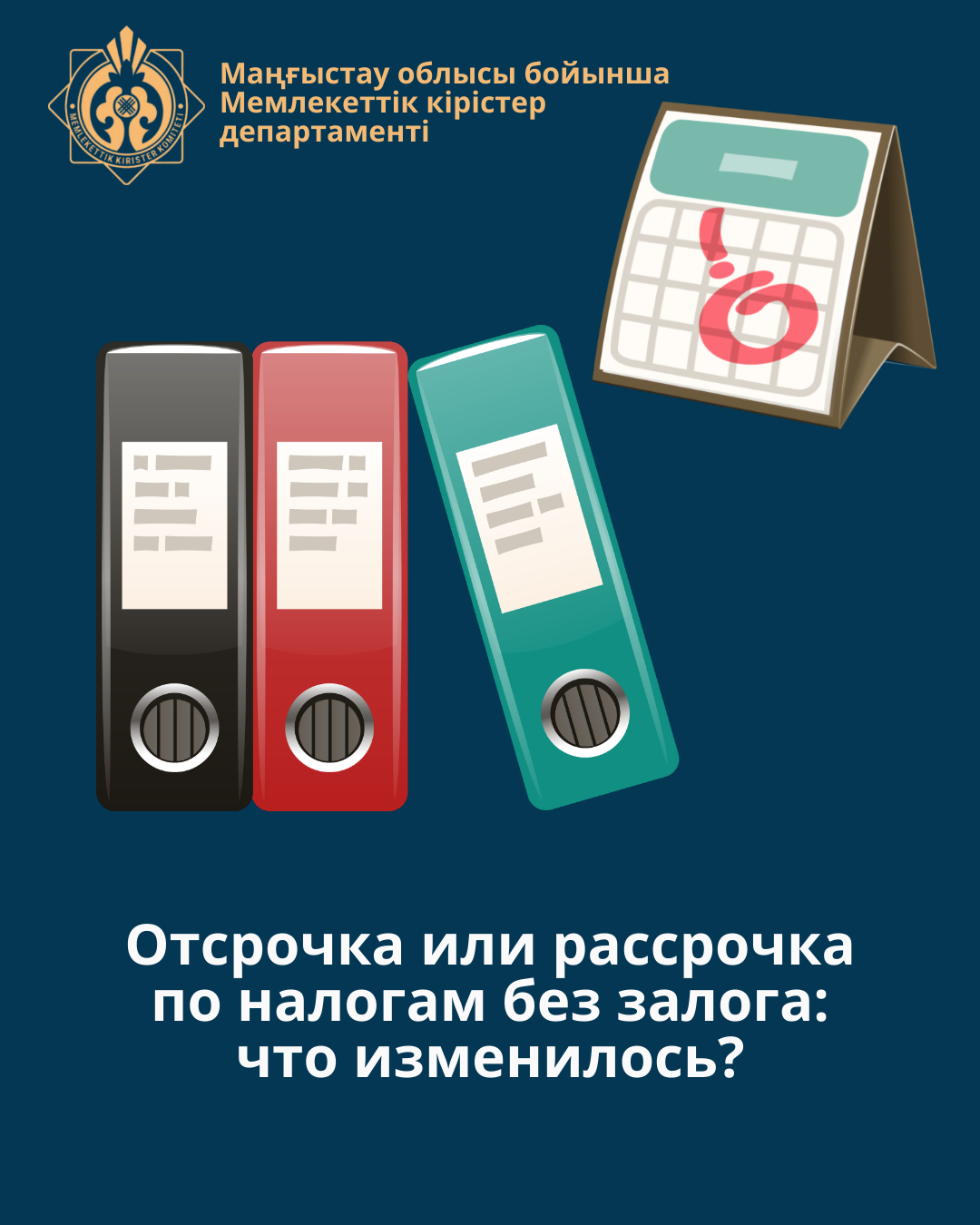
Deferred or installment taxes without collateral: what has changed? 14.07.2026
The Department of State Revenue for the Mangystau region informs that the Tax Code of the Republic of Kazakhstan provides support measures for taxpayers who are temporarily experiencing financial difficulties.According to paragraph 4 of Article 133 of the Tax Code, taxpayers can receive a deferral or installment payment of taxes without a pledge of property and a bank guarantee.Also, by Order of the Minister of Finance of the Republic of Kazakhstan dated October 31, 2025 No. 651, certain issues related to the provision of deferred/installment payments for taxes, fees and penalties were approved. Who can use the service? To receive a deferral or installment payment, you must meet the following conditions::— the amount owed should not exceed 1,500 MCI;— in 2026, 1 MCI is 4,325 tenge, respectively, the maximum amount of debt is 6,487,500 tenge;— the taxpayer should not have a valid deferral or installment plan provided earlier;— there should be no unfulfilled notifications of a mandatory nature;— at least 2 years must pass from the date of registration as a taxpayer.;— the taxpayer should not be in the status of suspended activity at the time of filing the application.These conditions do not apply to participants in horizontal monitoring. How do I apply? An application for a deferral or installment plan for up to 12 months is submitted through the Taxpayer's Office, subject to all the above conditions.Check the compliance with the requirements in advance and submit the application in electronic format. (Unofficial translation)Source : https://www.gov.kz/memleket/entities/kgd-mangistau/press/news/details/1253064?lang=ru
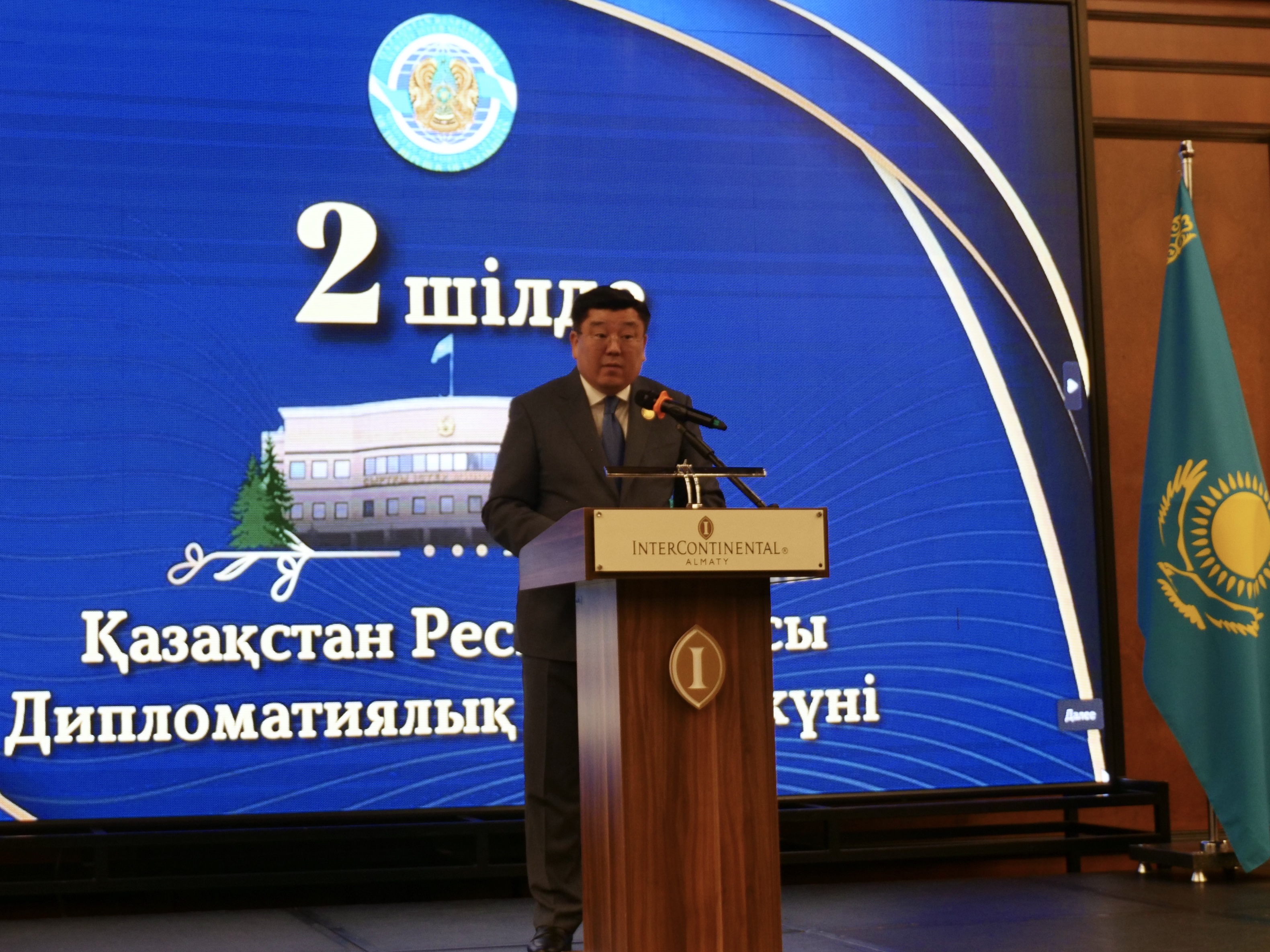
A solemn event in honor of the Day of the Diplomatic Service of Kazakhstan was held in Almaty 14.07.2026
On July 2, 2026, the Representative office of the Ministry of Foreign Affairs of the Republic of Kazakhstan in Almaty held a solemn event for veterans of the diplomatic service and employees of the Representative office of the MFA of the Republic of Kazakhstan in Almaty on the occasion of the Day of the Diplomatic Service of the Republic of Kazakhstan. On behalf of the MFA of the Republic of Kazakhstan, Ambassador-at-Large – Head of the Representative Office of the Ministry of Foreign Affairs of the Republic of Kazakhstan in Almaty Zhanibek Abdrashov congratulated the guests on the holiday, emphasizing Kazakhstan's achievements in the international arena, the country's commitment to multilateral foreign policy and the importance of initiatives aimed at strengthening peace and security. The honorary guests of the event were veterans of the diplomatic service.Source : https://www.gov.kz/memleket/entities/mfa-almaty/press/news/details/1253065?lang=ru
Kazakhstan Sets Kurultai Elections for August 23 14.07.2026
Dear Citizens of the Republic of Kazakhstan,The elections of the deputies of the Kurultai of the Republic of Kazakhstan will take place on 23 August 2026.Citizens of the Republic of Kazakhstan residing or temporarily staying in Spain are invited to participate in the voting.🗳 Polling Station No. 434📍 Embassy of the Republic of Kazakhstan in the Kingdom of SpainAvenida de Madroños, 43, Madrid🕖 Voting hours: 07:00–20:00A mobile polling station will also operate in Barcelona:📍 Consulate of the Republic of Kazakhstan in BarcelonaPasseig de Gràcia, 21, Barcelona🕛 Voting hours: 12:00–14:00❗ Please note that voting in Barcelona will take place at a mobile polling station; therefore, it will be possible to vote only between 12:00 and 14:00.To ensure that a sufficient number of ballot papers is available, we kindly ask all citizens planning to vote to complete the pre-registration using the link below. The number of ballot papers is determined based on the advance registrations received. Therefore, without prior registration, there is a possibility that a ballot paper may not be available due to the limited quantity.🔗 Pre-registration:https://forms.gle/rfi2xQci6t31DqVt6We encourage all eligible citizens to take an active part in the elections!Source : https://www.gov.kz/memleket/entities/mfa-madrid/press/news/details/1253051?lang=ru
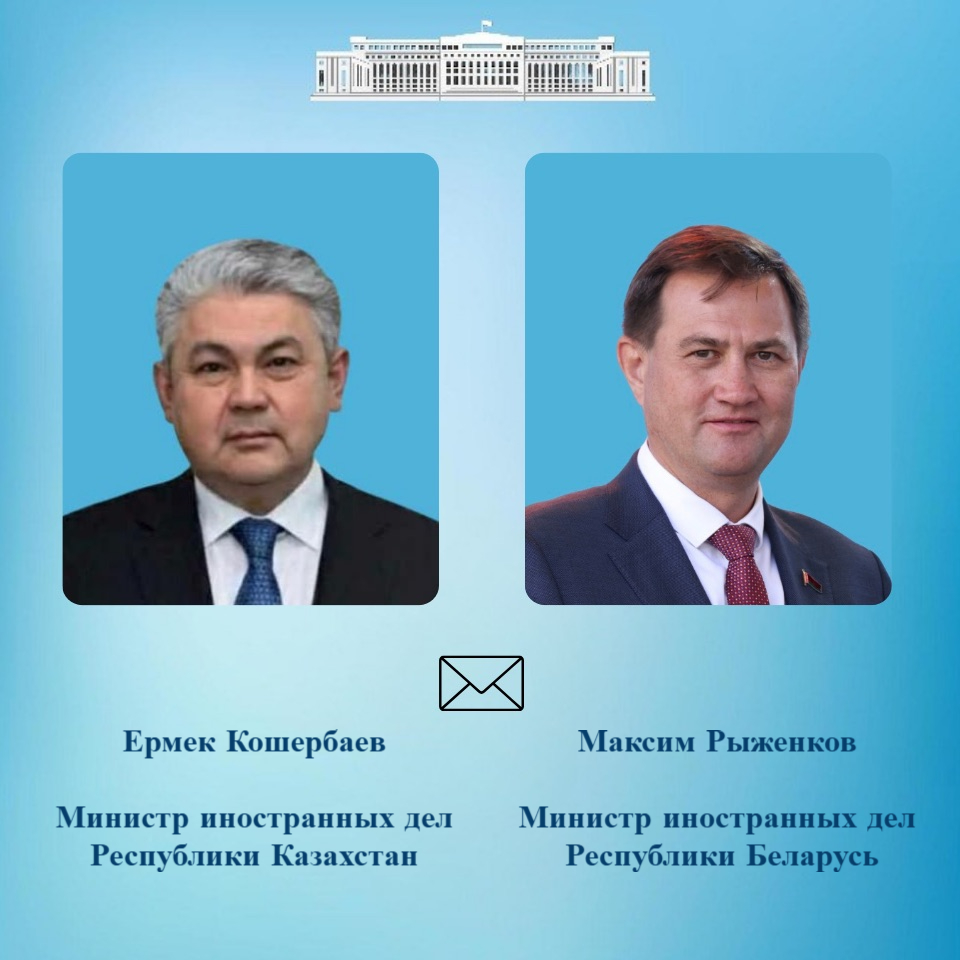
Congratulations of the Minister of Foreign Affairs of Kazakhstan E.Kosherbayev to the Minister of Foreign Affairs of Belarus M.Ryzhenkov on the occasion of the Independence Day of the Republic of Belarus 14.07.2026
Congratulations of the Minister of Foreign Affairs of the Republic of Kazakhstan Yermek Kosherbayev to the Minister of Foreign Affairs of the Republic of Belarus Maxim Ryzhenkov on the occasion of the Independence Day of the Republic of Belarus Astana 03/07/2026Dear Maxim Vladimirovich,Please accept my sincere congratulations on the occasion of the Independence Day.Kazakhstan is sincerely pleased with the success of Belarus, with which we have strong ties of friendship and reliable partnership.I highly appreciate your contribution to strengthening Kazakh-Belarusian cooperation. I confirm my determination to continue close contacts aimed to deepen comprehensive interstate relations.On this significant day, I wish you, dear Maxim Vladimirovich, new successes in your responsible government activities, and prosperity and well-being to the friendly people of Belarus. With respect, Ermek KOSHERBAYEV Source : https://www.gov.kz/memleket/entities/mfa-minsk/press/news/details/1253044?lang=ru
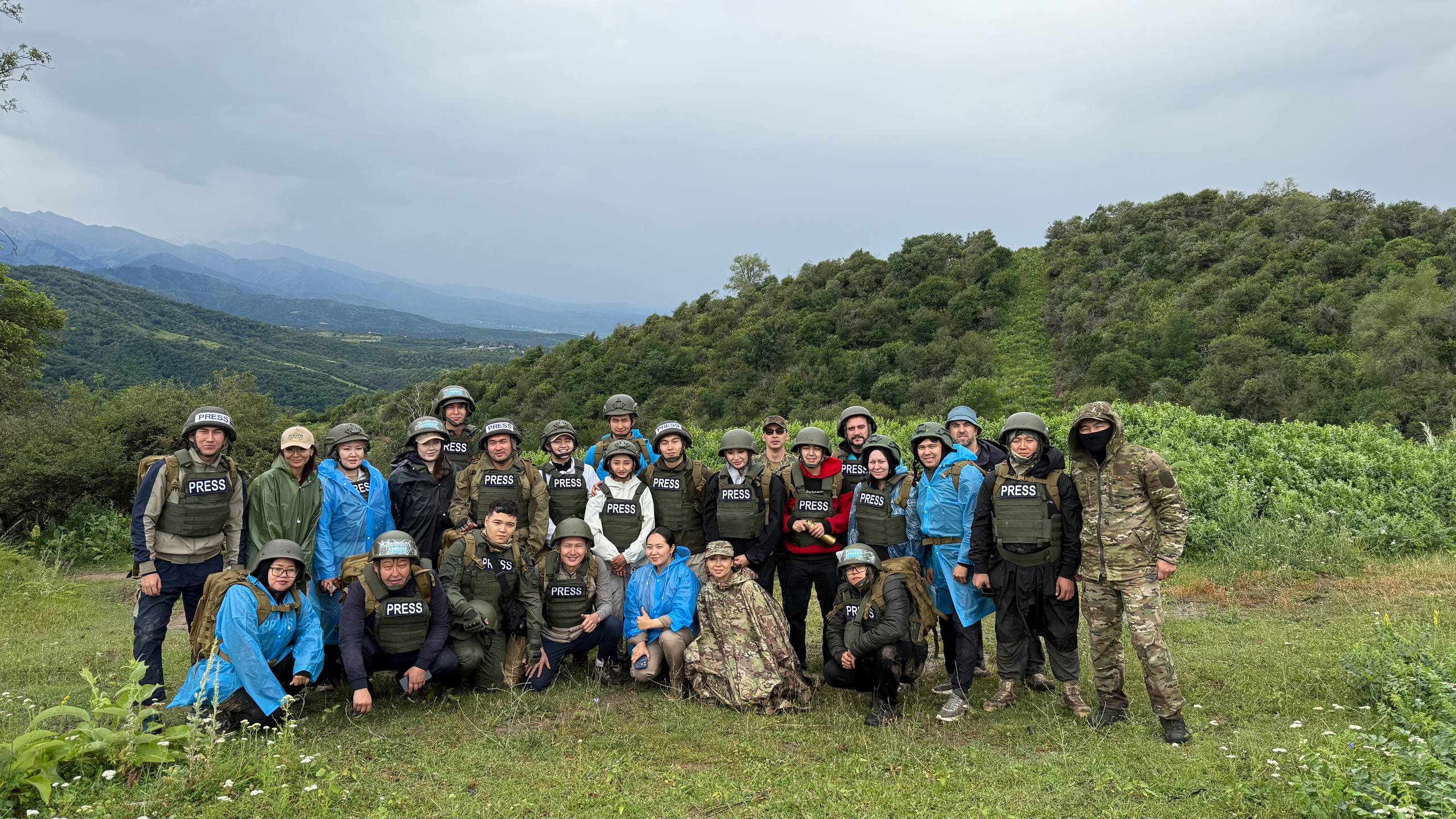
At the mountain training center, journalists mastered survival skills for extreme conditions. 14.07.2026
Source : https://www.gov.kz/memleket/entities/mod/press/news/details/1252996?lang=ru

UAPF presents a report on pension savings investment as of June 1, 2026. 14.07.2026
UAPF JSC (UAPF, the Fund) presents a report on the management of pension assets by the National Bank of the Republic of Kazakhstan (NBRK) and investment portfolio managers (IPM) on the website enpf.kz in the section "Statistics and Analytics - Investment Management of Pension Assets". As of June 1, 2026, the total volume of pension assetsmanaged by the NBRK and the IPM amounted to 27,630.11 billion tenge. As of this date, UAPF pension assets held in trust by the NBRK, formed through compulsory pension contributions (CPC), compulsoryoccupational pension contributions (COPC), and voluntary pension contributions (VPC), amounted to approximately 26,424.41 billion tenge. The volume of pension assets formed through employer’scompulsory pension contributions (ECPC) held in trust by the NBRK was 1,095.72 billion tenge.Pension assets under IPM managementamounted to 105.88 billion tenge. Investment portfolio of pension assets managed by the National Bank of the Republic of Kazakhstan The National Bank of the Republic of Kazakhstan, as the trustee of the UAPF pension assets, pursues a balanced investment policy: investing in various types of financial instruments, diversifying the portfolio by currency, country, sector, and issuer.According to information provided by the National Bank of the Republic of Kazakhstan, the main investment areas of pension assets formed through CPC, COPC, and VPC, as of June 1, 2026, are as follows: government securities of the Ministry of Finance of the Republic of Kazakhstan – 43.38%, bonds of quasi-public companies – 8.18%, deposits of the National Bank of the Republic of Kazakhstan – 3.12%, bonds of second-tier banks of the Republic of Kazakhstan – 2.57%, shares and depositary receipts of issuers of the Republic of Kazakhstan – 2.07%, government securities of foreign states – 1.62%, and microfinance organizations – 1.13%.37.65% of assets are invested through index management. This approach involves creating an investment portfolio focused on a benchmark portfolio, a set of securities reflecting the investor's strategic interests. The benchmark portfolio's performance serves as a benchmark for assessing management effectiveness. The benchmark portfolio is based on indices developed and monitored by leading global financial companies or the National Bank of the Republic of Kazakhstan. The National Bank of the Republic of Kazakhstan performs index management of assets both independently and with the involvement of foreign management companies in specific areas, including subportfolios of developed and emerging market bonds, corporate bonds, and equities.The investment portfolio, broken down by currencies in which financial instruments acquired through CPC, COPC, and VPC are denominated, as of June 1, 2026, is as follows: investments in national currency account for 58.94%, while investments in US dollars account for 41.06% of the pension asset portfolio.As a result of investments, interest income on securities, including deposits and reverse repo transactions, amounted to 928.70 billion tenge; income from assets under external management, including those adjusted for exchange rate revaluation, amounted to 42.48 billion tenge; income from the market revaluation of securities amounted to 9.76 billion tenge; and other income amounted to 2.90 billion tenge.The market revaluation of securities invested in foreign currency was negative. The accrued investment income for the last 12 months from June 2025 to May 2026 amounted to approximately 2.71 trillion tenge, with a return of 11.46% for this period. ECPC's investment portfolio as of June 1, 2026, is as follows: government securities of the Ministry of Finance of the Republic of Kazakhstan – 87.69%, repo transactions – 10.52%, NBRK deposits – 1.78%, and cash in investment accounts – 0.01%.The ECPC investment portfolio includes only financial instruments denominated in national currency. Interest income on securities, including deposits and reverse repo transactions, amounted to 55.62 billion tenge. Market revaluation of securities brought investors 1.95 billion tenge.As of June 1, 2026, accrued investment income over the past 12 months amounted to 115.29 billion tenge, with a return of 17.12% for the period.A detailed breakdownof the investment portfolio of financial instruments managed by the National Bank of the Republic of Kazakhstan, including issuers, and an overview of investment activities are available on the UAPF's official website. Information on the portfolio structure of pension assetsformed through the ECPC is also available on the enpf.kz website. Investment Portfolio Managers The total volume of pension assets under the management of the IPM is 109.98 billion tenge.As of June 1, 2026, pension assets under the trust management of Alatau City Invest JSC amounted to 17.53 billion tenge.The company's main investments: Exchange Traded Funds (ETF) units – 29.90%, shares and depositary receipts of issuers of the Republic of Kazakhstan – 15.45%, bonds of second-tier banks of the Republic of Kazakhstan – 11.99%, government securities of foreign governments – 9.11%, corporate bonds of issuers of the Republic of Kazakhstan – 8.93%, bonds of quasi-public companies of the Republic of Kazakhstan – 8.74%, corporate bonds of foreign issuers – 5.03%, repos – 3.31%, microfinance organizations – 3.18%.It should be noted that 48.89% of the portfolio is held in tenge, 50.14% in US dollars, and 0.98% in other currencies.The return on pension assets over the past 12 months from June 2025 to May 2026 was 15.14%.A detailed breakdownof the investment portfolio of financial instruments managed by Alatau City Invest JSC, including issuers, is available on the UAPF website. As of June 1, 2026, UAPF pension assets held in trust by BCC Invest JSC amounted to 14.07 billion tenge.Main investment areas: bonds of second-tier banks of the Republic of Kazakhstan – 22.56%, government securities of the Ministry of Finance of the Republic of Kazakhstan – 20.32%, bonds of quasi-public companies of the Republic of Kazakhstan – 14.03%, corporate bonds of issuers-residents of the Republic of Kazakhstan – 8.96%, repo – 8.13%, shares and depositary receipts issued by organizations of the Republic of Kazakhstan – 7.37%, corporate bonds of foreign issuers – 5.95%, government securities of foreign states – 5.17%.Investments in national currency accounted for 65.84% of the portfolio, in US dollars – 34.16%.The return on pension assets over the past 12 months from June 2025 to May 2026 was 12.10%.A detailed breakdown of the investment portfolio of financial instruments managed by BCC Invest JSC, including issuers, is available on the UAPF website. As of June 1, 2026, pension assets under trust management by Halyk Global Markets JSC amounted to 7.25 billion tenge.The main investments in the portfolio structure are as follows: equity instruments of foreign issuers (ETF units) – 24.87%, reverse repos (up to 90 calendar days) – 18.49%, bonds of second-tier banks of the Republic of Kazakhstan – 15.00%, notes of the National Bank of the Republic of Kazakhstan – 10.04%, bonds of quasi-public companies of the Republic of Kazakhstan – 9.84%, corporate bonds of organizations of the Republic of Kazakhstan – 5.58%, government securities of the Ministry of Finance of the Republic of Kazakhstan – 5.27%, shares and depositary receipts issued by organizations of the Republic of Kazakhstan – 5.06%, securities with government status issued by the central governments of foreign states – 4.80%.Note that 65.56% of the portfolio is represented in tenge, 34.44% in US dollars.The return on pension assets over the past 12 months was 12.57%.A detailed structureof the investment portfolio of financial instruments managed by JSC Halyk Global Markets, including issuers, is available on the UAPF website. As of June 1, 2026, pension assets under trust management by Halyk Bank of Kazakhstan Subsidiary Halyk Finance JSC amounted to 61.69 billion tenge.The portfolio's key investments are as follows: bonds of second-tier banks of the Republic of Kazakhstan – 22.69%, bonds of quasi-public companies of the Republic of Kazakhstan – 12.89%, microfinance organizations – 10.52%, Exchange Traded Funds (ETF) units – 10.51%, government securities of the Ministry of Finance of the Republic of Kazakhstan – 8.52%, notes of the National Bank of the Republic of Kazakhstan – 8.49%, shares and depositary receipts of issuers of the Republic of Kazakhstan – 6.62%, corporate bonds of issuers of the Republic of Kazakhstan – 6.42%, reverse repo (up to 90 calendar days) – 3.57%, and corporate bonds of foreign issuers – 3.13%.64.97% of the portfolio is invested in national currency instruments, while 35.03% is invested in US dollars.The return on pension assets over the past 12 months from June 2025 to May 2026 was 12.82%.A detailed breakdownof the investment portfolio of financial instruments managed by Halyk Bank of Kazakhstan Subsidiary Halyk Finance, including issuers, is available on the UAPF website. As of June 1, 2026, UAPF pension assets held in trust by Centras Securities JSC amounted to approximately 9.33 billion tenge.23.31% of the portfolio was invested in bonds of Kazakhstan's second-tier banks, 21.24% in bonds of quasi-public companies of Kazakhstan, 13.94% in corporate bonds of Kazakhstan issuers, 7.22% in US government bonds, 7.15% in corporate bonds of foreign issuers, 6.78% in government securities of the Ministry of Finance of Kazakhstan, 5.01% in shares and depositary receipts of Kazakhstan resident issuers, and 4.62% in shares and depositary receipts of foreign issuers. REPO transactions accounted for 3.28%.Investments in national currency accounted for 68.59% of the portfolio, while those in US dollars accounted for 31.41%.The return on pension assets over the past 12 months from June 2025 to May 2026 was 18.28%.A detailed breakdownof the investment portfolio of financial instruments managed by Centras Securities JSC, including issuers, is available on the UAPF website. As of June 1, 2026, pension assets under trust management by Tansar Capital JSC amounted to 0.11 billion tenge.The main investments in the portfolio structure are as follows: repo – 63.56%, units (ETFs on major stock indices) – 21.68%, shares and depositary receipts issued by organizations of the Republic of Kazakhstan – 13.87%.Tansar Capital JSC's investment portfolio includes only financial instruments denominated in the national currency.78.11% of the portfolio is invested in national currency instruments, and 21.89% in US dollars.Tansar Capital JSC began managing pension assets on April 8, 2026. The return on pension assets since the start of management has been 1.34%.A detailed breakdownof the investment portfolio of financial instruments managed by Tansar Capital JSC, including issuers, is available on the UAPF website. Starting July 1, 2023, contributors can transfer up to 50% of their pension savings to investment portfolio managers (IPMs) for trust management, regardless of the minimum adequacy threshold, through CPCs and COPCs. They can choose their chosen investment portfolio manager (IPM). Contributors with voluntary pension savings can transfer 100% of their savings to IPMs. As a reminder, the UAPF has launched a unified online information platform for investment management of citizens' pension assets, invest.enpf.kz, which consolidates all key information about IPMs in a single digital space and provides a systematic approach to providing data on investment activities.Source : https://www.gov.kz/memleket/entities/kostanai-rudnyi-kalasy-akimat/press/news/details/1252991?lang=ru

UAPF has provided over 24.5 million services to contributors since the beginning of the year 14.07.2026
The Unified Accumulative Pension Fund (UAPF) plays a key role in the country's pension system, providing citizens with reliable tools for saving for retirement. UAPF provides a variety of digital services to Kazakhstanis and continues to develop them, adapting to customer needs. The 24/7 availability of the Fund's services on its website and mobile app is a key factor in increasing contributor interest.Over the five months from January 1, 2026, to May 31, 2026, 24.7 million services were provided to the public. Of these, 14.3 million were provided electronically, and 9.9 million were automated. Thus, the share of automated, electronic, and remote services amounted to 98.7% of the total. 322,100 services were provided in person, including more than 313,400 directly at the Fund's offices.As a reminder, all pension accounts are opened automatically in the UAPF upon receipt of the first contribution. Targeted requirements are also automatically accrued to citizens of the Republic of Kazakhstan under 18 years of age, and targeted savings accounts (TSA) are opened to record and pay out targeted savings to adult recipients of targeted savings under the National Fund for Children program.During the reporting period, the total number of automatically opened individual pension savings accounts (IPSAs) for all types of compulsory pension contributions (CPCs), notional pension accounts (NPSAs) for recording compulsory occupational pension contributions (COPCs) paid by employers from their own funds, and targeted savings accounts (TSAs, opened to record and pay targeted savings to recipients of targeted savings under the National Fund for Children program) amounted to 891,700.Getting statements from IPSAs, NPSAs, and TSAs remains the most popular service. Since the beginning of the year, more than 15.0 million statements have been issued for all account types, 13.3 million of which were electronic and 1.5 million statements were issued automatically. The UAPF reminds that accessing account status information through your personal account is the most convenient, reliable, and timely way to monitor your pension savings. The service operates online 24/7, allowing you to receive up-to-date information at any time and from anywhere. Account status information is available not only through the UAPF mobile app and your personal account on the UAPF website, but also through the egov.kz portal or the e-government mobile app. This provides additional convenience for users who prefer to interact with government services through a single platform. UAPF notes that, starting in 2025, the annual automatic mailing of statements will no longer be provided. However, receiving information on pension savings by mail is still possible upon submitting a request to the UAPF address.In addition to receiving statements in their personal account on the website and in the mobile app, contributors (beneficiaries) can use services such as making changes and additions to their account details, obtaining a certificate of account availability, submitting an application for pension benefits due to the establishment of a Group 1 or 2 disability for life or upon reaching the age of 50 through voluntary pension contributions, tracking the status of a benefit application, transferring a portion of their pension savings to an investment portfolio manager (IPM), calculating a projected future pension using a pension calculator, etc. Over the past period, 38.7 thousand contributor applications for transferring a portion of their pension savings to IPM trust management were accepted, the majority of which were in electronic format.During the reporting period, 46.7 thousand applications for changing account details were accepted, of which approximately 44.0 thousand were submitted at the Fund's offices.When seeking a service from UAPF specialists, contributors typically receive additional consultations and advice on savings management. As part of outreach efforts, 25,100 roadside presentations were held, attended by 505,100 people. The number of materials published in the media based on UAPF announcements amounted to 17,000.The number of inquiries received from contributors and beneficiaries through feedback channels (call center, website consultations, instant messaging, social media, and other communication channels) amounted to 192,500.As a reminder, any company can request an on-site presentation and consultation on the funded pension system by simply calling the call center at 1418 or through the Fund's website or mobile app.UAPF consulting services can be obtained through instant messengers (chat bot in WhatsApp and Viber at +7 777 000 14 18), call center at 1418 (free call within Kazakhstan), on the corporate website enpf.kz, as well as on the official UAPF pages on social networks Instagram, Facebook, VKontakte, Telegram, Odnoklassniki.Source : https://www.gov.kz/memleket/entities/kostanai-rudnyi-kalasy-akimat/press/news/details/1252993?lang=ru

Ile-Alatau National Park: A Living Heritage of Mountains and Forests 14.07.2026
If you lift your gaze toward the majestic peaks of the Zailiyskiy Alatau, a remarkable world will unfold before you — a world of snow-capped summits, deep gorges, crystal-clear mountain rivers, and forests where nature has preserved its pristine beauty.It is here, at the foothills of the Northern Tien Shan, that the Ile-Alatau State National Nature Park is located — one of the largest and most valuable specially protected natural areas in Kazakhstan.Ile-Alatau National Park was established on February 22, 1996, by a resolution of the Government of the Republic of Kazakhstan, with the aim of preserving the unique natural complexes of the Zailiyskiy Alatau, its rich flora and fauna, mountain landscapes, forests, and rare species of great scientific, ecological, and cultural significance.Today, the park covers an area of 200,160 hectares. Its territory includes picturesque mountain gorges, forested areas, alpine meadows, glaciers, and high-altitude peaks. Along its perimeter, the park is protected by the Almaty State Complex Nature Reserve, which covers an area of 542,400 hectares.The territory of the park is divided into several functional zones: a strict protection zone, an ecological stabilization zone, a tourism and recreation zone, and a zone of limited economic activity. This zoning makes it possible to combine nature conservation, scientific research, environmental education, and regulated tourism.One of the main natural treasures of Ile-Alatau National Park is its forests. The area of forest-covered land amounts to more than 73,000 hectares. The forest cover of the territory is 36.5 percent. These forests not only adorn the mountain slopes but also play an important role in preserving the region’s water resources, soils, climate, and biological diversity.The flora of Ile-Alatau National Park is exceptionally rich. More than 2,000 species of vascular plants grow here, 37 of which are listed in the Red Book of Kazakhstan. Among them are the Sievers apple, the common apricot, and other rare plants that have survived in the mountain ecosystems of the Zailiyskiy Alatau.The park’s fauna is also diverse. About 270 species of vertebrate animals inhabit its territory, including 48 species of mammals and 198 species of birds. Many of them have special conservation status. In the mountain forests and gorges, one can encounter roe deer, wild boar, foxes, squirrels, and stone martens, while rare predators — true symbols of wild nature — inhabit the remote high-mountain areas.Ile-Alatau State National Nature Park is not merely a protected area. It is a living heritage of mountains, forests, and rivers — a natural laboratory where the unique gene pool of wild fruit plants is preserved. Here, the past meets the future: ancient relict species continue to live, bloom, and bear fruit, reminding humanity of its responsibility toward nature.Ile-Alatau National Park is the heart of the Zailiyskiy Alatau, a symbol of the richness of Kazakhstan’s nature, and a place where the grandeur of the mountains is combined with the fragile beauty of forests. Its preservation is an important duty to future generations, to whom we must pass on clean rivers, green gorges, blooming apple orchards, and the living harmony of wild nature.Source : https://www.gov.kz/memleket/entities/ecogeo/press/news/details/1252960?lang=ru
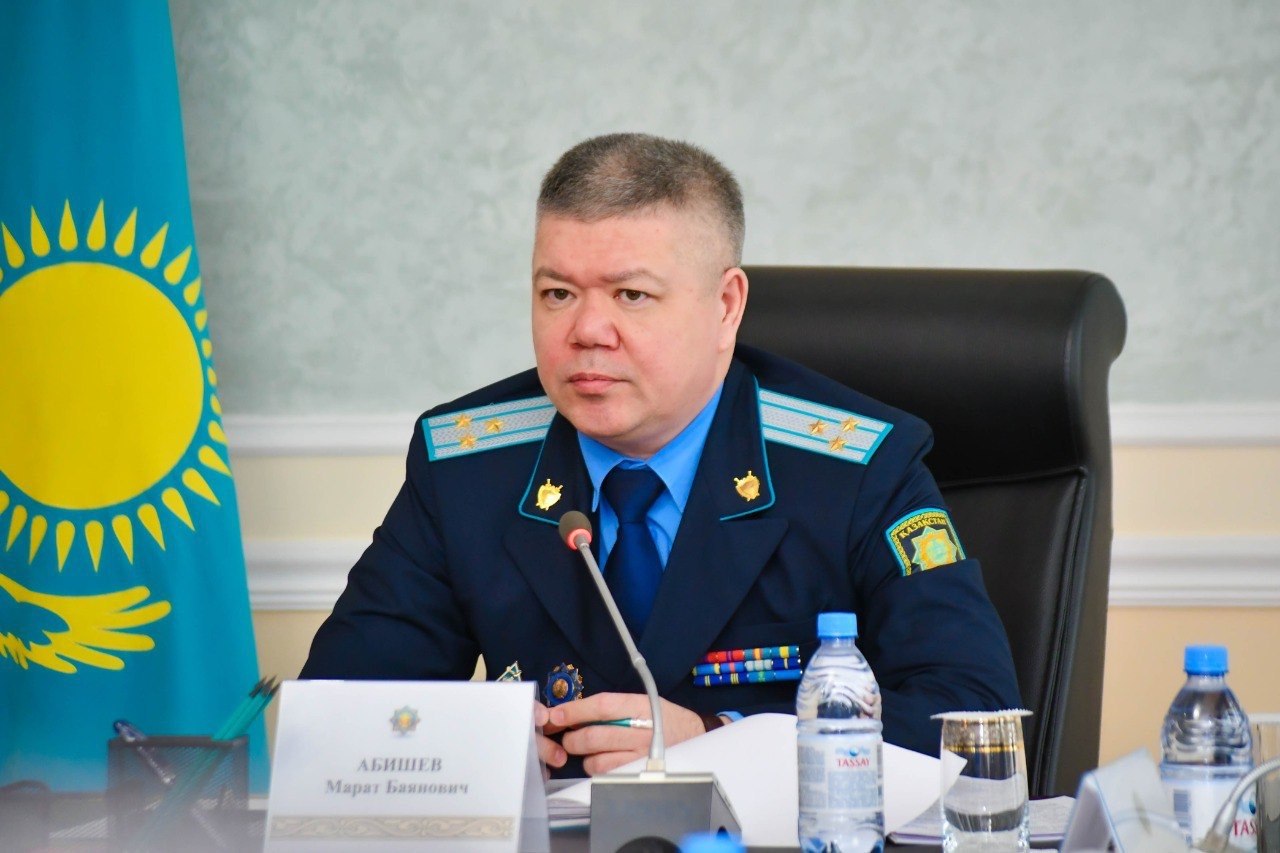
Measures to prevent crime and protect public interests have been strengthened in Aktobe region 14.07.2026
The Prosecutor's Office of Aktobe region summed up the results of the work for the 1st half of 2026.Deputy prosecutors of the region, heads of structural divisions, city district prosecutors were heard.During this period, systematic work has been carried out on crime prevention and prevention, with an emphasis on working with the causes of offenses.Thus, within the framework of the republican projects "Aikyn natizhe" and "Kapsiz balalyk shak", as well as its own projects "Aktobe–a territory without fraud" and "Drug Barrier-2026", a set of preventive measures is being implemented in the region.To this end, the Coordination Councils, together with the akim of the region and the heads of law enforcement and special agencies of the region, developed and approved detailed step-by-step plans, set clear deadlines, specific activities, sources of funding and responsible persons.During the reporting period, more than 600 million tenge was allocated from the regional budget for crime prevention.54 crime-causing points have been identified in the region, including 38 entertainment establishments that are constantly being monitored by the police.411 cameras (133 with face recognition) have been installed, and 380 streets are additionally illuminated.Over 150 abandoned, unattended buildings and structures have been transferred to the balance sheet or taken under surveillance and fenced.The activities of 150 alcohol trade entities have been suspended.45 villages have completely abandoned the sale of alcohol. 1.5 thousand registered persons have worked out - rowdy, drug addicts, alcoholics who are on probation and administrative supervision.120 people were sent to the SLPU for compulsory treatment. 4 thousand families at risk have been identified, where 6.5 thousand children are being raised. Targeted work is carried out with each family through the electronic platform "FSM social".An integrated approach is already producing tangible results.In the first 6 months of this year, crime in the region decreased by 8%.In particular, the number of homicides, serious crimes against the person, thefts, robberies, drug-related fraud, crimes in public places and domestic violence has decreased.An improvement in the quality of the pre-trial investigation was noted.Prosecutors have agreed on 7 thousand key procedural decisions.About 1.5 thousand cases were sent to the court, 742 persons were convicted.The damage in criminal cases was compensated for almost 2 billion tenge.Judicial errors in 54 cases against 67 persons were corrected in higher instances at the request of prosecutors.Along with this, a lot of work has been done to protect public interests, especially in terms of countering the "shadow economy." Thus, during the reporting period, unjustified spending of more than 4 billion tenge was prevented, property worth 2 billion tenge was returned to the state, and the budget was replenished in the amount of more than 7.5 billion tenge.These are mainly taxes, fines, and damages after prosecutorial inspections of large subsurface users.For example, a number of companies have been identified that intentionally underestimated the tax base and illegally transferred assets abroad.Different "gray" schemes were used for this. They concluded fictitious contracts with foreign companies for the provision of engineering services, that is, they overestimated expenses, hid income, etc.According to the requirements of the prosecutor's office and the acts of supervision, the tax authorities conducted inspections and added 12.6 billion tenge. As of today, the budget has received 5.5 billion tenge for only one group of companies, and work in this direction continues.Investment support is one of the priorities of the prosecutor's supervision.With the measures taken, the regional prosecutor's office facilitated the launch of investment projects worth 44.3 billion tenge, with the creation of 400 jobs.11 social facilities have also been built due to the returned assets.At the end of the meeting, Marat Abishev set specific tasks for subordinate prosecutors, emphasizing the need for strict execution of the Prosecutor General's instructions within the framework of the ideology of "Law and Order."Among the key priorities are the protection of constitutional rights and freedoms of citizens in any field, strengthening supervision in socially significant areas, countering the shadow economy, intensifying the fight against drug trafficking and fraud, effective support for investment projects, as well as the protection of honest business.Source : https://www.gov.kz/memleket/entities/prokuratura-aktobe/press/news/details/1252965?lang=ru
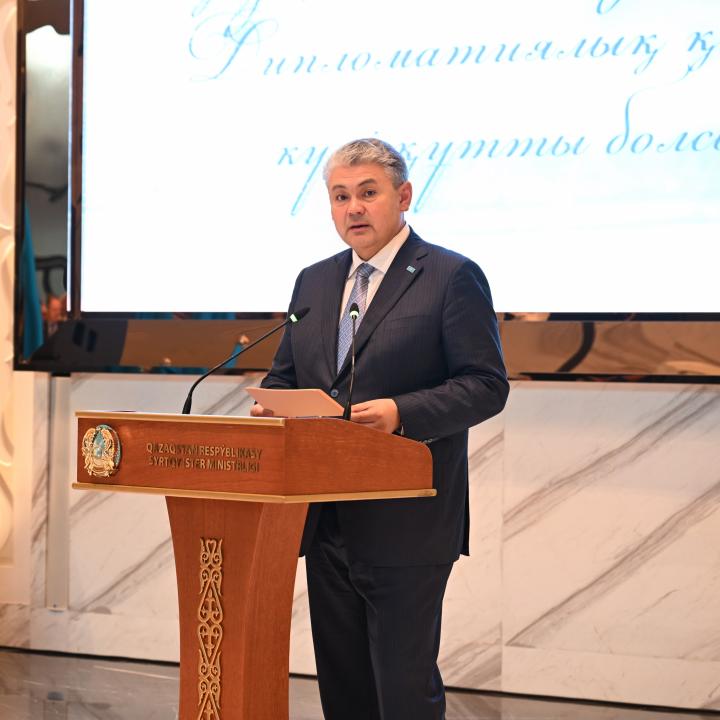
Astana Hosts Ceremonial Event Marking the Diplomatic Service Day of the Republic of Kazakhstan 14.07.2026
The Ministry of Foreign Affairs of the Republic of Kazakhstan held a ceremonial event dedicated to the Diplomatic Service Day of the Republic of Kazakhstan.The Minister of Foreign Affairs of the Republic of Kazakhstan, Yermek Kosherbayev, congratulated the Ministry's staff on the occasion of Diplomatic Service Day, emphasizing that this professional holiday holds special significance for those who are dedicated to advancing Kazakhstan's foreign policy and representing the country's interests abroad."Kazakhstan remains firmly committed to a balanced, constructive, and peaceful foreign policy. We attach particular importance to developing relations with all our partners on the basis of mutual respect, trust, and the principles of international law. It is precisely this approach that strengthens our country's international standing and creates new opportunities for its continued development," – the Minister emphasized.During the ceremony, a number of the Ministry's employees and veteran diplomats were honoured in recognition of their dedicated service and professional achievements.Source : https://www.gov.kz/memleket/entities/mfa-pretoria/press/news/details/1255178?lang=ru
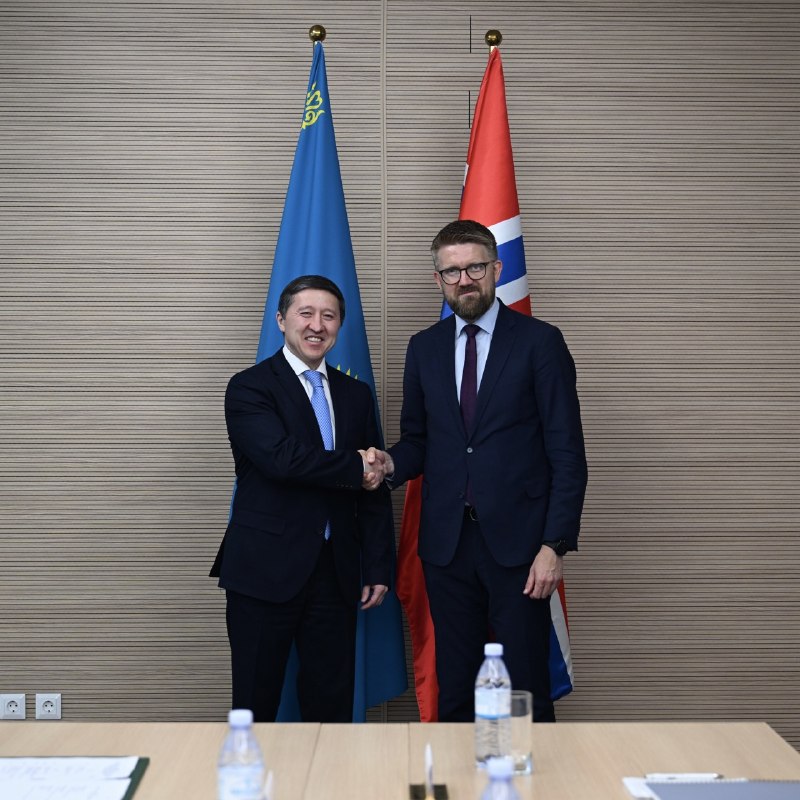
Ministries of Foreign Affairs of Kazakhstan and Norway held Political Consultations 14.07.2026
Astana, July 2, 2026 – The Ministries of Foreign Affairs of Kazakhstan and Norway held the fifth round of political consultations.Welcoming the Norwegian delegation, Kazakhstan’s Deputy Minister of Foreign Affairs Arman Issetov noted the importance of the further development of Kazakh-Norwegian political and economic cooperation as well as people-to-people ties. He reiterated the commitment to deepen mutually beneficial dialogue between Astana and Oslo.During the meeting, sides discussed a wide range of bilateral and multilateral issues and exchanged views on major international topics.The meeting also focused on activities to intensify economic relations, promote inter-parliamentary dialogue and interaction within the framework of multilateral institutions.State Secretary for Minister of Foreign Affairs of Norway highly appreciated dynamic bilateral engagement and noted that Kazakhstan is an important partner for Norway in Central Asia. In his opinion, Norway and Kazakhstan share similar view on many key issues on the multilateral agenda.Concluding the consultations, the parties agreed to continue promoting close dialogue between the Foreign Ministries of Kazakhstan and Norway.In 2025, bilateral trade reached $169,2 million (export – 7,8 million, import – 161,4 million).From 2005 the gross inflow of direct investments from Norway to Kazakhstan amounted to $1.6 billion.Source : https://www.gov.kz/memleket/entities/mfa/press/news/details/1252937?lang=ru

Department of Public Revenues for the Jetisu Region Reminds of Anti-Corruption Restrictions 13.07.2026
In order to prevent offenses, the Department of Public Revenues for the Jetisu Region draws the attention of civil servants and persons equated to them to the need for strict compliance with Article 12 of the Law of the Republic of Kazakhstan "On Countering Corruption". This provision rules out the use of official powers for personal or group interests.By accepting anti-corruption restrictions, officials undertake:Not to engage in activities incompatible with the performance of state functions. To prevent joint service of close relatives, spouses, and in-laws. Not to use official information for personal gain. Not to accept material rewards, gifts, or services for performing official duties. Not to open accounts or store valuables in foreign banks. Not to participate in gambling and betting, including via the Internet.Written consent to these rules is recorded by the personnel service. Refusal to accept the restrictions results in a refusal of employment, and their violation constitutes grounds for immediate dismissal.These prohibitions partly apply to family members as well (spouses, parents, children, and dependents living together) — they are not entitled to accept gifts and services related to the activities of the civil servant.The law establishes a strict procedure in the event that benefits were received contrary to the rules or without the person's knowledge:Accidentally received money must be transferred to the republican budget within two weeks from the moment of discovery, with an explanation sent to the public revenue authority. Gifts are subject to gratuitous transfer to the State Property Committee within seven calendar days. Illegally provided services must be paid into the budget within the same seven-day period. An official has the right to buy back a gift transferred to the state at its market appraised value, after notifying the management.The Department of Public Revenues for the Jetisu Region calls on officials to strictly adhere to the established anti-corruption standards, ensuring the transparency of the civil service and public trust. Source : https://www.gov.kz/memleket/entities/kgd-zhetysu/press/news/details/1252810?lang=ru
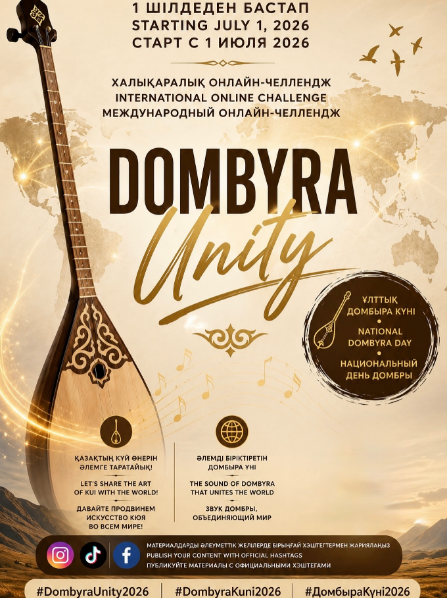
Participants from all over the world are joining the Karaganda Dombra Day Challenge 13.07.2026
The DOMBYRA UNITY international online challenge, initiated by the Department of Culture, Archives and Documentation of the Karaganda region in honor of the National Dombra Day, brought together fans of Kazakh musical art from around the world.Initially, the project was conceived as an international creative event with the participation of artists from the Karaganda region and foreign performers who are passionate about playing the dombra. But the interest in the challenge exceeded the expectations of the organizers. Participants from the Netherlands, the USA, Belgium, Sweden, Uzbekistan and other countries have already joined the initiative, and applications continue to arrive from almost all continents.— We expected an international response, but we did not expect that the geography of the project would be so wide. It is especially gratifying that the challenge was supported by residents of such distant countries as the Netherlands, the USA, Belgium and Sweden. Today we continue to receive new video works from different parts of the world. This indicates that the project is resonating with people. The challenge will last until July 5," said Aizhan Shakenova, Deputy Head of the Department of Culture, Archives and Documentation. As part of the challenge, participants perform Kazakh folk kuis on dombra and record video greetings dedicated to the National Day of Dombra. All materials are published on social networks under the single hashtags #DombyraUnity2026 and #DombyraKuni2026, creating a single international cultural space.The project aims to popularize the national musical heritage of Kazakhstan, introduce the world audience to the art of kuya and unite people from different countries around their love of dombra and Kazakh culture.Source : https://www.gov.kz/memleket/entities/karaganda/press/news/details/1252800?lang=ru