News
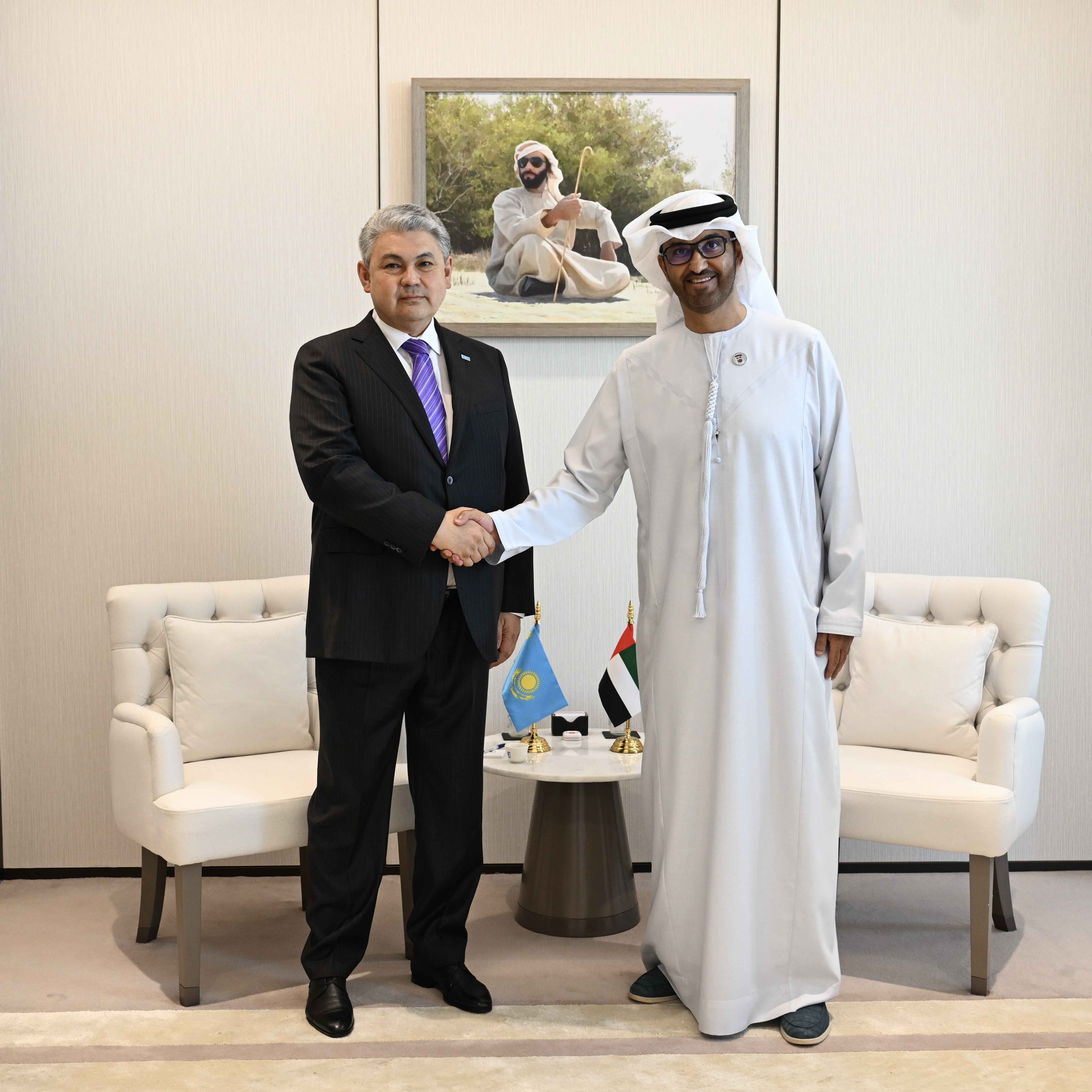
Prospects for Investment Cooperation between Kazakhstan and UAE Discussed in Abu Dhabi 27.04.2026
Abu Dhabi, April 27, 2026 – Minister of Foreign Affairs of the Republic of Kazakhstan Yermek Kosherbayev, during his official visit to the United Arab Emirates, held a meeting with the UAE Minister of Industry and Advanced Technology, Chairman of Masdar and CEO of ADNOC, Sultan Ahmed Al Jaber.During the talks, the parties discussed the current state and future prospects of investment cooperation between Kazakhstan and the UAE, as well as ways to advance collaboration in the field of renewable energy.The Kazakh Minister noted the steady positive dynamics of bilateral economic cooperation. In particular, following the results of 2025, the UAE ranked among the top five largest investors in Kazakhstan, with investment volumes reaching approximately 1.64 billion US dollars. Growth in mutual trade was also noted.Special attention was given to the 1 GW wind power plant project in the Zhambyl region, implemented by Masdar. This project is one of the largest renewable energy initiatives in Central Asia and stands as a vivid example of strategic partnership between the two countries.In addition, the parties discussed prospects for further expansion of the project, including increasing its capacity and introducing advanced energy storage solutions.Minister Kosherbayev emphasized the importance of further developing cooperation in new areas, including green hydrogen projects, localization of production, and the development of value chains, expressing confidence that this visit would provide additional momentum to investment cooperation, including the implementation of joint projects.Following the meeting, the parties reaffirmed their commitment to further strengthening the strategic partnership.Source : https://www.gov.kz/memleket/entities/mfa/press/news/details/1209357?lang=kk
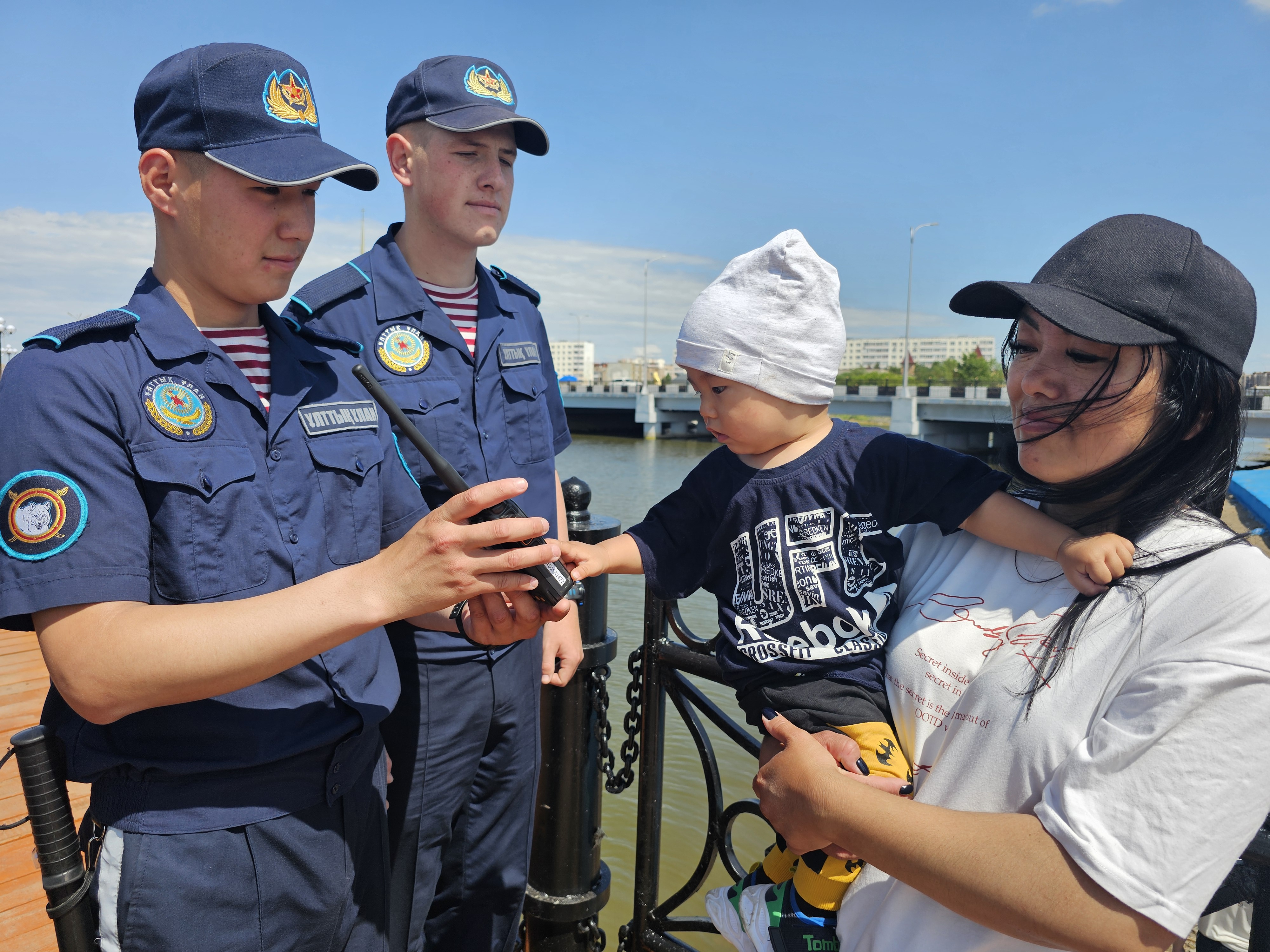
3,357 offenders detained by National Guard servicemen since the beginning of the year 27.04.2026
Since the beginning of 2026, servicemen of the National Guard of the Ministry of Internal Affairs of the Republic of Kazakhstan have detained and delivered 3,357 offenders to internal affairs bodies, including 71 individuals showing signs of criminal offenses.On a daily basis, guardsmen carry out duties to maintain public order and ensure the safety of citizens. Over three months, they have completed 839 patrol and guard service assignments and ensured security at 99 socio-political and public events across the country.During service, 28 units of cold and firearms have been seized from illegal circulation, and 10 cases involving the seizure of narcotic substances have been recorded.At the same time, National Guard units perform tasks related to guarding penitentiary system institutions and escorting detainees. A total of 39 penitentiary institutions and one industrial facility are under protection. Escorting is carried out along 35 routes, and security is also ensured for court hearings at various levels.Since the beginning of the year, 61 attempts to smuggle or throw prohibited items have been prevented. As a result, 29 mobile phones, 10 SIM cards, and narcotic substances with a total weight of 101.28 grams have been seized.In addition, over three months, 60 planned railway escorts, 143 road escorts, 378 incoming escorts, 672 court escorts, and 6 special escorts have been carried out. During these operations, around 19,000 convicted persons and detainees have been transported.It is worth noting that personnel of the law enforcement troops, together with police officers, ensure public order in 21 cities across the country. More than 8,000 guardsmen are engaged in this task on a daily basis. #LAWANDORDER#ЗАҢМЕНТӘРТІП Press Service of the National GuardMinistry of Internal Affairs of the Republic of KazakhstanSource : https://www.gov.kz/memleket/entities/kvv/press/news/details/1209297?lang=kk
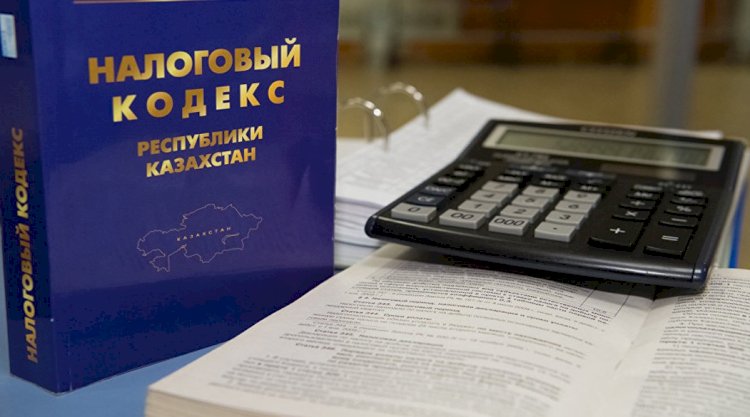
Deadlines for taxes and mandatory payments for 2026: what is important for taxpayers to know 27.04.2026
The Department of State Revenue for the Pavlodar region recalls the key deadlines for the payment of taxes and other mandatory payments established by the Tax Code of the Republic of Kazakhstan.Timely fulfillment of tax obligations avoids the accrual of penalties and the application of administrative liability measures.Monthly paymentsNo later than the 20th:- Excise taxes (Form 400.00);- Application for the import of goods and payment of indirect taxes (form 328.00).No later than the 25th:- Corporate income tax (CIT) withheld at the source of payment (forms 101.03, 101.04);- Advance payments on the CPN (form 101.02);- Individual Income tax (IIT) and social tax (Form 200.00);- Income tax on non-residents (form 200.02);- Personal income tax and social payments under special tax regimes (forms 910.00, 920.00).Quarterly paymentsPayment deadlines occur four times a year: no later than February 25, May 25, August 25 and November 25. These include:- Value added tax (VAT) (Form 300.00);- Gambling tax (Form 710.00);- Property tax (current payments) (Form 701.01);- Payment for the use of land plots (form 851.00);- Payment for the use of water resources (form 860.00);- Payment for negative environmental impact (Form 870.00);- Digital mining fee (Form 880.00);- Mineral extraction tax and other payments by subsurface users (Form 590.00);- Mandatory deductions and payments (form 641.00);- Payments under subsurface use contracts (form 500.00);- Fulfillment of tax obligations in kind (form 531.00).Annual taxes and other deadlinesNo later than April 10:- CPN (forms 100.00, 110.00, 150.00);- CPN at the source of payment for non-residents (form 101.04);- IPN on entrepreneurial activity (form 220.00);- Tax on transport, land and property (form 700.00);- Alternative tax on subsurface use (form 600.00);- Payments from subsurface users and obligations in kind (forms 531.00, 590.00).No later than July 10:- Personal identification number of a non-resident individual (form 270.00).No later than September 25:- Declaration of income and property (form 270.00).No later than October 1:- Personal property tax.Special tax regimes- Tax refund based on a simplified declaration (form 910.00): payment is made no later than August 25, 2026 and February 25, 2027.- CPR for peasant and farm enterprises (form 920.00): payment is made no later than November 10, 2026 and April 10, 2027.Subscription bonusPayment is made in the following terms:- Within 20 working days from the date of recognition as the winner of the competition or signing of the protocol of negotiations;- Within 10 working days from the date of the license issue;- Within 20 working days upon making changes to the subsurface use contract;- Within 20 working days from the date of receipt of the permit for the extraction of groundwater.The State Revenue Department recommends that taxpayers plan ahead to fulfill their tax obligations and make payments on time. Be attentive to the deadlines!Source : https://www.gov.kz/memleket/entities/kgd-pavlodar/press/news/details/1209304?lang=kk
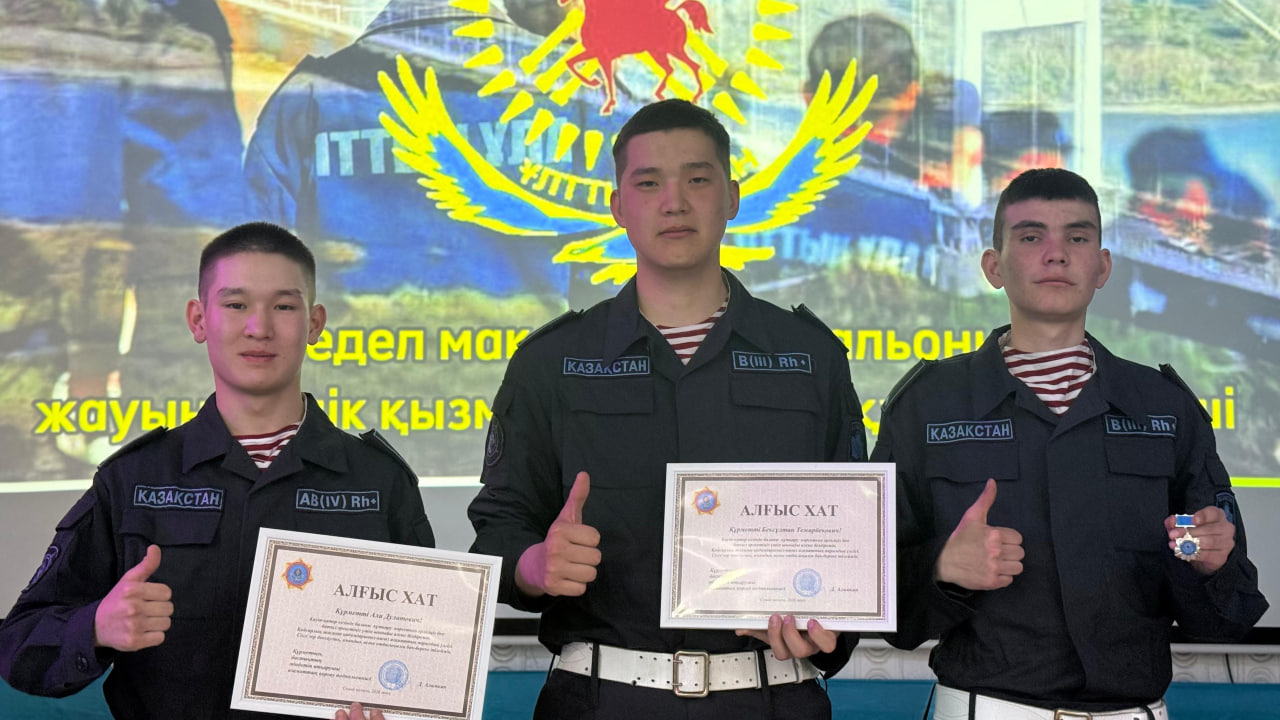
For vigilance: National Guard servicemen in Semey rewarded for preventing an emergency involving a child 27.04.2026
In the city of Semey, servicemen of military unit 5511 of the National Guard of the Ministry of Internal Affairs of the Republic of Kazakhstan have been rewarded for their vigilance and decisive actions in preventing a dangerous situation involving a young child.On April 8, during a patrol along Auezov Avenue, a military patrol unit noticed a child left unattended near an open window on the third floor of a residential building. Assessing the level of risk, the servicemen promptly took positions under the windows, ensuring readiness for immediate response.Until the arrival of the parents and police officers, the child’s safety was ensured by the patrol. Thanks to the professionalism and coordinated actions of the guardsmen, a possible tragedy was prevented.“We acted quickly because we understood that every second counted. The main task was to prevent a tragedy. It is a great honor and pride for me to receive such recognition of our service,” said Corporal Beksultan Temirbekov.For their courage, patrol commander Corporal Daulet Seidaly, as well as patrol members Corporal Beksultan Temirbekov and Private Ali Sagymbayev, were awarded letters of appreciation from the Emergency Situations Department of the Abai Region.In addition, Corporal Daulet Seidaly received the badge “For Maintaining Public Order” on behalf of the commander of Regional Command “Shygys.”By decision of the unit commander, Corporal Beksultan Temirbekov and Private Ali Sagymbayev were granted a ten-day short-term leave. The servicemen were also presented with wristwatches.Such examples demonstrate the high readiness of National Guard servicemen to act in emergency situations and their strong commitment to protecting the lives and safety of citizens.Press Service of the National GuardMinistry of Internal Affairs of the Republic of KazakhstanSource : https://www.gov.kz/memleket/entities/kvv/press/news/details/1209306?lang=kk
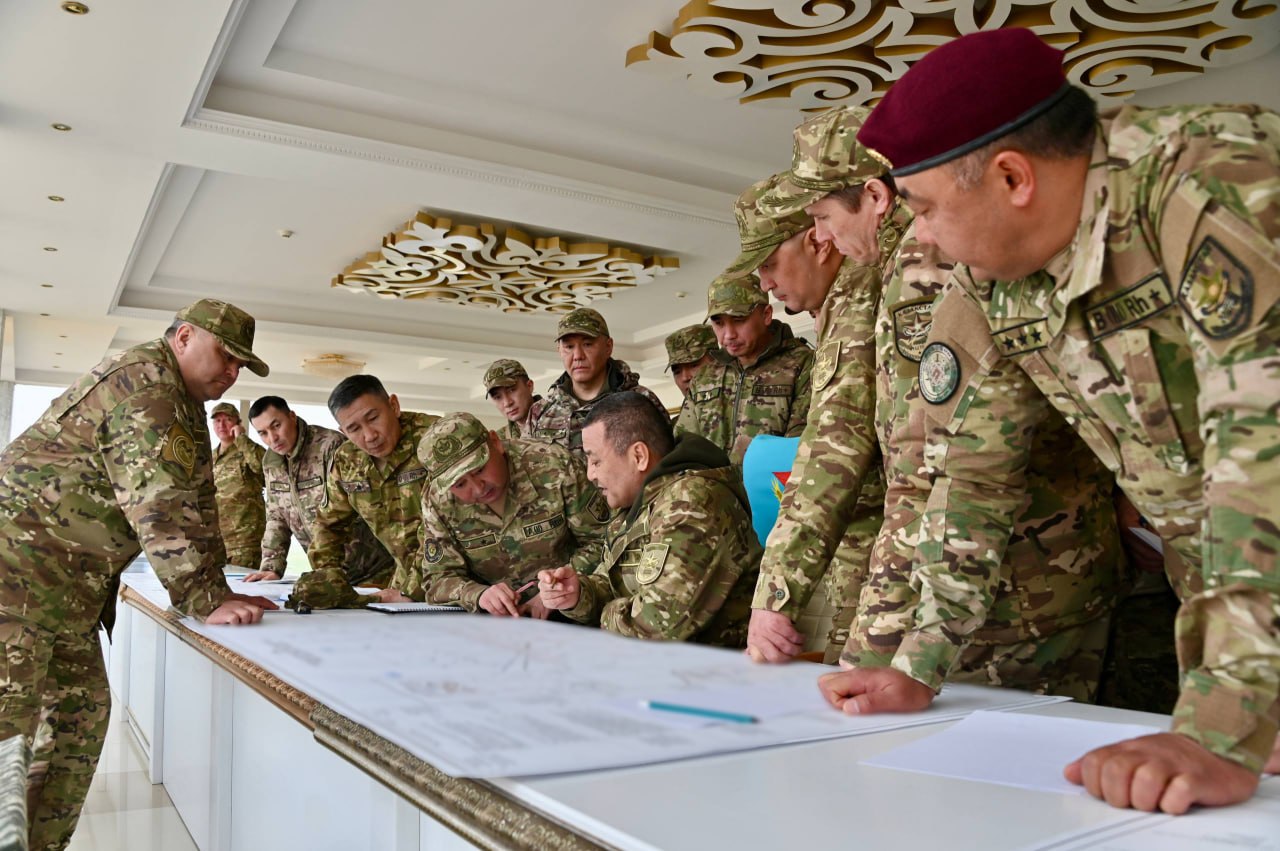
Aibalta-2026 exercises: focus on counter-UAVs and troop coherence 27.04.2026
Source : https://www.gov.kz/memleket/entities/mod/press/news/details/1209312?lang=kk

A new procedure for monitoring mobile transfers has been introduced since April 1, 2026. 27.04.2026
On April 1, 2026, banks began transmitting information about mobile transfers of individuals to the tax authorities. This measure is aimed at ensuring transparency of financial transactions and identifying unregistered business activities.Which transfers are subject to control?Not all transfers are subject to verification, but only if the following conditions are met simultaneously:- receipt of funds from 100 or more different persons;- regular receipt of transfers for 3 consecutive months;- the total amount exceeds 1,020,000 tenge.Pay attention. Verification is carried out only if all the specified conditions are met.How is the check going?It is important to know that these changes do not mean that accounts are automatically blocked. The verification procedure is carried out in stages:1. On-site monitoring (remote analysis) is carried out;2. An official notification is sent to the taxpayer.;3. Within 30 working days, an opportunity is provided to provide an explanation, confirm the source of funds, and, if necessary, eliminate the identified violations.If the transfers are of a personal natureTransfers are not subject to taxation if the funds have been received:- the quality of help from relatives;- for medical treatment;- on account of repayment of the debt;- as a gift or for personal needs.These facts, if necessary, can be confirmed by appropriate documents or explanations.The main purpose of the controlThe main task is to identify hidden (unregistered) business activities. For example, the systematic sale of goods or services without registering an individual entrepreneur, as well as regular income generation without paying taxes.What is important for citizens- Transfers between individuals for personal purposes are legal and tax-free;- The control is not aimed at all citizens, but at individuals running a hidden business.;- If you are not engaged in entrepreneurial activity, there is no reason to worry.Mobile transfer control is a tool for bringing illegal business out of the shadows, rather than total control over all financial transactions of citizens.Department of Explanatory Work and Contact CenterState Duma of the Pavlodar regionSource : https://www.gov.kz/memleket/entities/kgd-pavlodar/press/news/details/1209322?lang=kk
New rules on tax reporting. 27.04.2026
Starting from 2026, tax reports, with the exception of statements on the import of goods and payment of indirect taxes, are not subject to recall. Changes and (or) additions to the information reflected in previously submitted tax reports are made by submitting additional tax reports and (or) tax reports upon notification.Tax reporting is subject to format-logical control of the completeness and correctness of tax reporting.A prerequisite for the recognition of tax reports submitted is the assignment of such tax reports according to the results of the format-logical control of the status "Document accepted".Upon the expiration of the deadline for submitting initial or regular tax reports, the information system of the tax authority automatically generates the corresponding tax reporting with zero indicators for this tax period.The information system of the tax authority does not accept tax reports for the same tax period for the same type of tax or payment to the budget as the generated automatic tax reports, with the exception of additional tax reports, as well as tax reports on paper within the deadline set by the Tax Code of the Republic of Kazakhstan.After the initial or regular hard copy tax reports are entered into the tax authority's information system and the status "Document accepted" is assigned, the generated automatic tax reports for this tax period are canceled.The taxpayer is obliged to submit additional tax reports to the automatic tax reporting for the tax period if there is a taxable object and (or) a tax-related object to be reflected in such reporting.Source : https://www.gov.kz/memleket/entities/kgd-shymkent/press/news/details/1209196?lang=kk
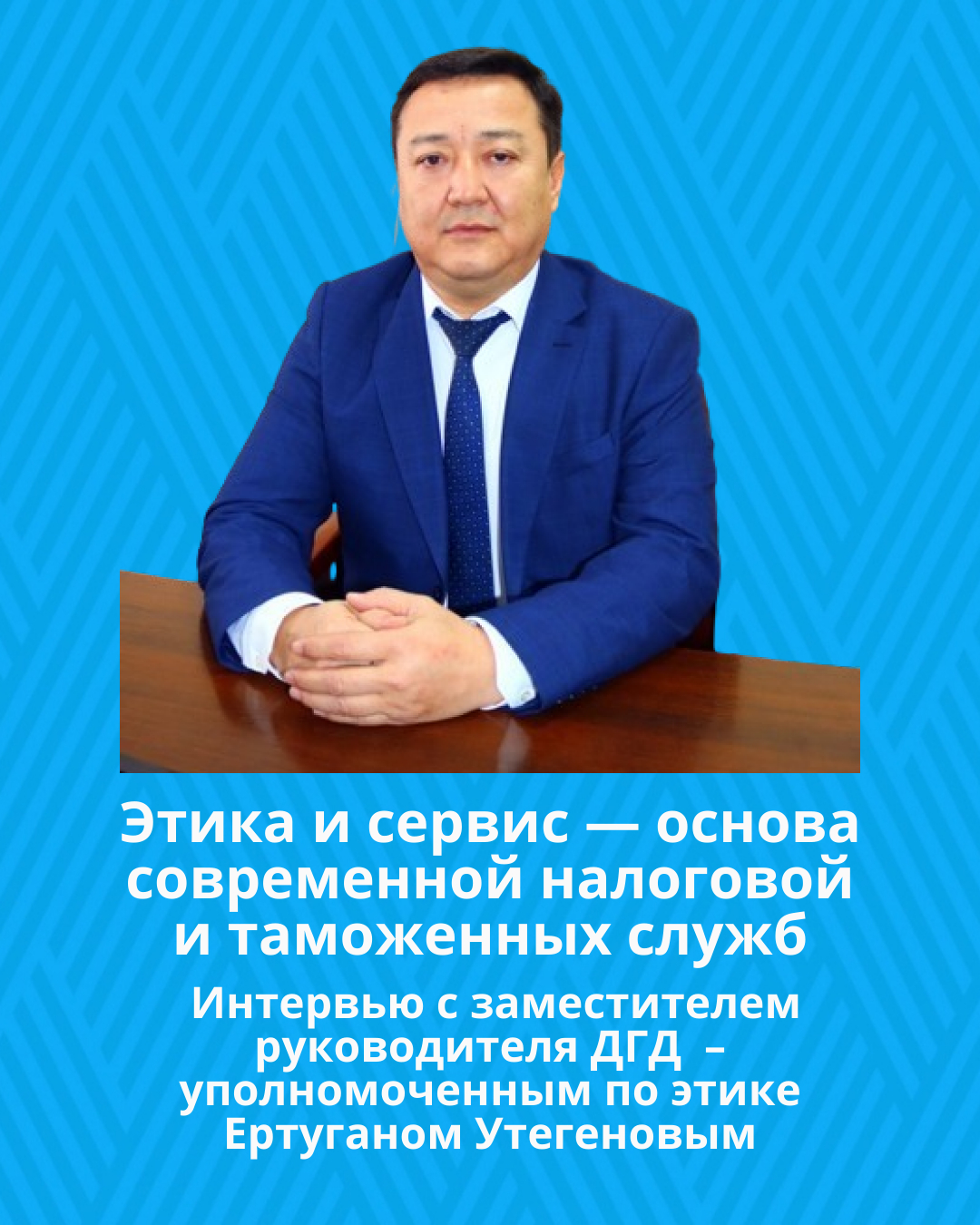
Ethics and service are the foundation of modern tax and customs services 27.04.2026
Interview with Yertugan Utegenov, Deputy Head of the State Duma for the Mangystau region, Ethics Commissioner The Department of State Revenue for the Mangystau region pays great attention to issues of professional ethics, anti-corruption and increasing the level of trust of citizens and businesses in the work of tax authorities.We talked with Yertugan Kenesovich Utegenov, Deputy Head of the Department of State Revenue for the Mangystau region, Ethics Commissioner, about the role of the Ethics Commissioner, compliance with the Code of Ethics and measures to prevent violations. — Yertugan Kenesovich, what are your duties as an ethics commissioner? As Deputy Head of the Department and Ethics Commissioner, I am responsible for ensuring compliance with the standards of professional ethics, prevention of corruption offenses and the requirements of the Ethical Code of Civil Servants of the Republic of Kazakhstan.We carry out explanatory work among employees, consider appeals from citizens and colleagues, organize training seminars and events aimed at the formation of a high ethical culture. The main task is for every employee to understand that honesty, impartiality and openness are not just requirements of the law, but the basis for effective and trusting work with taxpayers. — What are the key principles of the Code of Ethics that employees of state revenue agencies should follow? The basic principles are honesty, integrity, legality, impartiality, openness and respect for citizens. An employee may not use his official position for personal purposes, accept gifts, allow conflicts of interest, or disclose confidential information.We regularly conduct training to ensure that these standards become the internal culture of the department. We pay special attention to young professionals — it is important to establish the right values from the first days of service. — How often do you receive requests on ethical issues? What are the most common problems? Appeals are received on a regular basis, both from citizens and entrepreneurs, as well as from employees themselves. Most often, people complain about the culture of communication, possible cases of red tape or inappropriate behavior in the provision of public services.We consider each request promptly, objectively and in strict accordance with the law. In most cases, explanatory work is sufficient. Upon confirmation of violations, information is sent to the authorized bodies for taking action. — What measures does the Department take to prevent ethics violations and corruption? We carry out systematic preventive work: we hold seminars and meetings in the teams of all regional administrations, including Aktau, Zhanaozen and district divisions. We actively use both full-time and online learning formats.The Ethics Commissioner participates in employee evaluations, job placement contests, and internal investigations. An important area is to work with middle managers so that they themselves become an example of ethical behavior. — How can citizens and entrepreneurs approach you on ethics issues? You can apply in several convenient ways:- Personally in the building of the Department of State Revenue for the Mangystau region (Aktau, microdistrict 31B, building 35);- By helpline: 8 (7292) 30-13-10;- Through the citizens' address box in the DGD building.All requests are considered confidentially and within the time limits established by law. — What would you like to say to the taxpayers of the Mangystau region? Today, the state revenue authorities are actively moving from a model of total control to service support for businesses and citizens. We are open to dialogue and strive to ensure that every interaction is polite, transparent and professional.If you encounter inappropriate behavior from an employee, please do not remain silent, let us know. Only through joint efforts will we be able to maintain a high level of trust in the tax and customs services. The higher the ethical culture within the department, the more comfortable the conditions are for conscientious businesses and citizens. — Thank you for the interview, Yertugan Kenesovich. Yertugan Kenesovich Utegenov was born on July 30, 1976 in the Kyzylorda region. In 1997, he graduated from the Kazakh State Academy of Management. He has been working in the system of state revenue authorities for more than 25 years. Since 2019, he has held senior positions in the Department of Internal Affairs of the Mangystau region, including Head of the Audit Department. Since May 2025 — Deputy Head of the Department of State Revenue for the Mangystau region, Ethics Commissioner. (unofficial translation)Source : https://www.gov.kz/memleket/entities/kgd-mangistau/press/news/details/1209215?lang=kk
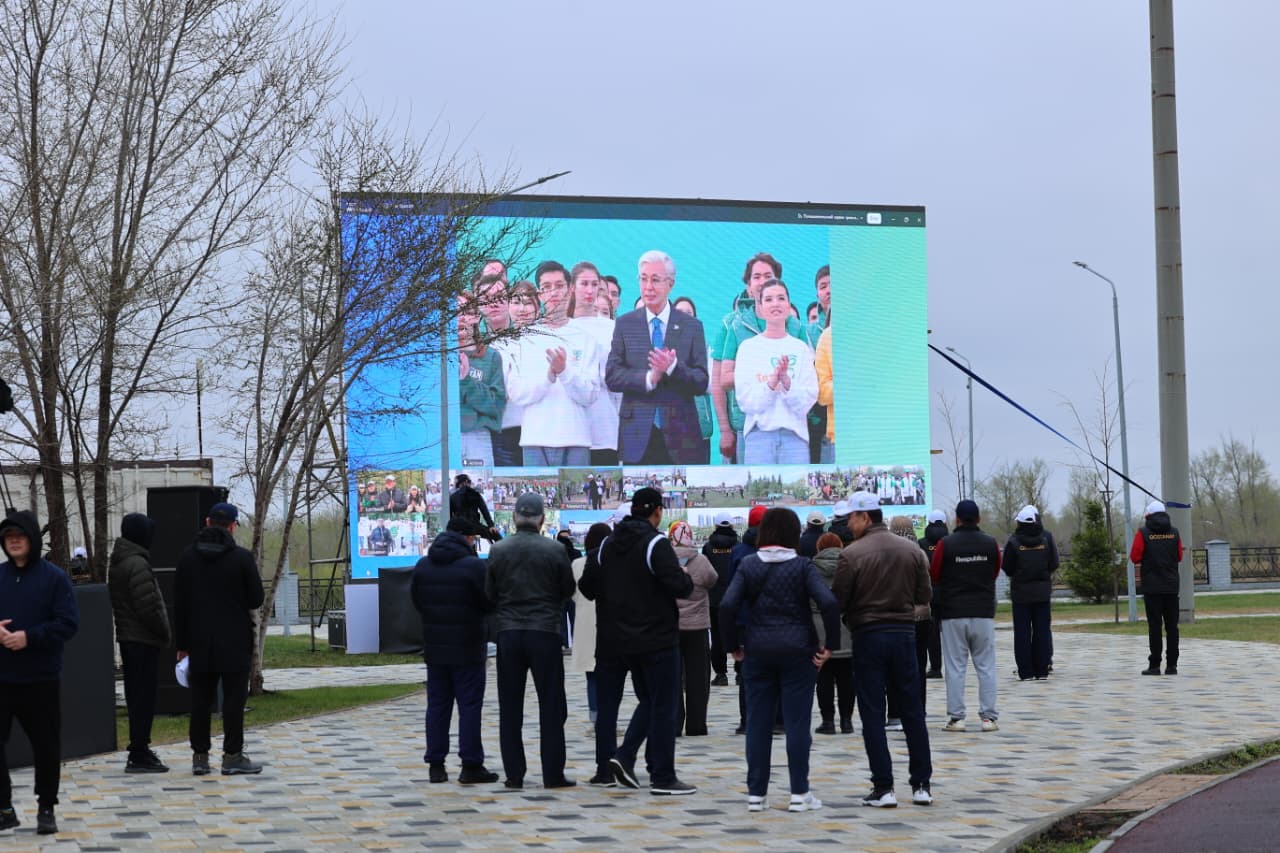
Residents of the region planted 12 thousand seedlings 27.04.2026
With the participation of the Head of State Kassym-Jomart Kemeluly Tokayev, the nationwide environmental campaign "Taza Kazakhstan" (Clean Kazakhstan) was held. Residents of the Kostanay region also actively joined the large-scale event by planting 12 thousand seedlings.Since the beginning of the environmental program's implementation in 2024, over 400 public spaces have been improved in the region, more than 250 children's and sports grounds have been installed, about 600 unauthorized dumpsites have been eliminated, over 1,250 dilapidated and ownerless structures have been demolished, and more than 277 thousand trees and seedlings have been planted.To date, 105 thousand residents and 1.9 thousand enterprises have participated in the sanitary cleanup and improvement efforts, with 3.5 thousand units of equipment involved. 1.3 thousand hectares of territory have been cleaned, including 19 thousand courtyards, and 50 thousand tons of waste have been removed.Over the past three years, 94 parks and squares have been built and improved in the region, and 420 children's and sports grounds have been installed. Additionally, the facades of more than 200 apartment buildings have been renovated."In 2026, the following are planned: planting 77.3 thousand seedlings, renovating the facades of 63 apartment buildings, installing 31 new children's playground, continuing the demolition of dilapidated housing, and improving 80 parks and public recreation areas. A bicycle park with an area of 43.8 hectares will be built in the Kostanay district, and an eco-park with an area of 40 hectares will be built in the city of Kostanay," noted the Akim (Governor) of the Kostanay region, Kumar Aksakalov.Source : https://www.gov.kz/memleket/entities/kostanay/press/news/details/1209230?lang=kk

Kostanay region strengthens exports of processed agricultural products 27.04.2026
The region is a leader in processing agribusiness products. According to the results of 2025, 8.1 million tons of processed agribusiness products were exported from the Republic of Kazakhstan. Of these, the Kostanay region accounts for 2.2 million tons. The share of the Kostanay region in the export of processed products is 27.2%. One such exporting enterprise is Kaizen LLP, which processes legumes and was launched two years ago. Now an agreement has been reached with the Turkish holding Arbel to open a pasta production plant. The company also intends to build a flour milling complex, where 200 thousand tons of wheat will be processed annually. As a result, the total capacity of the enterprise will reach 400 thousand tons per year. As noted by the Akim of the Kostanay region, Kumar Aksakalov, Kaizen LLP was opened as part of the implementation of the Head of State's instruction to increase the share of processed products in the agribusiness sector to 70%.Kaizen LLP was built with investments from the international Turkish holding Arbel. 70 jobs were created. The enterprise processes four crops: peas, chickpeas, green lentils, and red lentils.To date, the enterprise is unique for the northern region of the country in terms of the level of technological equipment and organization of production processes in the field of legume processing. Production is focused on producing high value-added products that meet modern quality and safety requirements.The enterprise's technological base includes modern high-performance equipment, ensuring a high level of process automation, stable product quality, and compliance with international standards.Products are supplied both to the domestic market of Kazakhstan and for export. The export geography covers the Turkish Republic, the People's Democratic Republic of Algeria, the Islamic Republic of Afghanistan, as well as a number of European countries. Just last year, the enterprise produced and exported 180 thousand tons of products.To further develop the industry, the enterprise has begun implementing an investment project to build a pasta production plant. The new enterprise will create 60 new jobs.The company also plans to build a flour milling complex, where 200 thousand tons of wheat will be processed."The implementation of these projects is aimed at ensuring the domestic market with domestic processed products, reducing dependence on imported pasta, and developing the enterprise's export potential with access to the markets of neighboring countries," noted Kumar Aksakalov.Overall, the activities of Kaizen LLP fully correspond to the tasks of increasing the level of processing of agricultural raw materials and diversifying the economy.Source : https://www.gov.kz/memleket/entities/kostanay/press/news/details/1209242?lang=kk
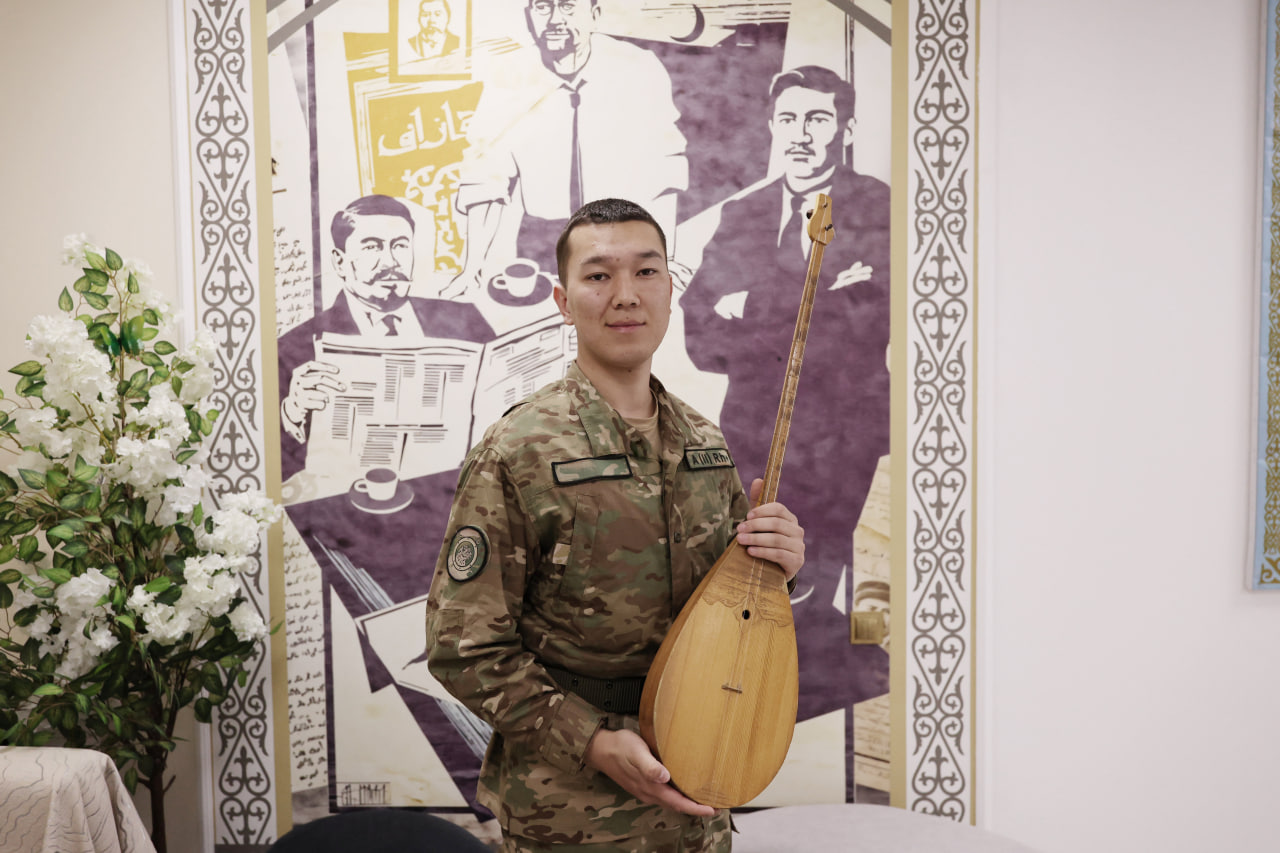
11 instruments in his arsenal: one of the most musical guardsmen serves in Turkestan 27.04.2026
Private Ramzat Azizuly is serving in military unit 5574 of the National Guard of the Ministry of Internal Affairs of the Republic of Kazakhstan in Turkestan. He is proficient in playing 11 musical instruments.The guardsman confidently plays the dombra, shertеr, guitar, and bass guitar, as well as a number of percussion and ethnic instruments, including the cajón, darbuka, dabyl, and taituyaq. His repertoire also includes the piano, sazsyrnai, and shankobyz.Ramzat is 21 years old and comes from the Zhambyl region. He has been involved in music since childhood. He received his first dombra lessons at the age of four from his parents, who are music teachers. Many members of his family are engaged in the arts: his brother plays the prima dombra, while his sister performs on the prima kobyz.He received professional education at the capital’s “Shabyt” college, majoring in bass dombra — a rare instrument that requires serious training.Before being conscripted, Ramzat performed as part of the ethno-folklore ensemble “Korkyt” at the State Academic Philharmonic named after Yerkegali Rakhmadiyev in Astana. He also participated in television projects as a musician.According to the military unit, Ramzat’s musical abilities have been supported from the very first days of his service. The unit provides conditions for practice and access to musical instruments, allowing him to continue developing his skills. Today, the guardsman takes part in cultural events.He is currently serving in Turkestan, performing duties related to maintaining public order. The city receives a large number of tourists ежедневно, which requires heightened responsibility from servicemen.According to the guardsman, music helps him maintain inner balance and focus, which is essential in carrying out his duties. Press Service of the National GuardMinistry of Internal Affairs of the Republic of KazakhstanSource : https://www.gov.kz/memleket/entities/kvv/press/news/details/1209277?lang=kk
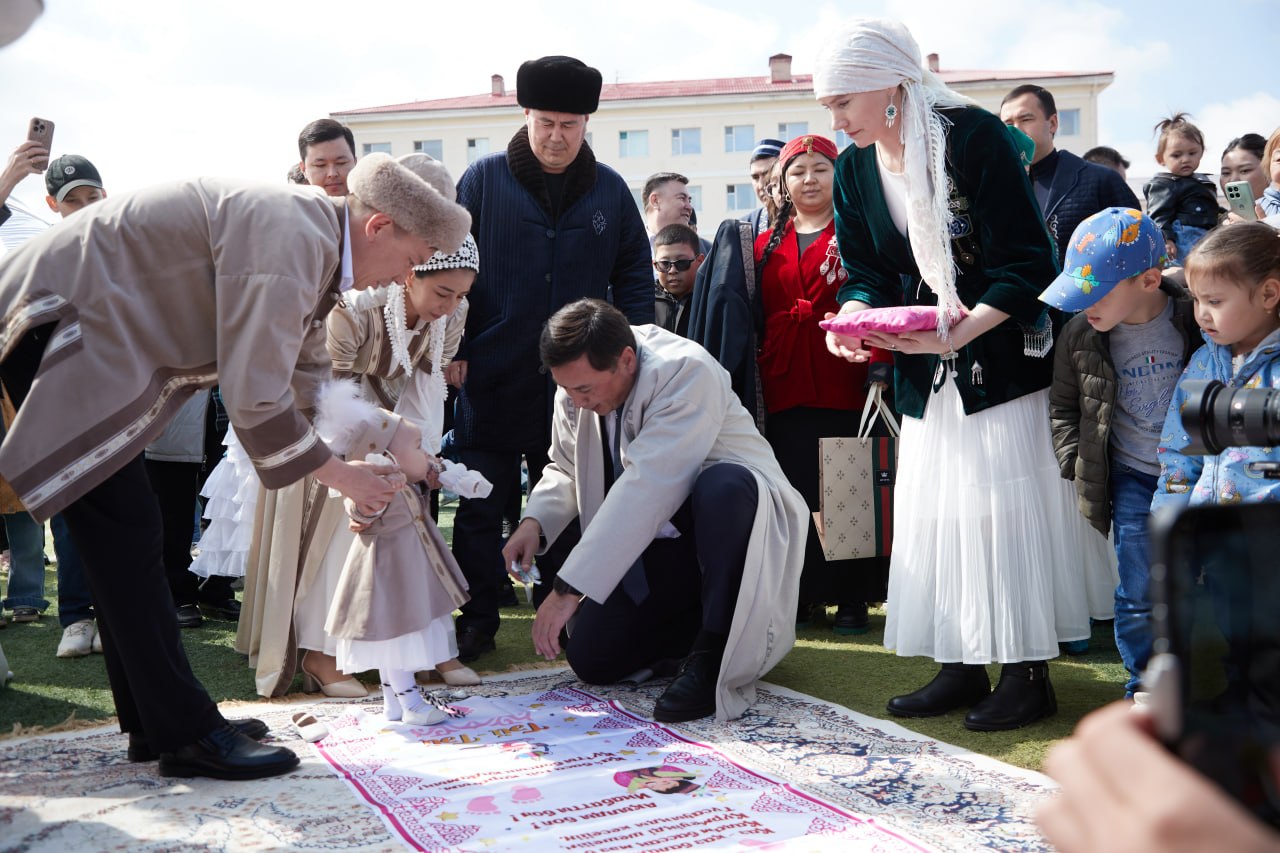
National Guard of the Ministry of Internal Affairs of the Republic of Kazakhstan celebrates Nauryz 27.04.2026
In the city of Astana, military units of the National Guard of the Ministry of Internal Affairs of the Republic of Kazakhstan celebrated the Nauryz holiday with great solemnity and scale. As part of the event, organized on the initiative of the Main Command, yurts of the Astana garrison were set up on the территории of a capital brigade, along with thematic compositions reflecting the national spirit.Each yurt installed at the celebration site was dedicated to promoting the rich culture and traditions of the Kazakh people.Servicemen prepared national dishes, treated guests, and demonstrated traditional hospitality. In addition, various rituals and national games were held in each yurt, creating a special festive atmosphere.As part of the event, winners were determined among the yurts in several special categories. Awards were presented for “Best Traditions,” “Most Beautiful Yurt,” “Most Creative Aul,” “Most Hospitable Yurt,” and “Best Nauryz Kozhe.” The competition contributed to the development of the servicemen’s creative potential and strengthened their respect for national values.It is worth noting that this holiday became not only a vibrant cultural event for National Guard servicemen but also an important platform for strengthening unity and promoting spiritual values. Press Service of the National GuardMinistry of Internal Affairs of the Republic of KazakhstanSource : https://www.gov.kz/memleket/entities/kvv/press/news/details/1209287?lang=kk

Диалоговая площадка по разъяснению прав и обязанностей граждан 27.04.2026
В Шелекском сельском округе была проведена диалоговая площадка с участием неправительственных организаций, жителей села и представителей акимата с целью повышения правовой грамотности и обсуждения актуальных проблем населения. В ходе мероприятия участники всесторонне рассмотрели вопросы формирования правовой культуры, разъяснения прав и обязанностей граждан.В ходе диалога жители задали интересующие их вопросы и получили конкретные ответы. В частности, были обсуждены вопросы земельных отношений, порядка получения социальной помощи, семейного права и трудовых споров.Source : https://www.gov.kz/memleket/entities/enbekshikazakh-shelek/press/news/details/1209160?lang=kk
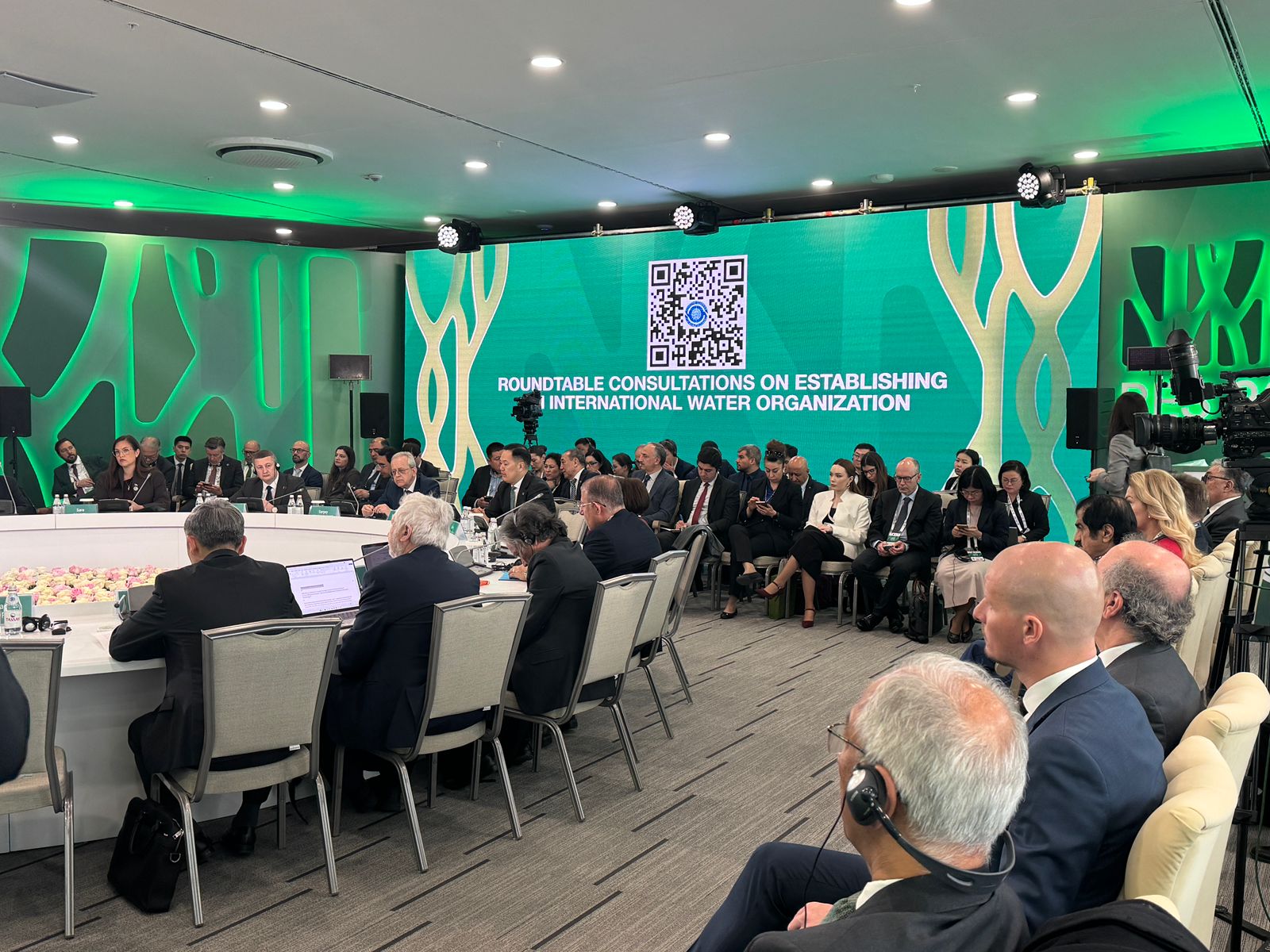
The Initiative of Kazakhstan to Establish an International Water Organization was Discussed at RES2026 27.04.2026
The first round of international consultations on the establishment of an International Water Organization (IWO) under the auspices of the United Nations was held on the margins of the Regional Ecological Summit.The event brought together high-level representatives of states, international organizations, as well as members of the scientific and expert communities.At the opening of the consultations, Didar Temenov, Director of the Department of Multilateral Cooperation, delivered remarks on behalf of Minister of Foreign Affairs of the Republic of Kazakhstan Yermek Kosherbayev. He outlined the objectives of the initiative put forward by President Kassym-Jomart Tokayev to consolidate United Nations water-related mandates in order to ensure the effective advancement of this agenda.Perspectives on the establishment of the International Water Organization were also shared by UN Under-Secretary-General for Economic and Social Affairs, Li Junhua; the UN Secretary-General’s Special Envoy on Water, Retno Marsudi (via video message); the UNECE Executive Secretary, Tatiana Molcean; as well as representatives of UNESCO, UN-Water, and other UN specialized agencies.Country positions and proposals were presented by the Representative of the President of Azerbaijan on Climate Issues and President of COP29, Mukhtar Babayev; the Minister of Water Resources of Uzbekistan, Shavkat Khamraev; the Minister of Environmental Protection of Serbia, Sara Pavkov; as well as deputy ministers of relevant ministries from a number of countries and other representatives of UN Member States.Overall, representatives of states, international organizations, and the scientific community expressed support for the initiative of the President of the Republic of Kazakhstan to establish an International Water Organization. Participants underscored its timeliness and legitimacy in light of the urgent need to strengthen the global water governance system.Representatives of states and international organizations reaffirmed their readiness to engage constructively in further discussions on the establishment of the IWO.For her side, the moderator of the consultations, Ambassador-at-Large of the Ministry of Foreign Affairs, Zulfiya Suleimenova, expressed her appreciation to the participants for their active engagement in launching the negotiation process and affirmed that Kazakhstan will continue to advance this initiative across all relevant international platforms.Source : https://www.gov.kz/memleket/entities/mfa/press/news/details/1209178?lang=kk
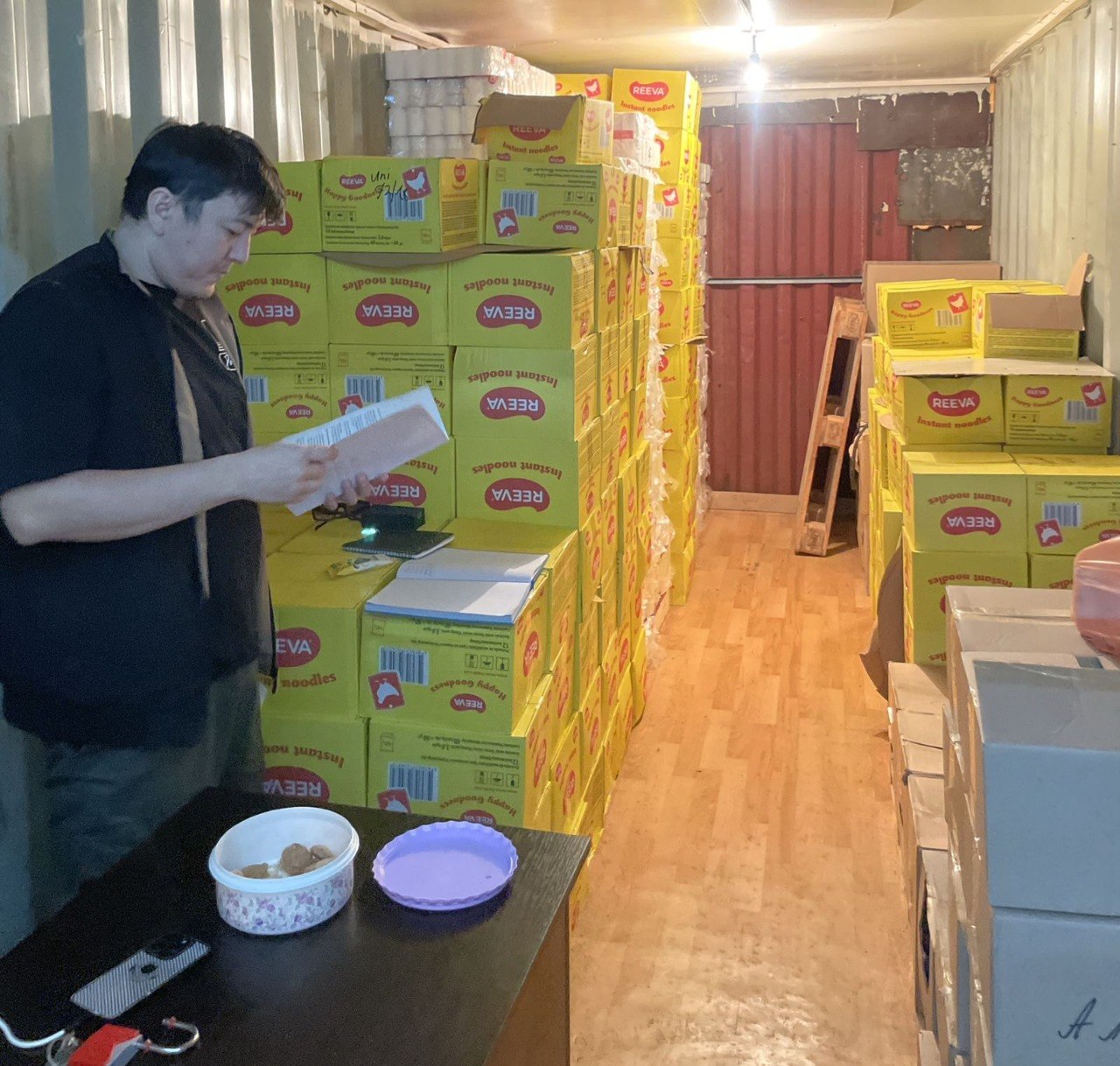
Nine intermediaries were identified at the Almaty wholesale market during an inspection 27.04.2026
In execution of the instruction of Prime Minister Olzhas Bektenov, in order to ensure state control and prevent unjustified price increases for socially significant food products and to eliminate unproductive intermediaries, the Department, on April 25 of the current year, together with the Entrepreneurship and Investment Department of Almaty, the State Revenue Department of Almaty, the Department of Economic Investigations of Almaty, and the offices of the district akims of the city, conducted another monitoring at the city's largest wholesale market "Barys-4". Within the framework of the monitoring conducted, the Department of Trade and Consumer Rights Protection of Almaty analyzed the wholesale intermediaries of the market. As a result of comprehensive measures, 9 intermediaries have been identified to date. Also, within the framework of the regional commission, the State Revenue Department of Almaty is conducting chronometric surveys of business entities. At the same time, the Department has carried out comprehensive work to inform and explain the requirements of trade legislation to entrepreneurs and the administration of the trading market. Special attention was paid to compliance with the established trade markup of no more than 15% on socially significant food products, as well as the need to sell goods with clearly designed and accessibly placed price tags.This issue is under constant control; materials regarding all identified intermediaries and business entities will be submitted for consideration at a meeting of the regional commission. Source : https://www.gov.kz/memleket/entities/mti/press/news/details/1209114?lang=kk
Lessons of the law: how legal culture is formed among schoolchildren and students in Kostanay region 27.04.2026
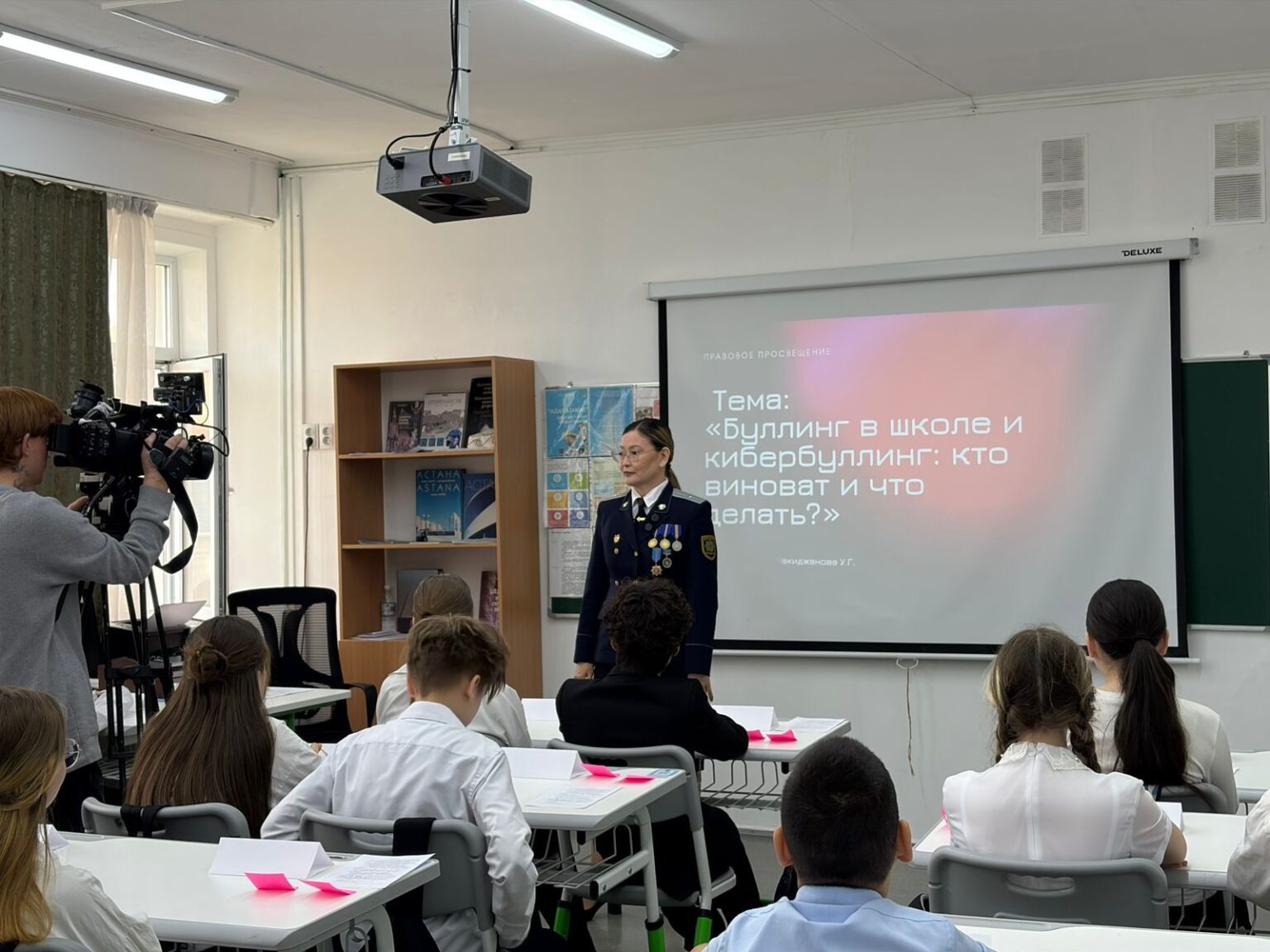
In the Kostanay region, as part of the "Law and Order" concept, a program of educational sessions aimed at shaping the legal consciousness of youth is being implemented in stages. The initiative is designed to enhance the legal culture of the younger generation, prevent offenses, and create a safe educational environment.Schools and colleges in the region are covered under the project. Employees of the prosecutor's office and police, as well as veterans of law enforcement agencies, are actively involved in its implementation as mentors. This allows for the transfer of practical knowledge to young people and the explanation of legal issues using specific examples.The program includes sessions aimed at improving the legal literacy of students. Particular attention is paid to the prevention of bullying and cyberbullying, drug addiction and gaming addiction, as well as the prevention of deviant behavior among minors. The sessions are conducted in an interactive format using trainings and practical tasks, which promotes student engagement.Another event took place at Secondary School No. 8 in the city of Kostanay. During the meeting, an open dialogue with students was organized, within which issues of compliance with legal norms, personal responsibility, and respect for the law were discussed in detail.This project is an important initiative that contributes to strengthening legal culture among young people, fostering a respectful attitude towards the law, and shaping them into conscious citizens.Source : https://www.gov.kz/memleket/entities/kostanay/press/news/details/1209045?lang=kk
Working with desk control notifications in the KNP ISNA 27.04.2026
The Department of State Revenue for the Karaganda region informs about the procedure for executing notifications of desk control.If discrepancies are identified during desk monitoring, a notification of discrepancies is sent to the taxpayer (except for participants in horizontal monitoring)., How is the notification considered completed:1. If you agree with the discrepancies, you need to eliminate the violations in one or more ways.:,submit correct tax reports for the relevant period;,return the previously refunded VAT to the budget + pay the penalty fee (for each day from the moment of receipt to the refund);for the self-employed:,reflect the data in a special mobile application;, or pay taxes and social security payments;If necessary, perform actions to switch to a different tax regime (according to art. 716 of the Tax Code of the Republic of Kazakhstan).2. If you disagreeYou must:,send an explanation of the reasons for the discrepancies to the tax authority;Important: the explanation should not indicate a violation of tax legislation.., How to submit an explanation:The explanation is provided through the KNP ISNA system:,Go to the main page;,Go to the "Incoming documents" tab;,Click "View all";,Find the desired notification.After you have opened the desired notification:The notification itself and the section "Execution of the OGD document" will be displayed in the window that opens.In this section, you must:fillin the explanatory field (describe the reasons for the discrepancies or indicate what measures you have taken);attach supporting documents (if available).After filling out, click the "Sign and send" buttonSource : https://www.gov.kz/memleket/entities/kgd-karaganda/press/news/details/1233559?lang=ru
Kazakhstan and the UAE Reaffirm Commitment to Strengthening Strategic Partnership 27.04.2026
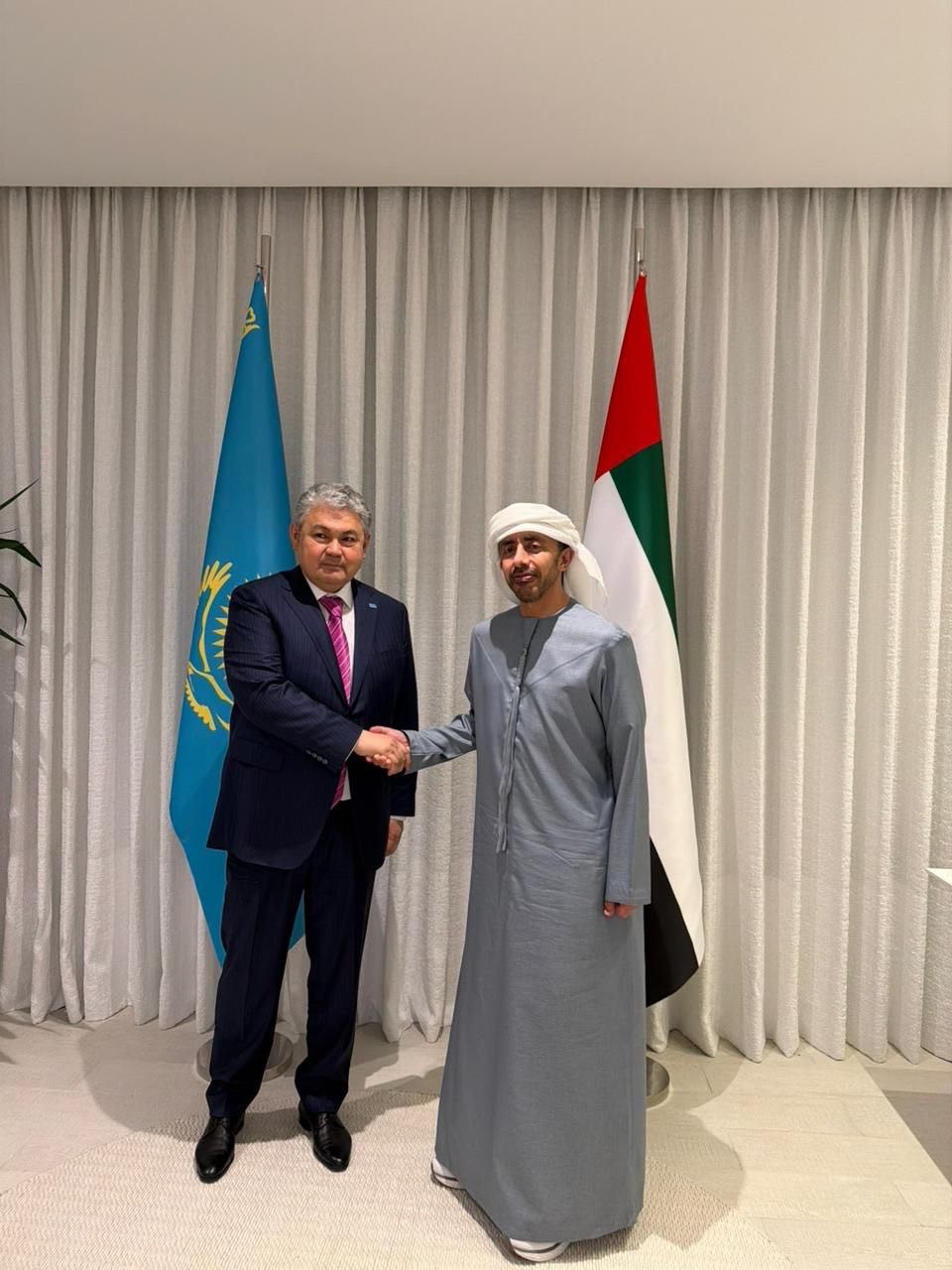
Abu Dhabi, 27 April 2026 – As part of his official visit to the United Arab Emirates Minister of Foreign Affairs of the Republic of Kazakhstan Yermek Kosherbayev held talks with Deputy Prime Minister and Minister of Foreign Affairs of the UAE Sheikh Abdullah bin Zayed Al Nahyan.During the meeting, the sides discussed the current state and future prospects of the Kazakh-Emirati partnership, noting the high level of political dialogue and the traditionally fraternal nature of relations between the two countries.“The UAE is Kazakhstan’s strategic partner in the Arab world, and cooperation between our two countries continues to strengthen consistently across all key areas,” noted Minister Kosherbayev.Special attention was paid to the implementation of agreements reached between the leadership of the two states, as well as to expanding trade, economic, and investment cooperation.The sides also reviewed prospects for collaboration in the fields of energy, transport, infrastructure, innovation, artificial intelligence, and food security.“Economic cooperation has always been a solid foundation of our partnership. Today, the UAE is one of Kazakhstan’s key trade and investment partners in the region, and we are interested in advancing new joint projects,” said the Kazakh Foreign Minister.The interlocutors also exchanged views on pressing regional and international issues. Minister Kosherbayev reaffirmed Kazakhstan’s support and solidarity with the United Arab Emirates in the context of the current regional situation, underscoring the importance of preventing escalation and resolving all conflicts through political and diplomatic means on the basis of the principles of international law.The Kazakh Foreign Minister also conveyed an official invitation on behalf of President Kassym-Jomart Tokayev to the President of the UAE to participate in the Summit of the Eurasian Economic Union, which will be held on May 28–29, 2026 in Astana.For his part, Sheikh Abdullah bin Zayed Al Nahyan expressed appreciation to the Kazakh side for its support and highly praised Kazakhstan’s constructive position aimed at advancing diplomatic efforts.Following the talks, the sides reaffirmed their mutual interest in further deepening the strategic partnership, expanding practical cooperation, and continuing close coordination in both bilateral and multilateral formats.Source : https://www.gov.kz/memleket/entities/mfa/press/news/details/1209075?lang=kk
"As part of National Book Day on April 23rd, a nationwide campaign titled '10 Books I Have Read' is being held across the country." 27.04.2026
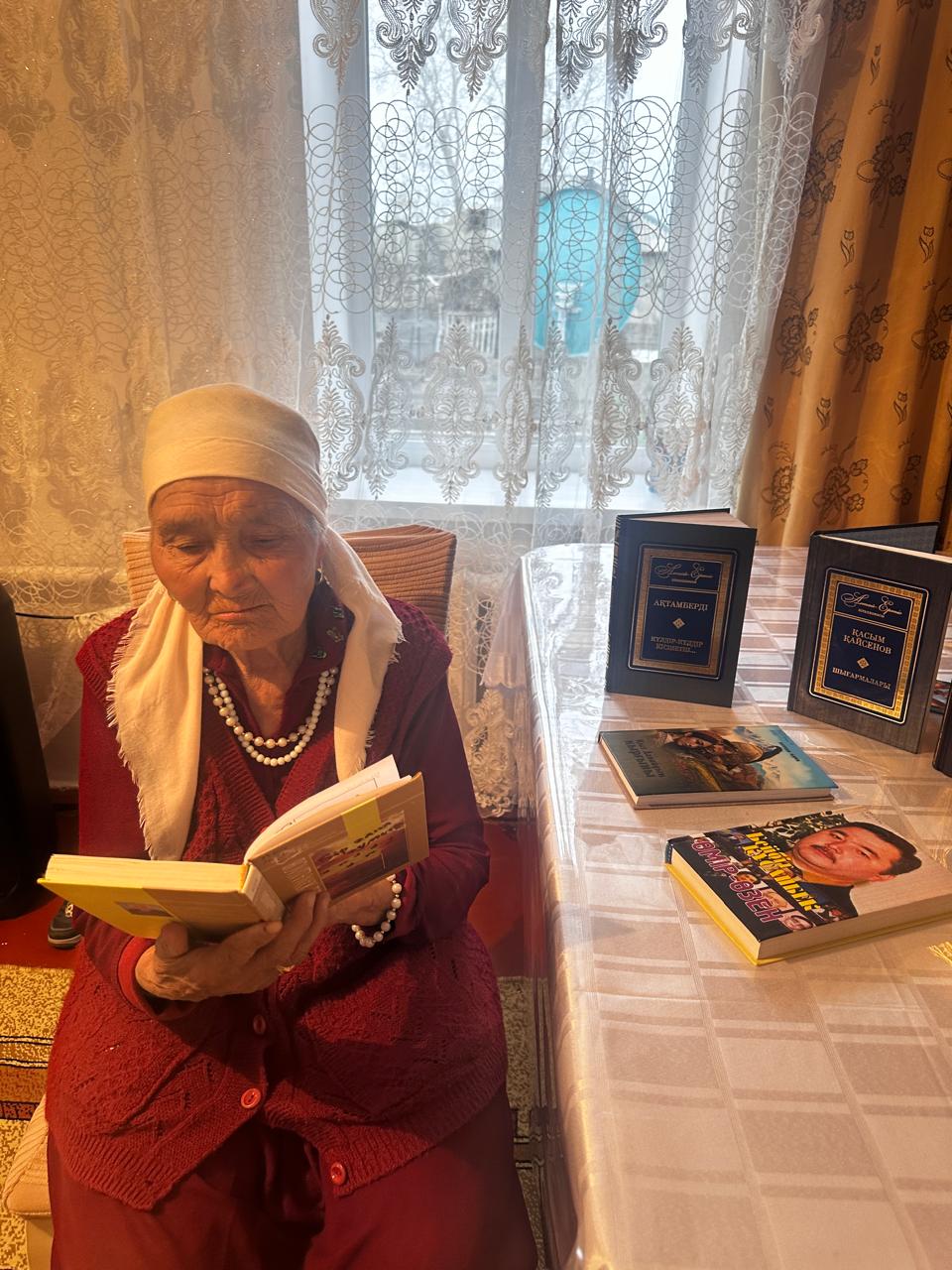
"In celebration of National Book Day on April 23rd, the nationwide campaign '10 Books I Have Read' was announced. The goal of the campaign is to promote a culture of mass reading in society and to encourage every citizen to read books.To set an example for the younger generation, the Bastaushi village library supported this campaign and decided to highlight one of its regular readers. A native of Bastaushi village, our elder Kulbagi Yerzhanova, remains a devoted reader at 84 years old and has read a vast number of works.Speaking of the books she has read since the beginning of this year, it is worth noting the twelve-volume collection by Kabdesh Zhumadilov. Additionally, as part of the 'One Country — One Book' campaign, she read his two-volume novel 'Tagdyr' ('Fate'). Kulbagi-apai shared the story's content, emphasizing its educational and moral value for the youth and the importance of honoring one's native land. Such examples are aimed at expanding the historical horizons of readers and increasing respect for the history of their country."Source : https://www.gov.kz/memleket/entities/vko-samar-bastaushy/press/news/details/1208817?lang=kk
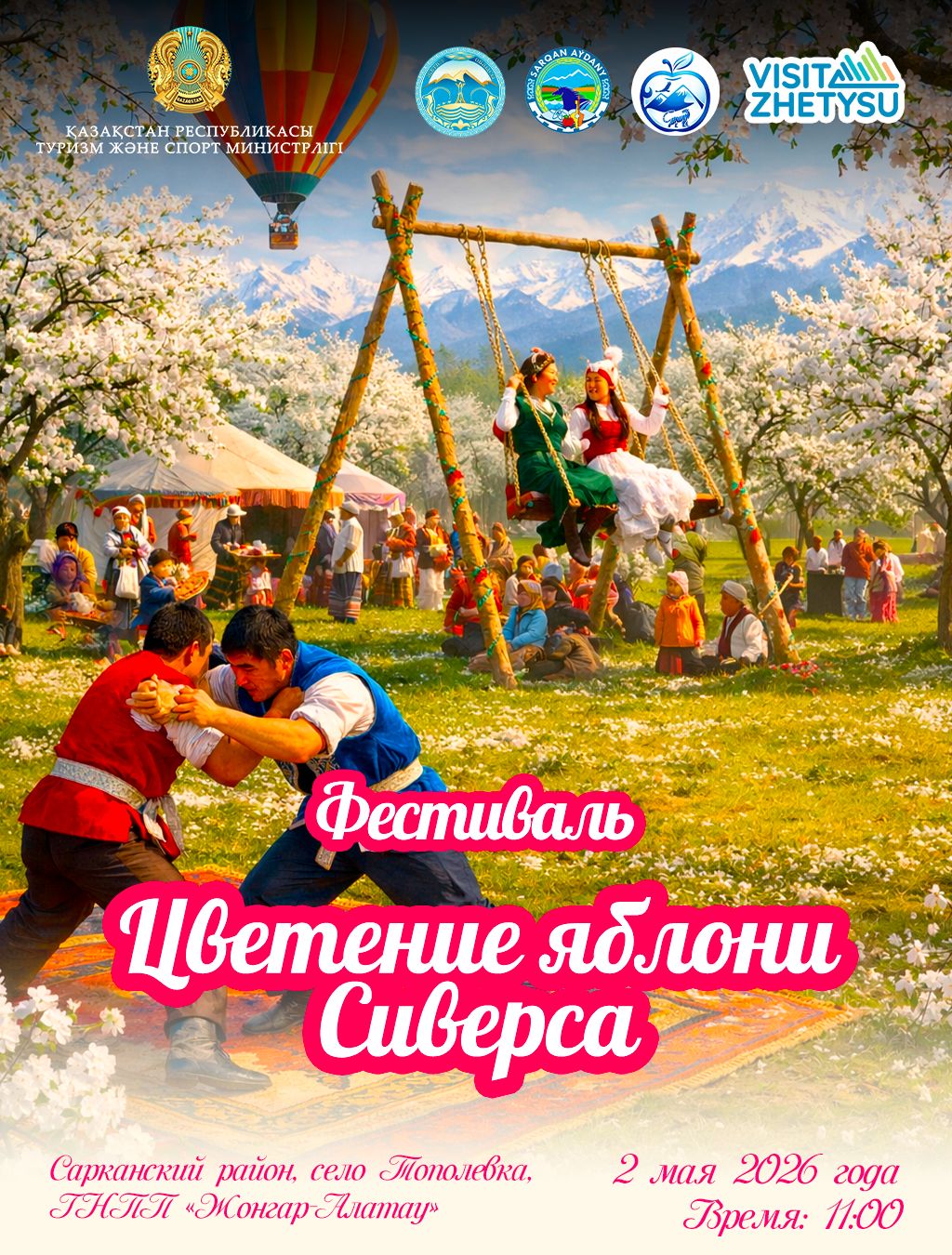
ANNOUNCEMENT The «Sivers Apple Blossom» Festival – 2026 27.04.2026
Date: May 2, 2026Location: Topolevka village, Sarkan district, «Zhongar-Alatau» State National Nature ParkOn May 2, 2026, one of the most spectacular natural events of spring will take place in the Zhetysu Region – the «Sivers Apple Blossom» Festival. This is an important event dedicated to a rare and extraordinary natural phenomenon.The event will be held on the territory of the «Zhongar-Alatau» State National Natural Park, in the picturesque surroundings of Topolevka village in the Sarkan district. This location was not chosen by chance: it is here that one of the largest groves of the wild Sivers apple tree in the world is found. This species is considered the ancestor of all cultivated apple varieties on Earth. According to scientists, approximately 48% of the global natural population of this unique apple tree is concentrated in the Zhetysu region.Once a year, for just a few weeks in spring, the mountain slopes are covered with delicate white and pink blossoms, transforming the valleys into breathtaking natural landscapes. During this period, thousands of tourists, photographers, and travelers visit the region to witness this rare natural phenomenon, learn its history, and experience the festival atmosphere.The festival brings together representatives of the tourism industry, environmentalists, scientists, media professionals, travel bloggers, artisans, cultural figures, as well as students and nature enthusiasts. The event serves as a platform for the development of eco-tourism, the preservation of natural heritage, and the international promotion of the region.The event is included in Kazakhstan’s national calendar of official events, highlighting its significance and tourist appeal.This year’s festival will offer a special atmosphere for guests. Headliners — Bayansulu and Kuandyk Rakhym — will take the stage and present a vibrant concert program against the backdrop of blooming mountains.Festival program includes:Panoramic views of blooming Sivers apple orchards;Plein air painting competition;Cultural events;National sports games;Handicraft exhibitions and master classes;Concert and entertainment programs.The «Sivers Apple Blossom» Festival is an opportunity to witness one of Kazakhstan’s most beautiful natural phenomenon, spend in the mountains surrounded by fresh air, get closer to national culture, and experience unforgettable impressions.Zhetysu invites you to get closer to a living legend of nature!Source : https://www.gov.kz/memleket/entities/mfa-hanoi/press/news/details/1208822?lang=kk