World
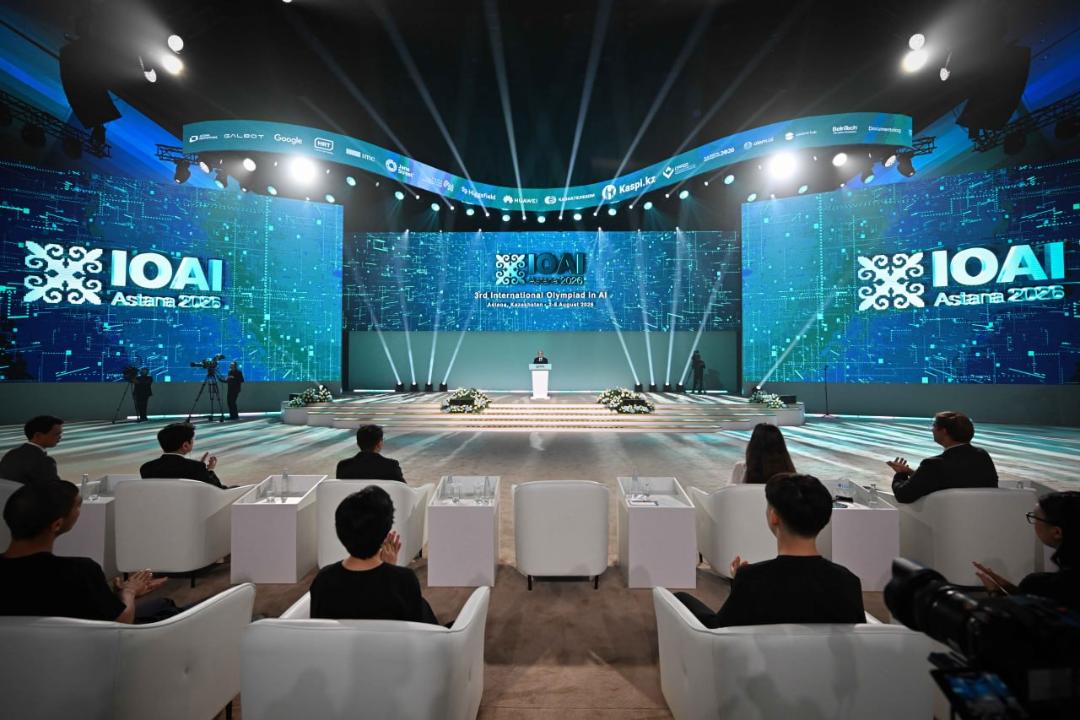
В Астане стартовала 3-я Международная олимпиада по искусственному интеллекту IOAI 2026 03.08.2026
3 августа в Астане состоялась торжественная церемония открытия 3-й Международной олимпиады по искусственному интеллекту IOAI 2026. На неделю столица Казахстана стала площадкой для встречи талантливых школьников, ведущих экспертов и представителей мировой технологической индустрии.Открыл Олимпиаду Президент Республики Казахстан Касым-Жомарт Токаев. В церемонии открытия приняли участие Заместитель Премьер-министра - Министр искусственного интеллекта и цифрового развития Республики Казахстан Жаслан Мадиев, руководитель Администрации Президента Республики Казахстан Роман Скляр, Министр просвещения Республики Казахстан Жулдыз Сулейменова, Министр науки и высшего образования Республики Казахстан Саясат Нурбек, сооснователь и председатель Международного совета IOAI Елена Маринова и глава Федерации по спортивному программированию Казахстана Багдат Мусин.На церемонии присутствовали участники IOAI 2026, руководители команд, наблюдатели и представители международного олимпиадного сообщества. В этом году соревнование объединило около 500 участников из 106 стран и территорий. Астана стала местом встречи нового поколения исследователей, инженеров и создателей технологий.«Для нас огромная гордость принимать Международную олимпиаду по искусственному интеллекту в Астане на таком беспрецедентном уровне - рекордные 106 стран объединила именно наша столица. Личная поддержка и внимание Главы государства Касым-Жомарта Кемелевича Токаева к развитию сферы искусственного интеллекта придают этому событию особый статус. Благодаря такому вниманию Казахстан уверенно заявляет о себе как о передовой технологической державе. МИИЦР продолжит системно работать над тем, чтобы наша талантливая молодежь получала все возможности для реализации самых смелых амбиций и создания прорывных решений» - отметил Заместитель Премьер-министра – Министр искусственного интеллекта и цифрового развития Республики Казахстан Жаслан Мадиев.Своим опытом и видением будущего искусственного интеллекта с участниками поделились:Михаил Ломтадзе, сооснователь и генеральный директор Kaspi.kz;Тимур Турлов, основатель и генеральный директор Freedom Holding Corp.;доктор Кай-Фу Ли, председатель и генеральный директор Sinovation Ventures, президент Института искусственного интеллекта Sinovation Ventures, бывший президент Google China.Выступления приглашенных экспертов стали одной из ключевых частей церемонии. Спикеры рассказали о стремительном развитии технологий искусственного интеллекта, значении фундаментальных знаний, готовности к экспериментам и ответственности нового поколения разработчиков.Напомним, 3-я Международная олимпиада по ИИ - IOAI 2026 проходит в Астане со 2 по 8 августа. Участникам предстоит решать задачи по машинному обучению, компьютерному зрению, обработке естественного языка и другим направлениям искусственного интеллекта.Программа олимпиады включает два индивидуальных тура, командный челлендж, образовательные встречи, международные дискуссии и культурные мероприятия.Проведение IOAI 2026 в Казахстане отражает стремление страны развивать цифровое образование, поддерживать талантливую молодёжь и участвовать в формировании глобальной повестки в области искусственного интеллекта.Организатором олимпиады в Казахстане выступает Федерация по спортивному программированию Казахстана (CPFED).Справочная информацияIOAI - международная научная олимпиада по искусственному интеллекту для школьников. Она предоставляет молодым талантам площадку для соревнований, обмена знаниями и знакомства с передовыми направлениями развития технологий искусственного интеллекта. Международная олимпиада по искусственному интеллекту проводится с 2024 года и уже успела стать одной из самых быстрорастущих в мире. IOAI впервые прошла в 2024 году в Бургасе (Болгария), которая собрала 32 страны и территории. Вторая Международная олимпиада по ИИ прошла в Пекине (КНР), где приняли участие 61 страна и территория. Астана принимает 3-ю IOAI, где собралось рекордное количество участников и стран.Партнеры IOAI 2026:3-я Международная олимпиада по ИИ проводится при поддержке Министерства ИИ и цифрового развития РК, Министерства просвещения РК, акимата г. Астана.Глобальные партнеры: IMC, Jane Street, Google, Huawei, Galbot, HRT, Mohammed ben Zayed University of AI, DeepInfra.Локальные партнеры: Kaspi.kz, Freedom Holding Corp., Documentolog, Higgsfield AI, Astana Hub.Источник: https://www.gov.kz/memleket/entities/maidd/press/news/details/1267648?lang=ru Source : https://www.gov.kz/memleket/entities/zhetysu-digital/press/news/details/1267767?lang=ru
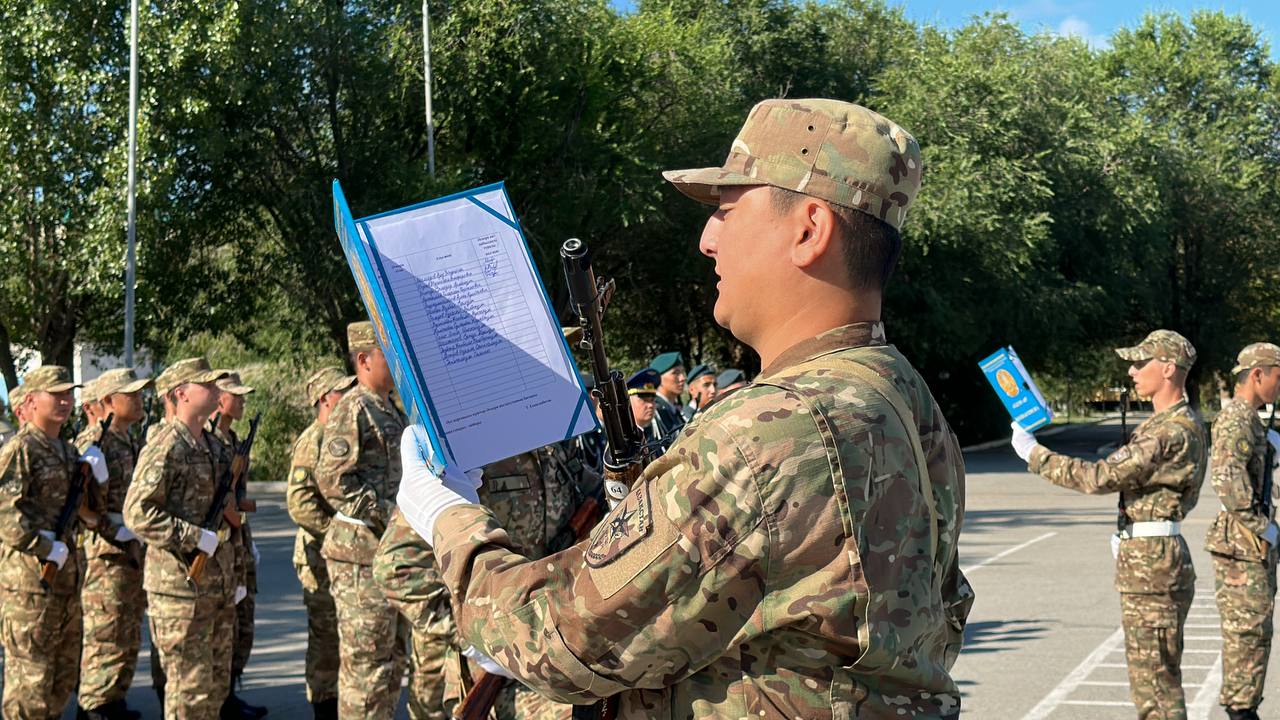
More than 50 students from Aktobe Regional University took an oath of allegiance to the Motherland 03.08.2026
Source : https://www.gov.kz/memleket/entities/mod/press/news/details/1267764?lang=ru
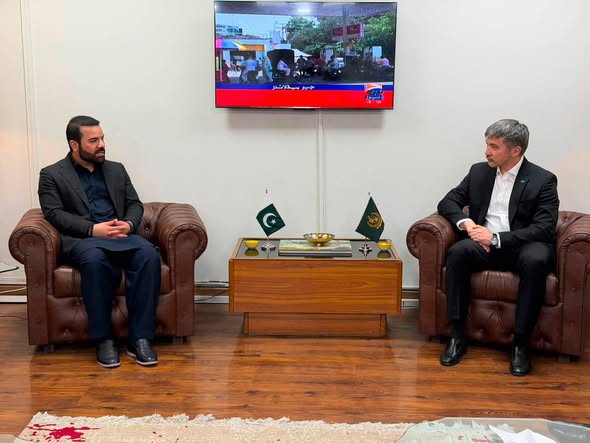
Ambassador of Kazakhstan met with Minister of State for Law and Justice of Pakistan 03.08.2026
Islamabad, 31 July 2026 – H.E. Mr. Yerzhan Kistafin, Ambassador of Kazakhstan to Pakistan, held a meeting with H.E. Mr. Aqeel Malik, Minister of State for Law and Justice of Pakistan.During the meeting, the parties discussed the current Kazakhstan-Pakistan bilateral agenda, as well as planned visits and activities scheduled for the near future.The interlocutors expressed satisfaction with the strong momentum of cooperation not only between government institutions, but also among business, academic, cultural, scientific and technical communities, sports federations, and other stakeholders.In this context, particular emphasis was placed on the need to strengthen cooperation in the legal sphere, primarily between the competent authorities of the two countries.To facilitate substantive discussions, the parties agreed to hold negotiations between representatives of the Ministries of Justice of Kazakhstan and Pakistan in order to identify specific areas of mutual interest for both sides.Source : https://www.gov.kz/memleket/entities/mfa-islamabad/press/news/details/1267695?lang=ru
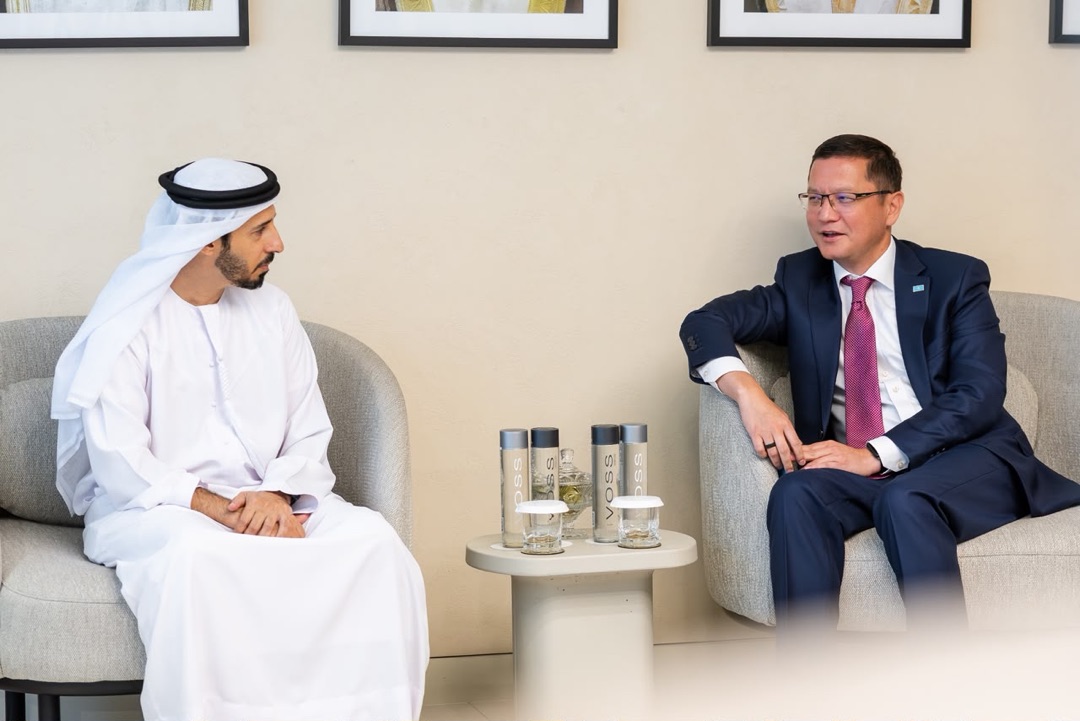
Kazakhstan and UAE discuss cooperation in training civil servants in Dubai 03.08.2026
Dubai, July 28, 2026 – Ambassador of the Republic of Kazakhstan to the United Arab Emirates Rauan Zhumabek met with Ali bin Siba'a Al Marri, President of the Mohammed Bin Rashid School of Government (MBRSG).During the meeting, the parties discussed prospects for expanding cooperation in public administration, capacity building, and the exchange of expertise. The Ambassador commended MBRSG's contribution to the development of the UAE's public administration system and noted that Kazakhstan is modernizing its higher education system, with a particular focus on training a new generation of professionals and advancing science and artificial intelligence.The Kazakh Ambassador proposed exploring opportunities to provide scholarships for Kazakhstani students to pursue master's degree programs at MBRSG, engage the school's faculty in delivering lectures, training sessions, and academic consulting, as well as organize short-term professional development programs for Kazakhstan's civil servants.For his part, Ali bin Siba'a Al Marri noted that this year marks the 10th anniversary of the Memorandum of Cooperation between MBRSG and the Academy of Public Administration under the President of the Republic of Kazakhstan. He emphasized that cooperation between the two institutions has continued to develop successfully over the past decade and proposed organizing joint events to commemorate this milestone.At the conclusion of the meeting, both sides reaffirmed their commitment to further strengthening bilateral cooperation in public administration and implementing joint educational initiatives.Source : https://www.gov.kz/memleket/entities/mfa-abudhabi/press/news/details/1267672?lang=ru

Today, the "TANDEM" radio station featured an extensive live broadcast introducing the "Tәuelsizdik Urpaqtary" (Generations of Independence) grant of the Akimat of the Aktobe Region. 03.08.2026
The live broadcast featured Alimbek Zhanibekuly Turaliyev, Head of the Aktobe Regional Department, who provided comprehensive information about the objectives of the grant competition, eligibility requirements, the application process, and the opportunities the grant offers to young people.If you have an innovative idea or a project aimed at benefiting society, the "Tәuelsizdik Urpaqtary" grant of the Akimat of the Aktobe Region is an excellent opportunity to bring it to life.Source : https://www.gov.kz/memleket/entities/aktobe-zhastar1/press/news/details/1267590?lang=ru
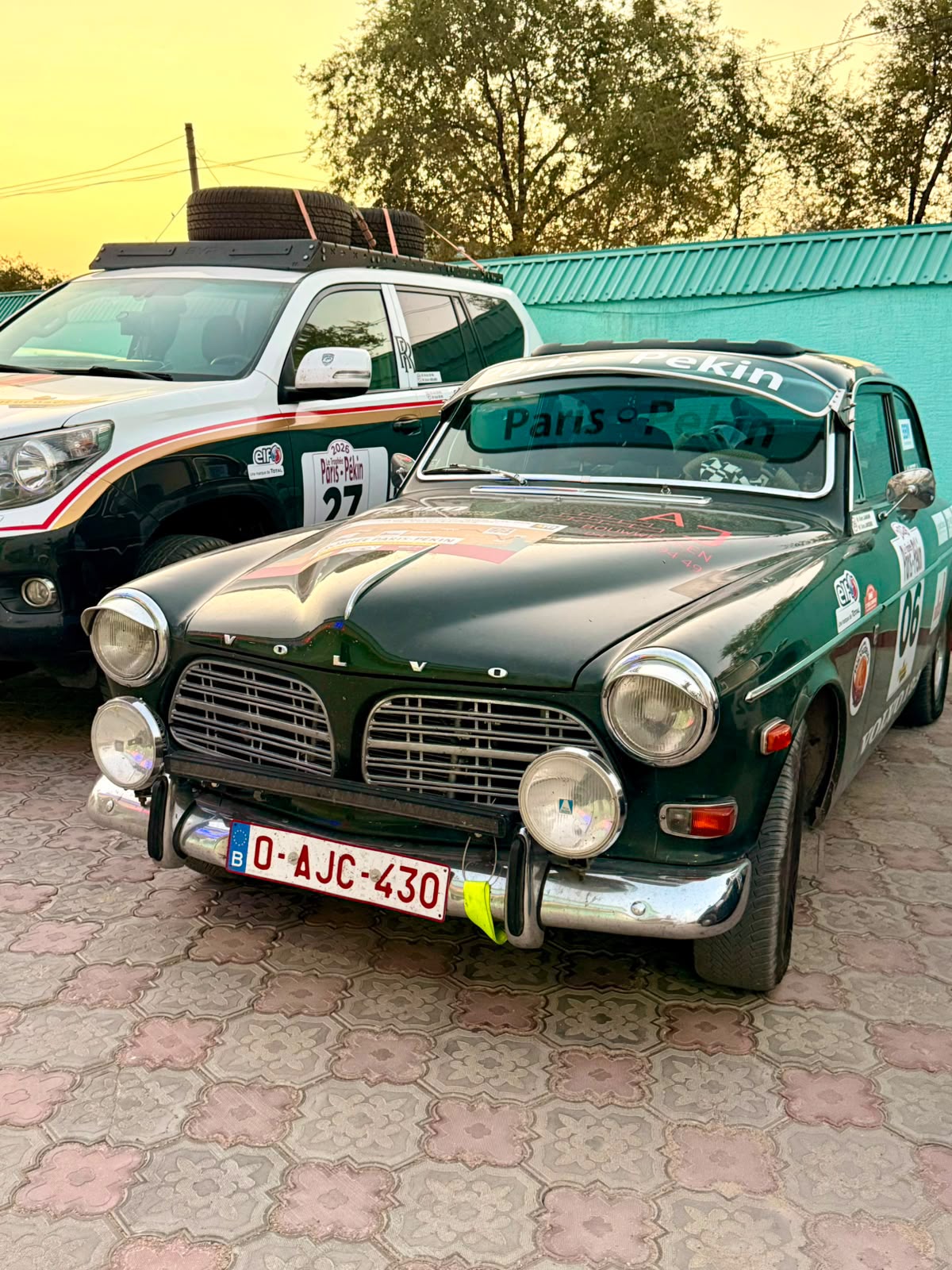
Holding of the International Classic and Vintage Car Rally "Trophée Paris–Pékin par la Route de la Soie" (29–31 July 2026) 03.08.2026
From 29 to 31 July 2026, the Kazakhstan stage of the international classic and vintage car rally "Trophée Paris–Pékin par la Route de la Soie" took place within the territory of the Republic of Kazakhstan.As part of the organization of the stage passing through the Mangystau Region, the Tourism Department of the Mangystau Region, in cooperation with the Border Service of the National Security Committee of the Republic of Kazakhstan and the event organizers, carried out all necessary coordination activities.A total of 36 crews, comprising 80 international participants, were accommodated at Qazaq Camp Yurts & Rooms in the Mangystau District, as well as at the Aray, Beyneu, and Zhibek Zholy hotels in the Beyneu District.On 31 July, all 36 crews successfully crossed the state border of the Republic of Kazakhstan through the Tazhen Border Crossing Point without delays and continued their route to the Republic of Uzbekistan.Source : https://www.gov.kz/memleket/entities/mangystau-tourism/press/news/details/1267470?lang=ru
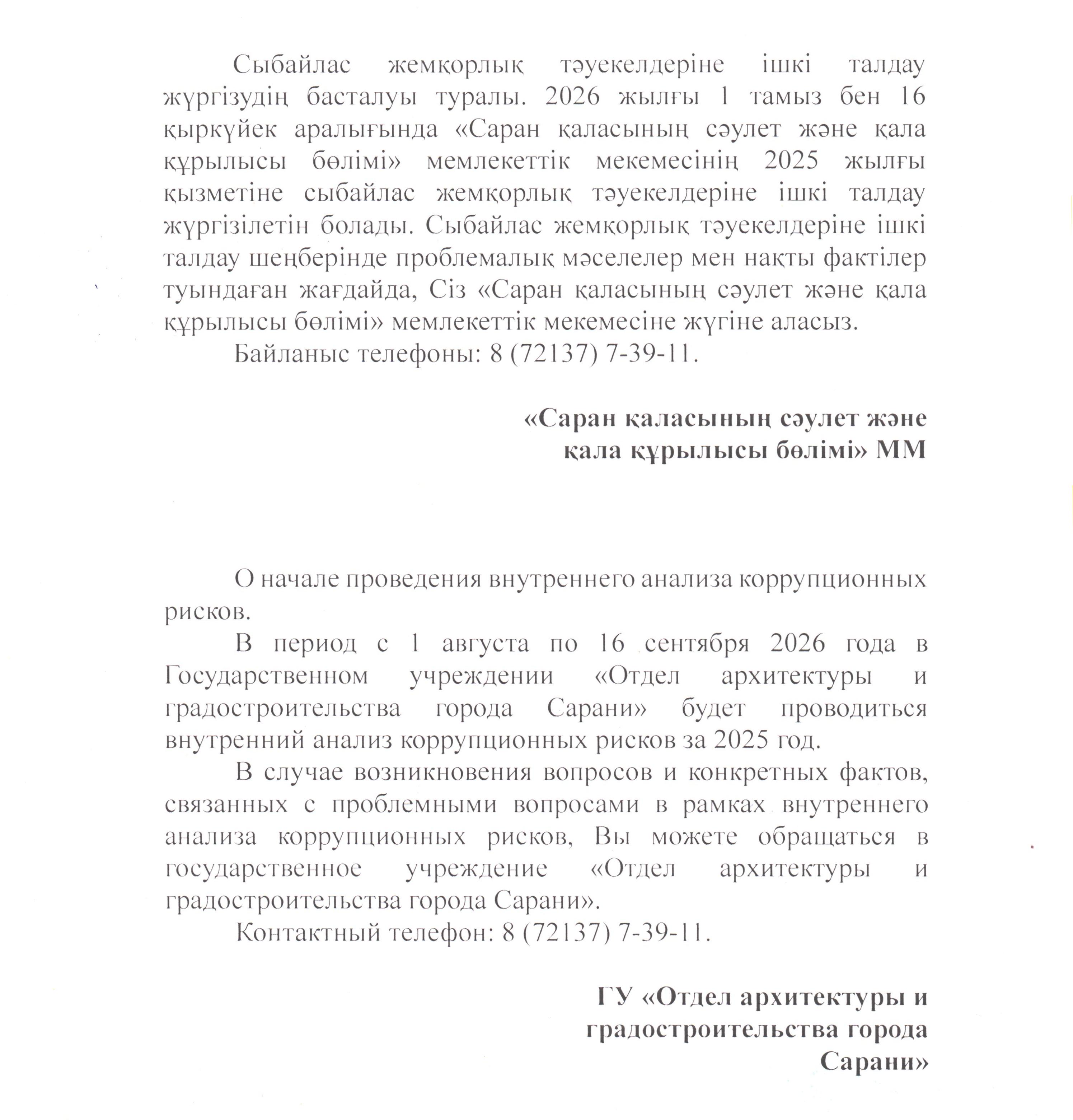
О проведении анализа коррупционных рисков 03.08.2026
The State Institution "Department of Architecture and Urban Planning of the City of Saran" will conduct a corruption risk analysis from August 1, 2026, to September 16, 2026. Source : https://www.gov.kz/memleket/entities/saulet-saran/press/news/details/1267460?lang=ru
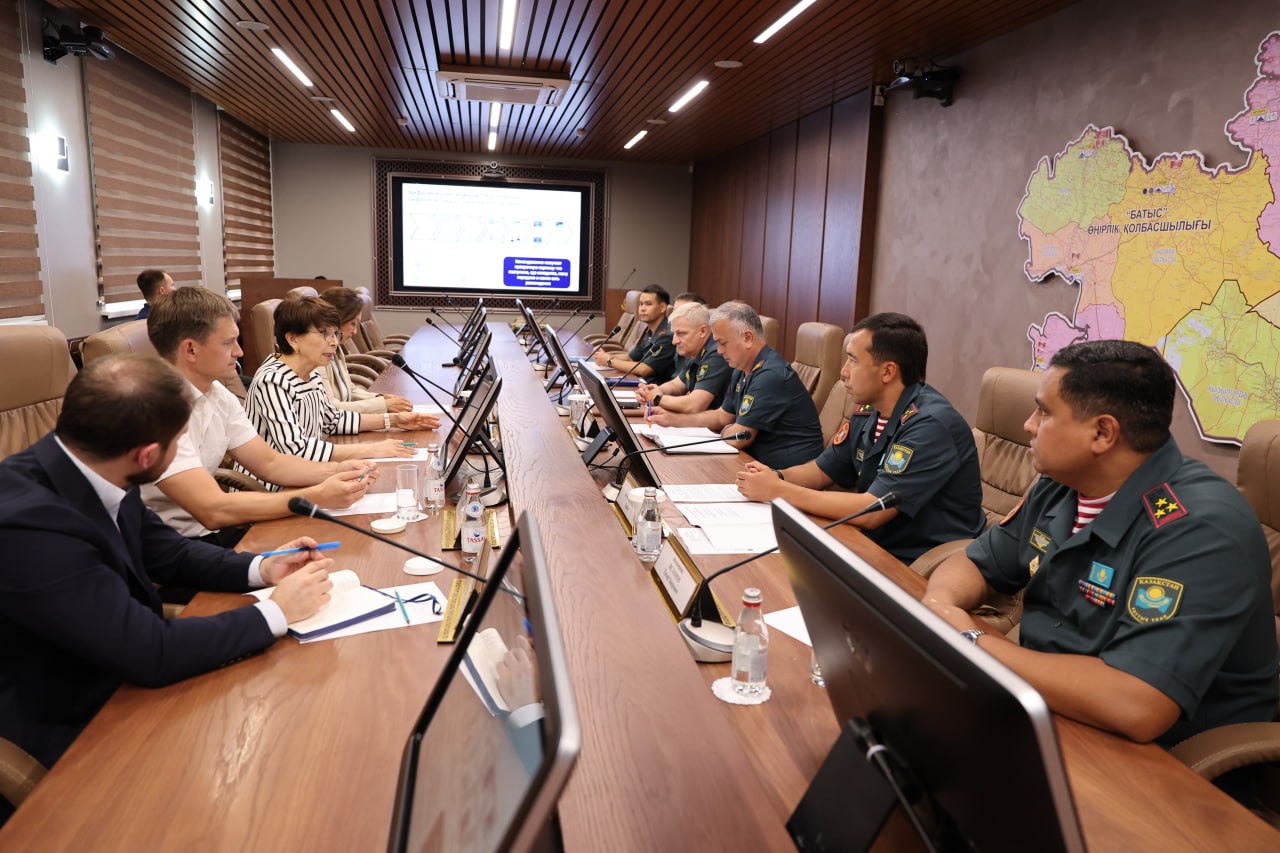
Property Management Goes Digital: National Guard Continues Its Digital Transformation 03.08.2026
The National Guard of the Ministry of Internal Affairs of the Republic of Kazakhstan is introducing a new digital property management system that will make it possible to track every item of equipment—from the moment it arrives at a warehouse until it is issued to an individual serviceman.This initiative follows the signing of a Memorandum of Cooperation between the Main Command of the National Guard and Center for Digital Economy Development LLP.The joint project aims to make the accounting of military supplies and equipment fully digital, transparent, and efficient.Each item will receive its own unique digital identifier, either an RFID tag or a barcode. This will enable commanders to monitor, in real time, the location of every item, identify the serviceman to whom it has been issued, and check current warehouse stock levels.The first military unit to implement the new system will be Military Unit 7552 in Almaty. Following the completion of the pilot project, the system is expected to be rolled out across other National Guard units throughout Kazakhstan.The transition to digital inventory management will address several key challenges. It will eliminate errors associated with paper-based accounting and inventory procedures while significantly accelerating the receipt, issuance, and verification of equipment. Processes that previously required hours—or even days—will be completed in just minutes.The implementation of modern digital technologies will enhance transparency, improve inventory accuracy, reduce information processing time, minimize the impact of human error, and establish a unified digital management system for military supplies and equipment.Through this initiative, the National Guard continues its comprehensive digital transformation, adopting advanced technologies that improve operational efficiency while making the management of state property more accurate, faster, and more transparent. Press Service of the National Guard of the Ministry of Internal Affairs of the Republic of KazakhstanSource : https://www.gov.kz/memleket/entities/kvv/press/news/details/1267253?lang=ru
- 03.08.2026
Source : https://www.gov.kz/memleket/entities/almobl-densaulyk/press/news/details/1267230?lang=ru
- 03.08.2026
Source : https://www.gov.kz/memleket/entities/almobl-densaulyk/press/news/details/1267231?lang=ru
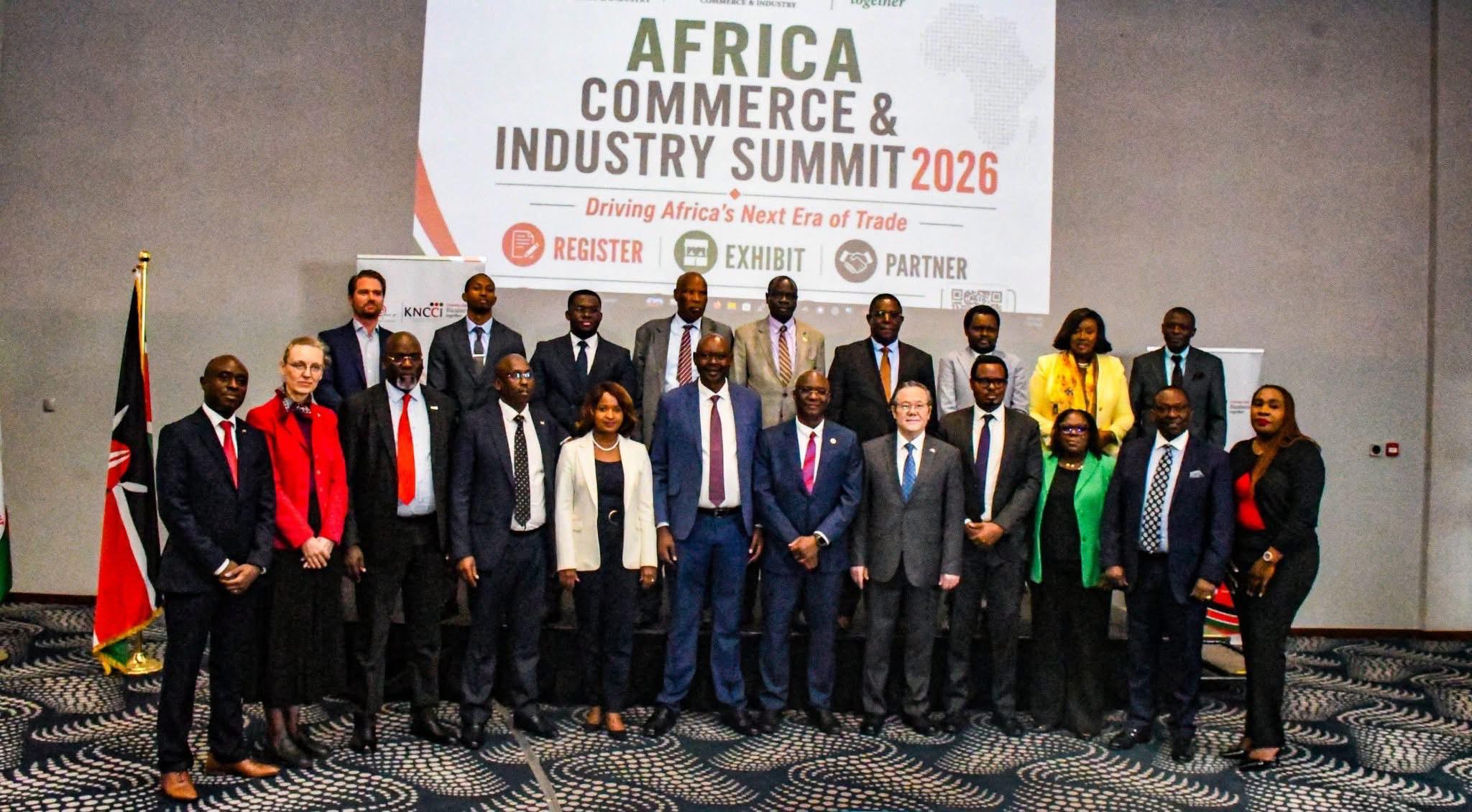
Prospects for Enhancing Kazakhstan–Kenya Trade and Economic Cooperation Discussed at the Kenya National Chamber of Commerce and Industry 02.08.2026
Nairobi, July 30, 2026 — On 30 July 2026, the Ambassador of the Republic of Kazakhstan to the Republic of Kenya and Permanent Representative of the Republic of Kazakhstan to the United Nations Office at Nairobi, Barlybay Sadykov, delivered a presentation at the Kenya National Chamber of Commerce and Industry (Nairobi) on Kazakhstan, its investment, trade and economic potential, as well as the prospects for strengthening bilateral cooperation between Kazakhstan and Kenya.In his remarks, the Ambassador briefed representatives of the Kenyan business community on the economic reforms being implemented in Kazakhstan, the country's favourable business environment, and its investment opportunities. Particular attention was given to the prospects for expanding cooperation in the areas of trade, agriculture, transport and logistics.Source : https://www.gov.kz/memleket/entities/mfa-nairobi/press/news/details/1267214?lang=ru
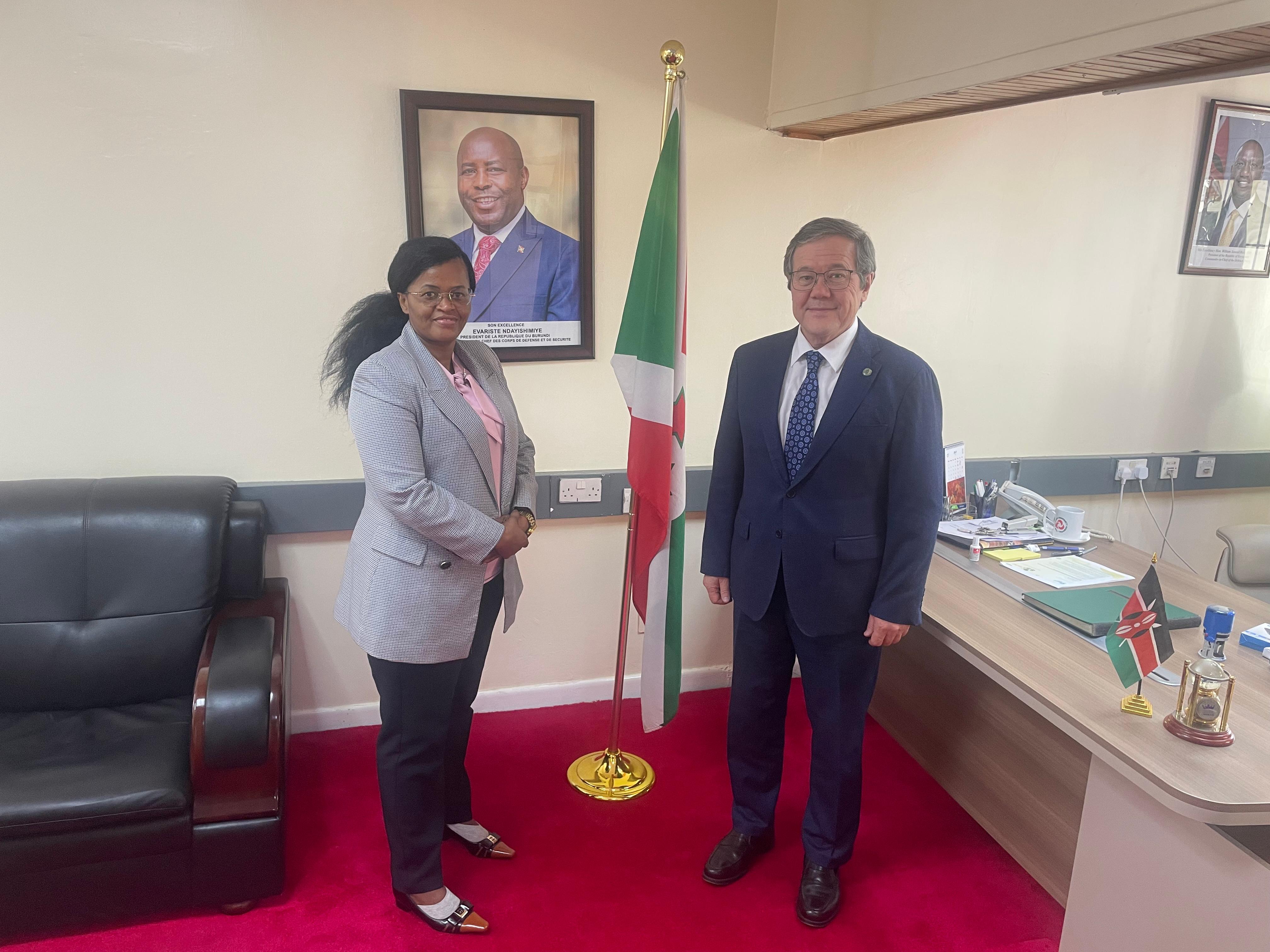
On the Meeting of the Ambassador of Kazakhstan with the Ambassador of Burundi to Kenya 02.08.2026
Nairobi, 31 July 2026 — The Ambassador Extraordinary and Plenipotentiary of the Republic of Kazakhstan to the Republic of Kenya, Barlybay Sadykov, held a meeting with the Ambassador Extraordinary and Plenipotentiary of the Republic of Burundi to the Republic of Kenya, Evelyne Habonimana.During the conversation, it was noted that Burundi currently holds the Chairmanship of the African Union. In light of the fact that the African Union has declared 2026 the year of “Assuring Sustainable Water Availability and Safe Sanitation Systems to Achieve the Goals of Agenda 2063,” this lends additional significance to the development of not only bilateral but also multilateral cooperation in this field.In this context, the parties devoted particular attention to discussing Kazakhstan’s initiative to establish an International Water Organization under the auspices of the United Nations.Following the meeting, the sides reaffirmed their readiness to further strengthen friendly ties and maintain regular dialogue on issues of mutual interest.Source : https://www.gov.kz/memleket/entities/mfa-nairobi/press/news/details/1267215?lang=ru
В eGov Business стала доступна услуга по передаче доли юрлица в доверительное управление 02.08.2026
В мобильном приложении eGov Business появилась новая госуслуга для предпринимателей «Передача доли уставного капитала в доверительное управление».Доверительное управление применяется в случаях, когда собственник временно передает управление своей долей другому лицу, сохраняя при этом право собственности. Все изменения оформляются официально и вносятся в государственные информационные системы.Для получения услуги в eGov Business необходимо:авторизоваться в мобильном приложении eGov Business;перейти в раздел «Категории услуг» – «Правовые отношения»;выбрать услугу «Передача доли ЮЛ в доверительное управление» и указать тип заявления;указать БИН юридического лица, ИИН/БИН учредителя-доверителя и ИИН/БИН доверительного управляющего;указать долю в процентах и теңге, срок передачи (в том числе бессрочно), номер и дату документа о передаче;прикрепить сканированную копию документа в формате PDF;подписать заявление одним из доступных способов;отслеживать статус рассмотрения в разделе «Сообщения» – «История услуг».«Мы постоянно расширяем возможности приложения eGov Business, чтобы предприниматели могли решать больше вопросов онлайн, без лишней бюрократии. Сейчас приложение набирает популярность среди предпринимателей и в 1 полугодии 2026 г. зарегистрировалось более 107 тыс. представителей малого и среднего бизнеса, и оказано более 1,4 млн услуг. Теперь в приложении доступна еще одна важная корпоративная услуга по передаче доли в уставном капитале в доверительное управление. Раньше для этого требовалось больше времени и личного участия, а всю процедуру можно пройти прямо со смартфона. Это экономит время и делает ведение бизнеса проще и удобнее», – отметил Заместитель Председателя Правления АО «Национальные Информационные Технологии» Шынгыс Оразалимов.Срок оказания услуги составляет не позднее 3 рабочих дней. Результат услуги можно посмотреть на странице Статуса заявки и в разделе «Сообщения – История услуг» приложения eGov Business. Услуга предоставляется бесплатно.Внедрение услуги стала результатом совместной работы Комитета государственных услуг Министерства искусственного интеллекта и цифрового развития Республики Казахстан, Министерства юстиции Республики Казахстан и АО «Национальные информационные технологии».Source : https://www.gov.kz/memleket/entities/aqmola-selinograd/press/news/details/1267205?lang=ru
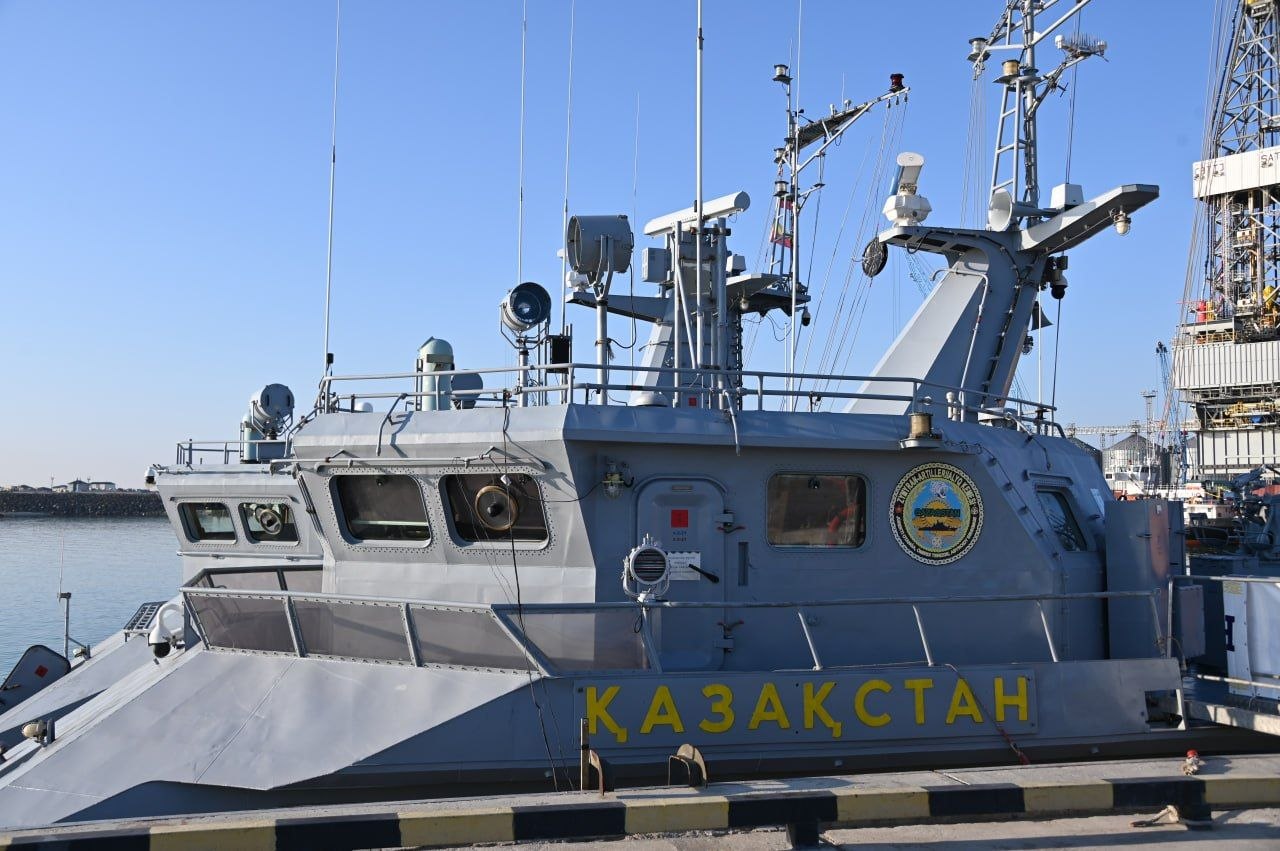
Another stage of combat training has concluded in the Naval Forces of Kazakhstan 01.08.2026
Source : https://www.gov.kz/memleket/entities/mod/press/news/details/1267131?lang=ru

Brazil Marks the 33rd Anniversary of Diplomatic Relations with Kazakhstan 01.08.2026
Brasília, July 30, 2026 – The Embassy of the Republic of Kazakhstan in the Federative Republic of Brazil hosted a ceremony of the Kazakhstan–Brazil Friendship Forum to commemorate the 33rd anniversary of the establishment of diplomatic relations between the two countries.The event was attended by Brazil's Deputy Minister of Foreign Affairs Susan Kleebank, President of the Kazakhstan–Brazil Friendship Forum and former Senator Ulysses Riedel, President of the Brazil–Kazakhstan Chamber of Commerce Cassiano Viana, leaders of Brazilian business associations, representatives of the country's political, public, and business communities, as well as members of the diplomatic corps accredited in Brazil.In his remarks, Ambassador of Kazakhstan to Brazil Bolat Nussupov outlined the key areas of bilateral cooperation between Kazakhstan and Brazil and informed the audience about the large-scale political reforms being implemented in Kazakhstan, including the entry into force of the new Constitution of the Republic of Kazakhstan and preparations for the elections to the unicameral Kurultai scheduled for August this year.In her welcoming address, Deputy Foreign Minister Susan Kleebank highly praised the current level of bilateral relations and noted the successful outcomes of the official visit of Brazil's Minister of Foreign Affairs Mauro Vieira to Astana in May this year. The Brazilian diplomat reaffirmed her government's unwavering commitment to strengthening and expanding bilateral cooperation with Kazakhstan.For his part, President of the Kazakhstan–Brazil Friendship Forum and former Senator Ulysses Riedel highly commended the reforms being carried out by Kazakhstan's leadership, emphasizing their importance for strengthening state institutions and ensuring the country's sustainable development. He also expressed his readiness to continue promoting and deepening cooperation between the two countries through the Friendship Society.During the event, Ambassador Bolat Nussupov expressed his appreciation to Kazakhstan's Honorary Consuls in Brazil and candidates for honorary consul positions for their successful cooperation and presented them with Certificates of Appreciation from the Embassy in recognition of their contribution to strengthening and expanding Kazakhstan–Brazil bilateral relations.On behalf of Kazakhstan's Honorary Consuls and candidates in the Brazilian states of São Paulo, Mato Grosso do Sul, Santa Catarina, and Pará, Kazakhstan's Honorary Consul in the State of Amazonas, Netto Cardozo, thanked the Ambassador of Kazakhstan for his support and trust. As a symbolic gesture, he presented the Ambassador with a commemorative "Kazakhstan Street" plaque, marking the naming of one of the streets in downtown Manaus, the capital of the State of Amazonas.The event concluded with a festive banquete featuring elements of traditional Kazakh cuisine. The Brazilian side, in turn, presented a musical performance featuring well-known Brazilian and international songs. Source : https://www.gov.kz/memleket/entities/mfa-brazil/press/news/details/1267122?lang=ru
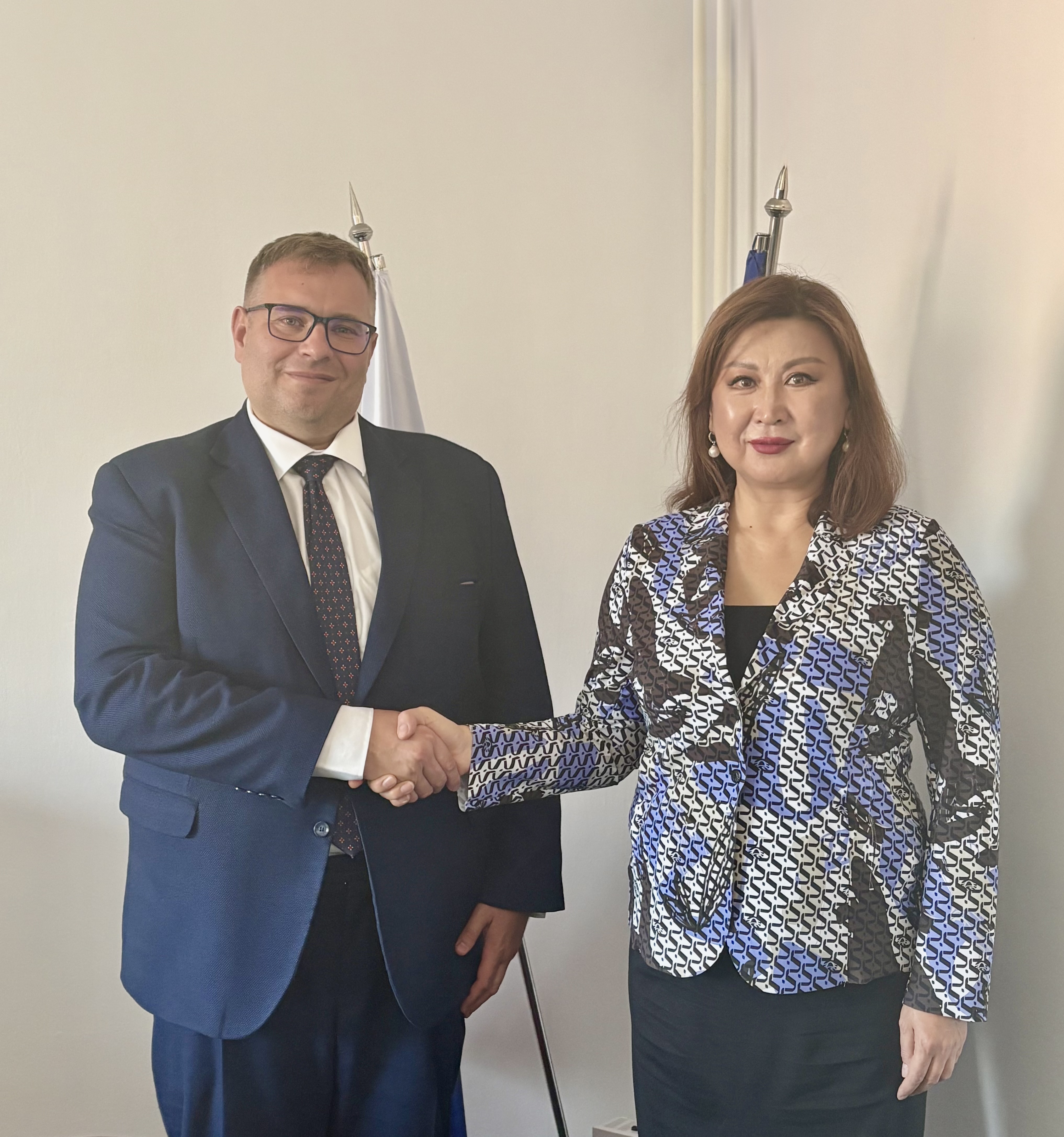
Kazakhstan and Slovakia Strengthen Cooperation in Human Rights Protection 31.07.2026
Ambassador of Kazakhstan to Slovakia Zhanna Saginova met with the Public Defender of Rights of the Slovak Republic, Róbert Dobrovodský, to discuss key issues in human rights protection and the prospects for cooperation between the national human rights institutions of both countries.The diplomat briefed the Ombudsman on the large-scale political and institutional reforms underway in Kazakhstan at the initiative of President Kassym-Jomart Tokayev, aimed at building a "Fair Kazakhstan." She noted that these ongoing transformations are designed to strengthen democratic institutions, uphold the rule of law, and safeguard human rights.Special attention was given to the new Constitution of the Republic of Kazakhstan, adopted via a nationwide referendum on March 15, 2026. Ambassador Saginova emphasized that the draft of the basic law was developed with broad public participation, ensuring its truly nation-wide character. She highlighted that the new Constitution adopts a human-centered approach, with expanding constitutional guarantees for the protection of human rights and fundamental freedoms as one of its top priorities.Ambassador Saginova informed Mr. Dobrovodský about Kazakhstan's comprehensive modernization of the social sector, including the adoption of the Social Code and the transition from an application-based delivery of social services to an outreach and proactive model.The Ombudsman expressed keen interest in the digital platform for social support implemented in Kazakhstan. He commended the practical value of these initiatives, noting that certain approaches – specifically the introduction of the digital family card – could offer valuable insights for potential implementation in the Slovak Republic.The meeting also focused on the institution of the Commissioner for Human Rights in the Republic of Kazakhstan, the constitutional status of the position, the expansion of its mandate, and the strengthening of its engagement with international organizations.Mr. Dobrovodský expressed his readiness to visit Astana to explore Kazakhstan’s experience and establish direct working relations with his Kazakh counterpart.Source : https://www.gov.kz/memleket/entities/mfa-bratislava/press/news/details/1267118?lang=ru

Goods Subject to Mandatory Labeling Starting September 1, 2026 31.07.2026
The rules governing the circulation of goods for importers and domestic manufacturers are changing in Kazakhstan.In accordance with Order No. 199 of the Ministry of Trade and Integration of the Republic of Kazakhstan, mandatory labeling is being introduced for dietary supplements, as well as beer and bottled beer-based beverages.The new requirements apply to products manufactured in Kazakhstan or imported into the country starting from September 1, 2026.A special security code must be applied to all dietary supplements with valid registration in the Republic of Kazakhstan or the EAEU, including specialized food products, concentrates, vitamin and mineral complexes, syrups, and herbal extracts, as well as beer and bottled beer-based beverages.Labeling protects the market from counterfeit products, helps bona fide businesses avoid unfair competition, and enables consumers to purchase verified and safe products.The digital code makes it possible to trace the journey of each product unit from the manufacturer or the border to the final consumer.The State Revenue Department for Almaty urges importers and retail chains to prepare for the new requirements in advance.Timely adjustment of technical processes will ensure a smooth transition period, prevent customs delays, and enable uninterrupted business operations.Source : https://www.gov.kz/memleket/entities/kgd-almaty/press/news/details/1267089?lang=ru
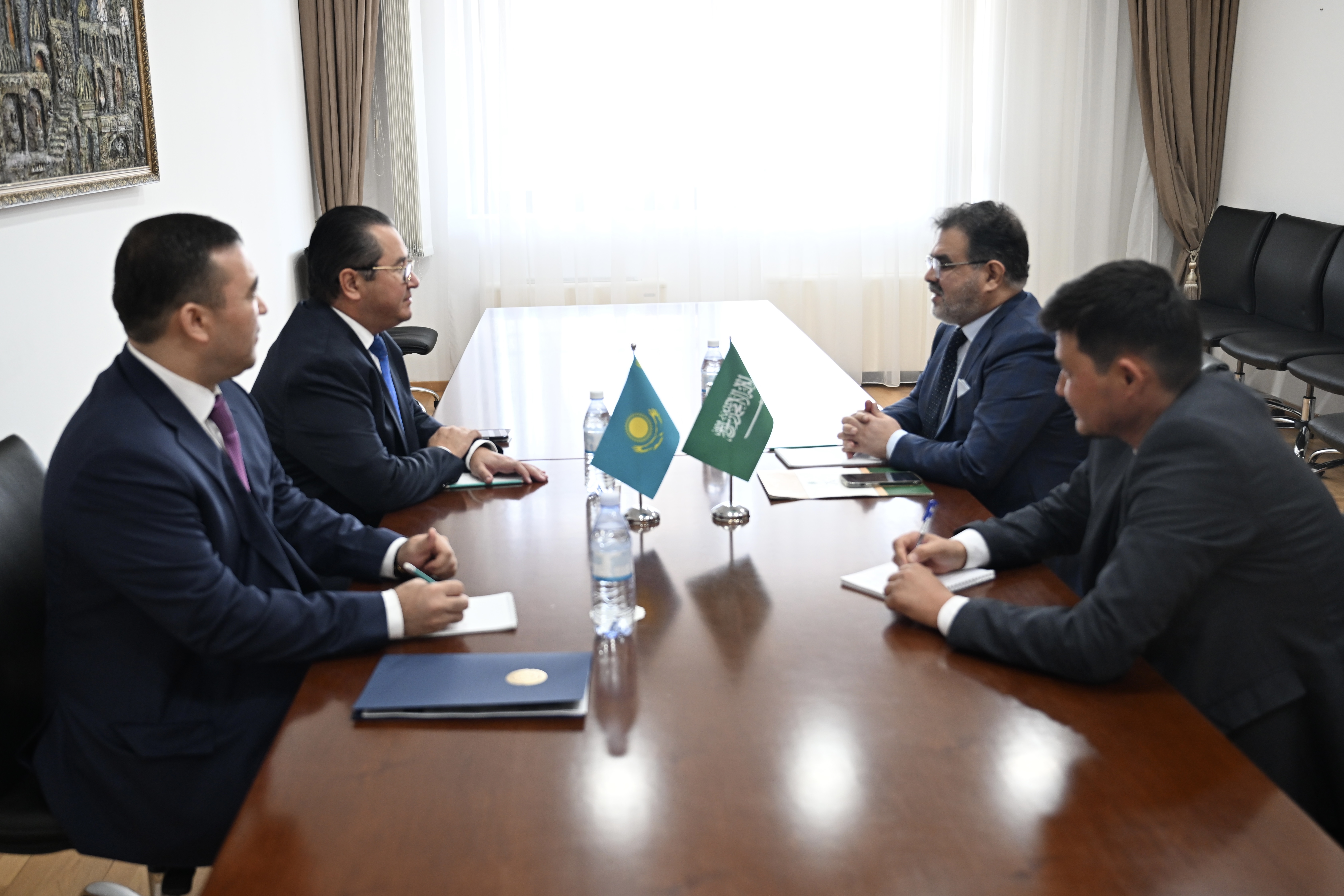
Deputy Foreign Minister Received Ambassador of Saudi Arabia 31.07.2026
Astana, July 31, 2026 – Deputy Minister of Foreign Affairs of the Republic of Kazakhstan Arman Issagaliyev received the Ambassador of the Kingdom of Saudi Arabia to Kazakhstan Faisal Al Kahtani.During the meeting, the parties discussed the current state and prospects for further development of bilateral cooperation in the political, trade, economic, investment, cultural, and humanitarian areas, as well as interaction between the two countries within international and regional organizations, including the UN, OIC, IOFS, and “Central Asia – GCC” format.Moreover, topical issues on the regional and international agenda, including the situation in the Middle East were widely addressed.Following the meeting, the parties reaffirmed their firm readiness to continue strengthening the partnership between Astana and Riyadh.Source : https://www.gov.kz/memleket/entities/mfa/press/news/details/1267078?lang=ru
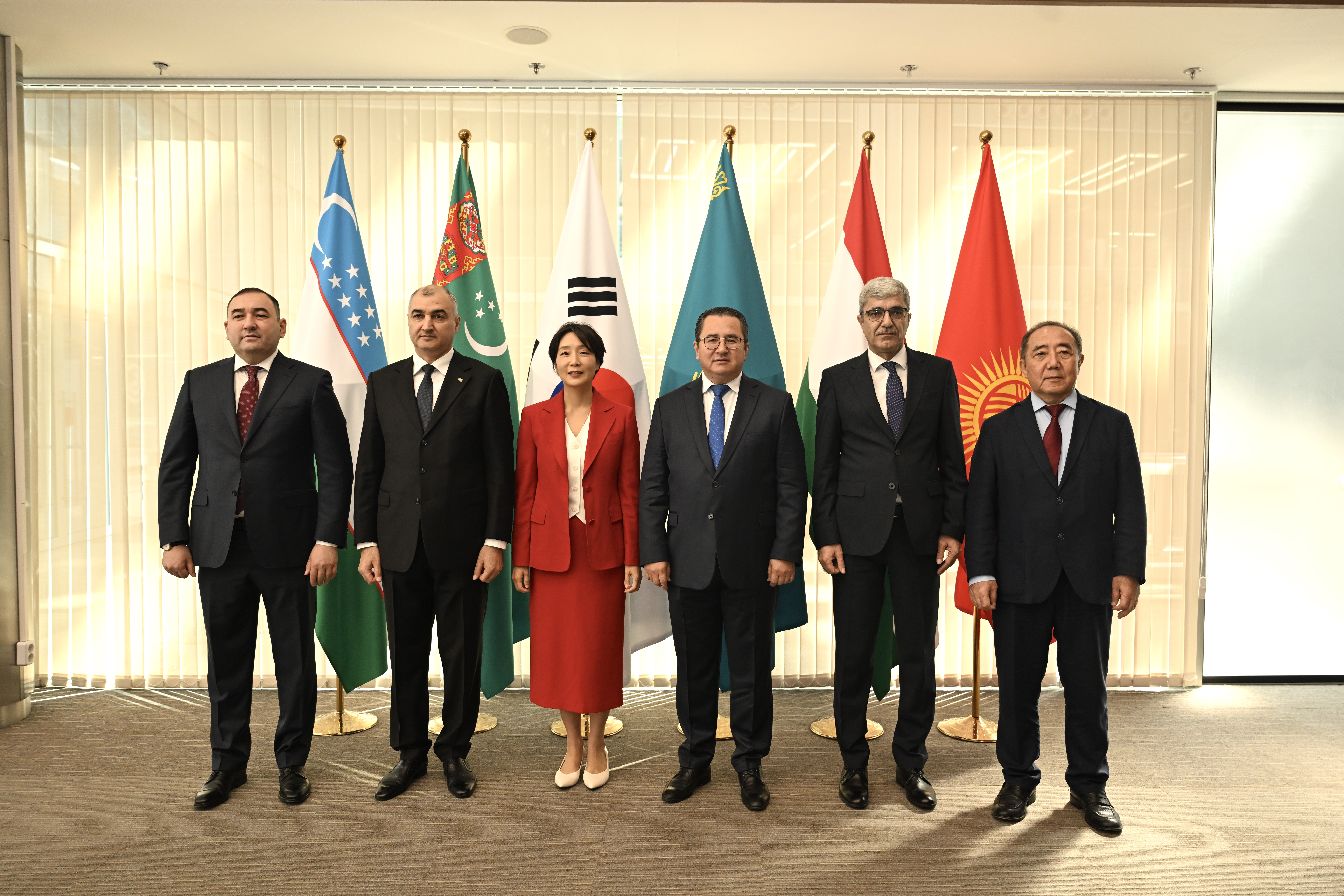
Preparations for the First Central Asia–Republic of Korea Summit Discussed in Astana 31.07.2026
Astana, July 31, 2026 – Deputy Minister of Foreign Affairs of the Republic of Kazakhstan Arman Issagaliyev participated in the 3rd Senior Officials' Meeting held in preparation for the First Central Asia–Republic of Korea Summit.The participants discussed organizational and protocol-related aspects of the upcoming Summit, as well as exchanged views on the substantive agenda of the meeting.Particular attention was paid to further strengthening multilateral cooperation between the Central Asian states and the Republic of Korea, including collaboration in the areas of trade and economy, energy, digitalization, and water resources.During the meeting, Arman Issagaliyev emphasized that thorough preparation for the Summit is of key importance, as it will serve as an important platform for developing and advancing joint initiatives aimed at strengthening regional cooperation, promoting sustainable development, and expanding mutually beneficial partnership.At the conclusion of the meeting, the participants reaffirmed their readiness to continue close coordination to ensure the successful preparation and holding of the Summit.On the sidelines of the meeting, Deputy Minister Issagaliyev also held separate talks with Deputy Minister of Foreign Affairs of the Republic of Korea Chung Eui-hae.The parties discussed current issues of Kazakhstan–Korea cooperation and prospects for further strengthening bilateral relations, reaffirming their mutual interest in maintaining the high momentum of political dialogue and implementing joint initiatives.Source : https://www.gov.kz/memleket/entities/mfa/press/news/details/1267058?lang=ru
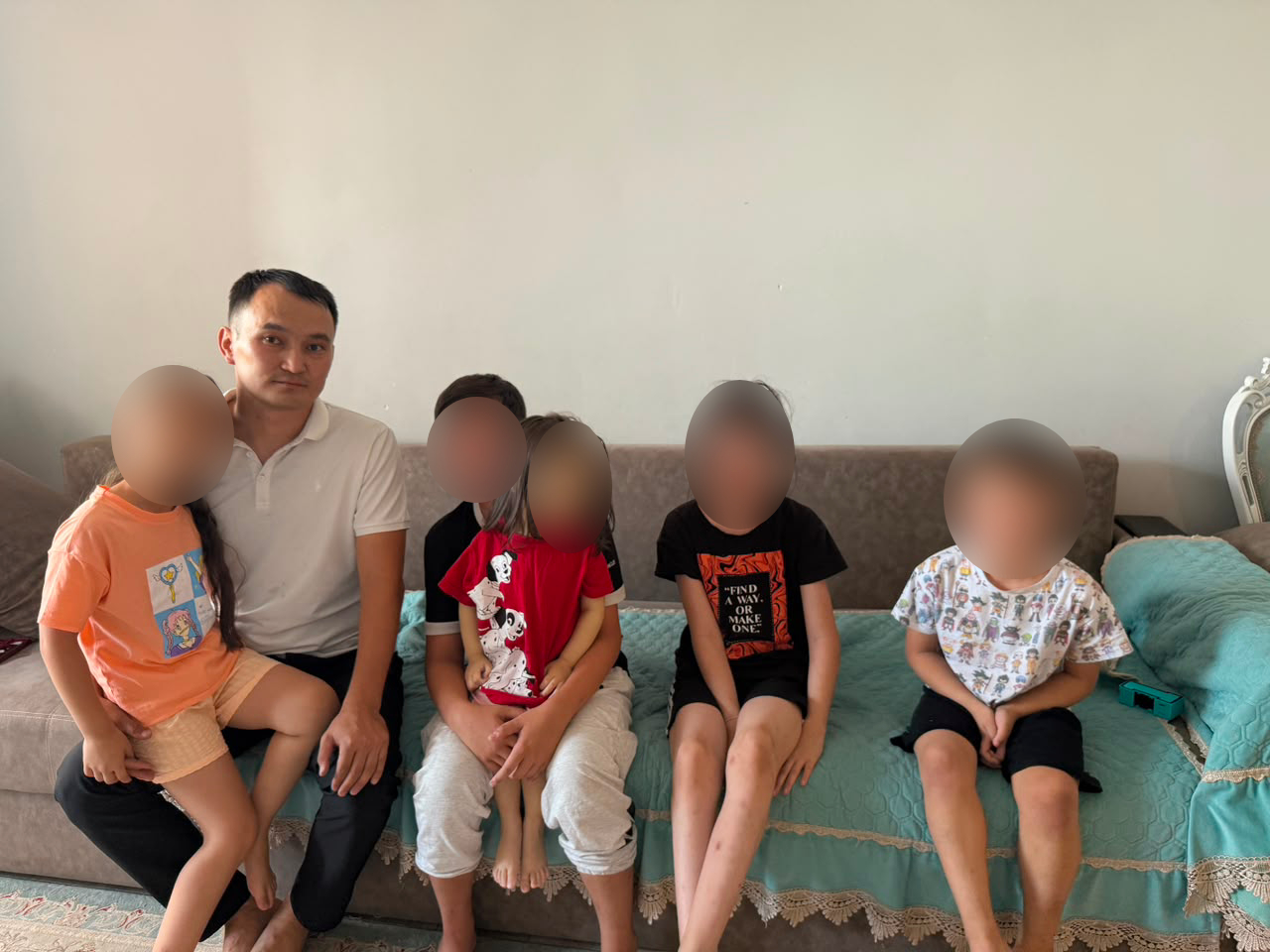
National Guardsman Rescues Children from Apartment Fire and Takes Them Home Until Their Family Arrives 31.07.2026
During a fire in the city of Karaganda, Senior Lieutenant Askhat Makhanbetzhanov, a serviceman of Military Unit 6505 of the National Guard of the Ministry of Internal Affairs of the Republic of Kazakhstan, displayed courage and selflessness by joining local residents to save the lives of five children.The incident occurred at approximately 11:30 a.m. in an apartment on the eighth floor of a residential building. After noticing the fire, the National Guardsman and nearby residents immediately rushed to help.Despite the thick smoke and hazardous conditions, they risked their own lives by entering the burning apartment and safely evacuating the five children trapped inside. Thanks to their coordinated and decisive actions, all of the children were rescued without harm.After firefighters arrived, Askhat Makhanbetzhanov and the residents continued assisting emergency crews in containing and extinguishing the fire. Once the evacuation was completed, the officer took the children to his own apartment, where they remained safe until their parents arrived.This incident once again demonstrates that National Guard servicemen are always ready to assist citizens, both while performing their official duties and in everyday life. At the same time, the successful rescue was made possible by the unity, courage, and compassion shown by the residents of the building, who acted together in a critical situation. Press Service of the National Guard of the Ministry of Internal Affairs of the Republic of KazakhstanSource : https://www.gov.kz/memleket/entities/kvv/press/news/details/1267052?lang=ru