Perspectives for Strategic Partnership between Kazakhstan and EU Discussed at Round Table in Brussels
12.12.2025 15:00:58 2619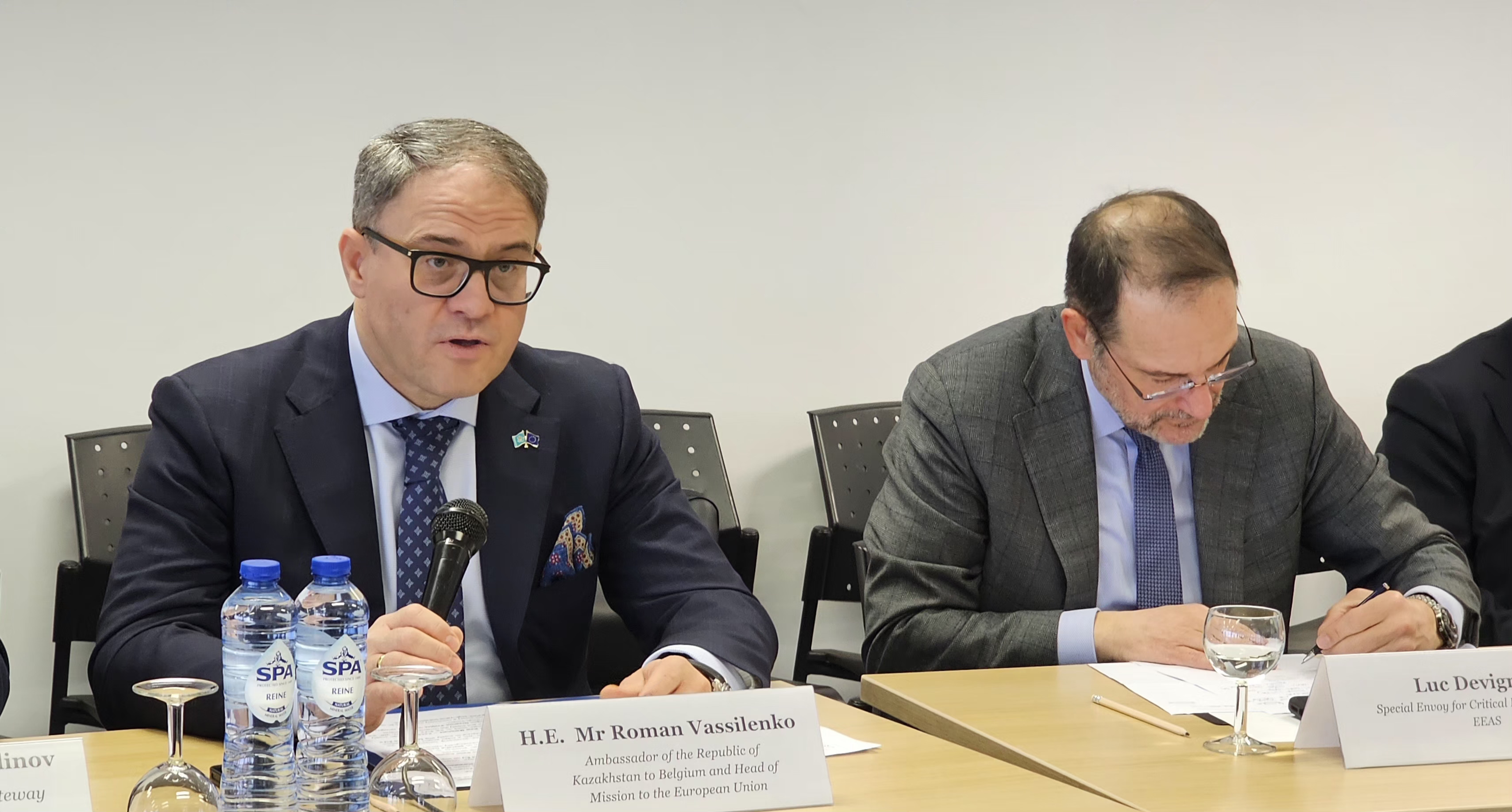
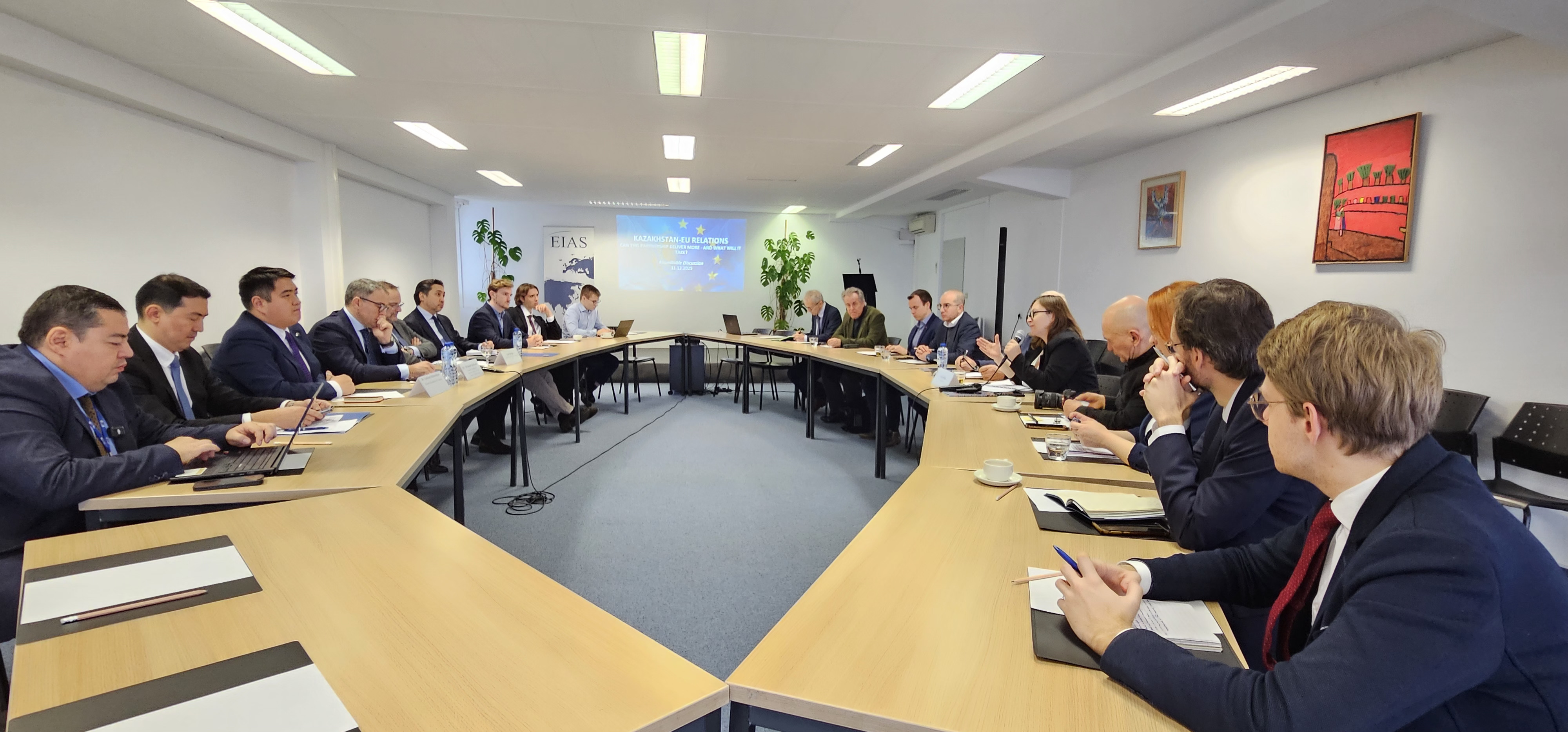
Brussels, 11 December 2025 – A round table titled “Kazakhstan – European Union: Can This Partnership Deliver More – and What Will It Take?” was held at the European Institute for Asian Studies (EIAS) in Brussels.
The event, organized at one of the well-known analytical centers of the European capital, was dedicated to the 10th anniversary of the signing of the Enhanced Partnership and Cooperation Agreement (EPCA) between Kazakhstan and the European Union and its Member States.
The round table, which brought together representatives of international and Belgian analytical communities as well as the European External Action Service (EEAS), enabled the parties to discuss the current state and prospects for further cooperation between Kazakhstan and the European Union.
Opening the discussion, Ambassador of Kazakhstan to Brussels Roman Vassilenko emphasized that over the past decade, Kazakhstan and the European Union have created not just a partnership but an entire ecosystem of cooperation. Covering 29 areas, the EPCA has become the backbone of our shared progress – from connectivity and energy security to education, climate policy, and digital innovation.
The diplomat noted that recent high-level engagements – including an official visit of European Council President António Costa to Astana and the 22nd Kazakhstan – EU Cooperation Council meeting in Brussels – co-chaired by Foreign Minister Yermek Kosherbayev and High Representative Kaja Kallas – confirmed the same message: both sides are ready for the next stage of cooperation.
It was particularly emphasized that Kazakhstan is ready to work further with EU partners to transform the Trans-Caspian International Transport Route (the so-called “Middle Corridor”), including its transformation into a fully modern, efficient and green transport artery linking Europe and Asia.
It was also noted that Kazakhstan and the EU have recently officially launched negotiations on agreements on visa facilitation and on readmission – an important milestone in the history of bilateral relations.
In addition, the potential for cooperation was highlighted in the fields of the green transition and decarbonization, critical raw materials, as well as digital transformation, artificial intelligence and digital governance. Kazakhstan also sees significant potential for cooperation with the EU in civil aviation – where both sides are currently shaping a new legal framework – and in the space sector.
As the Ambassador emphasized, “Kazakhstan and the European Union have already demonstrated that, when we align our strengths, we can deliver results with a global impact – from stability in our regions to resilient supply chains and green innovation. The question posed by today’s event is: Can this partnership deliver more? My answer is unequivocal: yes – it can, it must and it will. To answer the second part of that question, “What will it take?”, we say that it will require agility, long-term thinking, and the courage to invest in the infrastructure and technologies of tomorrow. Kazakhstan stands fully committed to this vision.”
Representatives of the expert community and the EEAS stressed the considerable perspectives for developing and strengthening cooperation between Kazakhstan and the EU in the areas of transport, digitalization and critical raw materials, while emphasizing the importance of further improving the investment climate. They also highlighted the potential of the Middle Corridor and Kazakhstan’s key role in this route.
Reference: Kazakhstan became the first Central Asian country to sign an EPCA with the European Union in 2015. Trade turnover between the EU and Central Asian countries amounted to around €55 billion in 2024, of which over €49 billion accounted for Kazakhstan.
Today, more than 4,000 companies with European capital operate in Kazakhstan, with total investment reaching $200 billion.
Source : https://www.gov.kz/memleket/entities/mfa-brussels/press/news/details/1124556?lang=kk