News
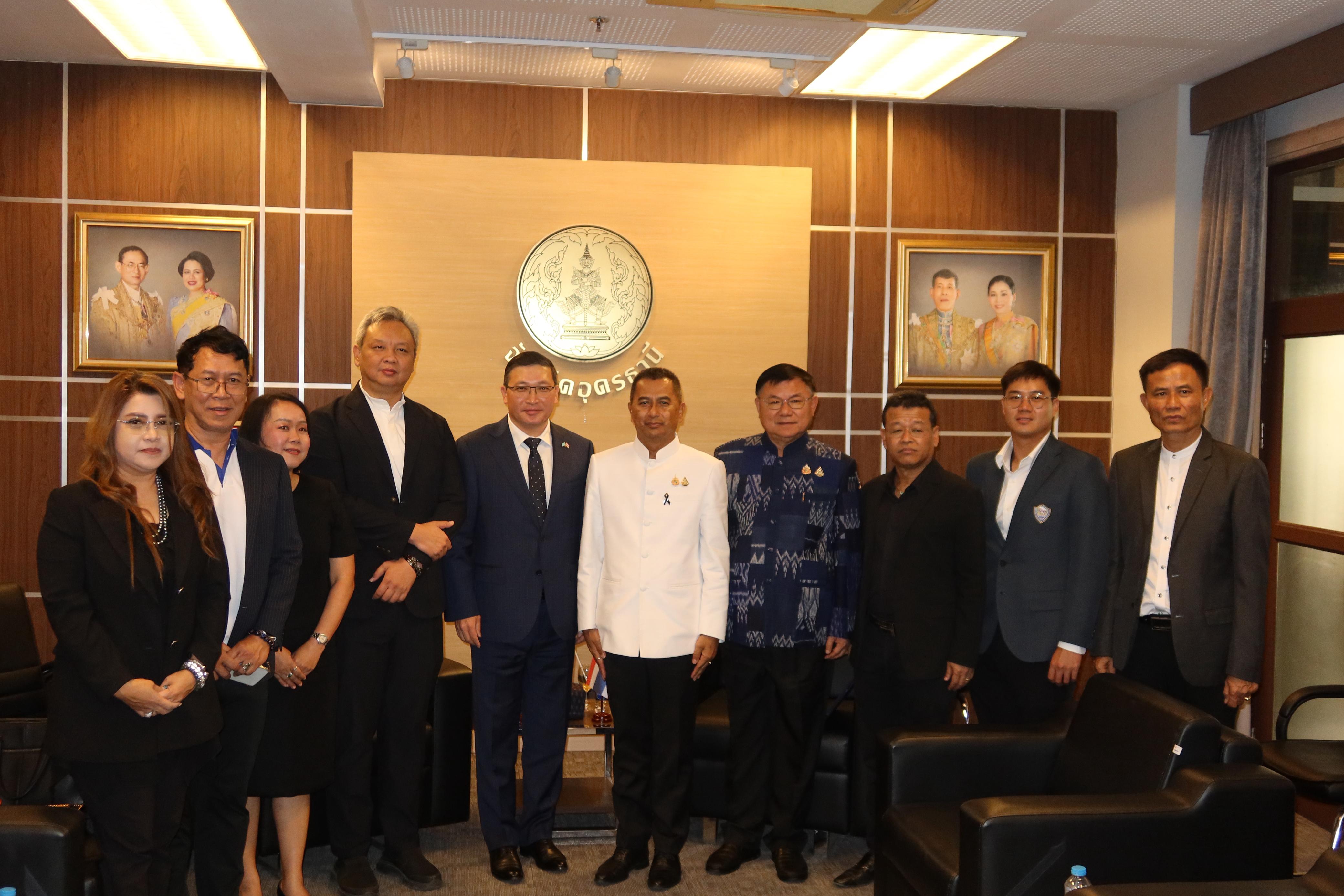
Kazakhstan and Northeastern Regions of Thailand Expand Cooperation in Industry and Logistics 29.04.2026
Udon Thani, April 28, 2026 – As part of a working visit to the northeastern regions to study transport corridors of the Kingdom of Thailand, Kazakhstan’s Ambassador to Thailand, Margulan Baimukhan, held a series of meetings and familiarization visits in the provinces of Udon Thani Province and Nong Khai Province, aimed at strengthening bilateral cooperation in trade, industry, and logistics.In Udon Thani Province, the Kazakh diplomat met with the provincial Governor, Rachan Soonhua, to discuss prospects for expanding interregional cooperation, including trade, investment, and humanitarian ties. It was noted that Udon Thani is one of the economic centers of northeastern Thailand, with well-developed industrial and logistics infrastructure.As part of the visit program, a meeting was also held with representatives of the Federation of Industries of Udon Thani Province, where opportunities for establishing direct contacts between business communities of Kazakhstan and Thailand were discussed.Margulan Baimukhan delivered a presentation on Kazakhstan’s investment and economic opportunities, including projects in the agro-industrial complex, manufacturing, logistics, and energy sectors.The Kazakh diplomat emphasized Kazakhstan’s interest in attracting Thai companies to participate in joint projects, as well as in developing cooperation in industrial production and technology transfer.Special attention was also given to visits to the industrial zone of Udon Thani Province and the region’s logistics center, where opportunities for establishing production facilities and warehouse infrastructure were presented. The parties discussed prospects for Kazakh companies’ participation in regional supply chains, as well as the use of Thailand’s logistics potential to access markets in Southeast Asia.During the visit to Nong Khai Province, a meeting was held at the Customs Office, where information was presented on current customs procedures, regulation of cross-border trade, and the functioning of one of Thailand’s key border checkpoints with Laos. The parties discussed prospects for expanding cooperation in logistics, simplifying trade procedures, and developing international transport corridors linking Southeast Asia with Central Asia.Particular attention was given to the region’s potential as a major transit hub in the Greater Mekong Subregion, as well as opportunities to utilize its infrastructure for developing multimodal transport and strengthening ties between Kazakhstan and ASEAN countries.Following the meetings, an agreement was reached on the participation of a business delegation from Udon Thani Province in the Kazakhstan–Thailand business forum scheduled for the end of May this year.For reference: Udon Thani Province and Nong Khai Province are among the key economic centers of northeastern Thailand (Isan region), with diversified economies focused on agriculture, industry, and logistics.Udon Thani Province has a gross regional product of approximately 110-115 billion baht (around 3 billion US dollars) and a population of about 1.5 million. The province has well-developed transport infrastructure, including an international airport, industrial zones, and logistics centers, and plays an important role in regional supply chains.Nong Khai Province, with a population of about 500,000, demonstrates steady economic growth, with a gross regional product of 40-45 billion baht (approximately 1-1.2 billion US dollars). The region occupies a strategic position on the border with Laos and is one of Thailand’s key cross-border trade hubs in the Greater Mekong Subregion, providing access to international transport routes.Source : https://www.gov.kz/memleket/entities/mfa-thailand/press/news/details/1210946?lang=kk
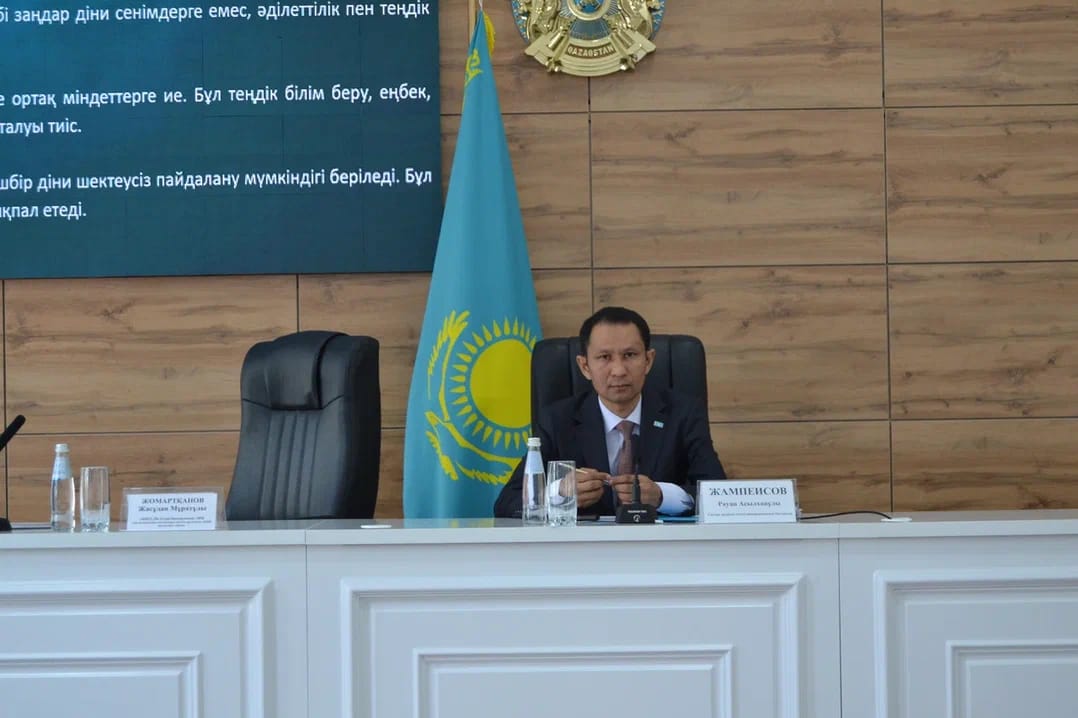
An explanatory meeting with government officials was held in the Samara region 29.04.2026
On April 27 of this year, an explanatory meeting with civil servants was held in the Samara district as part of preventative efforts to prevent civil servants from becoming involved in destructive religious movements.The event took the form of a seminar with the participation of religious studies specialist Zhasulan Zhomartkanov. During the meeting, civil servants were briefed on the provisions of Kazakhstan's legislation on religion and discussed the risks associated with destructive religious movements and gambling addiction. Special attention was paid to the signs that allow one to recognize dubious religious organizations and the possible consequences of their influence on individuals and society.As noted by the district's head of staff and ethics commissioner, Rauan Zhampeisov, such events contribute to increasing the legal literacy of civil servants, strengthening public safety, and building a strong immune system against destructive ideologies.Source : https://www.gov.kz/memleket/entities/vko-samar/press/news/details/1210936?lang=kk
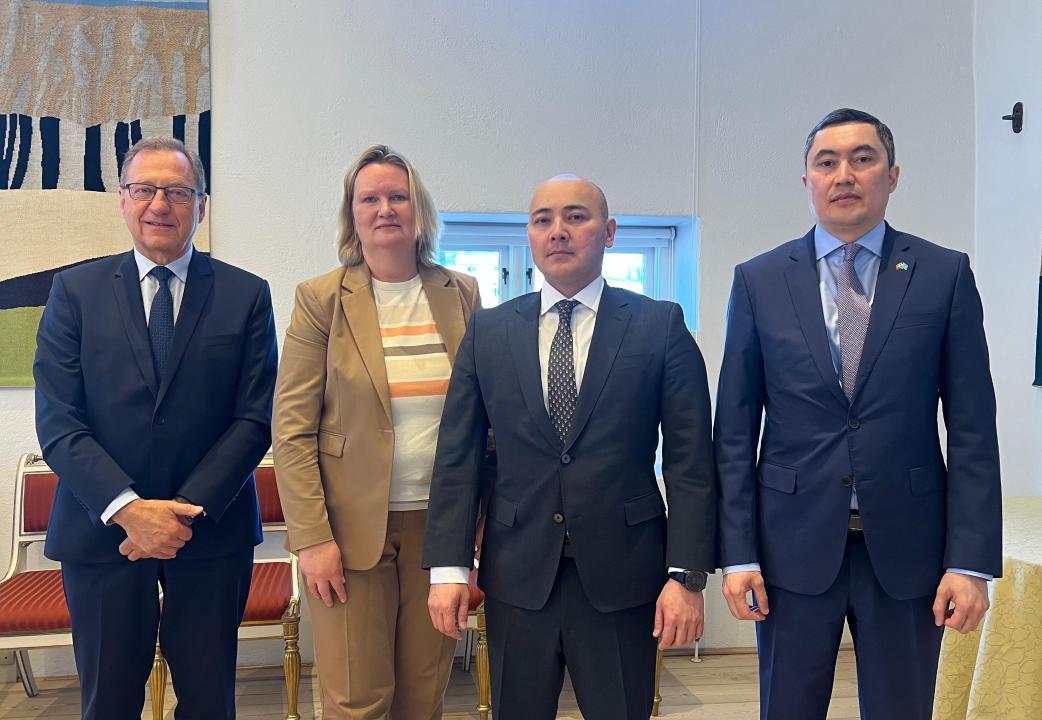
Kazakhstan and Denmark Outline New Horizons for Bilateral Cooperation 29.04.2026
Deputy Minister of Foreign Affairs of the Republic of Kazakhstan Alibek Kuantyrov visited the Kingdom of Denmark.The visit was conducted at the head of a high-level interagency delegation, which included Vice Minister of Agriculture of Kazakhstan Amanglyi Berdalin, as well as representatives of state bodies and leading national financial and investment institutions, including Baiterek National Managing Holding JSC, Samruk-Kazyna Invest, Kazakhstan Investment Development Fund and Kazakh Invest.As part of the official programme, bilateral consultations were held at the Ministry of Foreign Affairs of Denmark.The Deputy Minister held a meeting with State Secretary for Trade and Investment of the Danish Ministry of Foreign Affairs, Lina Gandløse Hansen, during which the parties discussed the current state and prospects for further development of Kazakhstan–Denmark trade, economic and investment cooperation. Particular attention was given to attracting Danish investment and expanding cooperation in priority sectors, including renewable energy, green technologies, water solutions, the agro-industrial sector, transport and logistics, digital governance and artificial intelligence. Plans to organise a trade mission of Danish companies to Kazakhstan were also discussed.During the meeting with Deputy State Secretary – Director for Political Affairs of the Danish Ministry of Foreign Affairs, Eva Barløse, the parties exchanged views on key issues of the bilateral and international agenda.The Danish side reaffirmed the growing importance of Central Asia in Denmark’s foreign policy and trade agenda and introduced Lars Thuesen as Special Representative for Central Asia, who is expected to assume his duties in August 2026.The parties also agreed to intensify efforts to expand the legal and regulatory framework of bilateral cooperation aimed at creating more favourable conditions for trade, investment and business activity.A separate part of the visit was dedicated to strengthening cooperation in the agro-industrial sector. Vice Minister of Agriculture A.Berdalin held meetings with the leadership of the Danish Ministry of Food, Agriculture and Fisheries, as well as the Danish Agriculture and Food Council.During the discussions, the parties explored prospects for the introduction of advanced Danish technologies in dairy farming, including plans to import high-yield dairy breeding cattle of Danish origin. Particular attention was given to veterinary safety, deep processing of agricultural products, expansion of bilateral trade in agri-food products, and the attraction of Danish investment into Kazakhstan’s agro-industrial complex.Source : https://www.gov.kz/memleket/entities/invest/press/news/details/1212834?lang=kk
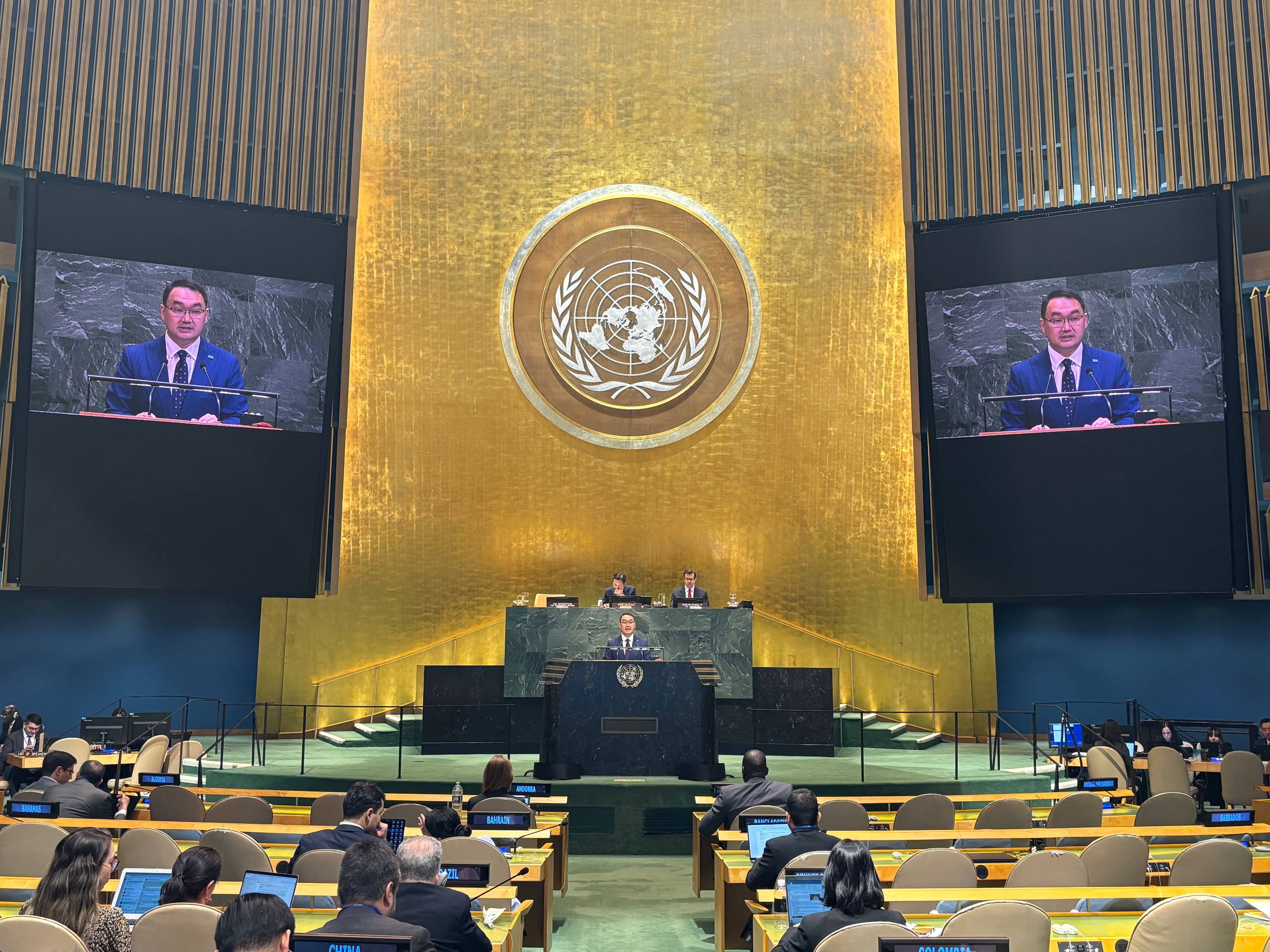
Kazakhstan Supports the Treaty on the Non-Proliferation of Nuclear Weapons 28.04.2026
On April 27, 2026, at the Headquarters of the United Nations, the Review Conference of the States Parties to the Treaty on the Non-Proliferation of Nuclear Weapons (NPT) commenced its work. The NPT is the cornerstone treaty in the field of nuclear disarmament and non-proliferation, and its Review Conference is taking place in an exceptionally complex international environment characterized by rising tensions, regional conflicts, and the weakening of the arms control architecture.Speaking in his national capacity during the General Debate, First Deputy Minister of Foreign Affairs of the Republic of Kazakhstan Yerzhan Ashikbayev emphasized that Kazakhstan consistently advocates for strengthening the NPT regime and advancing practical and realistic measures to reduce nuclear risks. Kazakhstan’s approach is grounded in its historical experience, including the closure of the Semipalatinsk nuclear test site and the voluntary renunciation of its nuclear arsenal – steps that remain a significant contribution to strengthening international security and trust. In this context, the Head of the Kazakh delegation highlighted the relevance of the initiative of the President of the Republic of Kazakhstan, Kassym-Jomart Tokayev, to resume dialogue among nuclear-weapon States.In a separate statement delivered by Kazakhstan in its capacity as Chair of the Treaty on a Nuclear-Weapon-Free Zone in Central Asia (Semipalatinsk Treaty), the contribution of the States Parties to the Zone to strengthening the global nuclear disarmament regime was underscored. On the occasion of the 20th anniversary of the signing of the Treaty in Semipalatinsk, the States Parties called for enhanced inter-zonal cooperation and the establishment of new nuclear-weapon-free zones.On the margins of the Conference, the Head of the Kazakh delegation also held a meeting with the UN Under-Secretary-General and High Representative for Disarmament Affairs, Izumi Nakamitsu, as well as with a number of heads of foreign delegations, to discuss current issues on the international security agenda.In parallel, the Permanent Representative of the Republic of Kazakhstan to the United Nations, Kairat Umarov, is serving as Chair of the Second Main Committee of the Conference, whose mandate covers non-proliferation, regional issues, and safeguards of the International Atomic Energy Agency.The NPT Review Conference is a key event in the field of international security, during which States Parties will review the implementation of their obligations under the Treaty and continue discussions on ways to strengthen the regime in current conditions.Source : https://www.gov.kz/memleket/entities/mfa-kazakhstanun/press/news/details/1210931?lang=kk
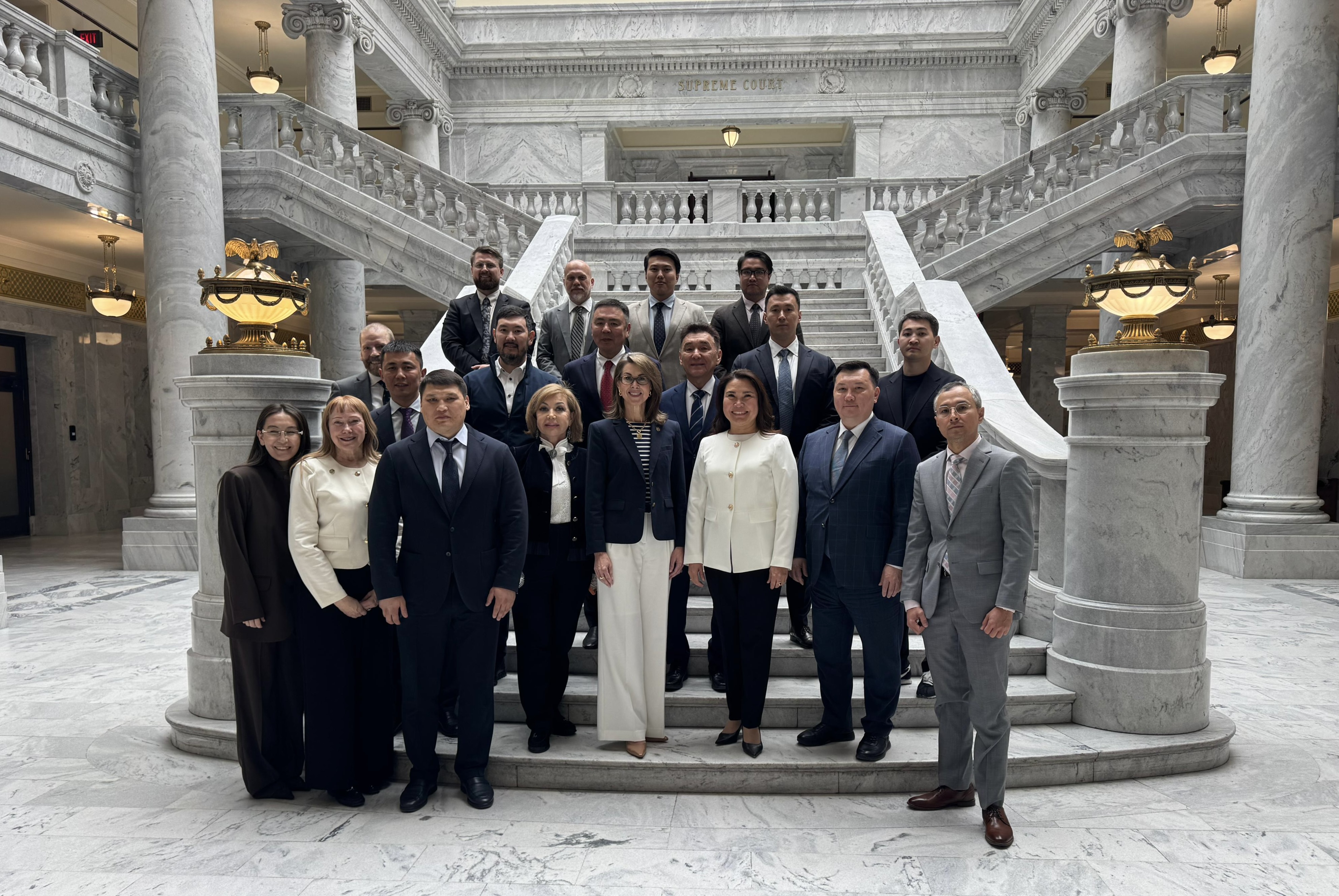
Kazakhstan Delegation Conducts Working Visit to Utah to Advance Subnational Partnership 28.04.2026
Salt Lake City, April 28, 2026 — A high-level delegation of the Republic of Kazakhstan, comprising representatives of government agencies, business, and higher education, is paying a working visit to the State of Utah, USA, from April 24 to 29, 2026. The visit aims to advance direct subnational ties in support of the growing strategic dialogue between Astana and Washington.A key event of the program was a meeting with Lieutenant Governor of Utah Deidre M. Henderson, held on April 27 at the Utah State Capitol. The parties discussed prospects for cooperation in investment, urban development, critical minerals, advanced materials, higher education, and support for women’s entrepreneurship. An official invitation was extended to the Lieutenant Governor on behalf of the Government of the Republic of Kazakhstan to visit Kazakhstan.The delegation was led by Ruslan Berdenov, Director of the Almaty City Development Center, and Kairat Bekenov, Chairman of the Board of JSC Almaty Invest. They presented the investment, industrial, and urban development potential of Almaty, Kazakhstan’s largest city, which accounts for approximately 23% of the country’s GDP. Particular attention was given to cooperation opportunities in Smart City infrastructure, high-tech manufacturing, tourism, and the development of the mountain resort cluster.Kazakhstan’s business community was represented by Aqniet Group, Das-Sauda, Meisster Group, Nero Group, and Center Elite NS. The education track was represented by Serik Irsaliyev, President of Astana International University. During the meetings, the parties discussed opportunities to expand cooperation with the University of Utah and Southern Utah University, including prospects for their presence in Kazakhstan’s higher education system.The visit also included business meetings with 47G, World Trade Center Utah, Bennett Group, Edison House, Neumont College of Computer Science, Provo Mining Association, the University of Utah, and Space Dynamics Lab. Several meetings yielded preliminary Letters of Intent in electronics, advanced materials, FMCG, and industrial development. The visit was organized by the Consulate General of the Republic of Kazakhstan in San Francisco in cooperation with Xander Group, Bennett Group, and 47G, with the support of the Utah Governor’s Office of Economic Opportunity and World Trade Center Utah.Source : https://www.gov.kz/memleket/entities/mfa-san-francisko/press/news/details/1210902?lang=kk
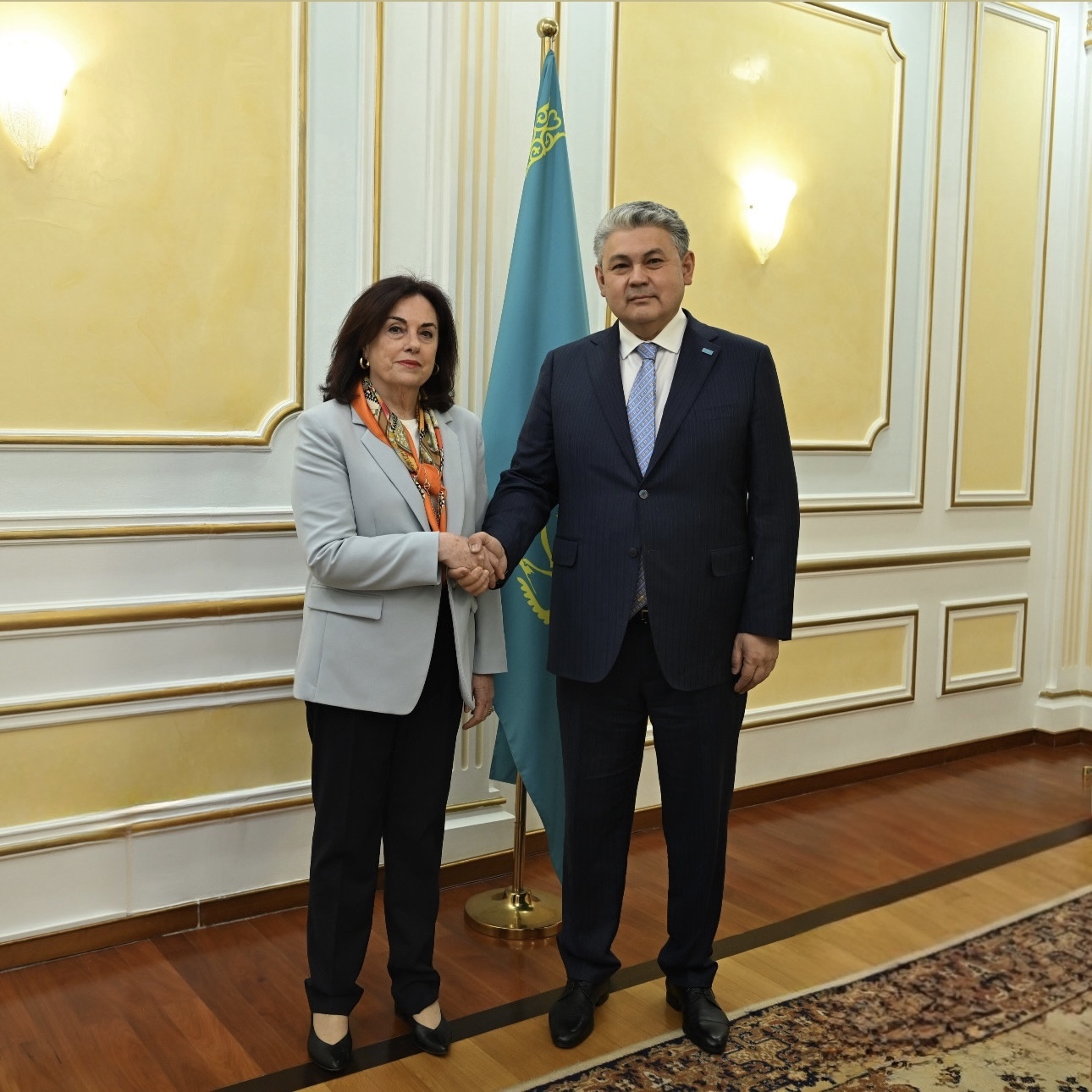
Kazakhstan and OSCE ODIHR Confirm Readiness to Continue Dialogue on Democratic Reforms 28.04.2026
Astana, April 28, 2026 – Minister of Foreign Affairs of the Republic of Kazakhstan Yermek Kosherbayev held a meeting with the Director of the OSCE Office for Democratic Institutions and Human Rights (ODIHR), Maria Telalian, who arrived in Astana on a visit.During the discussion, the prospects for further cooperation between Kazakhstan and OSCE ODIHR were discussed in the areas of strengthening democratic institutions, improving electoral processes, ensuring the rule of law, and protecting human rights. Particular attention was paid to the results of the republican referendum held on 15 March, as well as the adoption of the new Constitution of the Republic of Kazakhstan, which became an important step in the further democratization and modernization of the country’s political system.Minister Kosherbayev emphasized the readiness of the Kazakh side to continue constructive dialogue with OSCE ODIHR on issues of improving electoral legislation, developing civil society institutions, and strengthening human rights protection mechanisms.M.Telalian expressed her gratitude to the Kazakh side for the warm reception. She reaffirmed the Bureau’s readiness to continue providing expert, legal and technical support, including the exchange of best practices in the field of democratic reforms and election monitoring.Following the meeting, the parties confirmed their mutual interest in continuing the dialogue.Source : https://www.gov.kz/memleket/entities/mfa/press/news/details/1210907?lang=kk
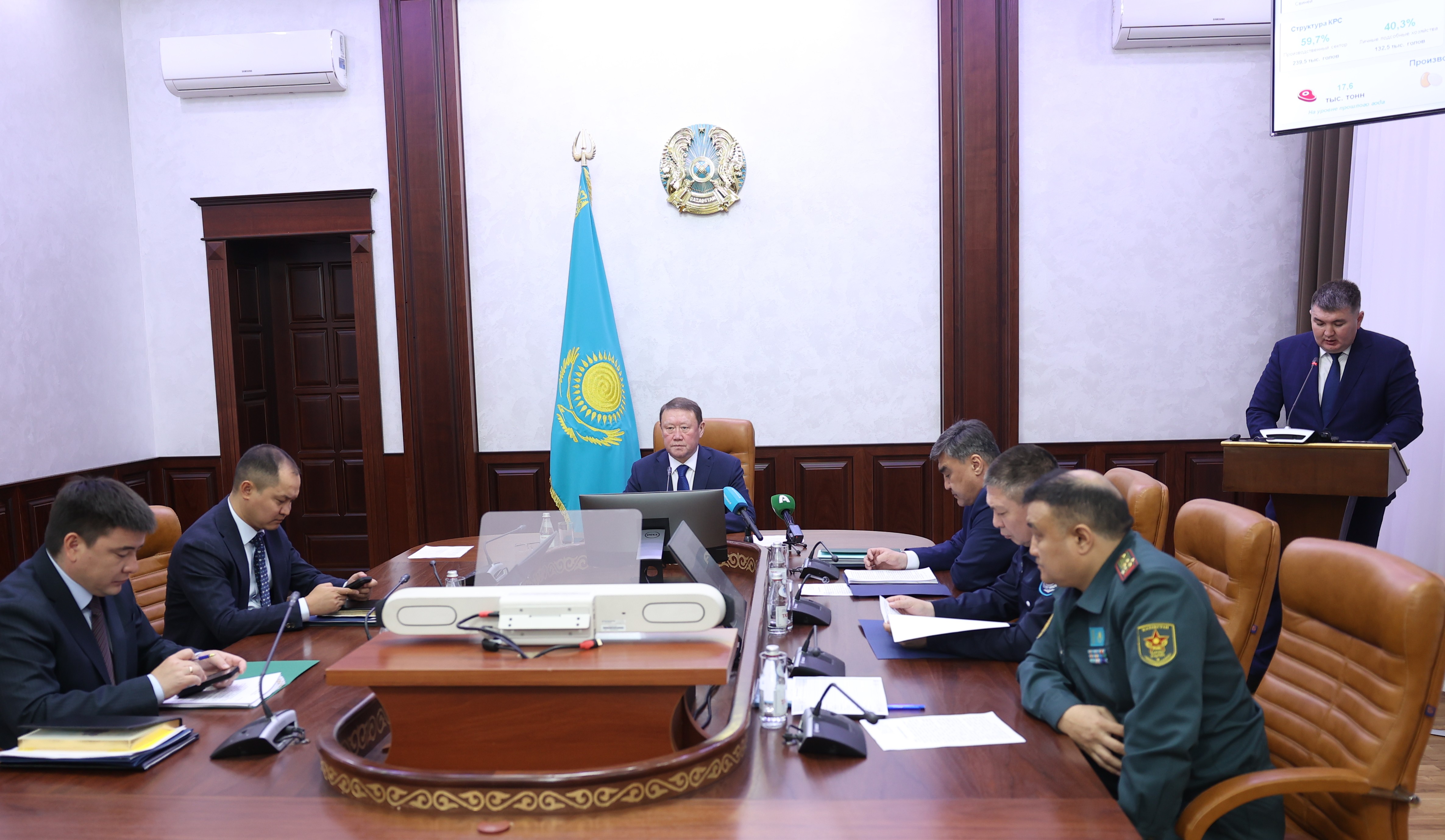
The number of livestock has increased in the region 28.04.2026
A meeting of the regional akimat dedicated to the development of livestock farming in the region was held under the chairmanship of the regional head, Kumar Aksakalov.As noted by the Head of State, livestock farming is one of the priority areas of agriculture. It is a key factor in ensuring food security, increasing rural employment, and the sustainable development of villages.Last year, 7.5 billion tenge was allocated for the purchase of breeding stock, as well as for reducing the cost of milk and meat production; this year, 10.8 billion tenge is provided. The growth amounted to 44%. Lending at a rate of 2.5% per annum continues."The Comprehensive Livestock Development Plan for 2026-2030 has been approved by the Government. Our region has become one of the key initiators of this plan, systematically advocating for the interests of farmers in obtaining affordable credit resources. Currently, the preferential credit programs 'Bereke' and 'Igilik' at 6% per annum are being implemented. For the implementation of transhumance livestock projects, the 'Zhailau' program with a similar rate for a term of 7-10 years will be launched. It will be implemented in three regions of the country. In our region, it is intended for agricultural producers in the city of Arkalyk, Amangeldy, and Zhangeldinsky districts. Every invested tenge must yield a concrete result. Our task is to effectively use the available opportunities to increase the livestock population, improve its quality, and introduce modern technologies," noted the akim of the region.It should be noted that in 2025 compared to 2022, the region has seen growth in the livestock and poultry population: cattle - by 25.2 thousand heads, horses - by 14.2 thousand heads, sheep and goats - by 14.6 thousand heads.Sustainable growth in livestock farming is associated with the launch of 7 modern large-scale industrial dairy farms. Another 6 such farms are under construction, 5 of which will be commissioned this year. Overall, 12 new modern dairy farms with a production volume of 77 thousand tons of raw milk per year will be able to meet the needs of more than 200 thousand people."We must approach the development of livestock farming comprehensively. The President of the country has clearly outlined the priorities for the development of the agro-industrial complex: deep processing, increased productivity, and the introduction of modern technologies. New and existing farms must be a model of production and sanitary culture, both inside and out. There must be cleanliness, order, and a high standard everywhere and in everything," emphasized Kumar Aksakalov. Source : https://www.gov.kz/memleket/entities/kostanay/press/news/details/1210843?lang=kk
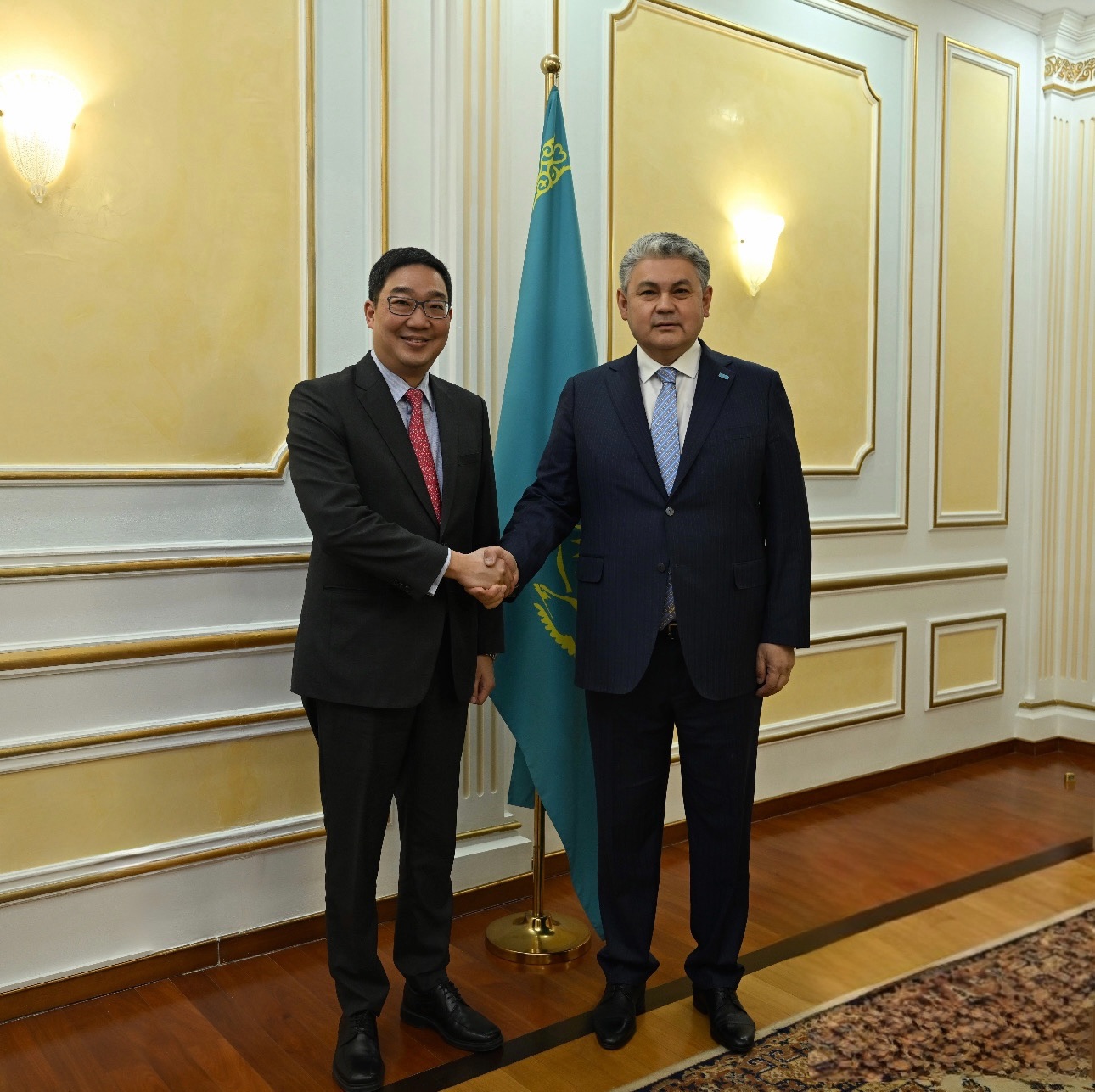
Kazakhstan and Singapore Outline New Areas of Cooperation 28.04.2026
Astana, April 28, 2026 – Minister of Foreign Affairs of the Republic of Kazakhstan Yermek Kosherbayev met with Deputy Secretary of the Ministry of Foreign Affairs of the Republic of Singapore Kevin Cheok.During the meeting, the parties reviews the current state and prospects of Kazakhstan-Singapore cooperation. They noted the high level of political dialogue and mutual interest in expanding partnership in trade, economic, and investment spheres.The Kazakh Foreign Minister emphasized the significant potential for cooperation in digitalization, innovation, and sustainable development, expressing readiness to intensify bilateral contacts.For his part, Deputy Secretary Cheok confirmed Singapore’s interest in further deepening cooperation, including the through the implementation of joint projects in the green economy, logistics, and human capital development.Particular attention was also given to strengthening business ties and enhancing interaction between the business communities of the two countries.Source : https://www.gov.kz/memleket/entities/mfa/press/news/details/1210845?lang=kk

Dear participants of foreign economic activity! 28.04.2026
The State Revenue Committee informs participants in foreign economic activity that, in connection with the full introduction of the new KEDEN information system and in order to unify approaches to issuing customs declarations, starting from May 4, 2026, payment of the customs declaration fee using the transit declaration and the customs escort fee should be made on KBK 106201 «Customs duties paid in accordance with the customs legislation of the Republic of Kazakhstan», which were approved by the Resolution of the Government of the Republic of Kazakhstan «On approval of the rates of customs duties levied by State Revenue authorities» dated April 5, 2018 No. 171. Considering that until now, the payment of the customs declaration fee using the transit declaration was made on KBK 106119 «Advance payments made in accordance with the customs legislation of the Eurasian Economic Union and the Republic of Kazakhstan, against the payment of upcoming customs duties, taxes, special, anti-dumping, countervailing duties, as well as to ensure the fulfillment of obligations under payment of customs duties, taxes, special, anti-dumping, countervailing duties» payers are given the opportunity to offset or refund to the settlement account the amounts previously paid on KBK 106119. To set off or refund the amounts paid on KBK 106119, you must submit a Tax Application to the State Revenue Department at the place of registration for setting off and (or) refunding taxes, payments to the budget, customs duties, penalties, interest and fines through the Taxpayer's Office web application (https://knp.kgd.gov.kz) or on paper through the NAO State Government for Citizens Corporation. Source : https://www.gov.kz/memleket/entities/kgd-akmola/press/news/details/1210863?lang=kk
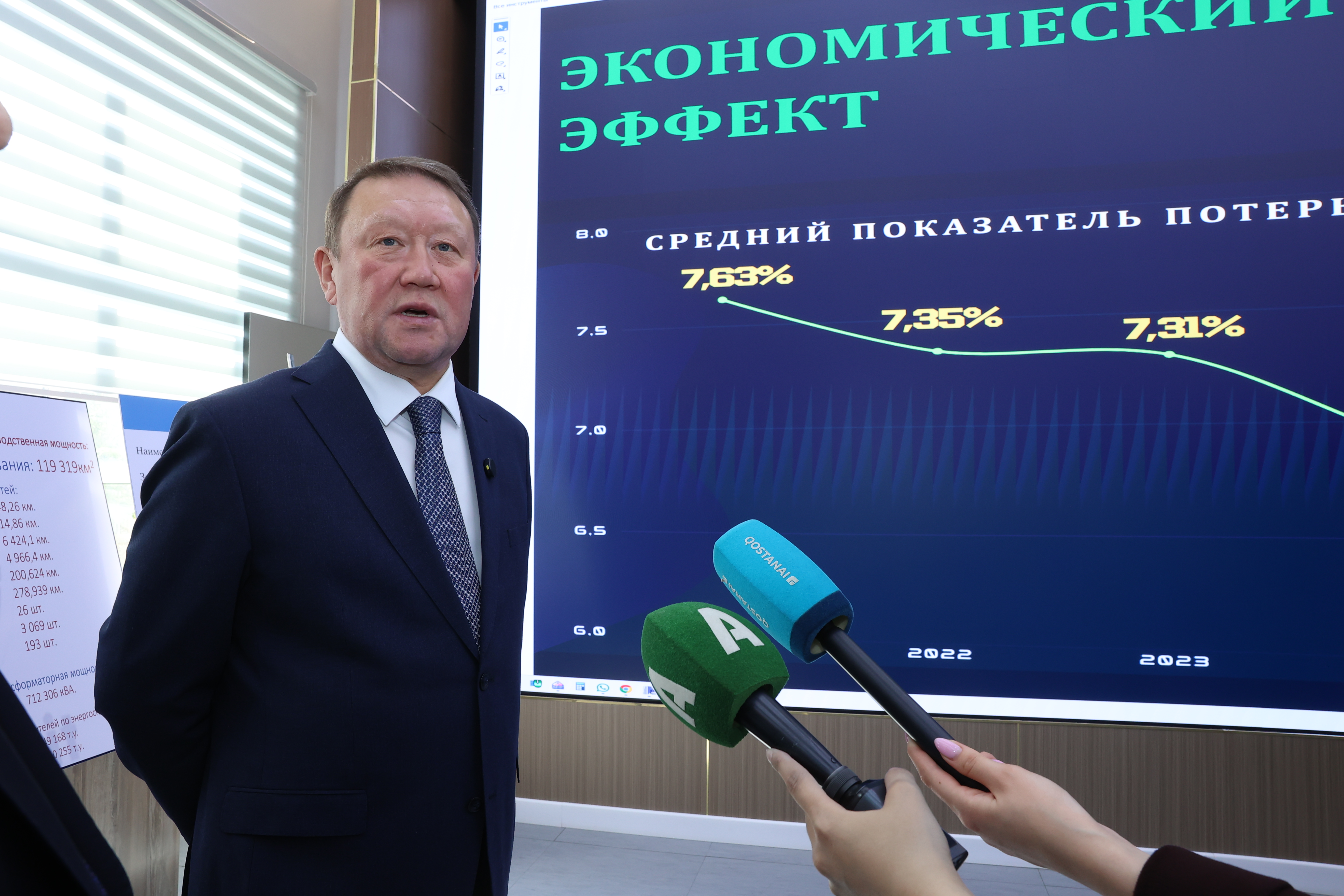
The level of accidents in electrical networks has decreased 28.04.2026
The head of the Kumar Aksakalov region familiarized himself with the activities of "EPK Forfait" LLP.The President of the country noted that without stable and sufficient electricity production, the implementation of artificial intelligence and large-scale digitalization is impossible."Compared to last year, the accident rate on the networks has decreased by 10%. Thanks to the new digital dispatch center of "EPK-forfait" LLP, the response time to emergency outages has been reduced from 2 hours to 5 minutes. Positive dynamics are also observed in infrastructure indicators — systematic work is underway to reduce the wear level of electrical networks from 83% in 2021 to 73% this year, update equipment, and reconstruct lines and substations," noted the head of the region.Reducing technical losses in the networks to 6.4% is an important achievement, while the average for the republic is 10–11%.I would particularly like to note the implementation of digital metering devices, automated monitoring systems, and the first solutions based on artificial intelligence."Our task is to move from eliminating the consequences of accidents to predicting and preventing them. From manual management to an intelligent model of the energy system," noted Kumar Aksakalov.Source : https://www.gov.kz/memleket/entities/kostanay/press/news/details/1210833?lang=kk

UAPF presents a report on the investment of pension assets as of April 1, 2026 28.04.2026
“Unified Accumulative Pension Fund” Joint Stock Company (UAPF, the Fund) presents a report on the management of pension assets by the National Bank of the Republic of Kazakhstan (NBRK) and investment portfolio managers (IPMs) on its website enpf.kz in the section “Statistics and Analytics – Investment Management of Pension Assets”. The total volume of pension assets under the management of the NBRK and IPMs as of April 1, 2026 amounted to KZT 26,811.26 billion. As of that date, the pension assets of the UAPF under the trust management of the NBRK, formed from mandatory pension contributions (MPC), mandatory occupational pension contributions (MOPC), and voluntary pension contributions (VPC), amounted to approximately KZT 25,760.59 billion[1].The volume of pension assets formed from employer mandatory pension contributions (EMPC) under the trust management of the NBRK amounted to KZT 948.86 billion.Pension assets under the management of IPMs amounted to KZT 101.81 billion. Investment Portfolio of Pension Assets under the Management of the NBRK The National Bank, acting as the trustee manager of UAPF pension assets, implements a balanced investment policy by investing in various types of financial instruments and diversifying the portfolio by currencies, countries, sectors, and issuers.According to the information provided by the National Bank, the main investment allocations of pension assets formed from mandatory pension contributions, mandatory occupational pension contributions, and voluntary pension contributions as of April 1, 2026 are as follows: government securities of the Ministry of Finance of the Republic of Kazakhstan – 42.74%, bonds of quasi-governmental companies – 9.26%, bonds of second-tier banks of the Republic of Kazakhstan – 2.58%, equities and depositary receipts of Kazakhstani issuers – 2.42%, deposits with the NBRK – 2.09%, government securities of foreign countries – 1.42%, and international financial organizations (IFOs) – 1.14%.A total of 35.23% of assets is invested within the framework of index management. This approach involves constructing an investment portfolio aligned with a benchmark portfolio, which represents a set of securities reflecting the strategic objectives of the investor. The return on the benchmark portfolio serves as a measure for evaluating management performance. Benchmark portfolios are based on indices developed and tracked by leading global financial institutions or by the NBRK. Index-based asset management is carried out by the NBRK both independently and with the involvement of foreign asset management companies in specific areas, including sub-portfolios of bonds from developed and emerging markets, as well as corporate bonds and equities.The investment portfolio by currency denomination of financial instruments acquired using MPC, MOPC, and VPC as of April 1, 2026 is as follows: investments in the national currency account for 61.09%, while investments in US dollars account for 38.91% of the pension assets portfolio.As a result of investment activities, income in the form of interest on securities, including income from placed deposits and reverse repo transactions, amounted to KZT 549.32 billion, income from market revaluation of securities amounted to KZT 94.12 billion, and other income amounted to KZT 0.48 billion. The market revaluation of securities invested in foreign currency, as well as assets under external management, including exchange rate revaluation effects, resulted in a negative value.The accrued investment income for the last 12 months from April 2025 to March 2026 amounted to approximately KZT 2.49 trillion, with a return of 10.74% over this period.The investment directions of Employer Mandatory Pension Contributions (EMPC) as of April 1, 2026 are as follows: government securities of the Ministry of Finance of the Republic of Kazakhstan – 93.84%, deposits with the NBRK – 6.15%, and cash on investment accounts – 0.01%.The investment portfolio formed from EMPC includes only financial instruments denominated in the national currency. Income in the form of interest on securities, including income from placed deposits and reverse repo transactions, amounted to KZT 30.65 billion. Market revaluation of securities contributed KZT 3.45 billion to contributors’ returns.The accrued investment income for the last 12 months from April 2025 to March 2026 amounted to approximately KZT 104.22 billion, with a return of 18.52% over the period.A detailed structure of the investment portfolio of financial instruments under the management of the NBRK, including issuers, as well as an overview of investment activities, is available on the official website of UAPF. Information on the portfolio structure of pension assets formed from EMPC is also available on enpf.kz. Investment Portfolio Managers The total amount of pension assets under the management of Investment Portfolio Managers (IPMs) amounts to KZT 101.81 billion.As of April 1, 2026, pension assets under the trust management of “Alatau City Invest”JSC amounted to KZT 16.33 billion.The company’s main investments include: units of Exchange Traded Funds (ETF) – 24.63%, shares and depositary receipts of Kazakhstani issuers – 16.80%, bonds of second-tier banks of the Republic of Kazakhstan – 12.49%, bonds of quasi-governmental organizations of the Republic of Kazakhstan – 10.00%, corporate bonds of Kazakhstani issuers – 9.64%, repo transactions – 6.48%, corporate bonds of foreign issuers – 5.29%, international financial organizations (IFO) – 3.33%, and government securities of foreign countries – 1.90%.It should be noted that 56.12% of the portfolio is denominated in tenge, 42.86% in US dollars, and 1.02% in other currencies.The return on pension assets for the last 12 months from April 2025 to March 2026 amounted to 10.62%.A detailed structure of the investment portfolio of financial instruments under the management of “Alatau City Invest” JSC, including issuers, is available on the official website of UAPF. As of April 1, 2026, pension assets of the UAPF under the trust management of “Halyk Global Markets” JSC amounted to KZT 7.55 billion.The main investment allocations in the portfolio are as follows: equity instruments of foreign issuers (ETF units) – 22.93%, bonds of second-tier banks of the Republic of Kazakhstan – 16.53%, government securities of the Ministry of Finance of the Republic of Kazakhstan – 11.44%, NBRK notes – 15.96%, bonds of quasi-governmental organizations of the Republic of Kazakhstan – 11.68%, corporate bonds of Kazakhstani organizations – 6.79%, equities and depositary receipts issued by organizations of the Republic of Kazakhstan – 4.15%, government securities issued by central governments of foreign states – 2.53%, and reverse repo transactions (up to 90 calendar days) – 2.07%.It should be noted that 63.95% of the portfolio is denominated in tenge, while 36.05% is denominated in US dollars.The return on pension assets for the last 12 months from April 2025 to March 2026 amounted to 10.54%.A detailed structure of the investment portfolio of financial instruments under the management of “Halyk Global Markets”JSC, including issuers, is available on the official website of UAPF. As of April 1, 2026, pension assets of the UAPF under the trust management of “BCC Invest” JSC amounted to KZT 13.08 billion.The main investment allocations include: bonds of second-tier banks of the Republic of Kazakhstan – 23.54%, government securities of the Ministry of Finance of the Republic of Kazakhstan – 17.71%, bonds of quasi-governmental organizations of the Republic of Kazakhstan – 14.12%, repo transactions – 11.17%, corporate bonds of Kazakhstani issuers – 9.62%, corporate bonds of foreign issuers – 6.25%, government securities of foreign countries – 5.45%, and equities and depositary receipts of Kazakhstani issuers – 5.93%.Investments in the national currency accounted for 66.59% of the portfolio, while investments in US dollars accounted for 33.41%.The return on pension assets for the last 12 months from April 2025 to March 2026 amounted to 9.01%.A detailed structure of the investment portfolio of financial instruments under the management of “BCC Invest”JSC, including issuers, is available on the official website of UAPF. As of April 1, 2026, pension assets of the UAPF under the trust management of “Centras Securities” JSC amounted to approximately KZT 7.19 billion.Investments in bonds of quasi-governmental organizations of the Republic of Kazakhstan accounted for 21.35%, repo transactions – 16.62%, bonds of second-tier banks of the Republic of Kazakhstan – 14.45%, corporate bonds of Kazakhstani issuers – 14.29%, corporate bonds of foreign issuers – 9.10%, U.S. government securities – 5.98%, government securities of the Ministry of Finance of the Republic of Kazakhstan – 4.93%, equities and depositary receipts of Kazakhstani issuers – 4.26%, and equities and depositary receipts of foreign issuers – 2.08%.Investments in the national currency accounted for 70.71% of the portfolio, while investments in US dollars accounted for 29.29%.The return on pension assets for the last 12 months from April 2025 to March 2026 amounted to 17.80%.A detailed structure of the investment portfolio of financial instruments under the management of “Centras Securities” JSC, including issuers, is available on the official website of UAPF. As of April 1, 2026, pension assets of the UAPF under the trust management of “Subsidiary of Halyk Bank of Kazakhstan “Halyk Finance” JSC amounted to KZT 57.66 billion.The main investment allocations in the portfolio structure are as follows: reverse repo transactions (up to 90 calendar days) – 17.23%, bonds of second-tier banks of the Republic of Kazakhstan – 14.96%, NBRK notes – 12.62%, government securities of the Ministry of Finance of the Republic of Kazakhstan – 11.81%, units of Exchange Traded Funds (ETFs) – 8.08%, international financial organizations (IFOs) – 6.95%, corporate bonds of Kazakhstani issuers – 6.74%, bonds of quasi-governmental organizations of the Republic of Kazakhstan – 5.36%, equities and depositary receipts of Kazakhstani issuers – 4.33%, and corporate bonds of foreign issuers – 3.28%.Investments in instruments denominated in the national currency accounted for 68.70% of the portfolio, while investments in US dollars accounted for 31.30%.The return on pension assets for the last 12 months from April 2025 to March 2026 amounted to 10.98%.A detailed structure of the investment portfolio of financial instruments under the management of “Subsidiary of Halyk Bank of Kazakhstan “Halyk Finance” JSC, including issuers, is available on the official website of UAPF.Since July 1, 2023, contributors are entitled to transfer up to 50% of their pension savings formed from mandatory pension contributions and mandatory occupational pension contributions to trust management with investment portfolio managers (IPMs), without taking into account the minimum sufficiency threshold, by independently selecting such a management company. Contributors who have voluntary pension savings may transfer up to 100% of these savings to IPMs.Since January 1, 2026, a system for evaluating the performance of Investment Portfolio Managers (IPMs) based on composite indices (Ki) has been implemented. A composite index is a type of benchmark that includes indices of national and global stock markets, ensuring an objective assessment of IPM performance while taking into account global economic trends and capital market conditions. Starting from 2026, IPMs carry out trust management of pension assets under a new approach that provides for the selection of one of three investment portfolios differing in risk level, return, and investment horizon. If the return on pension assets falls below the established minimum (composite benchmark), the IPM is required to compensate for the negative difference using its own capital. Thus, private asset managers are responsible for ensuring the preservation of savings through their own capital. It should be noted that since 2021, when the option to transfer pension savings to IPMs was introduced, all management companies have complied with the established regulatory requirements; therefore, no cases of compensation of the established difference have arisen.Pension savings under the trust management of the National Bank of the Republic of Kazakhstan are protected by a state guarantee of preservation not lower than the inflation rate at the time of eligibility for pension benefits. It should also be noted that the UAPF has launched a unified information online platform for the investment management of citizens’ pension assets – invest.enpf.kz. The platform consolidates all key information on Investment Portfolio Managers (IPMs) in a single digital space and ensures a systematic approach to providing data on investment activities. The Unified Accumulative Pension Fund (UAPF) was established on August 22, 2013 on the basis of JSC “NPF “GNPF” JSC. The founder and sole shareholder of the UAPF is the Government of the Republic of Kazakhstan, represented by the State Institution “Committee of State Property and Privatization” of the Ministry of Finance of the Republic of Kazakhstan. Trust management of the UAPF’s pension assets is carried out by the National Bank of the Republic of Kazakhstan. In accordance with pension legislation, the UAPF is responsible for the collection of mandatory pension contributions, employer mandatory pension contributions, mandatory occupational pension contributions, and voluntary pension contributions, as well as the recording and accounting of voluntary pension contributions formed from unclaimed amounts of guarantee compensation on guaranteed deposits transferred by the organization responsible for mandatory deposit insurance in accordance with the Law of the Republic of Kazakhstan “On Mandatory Guaranteeing of Deposits Placed in Second-Tier Banks of the Republic of Kazakhstan.” The Fund also ensures the implementation of pension benefit payments. In addition, the Fund carries out the accounting of target assets and target requirements, the recording and crediting of target savings (TS) to target savings accounts, the transfer of TS payments to beneficiaries’ bank accounts, and the accounting of TS reimbursements in accordance with the procedure determined by the Government of the Republic of Kazakhstan within the framework of the “National Fund – for Children” program. (Formoredetails, pleasevisit www.enpf.kz). [1]excluding funds held in pension contribution and benefit payment accountsSource : https://www.gov.kz/memleket/entities/kostanai-rudnyi-kalasy-akimat/press/news/details/1211108?lang=kk
The tax policy of 2026 in action 28.04.2026
Interview with Tolemis Madeniyet Eleusizuly, Head of the Department of State Revenue "Seaport Aktau" of the Department of State Revenue for the Mangystau region - Tolemis Madeniyet Eleusizuli, hello! Since January 1, 2026, a new Tax Code has been in effect in Kazakhstan. After the first few months, what key changes are already being felt by taxpayers of the Mangystau region, especially enterprises of the port zone and the Aktau Seaport SEZ? Tolemis Madeniyet Eleusizuli: Hello! The new Tax Code is aimed at digitalization, increasing tax fairness and stimulating investment. Significant preferences for residents remain in our region, especially in the port of Aktau and in the territory of the FEZ. We actively conduct consultations and seminars so that businesses and residents can work comfortably in the new environment. - Raising the VAT rate to 16% is one of the most discussed changes. How does it affect logistics and the port business today? Tolemis Madeniyet Eleusizuli: Starting from 2026, the base VAT rate is 16%. At the same time, the threshold for mandatory VAT registration has been lowered — now it is 10,000 MCI (approximately 43 million tenge per year). This affected a part of the medium-sized business. Important benefits continue to apply to residents of the Seaport Aktau SEZ: zero VAT rate on imports of goods imported from the EAEU member states, fully consumed for the purposes of the zone's activities, as well as exemption from corporate income tax, land and property taxes. These preferences help to maintain the port's competitiveness as a transit hub. - The progressive IPN scale (10% and 15%) is already being applied. Who does it affect first and how does it affect the port workers? Tolemis Madeniyet Eleusizuli: A progressive scale of individual income tax has been in effect since this year. Incomes up to 8,500 MCI per year (approximately 36.8 million tenge) are taxed at a rate of 10%, and the excess amount is 15%. The standard tax deduction has been increased to 30 MCI per month, which reduces the burden on workers with average wages. High-income employees pay more, which makes the system fairer. At port companies, we help employers calculate deductions correctly and clarify regulations to minimize the impact on retention of qualified personnel. - Special tax regimes have been optimized — instead of seven, there are three left. How has this affected Aktau's small and medium-sized businesses? Tolemis Madeniyet Eleusizuli: In the new code, the number of CPR has been reduced to three main modes: for the self-employed, based on a simplified declaration, and for peasant (farm) farms. Many Aktau entrepreneurs have successfully switched to a simplified declaration with a rate of 4% (with the possibility of adjustment by local authorities). Investment benefits, including a zero interest rate, continue to apply to residents of the Seaport Aktau SEZ. These measures support the development of port infrastructure and the creation of new jobs. - What changes in digitalization and tax administration are already noticeable in practice? Tolemis Madeniyet Eleusizuli: The Code has significantly enhanced digitalization: a single integrated platform is operating, reporting forms have been reduced by about 30%, and paper document flow has been minimized. Tax audits are conducted mainly based on a risk-based approach — bona fide taxpayers face fewer checks. This saves business time and resources. We see that entrepreneurs are gradually mastering new electronic services. - What advice would you give to businesses and residents of the region now, in April 2026? Tolemis Madeniyet Eleusizuli: I recommend that you regularly check how the new rules affect your activities, and submit timely updated declarations if necessary. Our Department of State Revenue "Seaport Aktau" continues to conduct free consultations and explanatory seminars. Please contact us by phone: 8 (7292) 30-13-10 (inner 1055) or 8 (7292) 30-18-50, and also come personally to the address: Aktau, microdistrict 31B, building 35. Our goal is to make the tax system convenient and fair, contributing to the growth of the region's economy. We are always ready to help you understand and resolve any issues that arise. - Thanks a lot for the relevant clarifications! Tolemis Madeniyet Eleusizuli: Thank you for your interest in the topic! (unofficial translation)Source : https://www.gov.kz/memleket/entities/kgd-mangistau/press/news/details/1210806?lang=kk
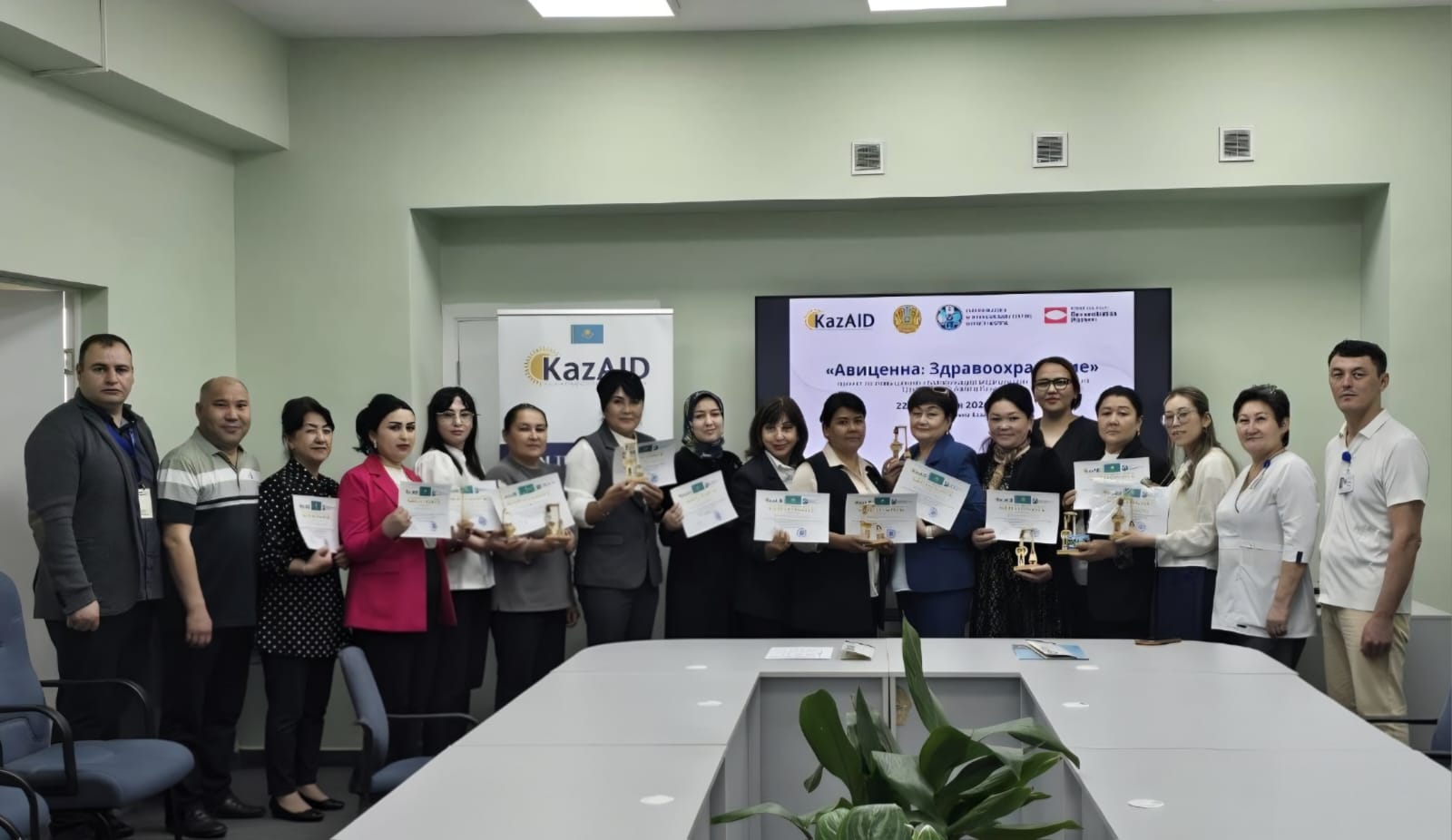
Kazakhstan shares its experience in primary healthcare with Central Asian countries 28.04.2026
From 22 to 24 April this year, the “Avicenna: Healthcare” program on professional development of medical staff from Central Asia, organized by the Kazakhstan Agency of International Development “KazAID” and Enbekshikazakh multidisciplinary central district hospital, was held in Esik, Almaty region.12 participants from the Kyrgyz Republic, the Republic of Tajikistan and the Republic of Uzbekistan underwent training on the World Health Organization (WHO) Primary Health Care Demonstration Platform (PHC). As part of the program, healthcare workers from Central Asian countries were able not only to expand their theoretical knowledge in this field but also to acquire practical skills through demonstrations and masterclasses. Site visits were organized to various facilities, including the Centre for Best Practices in Esik. Participants were given the opportunity to compare urban and rural PHC models. They also were able to learn about IT solutions such as DAMUMED. The “Avicenna: Healthcare” program on professional development of medical staff from Central Asia in Kazakhstan implemented by the Kazakhstan Agency of International Development “KazAID” has become a platform for sharing Kazakhstan’s experience in the field of PHC, as well as for establishing contacts among specialists of the region.Source : https://www.gov.kz/memleket/entities/kazaid/press/news/details/1210807?lang=kk
Dear consumers of the services of GKP KTEK 28.04.2026
Since April 29, 2026, major repairs of the heating network with a diameter of 159 mm along Mailina Street will be carried out.In this regard, the hot water supply in the following apartment buildings (120 apartments) will be temporarily turned off: 83, 85 Mailina St.; S. Nurmagambetova St., 92.We ask the residents of these houses to understand the temporary inconveniences.The deadline for the completion of repairs and restoration of hot water supply is May 08, 2026, until 17:00 hours. At the same time, every effort will be made to complete the work and resume the supply of hot water in a shorter time.Source : https://www.gov.kz/memleket/entities/kostanai-kalasy-akimat/press/news/details/1210810?lang=kk
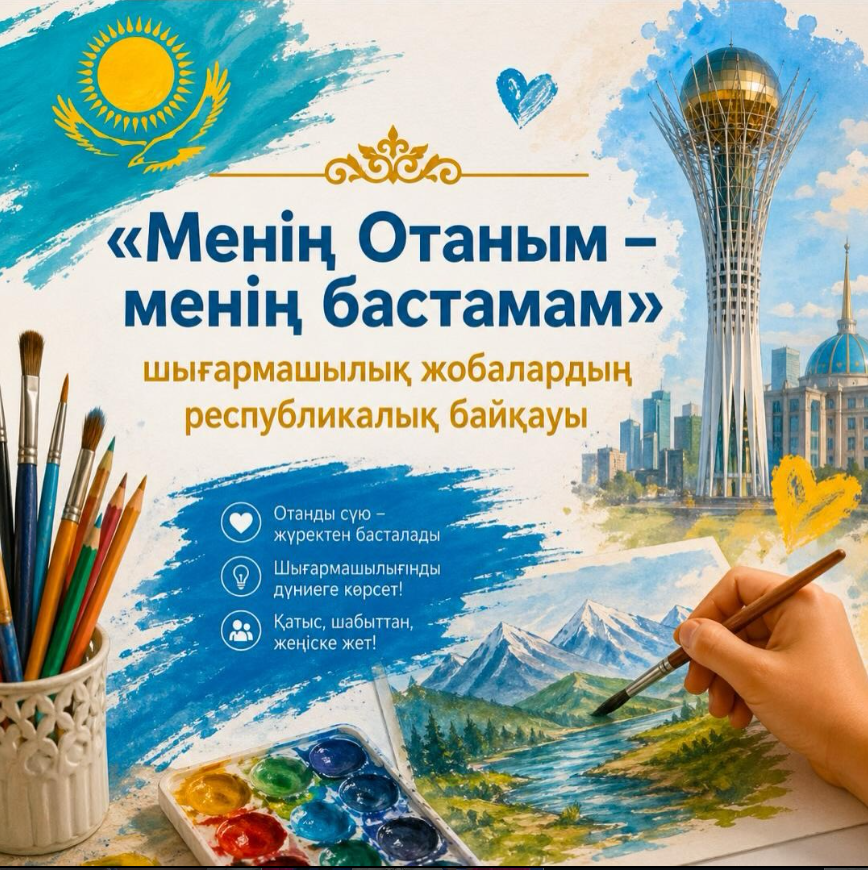
Results of the regional stage of the national competition of creative projects "My Homeland - My Initiative 28.04.2026
Based on the results of the regional stage, the following students won prizes:🔹 In the nomination "Caravan of Good Deeds" — 2nd place: student of KGU "Secondary School No. 1" Tolgatbek Berikzhan;🔹 In the nomination "My Family: Continuity, Values, and Meaning" — 2nd place: student of KGU "Secondary School named after N. Baimuratov" Orazbay Yerkenaz;🔹 In the nomination "My Homeland – My Sacred Native Land" — 3rd place: student of KGU "Begenskaya Secondary School" Kamalova Gulnaz.All participants were awarded certificates.Source : https://www.gov.kz/memleket/entities/beskaragay-roo/press/news/details/1210714?lang=kk
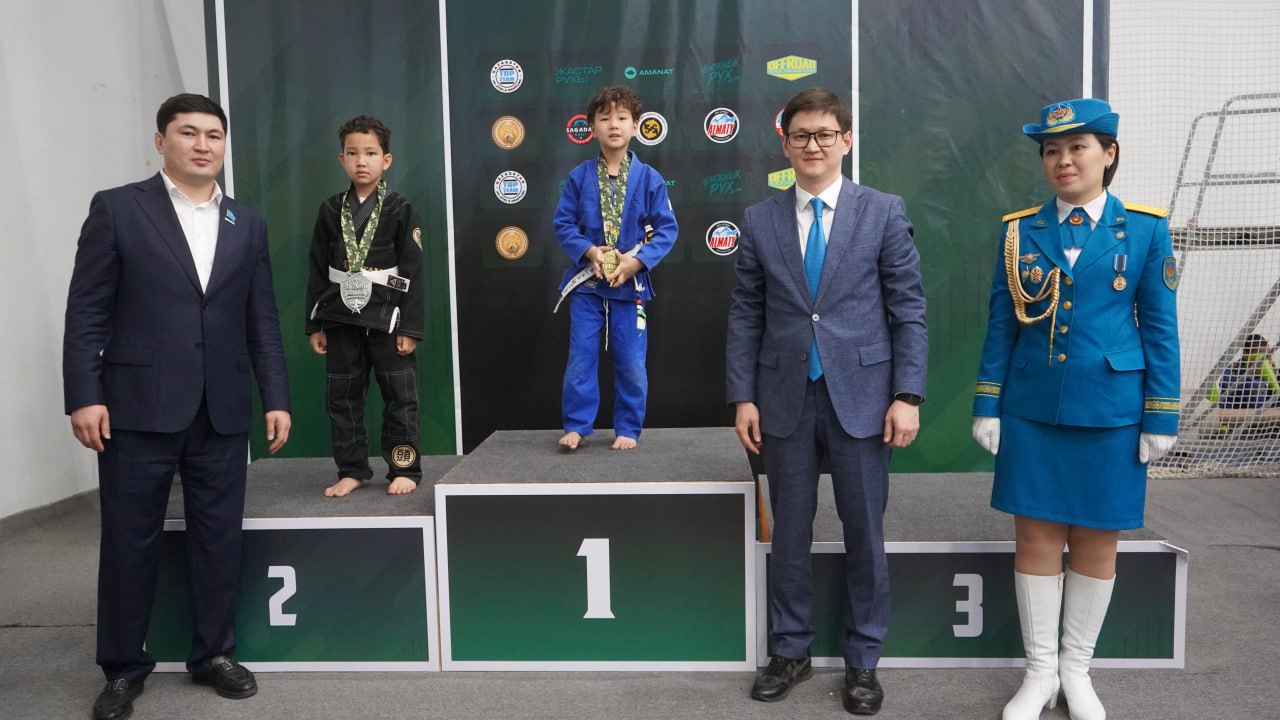
The international jiu-jitsu tournament in Almaty was dedicated to the memory of Khalyk қaһarmany Sagadat Nurmagambetov 28.04.2026
Source : https://www.gov.kz/memleket/entities/mod/press/news/details/1210723?lang=kk
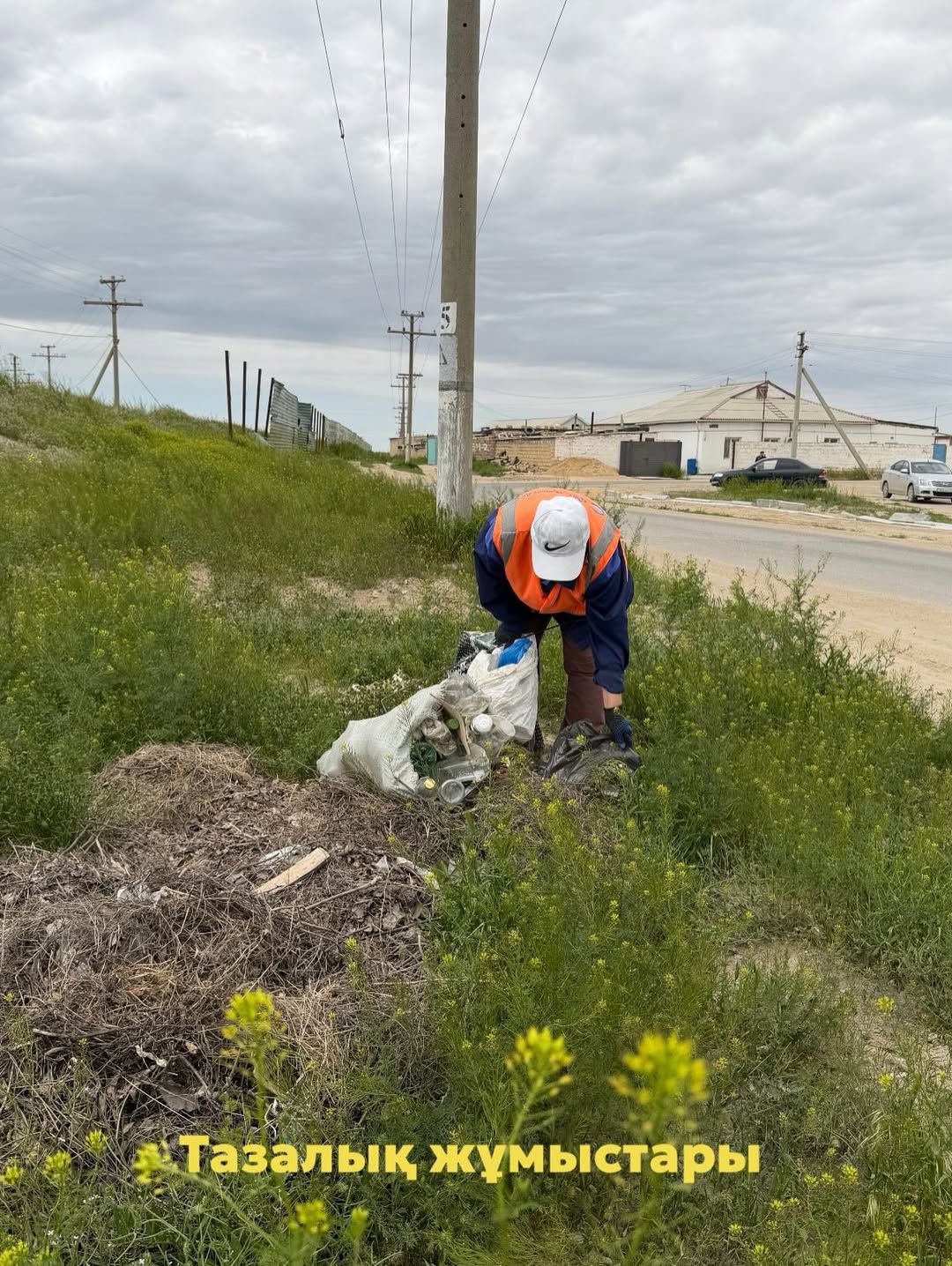
Landscaping and cleaning of the territory were carried out. 28.04.2026
An internal cleaning is being carried out, which will be continued in the future. The cleanliness of the village is a common task. , The press service of the office of the akim of the village of Daulet.Source : https://www.gov.kz/memleket/entities/mangystau-munaily-daulet/press/news/details/1210727?lang=kk
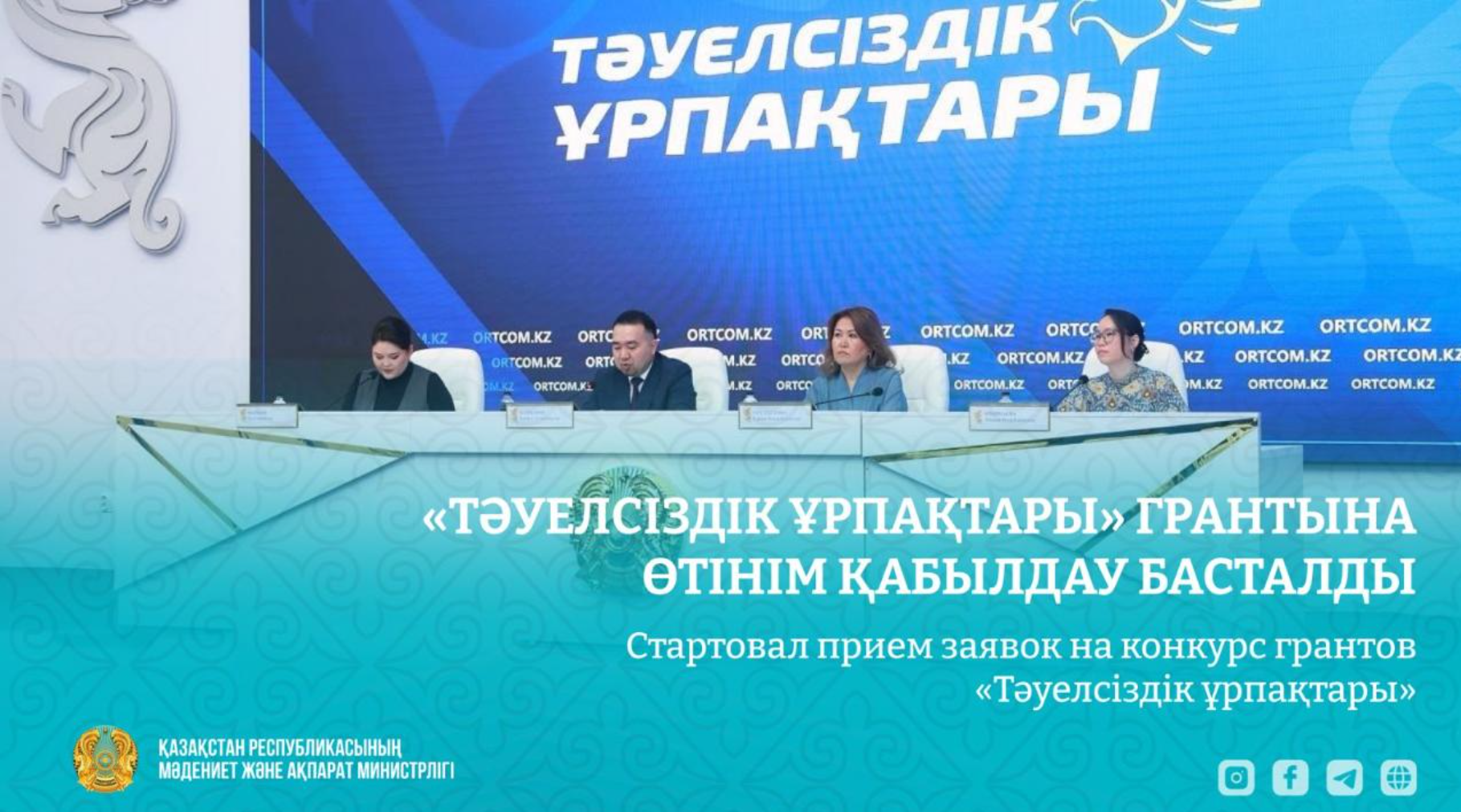
Acceptance of applications for the grant competition “Tauelsizdik Urpaktary” has started 28.04.2026
A briefing dedicated to the launch of the "Independence Generation" grant competition for 2026 was held at the Service of Central Communications under the President of the Republic of Kazakhstan. The main rules and participation requirements were explained at the event.The speakers were Chairman of the Committee for Youth and Family Affairs of the Ministry of Culture and Information of the Republic of Kazakhstan Kairat Kambarov, member of the competition commission Gaini Yesembekova, and 2025 grant recipient Aizhan Omirbayeva.The briefing noted that the "Independence Generation" grant has been awarded since 2021 on the initiative of President Kassym-Jomart Tokayev to provide state support to talented youth.In 2026, at the republican level, 30 grants of 3 million tenge each will be awarded.Citizens of the Republic of Kazakhstan aged 14 to 35 years (inclusive up to 34 years old) are eligible to apply for the grant.The grant is awarded on a competitive basis for the implementation of projects in 6 areas:"Science" – for the implementation of new scientific projects and research;"Culture" – for the implementation of projects aimed at popularizing Kazakhstan's cultural heritage, promoting folk cultural traditions and arts;"Information Technology" – for the implementation and development of new IT solutions and projects;"Business" – for the implementation of new business ideas;"Media" – for the implementation of new media projects, including projects to create educational, useful, and interesting content for youth;"Volunteering" – for the implementation of volunteer projects aimed at solving current social problems.Competition applications are accepted from April 21 to June 21 (inclusive until 24:00 on June 21) 2026.List of documents required to participate in the competition (in the state and/or Russian languages):1) The competition application is filled out via the link https://forms.gle/8Edm9PwoqQZQyw2872) Project description according to the form in Appendix-2 (PDF format);3) Video (no more than 60 seconds) or project presentation (no more than 10 slides);4) Project budget estimate according to the form in Appendix-3 (PDF format);5) Information on intellectual property (if available, PDF format);6) Copy of identity card or birth certificate (PDF format).Contact information for inquiries:8 (7172) 74-12-78, 8 777-114-66-82E-mail: t.urpaqtary2026@gmail.com (on working days from 9:00 to 18:30)Source : https://www.gov.kz/memleket/entities/beskaragay-roo/press/news/details/1210744?lang=kk
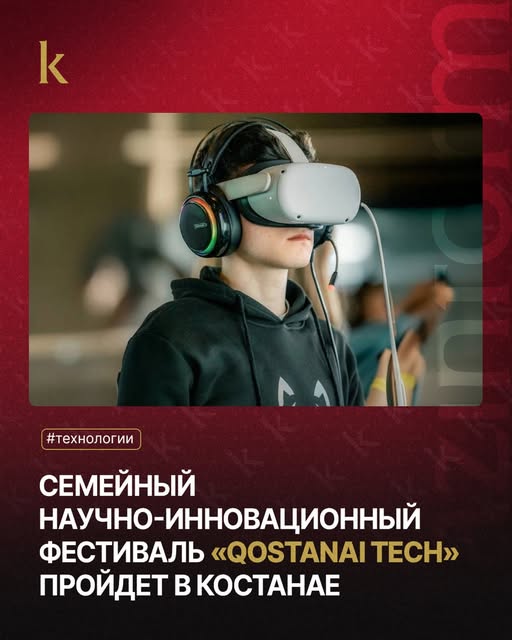
A large-scale family-oriented scientific and innovative festival «QOSTANAI TECH» will be held in Kostanay 28.04.2026
Date and Time: April 29, from 9:00 AM to 8:00 PMVenue: «Zhastar sarayy» and surrounding areas, Industrial zone On April 29, from 9:00 AM, the largest event of the year will begin in Kostanay. The family-oriented scientific and innovative festival «QOSTANAI TECH» will bring together Kostanay residents and guests from all regions of the country. The festival will become a landmark event in the Year of Digitalization and Artificial Intelligence, announced by Head of State Kassym-Jomart Tokayev. The start of the festival program will be given by Akim of Kostanay region Kumar Aksakalov. Among the festival’s headliners, who will address the audience in a TED-style format, are representatives of major industrial enterprises, IT companies, and opinion leaders. The speakers include Kim De Ki, General Director of KIA QAZAQSTAN; Temirlan Zinalabdin, CEO of Freedom Cloud and Advisor to the Working Group of the Presidential Council on AI Development of the Republic of Kazakhstan; Gabit Bekakhmetov, an entrepreneur in the fields of technology and education and the first Kazakhstani to have completed studies at the University of Oxford; and the leadership of Allur Group’s automotive manufacturing sector, among others. Guests will be welcomed in the foyer of the Zhastar Sarai by the festival’s mascot — the Q-AI transformer — as well as an exhibition of modern technologies. The interactive zone on the second floor will showcase innovative developments, including Industry 5.0 and smart manufacturing, autonomous systems and swarm technologies, urban digital infrastructure and smart city development, XR-based learning and immersive professions, as well as future environmental challenges, logistics, and digital security, among others. The festival will serve not only as a celebration of technology, but also as a platform for experimentation. A dedicated Future Technologies Zone will be organized on the second floor for children and teenagers.Visitors can look forward to a cyber sports arena with mini-tournaments, a tech testing ground, an engineering lab, and robotics activities. Particular interest among younger audiences is expected to be drawn by the VR/AI zone, where a simulation lab will allow participants to immerse themselves in real production processes — from operating agricultural machinery to working on electric vehicle assembly lines. At the outdoor area, children and their parents can enjoy hands-on workshops, interactive experiments, and science shows in chemistry and physics, including demonstrations with liquid nitrogen and a Tesla show. An exhibition of machinery and equipment from leading regional manufacturers will also take place at the venue. For those wishing to see automotive production processes and the operations of the region’s industrial giants firsthand, industrial tours will be organized throughout the day. These tours are expected to become a regular offering for both residents and visitors of the city. A key objective of the festival is to inspire the younger generation to explore programming and AI systems, which are becoming the foundation for the development of the engineering and agro-industrial sectors, while also reinforcing family values, intergenerational continuity, and respect for work and knowledge. Festival guests can look forward to a rich and engaging program, including:keynote speeches by leading experts in technology and artificial intelligencedemonstrations of innovative projects and technologiesinteractive zones and experimental areasan exhibition of regional enterprisesa vibrant concert programa wide range of additional activities and surprises Everyone will find something to enjoy. For the convenience of guests, a food court will be available on site. The festival program will conclude at 7:00 PM with a concert featuring Bayansulu, one of the brightest stars of the Kazakhstani music scene. Representatives of the media, as well as all interested guests, are invited to attend the family-oriented science and innovation festival «QOSTANAI TECH», starting at 9:00 AM on April 18. For all inquiries, comments, and additional information:Contact person: Anna LazarevaPhone: +7 777 370 23 04Source : https://www.gov.kz/memleket/entities/mfa-dushanbe/press/news/details/1210817?lang=kk

Notices indicating tax arrears have been distributed 28.04.2026
Specialists of the office of the akim of the Daulet rural district carried out work on sending notifications to the villagers indicating tax arrears. We ask the villagers to repay all mandatory tax payments in a timely manner.To the attention of the residents of the rural district!For all questions regarding taxes on individuals, contact the Office of the village Akim, the State Revenue Department or contact e-Salyq Azamat , Kaspi.kz We inform you what you can find out through the apps.The press service of the office of Akim of Daulet rural district.Source : https://www.gov.kz/memleket/entities/mangystau-munaily-daulet/press/news/details/1210780?lang=kk