Politics

Kazakhstan’s Agricultural Exports to China Rise by 82.4% 21.05.2026
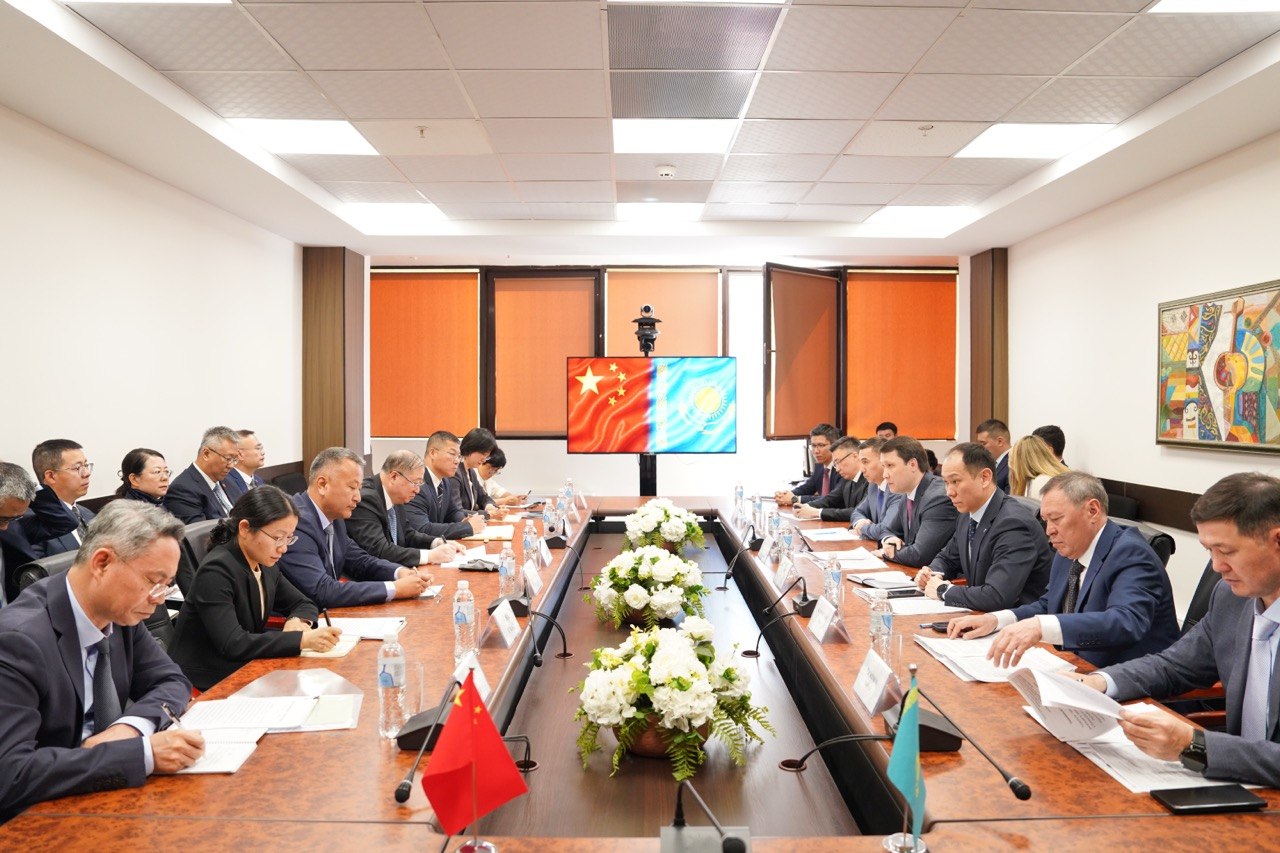
Vice Minister of Agriculture of Kazakhstan, Yermek Kenzhekhanuly, held a meeting with Liu Huanxin, Head of China’s National Food and Strategic Reserves Administration (NAFRA).During the talks, the parties discussed the current state and future prospects of bilateral cooperation, the expansion of agricultural trade, the implementation of investment projects, and the strengthening of food security.Yermek Kenzhekhanuly emphasized that China remains one of Kazakhstan’s key strategic partners in the agricultural sector.At the end of 2025, bilateral agricultural trade between the two countries increased by 36.8% and reached USD 1.97 billion. In January–March 2026, the figure grew by 61.7%, reaching USD 697 million.Kazakhstan’s agricultural exports to China increased by 35.3% in 2025, totaling USD 1.43 billion. The main export items included animal feed, vegetable oils, flax and sunflower seeds, and rapeseed oil. During the first three months of the current year, exports rose by 82.4%, reaching USD 550 million.Currently, Kazakhstan and China have signed protocols covering the export of 34 types of agricultural products, including 21 categories of crop products and 13 categories of livestock products. A total of 3,601 enterprises have been included in the register of companies authorized to export to China.For his part, Liu Huanxin highlighted the strong potential for agricultural cooperation between the two countries and confirmed China’s interest in stable supplies of high-quality products.“Your country is an important partner for China in ensuring food security and developing sustainable agricultural supply chains. We are ready to further strengthen practical cooperation, expand trade, and support joint projects in grain trade, logistics, and processing,” the head of NAFRA emphasized.Particular attention during the meeting was given to the prospects of concluding long-term contracts for the supply of grain and oilseed crops, creating logistics hubs and dry ports, as well as exchanging technologies for the storage and processing of agricultural products.Another topic of discussion was the development of digital tools for grain trading. The Kazakh side expressed interest in studying China’s experience in implementing a digital grain trading platform.Following the meeting, the parties agreed to establish a joint Chinese-Kazakh grain trading platform. The project is being implemented in accordance with the China–Central Asia Action Plan under the Belt and Road Initiative (BRI).The platform will be created on the basis of China’s existing National Internet Grain Trading Platform and will allow businesses from both countries to conduct transactions through competitive bidding and direct negotiations.The platform’s main product range will focus on soybeans and other oilseed crops.In addition, a Memorandum of Understanding was signed between the Ministry of Agriculture of Kazakhstan and NAFRA, along with a cooperation agreement between Food Contract Corporation JSC and the Grain Trade Coordination Center under NAFRA.Source : https://www.gov.kz/memleket/entities/moa/press/news/details/1224873?lang=ru

On the Demographic Situation for January-March 2026 15.05.2026
As of April 1, 2026, the population of the Abai Region amounted to 594.3 thousand people, including 374.2 thousand urban residents (63%) and 220.1 thousand rural residents (37%). Compared to the beginning of 2026, the population decreased by 1.4 thousand people, or 0.2%.Natural Population ChangeOverall, in the Abai Region, the natural population increase for January–March 2026 amounted to 553 people, which is 19.2% lower compared to January–March 2025 (684 people). The overall rate of natural increase was 3.78 per 1000 population.According to civil registration records provided by the civil registry offices, the number of births for January–March 2026 totaled 1797, which is 6.7% lower than during the corresponding period of 2025 (1926 births). The crude birth rate amounted to 12.29 births per 1000 population.During the reporting period, the number of deaths totaled 1,244 people, which is 0.2% higher than in January–March 2025 (1242 deaths). The crude death rate amounted to 8.51 deaths per 1000 population.In January–March 2026, 9 deaths of infants under one year of age were registered in the region, which is 40% lower compared to the corresponding period of 2025 (15 infant deaths). The infant mortality rate amounted to 5.01 per 1000 live births.Population MigrationAccording to data provided by the migration service authorities, in January–March 2026 the number of people arriving in the region amounted to 3,940, while the number of people leaving the region totaled 5893. As a result of external and internal migration, the migration decrease amounted to 1,953 people.The main external migration exchange occurred with CIS countries. The number of arrivals from CIS countries amounted to 39 people, or 65% of the total number of migrants, while the number of departures amounted to 179 people, or 84.23%. The majority of arrivals and departures involved the Russian Federation.Migration with non-CIS countries resulted in a positive balance: 21 people arrived in the region, while 3 people left. Most arrivals came from China, while most departures were to Germany.Regarding interregional migration, the number of arrivals amounted to 3880 people, while departures totaled 5874 people, resulting in a negative migration balance of 1994 people._____________________________________________________________________________________________________________Methodological explanationsThe natural growth rate is the difference between the total fertility and mortality rates.The total fertility rate is an indicator that determines the intensity of childbearing in relation to the entire population. Represents the ratio of the total number of live births during the period to the average population. As a rule, it is calculated per 1000 population.The total mortality rate is an indicator that determines the intensity of mortality of the population. Represents the ratio of the total number of deaths during the period to the average population. As a rule, it is calculated per 1000 population.The infant mortality rate is an indicator that determines the mortality rate of children under the age of one year. It is calculated by the ratio of the number of deaths under the age of 1 to the number of live births. The infant mortality rate is calculated per 1,000 live births.Population migration - the movement of people (migrants) across the borders of certain regions with a change of residence.Migrant - a person who commits a migration with change of residence.Number of arrivals - the number of people who have entered into the region because of its limits during the reporting period.Number of departures - the number of people who left the region outside of its boundaries during the reporting period. www.stat.gov.kz / Official statistics / By industry / Demographic statistics Head of the Division of social and demographic statistics:S.KondratyevaТеl. +7 (7222) 36 25 49 Address:180000, c.Semeyst.Mangilik yel, 25 © Bureau of National Statistics of the Agency for Strategic Planning and Reforms of the Republic of KazakhstanSource : https://www.gov.kz/memleket/entities/abay/press/news/details/1221037?lang=kk
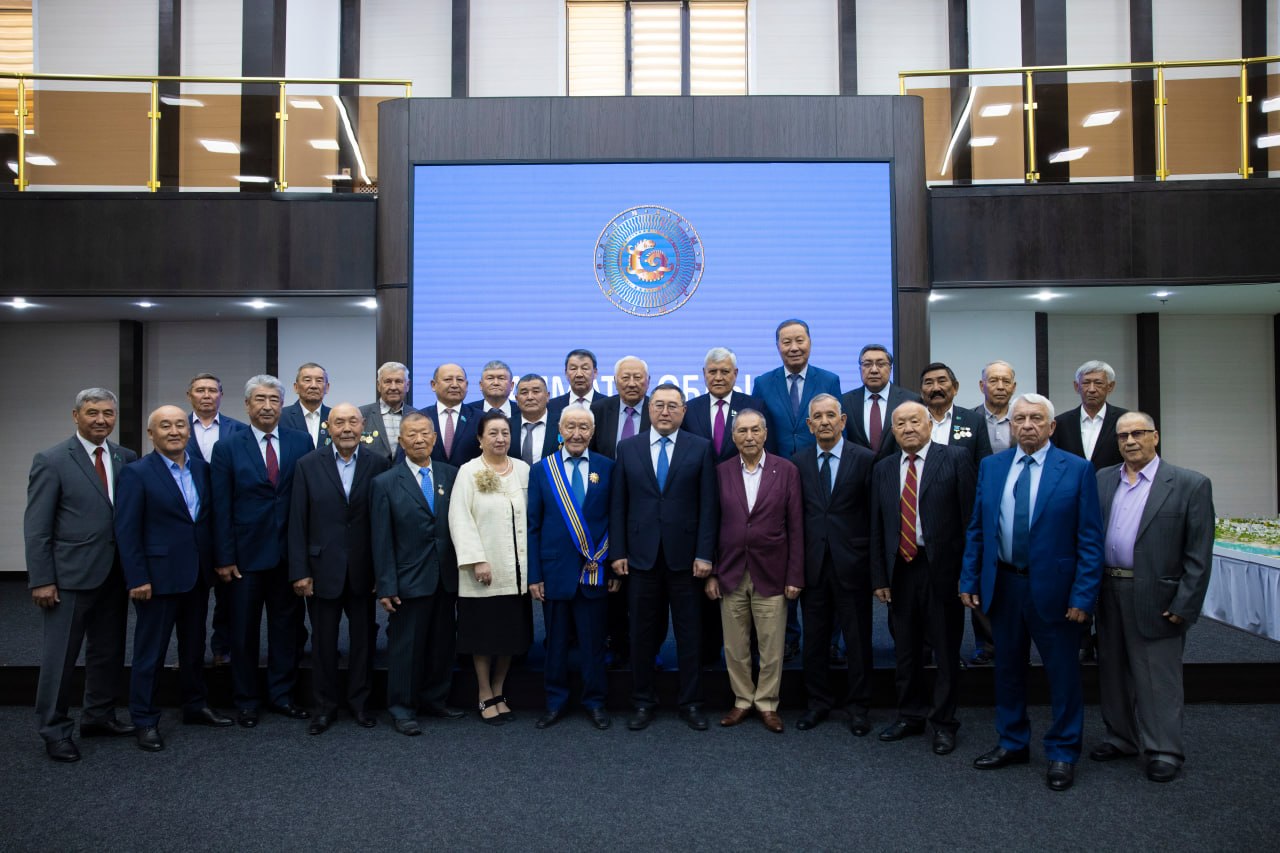

The future of the food and processing industry will be discussed in Astana 09.05.2026
From May 13 to 15, 2026, the International Exhibition Center IEC EXPO will host the 26th Kazakhstan International Exhibition “Food, Beverages, Ingredients, Packaging and Equipment for the Food Industry” — InterFood Astana 2026.The exhibition traditionally serves as one of Kazakhstan's key industry platforms, bringing together food producers, equipment suppliers, representatives of the processing industry, retailers, and government agencies. Around 80 companies from 12 countries—Austria, Belarus, Vietnam, Germany, Georgia, Kazakhstan, China, Malaysia, the UAE, Russia, Thailand, and Ukraine—will participate in the event.The exhibition will cover a wide range of areas—from food and beverage production to ingredients, packaging solutions, and modern food processing equipment. A distinctive feature of InterFood Astana remains its comprehensive approach to presenting the industry, demonstrating the full production and processing cycle.For many years, the InterFood Astana exhibition has been an effective professional platform focused on implementing state policy priorities in the agricultural sector.The forum's agenda is directly linked to the objectives outlined in the country's strategic documents and the Head of State's instructions, and is aimed at developing practical solutions for the further development of the food and processing industries.Over the course of two days, issues related to the meat and dairy industries of Kazakhstan will be discussed.Particular attention will be paid to issues of deep processing of agricultural products, increasing added value, introducing modern technologies, and expanding the export potential of domestic producers.The key event of the business program will be the first international Meat & Dairy Industry Forum in Kazakhstan.The exhibition will also feature a Retail and Distributor Center—a specialized platform for negotiations between food suppliers, retail chains, and distributors in Kazakhstan. This format will allow participants to establish direct business contacts, expand distribution channels, and discuss cooperation terms.A professional food and beverage tasting competition, "Traditions of Quality," will also be held, with the best producers awarded gold medals.Organizers note that InterFood Astana is not only an exhibition but also a working platform for discussing industry initiatives, developing coordinated approaches between government and business, and providing practical support for reforms in Kazakhstan's food and processing industries. Source : https://www.gov.kz/memleket/entities/moa/press/news/details/1216216?lang=kk