News

CRM in 2026: Why your business needs it and how to avoid an audit? 11.07.2026
Many entrepreneurs still think that a Cash Register Machine (CRM/KKM) is a waste of time. However, in today's Kazakhstan, it is the foundation of a "white" and safe business.Let's break down the essentials:✅ Who is required to use a CRM? If you accept payments in cash, by payment cards, or via mobile payments for goods, works, or services, the use of a CRM (with data fixation and transmission function) is mandatory.📝 Key Requirements:Registration: The CRM must be registered with the tax office before starting activities involving settlements.Issuing a Receipt: You are obligated to issue a fiscal receipt (paper or electronic) to the buyer for the full payment amount.Taxpayer Passport: If you work in trade or public catering, a QR code containing your business data must be displayed directly at the checkout.🚫 Who can work WITHOUT a CRM?Individuals (not registered as IPs).Lawyers, notaries, and mediators.Businesses in public urban transport (when issuing tickets).Important: Those who use a special mobile application (e.g., the self-employed) are exempt from CRMs, as receipts are generated directly on their smartphones.🧨 What are the risks? Tax authorities may conduct chronometric surveys to establish your actual income if there are suspicions of hidden revenue. Moreover, any buyer who records the non-issuance of a receipt on video can report it to the tax authorities and receive a reward.💡 Tip: Modern online CRMs integrate with accounting systems and allow you to send electronic receipts via WhatsApp or email — it's convenient for both you and your customers!Source : https://www.gov.kz/memleket/entities/kgd-zhetysu/press/news/details/1245690?lang=ru

Happy Civil Servant Day of the Republic of Kazakhstan! 11.07.2026
We extend our sincere congratulations to all those who have devoted their careers to public service and the advancement of our nation.We wish you good health, well-being, fruitful work, professional success, and continued achievements in your service to the country.Source : https://www.gov.kz/memleket/entities/kgd/press/news/details/1245675?lang=ru
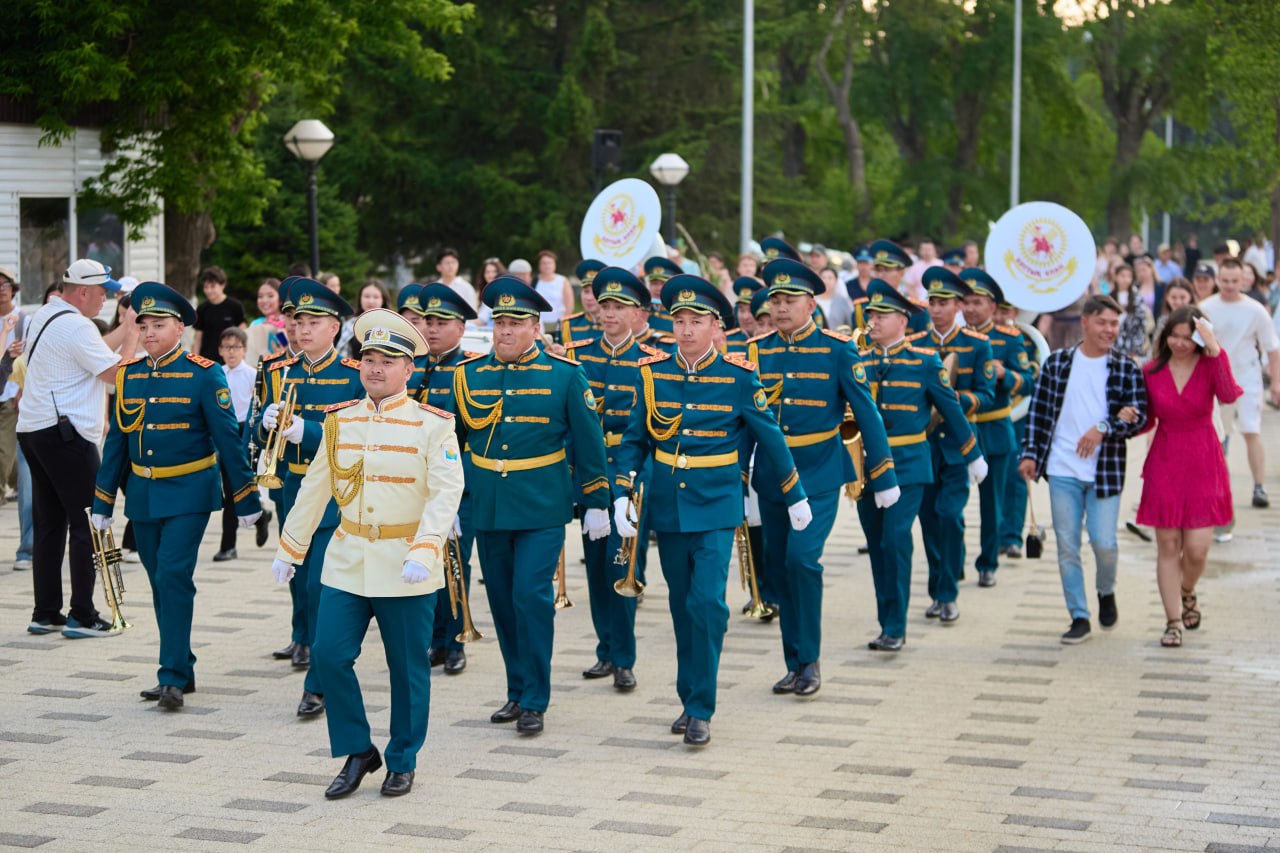
Along the World’s Longest Pedestrian Street: National Guard Orchestra Congratulates Police Officers on Their Professional Holiday 11.07.2026
In Petropavlovsk, the Exemplary Band of the National Guard of the Ministry of Internal Affairs of the Republic of Kazakhstan held a ceremonial march and concert dedicated to the Day of Kazakhstan Police. The musical program was organized as part of the GuardNext project and attracted numerous residents and visitors of the city.The event began with a ceremonial parade of military musicians through one of the city’s most recognizable public spaces. The orchestra then presented a concert program featuring military-patriotic compositions and popular songs by Kazakh performers. Through their performance, the musicians created a festive atmosphere while emphasizing the importance of service to the Motherland, national unity, and respect for state values.The performance generated significant interest among local residents. Passersby stopped to watch, recorded videos on their mobile phones, sang along to familiar melodies, and expressed their appreciation with warm applause.The venue itself added special significance to the event. The march and concert took place on Constitution of Kazakhstan Street, considered the country's longest pedestrian boulevard and a candidate for inclusion in the Guinness World Records as the longest pedestrian street in the world.The event clearly demonstrated that the National Guard remains an integral part of society and that military-patriotic culture continues to play an important role in strengthening civic unity.The GuardNext musical project is implemented by the National Guard on a regular basis and is aimed at promoting military band art, fostering patriotic values among young people, and developing cultural dialogue between service members and civilians.It is worth noting that the project continues to expand its geography and attract growing audiences across the country. Open-air concerts consistently generate strong public interest, which is why the performance in Petropavlovsk was organized following numerous requests and invitations from local residents.Today, residents of several other cities across Kazakhstan have also expressed interest in hosting similar concerts in their regions and have invited the participants of the GuardNext project to perform. Press Service of the National GuardMinistry of Internal Affairs of the Republic of KazakhstanSource : https://www.gov.kz/memleket/entities/kvv/press/news/details/1245669?lang=ru
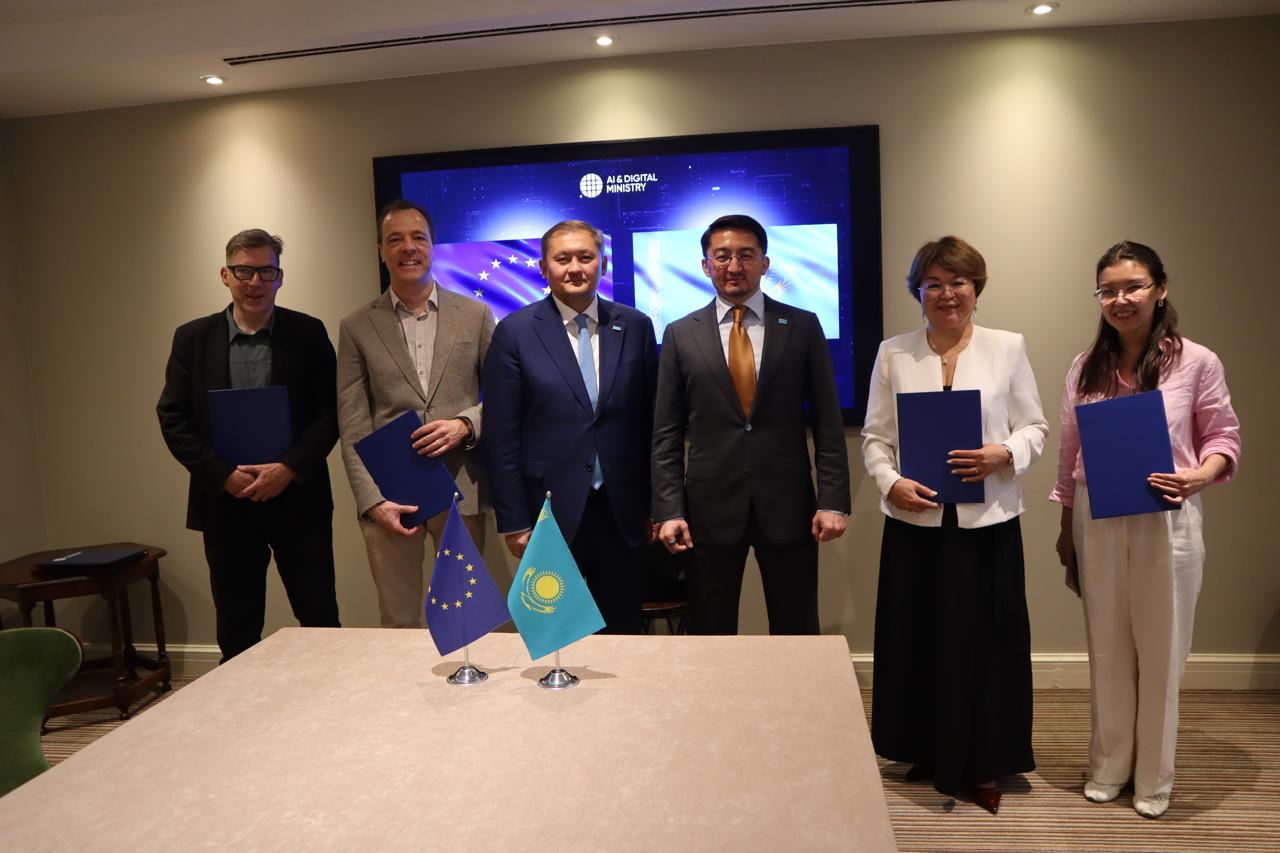
Strategic Agreements on the Development of Artificial Intelligence, Science and Digital Infrastructure in Kazakhstan Signed in Brussels 11.07.2026
Brussels, June 22, 2026During the state visit of the President of Kazakhstan to the Kingdom of Belgium, a number of strategic agreements were signed aimed at the development of artificial intelligence, science, digital infrastructure and space technologies. The agreements reached open up new opportunities for attracting investments, implementing joint research projects, introducing advanced technologies and strengthening Kazakhstan's position as one of the leading technological centers in Eurasia.On the part of Kazakhstan, the signing ceremonies were attended by Deputy Prime Minister - Minister of Artificial Intelligence and Digital Development of the Republic of Kazakhstan Jaslan Madiyev and Minister of Science and Higher Education of the Republic of Kazakhstan Sayasat Nurbek. During the visit, cooperation agreements were signed with Ghent University and KU Leuven, the leading scientific and educational centers in Europe. The documents provide for joint research, the creation of international research teams, academic mobility, training of specialists and the implementation of technological projects within the framework of Kazakhstan's cooperation with the European Union and the Horizon Europe program. For Kazakhstan, Horizon Europe is an important mechanism for integration into the European Research Space, expanding the participation of domestic scientists in international consortia and the implementation of joint scientific and innovative projects. The new agreements create a practical basis for the preparation of joint applications, the launch of research programs, the formation of international laboratories and the introduction of scientific developments into the economy. The signed agreements also create the basis for the development of the AI for Science and Innovation agenda - the use of artificial intelligence to accelerate scientific research, simulate complex processes, develop new materials and technologies, analyze data and create innovative solutions for industry and the economy.ALEM.AI will become the central platform for the implementation of this agenda in Kazakhstan, bringing together the capabilities of artificial intelligence, science, universities, research centers, startups and industrial partners. The platform is considered as an entry point for international partners to Kazakhstan's AI for Science and Innovation ecosystem and a tool for launching joint projects within Horizon Europe.Cooperation with Ghent University will focus on research in the fields of mathematical modeling, scientific computing, digital twins and artificial intelligence. The partnership with KU Leuven will expand cooperation in the fields of sustainable materials, critical metals, engineering training, technology commercialization and the introduction of scientific developments into industry. The International Science and Technology Center (ISTC), which has extensive experience in forming international research consortia and supporting scientific and technological projects, will also be involved in the implementation of joint initiatives.The parties discussed global trends in the development of artificial intelligence infrastructure, modern approaches to financing digital projects, as well as prospects for the implementation of large-scale initiatives in the field of data centers and high-performance computing in Kazakhstan. Among the areas under discussion are the further development of the Kazakhstan Data Center Valley project and the creation of conditions for attracting international investment in a new generation of AI infrastructure. The practical application of space technologies and satellite data was also included in the package of new agreements signed during the state visit. During the visit, an agreement on joint activities was signed between JSC "National Company Kazakhstan Garysh Sapary" and the Luxembourg company Hydrosat S.a.r.l., specializing in satellite analytics in the field of water resources management and agriculture. The document provides for the implementation of the pilot project "Water Resources Management in Kazakhstan using Copernicus and Hydrosat", aimed at obtaining verified data and analytics to improve the efficiency of water use, irrigation management and assessment of water use. The project will combine analytical solutions and Hydrosat satellite technologies, including satellite and ground data processing models, calculations of evapotranspiration, soil moisture and crop conditions, with the infrastructural and operational capabilities of NC Kazakhstan Garysh Sapary JSC for field work, equipment operation and interaction with land users in the pilot territories of Zhambyl region. The agreement provides for further scaling of the project results in Kazakhstan and the Central Asian states, as well as the possibility of creating a specialized project company to implement joint initiatives at the intergovernmental level. During meetings with the leadership of the Institute for Computer Science, Artificial Intelligence and Technology (INSAIT) and the International Science and Technology Center (ISTC), the parties discussed opportunities for joint talent development, collaborative research projects, the advancement of national large language models, and Kazakhstan’s integration into leading European scientific and technological initiatives.The agreements reached will contribute to the development of Kazakhstan’s artificial intelligence ecosystem, strengthen international scientific cooperation, and support the adoption of advanced technologies across the economy, education system, and public administration. The agreements signed in Brussels create new opportunities for international scientific cooperation, attracting investments, developing digital infrastructure and introducing advanced technologies into key sectors of the economy. New partnerships with European universities, investment platforms, and technology companies strengthen Kazakhstan's position as a country consistently shaping a modern ecosystem of artificial intelligence, science, and innovation.Source : https://www.gov.kz/memleket/entities/maidd/press/news/details/1245649?lang=ru
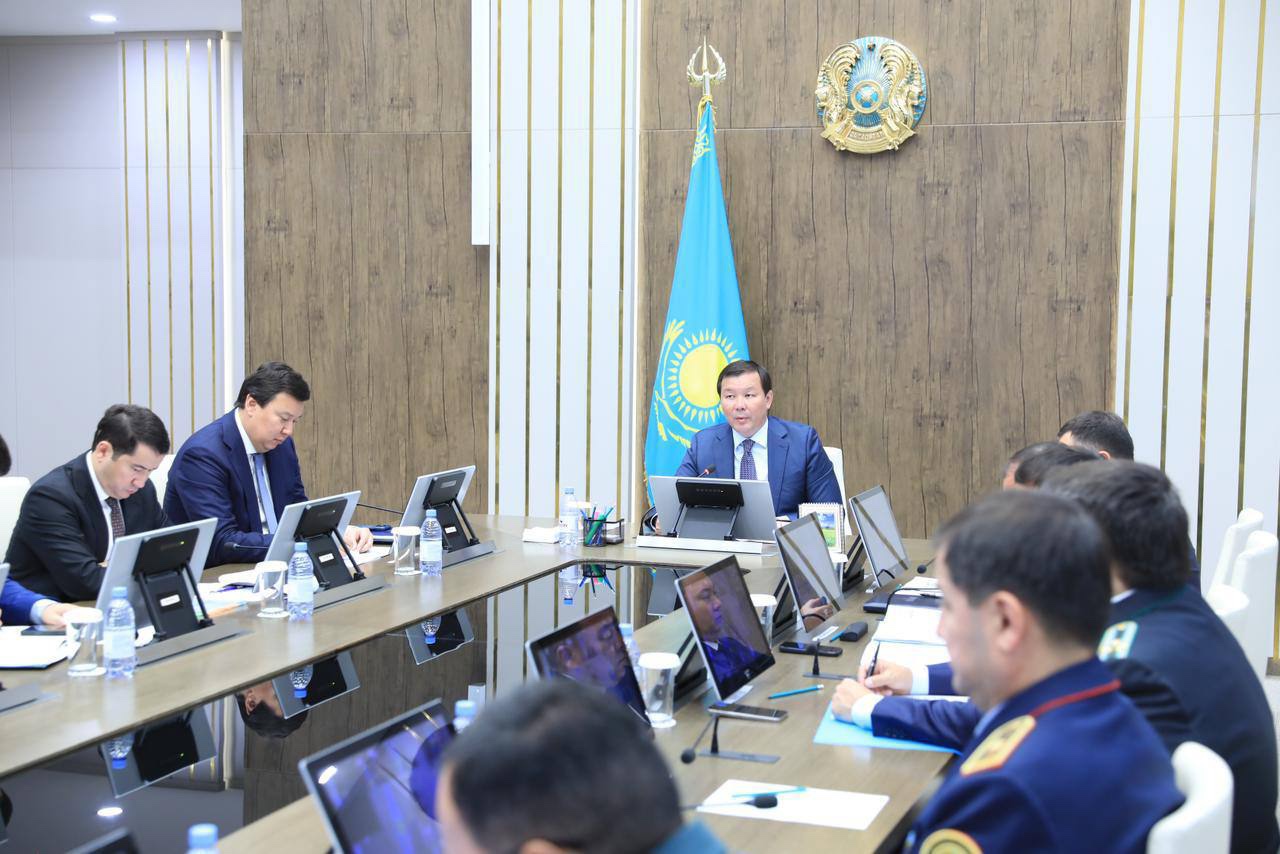
Implementation of the “Taza Kazakhstan” Program and Sanitary Conditions in the Region Discussed in Aktobe 11.07.2026
During a staff meeting chaired by Akim of the region Askhat Shakharov, participants discussed the implementation of the environmental program “Taza Kazakhstan,” as well as the state of sanitary cleaning and landscaping in the city and districts of the region.According to Isatay Espaganbetov, Head of the Department of Natural Resources and Environmental Management Regulation, the Aktobe Region continues its transition toward a more technological and systematic model of environmental management.To monitor air quality, four automated monitoring stations are planned to be installed in the region. They will be located in the Altyn Orda and Yeset Batyr residential districts, as well as in the village of Birshogyr in the Shalkar District. The stations are designed to monitor ambient air quality in real time.A green belt covering 15 hectares will be established around Aktobe, while 10-hectare green zones will be created around district centers. Tree planting activities will continue until November 1. This spring, a total of 46.7 thousand saplings were planted across the region.Isatay Espaganbetov also highlighted the work of the Telegram bot @TazaQazBot, created within the framework of the national environmental program “Taza Kazakhstan.” The service enables residents to promptly report illegal dumpsites, landscaping issues, environmental pollution, and other ecological concerns.“Residents of the region regularly submit requests through the ‘Taza Kazakhstan’ chatbot. All applications remain under continuous monitoring, and appropriate measures are taken for each case. This tool helps ensure a prompt response to issues and facilitates effective feedback from the public,” the speaker explained.Aktobe Akim Azamat Beket noted that comprehensive cleaning of streets and public spaces is carried out on a regular basis in the city, including mechanized cleaning of sidewalks, bus stops, parks, and public gardens, as well as the removal of bulky and illegally dumped waste.A total of 88 units of specialized equipment and 345 municipal workers are involved in these activities. Sanitary maintenance of the city is carried out across 16 sectors assigned to contractor organizations.Summer road maintenance work is being conducted on 711 streets and in 54 residential areas. More than 200 workers and over 100 units of specialized equipment are engaged in the cleanup operations. All equipment is fitted with GPS trackers, enabling monitoring of the quality and volume of work performed.Under new contracts, contractor organizations have been designated to provide sanitary maintenance and road network servicing until mid-2026. Their responsibilities include cleaning, watering, sweeping, road surface leveling, and roadside maintenance.According to Azamat Beket, the GPS monitoring system allows real-time tracking of specialized equipment operations and enhances transparency and quality control.After hearing the reports, Regional Akim Askhat Shakharov instructed officials to strengthen sanitary cleaning efforts, eliminate illegal dumpsites, expand digital monitoring tools, and improve the effectiveness of environmental initiatives.Askhat Shakharov emphasized that the implementation of the “Taza Kazakhstan” program should move to a qualitatively new level—from one-time events to systematic and sustainable work.“Today, environmental activities must be based on modern digital solutions and continuous monitoring. It is necessary to accelerate the introduction of air quality monitoring systems, strengthen efforts to eliminate illegal dumpsites, and ensure transparent accounting of municipal solid waste removal. Special attention should be paid to greening populated areas and implementing all planned activities within the established deadlines. It is also important to actively use the capabilities of the ‘Taza Kazakhstan’ chatbot to promptly respond to residents’ concerns. Only through the shared responsibility of the state, businesses, and citizens can we ensure a clean and comfortable living environment,” the regional head stressed.Source : https://www.gov.kz/memleket/entities/aktobe-zhastar1/press/news/details/1245640?lang=ru
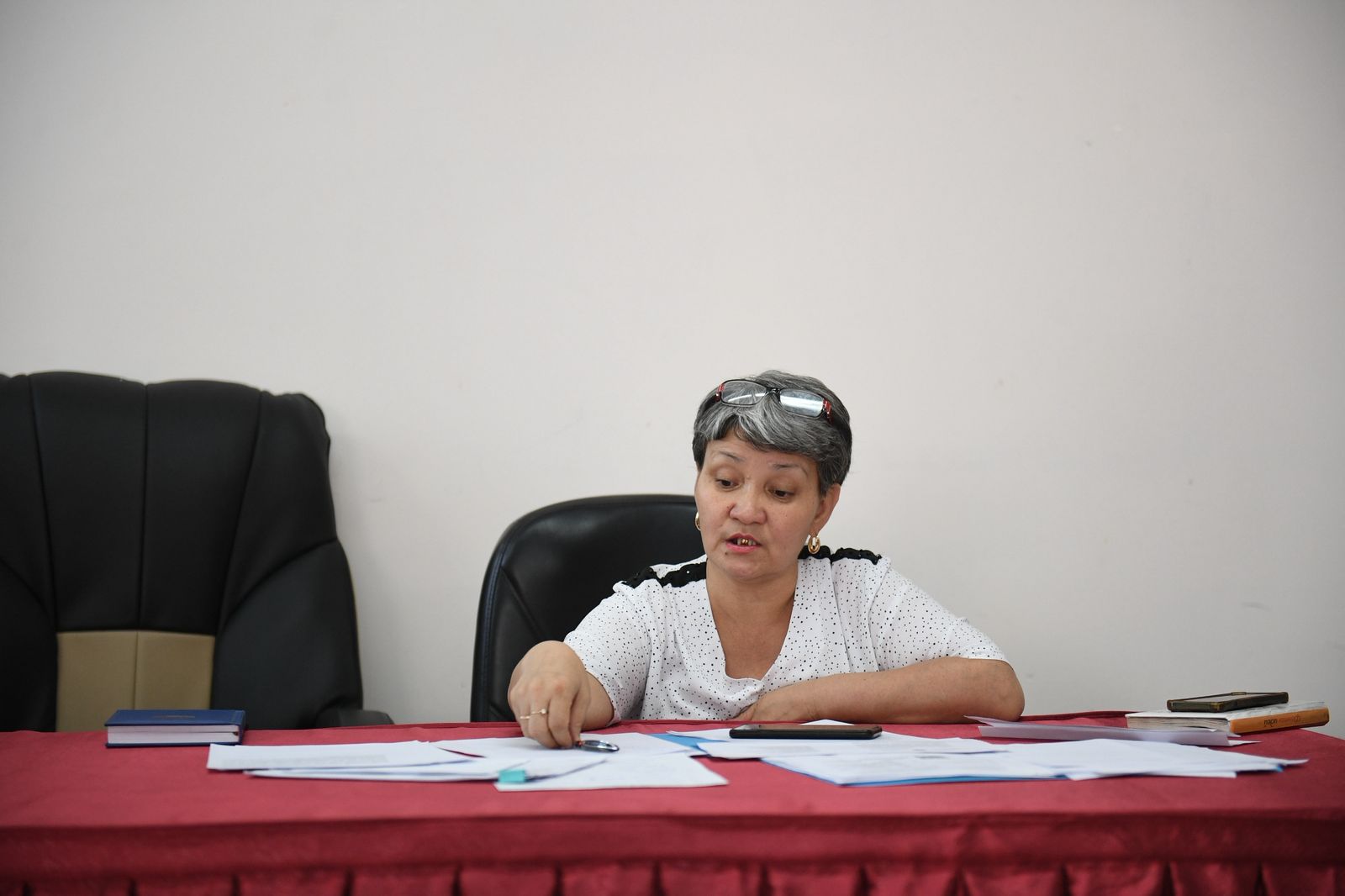
Issues of Improving the Quality of Citizens’ Appeals Review Discussed at Konaev City Multidisciplinary Hospital 11.07.2026
Source : https://www.gov.kz/memleket/entities/almobl-densaulyk/press/news/details/1245630?lang=ru
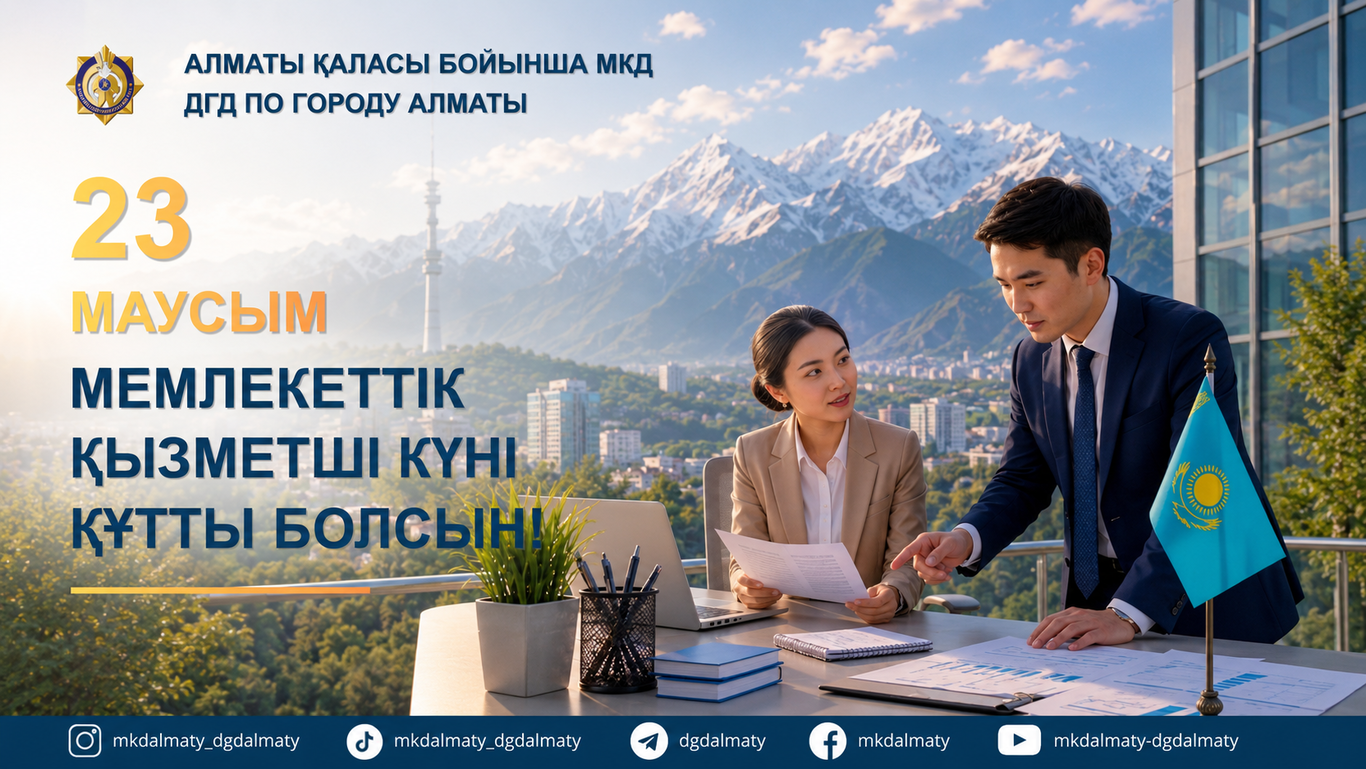
Happy Civil Servant's Day! 11.07.2026
The State Revenue Department of Almaty sincerely congratulates you on the Civil Servant Day of the Republic of Kazakhstan!Serving the country is an honorable duty! We wish you good health, family well-being, boundless energy, and confidence in the future.May your work for the benefit of the people be fruitful, your service honorable, and your future bright!Source : https://www.gov.kz/memleket/entities/kgd-almaty/press/news/details/1245906?lang=ru
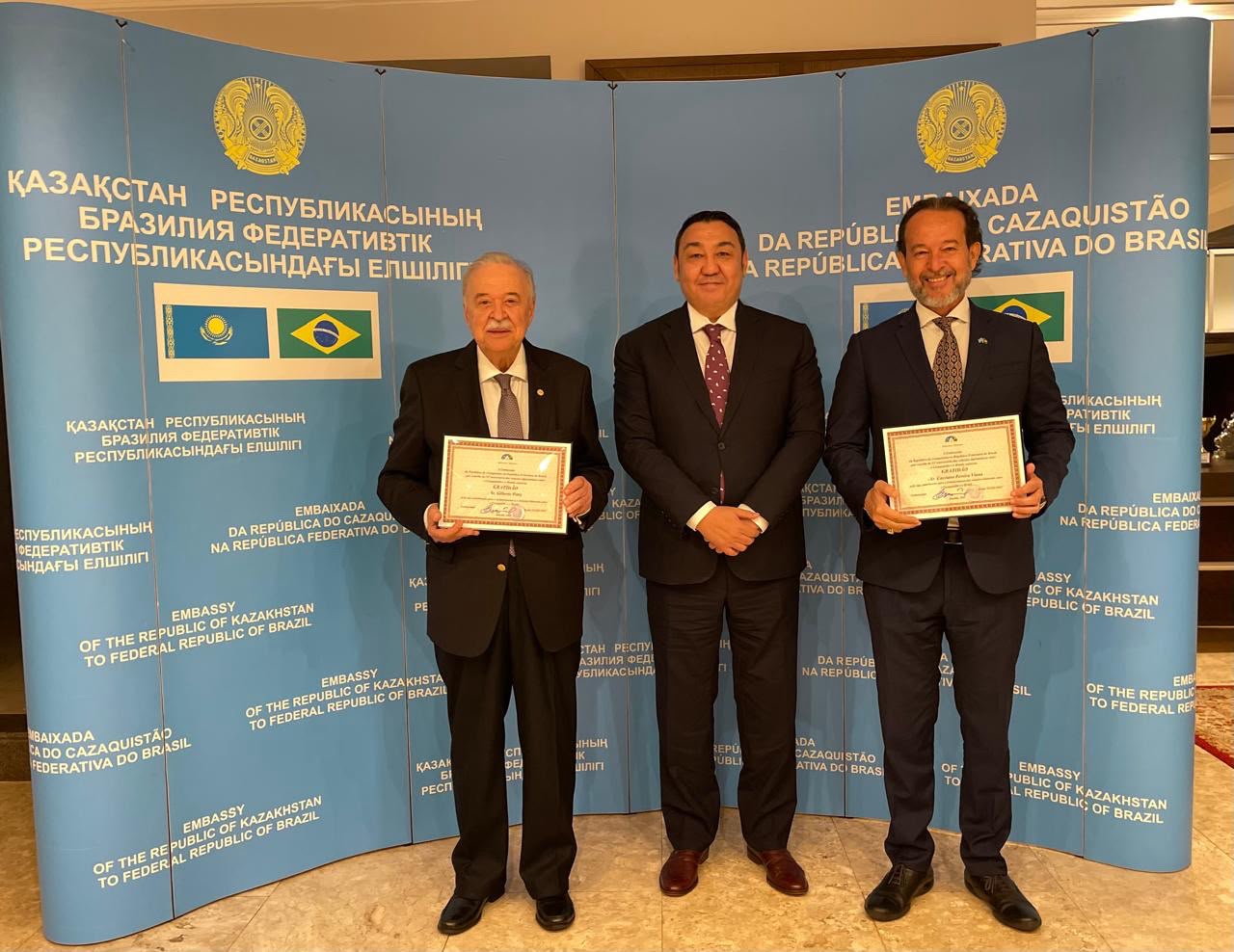
Issues of the Kazakhstan–Brazil Business Council Discussed 11.07.2026
Brasília, June 22, 2026 – A meeting was held at the Embassy of Kazakhstan in Brazil between Ambassador Bolat Nussupov, Vice President of the Brazilian National Confederation of Industry (CNI) and Co-Chairman of the Brazil–Kazakhstan Business Council, Gilberto Petri, and President of the Brazil–Kazakhstan Chamber of Commerce and Industry, Cassiano Viana.During the meeting, the participants discussed joint plans and matters related to the activities of the Brazil–Kazakhstan Business Council, which was established in 2021 under the co-chairmanship of QazIndustry JSC, the Kazakhstan Industry and Export Center, and the Brazilian National Confederation of Industry (CNI).The parties agreed on the draft agenda and the composition of the business delegations for the upcoming 4th meeting of the Business Council, scheduled to take place this autumn in the city of Konaev. In addition, priority economic projects were reviewed, as well as a list of documents that may be signed during the meeting.The Ambassador of Kazakhstan, in turn, expressed his gratitude to his counterparts for their successful and friendly cooperation and presented them with letters of appreciation from the Embassy in recognition of their contribution to strengthening and expanding bilateral relations between Kazakhstan and Brazil.For regerence: The inauguration and first meeting of the Business Council took place in November 2021 in Brasília during the visit of A. Aidarov, Deputy Minister of Foreign Affairs of the Republic of Kazakhstan, to Brazil. The second meeting was held in Astana in April 2023 as part of the visit of a Brazilian economic delegation led by Business Council Co-Chairman Gilberto Petri. The third meeting was organized in October 2024 in Porto Alegre (Rio Grande do Sul State) during the visit to Brazil of an economic delegation from Kazakhstan and representatives of the Almaty Region Administration. Source : https://www.gov.kz/memleket/entities/mfa-brazil/press/news/details/1245627?lang=ru
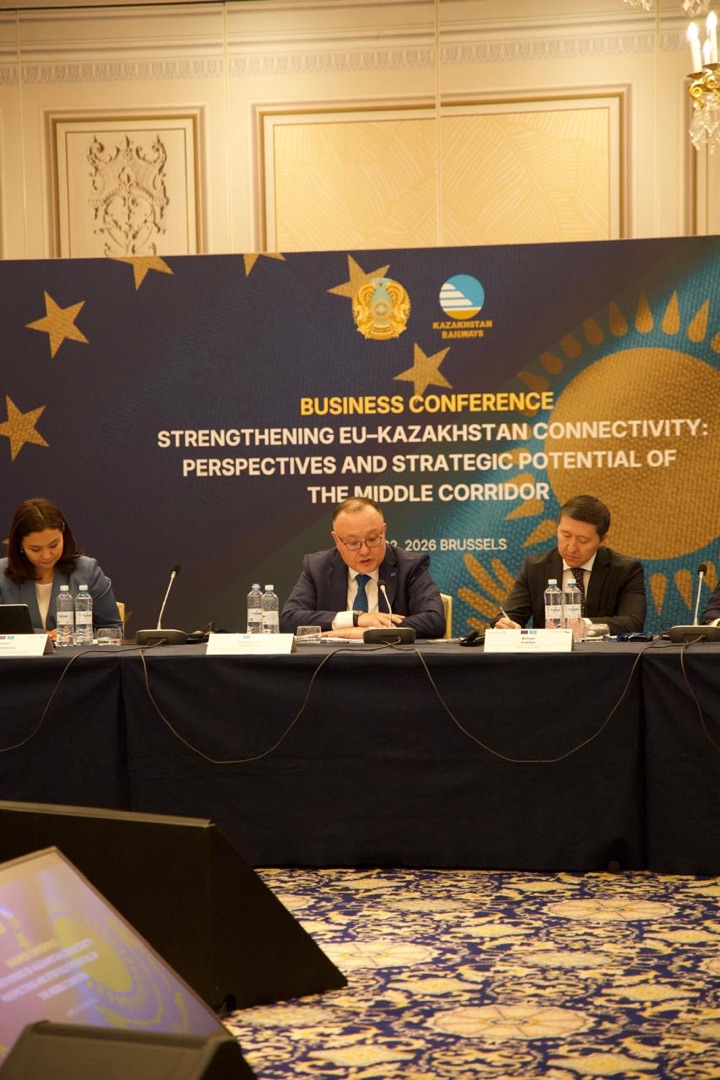
Kazakhstan and the European Union Strengthen Cooperation in Transport Connectivity 11.07.2026
Deputy Minister of Foreign Affairs of the Republic of Kazakhstan Arman Issetov took part in the Business Conference “Strengthening Kazakhstan–EU Connectivity: Perspectives and Strategic Potential of the Trans-Caspian International Transport Route (TITR)”.The event brought together representatives of the European Commission, the European Parliament, international financial institutions, transport and logistics companies, and business communities from Kazakhstan and the European Union.Speaking during the first session dedicated to the strategic importance of the TITR for Kazakhstan–EU relations, Deputy Minister Issetov emphasized that Kazakhstan and the European Union are connected by decades of trust-based dialogue and mutually beneficial cooperation.Acording to the Kazakh diplomat, the TITR has evolved far beyond a traditional transit corridor and is increasingly becoming a major geo-economic project serving the interests of both Central Asia and Europe.Against the backdrop of evolving global supply chains and growing demand for reliable and diversified transport routes, Kazakhstan consistently advocates for open, resilient and mutually beneficial connectivity between East and West.Particular attention was paid to the complementarity between the TITR and the European Union’s Global Gateway initiative. It was noted that the modernization of transport infrastructure, the development of digital solutions and the enhancement of logistics processes create additional opportunities for deepening bilateral cooperation.Following the event, a signing ceremony was held for a number of agreements aimed at further developing transport and logistics infrastructure and expanding cooperation with the European Union in this area.The European Union remains Kazakhstan’s largest trade and investment partner. As Kazakhstan and the European Union approach the 10th anniversary of the signing of the Enhanced Partnership and Cooperation Agreement (EPCA), bilateral relations continue to demonstrate strong positive momentum. In 2025, bilateral trade reached 45.1 billion US dollars, while the cumulative gross inflow of foreign direct investment from EU Member States exceeded 200 billion US dollars.Source : https://www.gov.kz/memleket/entities/mfa/press/news/details/1245598?lang=ru
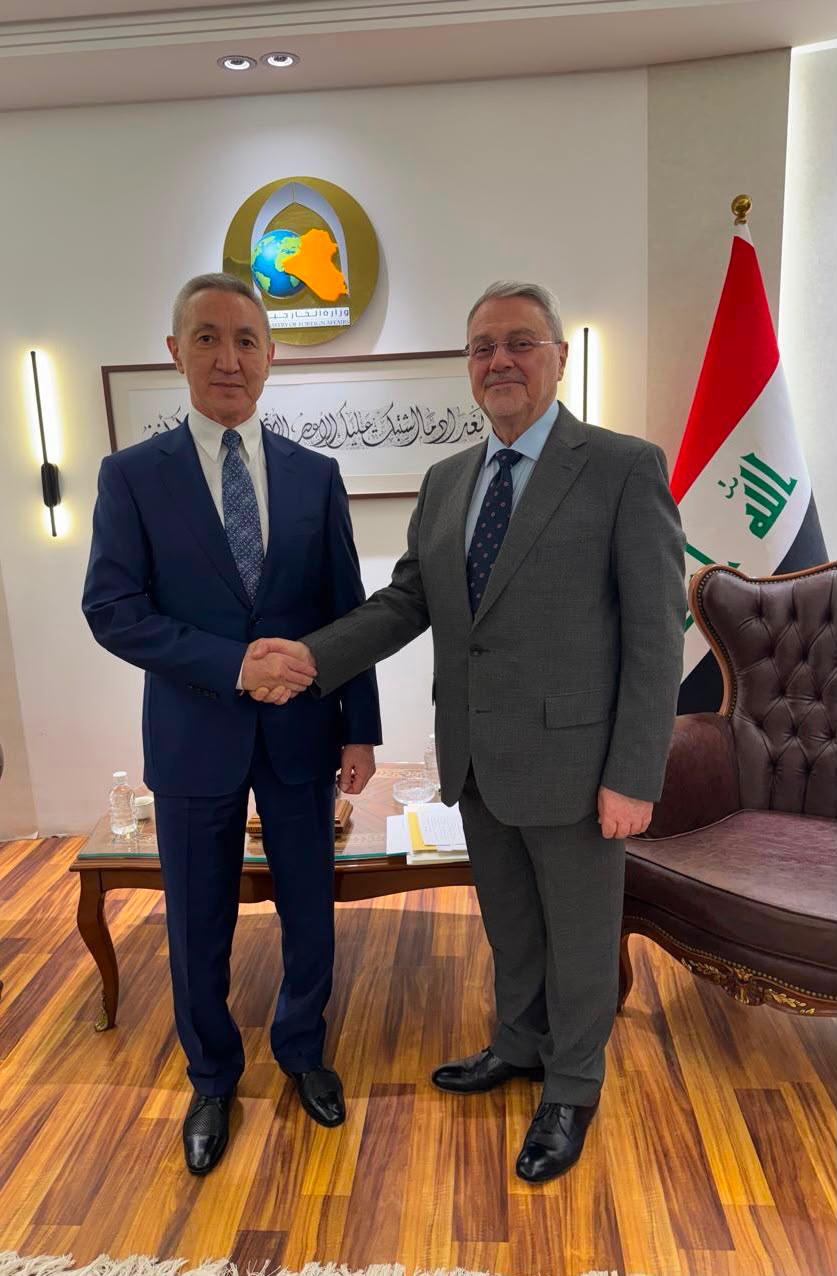
Bilateral and multilateral cooperation discussed Ministry of Foreign Affairs of Iraq 11.07.2026
Baghdad, June 22, 2026 – H.E. Mr.Talgat Shaldanbay, Ambassador of the Republic of Kazakhstan to the Hashemite Kingdom of Jordan and concurrently to the Republic of Iraq, held meetings at the Ministry of Foreign Affairs of the Republic of Iraq with H.E. Mr.Mohammed Hussein Bahr Al-Uloom, Deputy Minister of Foreign Affairs of Iraq, and H.E. Mr.Shorsh Khalid Said Gafuri, Deputy Minister of Foreign Affairs for Multilateral and Legal Affairs.The Ambassador briefed his Iraqi counterparts on the political reforms being implemented in Kazakhstan, aimed at further modernizing the system of public administration and strengthening democratic institutions. Information was also provided on the implementation of the provisions of the new Constitution of the Republic of Kazakhstan, as well as preparations for the forthcoming elections of deputies to the Kurultai, which will constitute an important milestone in the country’s further political development.During the discussions, the parties reviewed the current state and future prospects of Kazakhstan-Iraq relations, including the strengthening of political dialogue and inter-ministerial cooperation, prospects for organizing reciprocal visits and contacts at high and senior levels, as well as the holding of the next round of political consultations between the foreign ministries of the two countries.Particular attention was devoted to cooperation within international organizations, including mutual support for Kazakhstan’s and Iraq’s candidacies to elected bodies of the United Nations, interaction within the Organization of Islamic Cooperation, and other issues on the multilateral agenda.The interlocutors also discussed the expansion of the bilateral legal framework, visa and consular cooperation, as well as specific issues related to the protection of the rights and legitimate interests of citizens of the two countries.The parties further exchanged views on regional developments, including the situation in the Middle East and ongoing efforts to promote regional stability and security.At the conclusion of the meetings, the parties underscored the importance of further expanding bilateral cooperation, enhancing practical engagement across areas of mutual interest, and maintaining close coordination within international organizations and multilateral platforms.Source : https://www.gov.kz/memleket/entities/mfa-amman/press/news/details/1245605?lang=ru
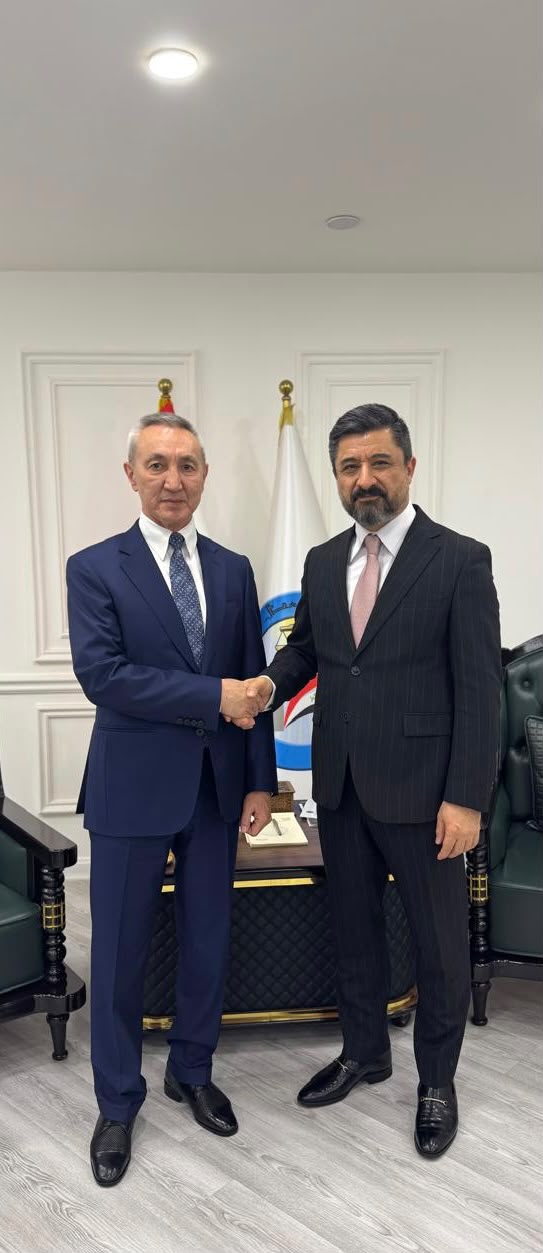
Legal cooperation and the protection of Kazakhstan citizens’ interests discussed at the Ministry of Justice of Iraq 11.07.2026
Baghdad, June 22, 2026 – H.E. Mr.Talgat Shaldanbay, Ambassador of the Republic of Kazakhstan to the Hashemite Kingdom of Jordan and concurrently to the Republic of Iraq, held a meeting with H.E. Mr.Khalid Shwani, Minister of Justice of the Republic of Iraq.During the meeting, the parties discussed the current state and prospects of Kazakhstan-Iraq cooperation in the legal sphere, including issues related to the expansion of the bilateral legal and contractual framework and cooperation between the relevant state institutions of the two countries.Particular attention was devoted to bilateral documents currently under consideration in the field of legal cooperation, including matters related to the transfer of sentenced persons.The Kazakh side also raised a number of consular and legal issues of mutual interest and expressed its interest in further strengthening cooperation between the competent authorities of the two countries.At the conclusion of the meeting, the parties noted the importance of further expanding Kazakhstan-Iraq cooperation in the legal sphere and advancing the development of the bilateral legal framework.Source : https://www.gov.kz/memleket/entities/mfa-amman/press/news/details/1245606?lang=ru
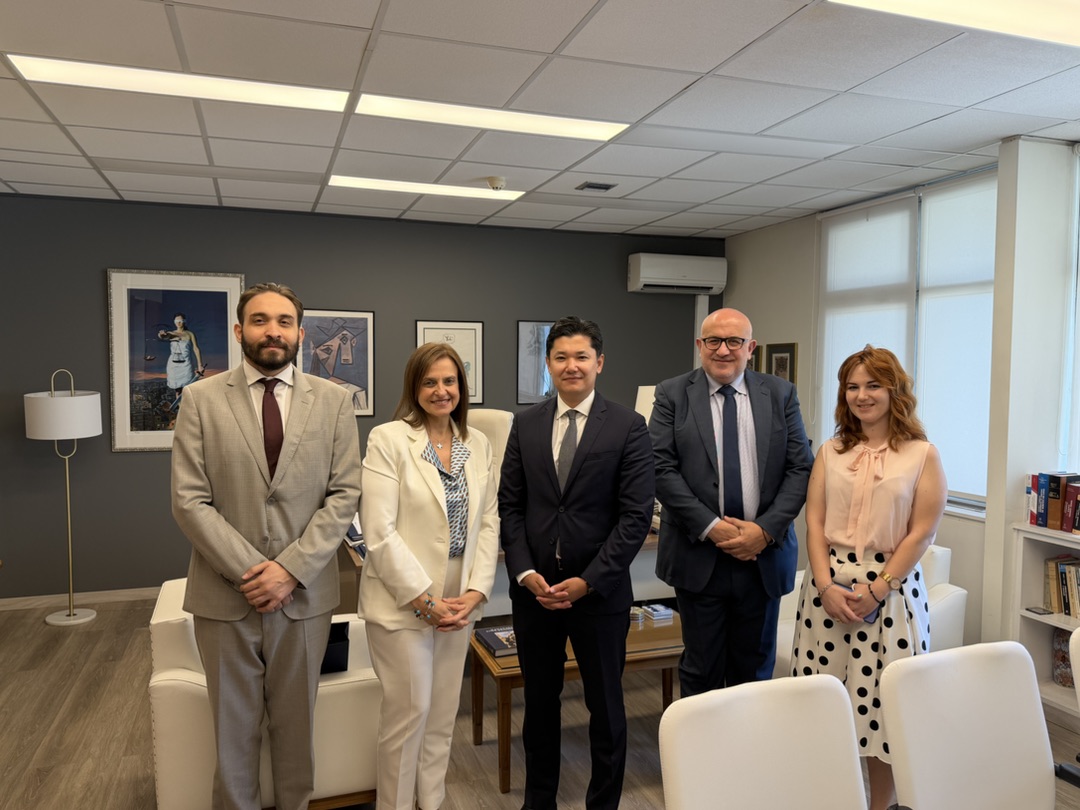
Kazakhstan’s Constitutional Reform Experience Presented at the Ministry of Justice of Greece 11.07.2026
ATHENS, 22 June 2026 – Ambassador of the Republic of Kazakhstan to the Hellenic Republic Timur Sultangozhin held a meeting with Ms. Vasiliki Giavi, Permanent Secretary of the Ministry of Justice of the Hellenic Republic.During the meeting, the Ambassador of Kazakhstan briefed the Greek side on the large-scale political and constitutional reforms being implemented in the Republic of Kazakhstan with the aim of further developing the country’s socio-political system. Particular attention was paid to the implementation of the provisions of the new Constitution, the improvement of the public administration system, the development of socio-political institutions, as well as preparations for the forthcoming Kurultai elections.The Greek side was also informed about the ongoing efforts in Kazakhstan to further strengthen the principles of the rule of law, improve the judicial system, enhance the effectiveness of public administration, and expand mechanisms for the protection of citizens’ rights and freedoms within the framework of implementing the new Constitution of the Republic of Kazakhstan.In this context, the parties exchanged views on the development of the legal systems of the two countries, legislative reforms, administrative justice, the digitalization of legal services, and improving access to justice. The participants noted the significant potential for expanding cooperation between the relevant state institutions of Kazakhstan and Greece, as well as among the expert and academic communities of both countries.The discussions also addressed prospects for further developing bilateral contacts, including the organization of expert exchanges and working visits between the respective institutions.At the conclusion of the meeting, the parties reaffirmed their mutual interest in continuing a constructive dialogue and expanding practical cooperation on issues of common interest.Source : https://www.gov.kz/memleket/entities/mfa-athens/press/news/details/1245580?lang=ru
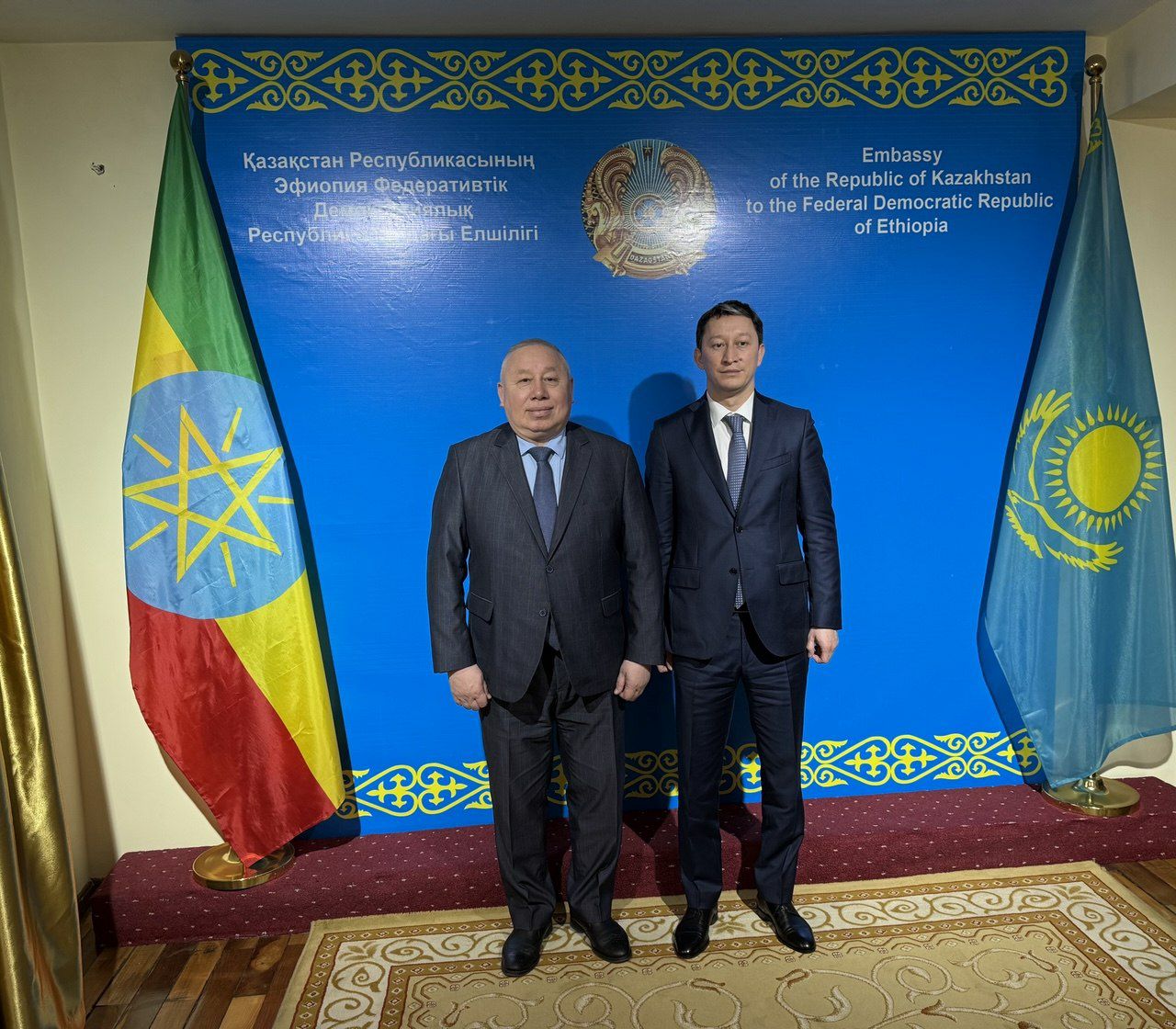
Ambassador of Kazakhstan to Ethiopia Holds Meeting with Ambassador of Uzbekistan 11.07.2026
Addis Ababa, June 22, 2026 – The Embassy of the Republic of Kazakhstan hosted a meeting between the Ambassador of Kazakhstan to Ethiopia and Permanent Representative of the Kazakhstan to the African Union, Zhalgas Adilbaev, and the Ambassador of the Republic of Uzbekistan to the State of Qatar and concurrently to Ethiopia, Ashraf Khodjaev.During the conversation, the Parties discussed the current state and prospects for the development of bilateral and multilateral cooperation, and exchanged views on topical issues on the regional and international agenda.In conclusion, the diplomats reaffirmed their mutual readiness to maintain working contacts to effectively advance foreign policy interests in the region. Source : https://www.gov.kz/memleket/entities/mfa-addis-ababa/press/news/details/1245506?lang=ru
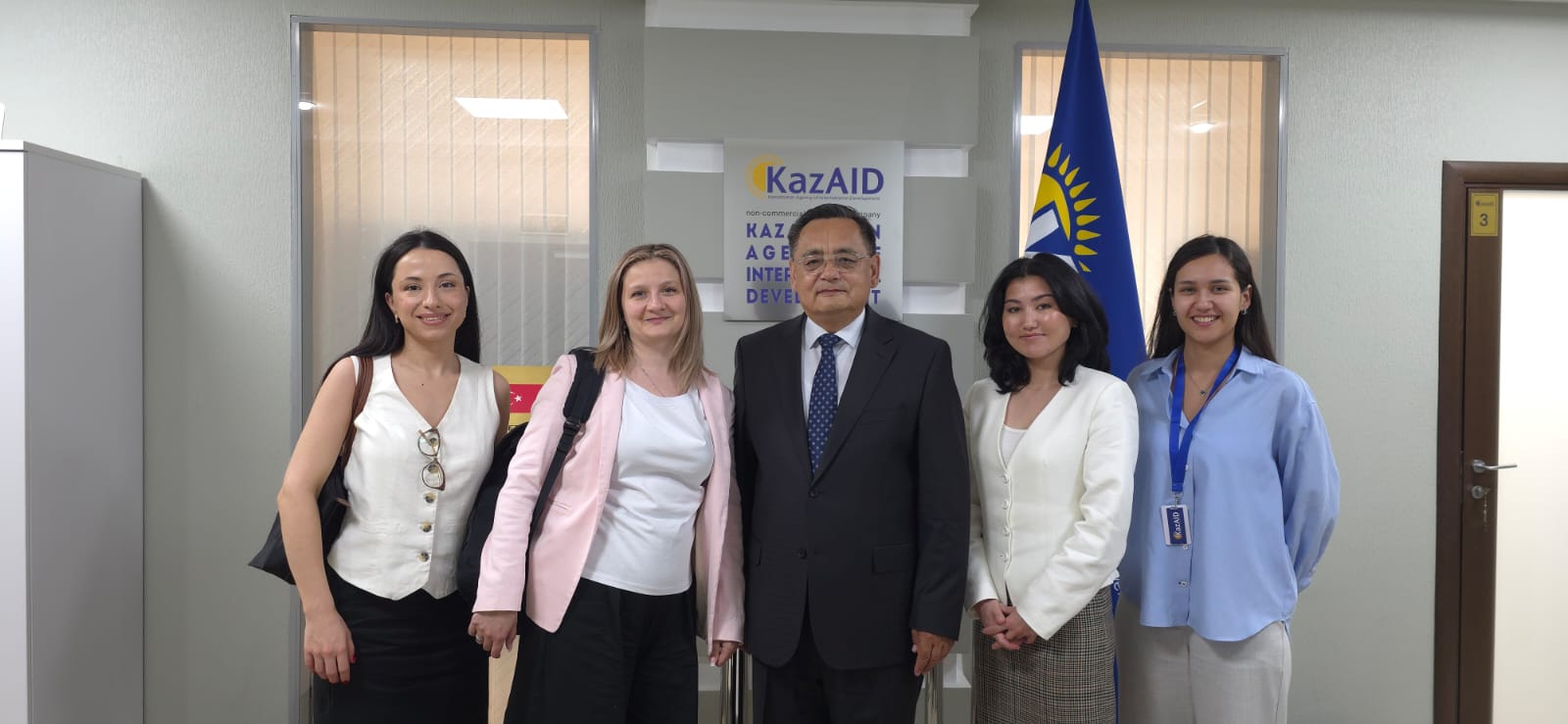
KazAID and DevelopmentAid Discuss Cooperation Opportunities 11.07.2026
Astana, June 22, 2026 – J. Asanov, Acting Chairman of the Board of the Kazakhstan Agency of International Development "KazAID", held a meeting with M. Uzun, Director of the Strategic Partnerships and Donor Relations Department at DevelopmentAid.During the meeting, a presentation of the DevelopmentAid platform was conducted. Furthermore, the parties discussed potential cooperation opportunities within the framework of this online platform.Source : https://www.gov.kz/memleket/entities/kazaid/press/news/details/1245501?lang=ru

Privatization of housing from the state housing stock 11.07.2026
How to obtain a service online1. Log in to the portal and click the "Order a service online" button (you must be registered on the e-qazyna.kz website to obtain the service).2. Complete the application on the e-qazyna.kz website and sign it with an EDS (electronic digital signature). A notification about the processing of your application will be sent to the email address you provided during registration. This notification will be sent within the specified time.How to obtain a service from the State Corporation "Government for Citizens" (required documents):1. An application for privatization of the occupied property, signed by all adult members of the tenant's family.2. Copies of marriage (divorce) certificates, death certificates, and birth certificates of children (as needed, if the information is missing from the information system).3. A lease agreement or a housing warrant.4. In cases where other individuals are recognized as family members of the service recipient, the latter must provide a copy of the court decision recognizing them as family members of the service recipient.5. Citizens belonging to socially vulnerable groups must additionally provide a copy of a document confirming the service recipient's (family's) status as a socially vulnerable group.6. Citizens classified as civil servants, employees of budgetary organizations, military personnel, employees of special government agencies, judges, and persons holding public elective office must additionally provide a copy of a certificate from their place of employment (service) or a copy of a document confirming the employee's employment history.7. Cosmonaut candidates and cosmonauts must provide a copy of a document confirming their status, which is assigned by the Government of the Republic of Kazakhstan.8. A document confirming the absence of outstanding debt under a housing lease agreement.9. In the case of privatization in accordance with paragraph 8 of the Rules - a copy of the document confirming membership in the category of citizens entitled to receive free ownership of housing from the state housing stock.Source : https://www.gov.kz/memleket/entities/abay-kurchatov/press/news/details/1245487?lang=ru
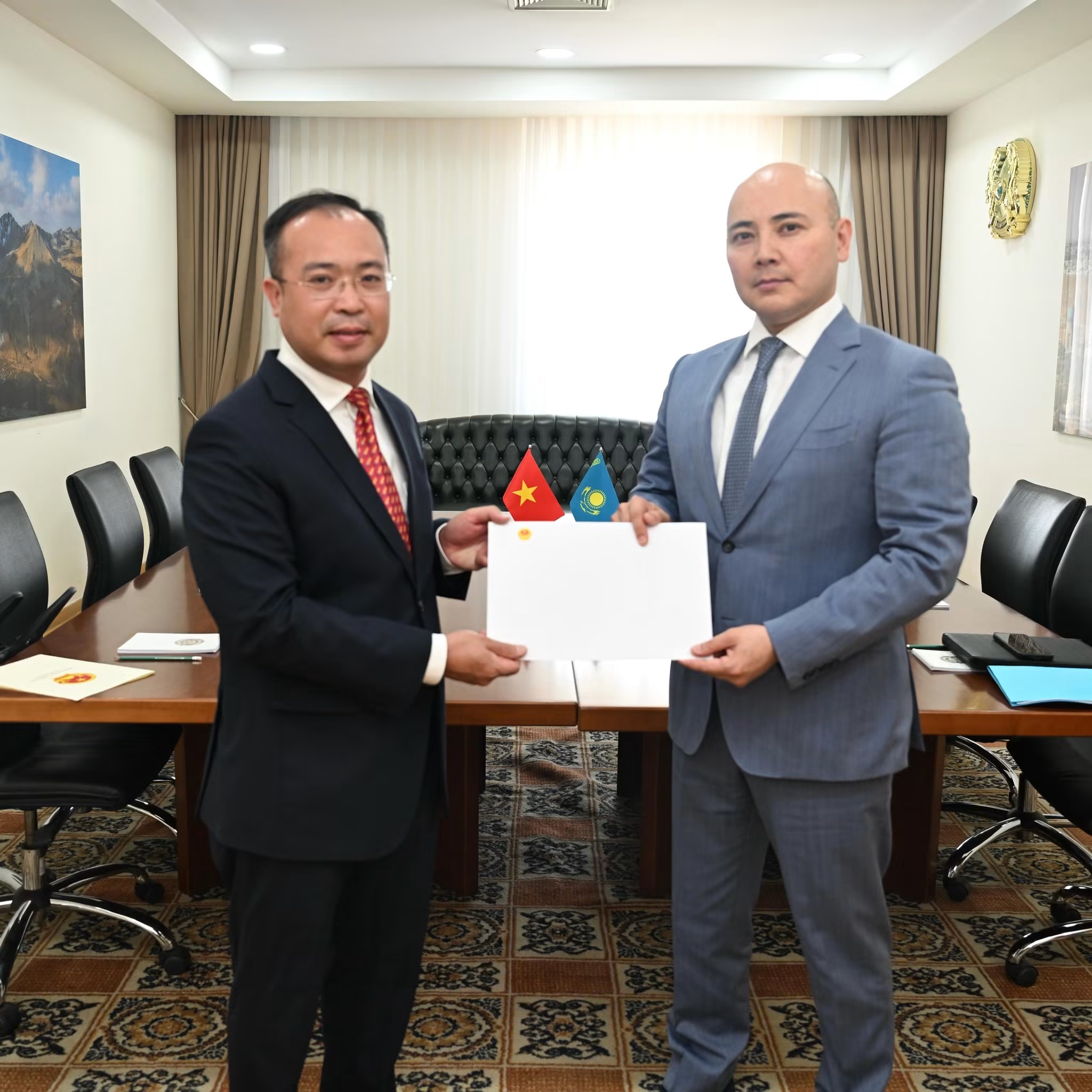
Vietnam’s Ambassador Presents Copies of Credentials 11.07.2026
Deputy Minister of Foreign Affairs of the Republic of Kazakhstan Alibek Kuantyrov received copies of credentials from the newly appointed Ambassador of the Socialist Republic of Vietnam to the Republic of Kazakhstan, Nguyen Thanh Le.During the meeting, the parties discussed current issues of the Kazakh-Vietnamese strategic partnership, paying special attention to the schedule of upcoming mutual visits and high-level events.Alibek Kuantyrov emphasized that Kazakhstan attaches great importance to further strengthening relations with Vietnam and is interested in expanding trade-economic and investment cooperation.The parties also confirmed their readiness to continue close interaction in multilateral formats, primarily within the UN, CICA, and other international organizations.In closing, the deputy minister wished the Vietnamese diplomat a successful and fruitful work in Kazakhstan.Source : https://www.gov.kz/memleket/entities/mfa-hanoi/press/news/details/1245628?lang=ru

A seminar on compliance with the Code of Ethics of Civil Servants and anti-corruption was held at the Department of State Revenue in Astana 11.07.2026
In the Department of State Revenue in Astana, Deputy Head – Ethics Commissioner Azamat Nurlybekov held a meeting with employees of the Audit Department on compliance with the Ethical Code of Civil Servants of the Republic of Kazakhstan as part of the monthly schedule of training events. During the seminar, issues of compliance with the norms of professional ethics in the exercise of public functions, as well as measures to strengthen the anti-corruption culture among civil servants were considered. Special attention is paid to compliance with the legislation on public service during tax audits and the prevention of possible offenses.Such events are aimed at developing principles of integrity, transparency, and responsibility in the public service system.Source : https://www.gov.kz/memleket/entities/kgd-astana/press/news/details/1245490?lang=ru
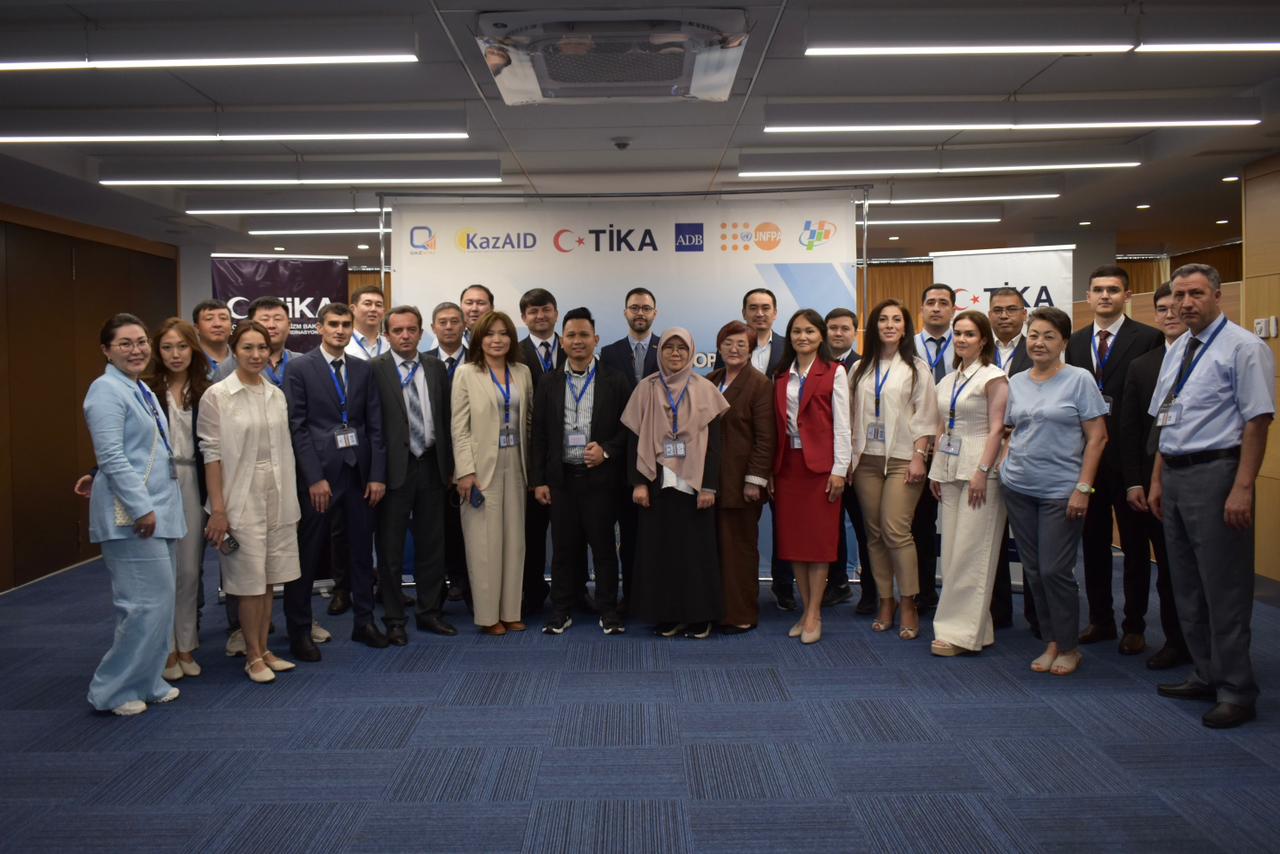
KazAID: Regional Workshop on the Use of Mobile Data for Statistics 11.07.2026
A three-day regional workshop on the use of mobile positioning data for official statistics has began at the UN Plaza in Almaty. The event is organized by the Kazakhstan Agency of International Development “KazAID” in cooperation with the Bureau of National Statistics of the Agency for Strategic Planning and Reforms of the Republic of Kazakhstan, the Turkish Cooperation and Coordination Agency (TİKA), the United Nations Population Fund (UNFPA), and the Asian Development Bank. The seminar brought together representatives of the national statistical services of Kazakhstan, Kyrgyzstan, Tajikistan, Uzbekistan and Azerbaijan, as well as Indonesia, one of the leading statistical offices in the field of using mobile data for official statistics. Welcoming the participants of the seminar, KazAID Deputy Chairman of the Board O. Syzdykov highlighted that KazAID considers a support in projects on statistics and data as a contribution to the sustainable development of the region. This event was a continuation of the Agency's joint initiatives being implemented in partnership with the Bureau of National Statistics to develop regional cooperation and expand the use of modern data sources to improve the quality of official statistics in the region. The speakers of the the seminar will be representatives from the Bureau of National Statistics of the Agency for Strategic Planning and Reforms of the Republic of Kazakhstan and the Central Bureau of Statistics of Indonesia, who will share their successful experiences in implementing innovative data sources into national statistical systems with representatives of partner countries.Source : https://www.gov.kz/memleket/entities/kazaid/press/news/details/1245476?lang=ru
UAPF Open Day: Digital Services, Financial Security, and Personal Data Protection 10.07.2026
On June 26, 2026, UAPF JSC invites everyone to participate in its next Open Day, titled "Digital Services of UAPF JSC. Protecting Personal Data from Fraudsters and Fake Intermediaries When Obtaining Fund Services."During the meeting, UAPF specialists will discuss the Fund's modern digital services, which allow access to most pension services remotely and at any convenient time, as well as information security and fraud prevention. At the meeting you will learn:what UAPF digital services are available to contributors/beneficiaries and how to use them;how to receive pension services in your personal account and mobile application, monitor the status of pension savings, track the status of submitted applications, etc.;how the Pension Calculator and Personal Pension Plan services work, helping to estimate future pension benefits and plan pension provision;what opportunities are provided by the official UAPF website, Telegram bot and other digital channels of interaction with the Fund;what are the most common fraud schemes used by attackers and how to recognize attempts to deceive;how to protect your personal data, pension savings and banking information from scammers and false intermediaries. In addition, UAPF specialists will answer questions from participants and provide individual consultations on pension system issues.We invite everyone to attend the Open Day to receive up-to-date and reliable information about UAPF's digital services, and learn how to protect your personal data and pension savings from fraud.UAPF JSC welcomes its contributors, beneficiaries, and everyone else to the Open Day! UAPF was founded on August 22, 2013 on the basis of GNPF APF JSC. The founder and shareholder of the UAPF is the Government of the Republic of Kazakhstan represented by the State Institution Committee of State Property and Privatization of the Ministry of Finance of the Republic of Kazakhstan. Trust management of UAPF pension assets is carried out by the National Bank of the Republic of Kazakhstan. In accordance with the pension legislation, the UAPF attracts compulsory pension contributions, employer’s compulsory pension contributions, compulsory occupational pension contributions, voluntary pension contributions, as well as carries out enrollment and accounting of voluntary pension contributions formed at the expense of the unclaimed amount of guaranteed compensation for the guaranteed deposit, transferred by the organization carrying out mandatory guarantee of deposits, in accordance with the Law of the Republic of Kazakhstan "On mandatory guarantee of deposits placed in second-tier banks of the Republic of Kazakhstan", ensures the implementation of pension benefits. The Fund also carries out accounting of target assets and target requirements, accounting and crediting of target savings (TS) to target savings accounts, payments of TS to their recipients in bank accounts, accounting for returns of TS in the manner determined by the Government of the Republic of Kazakhstan within the framework of the National Fund for Children program (More details at www.enpf.kz)Source : https://www.gov.kz/memleket/entities/kostanai-mendykarin-audany-akimat/press/news/details/1247570?lang=ru
About accounts receivable 10.07.2026
If there is a tax debt exceeding the threshold established by law and there is no repayment after the collection of funds from the taxpayer's bank accounts, the collection may be levied on the funds of his debtors.A debtor is a person who owes a debt to a taxpayer (tax agent).To identify debtors, the tax authority uses data from information systems, and also has the right to verify settlements between a taxpayer and his debtors. In case of identification of accounts receivable, a notification is sent to the debtor about the need to confirm its amount. Confirmation is carried out by submitting a reconciliation report or other documents confirming the existence of debt.If the notification is not executed within the prescribed period, the tax authority has the right to conduct a tax audit of the debtor and suspend spending operations on his bank accounts.When accounts receivable are confirmed by a reconciliation report, a tax audit report, or a court decision that has entered into force, collection orders may be issued to the debtor's bank accounts. Collection is carried out within the limits of the confirmed amount of accounts receivable and the amount of the taxpayer's tax debt.After the repayment of the tax debt, collection orders are subject to revocation. In case of excessive write-off of funds, the excess amount is refunded to the debtor in accordance with the established procedure.Source : https://www.gov.kz/memleket/entities/kgd-astana/press/news/details/1245453?lang=ru