Society
The weekly campaign “People's Accountant" continues. 11.02.2026
Today, 02.11.26, at the UGD in the district named after Kazybek bi @qazybek_bi_mkb continues the weekly campaign “People's Accountant".We remind you that this promotion is intended for individual entrepreneurs and small businesses.In this promotion, you can get practical recommendations onaccounting;tax reporting;for working with information systems, etc.DeadlinesDates: From January 5 to June 30, 2026.,Consultation schedule:January–February 2026 — 3 times a week (Monday, Wednesday, Friday) from 10:00 to 13: 00From March 2026-twice a week.Source : https://www.gov.kz/memleket/entities/kgd-karaganda/press/news/details/1159318?lang=kk
Astana and Islamabad Aim to Advance Practical Cooperation in Environmental Protection 11.02.2026
Islamabad, 10 February 2026 – A meeting was held between the Ambassador of Kazakhstan to Pakistan, H.E. Mr. Yerzhan Kistafin, and the Federal Minister for Climate Change and Environmental Coordination of Pakistan, H.E. Dr. Musadik Masood Malik.During the meeting, the parties discussed the outcomes of the state visit of the President of the Republic of Kazakhstan, H.E. Mr. Kassym-Jomart Tokayev, to Islamabad on 3-4 February 2026, and noted with satisfaction the signing of an interdepartmental memorandum of cooperation in the field of ecology.Minister M. Malik expressed the Pakistani side’s interest in developing concrete, practice-oriented areas of interaction aimed at addressing pressing environmental challenges. The Minister also confirmed his participation in the Regional Environmental Summit to be held in Astana on 22-24 April of the current year.Following the meeting, the parties agreed to organize expert level negotiations in the near future in order to coordinate joint measures. Source : https://www.gov.kz/memleket/entities/mfa-islamabad/press/news/details/1159326?lang=kk
тест новости 11.02.2026
A preventive event aimed at forming a conscious attitude among teenagers towards their future and preventing drug offenses was held for students of the "Bilim – Innovation" school in Astana. The event was attended by members of the police department's council for the prevention of drug offenses, narcologists, as well as popular athletes, champions, record holders, actors, and bloggers who generate interest and build trust among school students. The narcologist explained to high school students in an accessible way about the medical and social consequences of drug use, emphasizing that addiction destroys health and life plans. The speeches of the invited guests sparked particular interest among the students, who shared their stories of achieving success and spoke about the importance of discipline, hard work, and making the right choices from school age. A vivid part of the event was a demonstration by the cynology service. The service dogs demonstrated work on detecting prohibited substances, showing how drug offenses are identified and prevented.Source : https://www.gov.kz/memleket/entities/test-test/press/news/details/1159330?lang=kk
Announcement. An online seminar will be held on the mandatory labeling of beer and beer drinks 11.02.2026
The Department of State Revenues in the Akmola region reports on the holding of an online seminar on the mandatory labeling of beer and beer drinks with the participation of retail distributors of beer products and a single operator of the information system for labeling and traceability of goods.The seminar is scheduled for February 16, 2026 at 15:00 in online format via ZOOM.Link to connect to ZOOM conference:Log in Zoom Conferencehttps://us06web.zoom.us/j/84983818069?pwd=CaPlMMwhcfw7P3ftazS4cxalJ90Naj.1 Conference ID: 849 8381 8069Passcode: 998104Source : https://www.gov.kz/memleket/entities/kgd-akmola/press/news/details/1159361?lang=kk
From anxiety to support: how Almaty helps children with special needs from the first days of life 11.02.2026
The Almaty Regional Communications Service held a press conference titled "From Early Warning Signs to Results," dedicated to the Early Intervention Center's capabilities. Nurziya Alimbekova, Director of the Early Intervention Social Services Center, discussed the age at which children can receive support, who is eligible for support, and how the results are assessed. As the speaker noted, you can contact the Center from the moment your child is born. The primary target group is children aged 0 to 3 years, but in some cases, support can continue until age 7, if this meets the needs of the family and child. Specialists emphasize that early contact allows for timely support of the child's development and reduces the risk of potential problems in the future. "The earlier a family seeks help, the greater the opportunity to help their child. We work with children literally from the first days of life, and it is at this stage that many developmental and adaptation difficulties can be prevented," explained Nurziya Alimbekova. An important feature of the center's work is that a medical diagnosis is not a prerequisite for seeking help. Parents can receive consultation and support if they are concerned about their child's behavior, communication, or development, even without an official specialist opinion. "Sometimes parents simply sense that something is wrong, and that's enough to prompt them to contact us. Early intervention helps us understand the situation and support the family before difficulties escalate," noted the center's director. According to the speaker, the care provided at an early intervention center differs from that provided at development centers or medical care. The work focuses not only on the child but also on the entire family. Specialists help parents understand their child's developmental characteristics and integrate recommendations into everyday life—at home, during walks, playtime, and social interactions. This is a systematic approach, not a one-time intervention. "It's important to us that the support works in the family's real life. We evaluate effectiveness not by formal indicators, but by the changes parents themselves see: the child becomes more comfortable communicating, new skills are developed, and anxiety among adults decreases," emphasized Nurziya Alimbekova. As noted at the press conference, the results of the center's work are regularly discussed with the family. If necessary, the format of assistance is adjusted to ensure that the support remains useful and meets the real needs of the child and their loved ones.
How special children are being helped in Almaty 11.02.2026
A press conference entitled "From the first alarming sign to the result" was held at the Regional Communications Service. This time, the event was dedicated to the capabilities of the Early Intervention Center. Nurziya Alimbekova, Director of the Early Intervention Social Services Center, spoke about the age from which children can be provided with assistance, who is suitable for support, and how the results of the work are evaluated. According to the speaker, the center's services can be accessed as soon as a child is born. Although it mainly accepts children up to three years old, it can sometimes support children up to seven years old, depending on the needs of the family and the child. According to experts, early access allows for timely support for the child's development and prevents future difficulties. "The earlier help is sought, the greater the chance of helping the child. We work with the child as soon as he is born, and it is at this time that we can prevent some difficulties," says Nurziya Alimbekova. An important feature of the center's work is that a medical diagnosis is not required. If parents are concerned about their child's behavior and behavior, they can get the necessary advice and support here, without having to go to official specialists. "Sometimes parents have a gut feeling that something is wrong, and that alone is enough to reach out to us. It helps them understand what's happening and provide support before the situation escalates," says the center's director. According to the speaker, the help in the early intervention center is different from the lessons and medical care in developmental centers. Here, attention is paid not only to the child, but also to the parents. Specialists explain to the parents what the child needs and give advice. They help to implement these recommendations in everyday life. This is not a one-time lesson, but systematic support. "It is very important for us that the family relies on such advice in their daily lives. We evaluate its effectiveness not by formal indicators, but by the changes that the parents themselves notice. It will become easier for the child to communicate, new habits will be formed, and adults will stop worrying as before," Nurziya Alimbekova noted. The center discusses its work with family members. If necessary, the format of assistance is adjusted, and support is adapted to the needs of the child and his or her loved ones.
In Almaty, the Early Intervention Center provided assistance to 167 children and over 4,700 services. 11.02.2026
In Almaty, 167 young children and their families received assistance at the Early Intervention Center, providing a total of 4,717 services. This was announced by Nurziya Alimbekova, Director of the Early Intervention Center, at the Almaty Regional Communications Service. According to the speaker, the Center's key objectives are the early identification of child development risks, comprehensive family support, and the creation of conditions for the successful social and educational integration of children. "The Center's work focuses on early identification of developmental risks, family support, and creating conditions for the child's successful social and educational integration. This approach helps prepare the child for subsequent inclusion in the educational environment," noted Nurziya Alimbekova. According to the Center's director, 82% of children receiving services are at risk for development. Of these, 33% showed stable positive developmental progress, and 21% completed support and were prepared for inclusion in preschool educational institutions. The Center implements individualized early intervention programs with regular monitoring of progress. The Center provides services for speech and communication development, mobility, cognitive activity, and self-care skills, as well as psychological counseling for parents and support for children's socialization. "The early intervention project is viewed as a sustainable system of social support and will be further developed by expanding the network of services and increasing human resources," the speaker emphasized. Future plans include expanding the service network and increasing human resources. By April 2026, the Center's staff is expected to reach 26.
The Early Intervention Center in Almaty helped 167 children and provided more than 4.7 thousand services 11.02.2026
The Early Intervention Center in Almaty provided assistance to 167 children and their families, providing a total of 4,717 services. This was announced by Nurziya Alimbekova, Director of the Early Intervention Center, at the Regional Communications Service. According to the speaker, the main task of the center is to identify risks to a child's development early, provide comprehensive support to families, and create the best possible conditions for children's successful integration into the social and educational environment. "The main focus of the center's work is to identify risks in the child's development early, support the family, and promote the child's rapid integration into the social and educational environment. This approach allows the child to adapt to the upcoming educational campaign," said Nurziya Alimbekova. According to the director, 82% of children who applied to the center belong to the group at risk of development. 33% of children have normal development dynamics, 21% have completed support and are ready to enter preschool educational organizations. Some work is being done on individual early intervention programs, and development dynamics are constantly monitored. The center provides services to develop speech and communication, motor skills, cognitive activity, and self-service skills, as well as provides psychological counseling to parents and strives to create the best possible conditions for children's socialization. "We consider the early intervention project as a permanent system of social support, and we will continue to develop it in the future by expanding the network of services and increasing human resources," the speaker noted. In the future, it is planned to expand the network of services and increase the human resource capacity. By April of this year, the number of specialists at the Center will reach 26 people.
135 anti-drug measures were carried out in Almaty within the framework of the "Law and Order" principle. 11.02.2026
Police Major Sulushash Dosbolova, Senior Detective of the Almaty City Police Department's Drug Crime Control Department, reported on ongoing preventative work to prevent drug addiction and drug-related offenses at a briefing with the Regional Communications Service. This work is being carried out within the framework of the "Law and Order" ideology and is aimed at stabilizing the drug situation in the city. As the speaker noted, since the beginning of the year, 135 preventive events—forums, seminars, lectures, and events—have been held in Almaty's educational institutions. These events were organized jointly with police departments, government agencies, nongovernmental organizations, and volunteers. "Special attention is being paid to information and outreach efforts. 230 anti-drug materials have been published on media platforms," noted Sulushash Dosbolova. Social videos are being broadcast on 42 monitors in the metro and on 131 LED screens across the city, as well as on LED screens at gas stations, with information about an anonymous helpline. Additionally, 80 billboards featuring famous athletes under the slogan "Don't let the virus get to you!" have been placed in various areas of the city, strengthening preventative work among young people and adolescents. According to the police major, special attention is being paid to preventing drug-related crimes among minors. Overall, the work being carried out is aimed at preventing citizens from becoming involved in illegal drug trafficking and developing sustainable public immunity to drug-related crime.
"Law and Order: Almaty held 135 anti-drug events this year" 11.02.2026
Senior operational officer of the Almaty PD Drug Crime Countermeasures Department, police major Sulushash Dosbolova, reported on the work being done to prevent drug addiction and drug-related crimes at a briefing held at the Regional Communications Service. This work is aimed at implementing the ideology of "Law and Order" and stabilizing the drug situation in the city. According to the speaker, since the beginning of the year, 135 preventive events - forums, seminars, lectures and campaigns - have been held in Almaty's educational institutions. He is conducting this work in collaboration with police departments, government agencies, non-governmental organizations and volunteers. "A lot of attention is paid to the information and explanatory side. 230 anti-drug materials have been published on media platforms," says Sulushash Dosbolova. Social media videos were posted on 42 metro monitors and 131 LED screens across the city, and an anonymous hotline was displayed on LED screens at gas stations. In addition, 80 billboards featuring famous athletes appeared in various districts of the city with the slogan "We are against drugs!" This contributed to strengthening preventive work among young people and adolescents. According to the police major, special attention is being paid to preventing drug addiction among minors. The speaker noted that this ongoing work is aimed at preventing citizens from being involved in illegal drug trafficking and forming a public psychology that opposes drug crime.
From classrooms to messaging apps: How Almaty is strengthening drug prevention among young people 11.02.2026
*From classrooms to instant messaging apps: How Almaty is strengthening drug prevention among young people* A press conference on drug prevention among youth within the framework of the "Law and Order" principle was held at the Almaty Regional Communications Service. Nurlan Zhakupov, the project's curator, discussed the results and future plans of the "Narkostop" project. He explained that the main focus was on systematic work with adolescents and young adults, as well as on combating drug trafficking in the digital space. Over the past few years, the "Narkostop" project has proven its effectiveness. Prevention efforts were conducted simultaneously in educational institutions, online, and in the urban environment. Lectures for teenagers and students were held in schools, colleges, and universities, cybervolunteers identified online resources distributing illegal substances, and drug graffiti was regularly painted over in the city. This comprehensive approach helped raise awareness among young people, reduce the availability of drug-related content, and foster a more conscious attitude toward the problem. "Modern drug crime has changed. While distribution used to occur primarily offline, today recruitment and distribution have shifted to messaging apps, websites, and private channels. Teenagers are encountering this in a familiar environment—on their phones," noted Nurzhan Zhakupov. This year, the project plans to strengthen its prevention focus. Organizers will expand their outreach to schools and universities, increase the number of lectures, intensify online monitoring, and continue their work to eliminate visual drug advertising in urban areas. Particular attention is being paid to recruiting young people into drug trafficking under the guise of "easy money," where minors are offered the role of drug dealers, concealing the real consequences—criminal liability and broken lives. "One of the main challenges today is youth recruitment. Young people are promised quick money without being told the consequences. Our task is to honestly and directly explain the real risks and legal responsibilities," the project's curator emphasized. Narkostop's work is multi-pronged. A professional lecturer works with teenagers and students at educational institutions. The meetings are structured as a dialogue, exploring real-life situations and engagement mechanisms, without pressure or moralizing. Meanwhile, the project's cybervolunteers monitor the internet, identifying websites and resources with drug-related content and reporting the information to authorized agencies for blocking. The project also continues to paint over drug-related graffiti, reducing the visual advertising of drugs in urban environments. This year, analytical work is also planned, including a survey among young people to assess awareness, attitudes toward the problem, and identify risk factors. Based on the data obtained, preventive measures will be adjusted. Furthermore, the project's outreach component will be strengthened. A series of short educational videos for adolescents and young adults is planned, covering the risks of drug involvement, online recruitment mechanisms, legal liability, and the consequences of synthetic drug use. "We must speak to young people in modern terms and use the channels where they spend the most time. Prevention can't be a one-time event – it must be ongoing, systemic, and based on real data," said Nurzhan Zhakupov. The most vulnerable groups today remain adolescents aged 14–17 and young adults aged 18–25. According to the speaker, synthetic drugs pose a particular danger, as they quickly become addictive and cause serious harm to mental health. Within the framework of the "Law and Order" principle, the Narkostop project builds partnerships with law enforcement agencies, drug treatment services, and educational institutions, fostering strong civic engagement among young people. The speaker emphasized that at the first sign of a problem, it is important to contact professionals, including the project's specialists, as soon as possible to preserve the health and future of young people.
From the school classroom to messengers: Almaty steps up fight against drug addiction among youth 11.02.2026
*From the school classroom to messenger: Almaty steps up fight against drug addiction among youth* A press conference was held in the regional communications service on the issue of preventing drug addiction among youth within the framework of the "Law and Order" principle. At it, Nurlan Zhakypov reported on the results and plans of the "Narkostop" project. According to him, the main focus is on systematic work with adolescents and young people, and on strengthening the fight against the spread of drugs in the digital space. Over the past years, the Narkostop project has shown its effectiveness. A lot of work has been done in educational institutions, the Internet space and in the city. Lectures were organized for pupils and students in schools, colleges and universities, cyber volunteers identified Internet resources distributing prohibited substances, and also took steps to remove graffiti with drug advertising in the city. Such a comprehensive approach has increased the level of information literacy of young people, reduced the availability of drugs, and allowed them to form a positive attitude towards this issue. "Today, drug crime has changed. Previously, it was mainly distributed offline, but now it has moved to recruiting and selling people through messengers, websites, and closed channels. Many teenagers who have phones are falling for them," Nurzhan Zhakypov noted. This year, the project plans to strengthen its preventive focus. The organizers plan to expand the coverage of schools and universities, increase the number of meetings, intensify monitoring of the Internet space, and continue work to eliminate visual advertising of drugs in the city. Now they will pay more attention to those who are attracting young people to this work under the guise of "easy money." "Attracting young people to such dirty work is the most difficult problem now. They offer them a quick fix, but they never explain what the consequences will be. Our task is to convey to young people their responsibility before the law in a clear and understandable language," says the project leader. The work of "Narkostop" is carried out in several directions. A professional lecturer of the project works with teenagers and students in educational organizations. The format of the meeting is not a mentoring one, but a dialogue, using real-life examples and discussing ways to attract people. In addition, cyber volunteers monitor the Internet, identify sites and resources with drug content, and send information to the authorized bodies to block them. Graffiti advertising drugs is also gradually being removed in the city, which will help reduce open advertising. This year, it is planned to conduct a study among young people to determine the level of information literacy, attitudes to the problem and risk factors. Based on this data, preventive measures will be adjusted. In addition, the information and educational direction will be strengthened. Short educational videos for adolescents and young people will be prepared, which will tell about the consequences and mechanisms of their involvement in such work, legal responsibility and the consequences of synthetic drugs. "We need to speak to young people in their language and work through the channels where they spend most of their time. Prevention should not be a one-time campaign, it should be ongoing, systematic, and based on real data," said Nurzhan Zhakypov. Currently, the most vulnerable groups are adolescents aged 14–17 and young people aged 18–25. According to the speaker, synthetic drugs pose a particular threat, as they are quickly addictive and cause significant harm to health. Within the framework of the principle of "law and order", the "Narkostop" project aims to establish interaction with law enforcement agencies, narcological services and educational organizations, and to form a stable civic position among young people. The speaker noted that those who have such suspicions should immediately refer them to specialists and seek the help of experts who are at the forefront of this project.
THE NEW CONSTITUTION SPECIFICALLY SPECIFIES ALL TRANSITIONAL PROCEDURES, TIMELINES AND REGULATIONS 11.02.2026
At the 11th meeting of the Commission on Constitutional Reform, Majilis deputy Snezhana Imasheva expressed the opinion that it is necessary to clarify all transitional provisions in the draft of the new Constitution of Kazakhstan in order to ensure the continuity of the political process in the country. The Majilis deputy noted that, first of all, it is necessary to clearly define the procedure and terms of entry into force of the new Constitution. "The draft should specify the exact date from which its provisions will come into force. From the date of the official announcement of the results of the republican referendum or from another specifically established date?" he said. According to him, it is also necessary to resolve the issue of the status of the current state authorities during the transitional period. In particular, it is necessary to determine until what point the current Parliament will exercise its powers, what is the deadline and in what order will the Constituent Assembly elections be held? "I believe that these issues should be considered while ensuring the continuity of the implementation of the legislative function, including taking into account the need to implement the institutional innovations of the Constitution," the deputy noted. Snezhana Imasheva said that it is important to consider in the transitional provisions the mechanisms for forming the new composition of the Constitutional Court, the Central Election Commission, and the Supreme Audit Chamber. In addition, the procedure for appointing officials of key state bodies also requires regulation. "The specific approval of these procedures will provide legal clarity and prevent the absence of constitutional bodies during the period of institutional transition," he said. According to the deputy, the issue of the application of current legislation requires special attention. In this regard, the draft of the new Constitution should clearly specify whether the laws and other regulatory legal acts in force on the date of the Constitution's entry into force will remain in force and within what period they must be brought into line with the rules, he said. "The approval of these rules will ensure legal clarity, predictability of the functioning of state institutions, and a clear definition of the limits of the powers of each body during the transitional period," concluded Snezhana Imasheva.
PROHIBITING EXCLUSION FROM ASYLUM WITHOUT COURT DECISION PROPOSED TO BE ENFORCED IN THE NEW CONSTITUTION OF KAZAKHSTAN 11.02.2026
At a regular meeting of the Constitutional Reform Commission, the Commissioner for Children's Rights of the Republic of Kazakhstan, Dinara Zakiyeva, raised an initiative aimed at strengthening constitutional guarantees in terms of housing rights and protecting the interests of children. "This morning, at an expanded meeting of the Government, the President of the Republic of Kazakhstan, Kassym-Jomart Tokayev, paid special attention to the need to strengthen guarantees to protect citizens from unjustified eviction and deprivation of housing. The right to housing is not only a social guarantee, but also a fundamental condition for human security, especially when it comes to children," the speaker said. In her speech, Dinara Zakieva noted that, in accordance with international standards, children have the right to the most favorable conditions for life, development, and protection of their rights. "The UN Convention on the Rights of the Child enshrines the right of every child to a standard of living adequate for the physical, intellectual, spiritual, moral and social development. This includes safe and stable housing. Housing for a child is one of the key factors in protecting his or her well-being and interests," he said. It was also noted that the risk of violation of citizens' rights is particularly evident in the sphere of housing relations. According to the speaker, the practice of law enforcement is evidence of this. Because the social risks associated with restricting citizens' rights are most clearly visible when issues of eviction arise in housing relations. Dinara Zakiyeva said that during her work, she has repeatedly encountered situations where children were at risk of losing their only home due to various tragic domestic situations. “Let me give an example of a situation where children lose their sole breadwinner - their mother. The mother had repaid a significant part of the mortgage loan taken out for housing during her lifetime. Nevertheless, if the previously paid funds are not returned, the children risk losing their only housing. As a result of our application, the bank decided to forgive the remaining debt. However, such cases, unfortunately, are not uncommon,” said the Ombudsman for Children’s Rights. In this regard, it is necessary to establish guarantees that prevent situations in which the court disregards the most important and necessary interests of the child and deprives him of housing. In this context, he noted that a specific constitutional norm is being proposed. "In this regard, in addition to the state's obligation to create conditions for providing citizens with housing, we propose to establish a norm in the Constitution of the Republic of Kazakhstan that prohibits eviction from housing without a court decision," the speaker said. In conclusion, he drew attention to the fact that the proposed norm defines the value orientations of a welfare state. "The fact that the norm prohibiting eviction from a residential home without a court decision is reflected in the Constitution demonstrates the perfection of the social state and respect for human dignity," concluded Dinara Zakiyeva.
THE WORK CARRIED OUT AND THE SCOPE OF THE DISCUSSION MAKE IT POSSIBLE TO SUBMIT THE DRAFT NEW CONSTITUTION TO A NATIONAL REFERENDUM 11.02.2026
Human Rights Commissioner Artur Lastayev expressed his opinion on the need to protect the fundamental human right to housing at the constitutional level. In this regard, he proposed to enshrine in the Constitution a norm that prohibits not only deprivation of housing rights without a court decision, but also eviction from housing without a court decision. According to Lastaev, housing is enshrined as a basic value in the Universal Declaration of Human Rights and the Covenant on Economic, Social and Cultural Rights. However, considering it solely as a property category is a big mistake. "What is most important for a person? He wants to be sure that he will not be evicted from his home without any reason. The enshrining of guarantees for the protection of the right to housing in the Constitution testifies to the social and human rights nature of our country, to the unwavering protection of the rights and freedoms of citizens. This is very important for us. After all, the state lives not for symbols, but for every person in its composition. People-orientedness should be reflected in every decision and action of the authorities," the Commissioner for Human Rights said. He also noted that the new draft Constitution, taking into account the specific demands of society, will create a more stable and transparent system for protecting the rights and interests of citizens. This will allow for a nationwide discussion and referendum on the document. "The draft of the new Constitution takes into account the situations that citizens face in their daily lives and is aimed at preventing decisions that may violate fundamental human rights. In this sense, it responds to public demand for justice, security, and respect for human dignity. Taking into account the results of the work carried out and the scope of the discussion, the proposed draft, as a document that reflects the interests of citizens and meets their expectations, can be submitted to a nationwide referendum and receive support," Artur Lastayev noted at a regular meeting of the Commission. The new Constitution also provides for situations where evictions are necessary to protect people's lives and health. "Disputes related to housing and eviction from housing should be resolved only by the court. Therefore, it is proposed to enshrine the following norm in the Constitution: neither deprivation of housing nor eviction from housing is allowed without a court decision. Some may say that this is already present in existing legislation. However, enshrining this principle in the main legal document will ensure its legal stability," Lastayev concluded.
THE PROPOSALS RECEIVED WERE TAKEN INTO ACCOUNT, AND ADDITIONAL PROVISIONS WERE INCLUDED IN THE DRAFT NEW CONSTITUTION. 11.02.2026
The proposals received by the Constitutional Commission have been carefully studied, and additional norms have been introduced into the draft Constitution. This was stated by Bakhyt Nurmukhanov, Deputy Chairman of the Constitutional Court, at the 11th meeting of the Commission on Constitutional Reforms. "Article 8 of the draft Constitution states that two forms of ownership are recognized and equally protected. They are state and private property. Many proposals state that this norm does not cover all forms of ownership. Thus, paragraph 1 of the said article reads: "All forms of ownership in the Republic of Kazakhstan are recognized, guaranteed and equally protected," the speaker explained. Article 14, paragraph 2 of the draft states that human rights and freedoms are inherent in every person, are absolute and inalienable. Many citizens and experts have suggested strengthening this provision, asking to add that "human rights and freedoms determine the content and application of the legislation of the Republic of Kazakhstan." Taking these suggestions into account, the paragraph was amended to read: "Human rights and freedoms are inherent in every person, they are absolute and no one can deprive them of them, and the content and application of the current law of the Republic of Kazakhstan are determined accordingly." "Paragraph 3 of Article 14 states that a citizen of the Republic of Kazakhstan has rights and obligations in accordance with his citizenship. Citizenship represents a person's constitutional and legal relationship with the state. Therefore, citizens of the Republic of Kazakhstan have the full range of rights, freedoms and obligations established by the Constitution and are equal before the law. Paragraph 5 of this article has also been clarified. According to the amended wording, the exercise of the rights and freedoms of a person and a citizen must not violate the rights and freedoms of another person, must not harm the foundations of the constitutional order, public order, the health of citizens and the human nature of society," he said. In addition, proposals to make the dissolution mechanism of the Kurultai more flexible and conducive to compromise were also taken into account. In this regard, the phrase "shall dissolve" was replaced with the phrase "has the right to dissolve". "In the draft Constitution published for public discussion, these powers are established in an imperative form. Now it is proposed to formulate these powers of the President of the Republic in a dispositive form and establish them as a right. The corresponding changes have been made to subparagraphs 2), 4) and 8) of Article 46, paragraph 1 of Article 57, and paragraphs 1 and 2 of Article 62," explained the Commission member. At the same time, the aforementioned constitutional norms impose restrictions on the dissolution of the Constituent Assembly. The Constituent Assembly may not be dissolved during a state of emergency or war, during the last six months of the President's term of office, within one year of the previous dissolution, or in the cases established by Article 51 of the Constitution.
HEAD OF STATE: NEW CONSTITUTION IS A GUARANTEE OF STABILITY OF THE STATE 11.02.2026
Speaking at an expanded meeting of the Government, President of the Republic of Kazakhstan Kassym-Jomart Tokayev noted that the country has entered a transitional period and large-scale political changes are being implemented. According to the Head of State, the process of exchanging opinions in society regarding the Constitution did not begin yesterday, these discussions have been ongoing for more than six months. A Constitutional Commission consisting of 130 people was created to systematically examine and evaluate all proposals. The norms included in the draft of the new Constitution ensure the logic and consistency of the development of the political system of Kazakhstan. This document is based mainly on the concept of "Strong President - Influential Parliament - Accountable Government", Kassym-Jomart Tokayev noted. In his speech, the President emphasized that the reforms will serve the stability and development of the country, as well as strengthen mutual responsibility between state authorities and society.
National Guard Servicemen of the MIA of Kazakhstan Detained an Offender and Returned an iPhone in One Day 11.02.2026
In Astana, servicemen of Military Unit 5573 of the National Guard of the Ministry of Internal Affairs of the Republic of Kazakhstan once again demonstrated a high level of responsibility and readiness to respond promptly to potential offenses.At approximately 8:30 p.m., while patrolling B. Amanzhol Street, a patrol unit consisting of Patrol Commander Private Konstantin Gorbanevich and patrolmen Privates Rollan Malik and Nikita Trushnikov responded to an approach by a teenager. Demonstrating civic awareness and responsibility, he provided the servicemen with a video recording showing an unidentified man searching for a so-called “stash” near the City Polyclinic.The timely report served as an important signal, enabling an immediate response to a possible offense. Using the identifying details captured in the video, the servicemen quickly established the suspect’s whereabouts and carried out his detention.During questioning, the man did not deny that he had been searching for prohibited substances. The incident was immediately reported via communication channels, and police officers were called through the “102” emergency line. After the necessary documentation was completed, the individual was handed over to the police for further proceedings.Earlier that same day, at approximately 7:15 p.m., while following their patrol route along K. Azirbayev Street, the same unit discovered a lost iPhone 15 Pro Max. The find was immediately reported via communication channels. In cooperation with the duty service, the servicemen identified the phone’s owner and returned the property to its lawful owner.The woman expressed sincere gratitude to the National Guard servicemen for their honesty, attentiveness, and prompt actions.It should be noted that public order protection service requires not only professionalism from guardsmen, but also a high degree of personal responsibility. Through their actions, the servicemen once again proved that they stand guard over the law and the safety of citizens. Press Service of the National GuardMinistry of Internal Affairs of the Republic of KazakhstanSource : https://www.gov.kz/memleket/entities/kvv/press/news/details/1159235?lang=kk
Kazakhstan and Maribor aim to strengthen interregional cooperation 11.02.2026
Ljubljana, February 10, 2026 – As part of the further strengthening of interregional cooperation, Ambassador Altay Abibullayev discussed topical issues of municipal cooperation development, as well as prospects for expanding cooperation in the economic, cultural and humanitarian spheres, at a meeting with the Mayor of Maribor (Slovenia's second largest city) Aleksander Saša Arsenovič. The parties noted the high potential for deepening direct ties between the regions of the two countries and expressed mutual interest in implementing specific joint initiatives.Following the talks, an agreement in principle was reached on establishing interregional cooperation between Maribor city and the Kyzylorda region in order to form the institutional foundations for cooperation in the fields of economics, urban infrastructure, water resources management, education, culture and sustainable development. The mayor got acquainted in detail with the socio-economic and investment potential of the region. During the regional visit, the Kazakh Ambassador also held a business meeting with the leadership and representatives of the Štajerska Chamber of Commerce and Industry - representatives of the business circles of the region. Prospects for expanding trade and economic cooperation between Kazakhstan and the Štajerski region, issues of agricultural processing, trade, ecology, attracting investments and foreign tourists, and the possibility of Slovenian companies entering the Kazakh market were discussed. and the countries of Central Asia.The Ambassador presented the investment potential to the Slovenian business community, informed about the ongoing economic reforms in Kazakhstan, measures of state support for investors and priority sectors for international cooperation, including industry, logistics, agriculture, renewable energy sources and innovative technologies. The importance of direct dialogue between the interested business circles of our countries was emphasized as a key factor for increasing mutual trade and implementing joint projects.The regional visit of the Ambassador, organized with the assistance of the Honorary Consulate of Kazakhstan in Maribor, once again confirmed the mutual interest of the parties in further deepening Kazakh-Slovenian cooperation at the interregional level and became an important step towards the formation of a practical mutually beneficial partnership.Source : https://www.gov.kz/memleket/entities/mfa-ljubljana/press/news/details/1159241?lang=kk
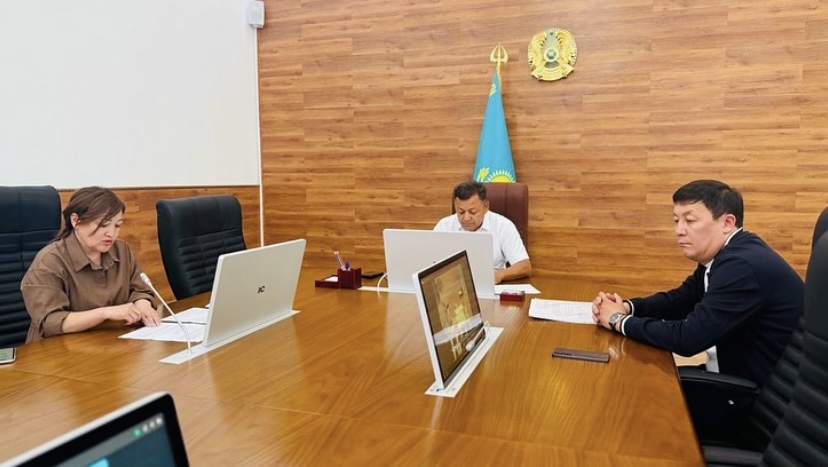
On February 11, 2026, the forty-ninth extraordinary session of the Kurchum district Maslikhat of the eighth convocation was held. 11.02.2026
On February 11, 2026, the forty-ninth extraordinary session of the Kurchum District Maslikhat of the eighth convocation was held 4 out of 6 deputies participated in the forty-ninth extraordinary session of the district maslikhat. Deputy Akim of the district Rollan Nurlanuly, Head of the District Department of Economics and Finance Gulgira Kumargazinovna Zhanaeva, Deputy Chairman of the District Territorial Election Commission Roza Kusainovna Tleubaeva, as well as akims of rural districts were invited to the extraordinary session. The following issues were considered at the session: 1. On amendments to the decision of the Kurchum District Maslikhat dated December 18, 2025 No. 47/4-VІII "On the District Budget for 2026-2028"Gulgira Kumargazinovna Zhanaeva - Head of the District Department of Economics and Finance2. On amendments to the decision of the Kurchum District Maslikhat dated January 16, 2023 No. 31/2-VIII "On the Formation of the Composition of District Territorial Election Commissions"Roza Kusainovna Tleubaeva - Deputy Chairman of the District Territorial Election Commission3. On amendments to the decision of the Kurchum District Maslikhat dated December 26, 2023 No. 14/21-VIII "On the Elections of District and Precinct Election Commissions"Roza Kusainovna Tleubaeva - Deputy Chairman of the District Territorial Election Commission Appropriate decisions were made on all considered issues.Link to the online broadcast: https://youtu.be/7pfnwUHczzo?si=cwYUj4oW0fMbbREe Source : https://www.gov.kz/memleket/entities/kurchum-maslihat/press/news/details/1159213?lang=kk