
Society
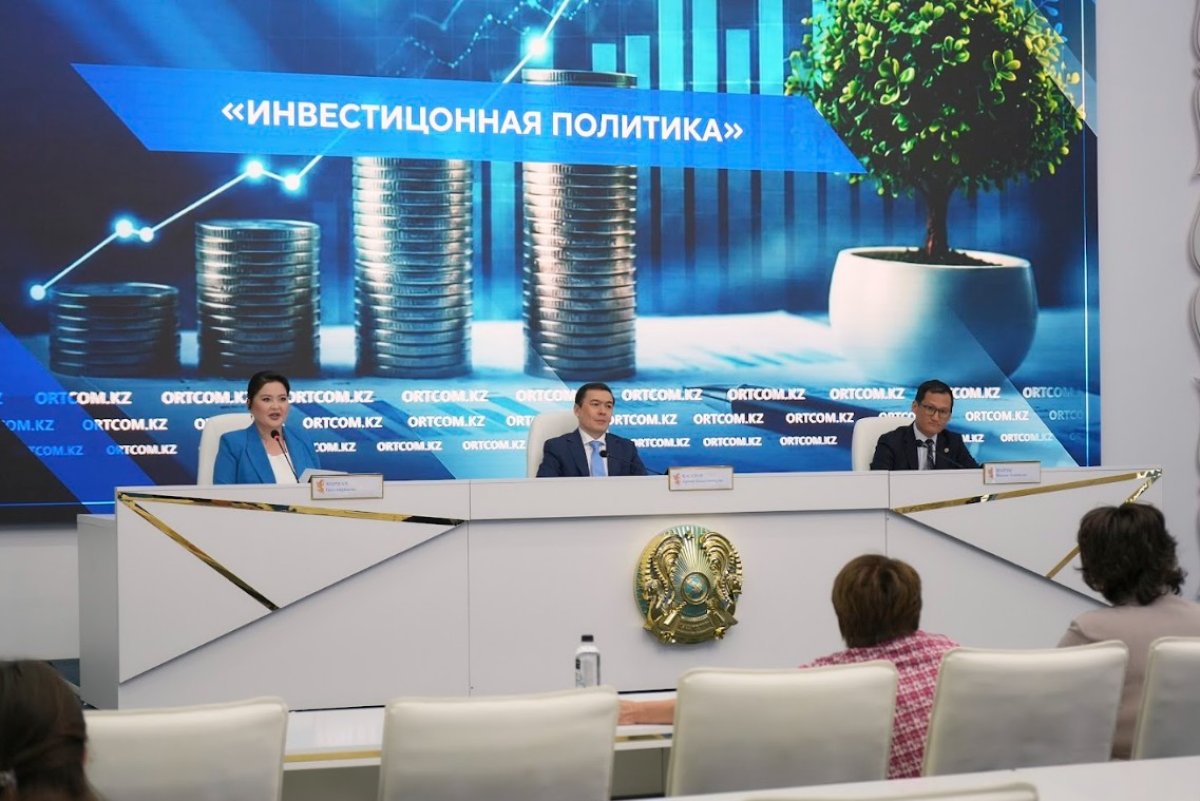
В Казахстане действует комплексная система сопровождения инвесторов 30.06.2026
В Казахстане продолжается рост инвестиционной активности. По итогам четырех месяцев 2026 года инвестиции в основной капитал увеличились на 6,7%, достигнув 4,9 трлн тенге, что превышает темпы роста экономики. При этом в 2025 году валовый приток прямых иностранных инвестиций составил 20,5 млрд долларов, увеличившись на 14,4% по сравнению с предыдущим годом. Об этом сообщил вице-министр национальной экономики РК Арман Касенов на пресс-конференции в СЦК.Спикер отметил, что международные рейтинговые агентства Moody’s, Standard & Poor's и Fitch регулярно подтверждают суверенный рейтинг Казахстана на уровне инвестиционной надежности.«Для привлечения инвестиций в Казахстан сформирована комплексная система сопровождения инвесторов, включающая зарубежные учреждения, центральные госорганы и региональный уровень. В каждом регионе сформированы инвестиционные программы, предусматривающие конкретные проекты, нуждающиеся в привлечении инвестиций. После отбора проектов проводится адресная работа по поиску инвесторов через зарубежные представительства Казахстана», – подчеркнул вице-министр. В целях создания благоприятного инвестиционного климата реализуются механизмы защиты бизнеса. Внедрен «прокурорский фильтр», ограничивающий необоснованное вмешательство контролирующих органов. Для приоритетных проектов действует механизм Fast Track, позволяющий ускорить получение необходимых разрешений и мер господдержки. Для оперативного решения возникающих вопросов в каждом регионе функционируют региональные инвестиционные штабы, а также формируется Единый реестр проблемных вопросов инвесторов.Регистрация компаний доступна в онлайн-формате через портал eGov. Инвесторам предоставляются налоговые и таможенные преференции, инвестиционные субсидии, натурные гранты и другие меры господдержки, в рамках заключения инвестиционного контракта.В стране функционируют 18 специальных экономических зон и 67 индустриальных зон. Они обеспечивают инвесторов готовой инфраструктурой и льготными условиями для ведения бизнеса.«Одним из ключевых инструментов поддержки крупных проектов является Соглашение об инвестициях. Данный механизм позволяет инвесторам, реализующим проекты стоимостью не менее 7,5 млн МРП, получить комплекс мер господдержки и гарантии стабильности законодательства сроком до 25 лет. За 2025 год заключено 30 соглашений, в текущем году – 12 соглашений. Дополнительным механизмом является Соглашение об инвестиционных обязательствах, предусматривающее стабильность налогового законодательства сроком до 10 лет для крупных отечественных производителей, реализующих масштабные проекты по созданию и модернизации производств», - добавил Арман Касенов.Отдельно для нефтегазовой отрасли действует улучшенный модельный контракт, предусматривающий специальные фискальные стимулы для сложных проектов и возможность разрешения споров в международном арбитраже.Source : https://www.gov.kz/memleket/entities/economy/press/news/details/1237432?lang=ru
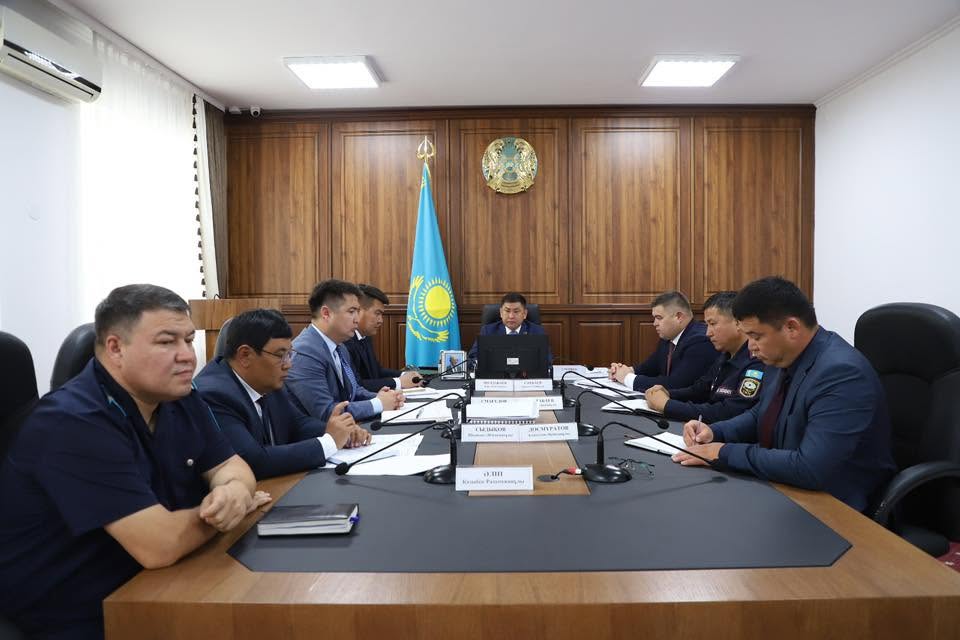
Tourism Development Issues Discussed 30.06.2026
Today, a regular meeting chaired by District Akim Jandos Yerkinbek was held, during which issues related to tourism development, children's water safety, and the sanitary safety of food products during the summer season were discussed.During the meeting, it was noted that special attention had been paid to tourism development at a recent meeting chaired by the Regional Akim. The inclusion of the Baikonur Cosmodrome in the country's official tourism map has created new opportunities to enhance the district’s tourism potential.In this regard, the District Akim stated:— We need to promote the district’s economic development through the effective use of the historical and unique sites within the Baikonur complex. Intensifying tourism development efforts and creating comfortable conditions for visitors is our shared responsibility.Several instructions were given to responsible officials regarding the cleanliness of tourist sites and the quality of services provided to visitors.The second issue on the agenda concerned the sanitary safety of fruits, vegetables, and melons sold during the summer season. Jandos Yerkinbek emphasized that protecting the health of residents is one of the highest priorities and instructed relevant authorities to maintain continuous monitoring of compliance with sanitary requirements.Special attention was also given to preventing children from swimming in unauthorized water bodies. The district emergency situations department, district police department, education department, and the akims of settlements and rural districts were instructed to strengthen inspection and patrol activities and ensure the regular implementation of safety measures.The District Akim assigned all responsible departments the task of ensuring the proper and timely execution of the instructions given.Source : https://www.gov.kz/memleket/entities/kyzylorda-karmakshy/press/news/details/1237435?lang=ru
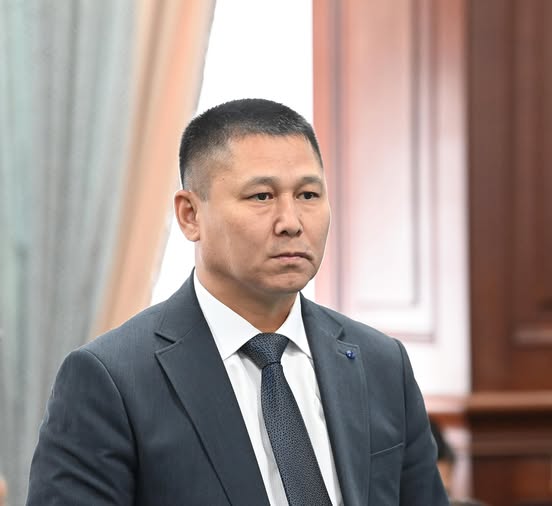
Director of the "Syr Suy" branch has been appointed 30.06.2026
Today, at a meeting chaired by the regional akim Murat Ergeshbayev, Amisha Erzhan Shyntemirovich was introduced, who was appointed to the position of director of the "Syr Suy" branch by order of the general director of the republican state enterprise "Kazsushar".The regional akim wished the new leader success in his work and instructed him to take the necessary measures to provide the population with high-quality drinking water without interruptions. The task was given to develop and modernize the region's water management infrastructure, ensure the operation of water supply systems, and improve the quality of water supply services.Erzhan Shyntemirovich was born in 1980 in the Kyzylorda region. He received education in the specialties "Construction" and "Jurisprudence" at the Korkyt Ata Kyzylorda University.He began his career as an engineer at the "SMP-Kyzylorda" partnership.Over the years, he has held responsible positions in the private sector and state institutions.In recent years, he served as the acting deputy director of the "Syr Suy" branch of the "Kazsushar" enterprise.Source : https://www.gov.kz/memleket/entities/kyzylorda/press/news/details/1237442?lang=ru
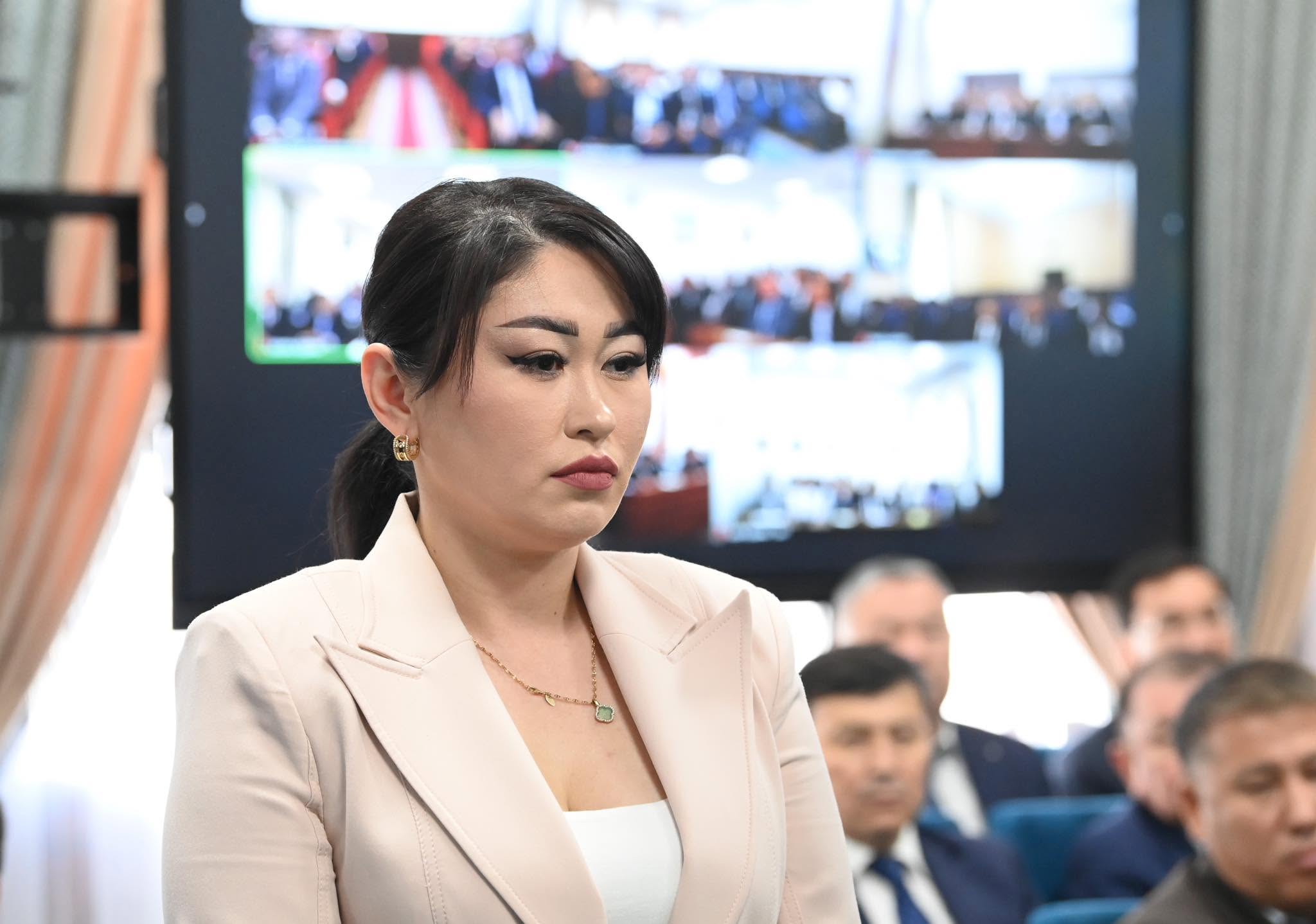
The head of the Department of the Committee for Medical and Pharmaceutical Control in the Kyzylorda region has been appointed 30.06.2026
Today, a meeting dedicated to personnel changes was held under the chairmanship of the regional akim Murat Ergeshbayev. Zhaksylyk Zhanerke Almasovna, appointed by order of the head of the apparatus of the Ministry of Health to the position of Head of the Department of the Committee for Medical and Pharmaceutical Control in the Kyzylorda region, was introduced at the meeting.The regional akim instructed the new head to carry out effective work to ensure strict control over the circulation of medicines and medical devices in the region, as well as to improve the quality and accessibility of medical services.Zhanerke Zhaksylyk was born in 1992 in the city of Kyzylorda.She received her education in the specialties "Medicine" and "General Medicine" at the West Kazakhstan State University named after Marat Ospanov.She began her career in 2017 as a doctor at City Polyclinic No. 3 in Kyzylorda. In subsequent years, she worked at the same polyclinic as head of a department, district doctor, and deputy chief physician. From 2023 to the present, she has been acting as Deputy Head of the Department of the Committee for Medical and Pharmaceutical Control in the Kyzylorda region.Source : https://www.gov.kz/memleket/entities/kyzylorda/press/news/details/1237447?lang=ru
Important information for the users of the Zhaysan checkpoint! 30.06.2026
The State Revenue Committee of the Ministry of Finance of the Republic of Kazakhstan hereby informs that at the moment there is a large accumulation of vehicles on the Kazakh-Russian section of the border at the automobile checkpoint "Zhaysan" of the Department of State Revenue for the Aktobe region (adjacent checkpoint "Iletsk-1", Orenburg region of the Russian Federation).In this regard, it is necessary to conduct explanatory work with participants in the transportation process, customs representatives, carriers and participants in foreign economic activity on the choice of alternative routes to/through the direction of the Russian Federation in order to avoid downtime at the above-mentioned checkpoint.Until the current situation is resolved, the Committee suggests moving vehicles through the Alimbet checkpoint as an alternative.Please take this information into account when planning routes and organizing transportation.Source : https://www.gov.kz/memleket/entities/kgd-karaganda/press/news/details/1237454?lang=ru
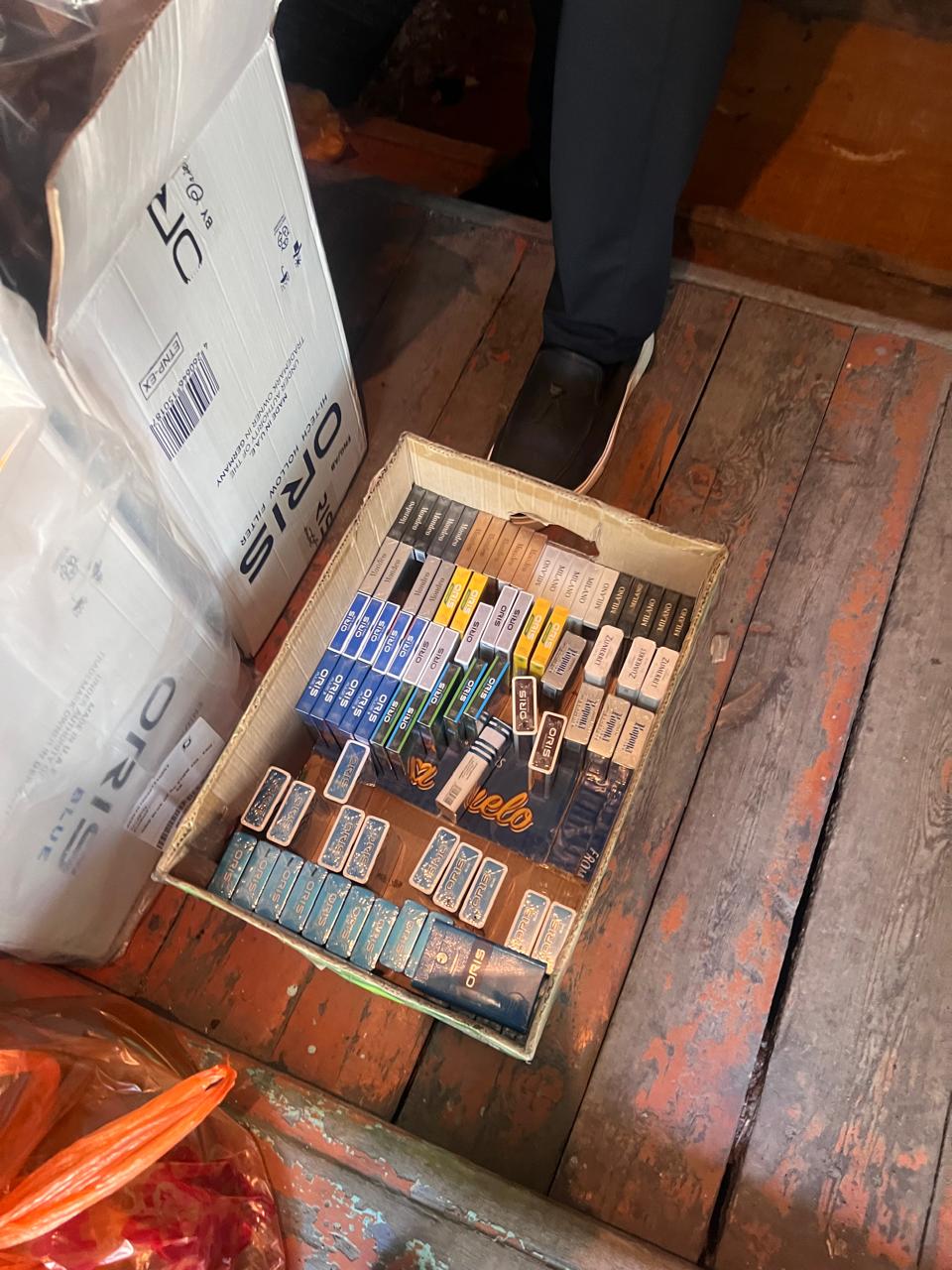
Sale of Counterfeit Tobacco Products Uncovered 30.06.2026
During a raid, officials from the State Revenue Department for the Alakol District uncovered the sale of counterfeit tobacco products by a business entity.During the inspection, 1,135 packs of cigarettes were discovered and seized that lacked the identification marks (marking codes) required by the current legislation of the Republic of Kazakhstan.The case materials have been forwarded to the judicial authorities for review and the issuance of an appropriate procedural decision.We remind you that you can verify the authenticity of the marking codes on tobacco products yourself using the “NAQTY ONIM” mobile app. Source : https://www.gov.kz/memleket/entities/kgd-zhetysu/press/news/details/1237487?lang=ru

WHAT IS THE PURPOSE OF LABELING PRODUCTS? 30.06.2026
WHY DO I NEED PRODUCT LABELING?Confirmation of product authenticityFull tracking of product movementConsumer protectionFighting the shadow marketLabeling is a guarantee of safety, quality of goods and trust in them.Source : https://www.gov.kz/memleket/entities/kgd-kostanay/press/news/details/1237498?lang=ru
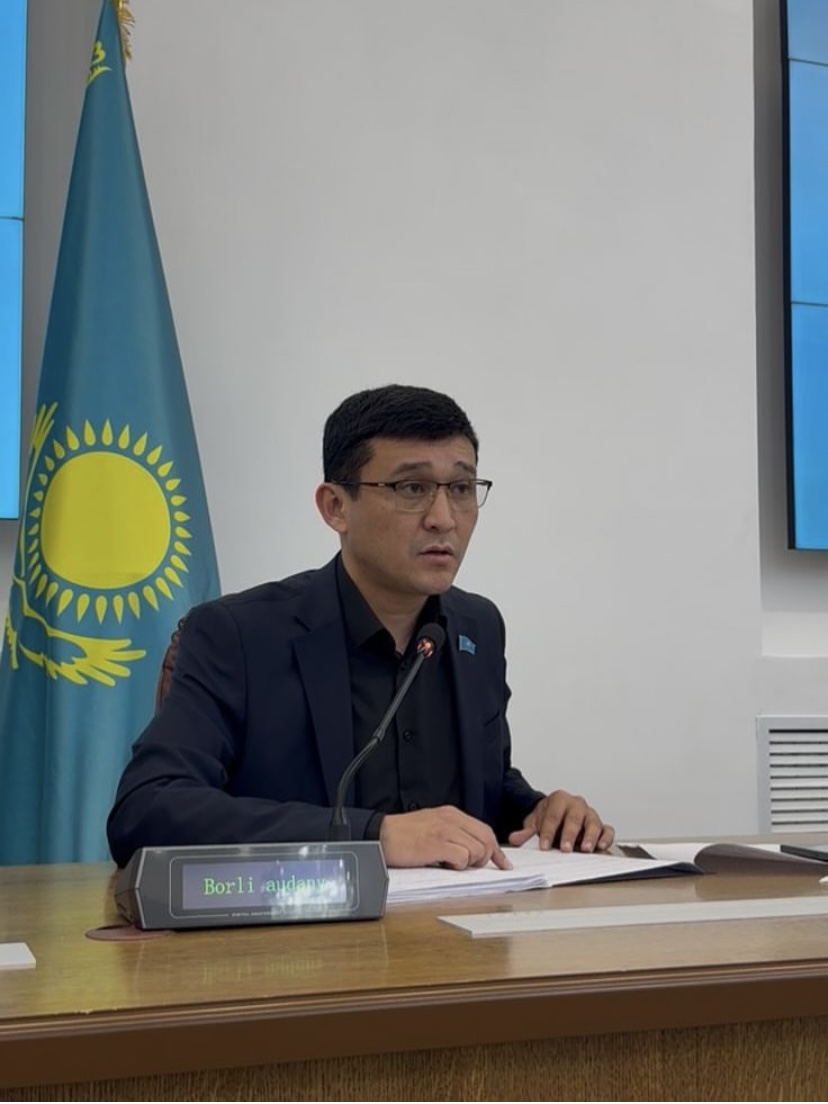
A meeting of the standing commission of the Burlin district maslikhat was held 30.06.2026
8 июня 2026 года открыл и вел заседание постоянной комиссии районного маслихата депутат маслихата Е.Мергалиев. В работе заседания приняли участие заместитель акима района Д.Имашев, руководители отделов.С докладом по вопросам повестки дня «О внесении изменения в совместное постановление акимата Бурлинского района Западно-Казахстанской области от 15 мая 2025 года № 175 и решение Бурлинского районного маслихата Западно-Казахстанской области от 15 мая 2025 года № 27-18 «О льготном проезде отдельных категорий пассажиров Бурлинского района для проезда на внутригородском общественном транспорте (кроме такси)», «О внесении изменения в решение Бурлинского районного маслихата от 24 апреля 2023 года № 2-23 «Об утверждении тарифов для населения на сбор, транспортировку, сортировку и захоронение твердых бытовых отходов по Бурлинскому району» выступил руководитель отдела жилищно-коммунального хозяйства, пассажирского транспорта и автомобильных дорог Б.Карагойшин. Депутаты задали вопросы касательно льгот по тарифам пассажироперевозок, сбору твердо-бытовых отходов и получили на них ответы.По вопросу окружной и участковой избирательным комиссиям Бурлинского района выступила руководитель аппарата маслихата Б.Мукашева.Все вопросы рассмотренные на комиссии были внесены в повестку дня очередной сессии.Source : https://www.gov.kz/memleket/entities/burlin-maslihat/press/news/details/1237499?lang=ru
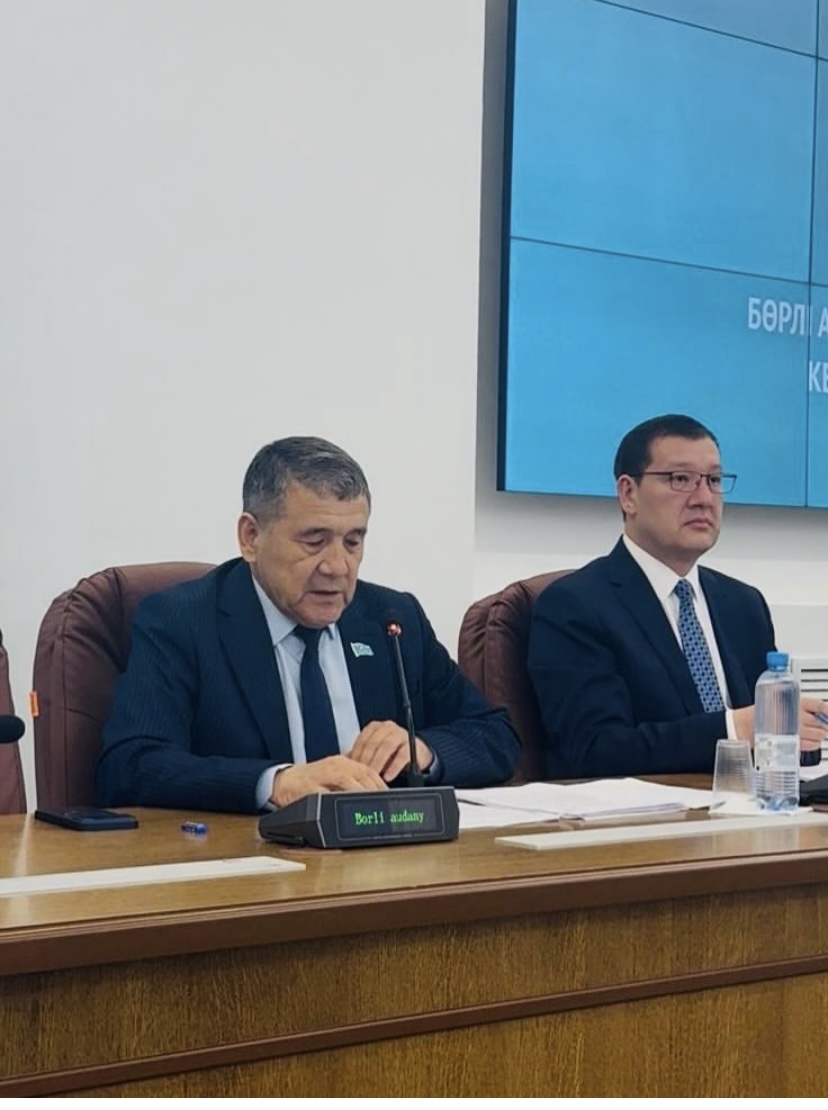
The next XXXV session of the district maslikhat 30.06.2026
8 июня 2026 года очередную ХХХV сессию районного маслихата открыл и вел председатель маслихата К.Ермекбаев. В работе сессии приняли участие аким района Е.Ихсанов, депутат областного маслихата Ж.Курманкулов, заместитель акима района, руководитель аппарата акима района, руководители отделов, акимы города и сельских округов, представители средств массовой информации.На сессии, по вопросу «Об исполнении бюджета района за 2025 год» выступила руководитель отдела экономики и финансов Г.Шамгонова. Депутаты утвердили отчеты об исполнении бюджета района, города Аксай и сельских округов за 2025 год.А также, были внесены изменения в совместное постановление акимата и решение маслихата «О льготном проезде отдельных категорий пассажиров Бурлинского района для проезда на внутригородском общественном транспорте (кроме такси)», в решение маслихата «Об утверждении тарифов для населения на сбор, транспортировку, сортировку и захоронение твердых бытовых отходов по Бурлинскому району».Кроме этого, с докладом по вопросу окружной и участковой избирательным комиссиям Бурлинского района выступила руководитель аппарата маслихата Б.Мукашева.Согласно статьи 11 Закона РК «О местном государственном управлении и самоуправлении в Республике Казахстан» в работу сессии маслихата был объявлен перерыв.Source : https://www.gov.kz/memleket/entities/burlin-maslihat/press/news/details/1237507?lang=ru
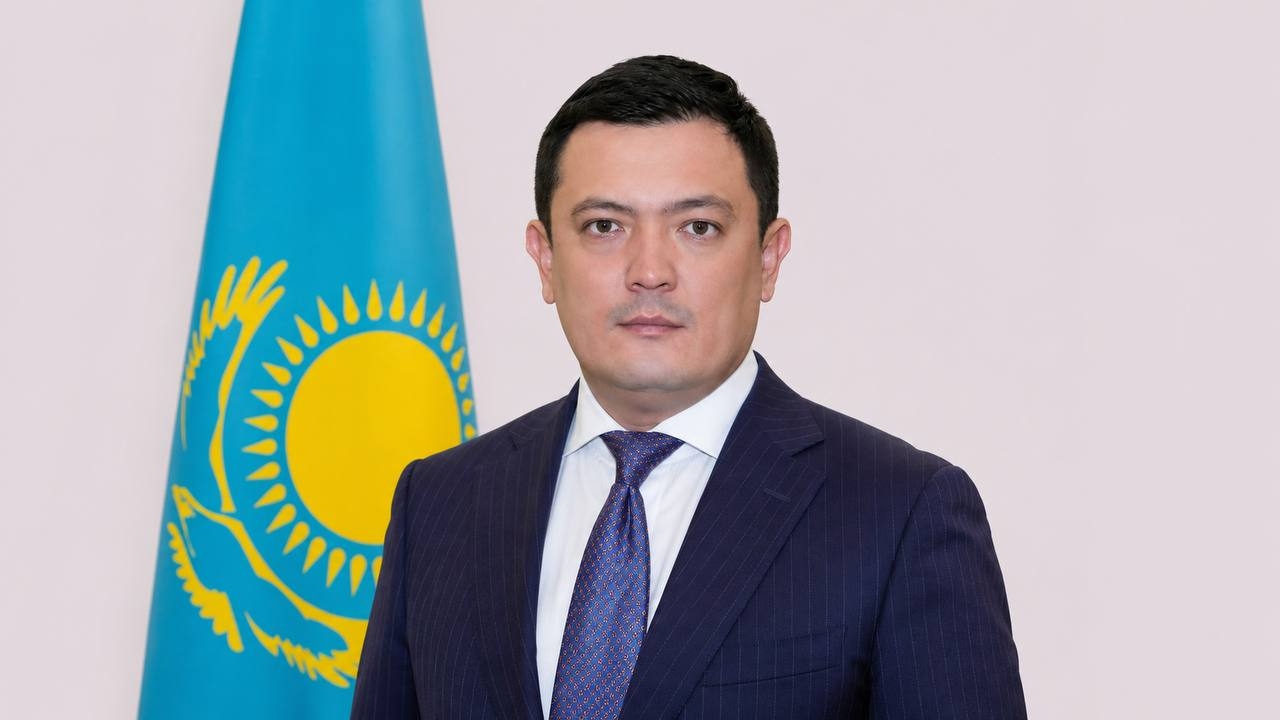
Бекболат Молдабеков назначен вице-министром национальной экономики РК 30.06.2026
Постановлением Правительства Республики Казахстан Молдабеков Бекболат Серикович назначен на должность вице-министра национальной экономики. Он освобожден от ранее занимаемой должности. Об этом сообщает пресс-служба Правительства РК.Source : https://www.gov.kz/memleket/entities/economy/press/news/details/1237541?lang=ru
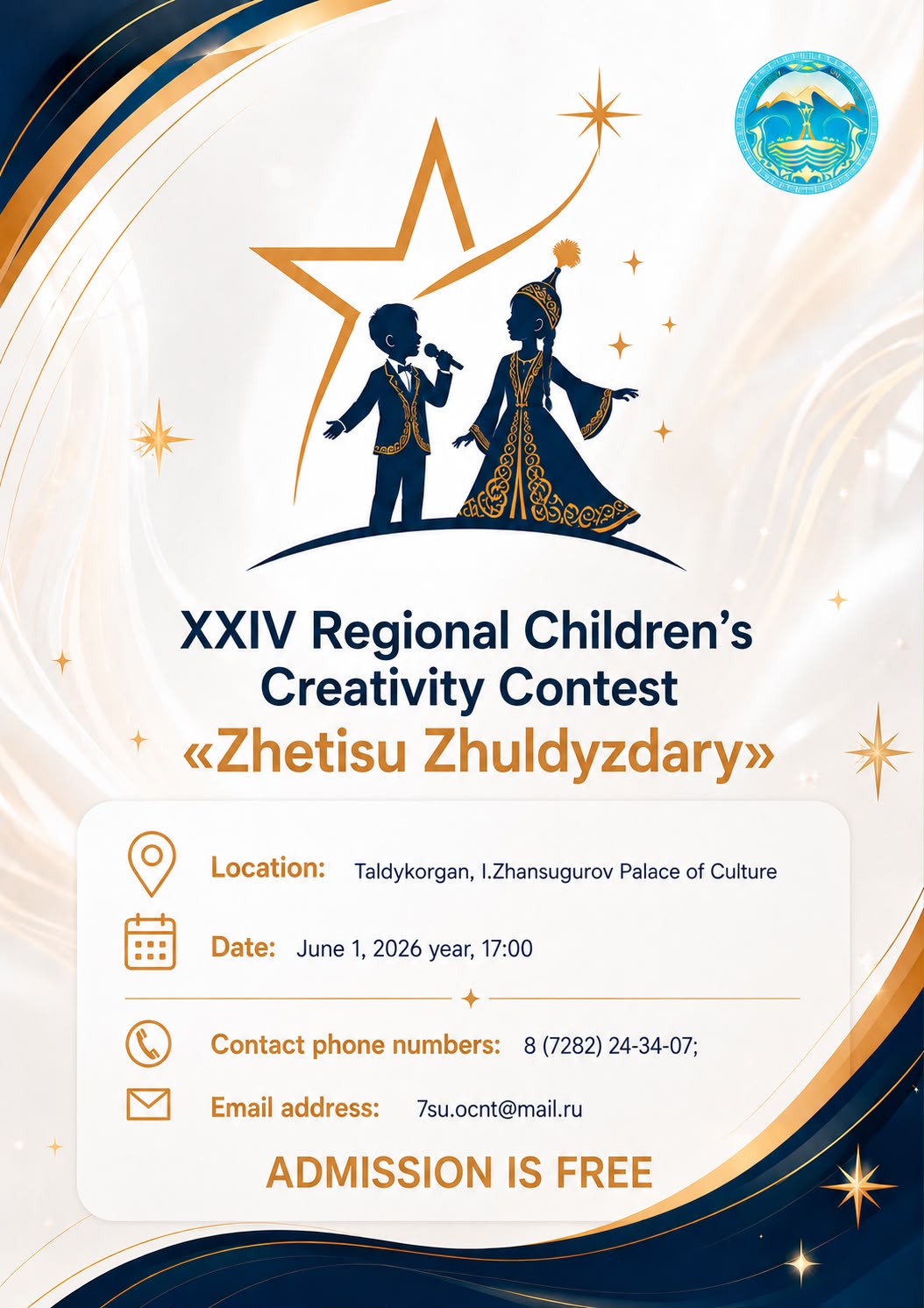
XXIV Regional Children’s Creativity Contest «Zhetisu Zhuldyzdary» 29.06.2026
Location: Taldykorgan, I.Zhansugurov Palace of CultureDate: June 1, 2026 year, 17:00 Contact phone numbers: 8 (7282) 24-34-07;Email address: 7su.ocnt@mail.ru ADMISSION IS FREE Source : https://www.gov.kz/memleket/entities/zhetysu-archive/press/news/details/1230377?lang=ru
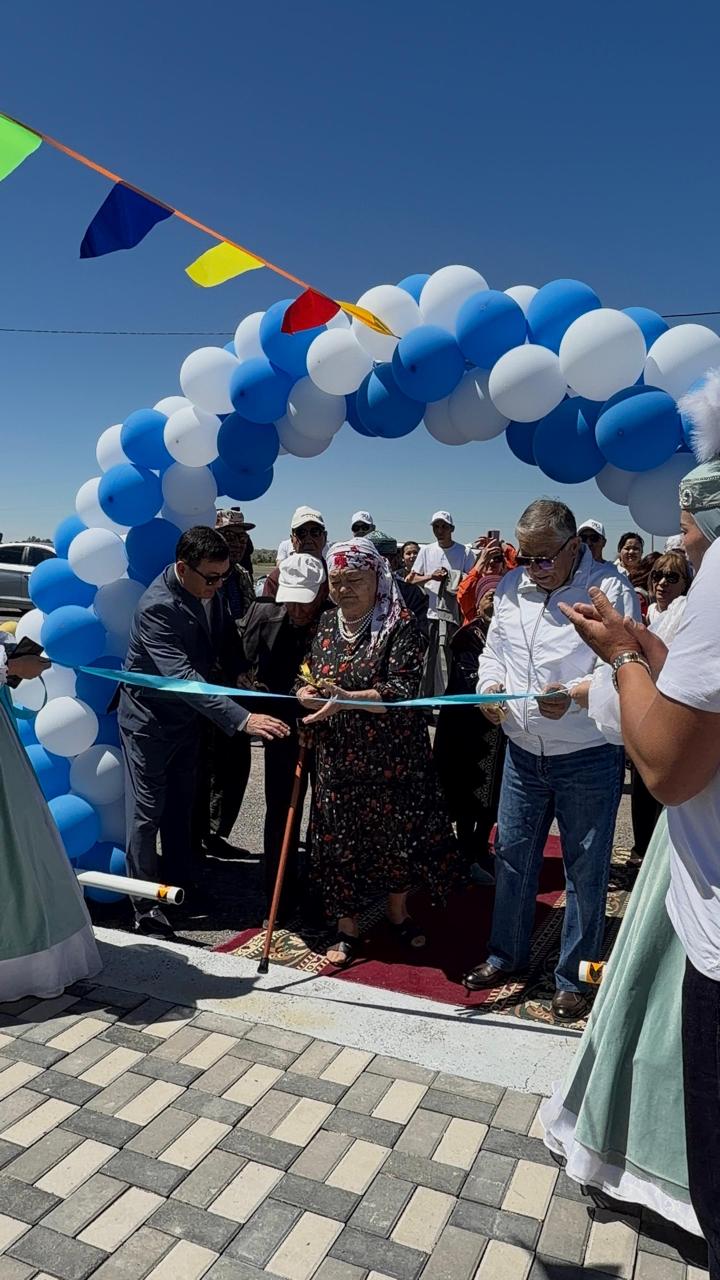
Flag Square opened in Bakbakty village 29.06.2026
The 39th graduates of Bakbakty village expressed their deep gratitude to their native land and presented a commemorative sign “Bakbakty" and a banner at the entrance to the village.This is a vivid manifestation of sincere respect for his native village, patriotism and an instructive gift left to his descendants.Now the Blue Flag will fly in our village, which will become a symbol of the country and unity.On behalf of the villagers, we would like to express our sincere gratitude to those who initiated such a good deed!Our tribute to every soul who has contributed to the prosperity of our native land is boundless.Source : https://www.gov.kz/memleket/entities/balkhash-bakbakty/press/news/details/1230385?lang=ru
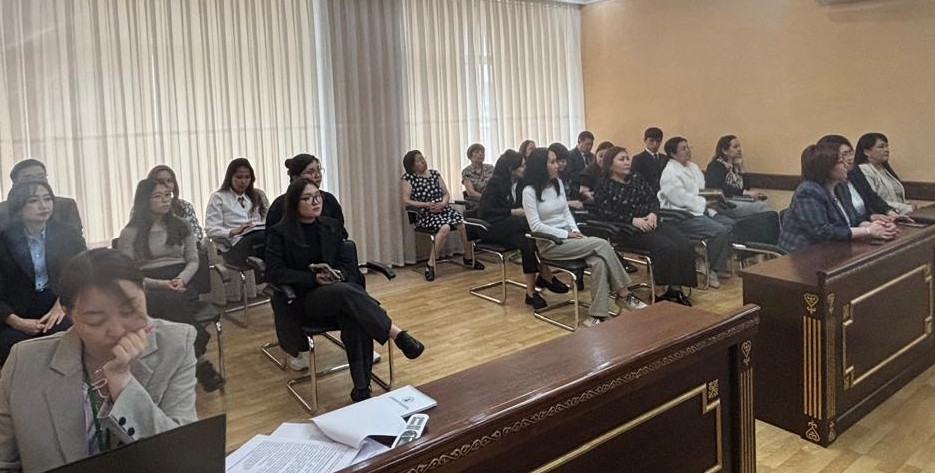
The office of the Akim of Kostanay region conducted a comprehensive legal examination on administrative procedures when considering appeals. 29.06.2026
On May 28, 2026, a training session was held at the State Institution "Office of the Akim of the Kostanay Region" as part of legal education to explain the procedure for conducting administrative procedures when considering applications, taking into account the latest amendments to the Administrative Procedural and Process Code of the Republic of Kazakhstan.The speaker of the event was the Head of the Department of the Committee on Legal Statistics and Special Records of the General Prosecutor's Office of the Republic of Kazakhstan, Zhidebayev Daulet Turarovich.During the session, participants were explained issues related to the registration, recording, and consideration of applications, the procedure for determining the type of incoming documents, checking jurisdiction, handling duplicates, as well as the specifics of reflecting relevant actions in the IAS "Electronic Applications".Special attention was paid to changes related to the recording of requests for personal reception, the use of form LP-1, the new alphabetical index "ZhK", and the procedure for generating reports on applications.Following the legal education session, participants were given practical recommendations on the correct application of the changes in their daily work with applications from individuals and legal entities.Source : https://www.gov.kz/memleket/entities/kostanay/press/news/details/1230389?lang=ru
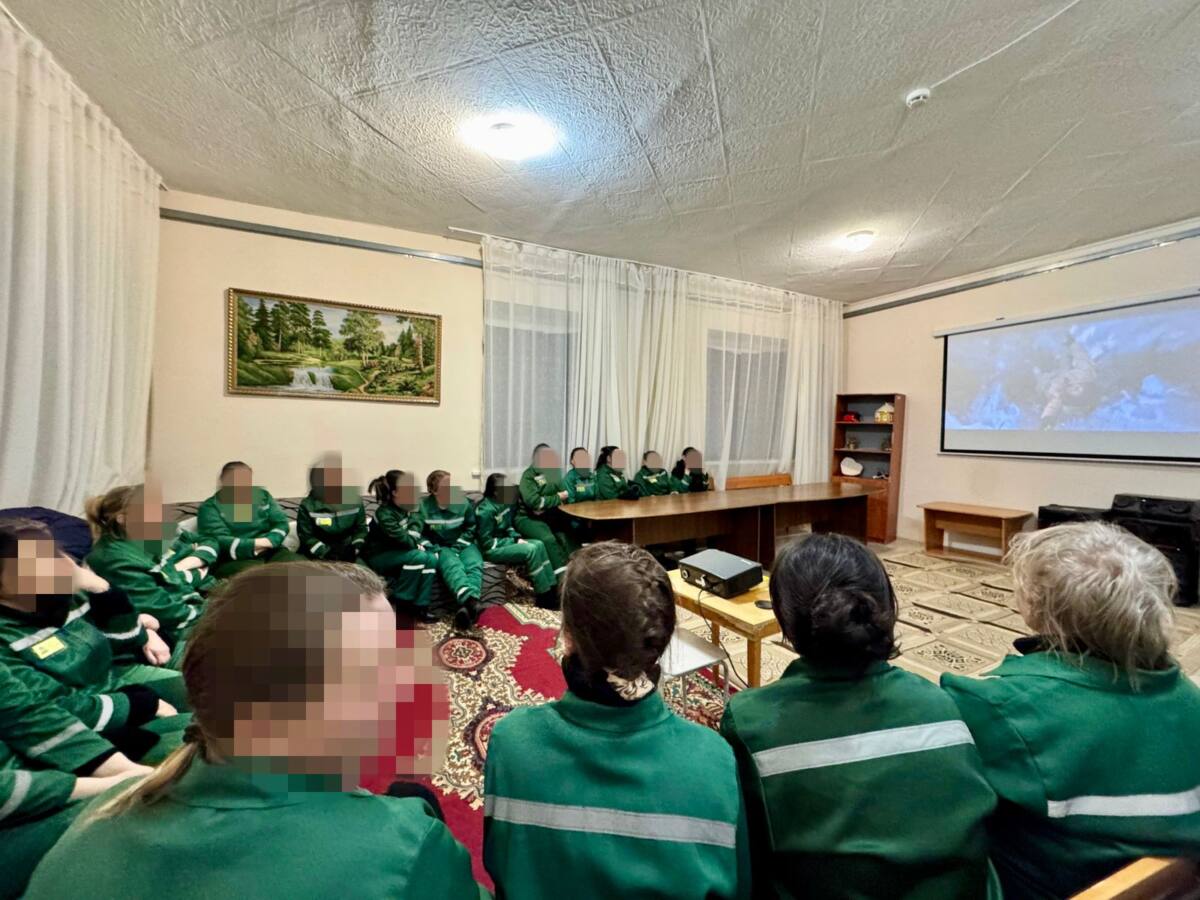
Абай облысының ҚАЖ әйелдер колониясының қызметкерлері сотталғандар арасында отбасылық құндылықтарды нығайту бойынша жүйелі жұмыс жүргізуде. 29.06.2026
Абай облысы бойынша қылмыстық-атқару жүйесі департаментінің әйелдер колониясы мекемесінде отбасылық құндылықтарды нығайтуға және заңға бағынатын өмір салтына тұрақты уәждемені қалыптастыруға бағытталған тәрбие және психологиялық жұмыс тұрақты негізде жүргізіледі. Бұл жұмыстың кезекті кезеңі отбасының әйел өміріндегі рөліне арналған тақырыптық іс-шара болды. Алпыстан астам сотталушы "отбасылық құндылықтар: әр түрлі ұрпақтың көзқарасы"дау-дамайына қатысты. Жас топтарына бөлінген қатысушылар қазіргі қоғамдағы отбасы мен әйелдің рөлін, жеке жауапкершілік пен өмірлік басымдықтар мәселелерін талқылады. Іс-шара аясында мансап пен отбасылық әл-ауқат арасындағы таңдау тақырыбын ашатын "отбасы адамы" көркем фильмін көру ұйымдастырылды. Сурет сотталғандардың эмоционалды реакциясын тудырды және өмірлік құндылықтарды қайта қарастыруға ықпал етті. — Бір кездері менің отбасым болды-күйеуім және үш балам: екі ұл мен қызым. Біз қарапайым өмір сүрдік, бірақ бақытты болдық. Бухгалтер болып жұмыс істей отырып, мен азғыруға бой алдырдым және ұрлық жасадым. Бүгін менің балаларым менсіз өседі, мен қолымызда бар нәрсені сақтаудың қаншалықты маңызды екенін түсінемін. Ең құндысы материалдық емес, жақын болу мүмкіндігі болды, - деп бөлісті сотталған. — Осындай іс-шаралар арқылы біз сотталған әйелдердің отбасына саналы көзқарасын қалыптастырамыз, балалардың болашағы үшін жауапкершілік сезімін күшейтеміз және оң өзгерістерге ішкі мотивацияны қалыптастыруға көмектесеміз. Бұл қайта әлеуметтендіру бойынша кешенді жұмыстың маңызды бөлігі,-деп атап өтті сотталғандар арасындағы тәрбие-психологиялық жұмыс бөлімінің аға психологы Алтынгүл Агатанова. Рухани-адамгершілік бағдарларды нығайту және сотталғандарды қоғамға оралуға дайындау жөніндегі жұмыс жүйелі негізде жалғастырылатын болады.Source : https://www.gov.kz/memleket/entities/duisabai/press/news/details/1230391?lang=ru
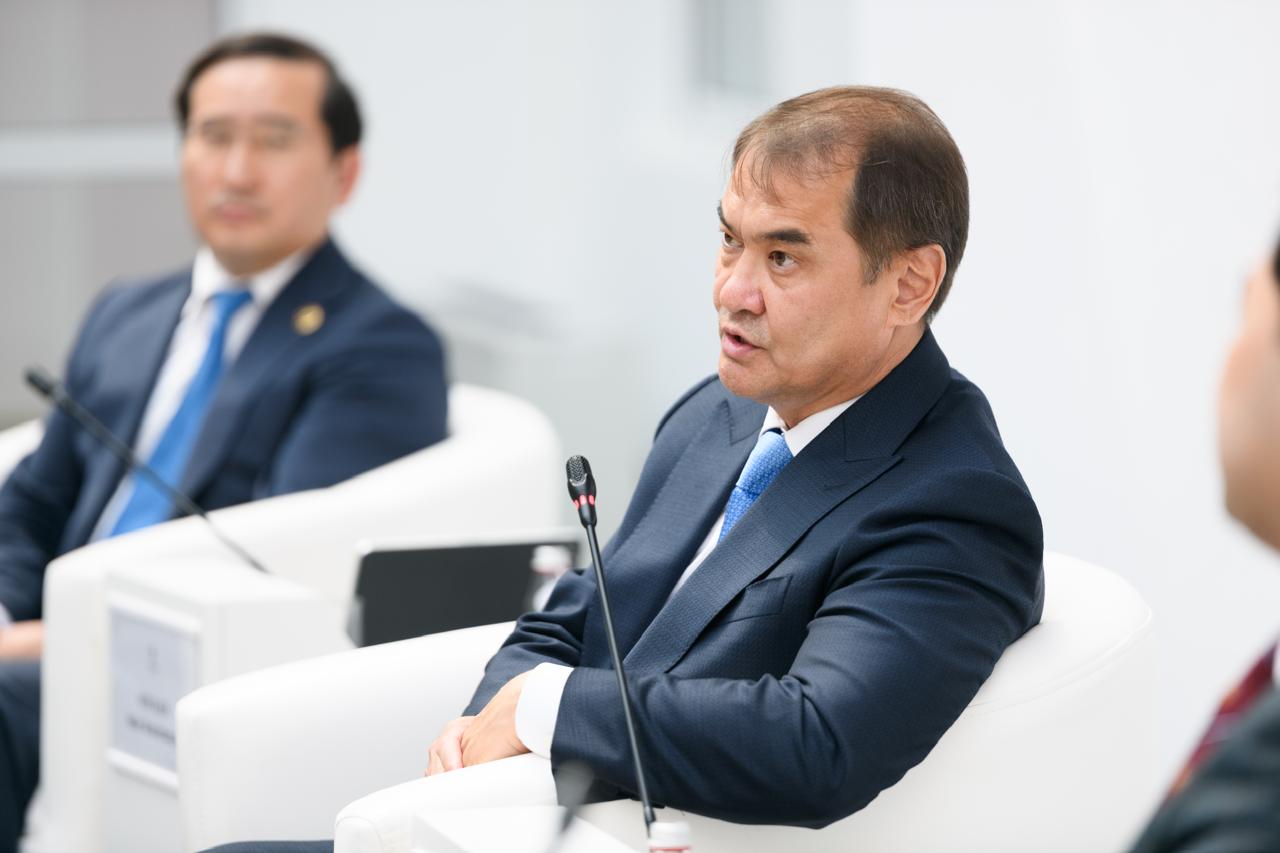
Meeting of the Chairman of the ISAC E.T.Mynzhasarov with residents of Mangystau region 29.06.2026
As part of implementing the "Hearing State" concept, the Chairman of the Committee of Internal State Audit of the Ministry of Finance of the Republic of Kazakhstan, Yerzhan Tilekovich Mynzhasarov, held a meeting with the population of the Mangystau region. During the meeting, he presented the results of the work and new approaches in the field of state audit. He also provided comprehensive answers to the questions received.The meeting was held in an open dialogue format. Residents actively asked questions, including about conducting remote inspections.As of May 15, 2026, audits have covered budget funds amounting to 1.7 trillion tenge, identified financial violations totaling 372.2 billion tenge, and more than 963 procedural violations. At the same time, despite a reduction in the number of inspections, the volume of covered budget funds has more than doubled.Thus, online budget monitoring has prevented the overstatement of planned state expenditures by 1.5 trillion tenge. The number of violations previously typical in the education sector, related to the illegal transfer of funds to card accounts, has also been reduced.In most cases, violations are rectified voluntarily, and funds are returned to the budget without court proceedings.The Chairman of the Committee emphasized that the key task today is not only to identify violations but also to prevent them at early stages through digitalization and analytics.In conclusion, it was noted that the Committee of Internal State Audit will continue to develop modern audit tools and work with citizens' appeals, which remain an important source of feedback and enhance the transparency of budget fund usage.Source : https://www.gov.kz/memleket/entities/kvga/press/news/details/1230423?lang=ru
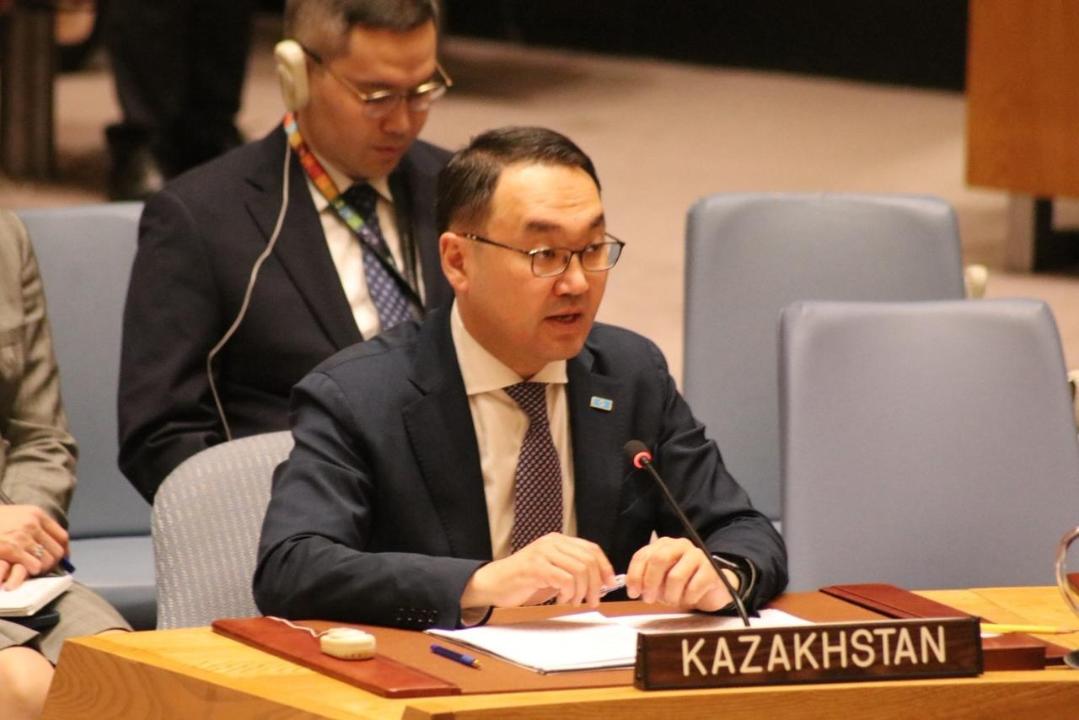
Kazakhstan Advocates for Strengthening the Role of the UN at Security Council Debate 29.06.2026
New York, 26 May 2026 – First Deputy Minister of Foreign Affairs of the Republic of Kazakhstan Yerzhan Ashikbayev took part in a high-level open debate of the United Nations Security Council, held under the presidency of China, on «Upholding the Purposes and Principles of the Charter of the United Nations and Strengthening the International System with the United Nations at its Centre».In his statement, the representative of Kazakhstan noted that the debate was taking place against the backdrop of growing uncertainty, the erosion of international law and the selective application of legal norms. In this regard, he underscored the full support of the President of the Republic of Kazakhstan K.Tokayev for the central role of the United Nations, as well as his call on world leaders to approach issues of international peace and security with a strong sense of responsibility.The Kazakh side emphasized that the United Nations remains an indispensable mechanism for ensuring sustainable peace and development. In this context, Kazakhstan’s efforts to strengthen regional confidence-building and mutually beneficial cooperation in Central Asia, facilitate peace processes, promote nuclear disarmament and interreligious dialogue, and contribute to United Nations peacekeeping activities were highlighted.Particular attention was paid to the need to reform the United Nations, including by adapting the Security Council to contemporary realities. Kazakhstan stands for broader representation of developing countries and middle powers, as well as for an evolutionary approach to reform aimed at enhancing the effectiveness of the United Nations and its ability to meet the expectations of Member States.In the context of global challenges, reference was made to the initiative of the Head of State to establish an International Water Organization with a view to overcoming duplication among existing mechanisms and enhancing the effectiveness of the United Nations water mandate. Kazakhstan’s initiatives to establish a Global Coalition on Primary Health Care and an International Agency for Biological Safety were also mentioned.The First Deputy Minister reaffirmed Kazakhstan’s readiness to continue working with all Member States to advance multilateral cooperation in a qualitative manner and to further strengthen the principles of the Charter of the United Nations.Also on the sidelines of the UN Security Council meeting, the Kazakh diplomat held meetings with Chinese Foreign Minister Wang Yi and Kyrgyz Foreign Minister Jeenbek Kulubaev to discuss prospects for developing bilateral cooperation and key areas of interaction on multilateral platforms.Source : https://www.gov.kz/memleket/entities/mfa-geneva/press/news/details/1230424?lang=ru
.jpg)
The Future of Higher Education Discussed in Almaty: IAUP and AlmaU Bring Together the Global Academic Community 13.06.2026
On June 12–13, 2026, Almaty hosted the first-ever International Association of University Presidents (IAUP) regional conference in Central Asia. IAUP is one of the world's most influential associations of higher education leaders.The IAUP Central Asia Regional Conference, held under the theme “Impact-driven Universities: Education, Leadership and Societal Change” brought together more than 100 university leaders, representatives of international organizations, government institutions, and experts from over 20 countries across Central Asia, Europe, North America, and the Asia-Pacific region.The conference was organized by Almaty Management University (AlmaU) in partnership with the International Association of University Presidents (IAUP), with the support of the Ministry of Science and Higher Education of the Republic of Kazakhstan, The Phoenix Philanthropy Group, British Council, QS Quacquarelli Symonds, the Eurasian Chapter of Principles for Responsible Management Education (PRME), and the Almaty Tourism Bureau.Welcoming remarks were delivered by IAUP President, Founder and Chairman of the Board, Sias University Shawn Chen and AlmaU Founder and President Assylbek Kozhakhmetov. Participants were also addressed via video message by the Minister of Science and Higher Education of the Republic of Kazakhstan, Sayasat Nurbek.“Kazakhstan consistently strengthens international cooperation in the field of higher education. In recent years, important legislative initiatives have been adopted and mechanisms for university support have been established, including the development of endowment funds. Today's conference opens up new opportunities for academic mobility, employment, scientific partnership and future staff training. Artificial intelligence plays a special role in these processes, which is becoming one of the key drivers of education transformation. AlmaU University is a prime example of how private universities can initiate large-scale international projects and contribute to the development of the country's educational ecosystem," said Sayasat Nurbek.“Central Asia has a large and growing youth population. That is why hosting international conferences of this kind is particularly important for the region. Such platforms are created not only for exchanging ideas and discussing current issues. Their greatest value lies in fostering international cooperation, jointly seeking solutions to global challenges, and creating new opportunities for future generations,” emphasized Shawn Chen.“Universities in Central Asia no longer seek only to follow global trends - we are ready to shape them ourselves. We want to contribute to the global research agenda in the fields of sustainability, artificial intelligence, economic and social impact, and inclusive development. We strive to ensure that our educational innovations based on the philosophy of nomadic culture - sustainability, adaptability and mutual support - are studied and applied by colleagues around the world. We want the students of our region to study freely at the world's leading universities, and students from all over the world to come to study in Central Asia," said Assylbek Kozhakhmetov.One of the keynote speakers on the first day of the conference was Norbert Csizmadia Geopolitics & Geoeconomics Strategist Former President of the board of trustees of John von Neumann University. In his presentation, he highlighted the growing role of universities in shaping intellectual capital and fostering international cooperation.“The IAUP is not a regional, but a global conference. We need to ask ourselves: what should we do today so that tomorrow will be good. Turquoise Zone is a new concept that unites heaven and earth. As in the Kazakh language, the word "kok", which combines several meanings. The super-media trends of the future are already rapidly growing and shaping a new world”, - he shared.The conference program continued with a series of keynote, plenary, and panel discussions.The plenary session, titled “International Standards and the Future of Impact-Driven Universities,” was held in partnership with the British Council and moderated by Fernando León-García, Chair of the IAUP Board of Directors and President of CETYS University (Mexico).The discussion featured Alibek Madibekov, Director of the National Center for Higher Education Development under the Ministry of Science and Higher Education of the Republic of Kazakhstan; Samgat Yermekbayev, First Vice-Rector of Al-Farabi Kazakh National University; Lawrence M. Schall, President of the of the Commission, New England Commission of Higher Education; Rob Stroud, Executive Director for Quality Assurance and Enhancement at the UK's Quality Assurance Agency for Higher Education (QAA); and Miras Daulenov, President of Coventry University Kazakhstan.“Global standards cannot always be applied with the same level of effectiveness across all countries. Therefore, it is important to adapt them to national and regional contexts. It is this contextualization that makes standards more relevant and effective, creating conditions for shared development and sustainable growth across countries and regions,” emphasized Alibek Madibekov.“Throughout my professional career, I have witnessed the implementation of various international educational standards. Today, we are seeing strong interest from international students in studying in Kazakhstan; however, existing resources do not always allow us to fully meet the growing demand. The increase in applications has been driven by the expansion of international academic programs and dual-degree opportunities. At the same time, one of our key priorities remains creating conditions that enable talented students to receive a high-quality education and build successful careers in their home country. Achieving this requires further investment in educational infrastructure and strengthening the academic capacity of universities. At the same time, modern ranking systems often place greater emphasis on marketing indicators and ranking positions, while the actual academic processes and the quality of the educational environment receive far less public attention. Nevertheless, university rankings frequently serve as a primary reference point for prospective students when choosing where to study.”, - highlighted Samgat Yermekbayev.“In NECHE’s accreditation practice, we often encounter universities that may not fully meet every standard, yet demonstrate highly successful and innovative approaches to institutional development. This is precisely why we revised the structure of our accreditation framework, reducing the number of standards from nine to five. The purpose of these changes was not to make the process easier for universities, but rather to provide them with an opportunity to present their achievements, outcomes, and institutional progress in a more meaningful, comprehensive, and holistic way throughout the accreditation process,”- noted Lawrence M. Schall.“In the United Kingdom, through the QAA framework, we regularly review and update educational standards. To achieve the greatest possible impact, it is essential to continuously refine and modernize existing standards. Contextualization is of fundamental importance, as each country has its own unique characteristics, values, and societal needs. While the key indicator in the UK was once how many students acquired knowledge, today a far more important measure is how effectively they apply that knowledge in practice,” - added Rob Stroud.“Social impact is extremely difficult to measure, as its effects unfold and become visible over a long period of time. Not everything can be quantified through publication counts and formal performance indicators. When it comes to societal impact, AlmaU stands out as a university with a significant contribution. Even representatives of Harvard acknowledge that they do not attempt to fully measure social impact. Indicators of influence should include not only quantitative metrics, but also graduates who make a meaningful contribution to society and the world. There are universities that focus exclusively on rankings and performance indicators, yet in doing so, they often overlook their true impact on society,” - stated Miras Daulenov.During the first panel session, participants discussed entrepreneurial universities as drivers of economic and social transformation. The session was moderated by Amir Reza, Dean of Babson College, one of the world’s leading institutions in entrepreneurship education.During the discussion, he noted: “At Babson College, we strive not to limit students’ entrepreneurial initiatives, but to equip them with the skills and tools needed to shape the future. Our goal is not simply to teach students how to launch startups, but to cultivate a mindset that empowers young people to create new opportunities and transform the world around them,” noted Amir Reza. ”Erkin Tatishev, Founder and Chairman of the Board of Directors of Kusto Group and Chairman of AlmaU’s Board of Trustees, emphasized: “Today, many students in Central Asia find themselves insufficiently prepared for adult life and its real-world challenges. Good advice is more valuable than gold, yet young people often do not seek it out. I believe in openness, honesty, and continuous personal growth. Skills are not an innate quality - they can and should be developed throughout one’s life,” he noted.”Zhenis Taishitayev, Deputy Chairman of the Management Board of the National Chamber of Entrepreneurs of Kazakhstan “Atameken,” spoke about the importance of collaboration between universities and businesses in preparing in-demand professionals and developing the country's entrepreneurial ecosystem.Meanwhile, Hikmat Abdurakhmanov, CEO of Team University, shared insights into the development of entrepreneurial education and innovation culture in private universities in Uzbekistan. Tariq Qureishy, President and CEO of Future Readiness Forum and Xponential Group, also shared his experience.The session “ Higher education and sustainability imperative: universities the world needs” organized in partnership with QS Quacquarelli Symonds, was moderated by Zoia Zaitseva, Head of QS Impact Projects.According to her: “According to international studies on AI literacy, Kazakhstan demonstrates relatively strong performance in preparing students to work with artificial intelligence technologies. However, despite this potential, the level of alignment between graduates’ skills and employers’ expectations remains less than optimal. The reasons may vary, ranging from a gap between academic training and labor market needs to the rapid evolution of competency requirements in the modern workforce. This highlights the need for closer collaboration among universities, businesses, and governments to develop educational programs that are relevant, responsive, and future-oriented,” he emphasized.“At Sunway University, we believe that quality education goes beyond the development of hard skills and soft skills. It also involves shaping values, character, and worldview. Our goal is not only to prepare graduates who are highly employable, but also responsible citizens who can make a positive contribution to society and help address global challenges. The high employment rate of our graduates within the first six months after graduation is a strong testament to the effectiveness of this approach. At the same time, we view education as a lifelong journey and provide our graduates with opportunities to continue learning for up to two years after completing their studies as part of our lifelong learning framework. Most importantly, we want our graduates to aspire to serve society and create social value. There is never a shortage of people who wish to lead society, but those who are willing to take responsibility for its development are far less common,” - noted Sibrandes Poppema, President and Vice-Chancellor of Sunway University.Meirgul Alpysbayeva, Education National Professional Officer, UNESCO Regional Office in Almaty, discussed the role of universities in achieving the Sustainable Development Goals and advancing responsible education principles.Sarvarbek Rakhmatillaev, Head of International Relations Department, Central Asian University, shared Uzbekistan’s experience in integrating sustainable development principles into the education system and preparing future leaders.The third panel session focused on the diversity of models and common challenges facing private higher education in Asia. The discussion was moderated by Anel Kulakhmetova, Director of the AlmaU Center for Sustainable Development.Eun-Joo Lee, President of Seoul Cyber University, emphasized: “In Korea, we are witnessing a steady increase in the number of people in their twenties and thirties who are eager to continue their education and acquire new competencies. The labor market clearly demonstrates strong demand for technology-related professions, prompting universities to adapt their academic programs to meet emerging challenges. At the same time, we place special emphasis on serving society and fostering a sense of social responsibility among students.” IAUP Secretary General and Vice Chancellor of the Tanioka Gakuen Educational Foundation, Tatsuro Tanioka, noted that private universities account for approximately 80% of Japan’s higher education sector and play a pivotal role in advancing higher education, developing human capital, and driving innovation. “This experience demonstrates the importance of creating conditions for collaboration among governments, academia, and the business community. International partnerships and the exchange of best practices enable universities to respond more effectively to contemporary challenges and prepare graduates for success in the global labor market,” he emphasized.Ayşegül Komşuoğlu Çıtıpıtıoğlu, Rector of Nişantaşı University in Istanbul, spoke about the current trends shaping the development of private higher education in Türkiye. “Perhaps the most important thing we can teach students is how to think independently. Today’s students often lack the adaptability needed to thrive in a rapidly changing world. There is a growing need for educational programs that foster leadership, ethical competencies, and critical thinking,” she noted.Davronzhon Gaipov, Executive Deputy-Rector, SDU University, shared Kazakhstan’s experience in developing the private higher education sector and ensuring educational quality.“One of our key priorities is engaging students in the sustainable development agenda. All students first study the theoretical foundations of the Sustainable Development Goals and then apply their knowledge in practice through real-world projects,” he emphasized.The next panel session, titled “Central Asia: A New Voice in Global Higher Education,” was organized in partnership with Rector’s Club: Central Asia+. The discussion was moderated by Nariman Shilekpayev, Associate Research Scholar of the Central Asia Program at Yale University. The discussion brought together higher education leaders representing Kazakhstan, Kyrgyzstan, Tajikistan, Azerbaijan, and Canada. Participants included Assylbek Kozhakhmetov, Founder and President of AlmaU; Emma Harden-Wolfson, Associate Professor at McGill University; Chinara Ryskulova, Vice President of the American University of Central Asia; Dilara Rasulova, Dean of the Faculty of Economics and Management at Khazar University and Meruert Zharmagambetova, Rector of ALT University.Assylbek Kozhakhmetov, Founder and President of AlmaU, noted:“Today, the quality of universities is often assessed through rankings and accreditation frameworks. While I strongly support the pursuit of excellence, quality should not be measured solely by comparison with institutions such as Harvard. Three years ago, we established the Rectors’ Club of Central Asia and launched the Tolyq Adam initiative. Today, we are already witnessing the first outcomes of this effort, including the establishment of the The Awards Asia 2026. These developments demonstrate that universities in Central Asia are capable of creating and advancing their own impactful and internationally relevant initiatives.”Emma Harden-Wolfson, Associate Professor at McGill University, stated:“One of the key tensions in higher education today lies in balancing institutional autonomy with government regulation. In some countries, universities enjoy a high degree of autonomy and independently determine tuition fees and academic priorities, while in others, state oversight plays a much more significant role. Geography is also an important factor. Central Asia is located at the heart of Eurasia, creating new opportunities while simultaneously requiring institutions to navigate the complexities of neighboring regions. Universities have the opportunity to develop their own distinctive models of growth while preserving their cultural heritage and institutional identity.”A special highlight of the conference was the presentation of the international publication “Universities after AI: A Blueprint for the Next Generation Institutions of Learning,” dedicated to the transformation of universities in the era of artificial intelligence.During the presentation, international experts discussed the impact of AI on the future of higher education and the models of next-generation universities.Speakers included Pavel Luksha, Founder and Director of Global Education Futures; Shawn Chen, President of IAUP and Founder of Sias University; Sabur Khan, Founder and Chairman of Daffodil International University; Kaha Shengelia, President of Caucasus University and Former President of IAUP; and Natalia Cebotari, Independent Education Advisor at Yandex Education.“Artificial intelligence is rapidly permeating all spheres of our lives, continuously learning and evolving. Whereas universities were once established as institutions ensuring access to knowledge, AI today is capable of providing access to virtually any information. As a result, traditional principles of higher education are facing significant challenges and require rethinking. This is particularly evident for second-tier universities. However, they also possess an important advantage: the lack of rigid attachment to centuries-old traditions allows them to adapt more quickly to new realities. At the same time, the continuous use of artificial intelligence introduces new risks: people access information much faster, but often forget it just as quickly. A university is not merely a place for knowledge transfer. Its mission is to help students see the bigger picture of the world, understand the interconnections between phenomena, and recognize their place within it. Our book is dedicated to these ideas,” - said Pavel Luksha.“When calculators were introduced, many people gradually stopped doing mental arithmetic. Today, a similar phenomenon is occurring with artificial intelligence: there is a risk that some acquired skills may be lost. Therefore, universities should not simply implement AI, but create an educational environment in which technologies enhance human potential. We know that many students feel disengaged at university and often attend merely to obtain a diploma. Modern universities need not only traditional libraries but also AI laboratories where students can create innovations and develop the practical skills required for the future,” - shared Sabur Khan.On June 13, the conference continued at AlmaU with discussions on global trends shaping the future of higher education. During the panel session, participants explored the current landscape of global higher education and the key trends that are expected to define its impact over the next decade. The session was moderated by Noé Cirino-Hernández, Director of International Strategic Initiatives at the CETYS University System and Executive Director of the Consortium for North American Higher Education Collaboration (CONAHEC). Panelists included Cheryl Matherly, Vice President and Vice Provost for International Affairs at Lehigh University; Yerlan Shulanov, Provost of Narxoz University; Dara Melnyk, Director of Global Engagement at Higher Education Strategy Associates; and Yhing Sawheny, Director of International Affairs at Siam University.“Over the past three days, we have discussed a wide range of topics, including the internationalization of higher education, the evolving global agenda, and the new challenges facing universities. Today, universities are no longer simply educational institutions; they have become multifaceted hubs that integrate learning, research, innovation, and student engagement. For AlmaU, this conference has served not only as a platform for meaningful discussions, but also as an opportunity to launch new initiatives, strengthen international partnerships, and identify collaborative solutions for the future of higher education,” noted Timur Buldybayev, Rector of AlmaU, during the conference’s closing ceremony.More than 40 memoranda of understanding were signed during the conference. These partnerships between international universities are aimed at developing joint academic programs, promoting student and faculty mobility, conducting collaborative research, sharing best practices, and strengthening global cooperation in higher education.Next, AlmaU began an intensive course for rectors, “Impactful Leadership for Rectors & University Executives.The IAUP Central Asia 2026 conference holds strategic significance for Kazakhstan. It contributes to strengthening the country’s international reputation, expanding academic partnerships, attracting new collaborations and investments in education, and enhancing Kazakhstan’s position as a regional hub for science, education, and innovation.
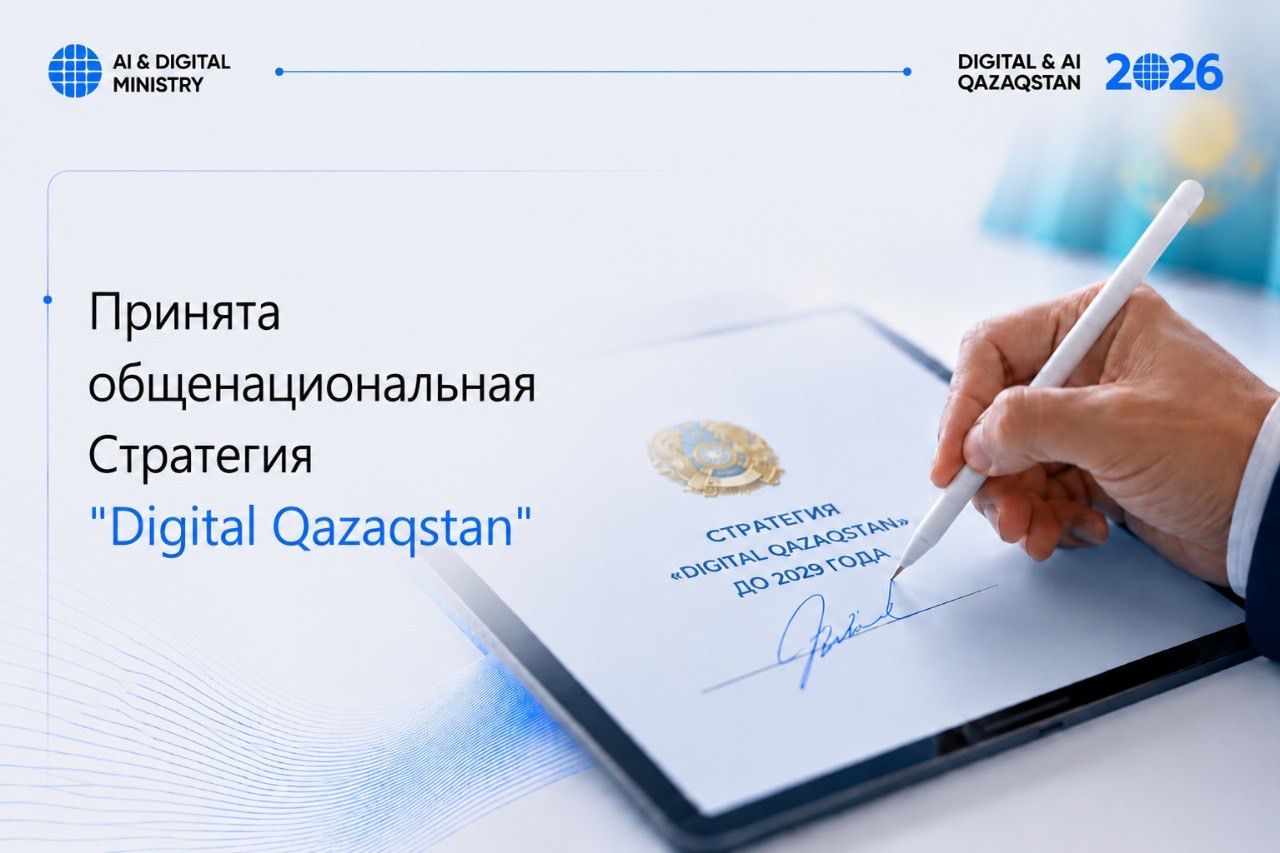
Kazakhstan has adopted the National Strategy "Digital Qazaqstan" until 2029 10.06.2026
The President of the Republic of Kazakhstan signed a decree approving the National Strategy for Large-scale Digitalization and the Introduction of Artificial Intelligence Technologies "Digital Qazaqstan" until 2029.The strategy will become the main guiding document for the country's technological development in the coming years and defines a new stage of deep modernization of the state, economy and society in the context of global digital transformation.The strategic document defines the country's path towards building a technological nation, offering a clear plan and completing the formation of the entire cycle of institutional documents that henceforth determine the strategic course and key areas of the state's work in this field.Digital Qazaqstan represents a fundamental transition of Kazakhstan to a new model of development, where data, artificial intelligence and modern technologies become the foundation of public administration and transform the country's digital ecosystem - from automation of individual services to integrated, data-driven governance.Today, Kazakhstan ranks first in the region according to the government readiness index for artificial intelligence and is among the world leaders in e-government development. In recent years, the country has already built a solid foundation for a digital state, and today it is opening a new chapter of its development, setting itself an ambitious goal - not just to adapt to global changes, but to shape them independently, as in modern practice, the states that lead are those introducing AI across all spheres of life faster than others.The new Strategy aims to systematize this experience and scale it across all key industries. It is expected that the comprehensive introduction of AI and the digitalization of industry, subsoil use, logistics and energy will contribute an additional 1.5 percentage points per year to GDP on average by the end of 2029, and the projected volume of comparable market investments over a three-year period will range from USD 10.5 to 16.5 billion.By 2029, Kazakhstan plans to become one of the most technologically advanced countries in the world, significantly strengthening its position in international rankings of digital competitiveness. Deputy Prime Minister and Minister of Artificial Intelligence and Digital Development of the Republic of Kazakhstan Jaslan Madiyev noted that the Head of State set a strategic goal: to turn Kazakhstan into a fully-fledged digital country within three years. The approval of the nationwide Digital Qazaqstan Strategy marks the starting point of a large-scale transformation affecting all key areas of the country's life. "We are talking about the transition to a new model of development, where data, artificial intelligence and modern technologies become the foundation of public administration, economics and social policy. We are moving from the digitalization of individual services and processes to the creation of an integrated digital architecture of the country.For citizens, this means a more convenient, proactive and personalized state. For businesses - productivity growth, cost reduction and new development opportunities. For the economy - the emergence of new industries, attraction of investment and strengthening of Kazakhstan's competitiveness.Today, the leaders are countries that are building a complete AI ecosystem - from energy and computing power to national language models and applied services for citizens and businesses. This architecture is called the AI Economy Stack and includes five levels: energy and infrastructure, computing power, data and large language models, digital platforms, and applied AI services. It is precisely this kind of system that the Digital Qazaqstan Strategy is designed to create." As part of the Strategy, digital transformation will encompass three key areas.The human being is at the center of all transformations within the first direction - digitalization in the interests of citizens. The strategy envisions a continuous, life-stage service model in which public services are tailored to the individual needs of each Kazakhstani citizen, regardless of their region of residence. Proactive support mechanisms will be introduced in the social sphere, eliminating the need to collect additional documents, and key tools - from social benefits to predictive analytics in healthcare and pharmaceutical supply management - will be consolidated within the "Social Wallet" ecosystem. In education, personalized AI development pathways for children from an early age will be launched to help unlock student potential and build advanced digital skills for the next generation. Large-scale AI workforce training will cover both the academic environment and regional IT schools, and the level of generative AI literacy among the population is expected to reach at least 20%.In the second direction - serving business and the new economy - a managed digital architecture with mandatory instrumentation is being built across the real sector. The strategy provides for deep digital transformation of all core economic sectors: agro-industrial complex, construction, the financial sector, the oil and gas industry and small businesses. The introduction of artificial intelligence, digital twins and intelligent platforms will significantly increase labor productivity, reduce costs and ensure the global competitiveness of domestic businesses. At the same time, conditions are being created for the accelerated development of future industries - robotics, unmanned systems, digital assets and space technologies. The flagship project of this direction will be the creation of a sovereign "AI Hub," designed as a full-fledged "Data Center Valley." This hub will serve as the key infrastructure platform in the macroregion, bringing together advanced computing power, research institutes and leading technology companies. An ecosystem for the development and testing of breakthrough solutions in machine learning and big data analytics will be deployed on the basis of the AI Hub. The design capacity of its computing centers will be scaled to 1 GW. Implementation will be carried out through a strategic partnership between government and business. The strategy calls for the active involvement of private investment, international technology companies, development institutions and leading global experts. This synergy of infrastructure and talent is intended to attract major international investors and vendors, at least double the export of Kazakhstani IT services, and bring at least three homegrown unicorn companies to the global market.In the interests of the state apparatus, deep governance reform is envisioned along with a complete departure from fragmented departmental decision-making. Government agencies are transitioning to a service model of operation, where key public services are delivered exclusively in a proactive manner - seamlessly and without burden on the applicant. The introduction of AI will automate routine administrative processes and fully eliminate duplicated departmental functions. Government decision-making and regulatory modeling are being transferred to rigorous big data analysis (data-driven governance), minimizing the human factor and eliminating managerial errors. In addition, algorithm-driven approaches will be applied to budget planning and allocation: an end-to-end digital oversight system will ensure the transparency and targeted effectiveness of every tenge spent.The Strategy also places significant emphasis on cybersecurity and the protection of the national information space in the era of active AI development. The document provides for the creation of a resilient digital infrastructure, the introduction of advanced encryption standards and the protection of critical facilities from external threats.Considerable attention has also been paid to the development of safe urban environments: smart city standards will cover at least 70% of the urban population, shifting public safety to a proactive model. Through AI and behavioral video analytics, incident response times will be reduced by one third, and together with end-to-end protection systems, a national ecosystem for protecting citizens from online fraud will be deployed.The Digital Qazaqstan Strategy thus represents Kazakhstan's strategic commitment to technology, knowledge and innovation. It not only ensures the Republic's confident transition to digital governance maturity, but also creates a solid foundation for long-term economic growth, improved quality of life for citizens, and strengthened global competitiveness of the Republic of Kazakhstan in the age of artificial intelligence.Source : https://www.gov.kz/memleket/entities/maidd/press/news/details/1238140?lang=ru

MBA Impact Forum 2026: Key Outcomes 08.06.2026
Astana hosted the large-scale MBA Impact Forum 2026, bringing together business leaders, entrepreneurs, investors, experts, and members of the MBA alumni community. The forum was dedicated to the 30th anniversary of GSB AlmaU, the Graduate School of Business at AlmaU, which was the first institution in Kazakhstan to launch an MBA program and lay the foundation for business education in the country.The central theme of the forum focused on growth strategies in an era of profound uncertainty, values-based leadership, and the impact of business education on the real economy of the region.“The most important thing that MBA and DBA programs provide is not diplomas or lecture notes. What truly matters is the community of knowledge — people who trust one another, speak the same language, and share their experience. It is more than networking: alongside connections comes shared knowledge that everyone can draw upon,” said Assylbek Kozhakhmetov in his opening remarks.Opening the forum, Timur Buldybayev, Rector of Almaty Management University (AlmaU), noted that in today’s world academic success can no longer be measured by the number of diplomas awarded. The true strength of a business school lies in the measurable impact its graduates create in the real economy.“At AlmaU, we measure our success by the footprint — the impact — our graduates leave on the real economy. We firmly believe that knowledge which cannot be applied in practice and transformed into concrete managerial decisions is not education; it is merely decoration. We have chosen to be a laboratory of living business,” he emphasized.Global Futurism and Human Values in the Age of AIThe international keynote speakers agreed that technological breakthroughs — including mass automation and artificial intelligence — represent far more than new software solutions. They signify a complete transformation of the logic of human labor, where the scarcest resource is becoming humanity itself.According to Tariq Qureishy, CEO of Future Readiness Forum:“The more technological and AI-driven the world becomes, the more human we need to be. Everything that can be transferred to AI will be transferred, because it will be a million times faster and a million times cheaper. But everything that cannot be digitized — love, compassion, trust, and wisdom — will become a million times more valuable.”Experts noted that while advances in AI offer unprecedented opportunities, the uncontrolled commercial deployment of neural networks may also lead to a severe human capital crisis and transform technology into a potential threat.AI futurist Pavel Luksha described the phenomenon as a “leapfrogging effect”:“The arrival of artificial intelligence creates a leapfrogging effect, allowing countries and organizations to skip several stages of development and enter a new technological paradigm without going through every intermediate step. In other words, it enables them to bypass investments in parts of outdated infrastructure and move directly to where they need to be.” The discussion also explored how emerging technologies are reshaping the rules of the game in Kazakhstan’s market, why AI may temporarily displace entry-level professionals, and how digitalization and biometric technologies are helping build consumer trust in e-commerce.Dana Tokmurzina, CEO of Fortune Partners, shared practical business cases and noted that her company has already stopped hiring junior-level specialists.“Yes, in some ways we may be shooting ourselves in the foot because young professionals may struggle to find jobs in their field due to AI adoption. However, this is no longer the responsibility of business. If the Ministry of Education and university leaders encourage AI and prepare these graduates, then they must ensure that the specialists entering the market are valuable and employable for companies like ours,” she said.Victoria Torgunakova, Member of the Supervisory Board of Freedom Ticketon, spoke about AI implementation within the company:“To combat ticket resellers and enhance security at large-scale events, we are introducing biometric technologies. In the near future, Ticketon will be integrated with access control systems and venue turnstiles, allowing visitors who have given consent to enter using facial recognition instead of presenting a ticket. This will make the entry process seamless and significantly faster.”Mukhit Yeleuov, Partner at ADL Disputes and a graduate of Harvard Kennedy School, argued that no one today possesses a fully objective understanding of reality.“We perceive the world through our own experiences, knowledge, emotions, personal traits, and cognitive limitations. Behavioral science demonstrates that people do not always act rationally, and our decisions are strongly influenced by context and heuristics,” he noted.Another significant milestone of the forum was the signing of a Memorandum of Cooperation between AlmaU Graduate School of Business and BIArt School of Creative Industries. The event concluded with the presentation of a new lifelong membership model for continuous learning and the distribution of exclusive anniversary merchandise to all participants. Guests then continued networking and informal discussions at AlmaU FEST.

As part of the environmental campaign "Taza Kazakhstan", the next cleaning and landscaping of the Bayandy village is being carried out. 28.05.2026
Completed works:* Ash accumulates in the streets* Solid household waste is packed in bags and transported to the landfill by special equipment (Kamaz* Roadsides are being put in orderCleanliness starts from the threshold. Let's contribute to the beautification and cleanliness of our yard together! Protecting the environment without throwing garbage on the street is the task of every resident.Source : https://www.gov.kz/memleket/entities/mangystau-munaily-bayandy/press/news/details/1229521?lang=ru